




When choosing a kids’ easel, parents often find two main options: tabletop easels and standing easels.
While both are designed for creative activities, they create different experiences for young artists.
A standing easel provides a larger workspace for big ideas and open-ended creativity, while a tabletop easel offers a flexible setup for everyday drawing, coloring, and more focused artwork.
Understanding the differences can help parents choose the right easel based on their child’s creative style, available space, and daily routine.

Tabletop Easel vs. Standing Easel: Key Differences
1. Creative Space: Big Creations vs. Focused Artwork
The biggest difference between a tabletop easel and a standing easel is the way children interact with the creative surface.
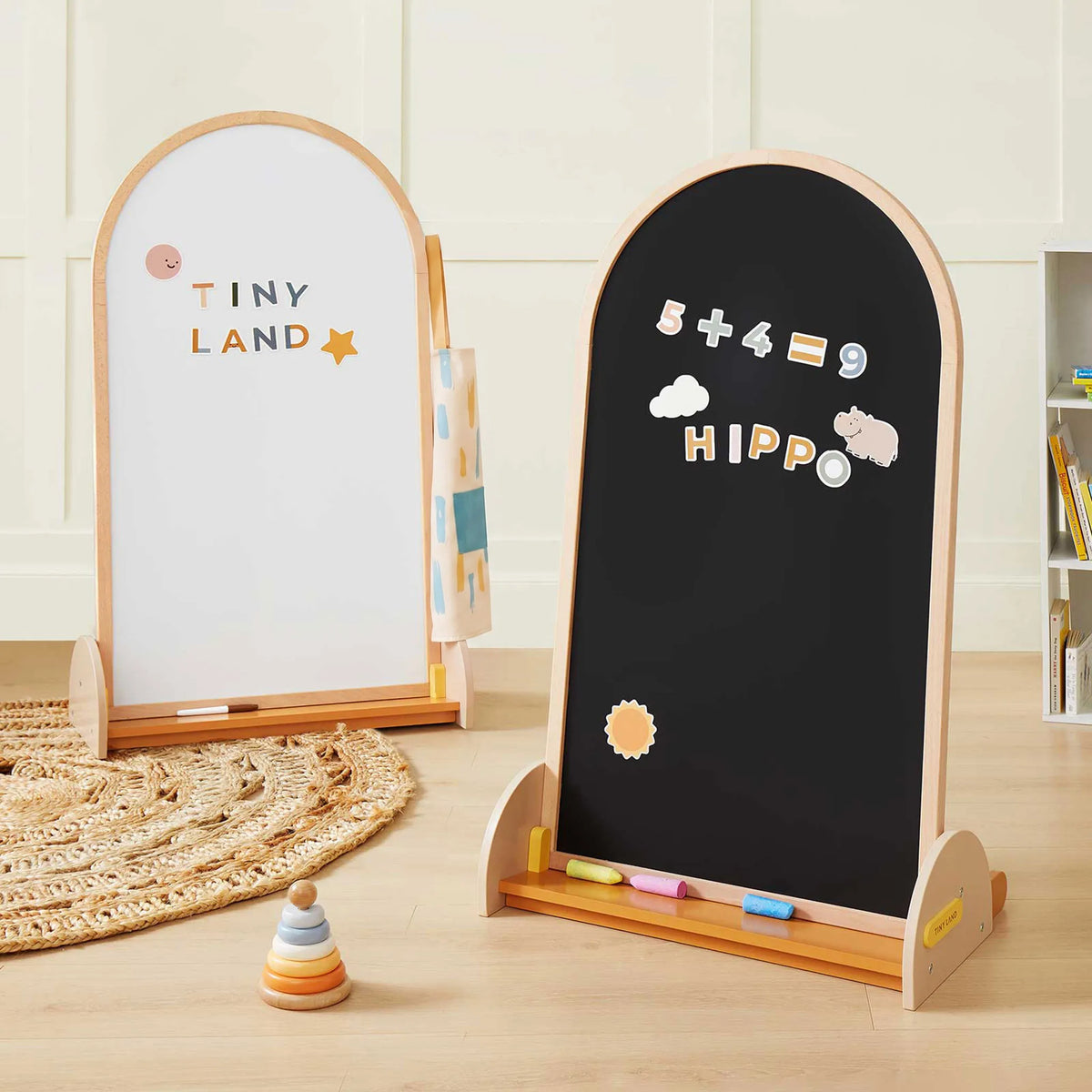
Standing Easel: Made for Large-Scale Creativity
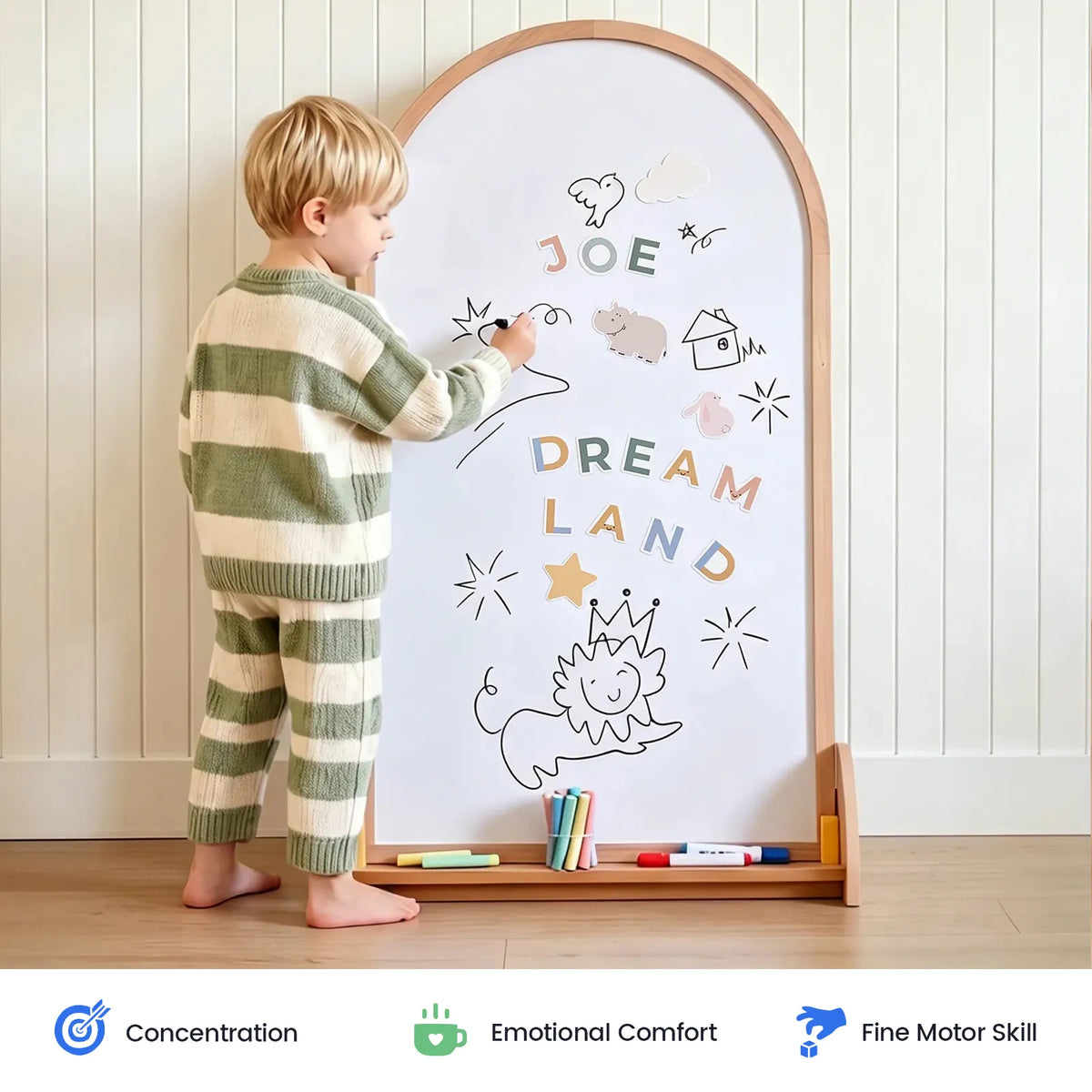
A standing easel gives children a larger vertical surface that encourages movement and bigger creations.
It is ideal for:
- Large drawings
- Painting projects
- Free-form scribbling
- Imaginative scenes and storytelling
Because children can stand, move around, and view their artwork from different angles, a standing easel can feel like having their own little art studio.
It is a great choice for children who enjoy creating freely and families who want to build a dedicated art corner at home.

Tabletop Easel: Designed for Everyday Creativity
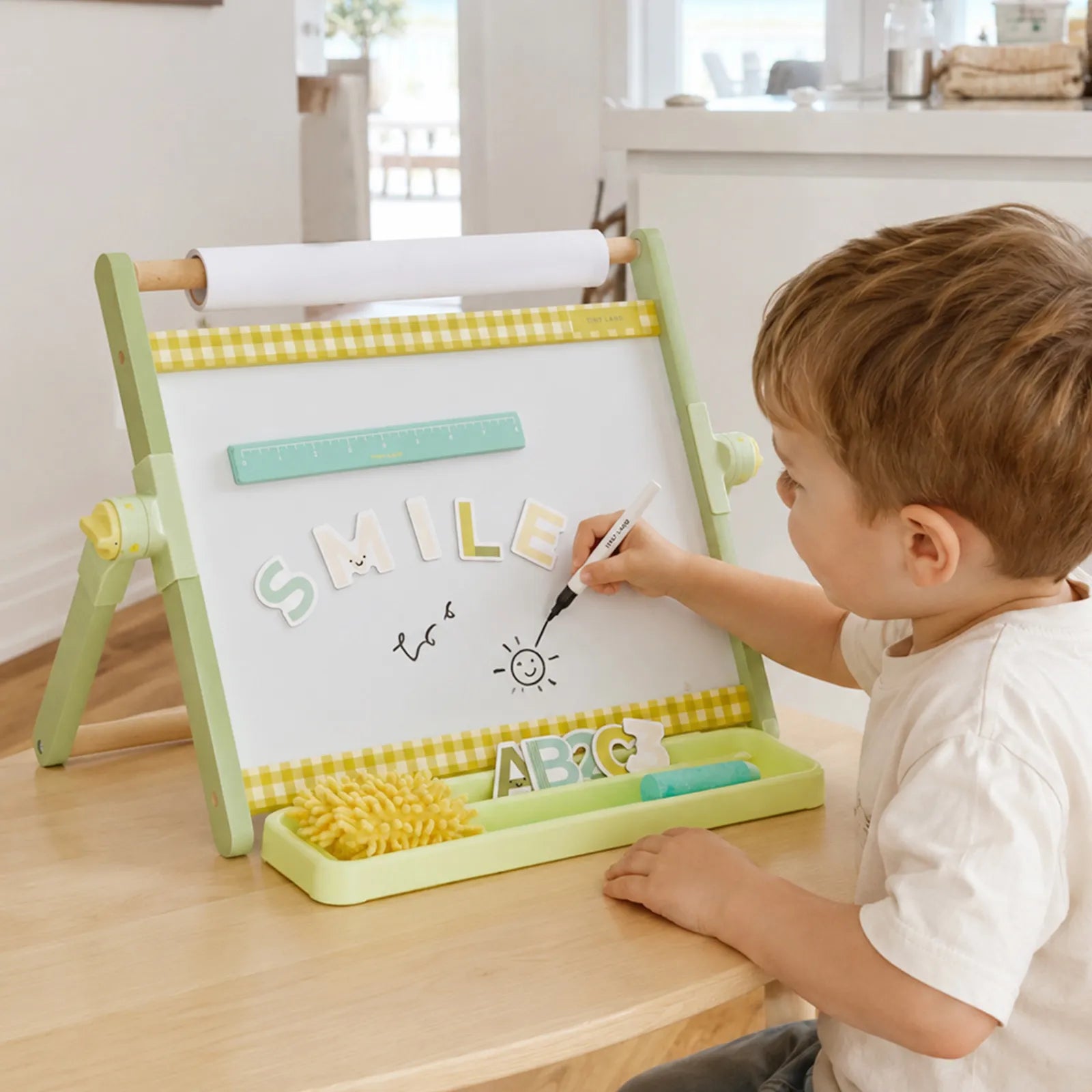
A tabletop easel provides a smaller, more focused creative workspace that fits naturally into everyday family life.
It works well for:
- Drawing
- Coloring
- Practicing early writing
- Creating detailed artwork
- Completing activity pages
Because children work closer to the surface, tabletop easels can encourage more controlled movements. This makes them a great option for practicing details, exploring different drawing techniques, and developing hand control during creative activities.
A tabletop easel is also easy to place on different surfaces, making it a practical choice for families who want a creative tool that can move throughout the home.

2. Space and Flexibility: Dedicated Art Space vs. Portable Creativity
Standing Easel: A Dedicated Creative Corner
A standing easel is designed to create a dedicated art space in your home, where children can easily return to their creative activities.
It works well for families who have:
- A dedicated playroom or art area
- More floor space available
- A place to keep an art station set up and ready to use
The larger size gives children more room for painting, drawing, and exploring bigger creative projects over time.
While many families choose to keep a standing easel in one place, it can still be moved or stored away when needed. Its larger size simply makes it better suited for a dedicated creative area rather than frequent portability.

Tabletop Easel: Flexible for Different Spaces
A tabletop easel is designed for flexibility.
Children can use it:
- At a table
- On a desk
- In a playroom
- On-the-go family activities
- In different rooms around the home
For families with limited space or those who want a creative tool that can be easily stored, a tabletop easel offers more convenience.

3. Which Easel Works Better for Different Ages?
The best easel depends on your child’s age, interests, and how they like to create.
|
Child’s Age |
Easel Choice to Consider |
|
Around 2 years old |
Tabletop easel for exploring colors, making simple marks, and developing hand control |
|
Around 3–4 years old |
Either option depending on space and creative style |
|
Preschoolers who enjoy large artwork |
Standing easel for bigger projects and open-ended painting |
Every child develops differently, so the best choice is the one that matches your child’s interests and your family’s environment.

Tabletop Easel vs. Standing Easel: Which One Is Right for Your Child?
Choose a standing easel if your child:
- Loves large drawings and painting projects
- Enjoys creating with bigger movements
- Has a dedicated play space
- Would enjoy having their own art station
Choose a tabletop easel if your child:
- Enjoys drawing, coloring, and detailed artwork
- Is still developing hand control
- Has limited space
- Needs a creative tool that can move easily between spaces
Both options can support creativity. The right choice depends on how your child prefers to explore and create.

What Parents Should Look for When Choosing a Kids’ Easel
No matter which type of easel you choose, consider these important features:
Stable and Child-Friendly Design
A good easel should feel comfortable and easy for children to use.
Look for:
- Stable construction
- Child-friendly height
- Easy-to-use surfaces
- Easy Setup and Storage
Creative activities are easier to enjoy when materials and tools fit naturally into family routines.
Consider:
- Available storage space
- How easy it is to move
- How it fits into your home
Supports Different Types of Creativity
A versatile easel can support:
- Drawing
- Coloring
- Painting
- Early writing practice
- Imaginative activities

Creating the Right Creative Space at Home
The best easel is one that children will want to use regularly.
A standing easel can become a dedicated art corner where children create larger projects and explore freely.
A tabletop easel can become a flexible creative station that fits into everyday moments, whether at the dining table, in a playroom, or during family activities.
For families looking for a creative setup that fits naturally into everyday life, a tabletop easel can be a practical choice for toddlers’ drawing, coloring, and imaginative play.

Frequently Asked Questions About Toddler Easels
Is a tabletop easel better for toddlers?
A tabletop easel can be a practical choice for many toddlers because it offers an accessible workspace, flexible placement, and supports activities like drawing, coloring, and early writing practice.
Is a standing easel better for older children?
Standing easels can be a great option for older preschoolers or children who enjoy larger artwork and more open-ended painting projects.
Can a tabletop easel help toddlers develop drawing skills?
Yes. Because children work closer to the creative surface, tabletop easels can support controlled movements, drawing practice, and exploring details through art activities.
Which easel should I buy for my child?
Consider your child’s age, creative style, available space, and how often you want to use the easel. A standing easel works well for larger projects, while a tabletop easel offers flexibility for everyday creativity.

Final Thoughts
Both tabletop and standing easels can become valuable parts of a child’s creative space.
-
A standing easel is ideal for children who love large-scale artwork and families who want a dedicated art area.
- A tabletop easel is a flexible choice for everyday creativity, focused artwork, and homes where space and portability matter.
The best kids’ easel is not necessarily the biggest one — it is the one that fits your child’s creativity and your family’s lifestyle.
For families looking for a flexible creative setup that blends naturally into everyday spaces, Tiny Land’s tabletop easel is designed to give little creators a comfortable place to draw, explore, and imagine.