
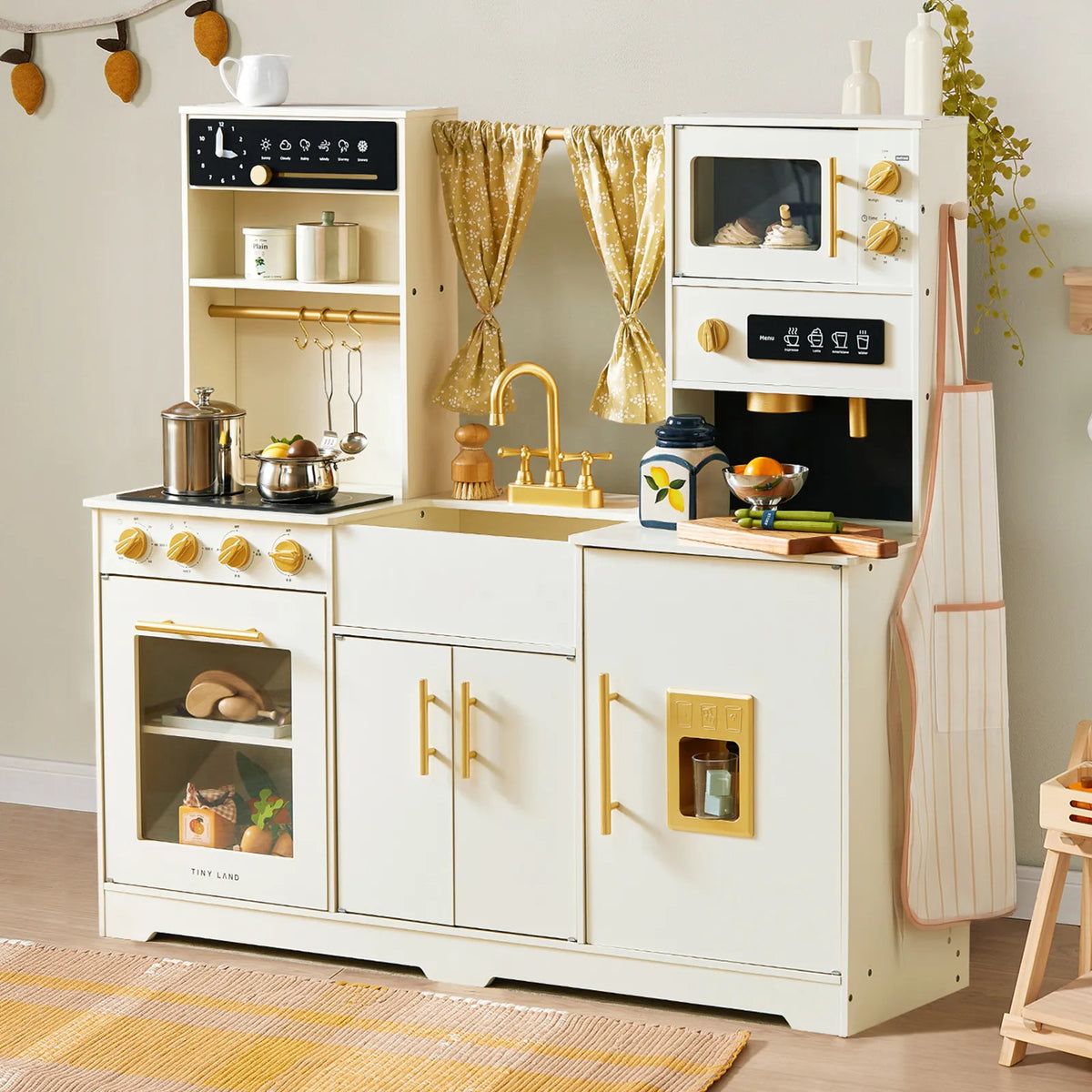
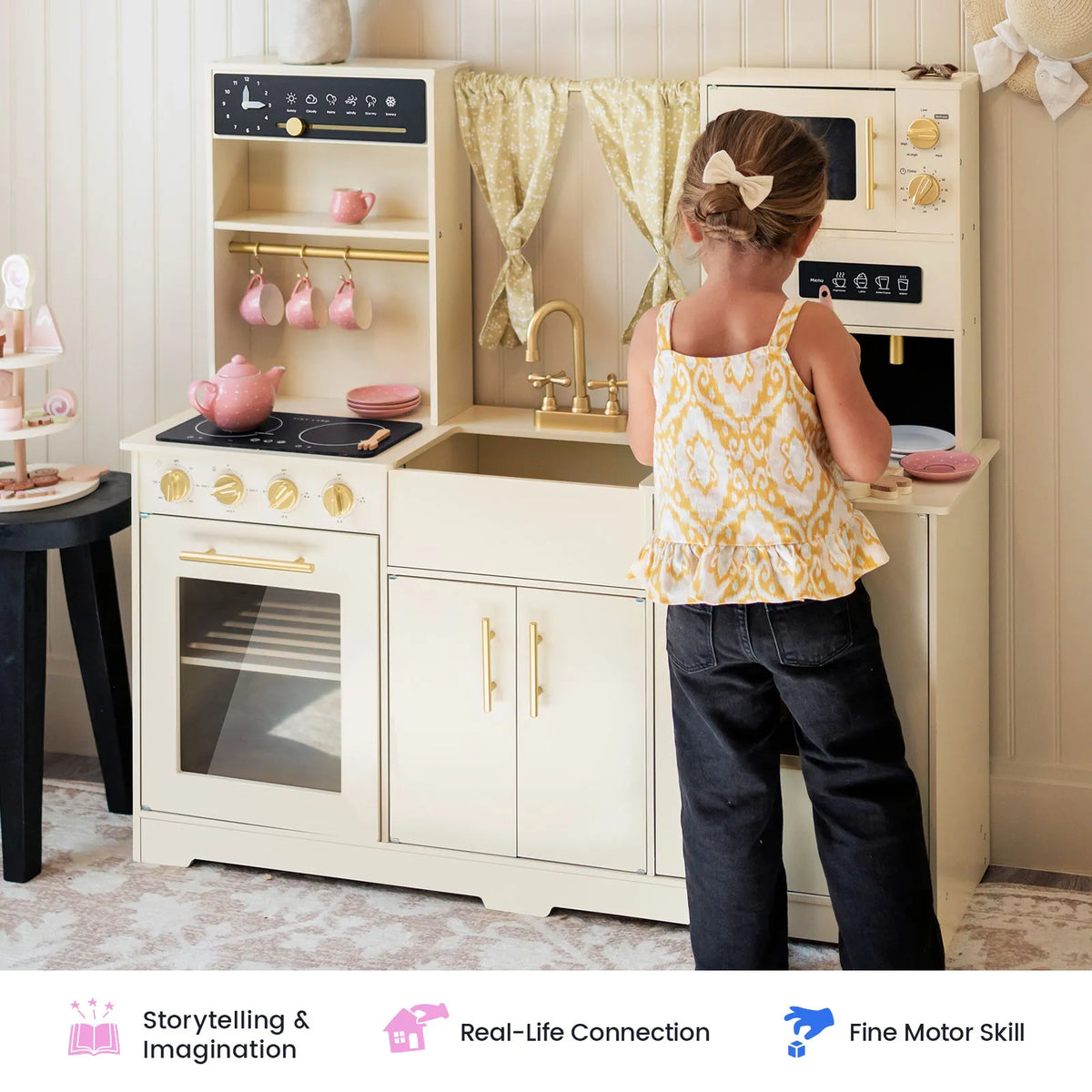
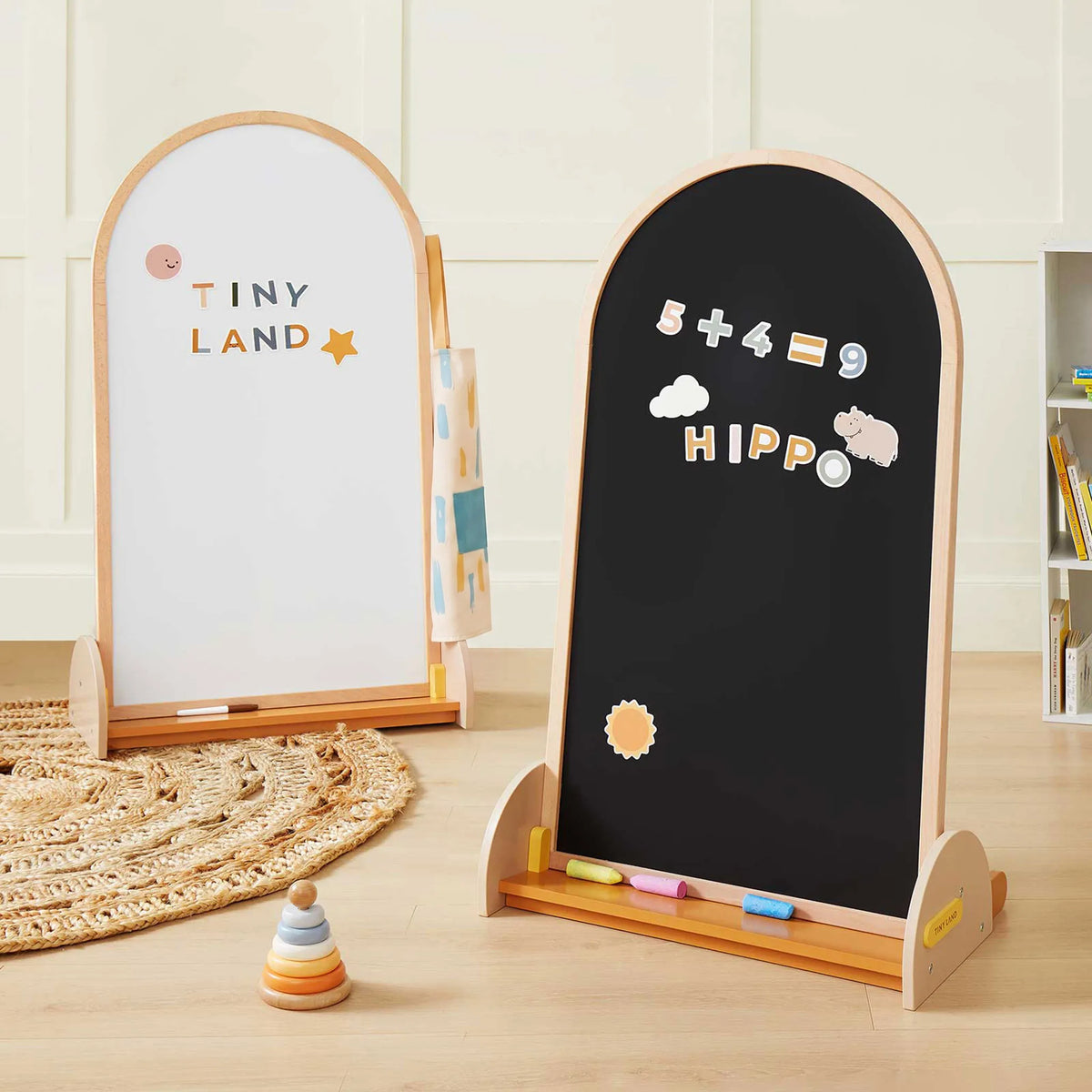
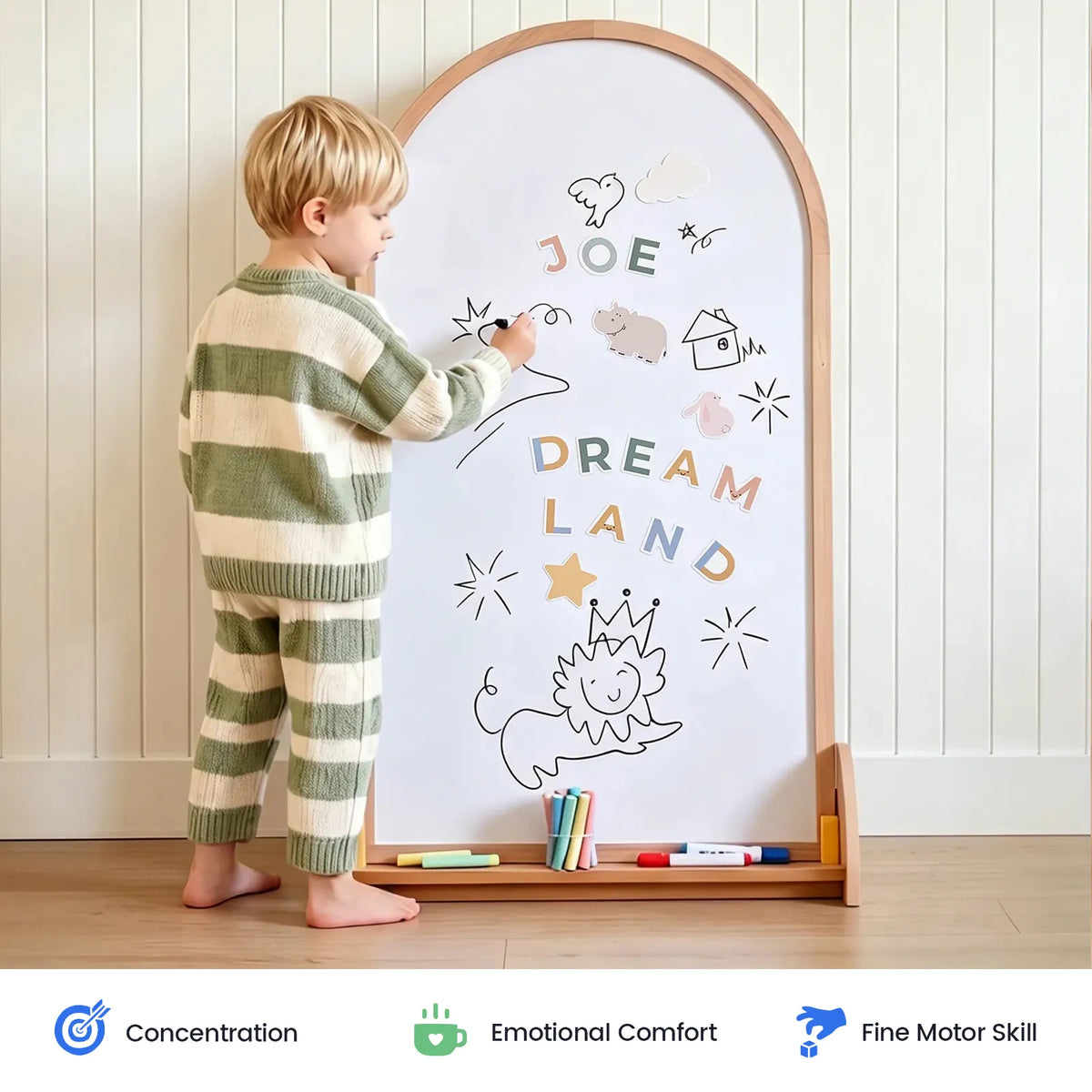
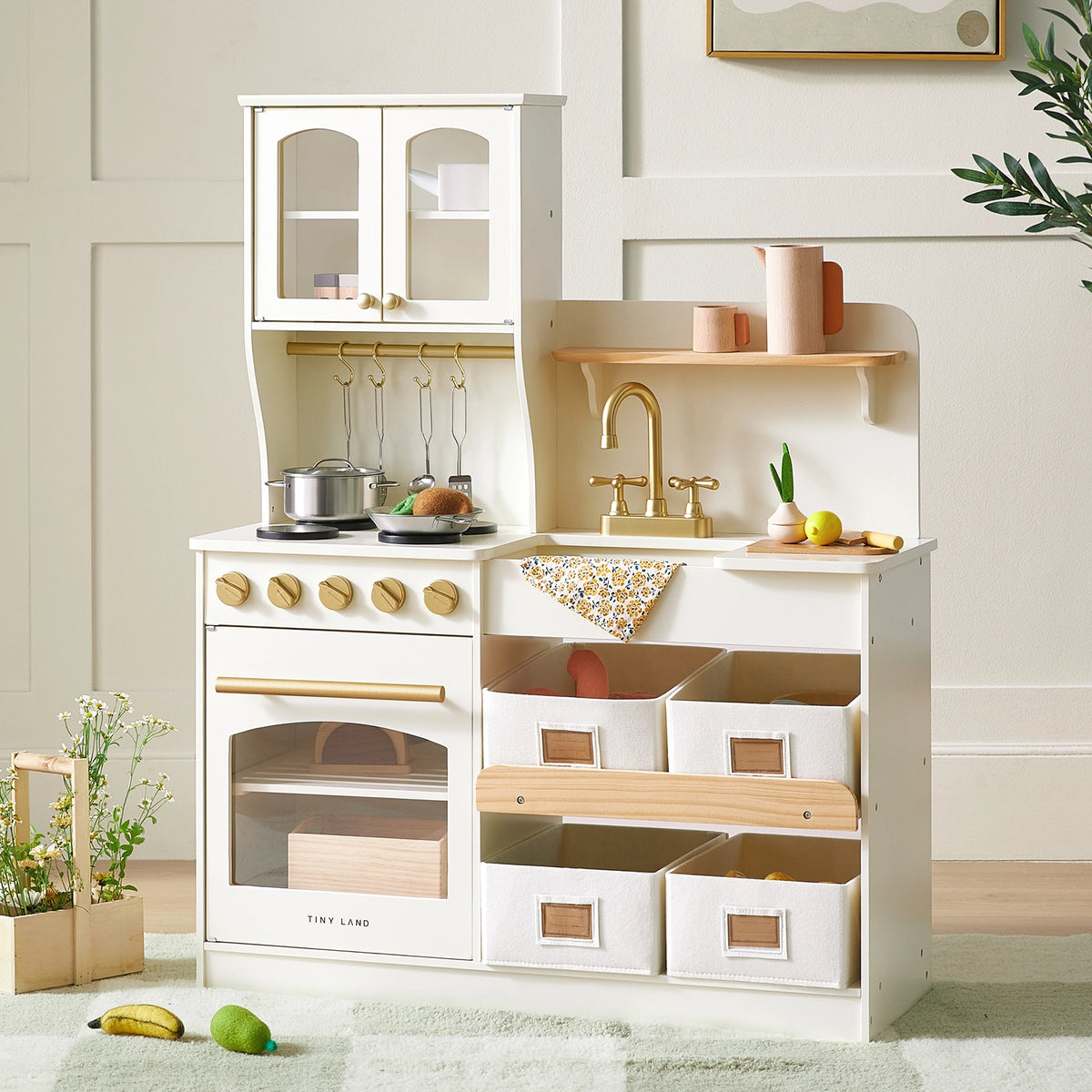
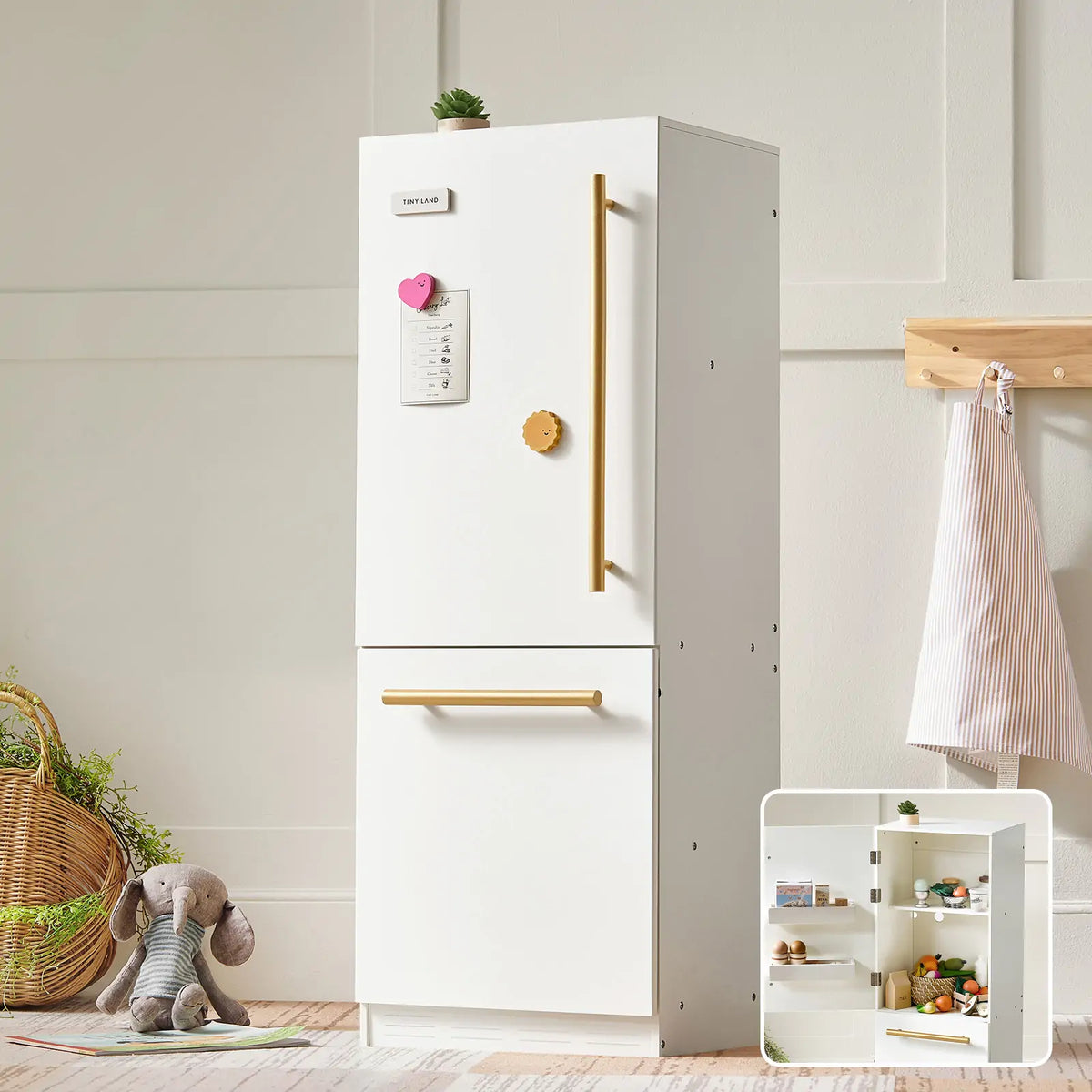
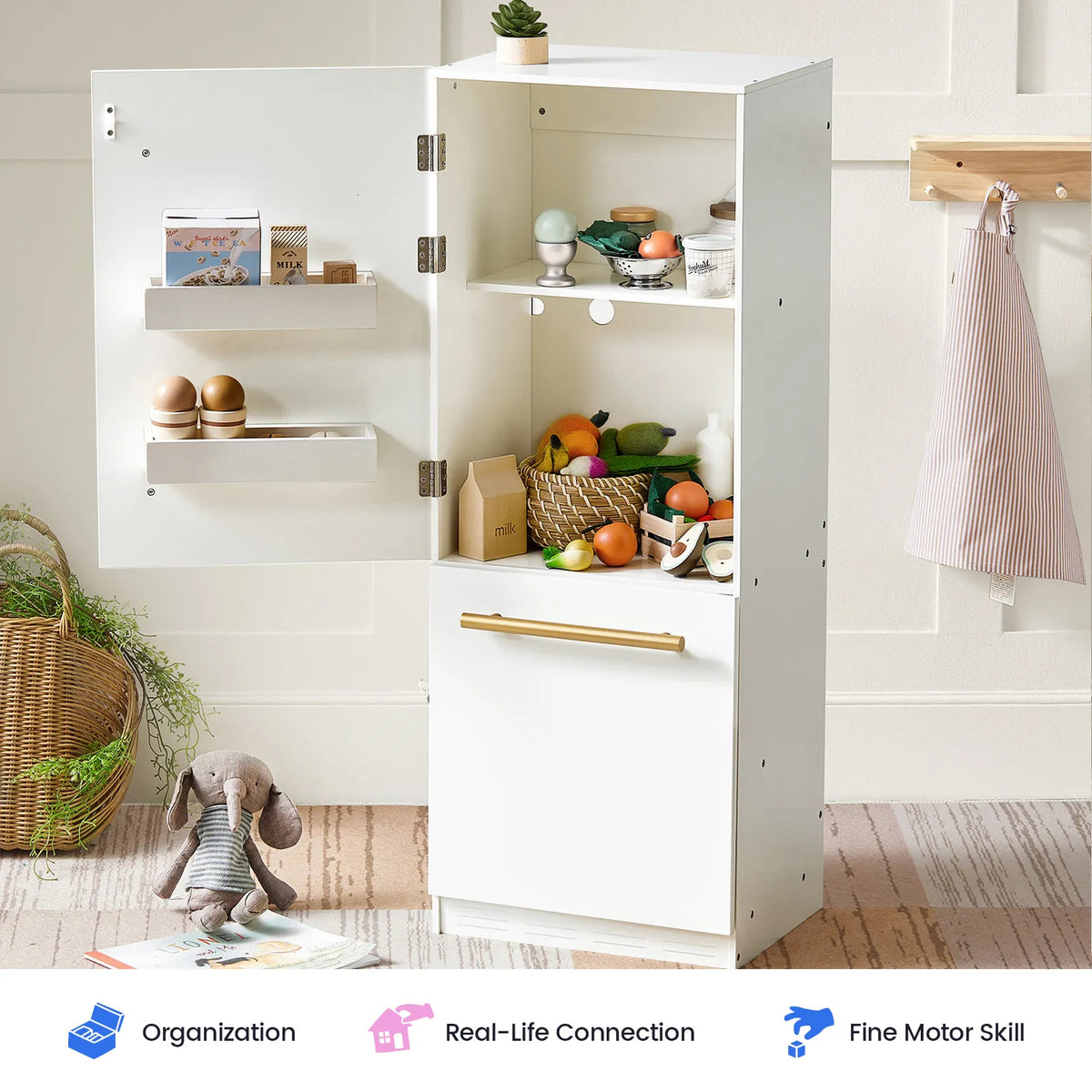
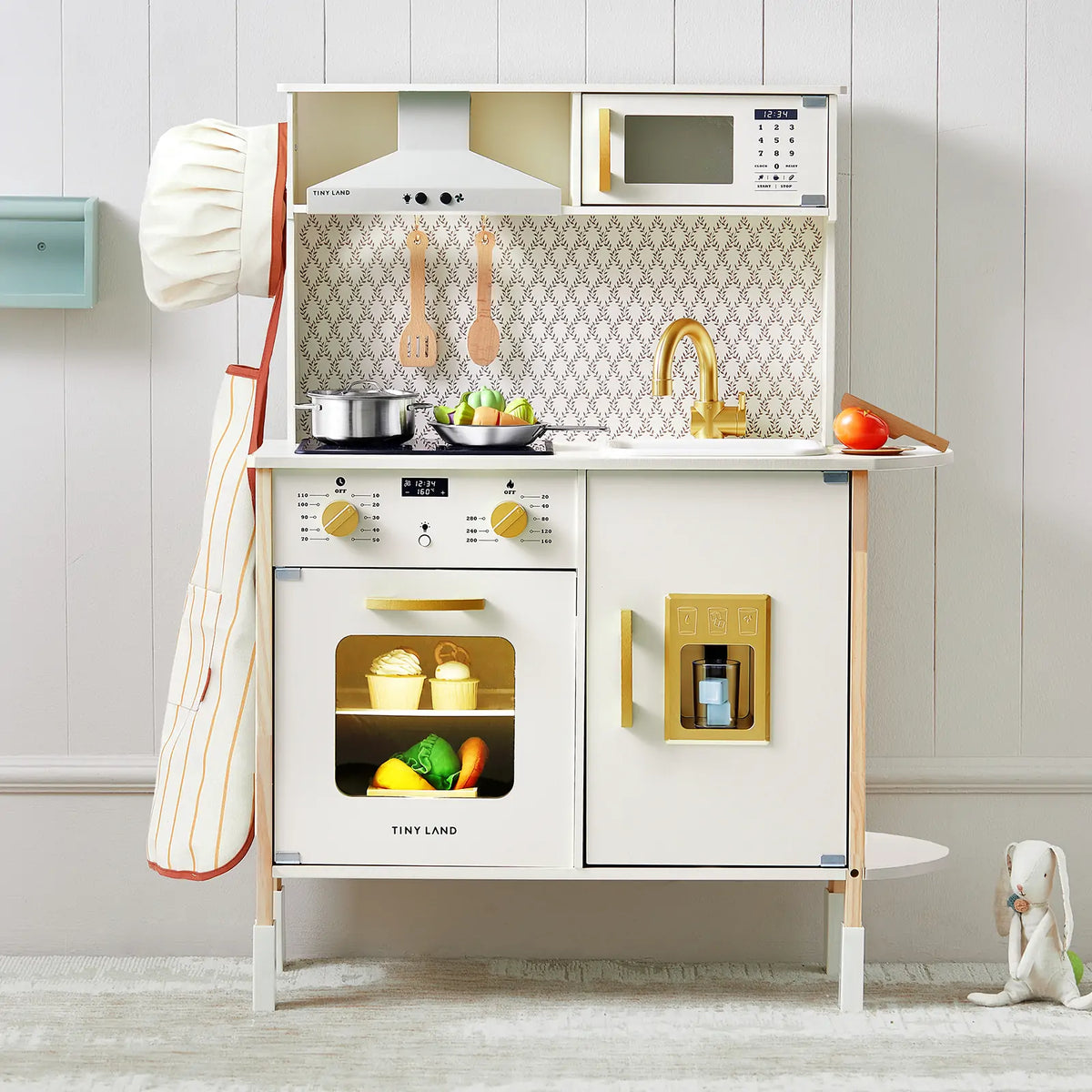
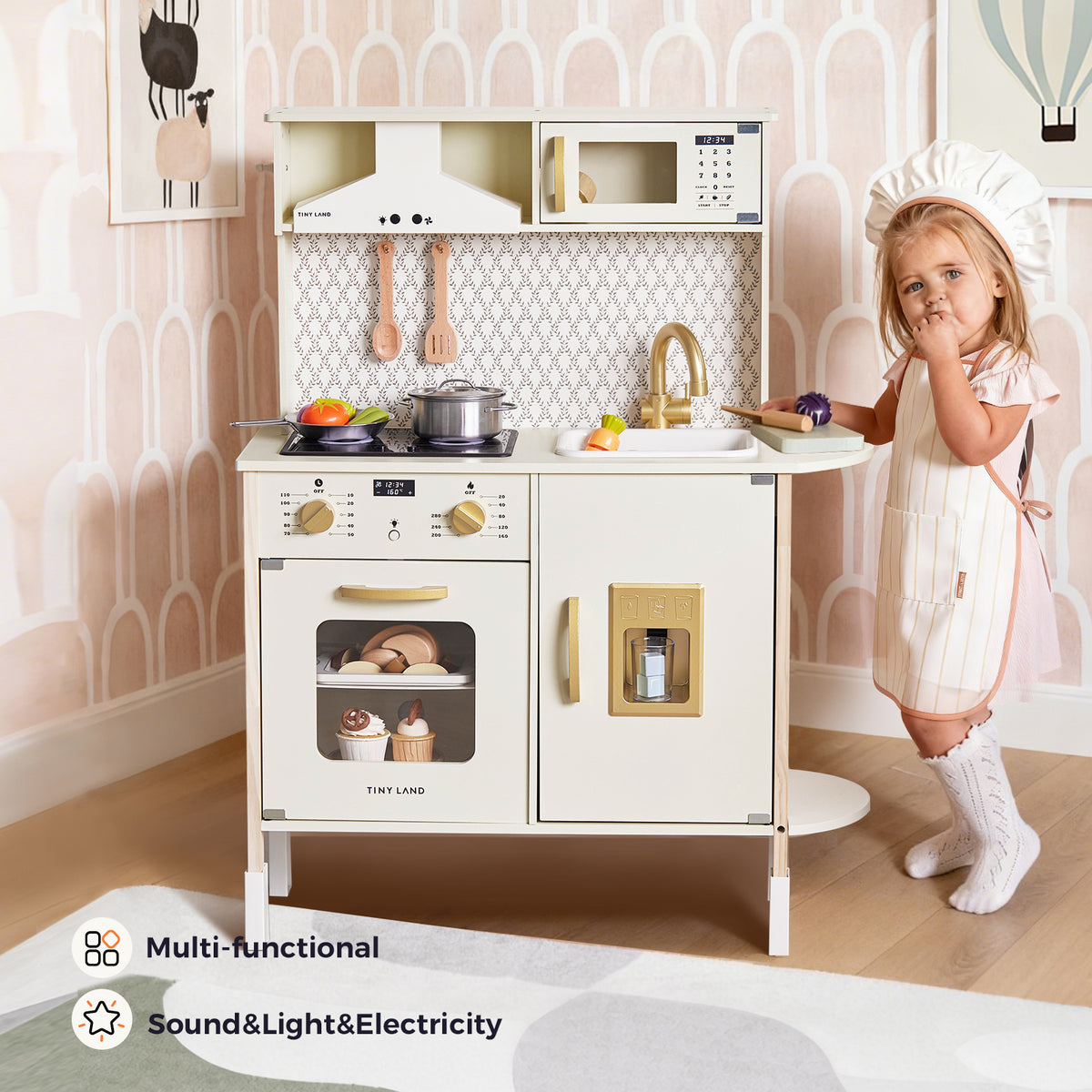





Choosing the right play kitchen for your toddler involves balancing safety, durability, aesthetic appeal, and developmental benefits.
Wooden play kitchens have become a preferred choice over plastic alternatives for modern families looking for sustainable, long-lasting toys that blend seamlessly into home decor.
Unlike traditional plastic options, wooden play kitchens provide a natural texture, timeless design, and realistic play experience that encourages children to explore, imagine, and create their own stories.
A thoughtfully designed play kitchen can support children’s creativity, independence, and early development through hands-on pretend play.
This toddler play kitchen buying guide breaks down the essential factors to consider when choosing the best wooden play kitchen for toddlers, including safety standards, Montessori-inspired features, size, and top interactive elements.

Key Factors to Consider When Buying a Wooden Play Kitchen
1. Safety and Material Standards
Safety should always be the first consideration when choosing a play kitchen for toddlers.
Since children interact closely with these toys through touching, opening, closing, and imaginative cooking, parents should pay attention to materials, finishes, and construction quality.
Certifications: ASTM F963 and CPSIA Compliance
When selecting a safe wooden play kitchen, look for products that meet recognized toy safety standards.
ASTM F963 Certification
ASTM F963 certification refers to the U.S. Standard Consumer Safety Specification for Toy Safety. This standard evaluates factors such as:
-
Mechanical and physical safety
-
Product durability
-
Material requirements
- Potential hazards during normal use
Choosing a play kitchen that meets ASTM F963 standards provides parents with additional confidence in product safety.
CPSIA Compliant
A CPSIA compliant children’s product meets U.S. federal safety requirements related to children’s products, including regulations regarding harmful substances such as lead and certain chemicals.

Finishes: Non-Toxic and Child-Safe Materials
When looking for a safe wooden play kitchen non toxic, consider products that use:
-
Non-toxic finishes
-
Water-based paint
-
Lead-free coatings
- Child-safe materials
A quality wooden play kitchen should have smooth, durable surfaces designed for everyday toddler interaction.
Edge Safety: Rounded Corners and Smooth Sanded Edges
Toddlers are naturally active explorers. Safety-focused design details can help create a more comfortable play environment.
Important features include:
-
Rounded corners
-
Smooth sanded edges
-
Stable construction
- Securely attached components
These details help reduce accidental scrapes and support safer independent play.

2. Interactive & Montessori-Inspired Features
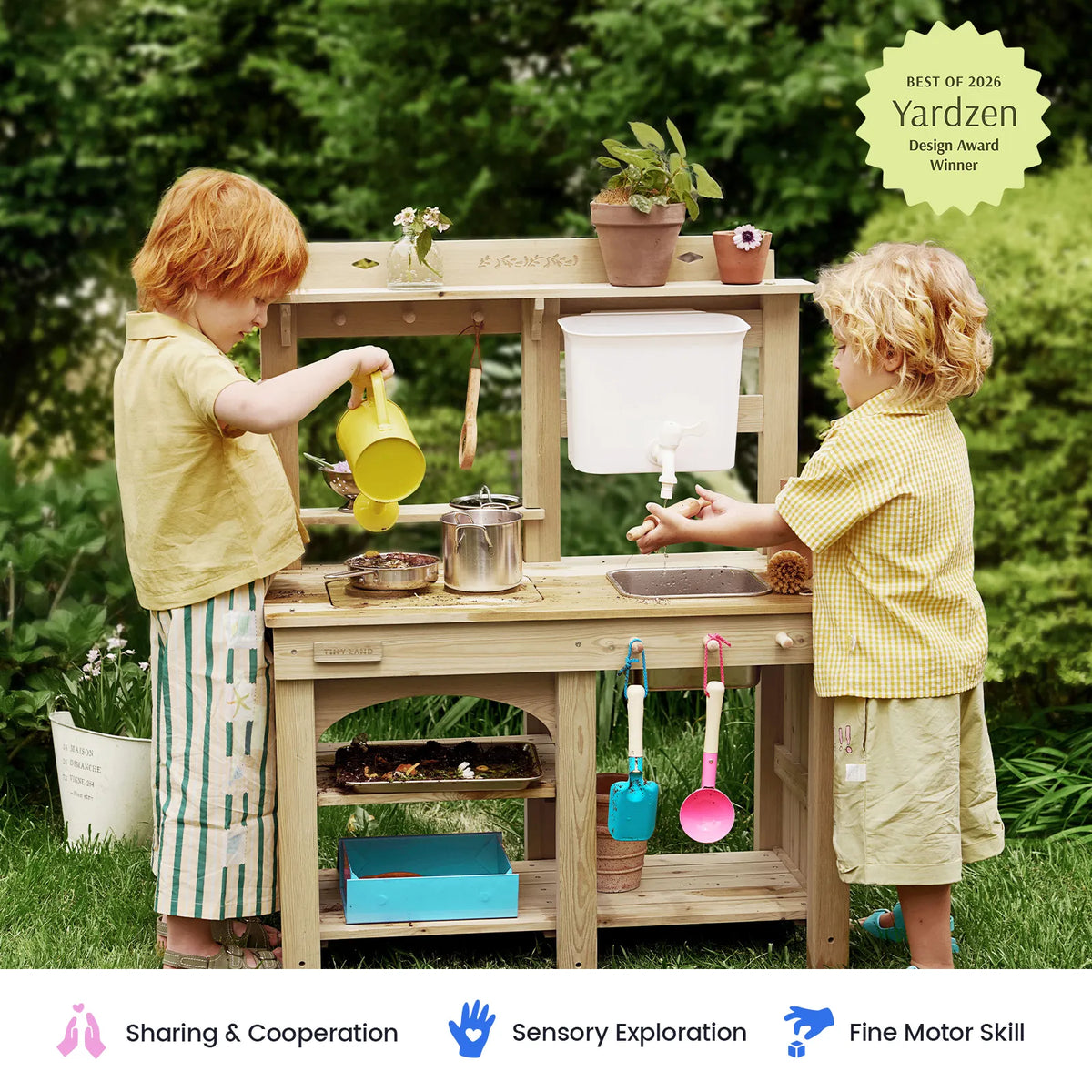
A montessori wooden play kitchen encourages children to learn through hands-on exploration and realistic experiences.
Rather than limiting children to one fixed way of playing, Montessori-inspired designs allow children to explore independently, practice everyday skills, and create their own pretend scenarios.
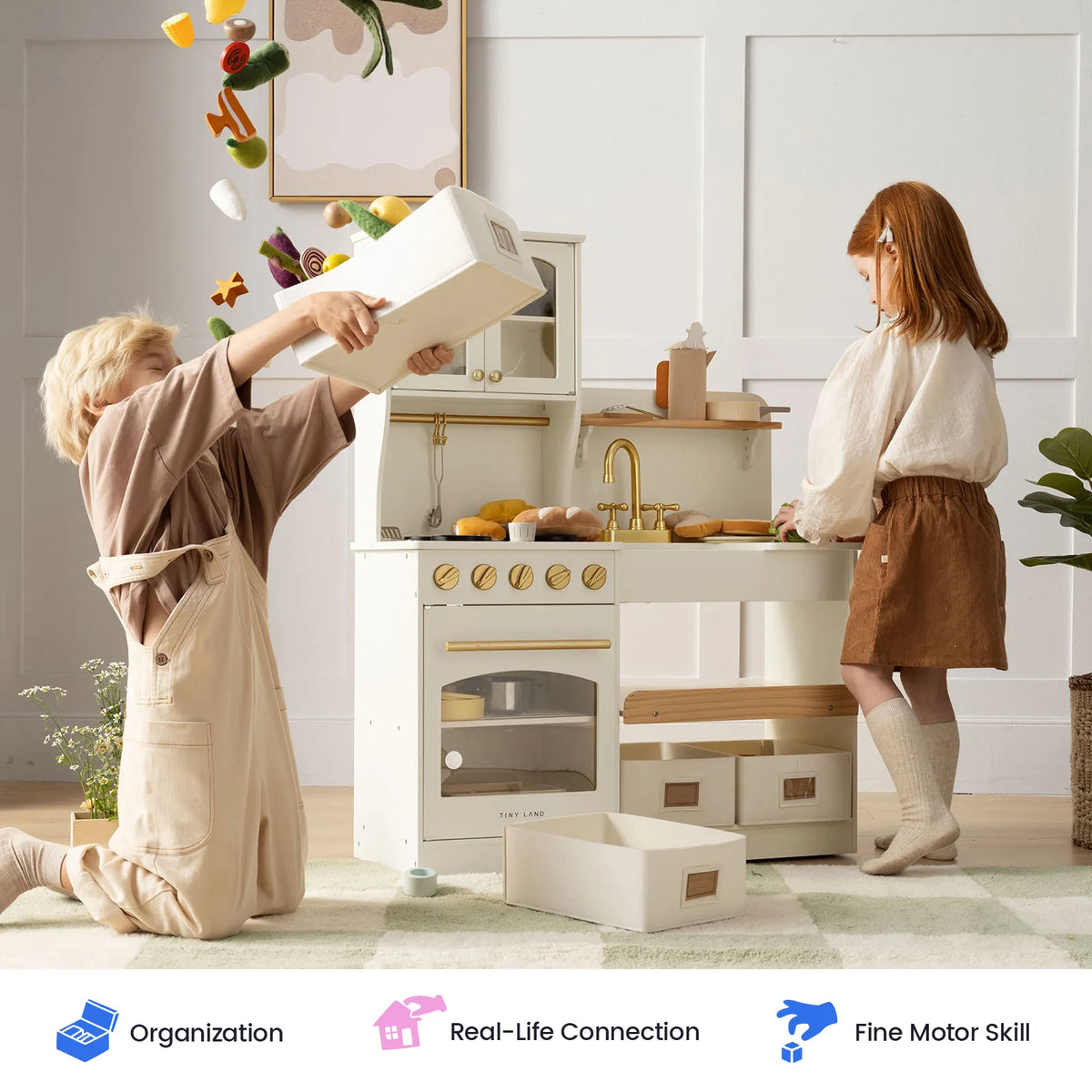
Working Mechanisms Support Fine Motor Skills
Interactive features such as:
-
Clickable knobs
-
Sliding doors
-
Removable sinks
- Turning handles
encourage children to develop:
-
Fine motor skills
-
Hand-eye coordination
- Problem-solving abilities
These small actions help toddlers build confidence while strengthening coordination and control.
Realistic Elements Encourage Creative Pretend Play
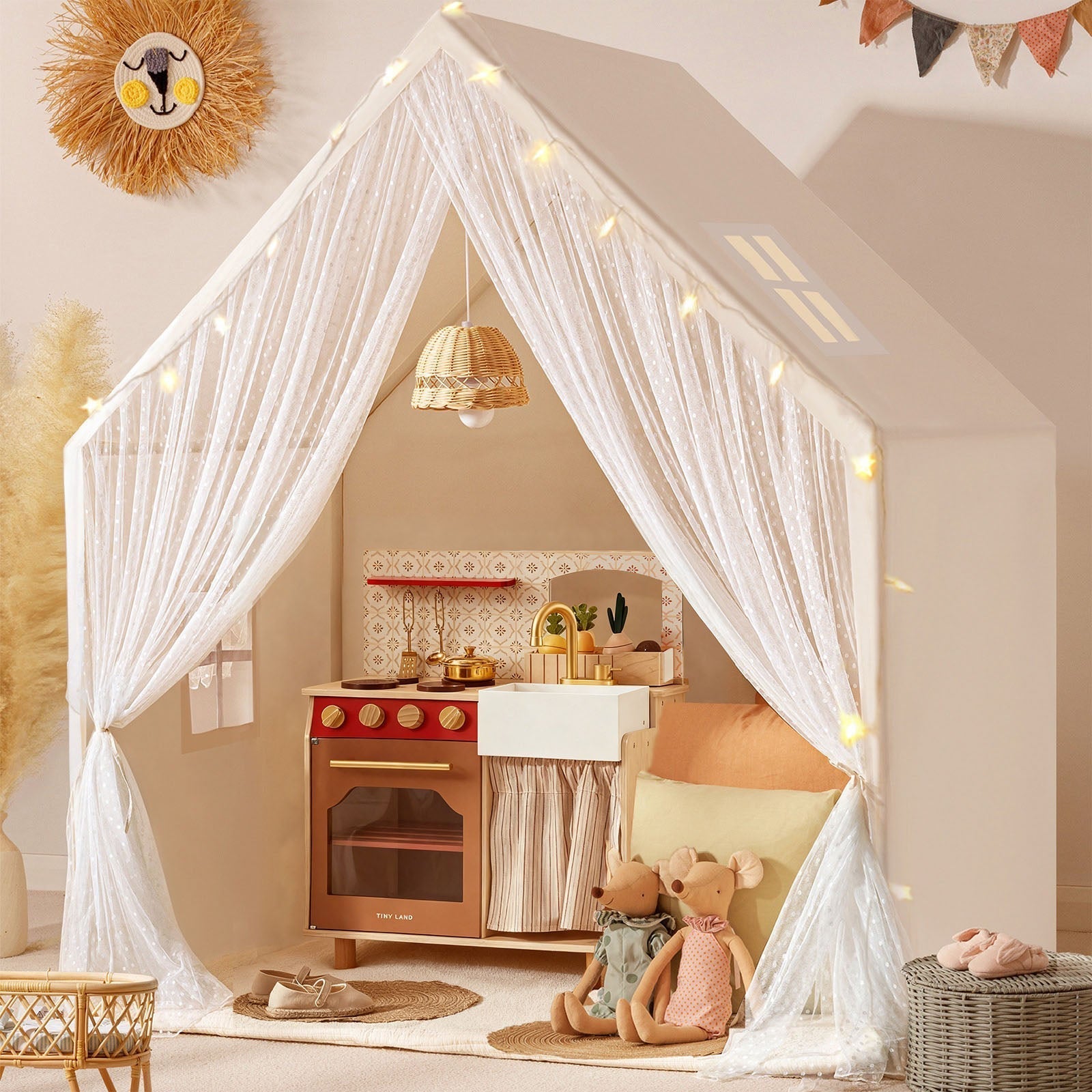
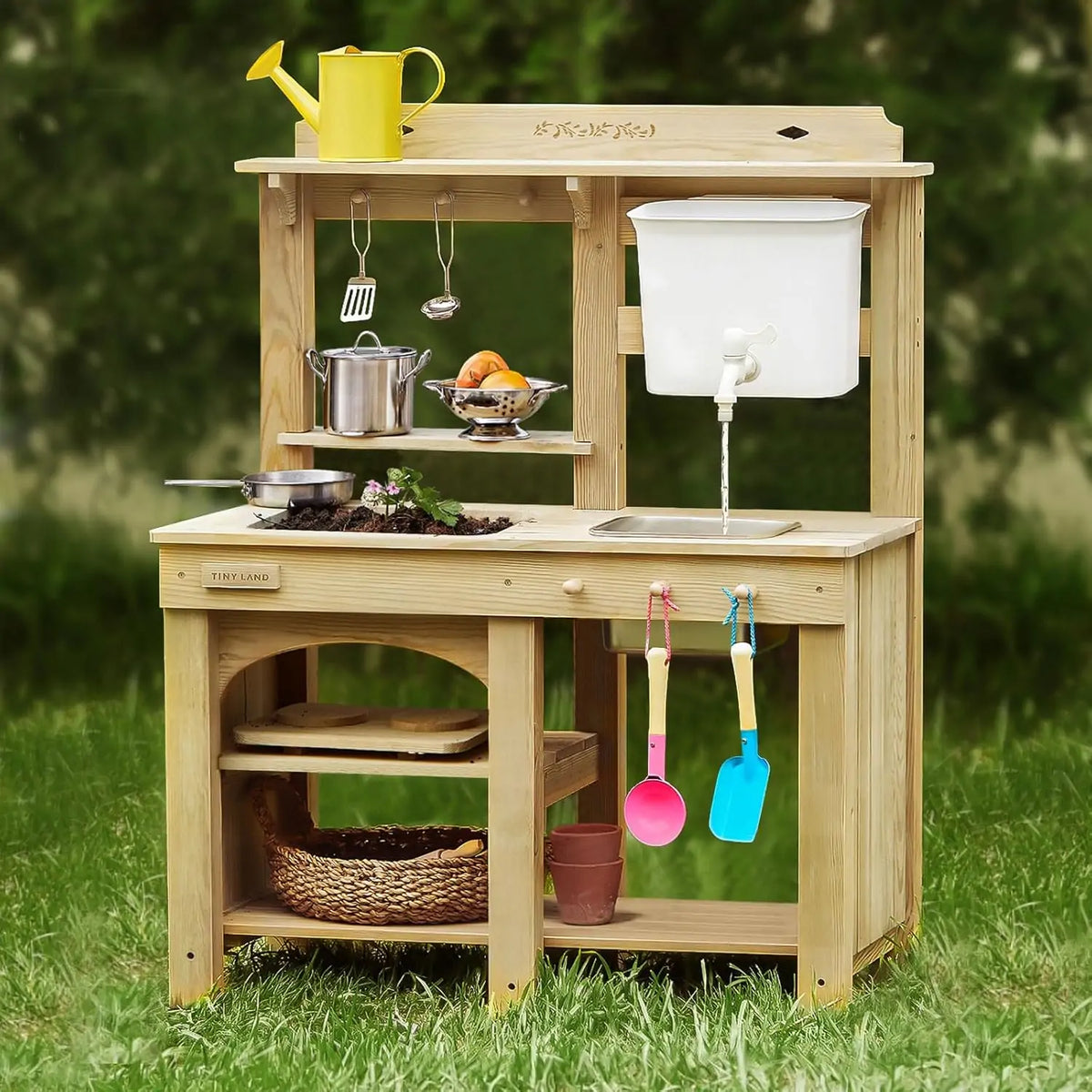
A well-designed pretend play kitchen includes realistic details that inspire imagination.
Features such as:
-
Working water circulation faucets
-
Chalkboard
-
Realistic appliances
- Pretend cooking accessories
encourage children to create different play scenarios, from preparing meals to running a pretend restaurant.
Through imaginative role-play, children can practice communication, creativity, and social interaction while exploring familiar everyday experiences.

3. Dimensions and Space Efficiency
Choosing the right size is an important part of finding the best wooden play kitchen for toddlers.
A properly sized play kitchen allows children to comfortably reach the countertop, accessories, and interactive features while supporting independent play.
Compact Spaces: Measure Your Play Area Before Purchasing
Before purchasing a toddler play kitchen, consider your available space.
Standard toddler play kitchens typically range between:
22 to 32 inches in width
Before choosing a design, consider:
- Available floor space
-
Room layout
-
Play area size
- How the kitchen fits into your home
A well-designed wooden play kitchen should provide enough space for play while blending naturally into family living spaces.
Counter Height: Choose an Age-Appropriate Design
The right play kitchen counter height helps toddlers comfortably interact with the play surface.
For toddlers aged approximately 1.5 to 4 years old: Recommended counter height: 18 to 22 inches
An appropriately sized kitchen allows children to reach accessories easily and participate in pretend play more independently.

Wooden vs. Plastic Play Kitchens Comparison
When comparing a wooden vs plastic play kitchen, parents often consider durability, design, sustainability, and overall play experience.
|
Feature |
Montessori Wooden Kitchen |
Standard Plastic Kitchen |
|
Primary Material |
Solid Wood / MDF (FSC-Certified options available) |
Molded Plastic |
|
Durability |
High durability with long-lasting construction |
Moderate durability and more prone to cracking |
|
Aesthetic Fit |
Neutral, minimalist design that blends with home decor |
Bright, saturated colors |
|
Environmental Impact |
More sustainable material options |
Non-biodegradable plastic materials |
|
Play Experience |
Encourages open-ended pretend play and sensory exploration |
Often focused on fixed features |
A wooden play kitchen can provide a timeless design and natural sensory experience while supporting creative, open-ended play.

Frequently Asked Questions (FAQs)
Are wooden play kitchens better than plastic ones?
Yes. Wooden play kitchens offer higher structural durability, eco-friendly sustainability, and a timeless design that fits home aesthetic standards.
They also support tactile development through natural textures and encourage open-ended pretend play.
At what age can a child start using a play kitchen?
Children typically begin engaging with play kitchens around 18 months, with peak engagement occurring between ages 2 and 5.
Younger toddlers may enjoy exploring simple features such as knobs, doors, and accessories, while older children often create more detailed pretend play scenarios.
What makes a Montessori wooden play kitchen different?
A montessori wooden play kitchen focuses on realistic, hands-on experiences that encourage independence, creativity, and practical life skills.
Children can explore everyday activities through self-directed play while developing confidence and problem-solving abilities.
What should I look for in a safe wooden play kitchen?
A safe wooden play kitchen non toxic should include:
-
ASTM F963 certification
-
CPSIA compliant materials
-
Water-based paint
-
Rounded corners
-
Smooth sanded edges
- Stable construction
These features help create a safer and more enjoyable play experience for toddlers.

Conclusion: Choosing the Best Wooden Play Kitchen for Toddlers
The best wooden play kitchen for toddlers combines safety, durability, thoughtful design, and developmental benefits.
When choosing a play kitchen, prioritize:
✓ ASTM F963 certification
✓ CPSIA compliant materials
✓ Non-toxic, water-based paint
✓ Rounded corners and smooth edges
✓ Montessori-inspired interactive features
✓ Appropriate play kitchen counter height
✓ Durable wooden construction
✓ Opportunities for creative pretend play
A thoughtfully designed wooden play kitchen is more than a toy—it is a space where toddlers can build imagination, confidence, fine motor skills, and social abilities through meaningful play.