




Toddlers are naturally drawn to movement. They want to crawl, climb, balance, slide, and explore—often at exactly the moment you need to make dinner, answer an email, or get a few things done around the house.
For families without a dedicated playroom, the challenge is finding an indoor climbing toy for toddlers that keeps little bodies moving without taking over the entire living room.
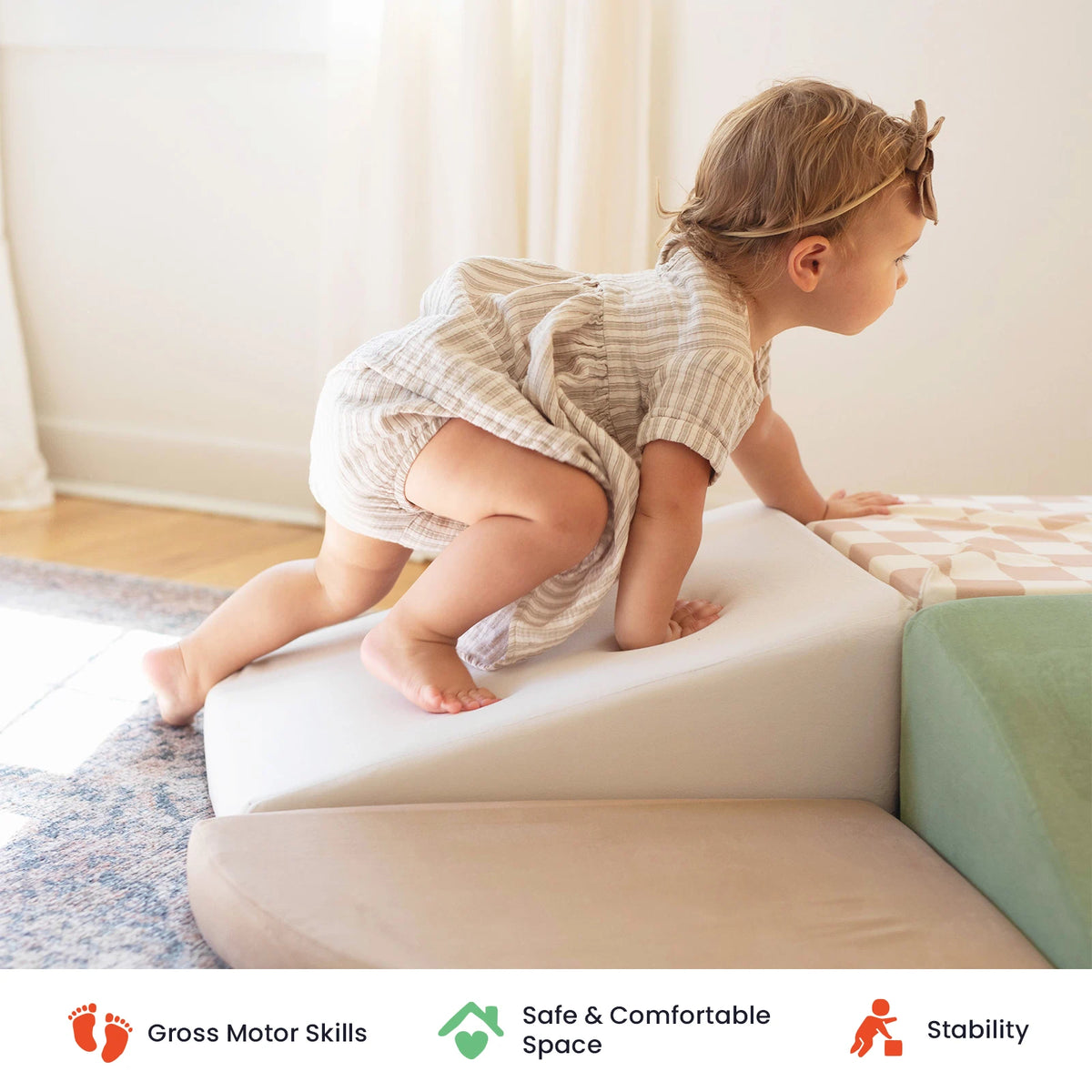
That's where foam climbing blocks for toddlers can be useful.
Unlike a fixed climbing structure, modular foam blocks can be rearranged into different setups as your child's interests, abilities, and available space change. The same pieces can become a climbing course, crawling path, obstacle course, reading spot, or pretend-play structure.
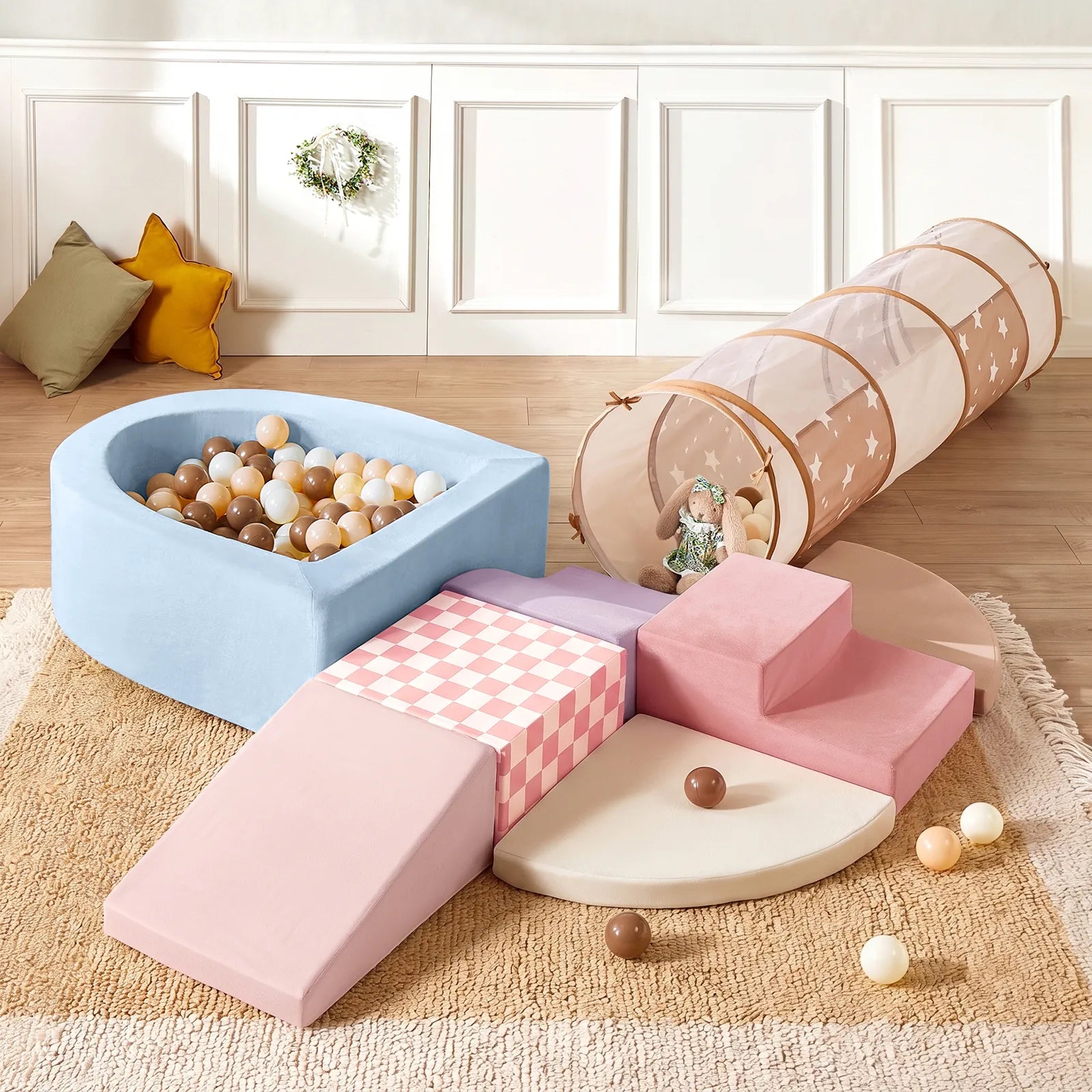
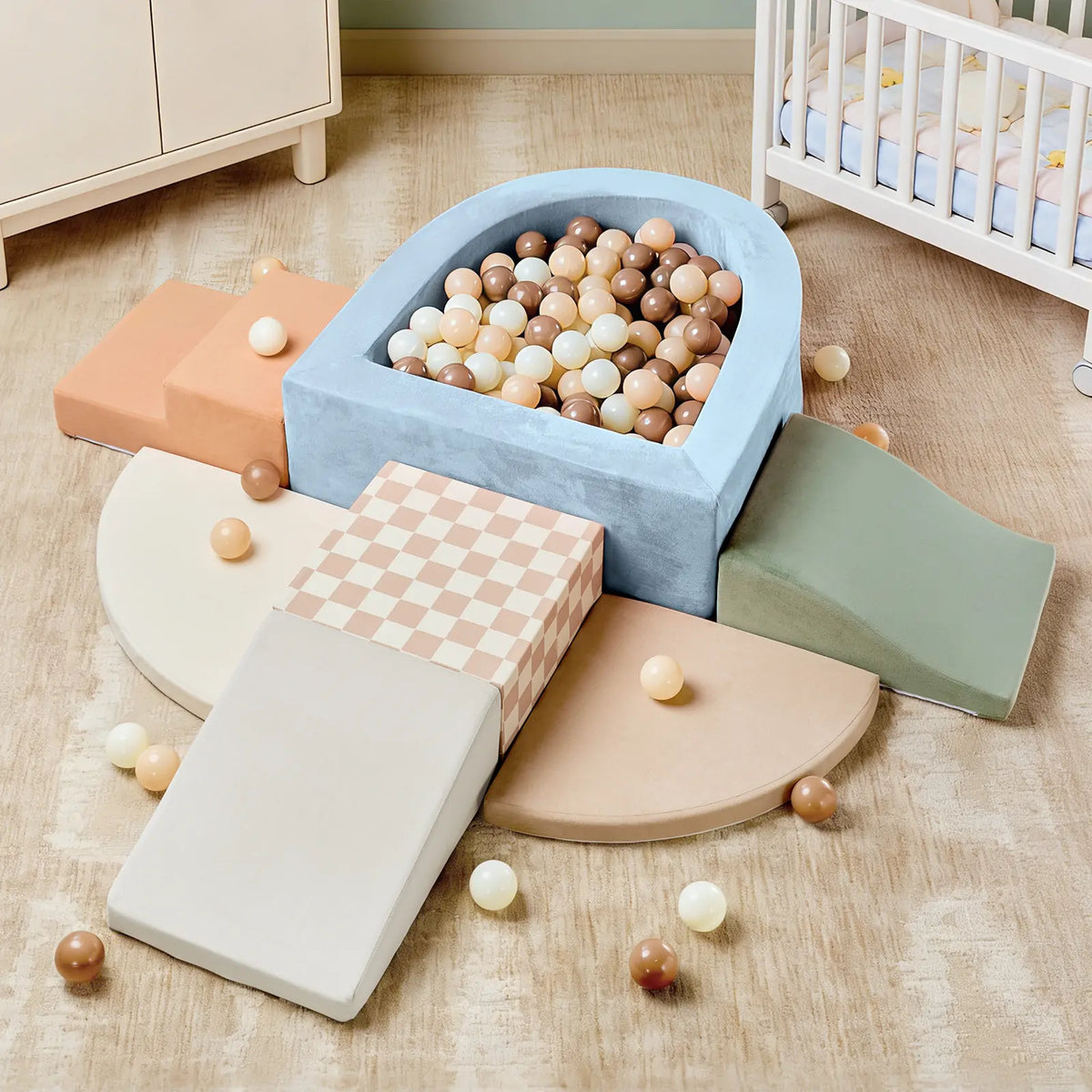
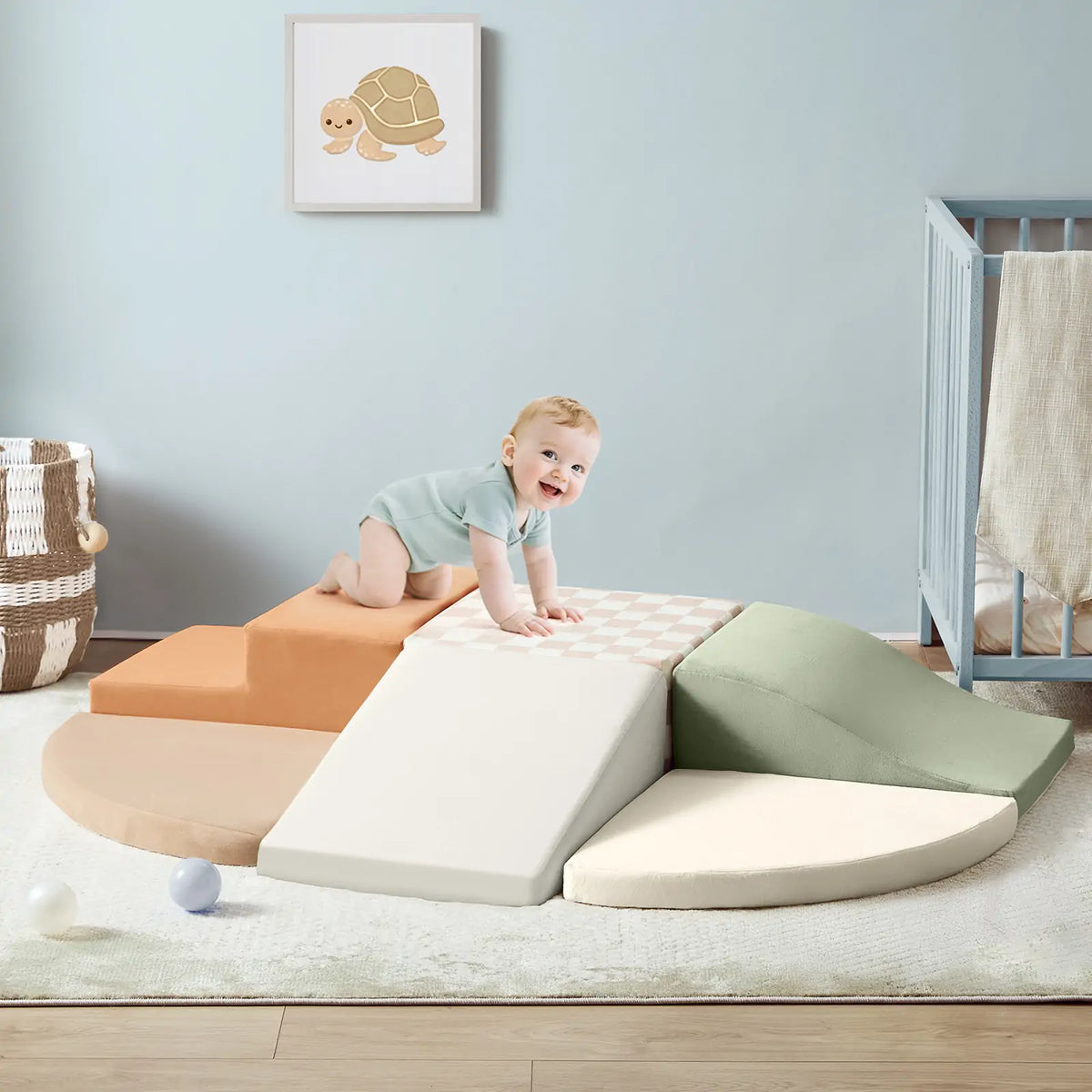
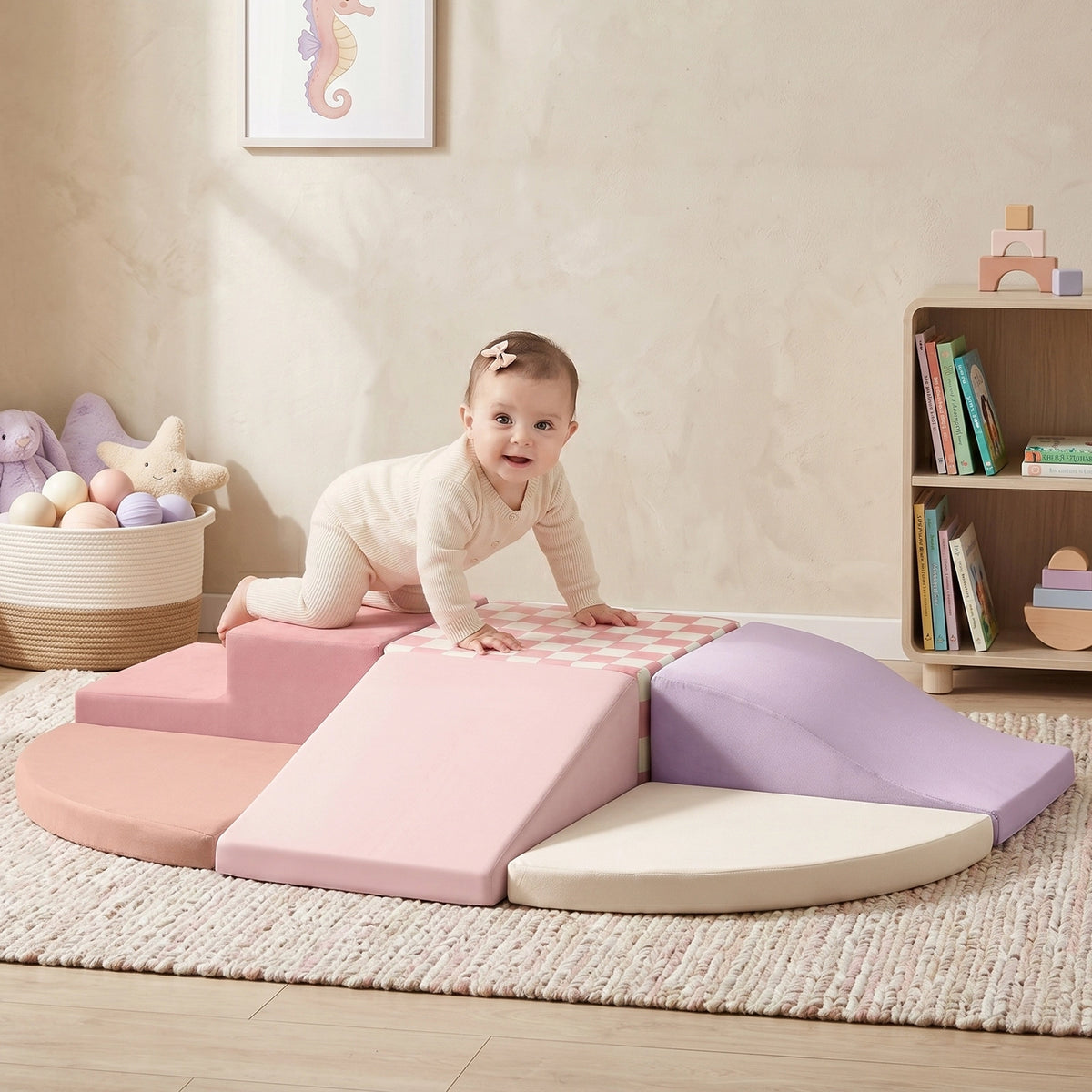
The Tiny Land 6-Piece Modular Morandi Foam Play Set is designed around that flexibility, combining six foam pieces in a soft, modern color palette that fits naturally into contemporary family spaces.

What's Included in the 6-Piece Foam Climbing Set?
The set includes six interchangeable pieces that can be used together or rearranged into different play configurations:
- 1 Two-Step Stair Block – A raised stepping surface for climbing and changing levels.
- 1 Checkerboard Square Mat – A central piece that can also be used for climbing, building, or lounging.
- 1 Curved Wave Ramp – A curved surface for crawling, climbing, and exploring different movement patterns.
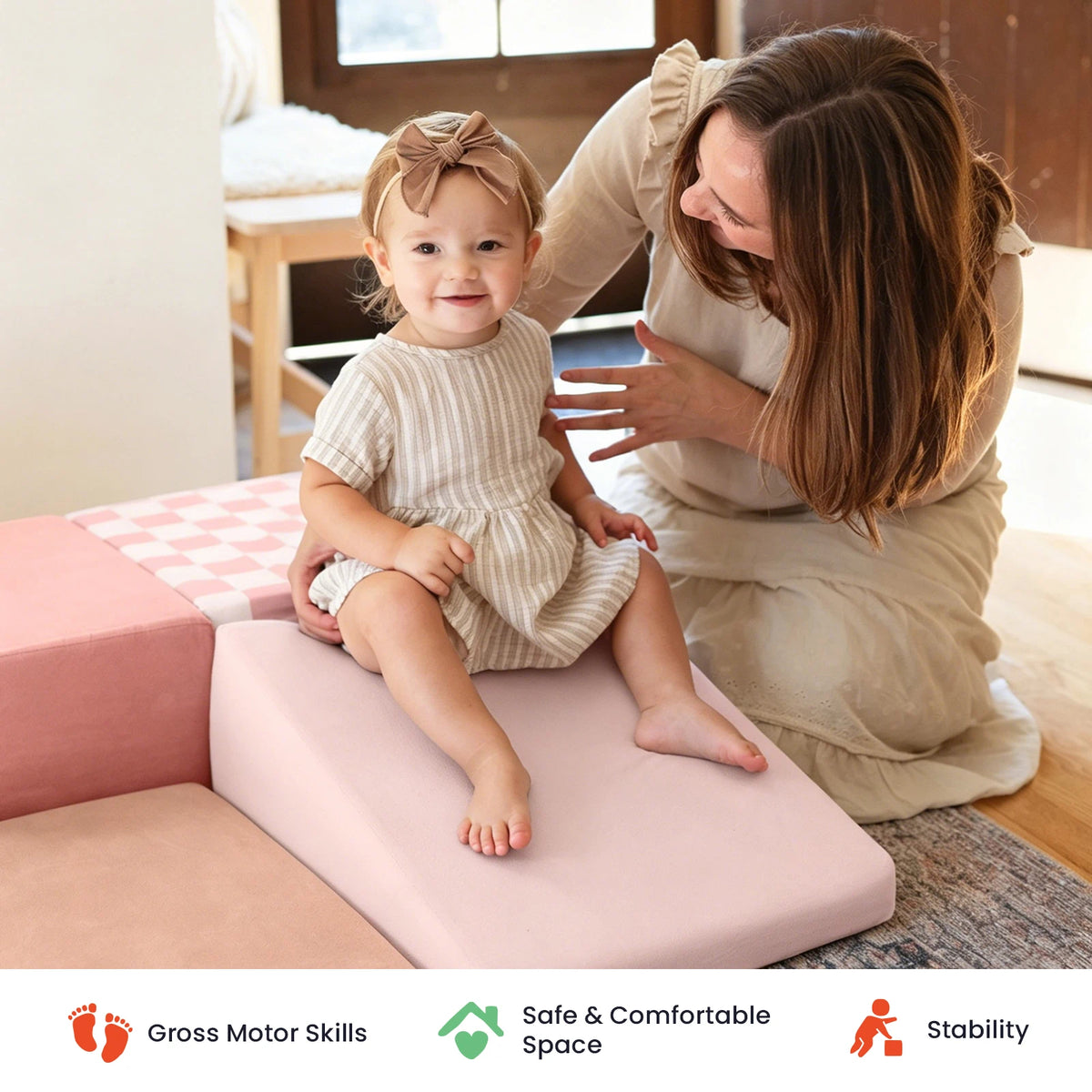
- 1 Straight Ramp – An incline that can be used for climbing, sliding, crawling, or imaginative play.
- 2 Quarter-Circle Pads – Curved pieces that can function as floor mats, supports, rocking surfaces, or building components.
The pieces can be combined in different ways, making it possible to create a play setup that fits both your child's interests and the amount of floor space available.

8 Foam Climbing Blocks Ideas for Toddlers
Wondering how to use foam climbing blocks beyond simply stacking them?
These eight configurations offer different ways to turn the same six pieces into an indoor movement and play area.

1. S-Curve Discovery Path
Best for: Younger crawlers and early movers
Arrange the foam pieces flat to create a low, winding path with gentle curves and different surfaces.
This gives children room to practice crawling, reaching, changing direction, and moving between surfaces.
Play idea: Place a few favorite soft toys along the path and create a simple "treasure crawl."
2. Bridge & Ramp Climber
Best for: Active toddlers
Combine the stair block, ramp, center piece, and curved pads to create a simple climbing-and-movement course.
Toddlers can step up, move across the structure, and return to the floor through a different route.
Play idea: Turn the ramp into a toy-car track and let your child experiment with different cars.
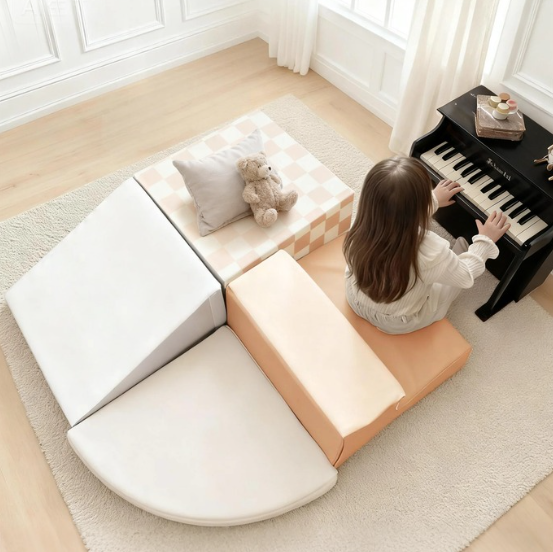
3. Cozy Armchair & Slide
Best for: Toddlers who enjoy both active and quiet play
Rearrange the pieces into a cozy seat with supporting sides and a ramp that can become a play surface or slide.
This configuration creates an easy transition from active movement to quieter activities such as looking through picture books.
Play idea: Add a favorite blanket and a few books to create a simple reading corner.
4. Fort & Step Setup
Best for: Toddlers and preschoolers who enjoy pretend play
Use the foam pieces to create a low boundary, steps, or a small imaginative play space.
Depending on the setup, children can turn the structure into a house, fort, shop, or part of an obstacle course.
Play idea: Add a lightweight play silk or blanket nearby to encourage pretend play. Keep the structure stable and supervise climbing and building.
5. Dual-Ramp Climbing Course
Best for: Active toddlers and sibling play
Arrange the ramps and curved pieces to create more than one route through the setup.
Children can experiment with different ways to climb, crawl, step, and move from one side to another rather than following one fixed path.
Play idea: Try a simple "floor is lava" game and encourage your child to travel across the foam pieces without stepping onto the surrounding floor.
6. Ridge & Step Island
Best for: Toddlers practicing climbing and balance
Combine the stair block, curved ramp, and floor pieces to create a small movement island.
The different shapes and levels give toddlers opportunities to practice stepping, crawling, changing direction, and navigating around obstacles.
Play idea: Count each step as your child climbs to add simple early counting practice to active play.
7. Low-Profile Activity Ring
Best for: Younger toddlers and early movers
Arrange the pieces around a central play area to create a low-profile activity ring.
Keeping the setup close to the floor gives children room to crawl, move around the perimeter, pull up, and explore.
Play idea: Place a few soft toys in the center and encourage your child to move around the outside to reach them.
8. Full Foam Climbing Obstacle Course
Best for: Toddlers ready for more active movement
Use all six pieces together to create an indoor obstacle course with ramps, steps, curves, and open areas.
Because the pieces can be approached from different directions, children can create their own routes through the setup.
Play idea: Create a simple movement challenge: crawl through one section, climb over another, and finish by stepping or sliding down.

How to Use Foam Climbing Blocks in Everyday Play
You don't need to rebuild the entire set every time your child wants something different.
Start with a simple configuration and change one or two pieces based on the activity. For example:
- Morning movement: Build a low climbing and crawling path.
- Rainy-day play: Create an indoor obstacle course.
- Quiet time: Turn part of the setup into a cozy reading space.
- Pretend play: Add dolls, toy cars, play food, or a lightweight blanket.
- Playdates: Create multiple routes for children to explore.
- Small-space play: Use fewer pieces and keep the configuration compact.
The setup can also change throughout the day. An active climbing arrangement in the morning can become a reading or pretend-play space later.

How to Choose a Foam Climbing Setup for Your Space
The best configuration isn't necessarily the largest one. It should work with your child's abilities, the type of play you want to encourage, and the floor space available.
For a Small Living Room
Choose a low-profile foam climbing setup using fewer pieces. Keeping the configuration compact can leave more room for everyday family activities.
For a Dedicated Playroom
Use more of the pieces together to create a larger climbing path or obstacle course.
For a Reading Corner
Try the armchair-style configuration and place it near a bookshelf or other quiet-play area.
For a Shared Family Space
Choose a configuration that can be quickly rearranged or separated when the room needs to serve another purpose.
This is one reason modular foam blocks can be useful for families who don't have a dedicated playroom: the setup can change with the room instead of permanently occupying it.
Why Choose Modular Foam Climbing Blocks?
If you're comparing foam climbing toys for toddlers, consider how many different activities the set can support—not just how many pieces it contains.
A modular set can be rearranged for different types of movement and play, while individual pieces can also be used separately.
Multiple Configurations
The same six pieces can create different climbing paths, ramps, seating areas, and pretend-play structures.
Flexible for Different Spaces
Pieces can be grouped together in a playroom or arranged more compactly in a living room or bedroom.
Combines Active and Quiet Play
Depending on the configuration, the set can support climbing and movement as well as reading, lounging, and pretend play.
Changes With Your Child's Interests
A setup that works for crawling and simple movement can later be rearranged into a more active obstacle course or imaginative play structure, within the manufacturer's recommended age and use guidelines.
Modular Foam Blocks vs. Fixed Climbing Toys
Both modular foam blocks and fixed climbing toys can be useful for indoor active play. The main difference is how the play structure can be used and rearranged.
| Feature | Modular Foam Climbing Blocks | Fixed Climbing Toy |
|---|---|---|
| Rearrangeable pieces | Yes | Usually no |
| Multiple configurations | Yes | Usually limited |
| Separate pieces for different activities | Yes | Usually no |
| Climbing and crawling | Yes | Depends on design |
| Can create an obstacle course | Yes | Depends on design |
| Can create a lounging area | Depending on configuration | Less common |
| Adaptable to changing room layouts | Yes | Depends on size and design |
If you want a single indoor play set that can change configuration rather than staying in one fixed shape, modular foam blocks are worth considering.
 What Can Toddlers Practice Through Active Play?
Climbing is only one part of movement-based play.
When toddlers crawl across a ramp, step onto a block, move around an obstacle, or change direction, they have opportunities to practice different gross motor movements.
Depending on the activity, active play can involve:
- Balance through stepping and changing positions
- Coordination through climbing and navigating different surfaces
- Body awareness through moving around and over obstacles
- Spatial awareness through judging distance and direction
- Problem-solving through figuring out different ways to move through a setup
The goal isn't to turn playtime into a lesson. For young children, movement is a natural part of exploring their environment.
Designed for Modern Family Spaces
Active play doesn't have to mean filling your home with brightly colored plastic toys.
The Tiny Land Modular Morandi Foam Play Set combines terracotta, sage green, soft blue, cream, blush, and checkerboard details for a more understated look.
The muted palette makes it easier to incorporate an active play area into a modern living room, bedroom, nursery, or playroom.
For families who want children's toys to work with their existing home aesthetic, design can be just as important as function.

Parent-Friendly Features
Supportive High-Density Foam
The foam pieces are designed to provide a firm, supportive surface for everyday climbing, crawling, stepping, and building activities while offering a softer surface than many hard climbing toys.
Always follow the manufacturer's age, setup, and safety guidance, and supervise children during active climbing play.
Removable, Easy-Care Covers
Toddlers and messes tend to go together.
Removable covers make it easier to clean the play set after everyday spills, crumbs, and messy hands. Follow the product care instructions for specific washing and drying recommendations.
A Calming Morandi Color Palette
Soft terracotta, sage green, blue, cream, blush, and checkerboard details create a more understated alternative to traditional brightly colored children's climbing toys.
It's an easy way to add an indoor active play area without making the room feel like a traditional play space.

One Foam Play Set. Eight Ways to Play.
The value of a modular foam climbing set isn't just the number of pieces in the box. It's how many different ways those pieces can be used.
With six interchangeable foam pieces, the Tiny Land 6-Piece Modular Morandi Foam Play Set can become a climbing course, crawling path, obstacle course, reading spot, pretend-play structure, or simple place to move and explore.
For families looking for indoor climbing toys for toddlers that can adapt to different spaces and play styles, a modular foam set offers an alternative to a fixed climbing structure.
Explore the Tiny Land 6-Piece Modular Morandi Foam Play Set and create a play setup that works for your child and your home.