

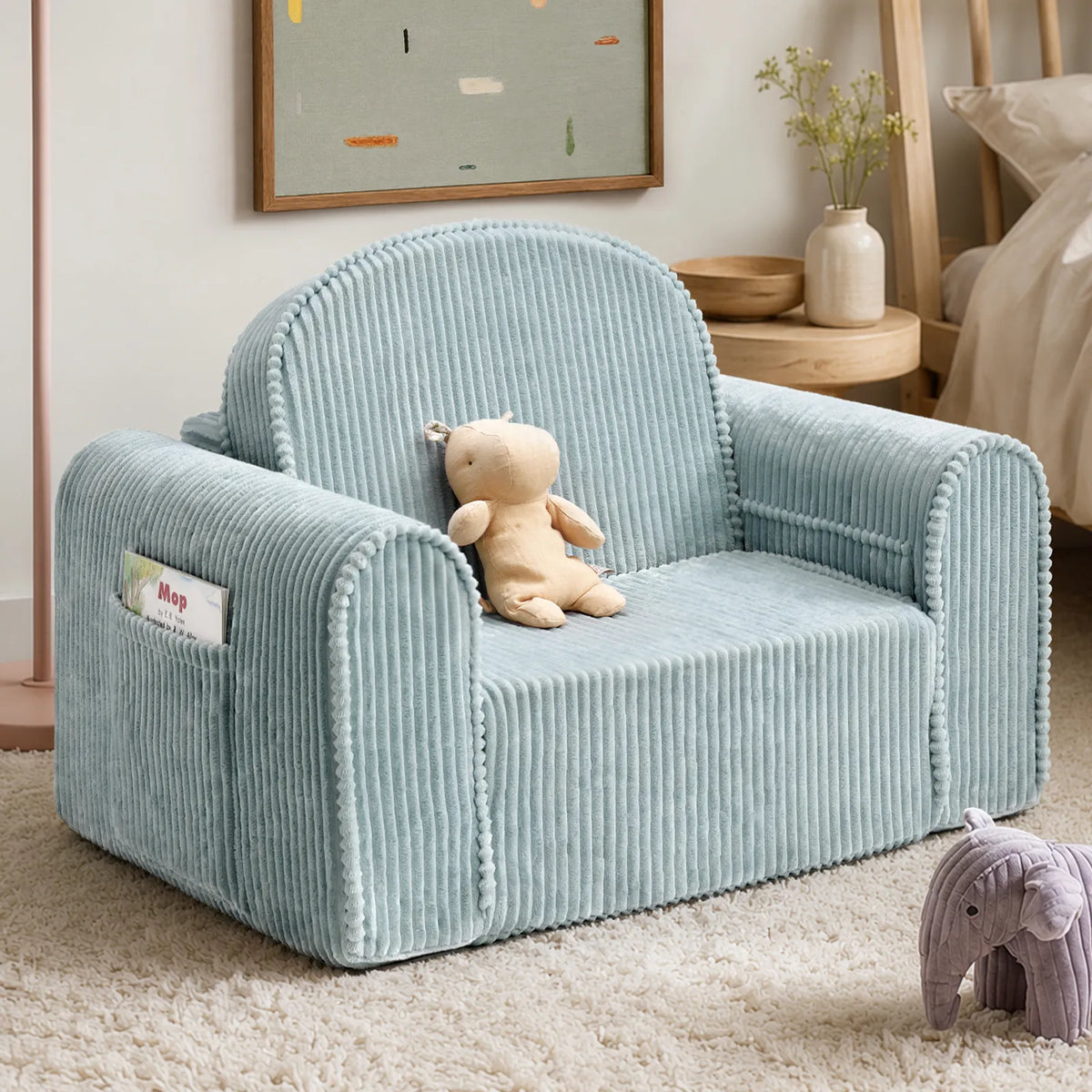
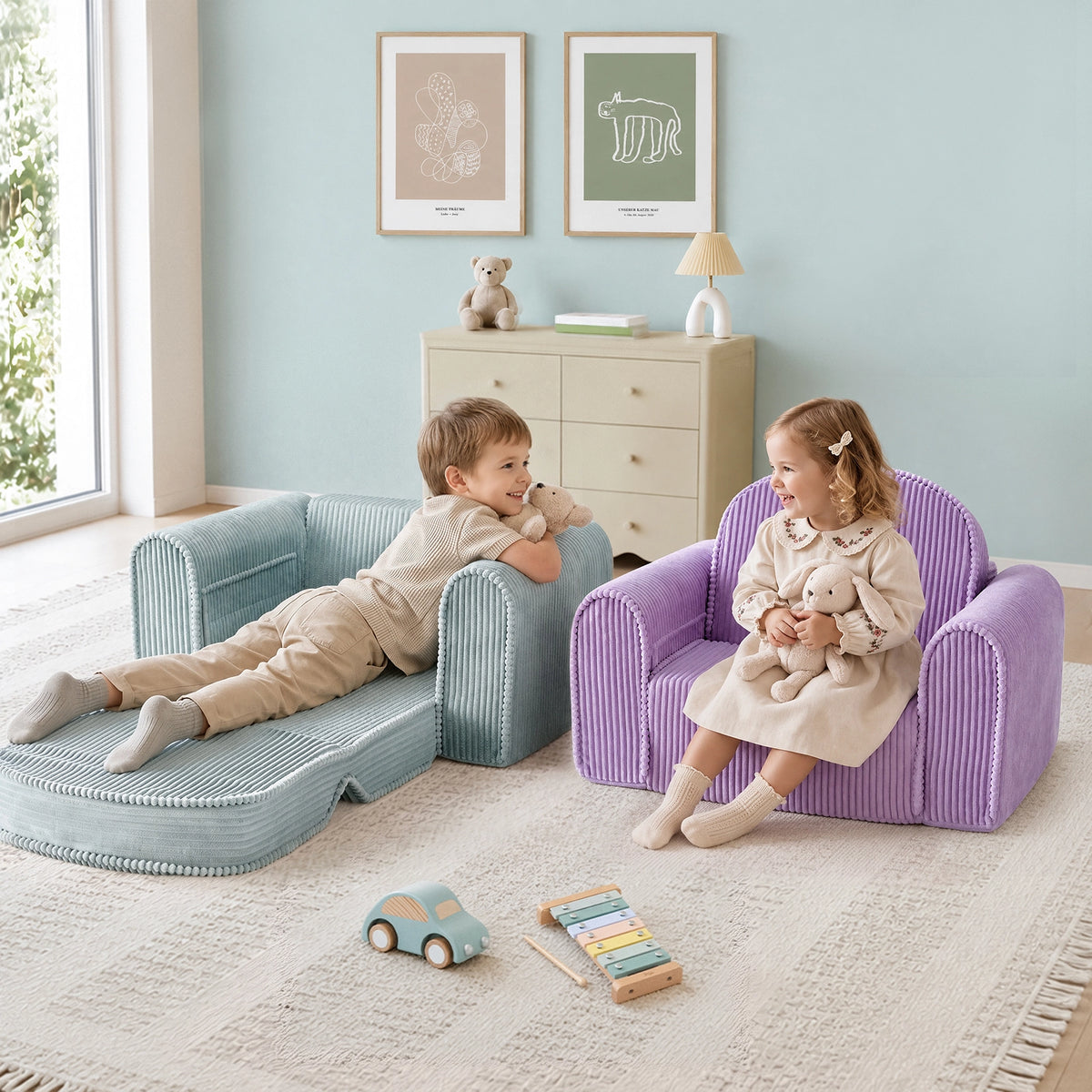

Choosing a kids sofa may seem simple at first, but many parents quickly realize there are important differences between options once they start comparing.
A well-designed kids fabric sofa is not just a piece of furniture—it influences how a child sits, plays, reads, and interacts with their environment every day.
This guide breaks down the key factors parents should focus on when choosing a kids sofa for home use.

1. Size: The Most Important Starting Point
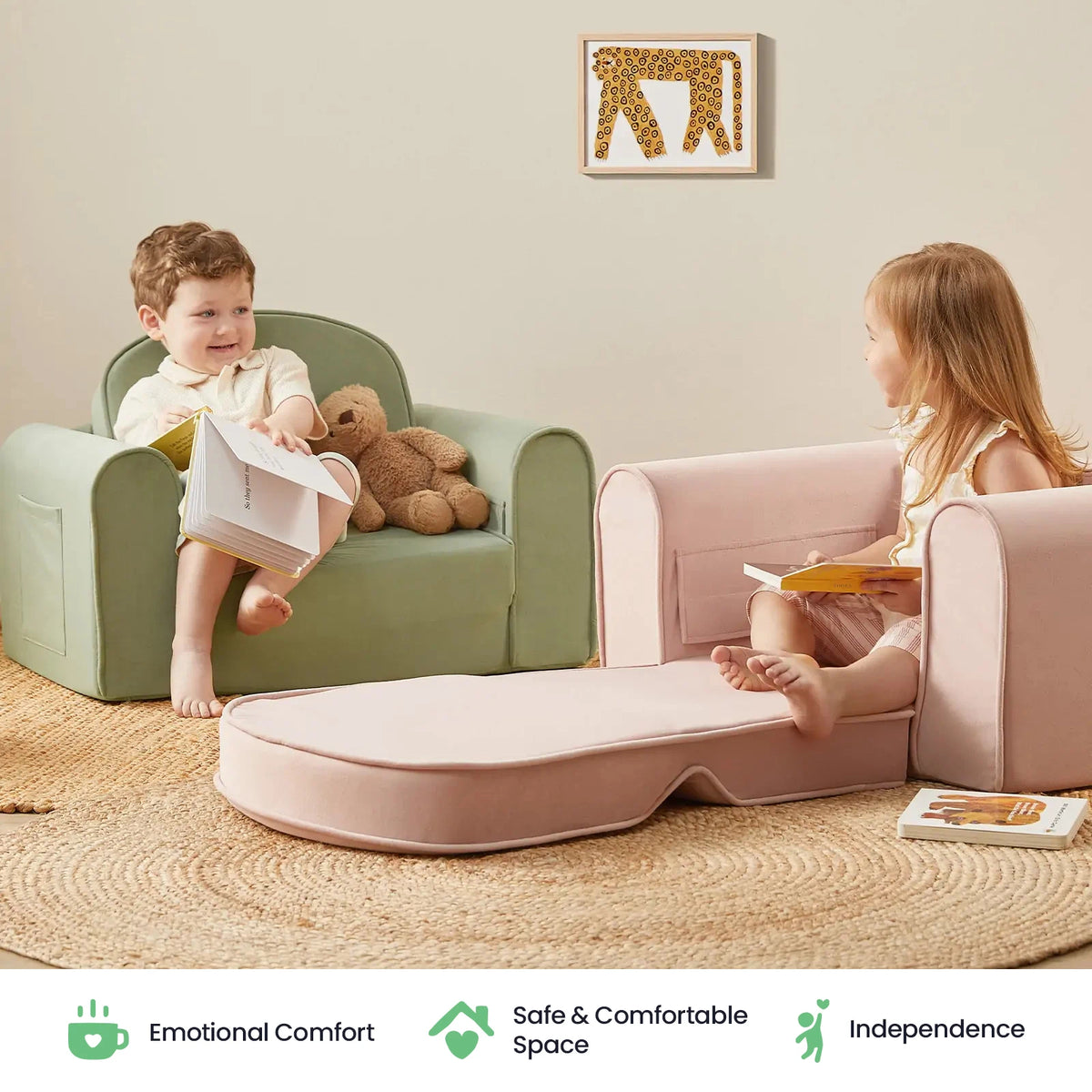
The right size determines whether the sofa actually supports independence.
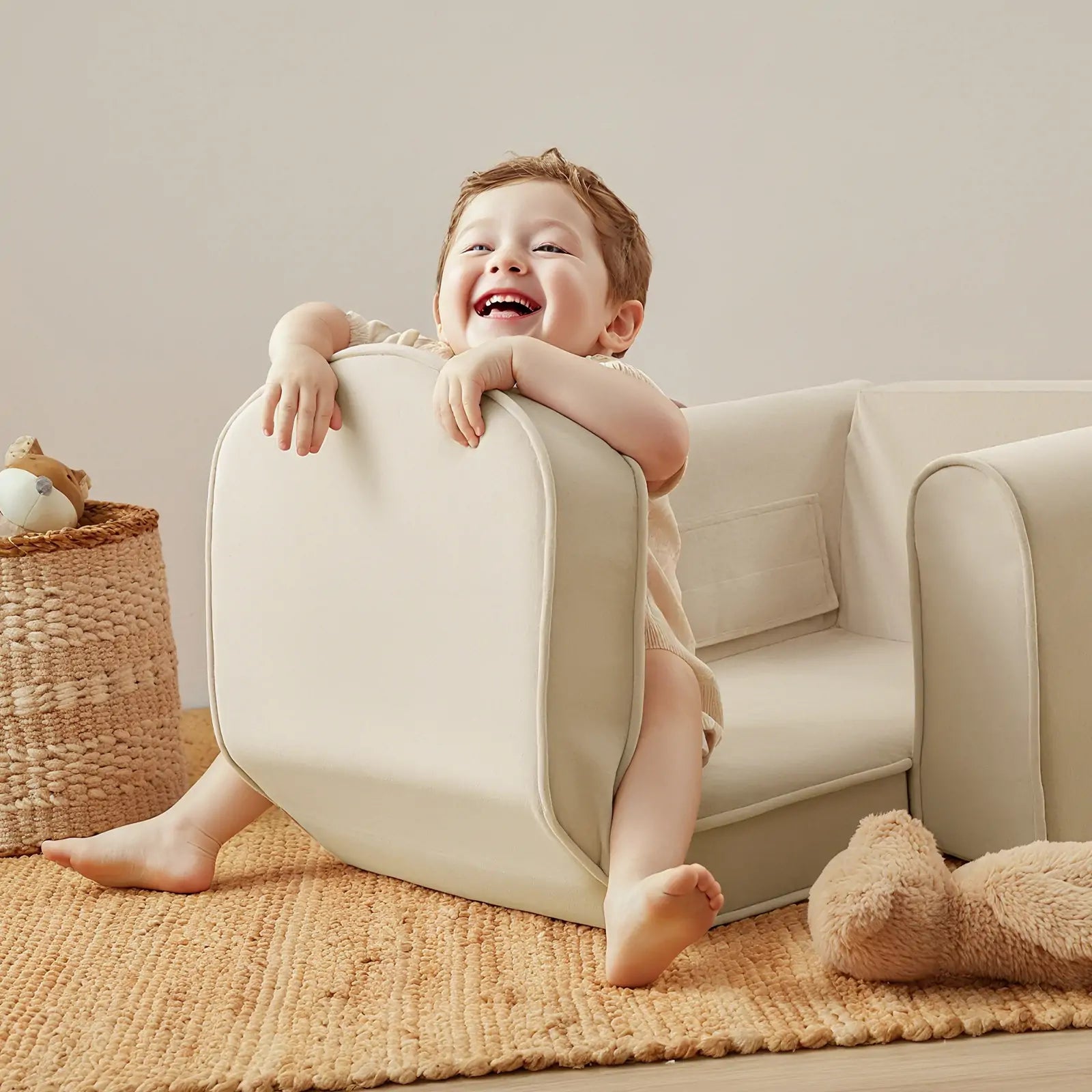
A good kids sofa should allow a child to:
- Sit down without help
- Stand up safely and naturally
- Keep feet supported comfortably
If the sofa is too large, children lose independence. If it is too small, it becomes uncomfortable and avoids use.
👉 Proper sizing is the foundation of any functional kids fabric sofa.

2. Independence: Can Your Child Use It Alone?
A high-quality kids sofa should support self-initiated use.
Ask this simple question:
Can my child use it without adult assistance?
If the answer is yes, the sofa supports independence, which is a key part of early development.
Independent use encourages:
- Confidence in movement
- Ownership of personal space
- Daily routine consistency

3. Comfort: Built for Real Daily Behavior
Children rarely sit still in one position. They lean, turn, climb, and shift constantly.
A suitable kids sofa should provide:
- Soft but structured cushioning
- Comfortable seating for reading and play
- A relaxed surface that adapts to movement
The goal is not rigidity—it is balanced comfort that still supports posture.
For reading or quiet play, a dedicated kids reading sofa helps maintain focus naturally.

4. Safety: Non-Negotiable for Parents
Safety is the baseline requirement for any kids seating.
Look for:
- Rounded, soft edges
- Stable base that resists tipping
- Non-toxic, child-safe materials
- Reinforced stitching and durable structure
A safe kids sofa should remain stable even during active movement.

5. Material: Why Fabric Matters
Material directly affects daily usability and comfort.
A good kids fabric sofa should be:
- Soft and skin-friendly
- Durable for daily use
- Easy to maintain in a home environment
- Comfortable for longer sitting periods
Compared to rigid materials, fabric creates a more calming and flexible seating experience for children.
6. Daily Use: Does It Fit Real Family Life?
A kids sofa should not be treated as decorative furniture.
It should support real routines such as:
- Reading books
- Quiet play
- Storytelling
- Rest time
- Nap Time
If a sofa is only used occasionally, it is not functionally integrated into the child’s daily environment.

7. Home Fit: Will It Work in Your Space?
A well-designed kids sofa should integrate naturally into your home.
It should:
- Fit in bedrooms, playrooms, or living rooms
- Maintain a clean visual appearance
- Avoid cluttering the space
- Create a defined area for the child
This allows children to have ownership without disrupting the home environment.
8. Common Mistakes Parents Make
When choosing a kids sofa, parents often:
- Prioritize appearance over function
- Choose oversized designs that reduce usability
- Ignore independence and ergonomics
- Overlook fabric durability
The most effective decision always prioritizes daily usability over visual design.

Final Decision Checklist
Before purchasing, confirm:
✔ Can my child use it independently?
✔ Does it support daily routines (reading, play, rest)?
✔ Is it safe, stable, and child-friendly?
✔ Is the size appropriate for long-term use?
If all answers are yes, the sofa is a suitable choice.
Final Thought
A kids sofa is not just seating.
It becomes part of how children develop independence, focus, and comfort in their everyday environment.
The right choice is not about decoration—it is about building a small, stable space where a child can grow naturally through daily routines.

👉 Explore Kids Fabric Sofa Collection
Discover soft, safe, and thoughtfully designed kids sofas built for everyday home use and independent play.