

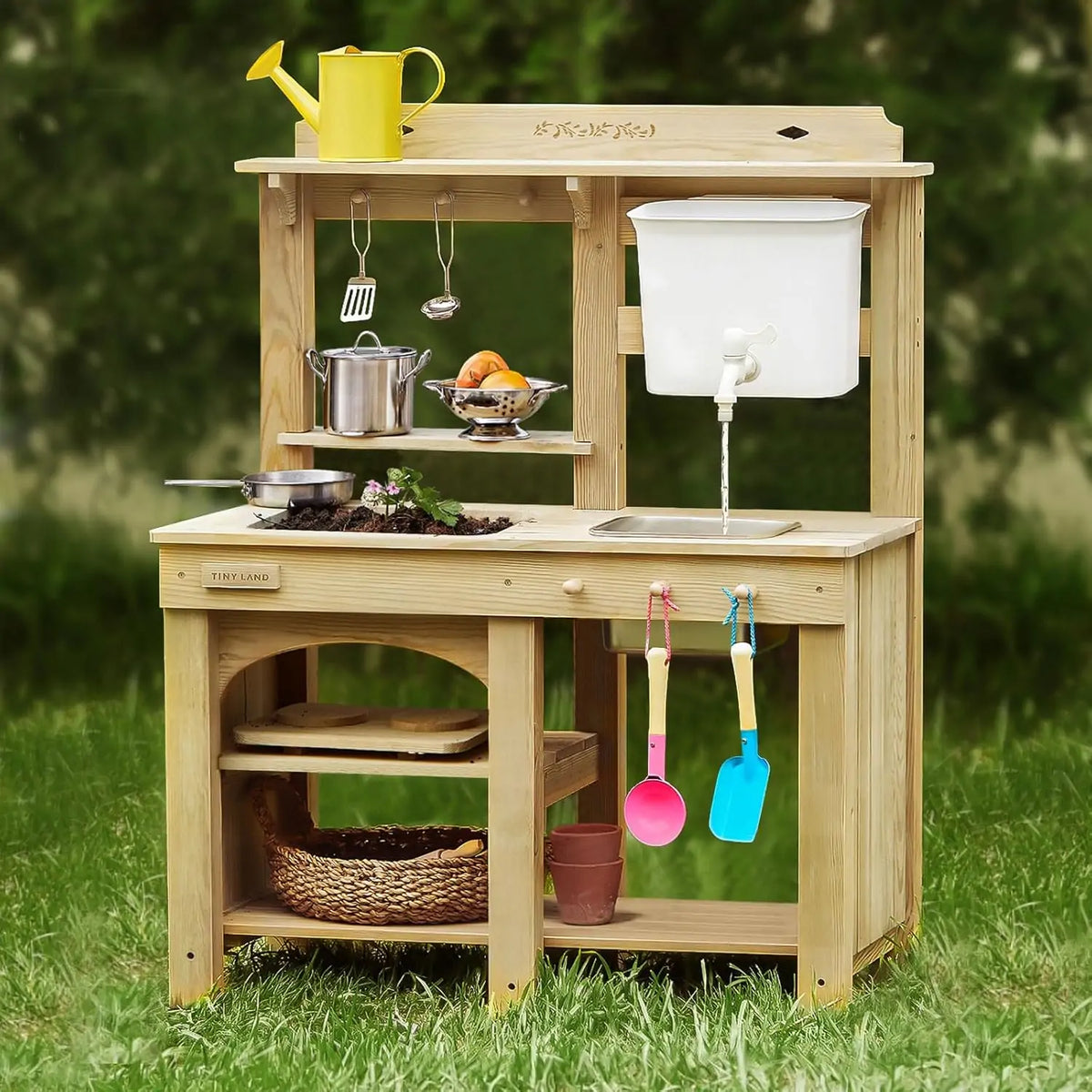
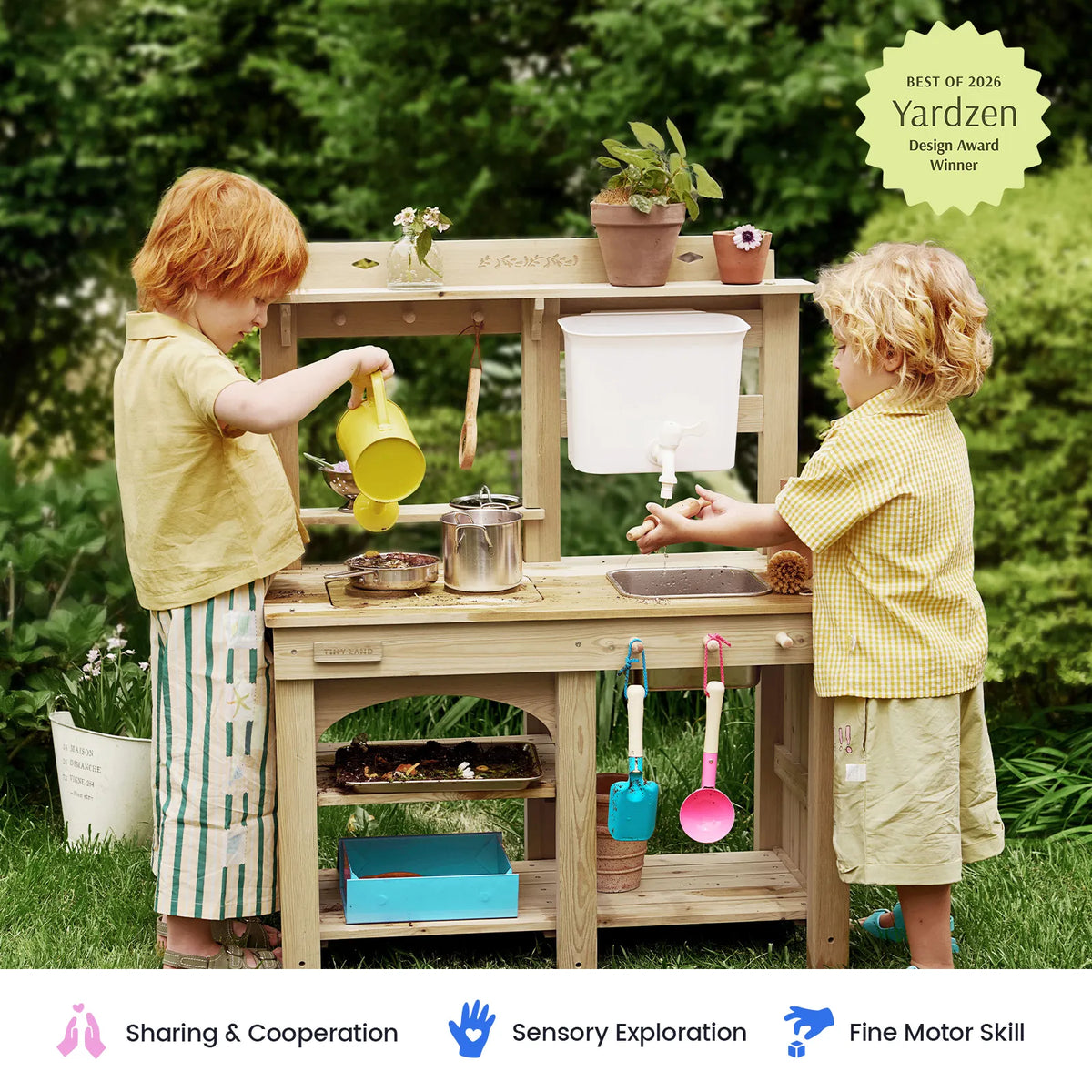




A mud kitchen is designed for messy, creative outdoor play—but that also means it needs a little regular care. If you’ve been wondering how to clean a mud kitchen, the good news is that it’s simple, quick, and doesn’t require anything complicated.
With just warm water, a damp cloth, and a few minutes after playtime, you can keep your mud kitchen clean, dry, and ready for kids to jump back in. A little attention goes a long way in protecting the wood, managing moisture, and helping your outdoor setup stay beautiful for years.
If you’re using a dedicated mud kitchen or comparing it with an indoor play kitchen, the biggest difference is exposure to mud, water, rain, and changing weather. That’s why outdoor kitchen care matters just a bit more.

Why Cleaning a Mud Kitchen Matters
Mud kitchens are built for real play—mixing mud, filling a bucket, and creating pretend meals. Over time, that fun can leave behind layers of mud, grime, and moisture on the surface.
Cleaning your mud kitchen regularly helps:
-
Prevent heavy buildup of mud and dirt
-
Reduce excess moisture sitting on wood
-
Maintain a clean, safe space for kids to play
-
Keep the kitchen looking beautiful and inviting
A quick post-play clean keeps small messes from turning into bigger ones.
 How to Clean a Mud Kitchen Step by Step
Remove Loose Mud and Grime
Start by brushing or wiping away as much loose mud as possible. Check corners, shelves, and play areas where mud tends to collect.
If kids have been making mud pies or using a bucket for water play, you’ll often find dried mud in small gaps—remove it gently before wiping the surface.
Wipe With Warm Water and a Damp Cloth
Next, use a damp cloth with warm water to clean the main kitchen surface. This is usually all you need for everyday cleaning.
For tougher grime, you can add a small amount of gentle soap mixed with water. Lightly wipe the wood, focusing on areas where mud and water collect most.
If needed, use a light spray of water—but avoid soaking the kitchen. Too much water can increase moisture in the wood over time.
Let the Wood Dry Completely
After cleaning, it’s important to let the mud kitchen dry fully.
Use a dry cloth to remove excess water, then allow it to air dry in a well-ventilated space. Proper drying helps prevent moisture buildup, mildew, and long-term weathering.
If rain is expected, try to move smaller items like buckets or play accessories to a covered area so everything stays ready for the next play session.
 How to Maintain a Wooden Mud Kitchen Over Time
Cleaning is just one part of care. A few simple habits can help your mud kitchen last for years.
Protect Against Moisture, Rain, and Weathering
Outdoor play means exposure to rain, humidity, and changing weather. Over time, wood will naturally show signs of weathering—but you can slow the process.
Place your mud kitchen in a partially covered space when possible, such as a patio or shaded area. This helps reduce constant exposure to moisture and rain.
Check for Mildew and Surface Wear
Every so often, take a quick look at the kitchen surface. Check for:
-
Spots where moisture tends to sit
-
Areas with built-up grime
-
Early signs of mildew
-
Rough or worn sections of wood
Catching these early makes cleaning easier and helps maintain the kitchen’s appearance.
Build a Simple Cleaning Routine
Keeping your mud kitchen in great shape doesn’t take much time—just consistency.
A simple routine might look like:
-
After play: remove loose mud and wipe key areas
-
Weekly: clean with warm water and a damp cloth
-
Regularly: check for moisture, mildew, and wear
-
After rain: make sure everything can dry completely
Small habits make a big difference over time.
 What to Avoid When Cleaning a Mud Kitchen
When cleaning a mud kitchen, gentle methods are usually best.
Avoid:
-
Soaking the wood with too much water
-
Using harsh chemicals unnecessarily
-
Relying on bleach for regular cleaning
While bleach can sometimes be used in specific situations, it’s often too strong for routine care and may affect the wood’s appearance over time.
Stick with simple cleaning methods—warm water, a damp cloth, and mild soap when needed.
 Keep It Ready for Everyday Play
A clean mud kitchen doesn’t mean less mess—it just means a better play experience.
When the kitchen is clean and dry, kids can jump right back into creative play—mixing mud, building pretend recipes, and exploring outdoor fun without dealing with old grime or standing water.
Whether you’re setting up your first outdoor play space or upgrading your current one, a well-maintained mud kitchen supports imaginative play and everyday use.
If you’re looking for a setup designed for outdoor fun, explore Tiny Land mud kitchen or browse the play kitchen collection for more ways to inspire creative play at home.
 Final Thoughts
Learning how to clean a mud kitchen is all about keeping things simple. Remove mud, wipe with warm water, manage moisture, and let the wood dry completely.
With just a little regular care, your mud kitchen can stay clean, safe, and beautiful—ready for years of outdoor play, creativity, and everyday fun.
FAQ
1. How to clean a mud kitchen after messy play?
Remove loose mud first, then wipe the surface with a damp cloth and warm water. Dry it completely to prevent excess moisture.
2. How often should you clean a mud kitchen?
Light cleaning after play and a more thorough clean regularly will help keep it in good condition.
3. Can a wooden mud kitchen stay outside in the rain?
It can, but reducing long exposure to rain and moisture will help it last longer and maintain its appearance.
4. What is the best way to remove mud from a mud kitchen?
Let thick mud dry slightly, brush off loose dirt, then clean with warm water and a damp cloth.
5. Do you need soap to clean a mud kitchen?
Not always. Warm water is often enough, but mild soap can help with stubborn grime.