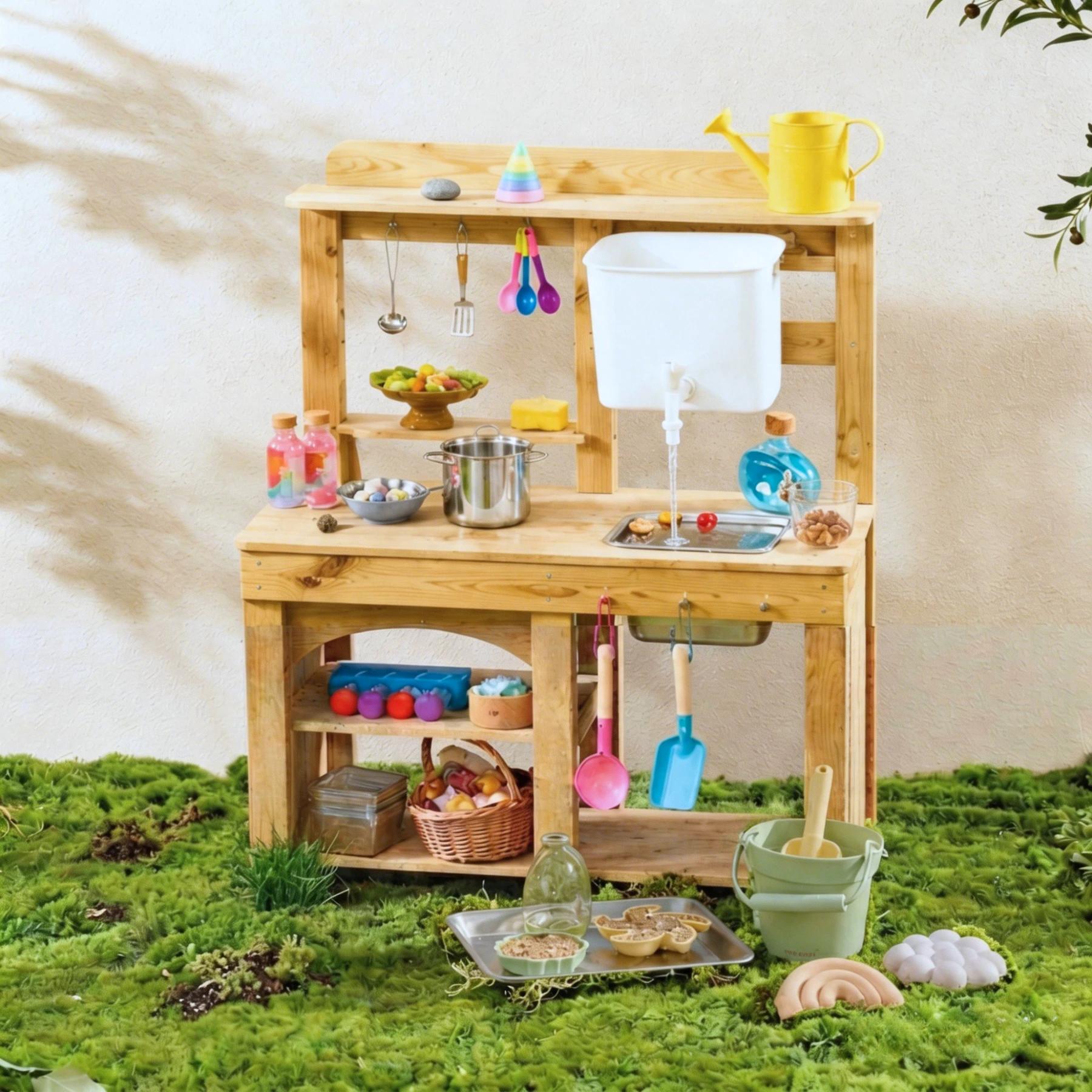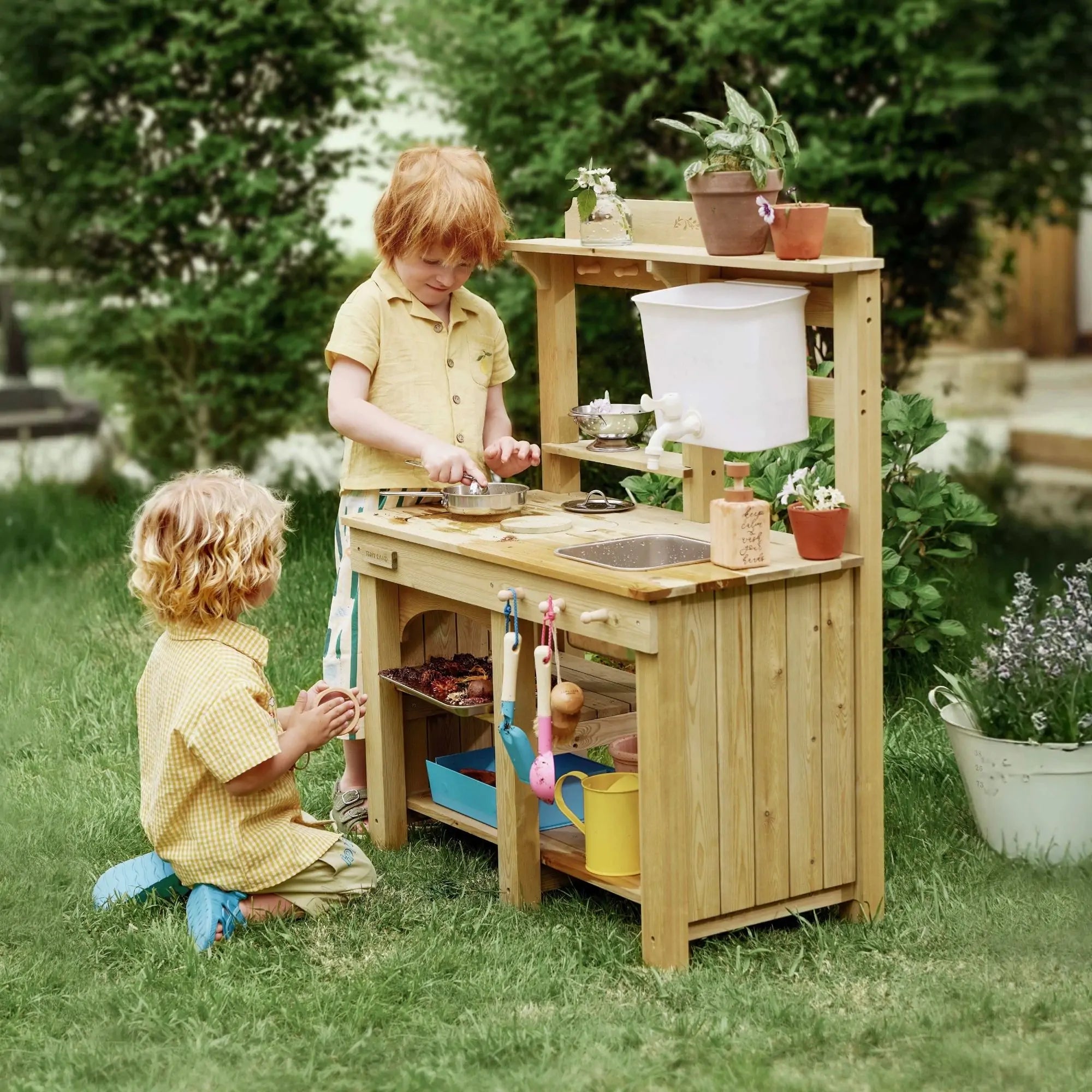
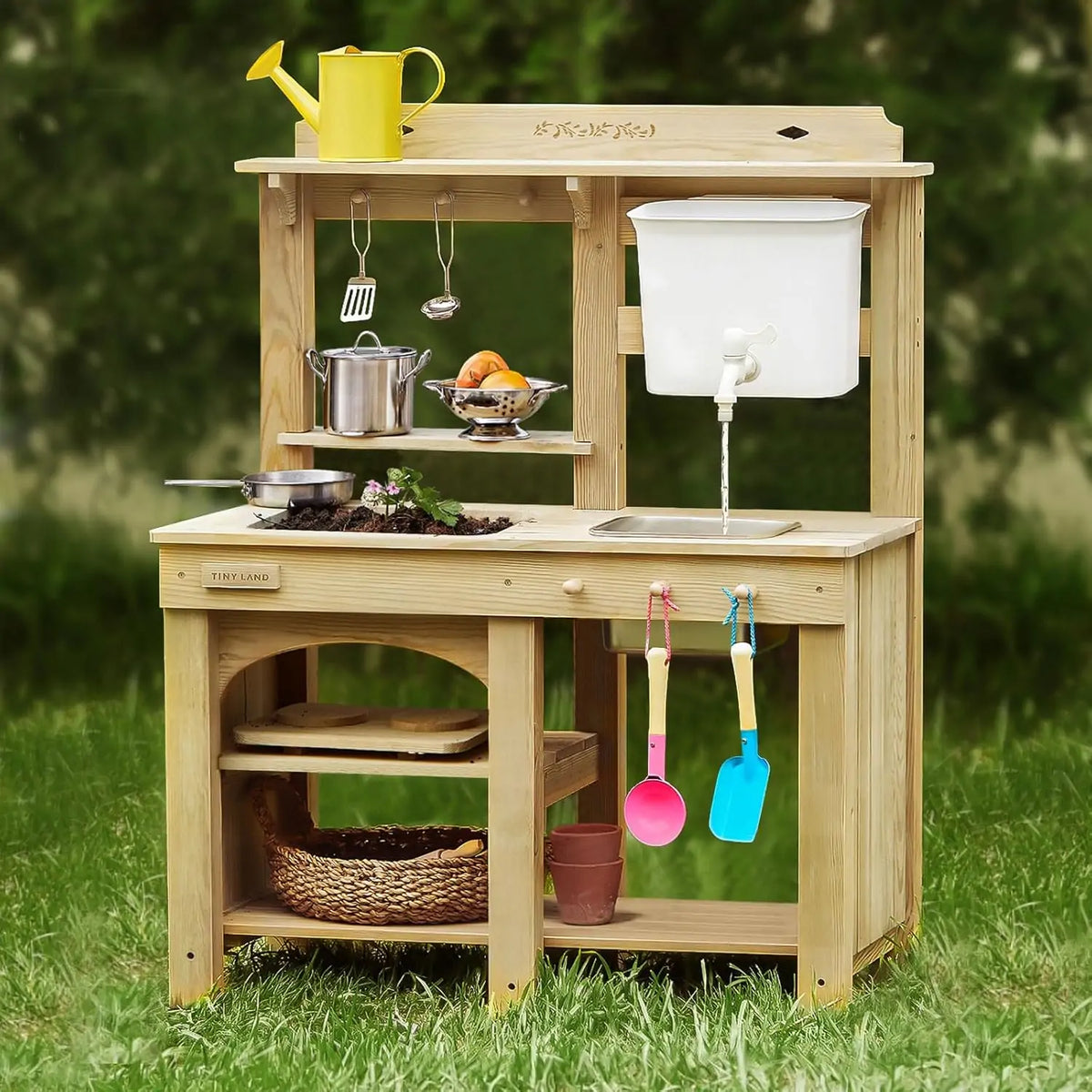
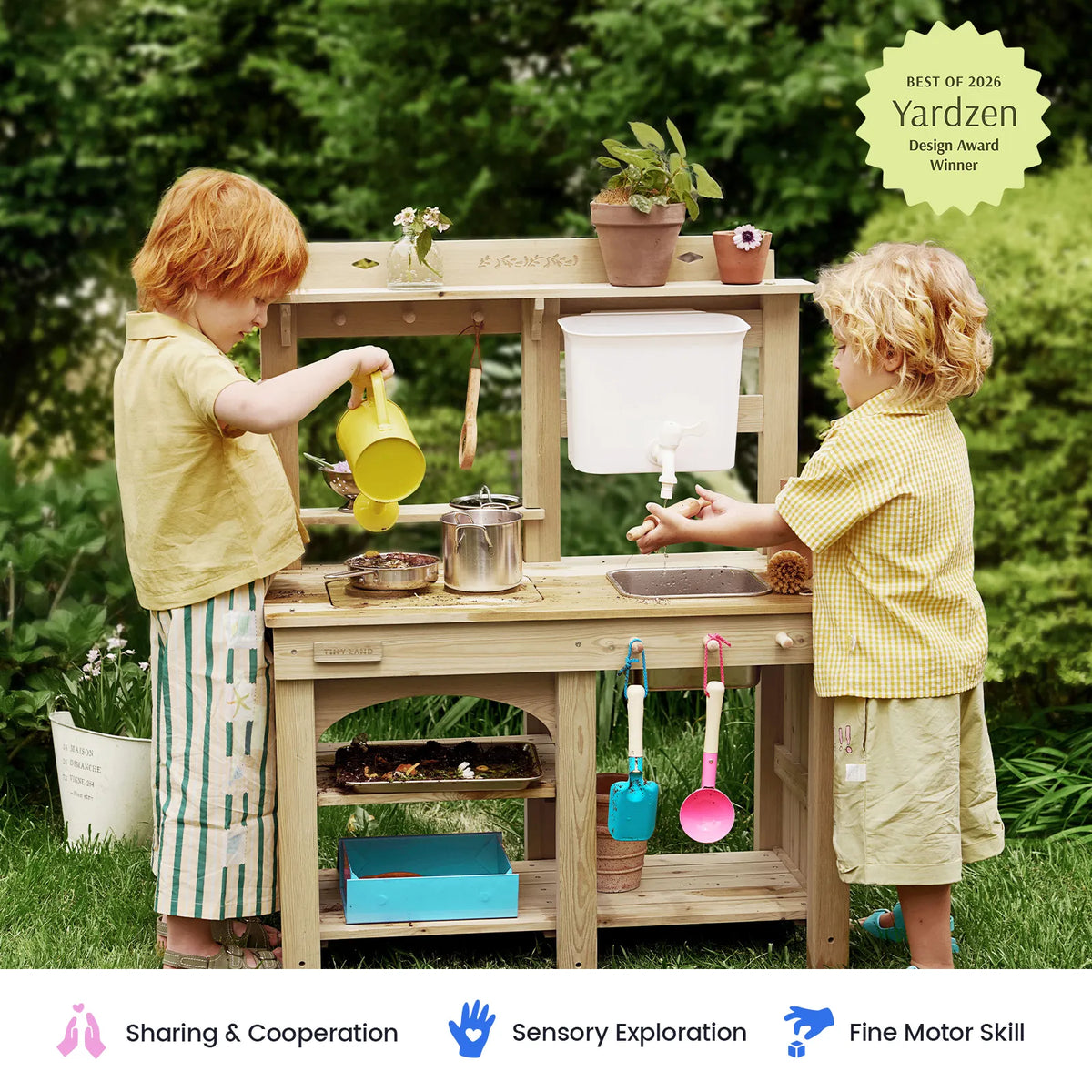
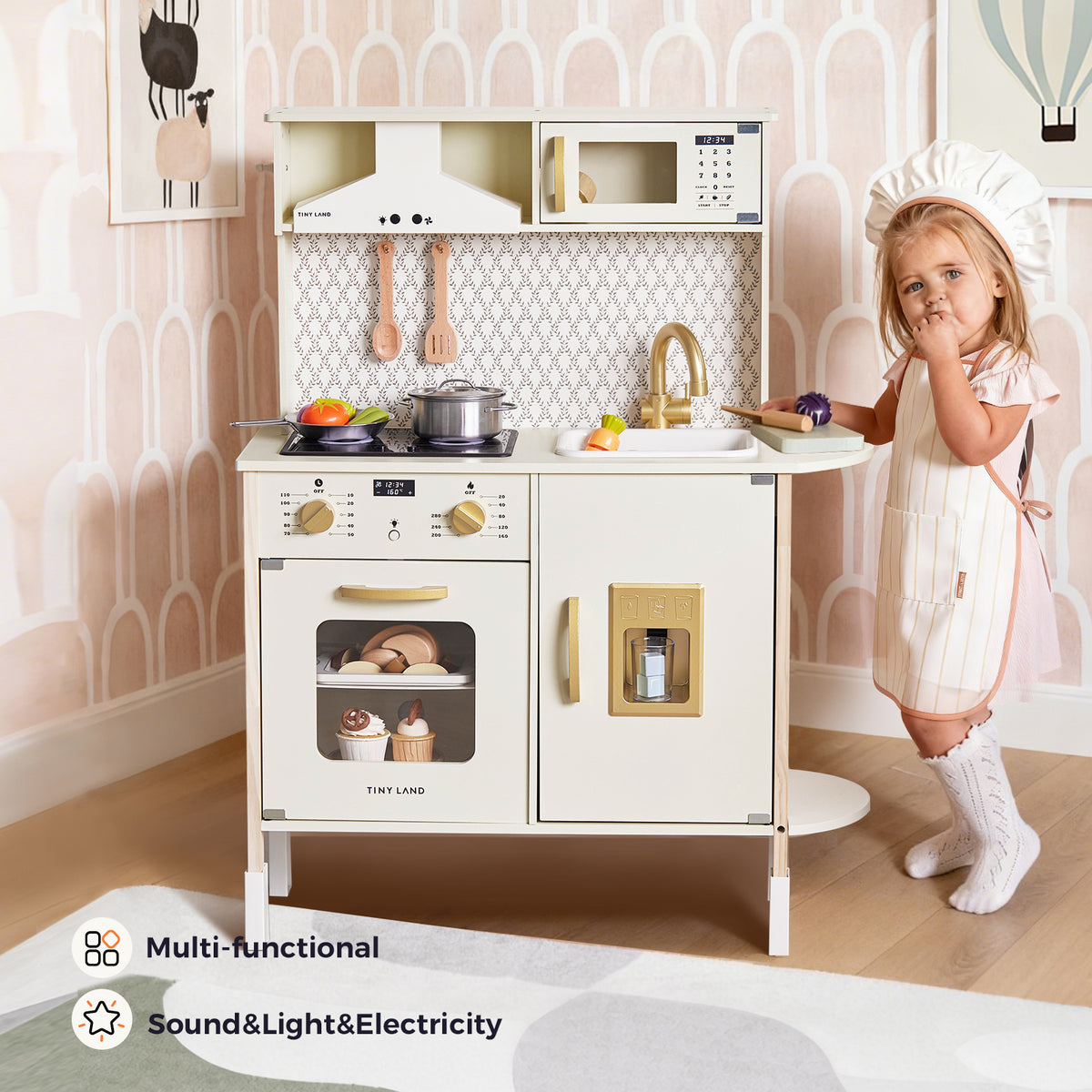



Outdoor play becomes more meaningful when children have a space that encourages creativity, independence, and sensory exploration. A mud kitchen is one of the simplest ways to turn any outdoor area—whether a backyard, patio, or even a small balcony—into a rich, open-ended play environment.
The best part is that you don’t need a large yard or expensive setup to create one. A mud kitchen can be flexible, modular, and adapted to almost any home space.

What Is a Mud Kitchen?
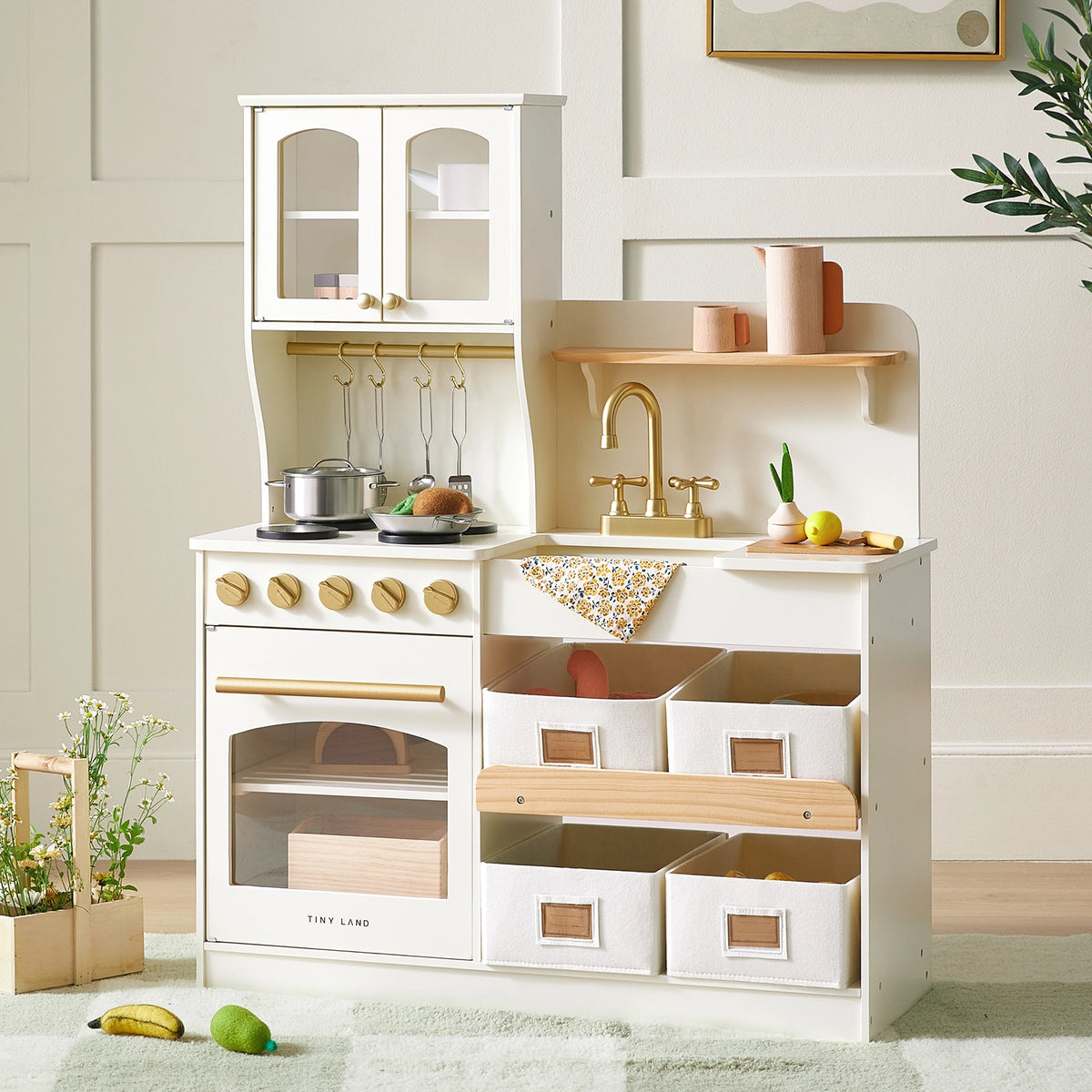
A mud kitchen is an outdoor sensory play station where children mix natural materials such as soil, water, leaves, sand, and flowers to create imaginative “recipes.”
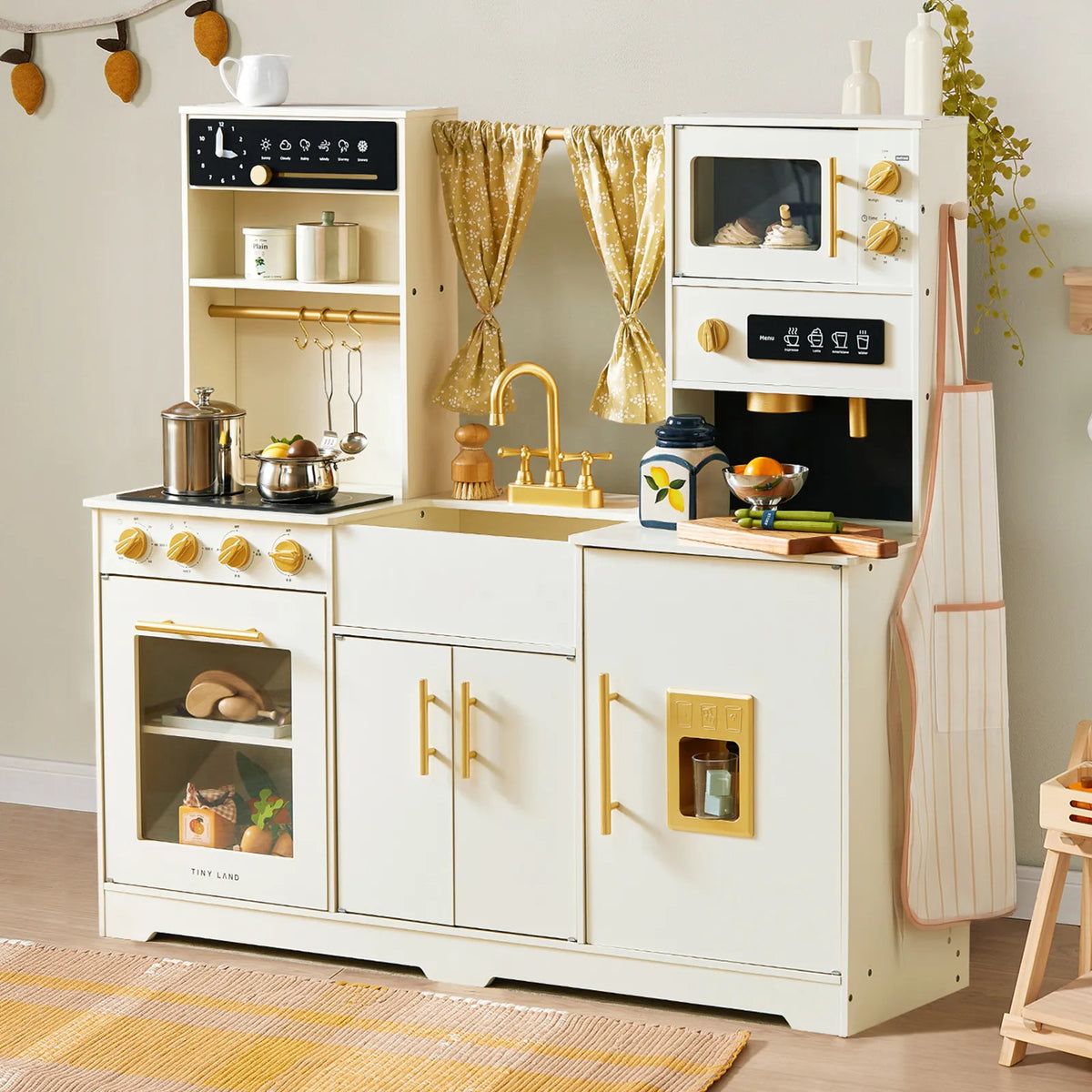
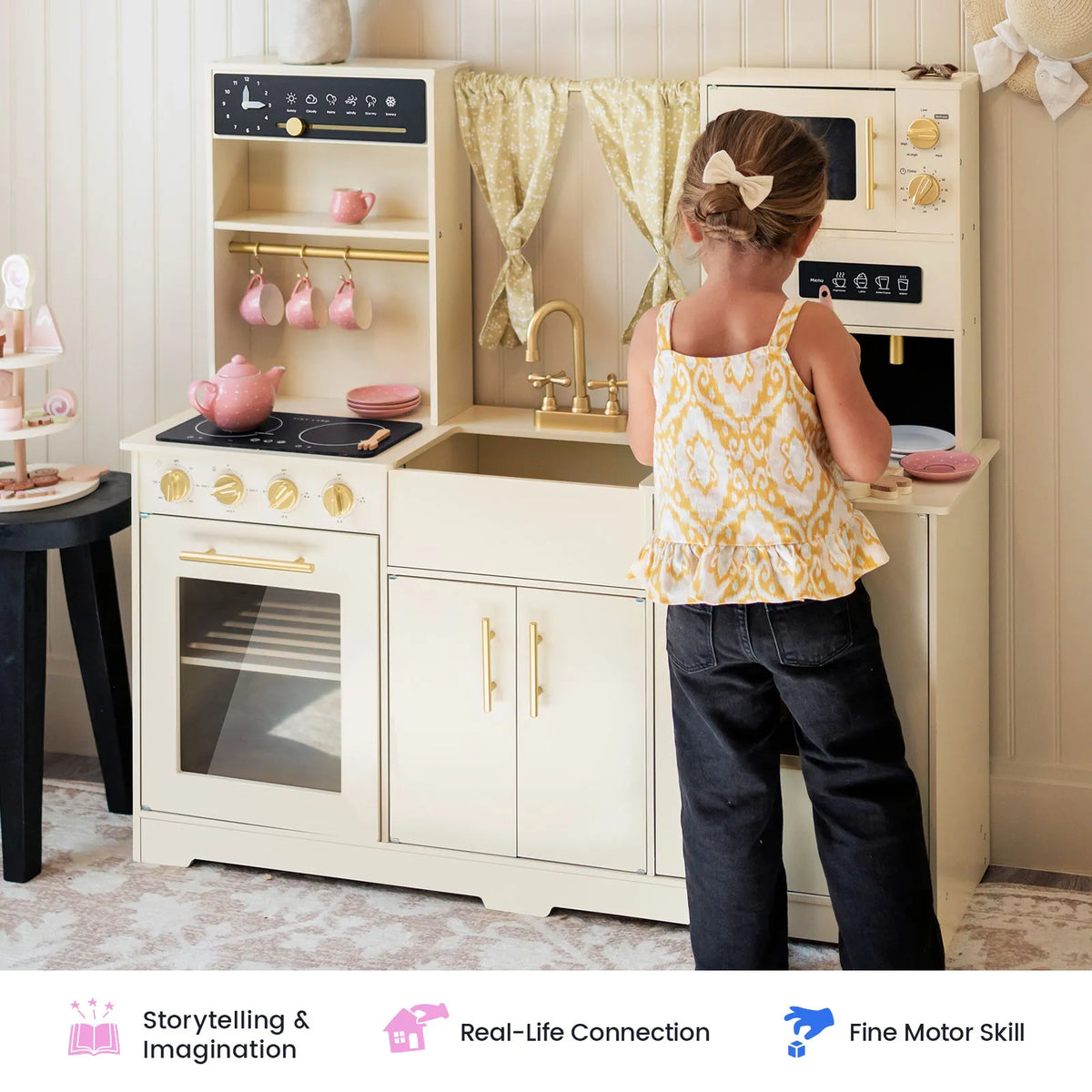
It mimics a real kitchen but replaces structured cooking with open-ended exploration.
Children may:
- Stir mud soup
- Bake leaf cakes
- Create nature-based “drinks”
- Experiment with textures and mixtures
The goal is not cleanliness or results—it’s creativity, curiosity, and hands-on discovery.

Why Mud Kitchen Play Matters
A mud kitchen supports key areas of early childhood development in a natural and engaging way:
-
Sensory development
-
Children explore real-world textures such as wet, dry, sticky, and soft materials.
-
Creativity and imagination
-
Open-ended play encourages storytelling and role-playing scenarios.
-
Fine motor skills
-
Scooping, pouring, mixing, and transferring materials strengthen coordination.
-
Independent play
-
Children learn to create without structured instructions.
-
Social interaction
- When shared, it naturally encourages cooperation and communication.

Where to Set Up a Mud Kitchen (Backyard + Small Space Guide)
One of the most common questions parents ask is: Can I set up a mud kitchen if I don’t have a backyard?
The answer is yes.
Backyard Setup (Best Case Scenario)
A backyard allows for more freedom and larger setups.
Recommended setup:
- A flat, stable surface
- A shaded or semi-shaded corner
- Easy access to water (hose or bucket)
- Defined play boundary for easy cleanup
A backyard setup can evolve into a long-term outdoor play station.
Small Space Setup (Balcony, Patio, Apartment-Friendly)
A mud kitchen can also work in compact urban spaces when designed thoughtfully.
Best practices:
- Use a corner or wall-adjacent space
- Place a waterproof mat underneath
- Keep materials in stackable bins
- Use portable water containers instead of hoses
Even a 2–3 square meter area can become a functional sensory play zone when organized properly.
👉 Small space setups are increasingly popular among urban families, especially for toddler sensory play at home.
Shared Outdoor Spaces (Park or Community Areas)
For families without private outdoor space, a portable mud kitchen setup works well.
Bring:
- Lightweight table or foldable surface
- Basic bowls, cups, and tools
- A container of natural materials collected outdoors
This approach turns any outdoor visit into a structured play experience.

What You Need for a Mud Kitchen Setup
You don’t need many items to get started. Simplicity works best.
Core essentials:
- Stable surface (table, bench, or mud kitchen station)
- Bowls, cups, and containers
- Spoons, ladles, scoops
- Small pots or pans
- Natural materials:
- Soil or sand
- Water
- Leaves, flowers, sticks, stones
- Optional tools:
- Funnels and sieves
- Measuring cups
- Storage bins
- Aprons or old clothing

Step-by-Step: How to Set Up a Mud Kitchen at Home
Step 1: Define the play zone
Choose a consistent area so children understand where play begins and ends. This also simplifies cleanup.
Step 2: Set up the base structure
Place your surface or mud kitchen station on stable ground at child-appropriate height.
Step 3: Create simple play zones
Organize materials into three functional zones:
- Mixing zone (bowls, spoons, tools)
- Water zone (cups, pitchers, buckets)
-
Nature zone (leaves, soil, collected materials)
This structure encourages independent and organized play.
Step 4: Add natural elements
Invite children to collect materials from outside. This transforms setup into part of the play experience itself.
Step 5: Keep water access simple
A bucket of water is often enough. Complexity is not necessary for meaningful play.

Small Space Mud Kitchen Tips (Important for Urban Homes)
Small space does not mean limited play value. It simply requires smarter organization.
Effective strategies:
- Use foldable or compact furniture
- Store materials in stackable containers
- Rotate play materials weekly to maintain engagement
- Use a washable mat to define boundaries
- Limit sessions to 30–60 minutes for easier cleanup
Even a balcony or patio can become a highly effective sensory play environment.
Mud Kitchen Play Ideas (Quick Inspiration)
To help children get started, try these simple play themes:
- Nature Soup Kitchen (mix leaves + water + soil)
- Flower Bakery (create “cakes” using petals and sand)
- Stone Sorting Kitchen (organize and “cook” stones)
- Outdoor Café (pretend serving food and drinks)
- Nature Science Lab (mix colored water, soil, leaves, and observe color blending and texture changes)
These ideas can evolve naturally over time as children explore.

How to Keep Mud Kitchen Play Manageable for Parents
Mess is part of the learning experience, but it can be structured.
Helpful approaches:
- Define a clear play boundary
- Keep cleaning tools nearby (bucket, cloth, hose)
- Use simple rules (materials stay in zone)
- Dress children in easy-wash clothing
The goal is not to eliminate mess, but to manage it intentionally.

FAQ: Mud Kitchen Setup at Home
What age is best for a mud kitchen?
Most children between 2–7 years old enjoy mud kitchen play, especially during early sensory and imaginative development stages.
Can I set up a mud kitchen in a small apartment?
Yes. Even a small balcony or patio can support a compact mud kitchen with proper organization and portable materials.
How do I clean a mud kitchen?
Cleaning is simple—use water, cloths, or a hose. Most materials used are natural and easy to rinse off.
How often should children use a mud kitchen?
There is no fixed rule. Many families use it 2–4 times per week depending on weather and interest.

Final Thoughts
Setting up a mud kitchen at home does not require a large space or complex materials. With a simple structure, a few basic tools, and access to natural elements, any outdoor area can become a meaningful sensory play environment.
Whether in a backyard or a small balcony, the key is to create space for open-ended exploration—where children lead the play and imagination shapes the experience.