


Discover styles that fit your home and spark your child’s imagination — from aesthetically pleasing designs to hours of imaginative play
When it comes to choosing a play kitchen, today’s parents aren’t just thinking about what looks cute — they’re thinking about hands on learning, safety, and durability too. Whether you love a sleek modern wooden play kitchen or the charm of a vintage kitchen set, this guide will help you think through the differences in a simple, educational way.

1. What Is a Modern Wooden Play Kitchen?
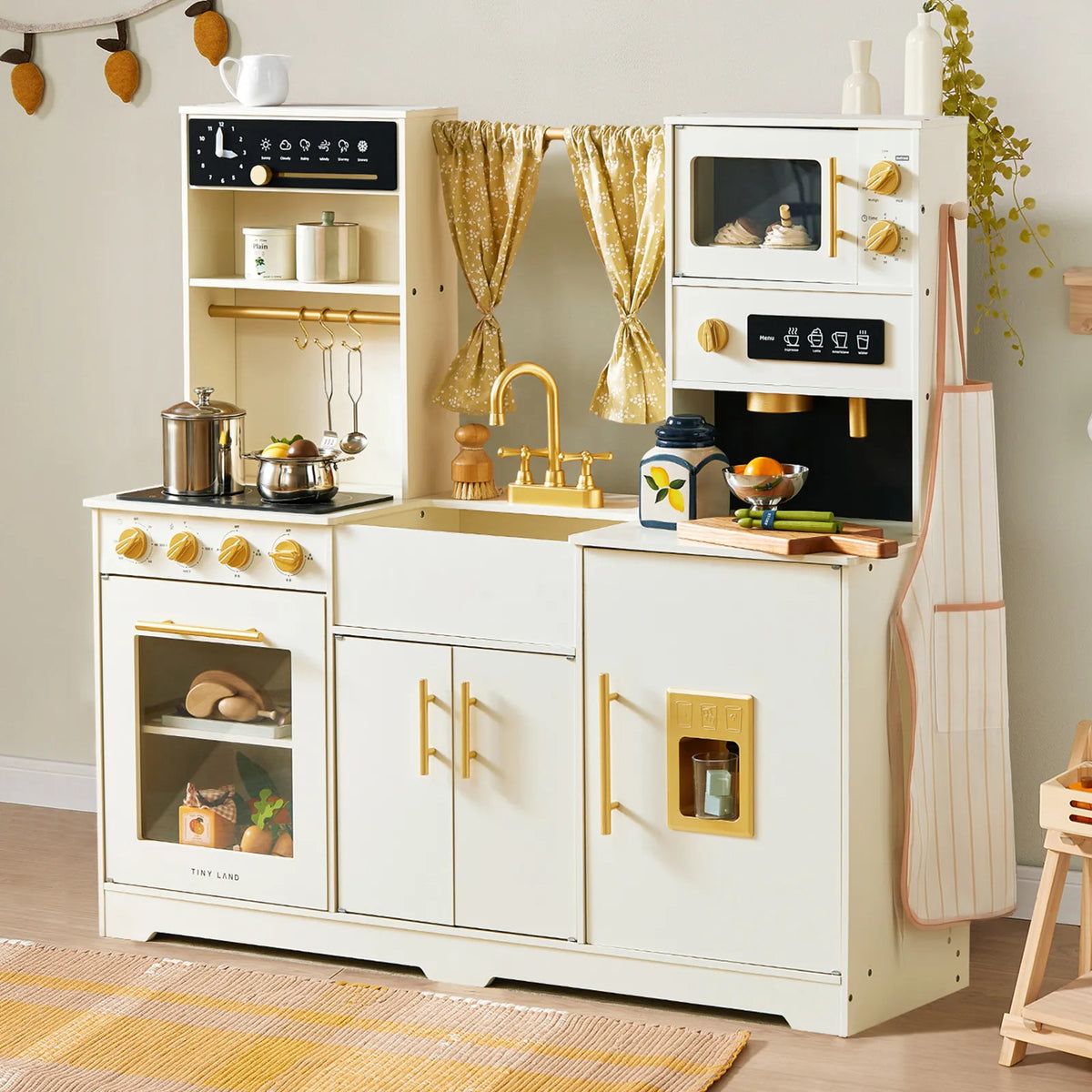
Modern wooden play kitchens are all about clean lines, neutral palettes, and designs that blend seamlessly with modern home decor. These kitchens are often built from solid wood and natural materials, giving them a premium, timeless feel.
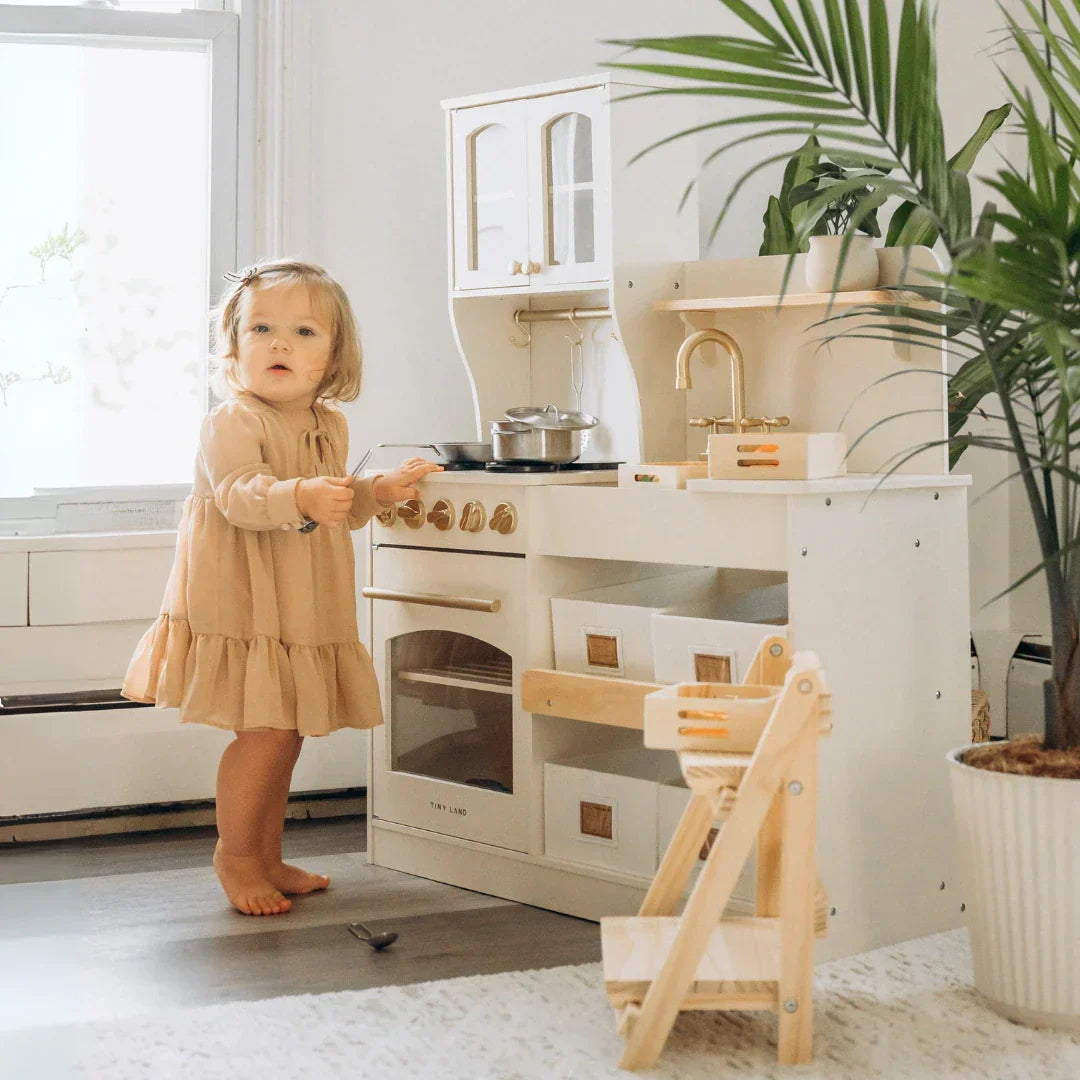
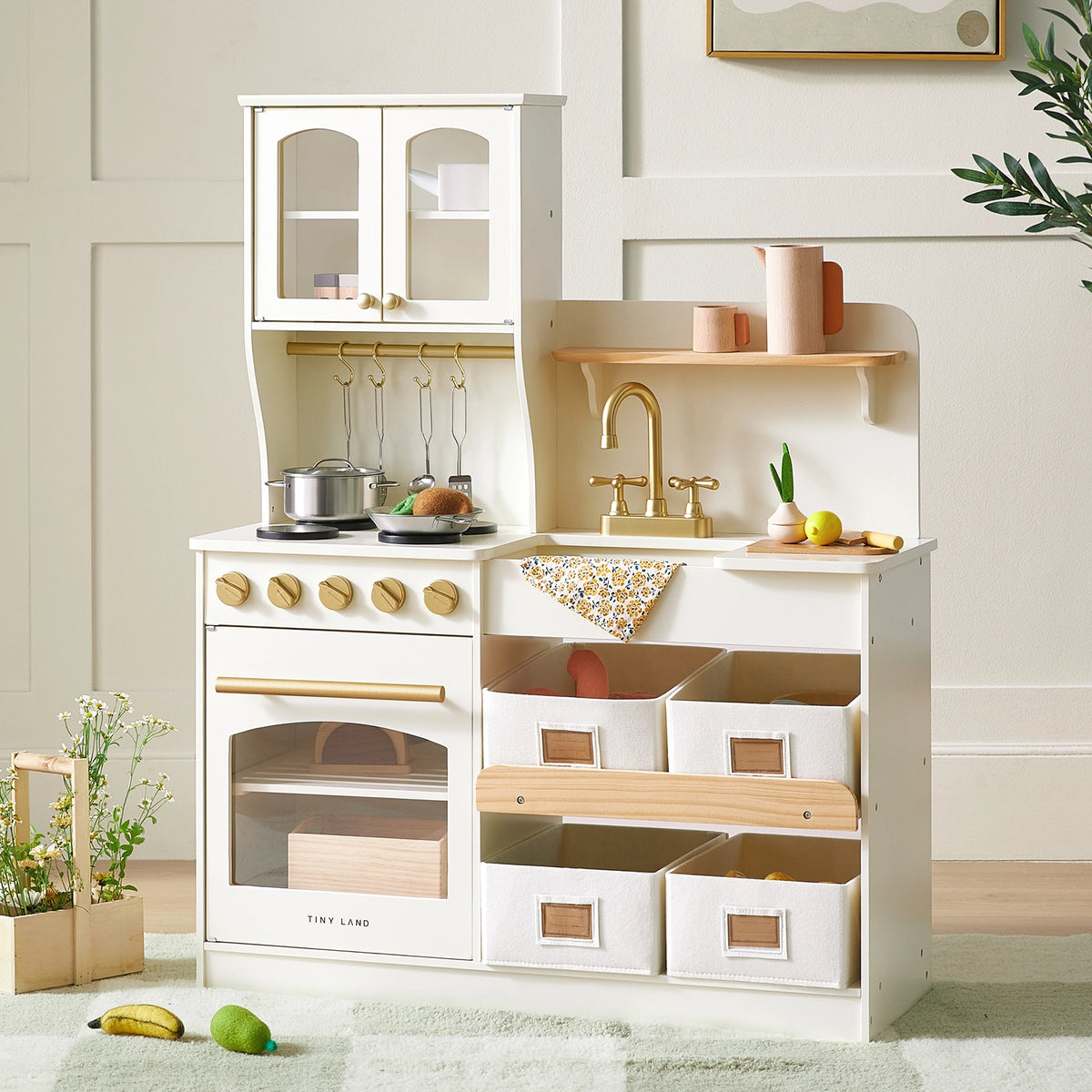
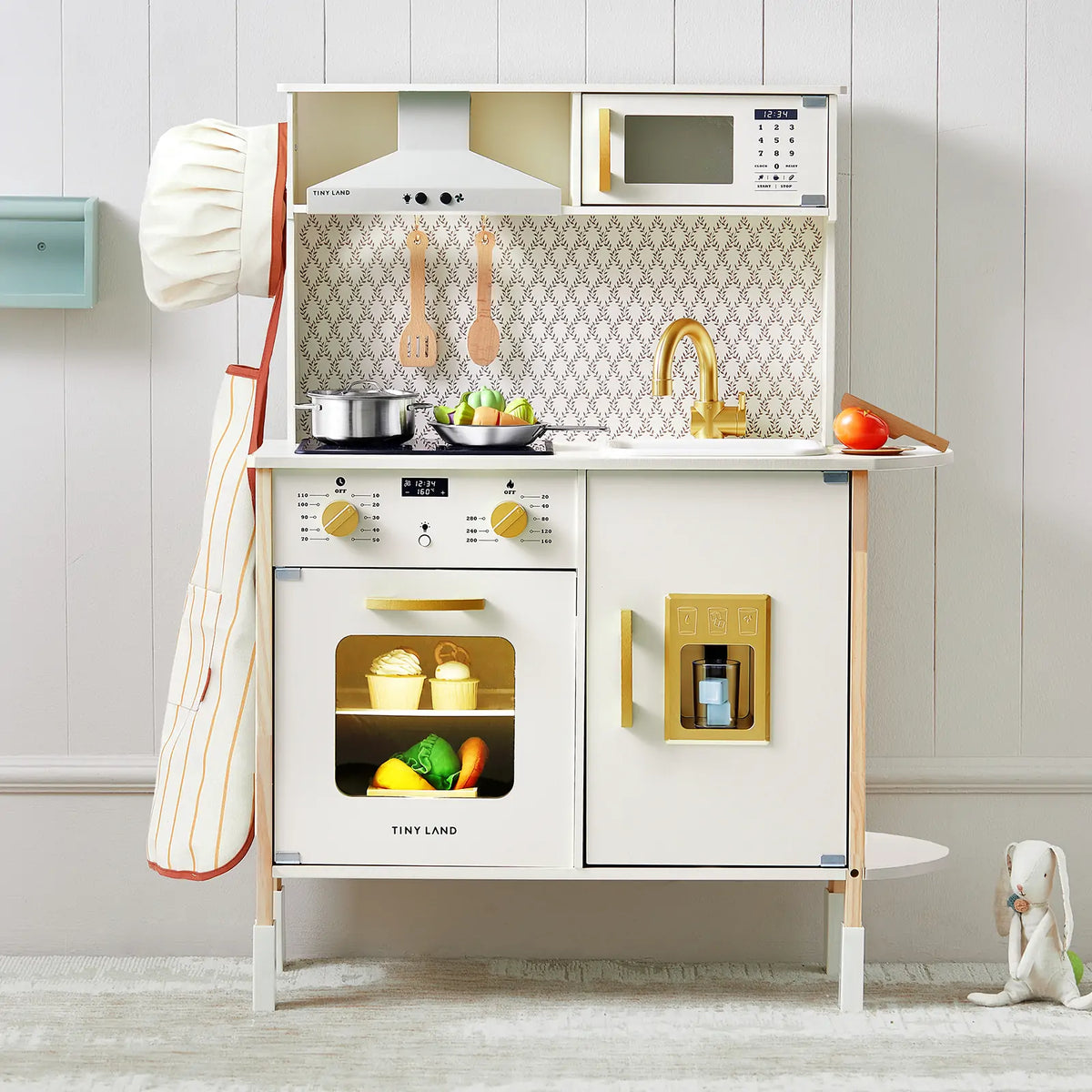
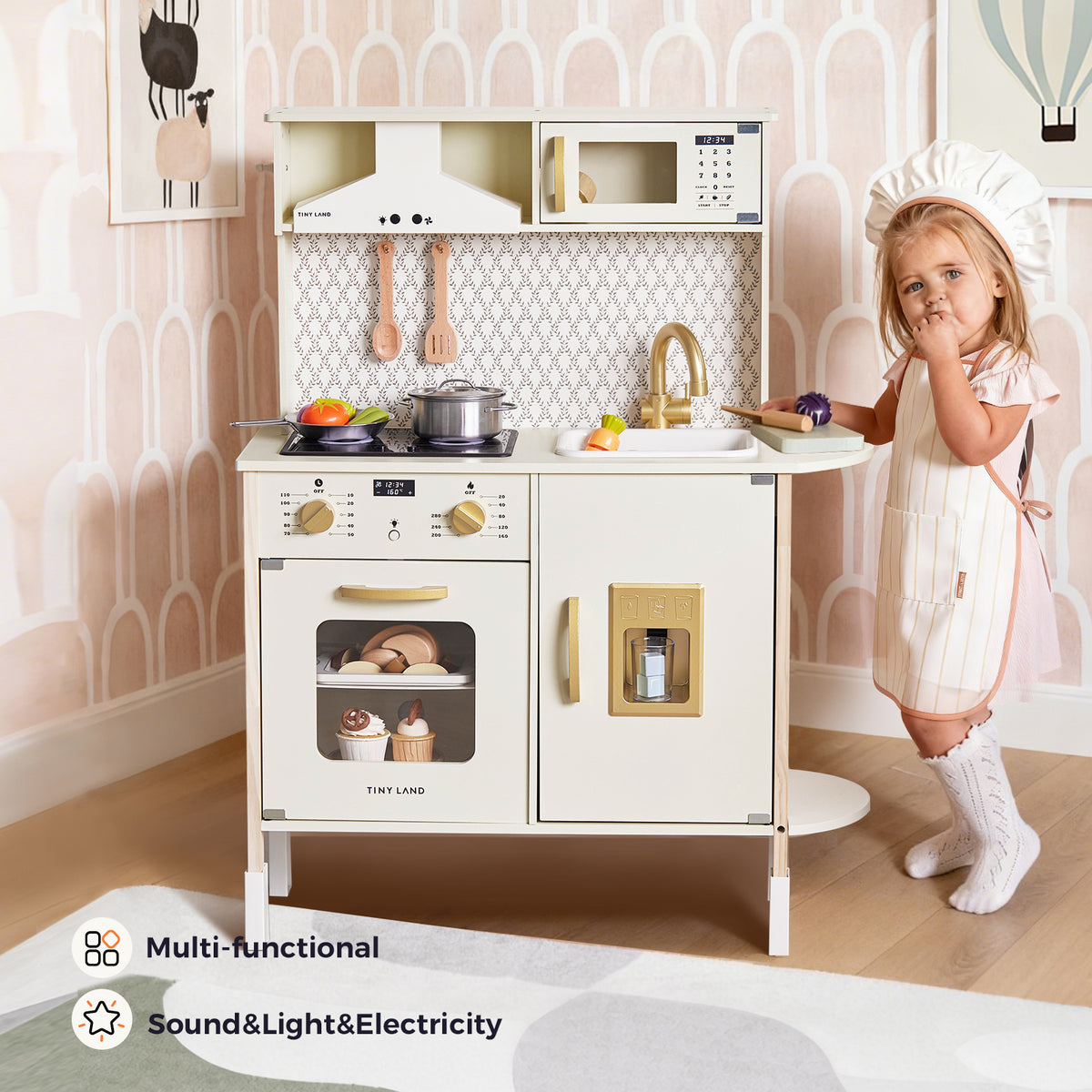
A modern set like the Tiny Land® PopJoy Play Kitchen uses child safe paints, smart functional features, and interactive elements that make pretend cooking feel real — without loud noise or plastic overwhelm.
Modern designs appeal to many parents because:
- They match living spaces instead of clashing with them
- They avoid bright, busy colors that some toddlers outgrow quickly
- They feel like functional, beautiful furniture for children’s play areas
2. What Defines a Vintage Kitchen?
Vintage-style play kitchens often imitate old-school appliances with bold colors, classic patterns, and nostalgic knobs. While they can be visually charming, they may not fit every family’s space or long-term style goals.
A vintage kitchen can still be great for pretend play, but it generally prioritizes decorative detail over minimalist design.

3. Imaginative Play: How Each Style Encourages Creativity
Modern and vintage kitchens both support imaginative play, but in slightly different ways.
- Modern wooden kitchens invite open-ended scenarios, where children explore roles like chef, baker, or host.
- Vintage kitchens can spark theme-based games tied to specific styles (e.g., 1950s diner fun).
Either way, kitchens become a space where little ones explore social roles — talking, acting, and creating stories together.
4. Fine Motor Skills: Building Coordination Through Play
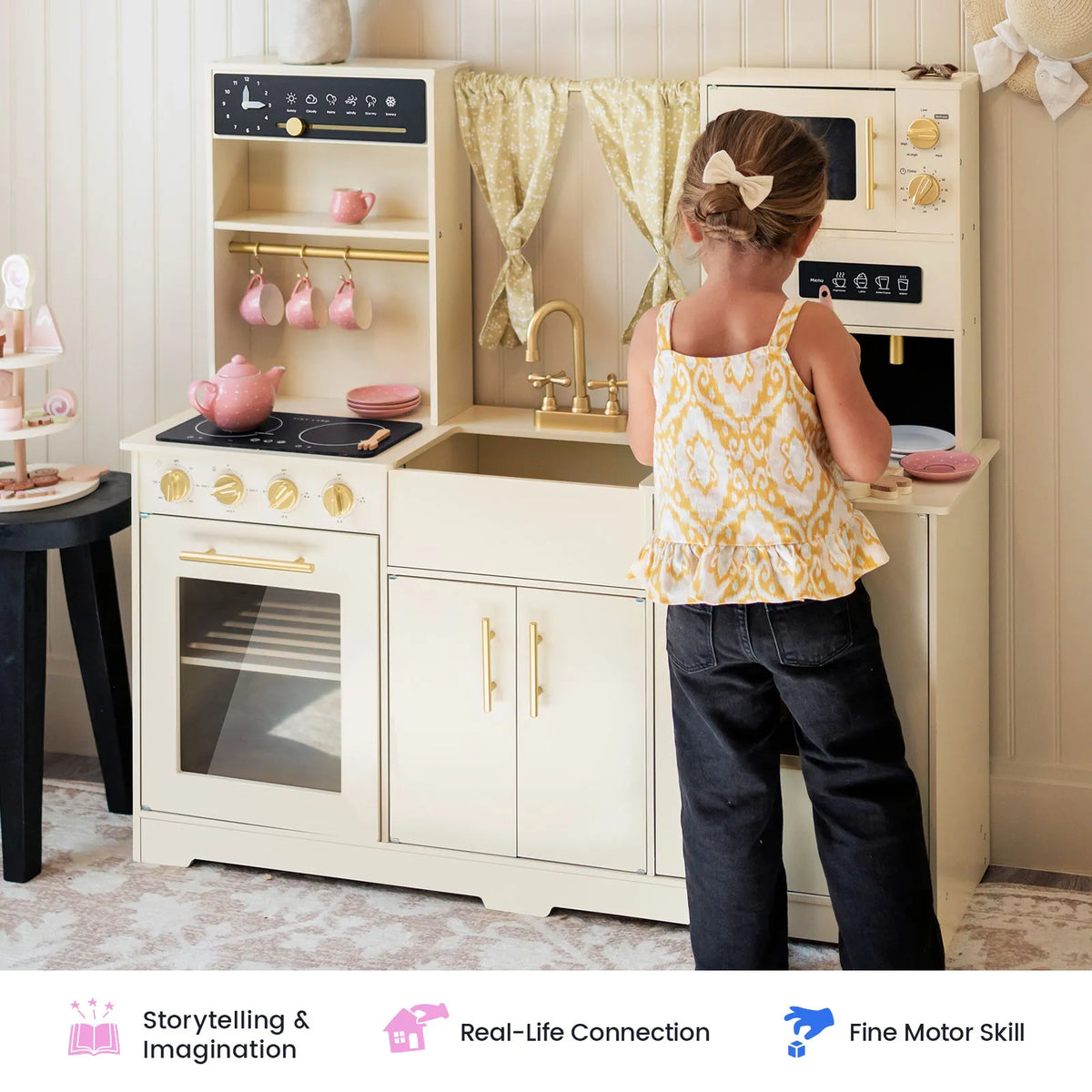
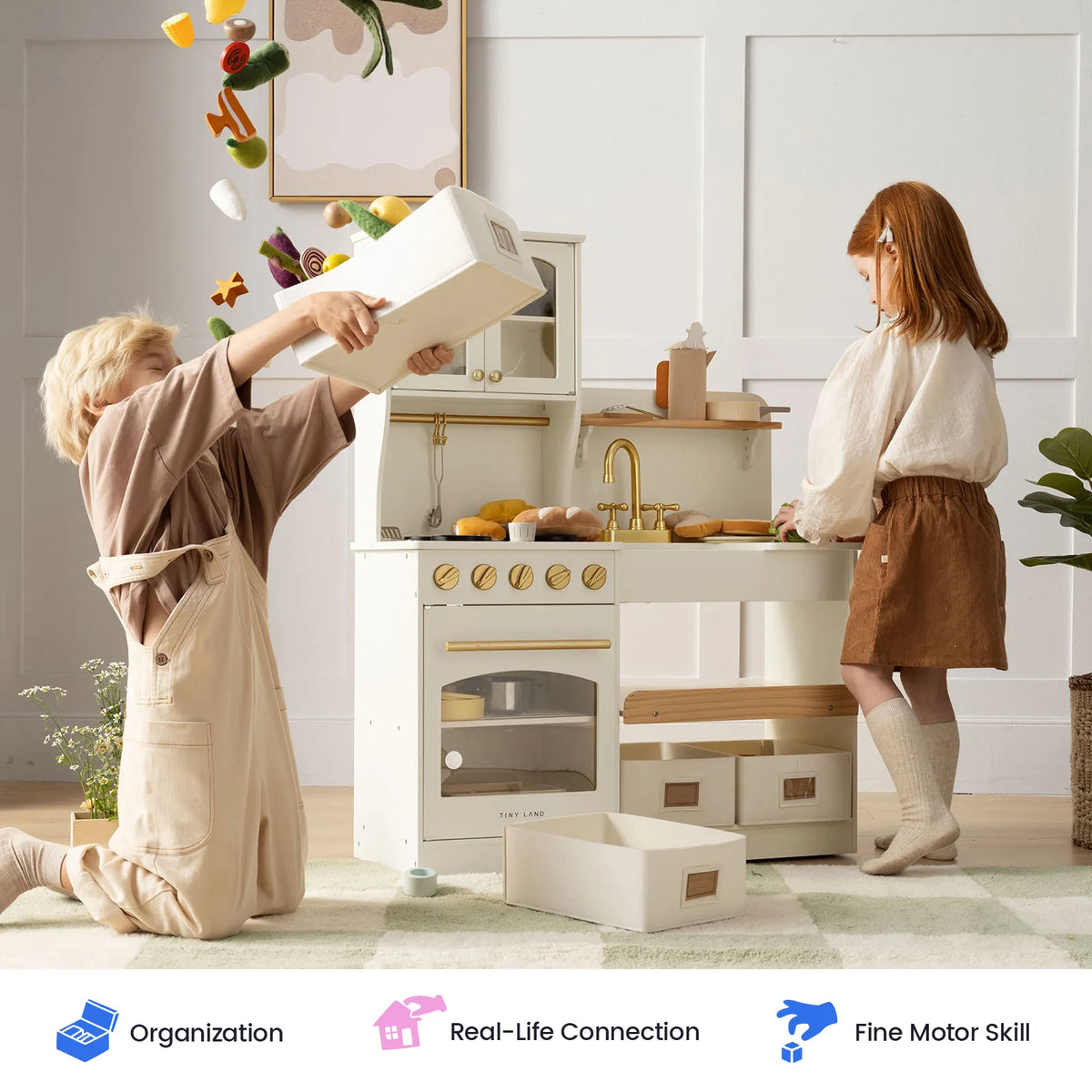
A kitchen set that encourages fine motor skills helps kids build hand-eye coordination and confidence. Turning knobs, opening functional doors, and placing utensils works muscles and neural connections that matter later in school and life.
The Tiny Land® PopJoy Play Kitchen includes interactive knobs, opening ovens and sink features that invite such precise motions — making everyday play a hands on learning experience.
5. Pretend Play: Why This Matters for Child Development
Pretend play is more than just fun — it’s a foundational way children learn about the world. When kids pretend to cook, clean, serve, or organize, they’re practicing:
- Language development through role speaking
- Social skills by sharing roles with friends or siblings
- Creative thinking and decision making
- Emotional expression and storytelling
Modern and vintage kitchens both fuel pretend play — but a well-designed wooden kitchen often feels more natural and open-ended.

6. Sustainable Materials: What Parents Need to Know
Parents today care about what toys are made of — not just what they look like. Kitchens made from sustainable materials like responsibly sourced wood help families feel confident about purchases that:
- Last for years
- Avoid harmful chemicals
- Can be passed down to siblings or friends
Many wooden play kitchens — including options like Tiny Land models — use natural materials and finishes that are non toxic finishes, giving parents peace of mind about safety and durability.
7. How Play Kitchens Support Hands On Learning
Whether your child is exploring textures, sounds, or sequences of action — a kitchen offers endless possibilities for hands on learning. Kids learn by doing:
- Scooping “food” from a bowl
- Turning knobs to “heat” a pot
- Imagining dinner for guests
This kind of play isn’t just just fun — it strengthens cognitive and physical growth through meaningful activity.
8. Enthusiastic Play & Endless Fun: What Keeps Kids Coming Back
A great play kitchen doesn’t get ignored after a week — it becomes a favorite play destination. Features like realistic sound effects and lights, adjustable height, and accessories (chef hat and apron) turn everyday play into enthusiastic play with endless fun.
A set that inspires hours of engagement will:
- Encourage repeated use
- Grow with more complex games
- Stay fresh as skills develop

9. Cooking Up Memories: Create Memories That Last
Beyond skills and play value, kitchens give children experiences that stay with them:
- Hosting imaginary dinner parties
- Playing “store” with friends
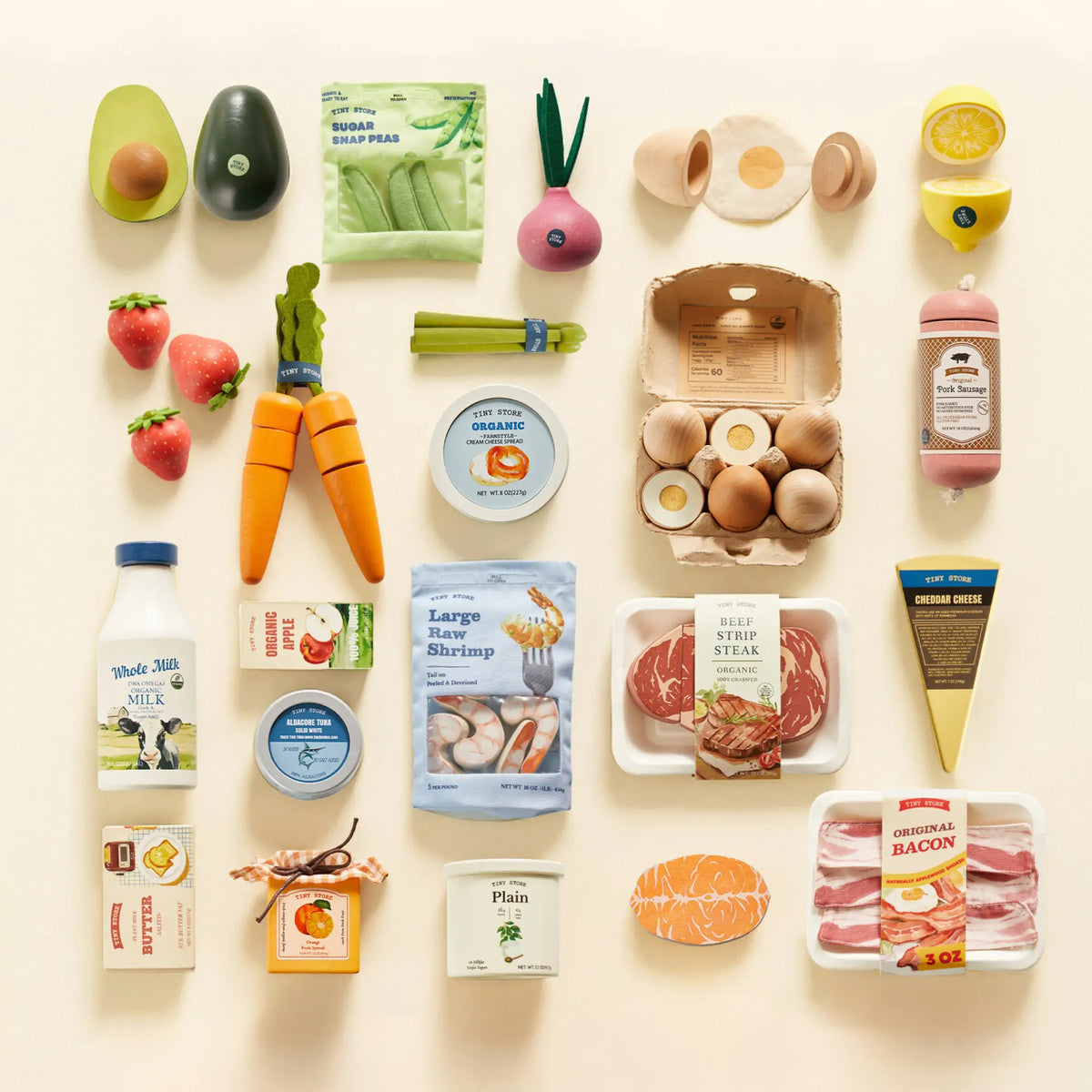
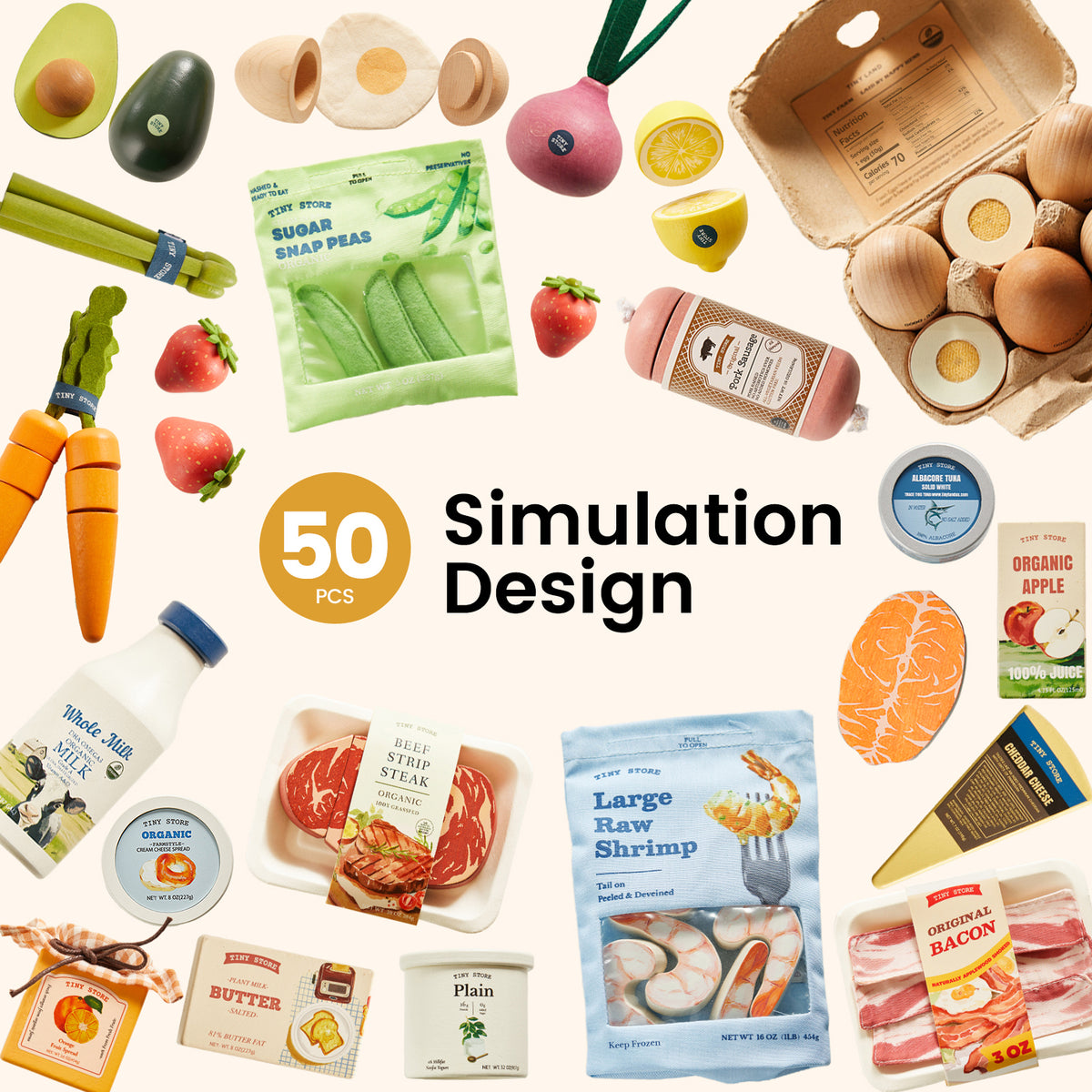
- Making family meals out of play food
These moments build connection between parent and child — and between playmates — so every session becomes a memory, not just a toy interaction.
10. Which Style Should You Choose?
Here’s a simple way to think about it:
Choose a modern wooden play kitchen if you want:
✅ A stylish piece that enhances home decor
✅ Durable play that grows with your child
✅ Neutral design that fits most spaces
Choose a vintage kitchen if you want:
🎨 A bold, playful aesthetic
🎉 Nostalgic charm for thematic play
Both support laughter, learning, and creative exploration — it’s really about which fits your home and family vibe best.

Featured Pick: Tiny Land® PopJoy Play Kitchen
If you’re leaning toward a modern wooden play kitchen that blends design with developmental value, the Tiny Land® PopJoy Play Kitchen is worth exploring. This set features engaging sound and light details, adjustable height for ages 3–7, and thoughtful design details that make pretend play feel real — and lasting.