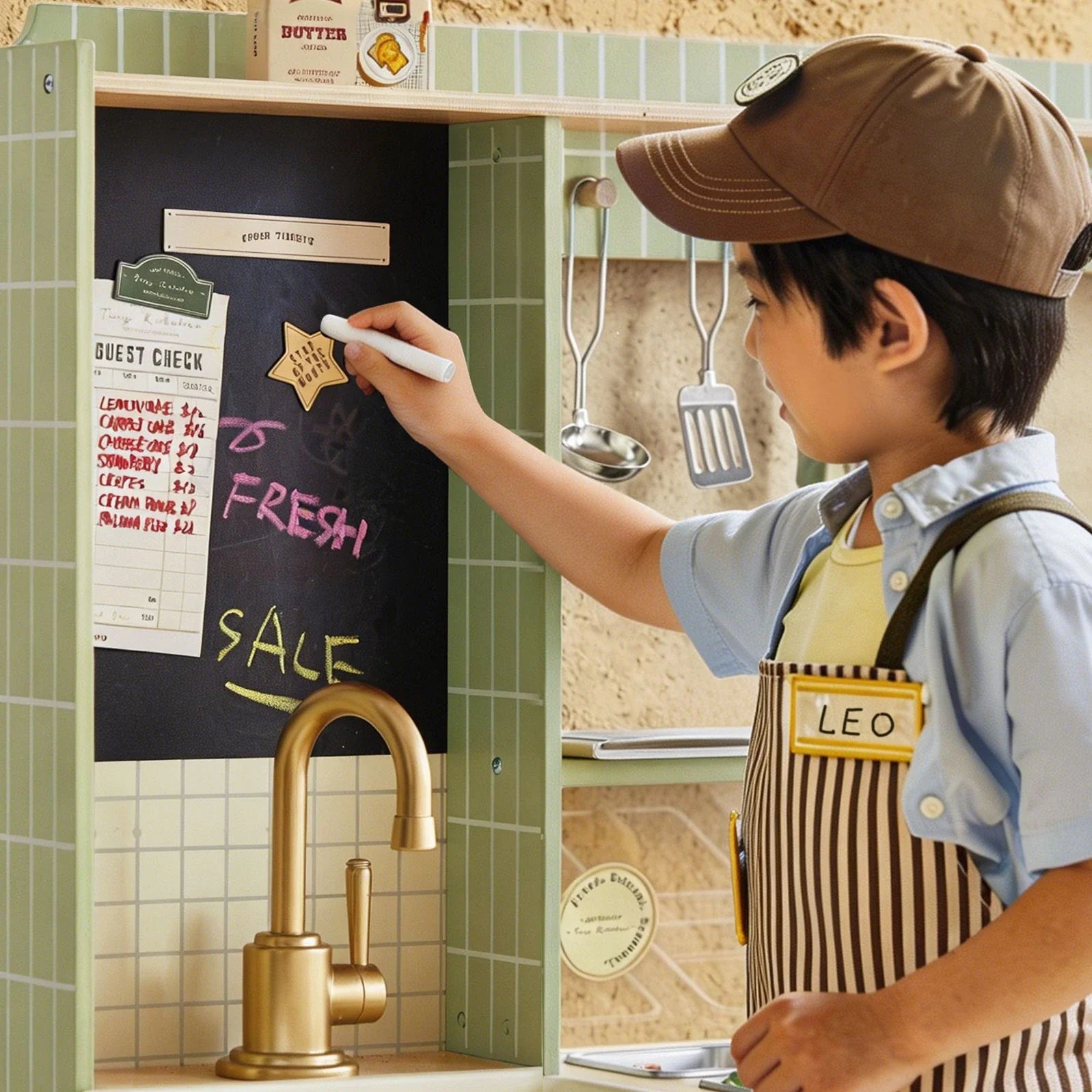
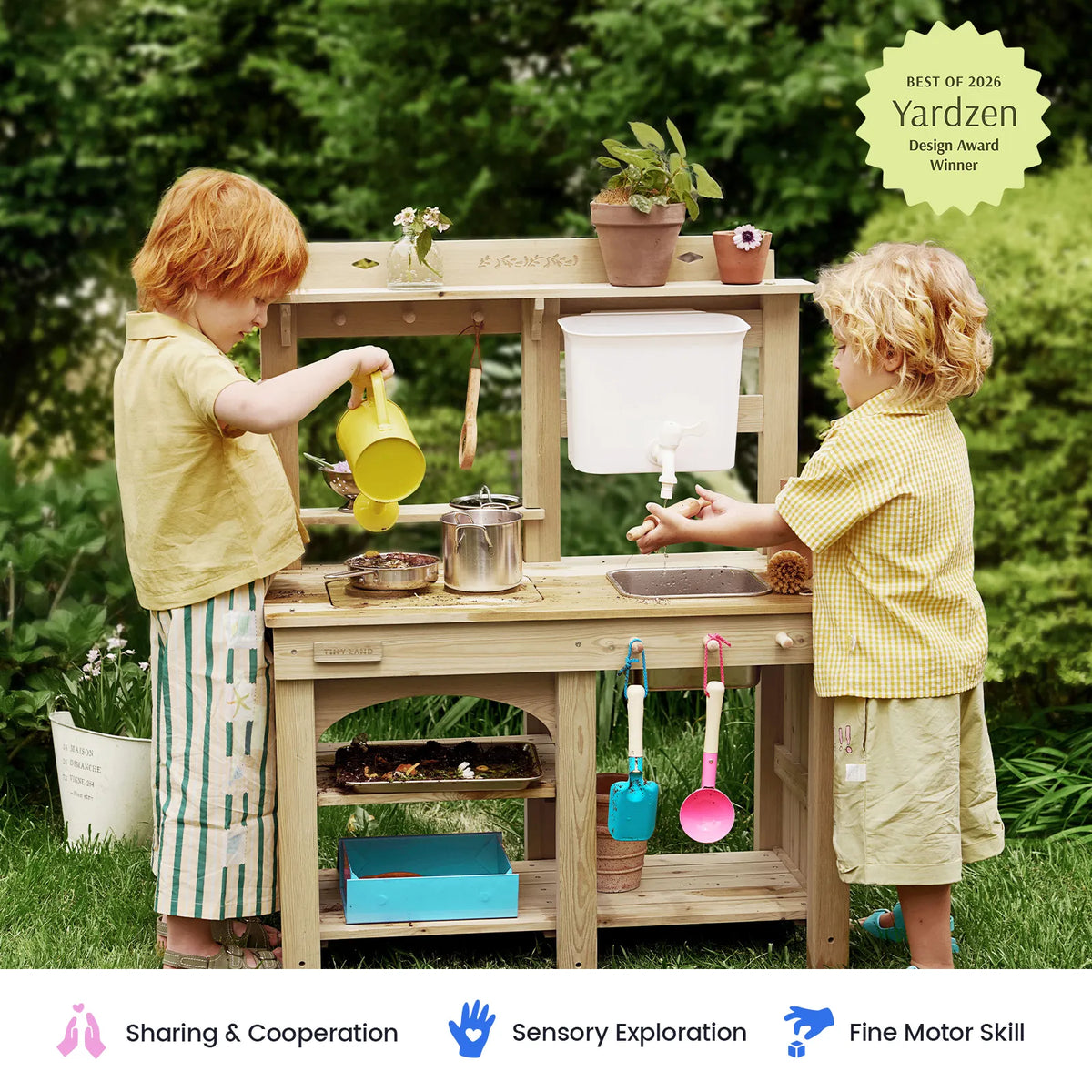



Mud kitchen play may look like simple messy play, but for young children, it is full of learning. When a child scoops squelchy mud into mixing bowls, pours water into cake tins, stirs with kitchen utensils, and proudly serves a mud pie, they are doing much more than making a mess. They are building language development, communication skills, social skills, fine motor skills, and confidence in a fun and engaging way.
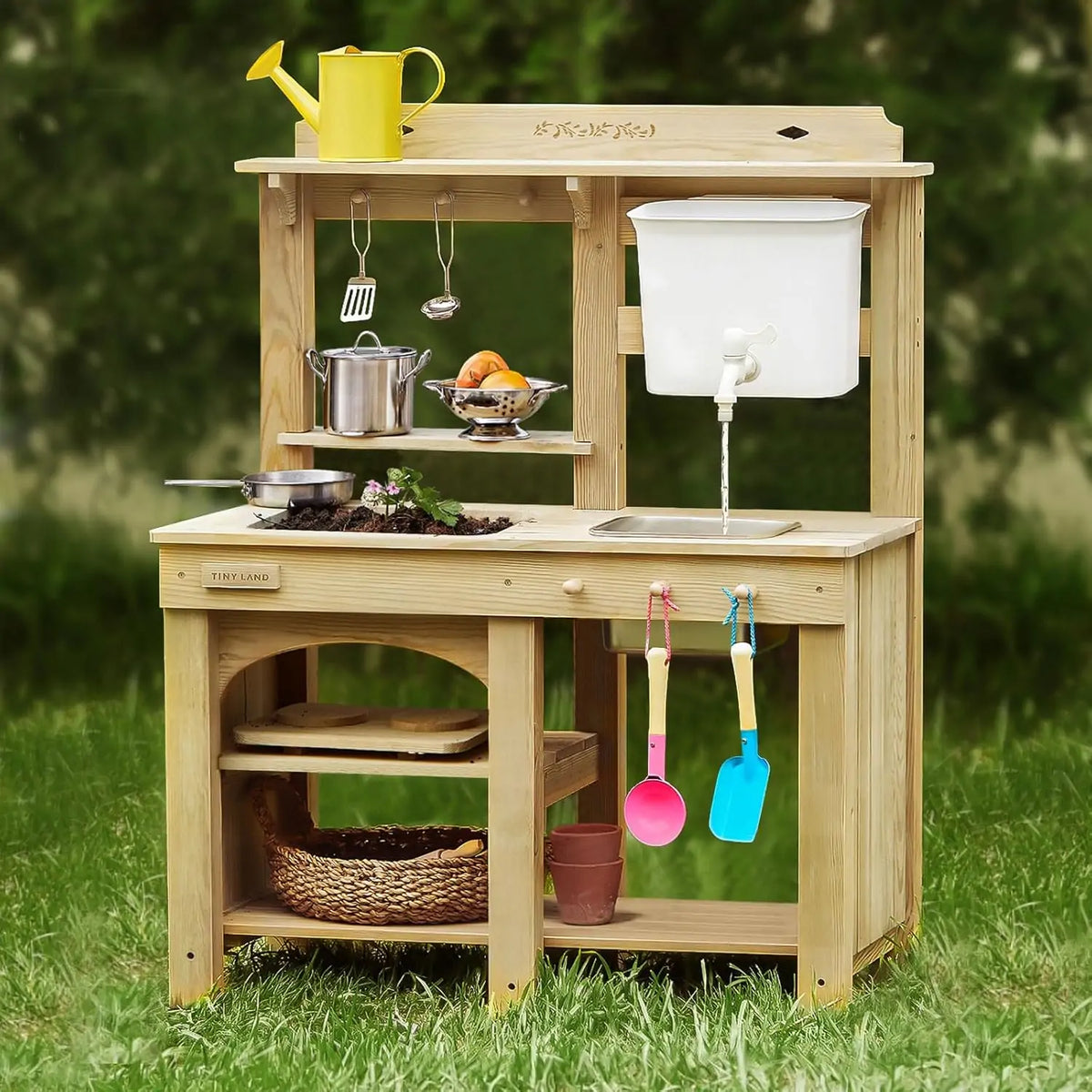
A mud kitchen is more than just a place for children play. It is an outdoor play kitchen where children can explore natural materials, create pretend meals, make mud cakes, mix magic potions, and use their own ideas. Because there is no right or wrong way to play, children feel free to talk, experiment, imagine, and express themselves.

Why Mud Kitchen Play Helps Language Development
Mud kitchen language development happens naturally because children have a real reason to communicate. They might say, “I’m making soup,” “This mud pie needs more water,” or “Can you pass me the spoon?” These simple conversations are important because children are using words with purpose.
In early years learning, children learn best through hands on experiences. Mud kitchen play gives them chances to describe what they are doing, ask questions, listen to others, and explain their own recipes. Instead of repeating words from a lesson, they are using language during real play.
For example, when children are mixing mud, they may use words such as wet, dry, sticky, soft, heavy, full, empty, more, less, stir, pour, scoop, and splash. These words become easier to understand because children can see, touch, and feel what they mean. This makes outdoor mud play a highly beneficial form of language learning.

Sensory Play Builds New Vocabulary
One of the biggest benefits of mud kitchens is the rich sensory experience they offer. Mud, water, leaves, flowers, sticks, stones, and sand all have different textures, smells, shapes, and colors. When children explore these different materials, they naturally begin to describe them.
A child might say the mud is cold, the leaves are crunchy, or the mixture is too runny. These moments support sensory development and cognitive development while also helping children learn new descriptive words.
Sensory play also encourages children to compare and think carefully. What happens when they add more water? Why is one mud cake smooth while another one falls apart? Can they make a mud pie that holds its shape? These questions build critical thinking and problem solving skills, while giving children more reasons to talk.

Role Play Encourages Communication Skills
Mud kitchen play is full of imaginative play. One day, the mud kitchen may become a bakery. Another day, it may become a mud kitchen café, a restaurant, a potion shop, or a family kitchen. Through role play, children practice the kind of language they hear in everyday life.
They may say, “What would you like to eat?” “Your food is ready,” “I need more ingredients,” or “Let’s make flower cakes.” These conversations help children learn how to take turns, ask questions, answer others, and keep a story going.
Cooperative play is especially powerful for language development. When children share tools, take roles, and work together on muddy creations, they practice listening and speaking. They may need to decide who uses the spoon, who pours the water, or who serves the imaginary dishes. These small moments help children build communication skills and social skills in a natural environment.

Natural Materials Spark Imagination
Natural materials make mud kitchen play open-ended. A stick can become a spoon, a candle, a magic wand, or a piece of pasta. Leaves can become salad, decorations, money, or plates. Stones can be potatoes, cakes, or special ingredients.
This flexibility encourages creativity because children are not limited by fixed toys. They can create their own recipes, invent stories, and decide what each object becomes. This type of imaginative play supports expressive arts, emotional development, and a deeper connection with the natural world.
Using natural materials also helps children notice details. They may talk about the size of a stone, the shape of a leaf, or the smell of wet soil. These observations build vocabulary and support early childhood education in a simple, playful way.

Fine Motor Skills and Language Work Together
Mud kitchen play is also excellent for fine motor skill development. Children scoop, stir, squeeze, pat, pour, sprinkle, and pick up small natural materials. These actions strengthen fine motor control, hand eye coordination, and physical coordination.
Fine motor skills may seem separate from language development, but child development is connected. When children gain confidence using their hands, they become more independent in play. This gives them more chances to make choices and talk about what they are doing.
For example, a child carefully pouring water might say, “Slowly,” “It’s full,” or “I need more.” A child pressing mud into cake tins might say, “I made a chocolate cake.” Their words come directly from action, which makes learning more meaningful.

Outdoor Play Supports the Whole Child
An outdoor mud kitchen also supports gross motor skills and physical development. Children carry buckets, lift bowls, bend down to collect leaves, reach for tools, and move around the outdoor space. These bigger movements support the child’s health while giving them fresh air and freedom.
Outdoor play can also help children feel calmer and more confident. Some children who are quiet indoors may become more talkative outside because the space feels less formal. The natural environment gives children room to explore, move, and express themselves.
The benefits of mud go beyond language. Mud kitchen play supports sensory development, problem solving, emotional development, social skills, cognitive development, fine motor skills, gross motor skills, and independence. It allows children to learn with their whole body.

Useful Mud Kitchen Resources
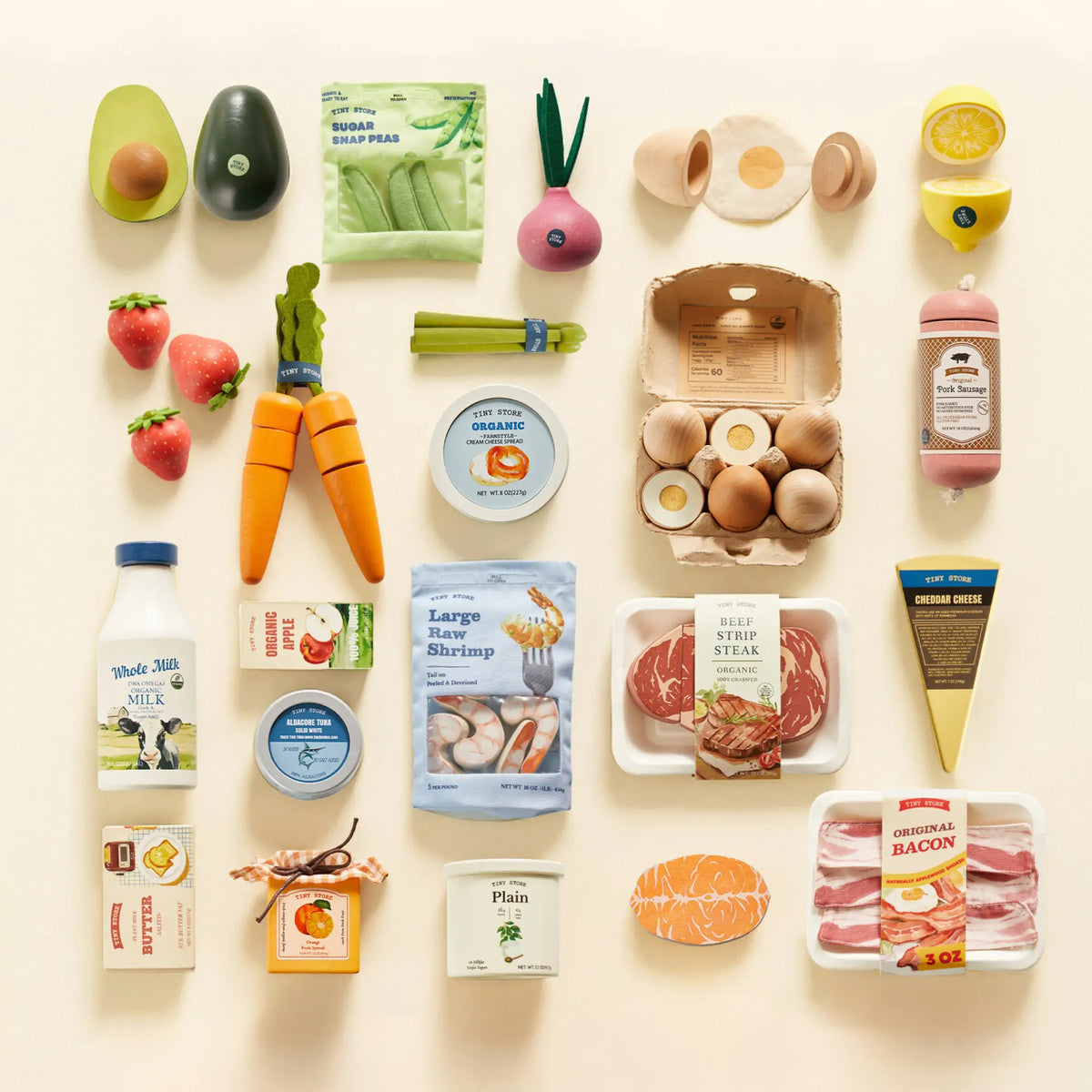
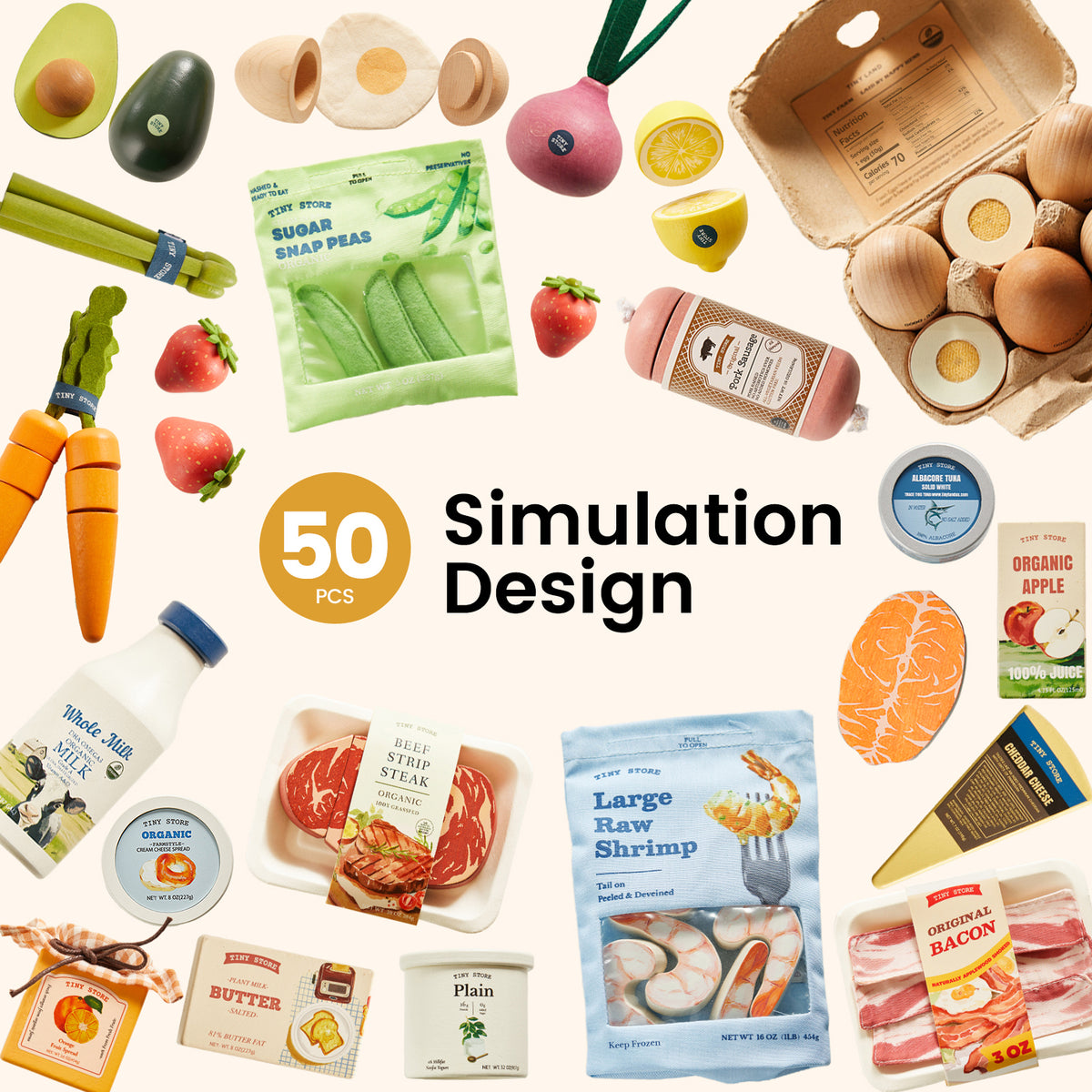
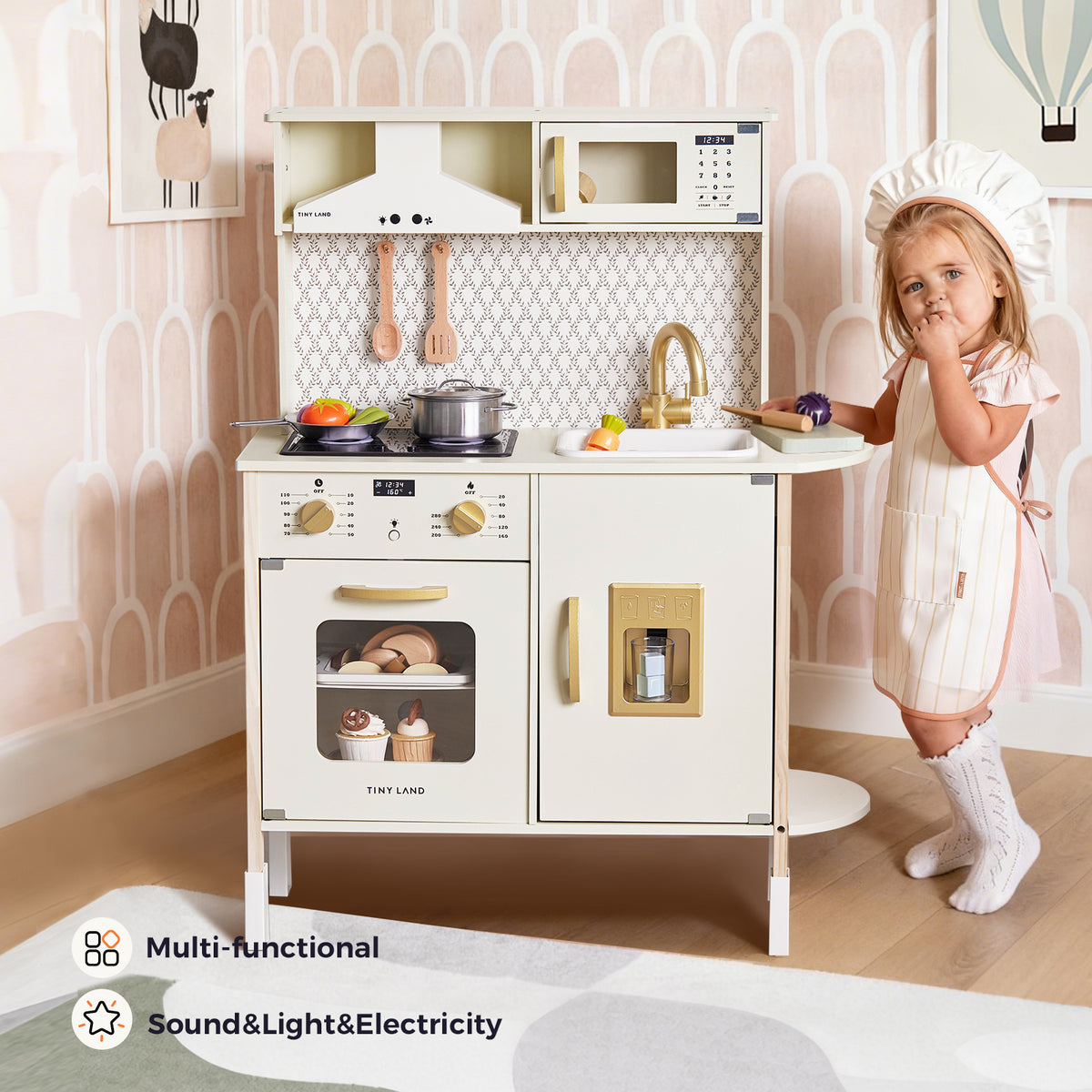
You do not need expensive mud kitchen resources to create meaningful play. A simple outdoor mud kitchen can include mixing bowls, cake tins, old pots and pans, spoons, cups, jugs, kitchen utensils, and a small storage space.
Adding natural materials such as leaves, flowers, sticks, stones, pinecones, and water makes the play even richer. Children can use these items for making food, decorating mud cakes, creating magic potions, or inventing imaginary dishes.
You can also add simple menus, labels, or recipe cards to support early maths skills and early literacy. Children might count stones, compare amounts, measure water, or talk about whether a bowl is full or empty. These small activities help children learn naturally through play.

How Adults Can Support Mud Kitchen Language Development
Adults do not need to control mud kitchen play. In fact, children often learn more when they are allowed to lead. The best approach is to observe, listen, and gently add language when it feels natural.
Instead of asking too many questions, adults can make comments such as, “That mixture looks very thick,” or “You are pouring the water carefully.” Open questions can also help, such as “What are you making today?” or “What happens if you add more leaves?”
Adults can also model social language. Phrases like “Can I have a turn?”, “Let’s share the spoon,” and “Would you like some help?” support cooperative play and teach children useful communication skills.

Final Thoughts
Mud kitchen play is messy, creative, and full of learning. It gives children a natural reason to talk, listen, imagine, describe, negotiate, and solve problems. Whether they are making a mud pie, running a mud kitchen café, mixing mud, or creating flower cakes, children are developing important language skills through play.
The benefits of mud kitchens reach across many areas of child development. They support fine motor skills, gross motor skills, sensory play, physical development, emotional development, cognitive development, social skills, and a deeper connection with the natural world.
Most importantly, mud kitchen play encourages children to use their own ideas. It fosters independence, creativity, and confidence. A simple outdoor mud kitchen is not just a place for muddy creations. It is a powerful space where children learn language, build friendships, explore nature, and grow through hands on play.