



A pretend play grocery store turns a simple corner of your living room into an active learning center. Role-playing as a shopper, cashier, or store manager helps young children build early math skills, vocabulary, and cooperative social habits.
Whether your child wants to sell fresh wooden vegetables or run a cozy morning café, setting up a dedicated play area gives everyday objects new life.

What You Need for a Pretend Grocery Store and Cash Register
Building an engaging play grocery store does not require a complicated layout. A few core items establish the scene and invite open-ended play.
Play Food and Shopping Baskets
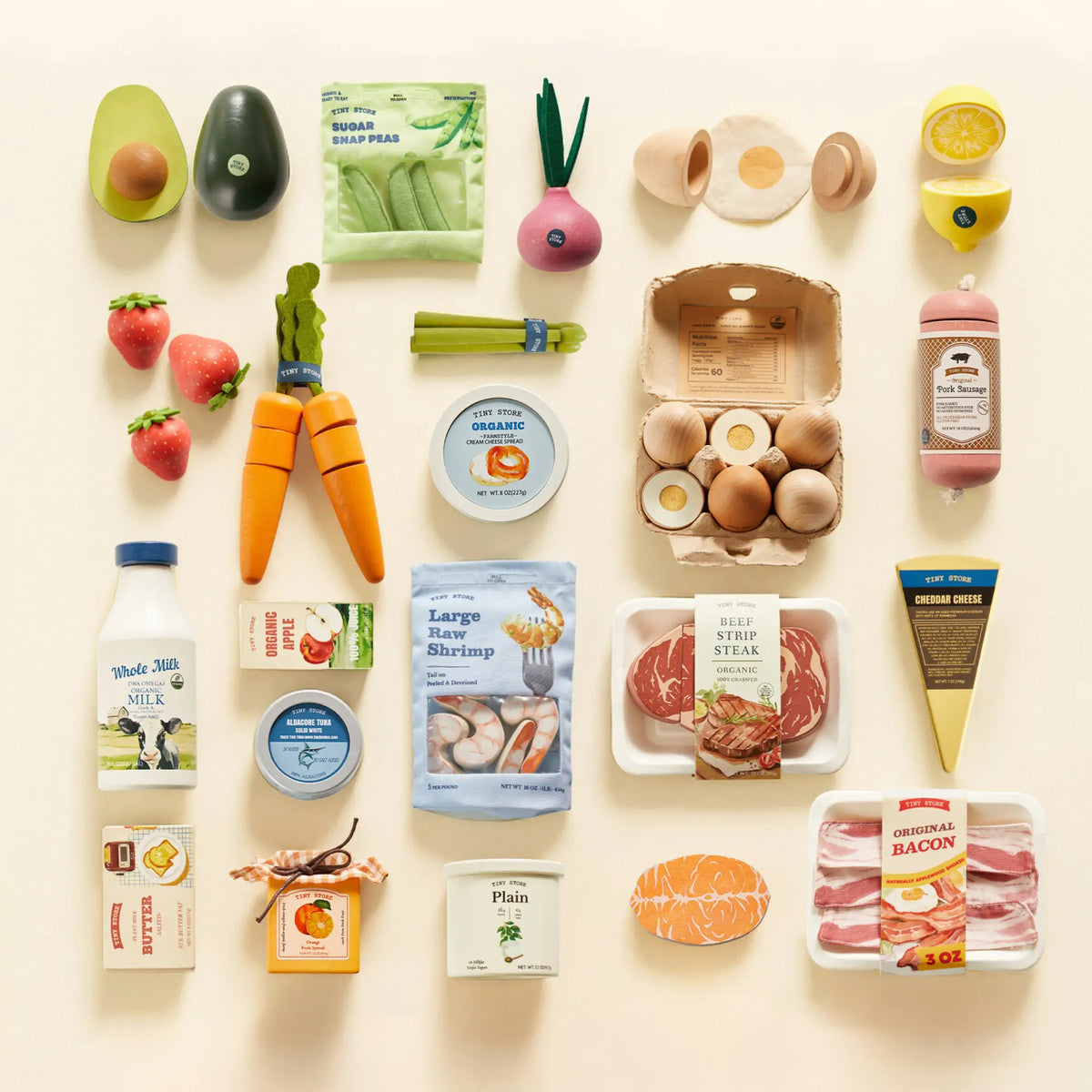
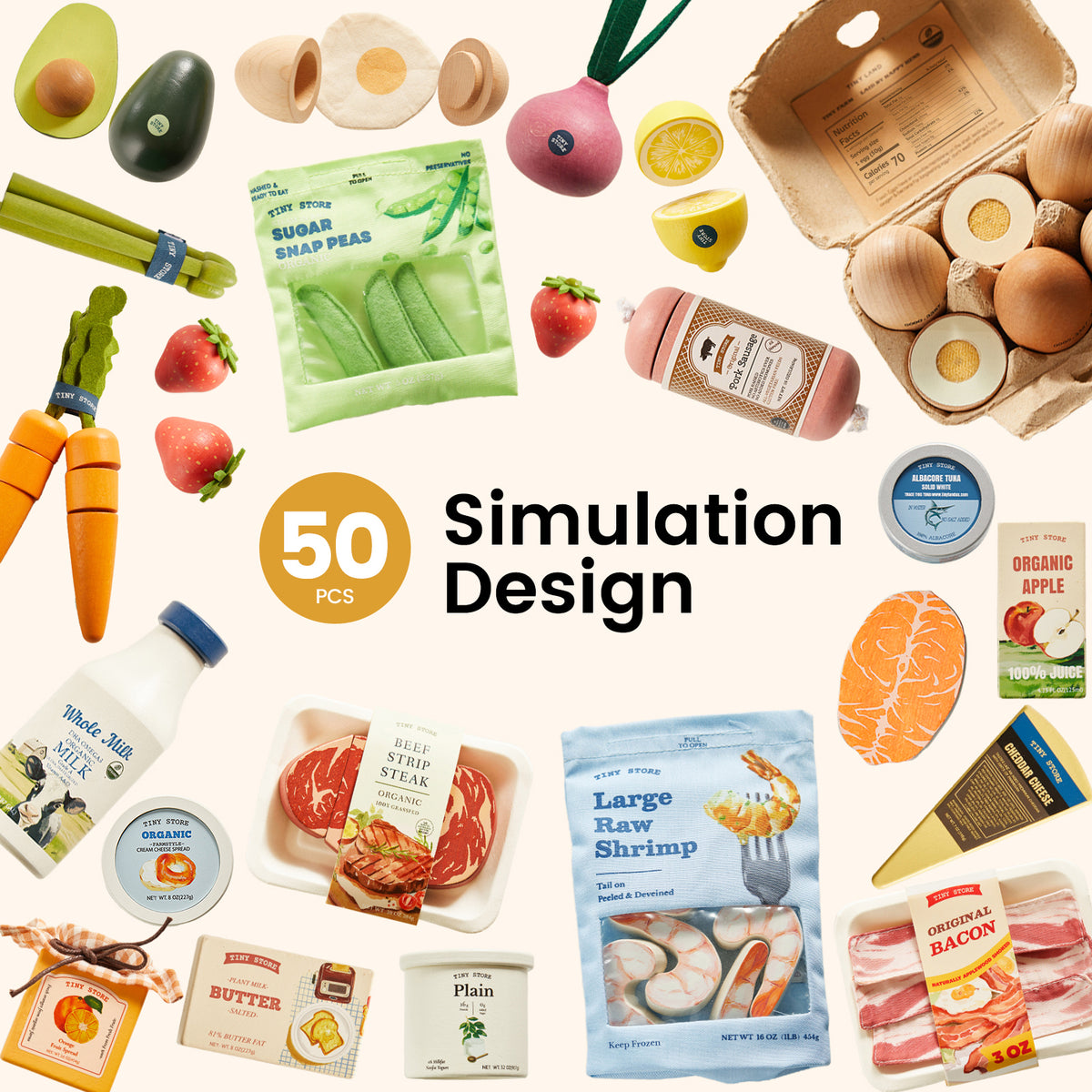
A good selection of toy produce, bakery items, play boxes, frozen foods, drinks, and pantry staples creates a realistic environment.
Sturdy wooden play food sets give toddlers and preschoolers concrete items to hold, stack, and sort. Realistic options can include produce with fresh fruits and vegetables, herbs, and pre-cut salad mixes; bakery items like breads, cakes, and pastries; frozen foods such as frozen vegetables, ice cream, and ready-to-eat meals; beverages like bottled water, juices, and sodas; and pantry and dry goods such as pasta, rice, and canned goods.
Pair these with small shopping baskets, canvas bags, or a lightweight cart so young shoppers can collect their groceries.

Signs, Labels, Conveyor Belt, and Simple Props
Incorporate simple paper props to add visual interest and support early literacy:
-
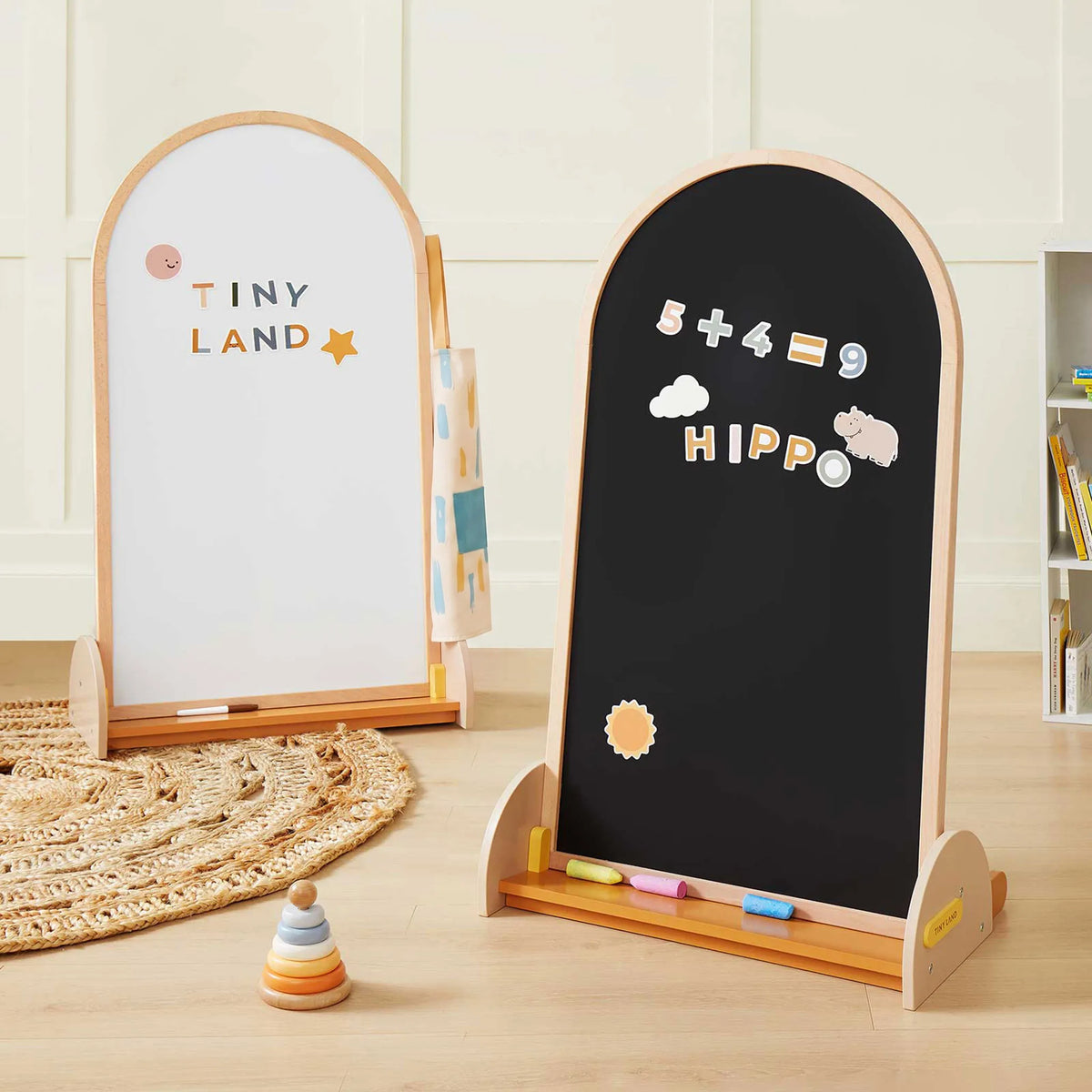
Small chalkboards or index cards for price tags.
-
Play money, wooden coins, or a pretend credit card.
-
A small notepad and pencil for shopping lists.
-
Fabric aprons or name tags for store employees.
Choose a Store Theme
Switching themes keeps the setup fresh and encourages new vocabulary.
Farmers Market
Focus on fresh produce, floral displays, and wooden crates. Kids can sort fruits by color, weigh vegetables, and talk about seasonal harvests.
Neighborhood Grocery Store
Set up organized aisles using everyday pantry staples alongside wooden play items. Children can stack boxed goods, arrange milk cartons, and stock shelves by category.
Pretend Coffee Shop
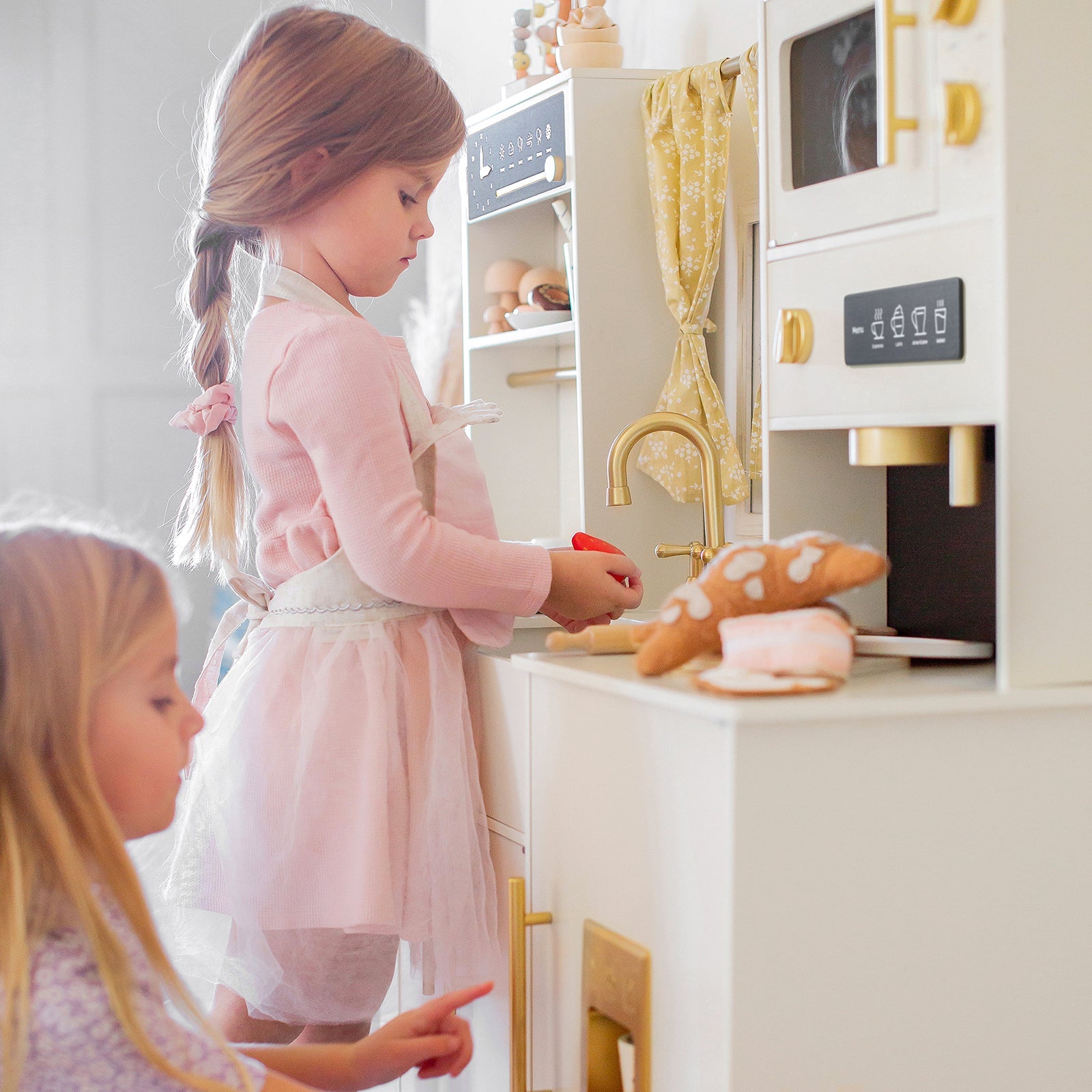
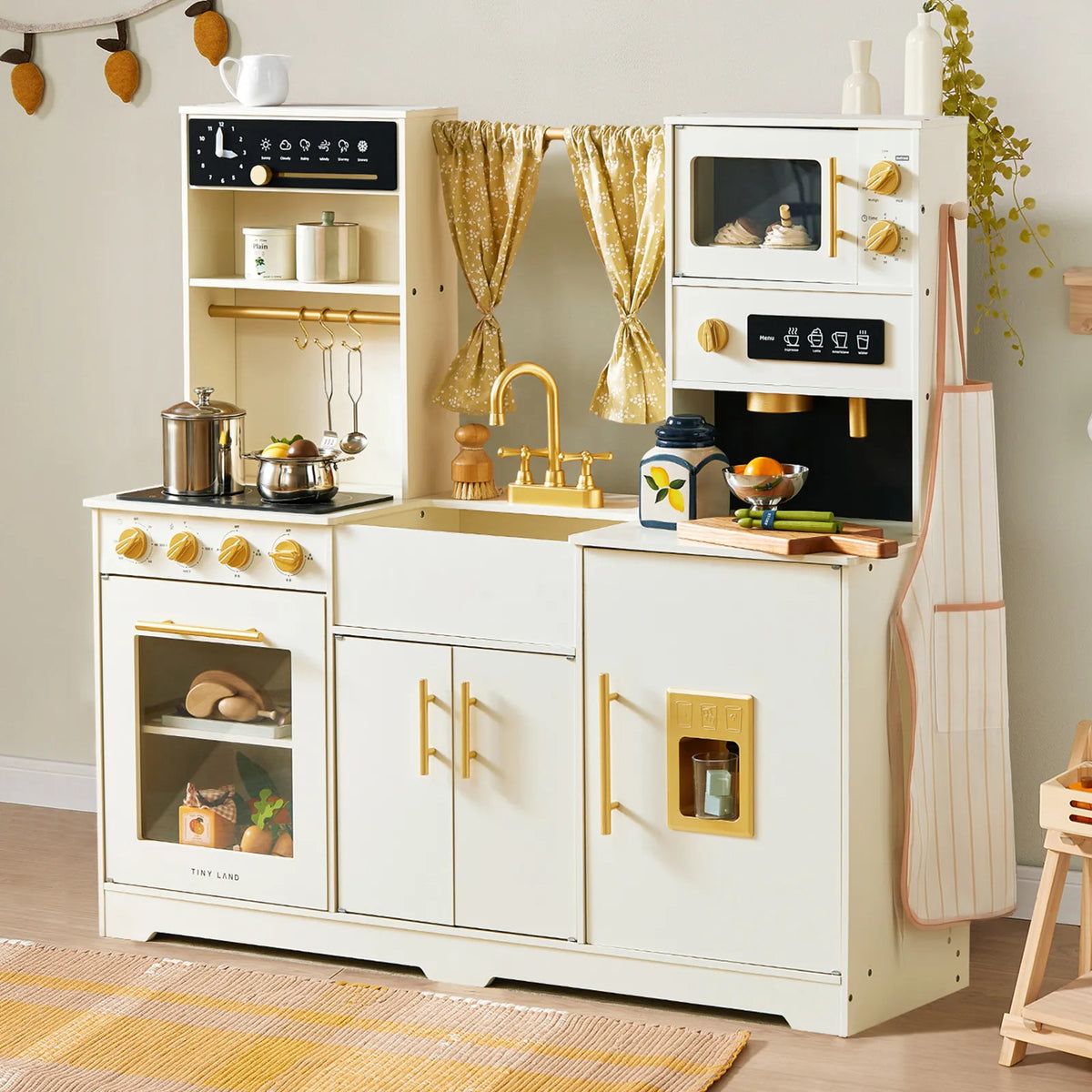
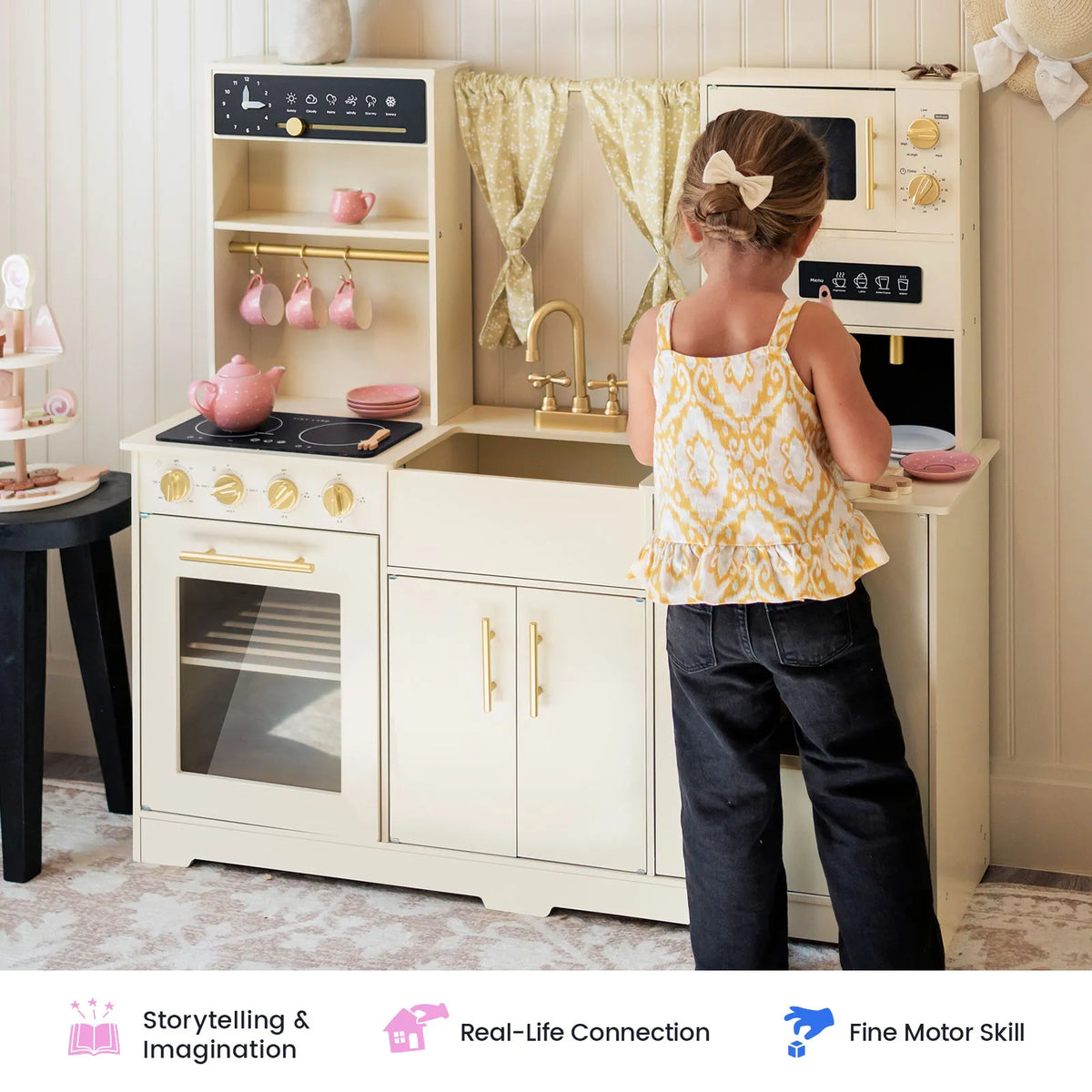
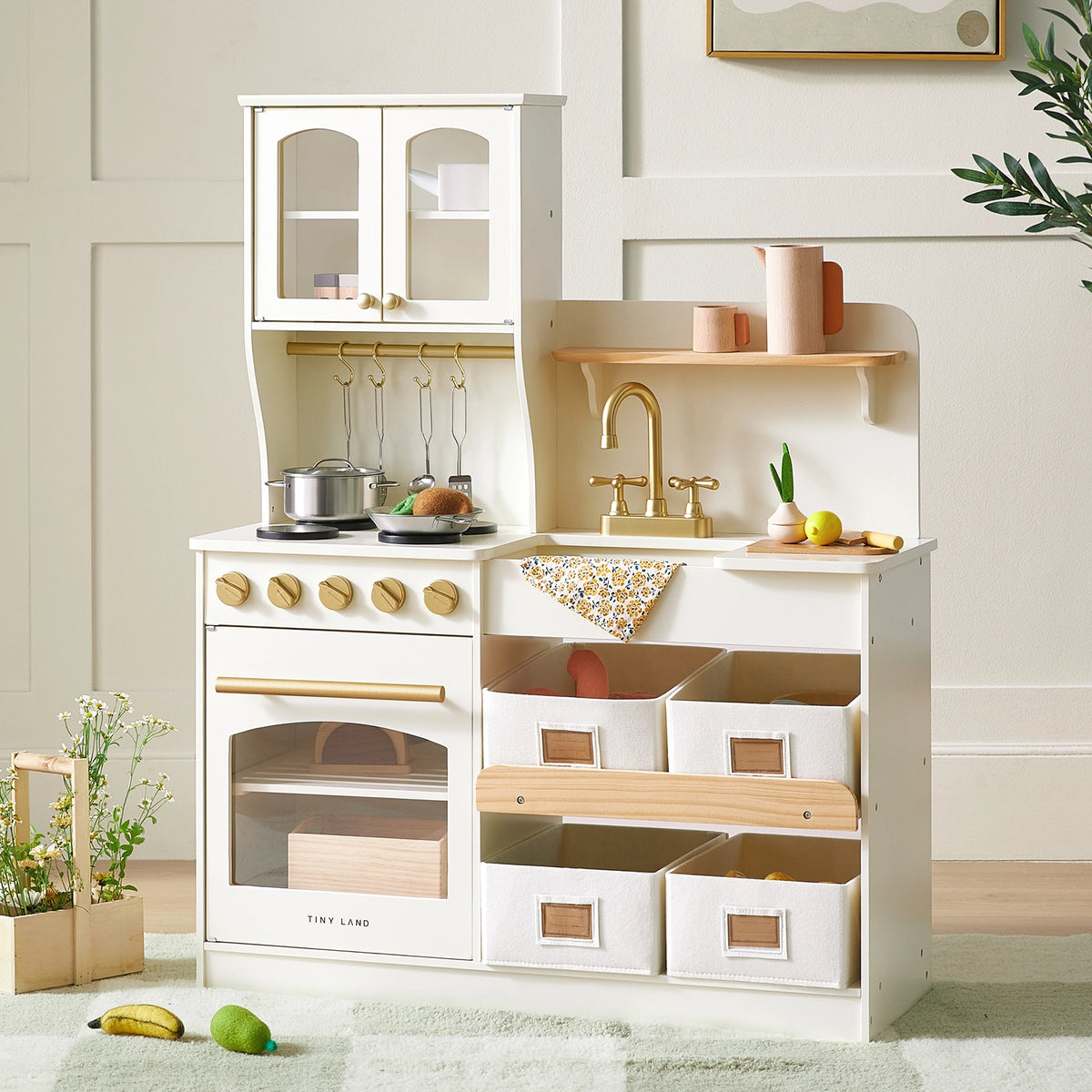
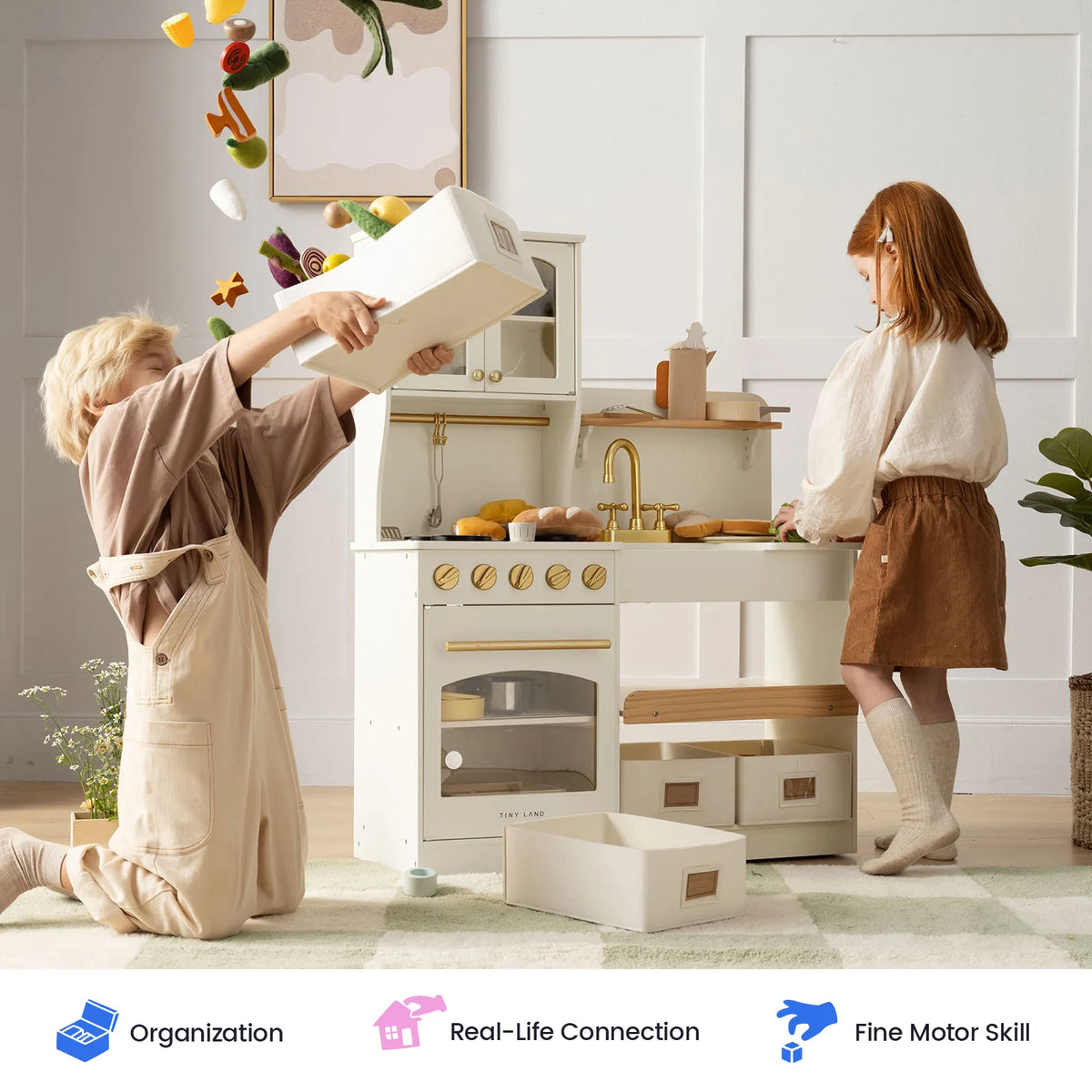
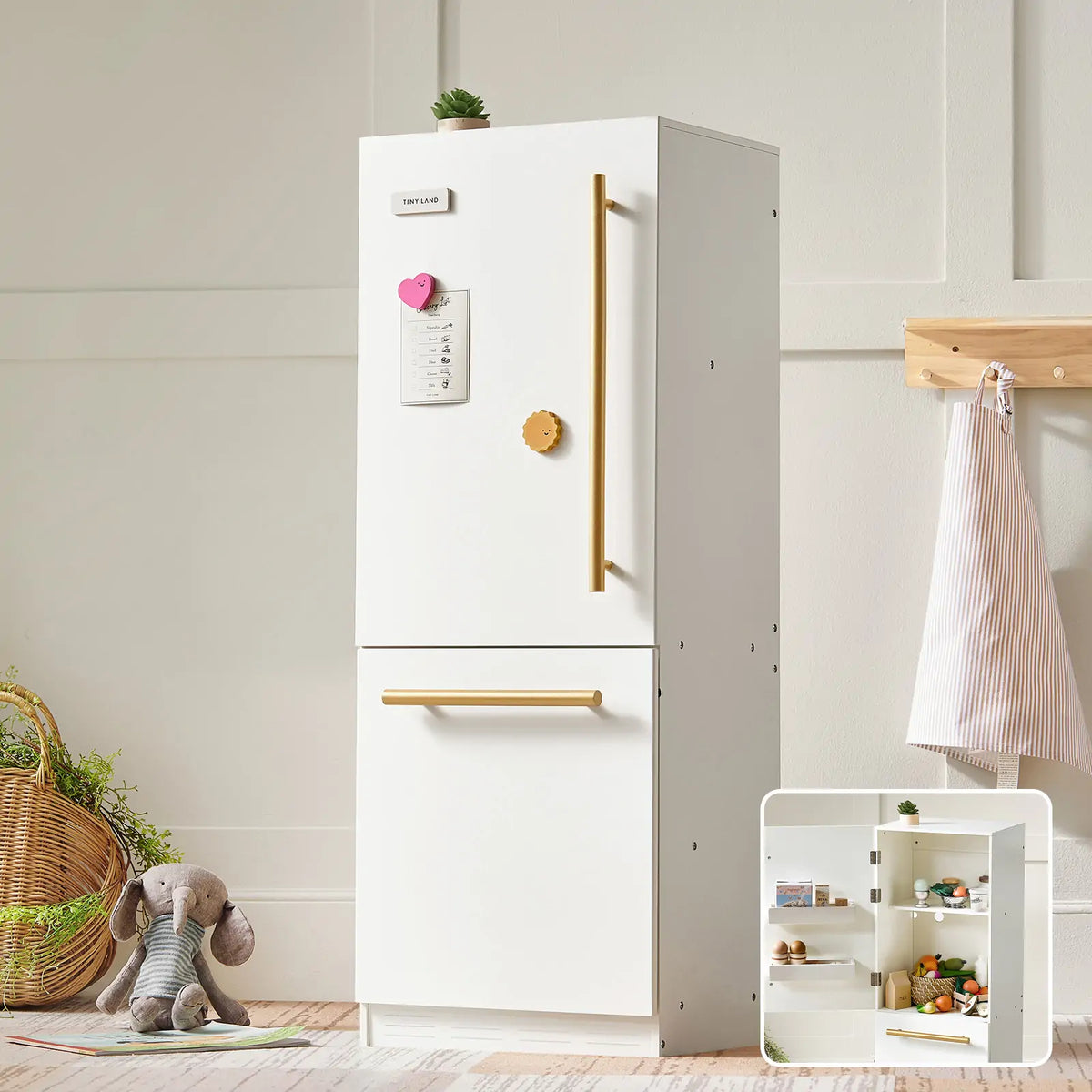
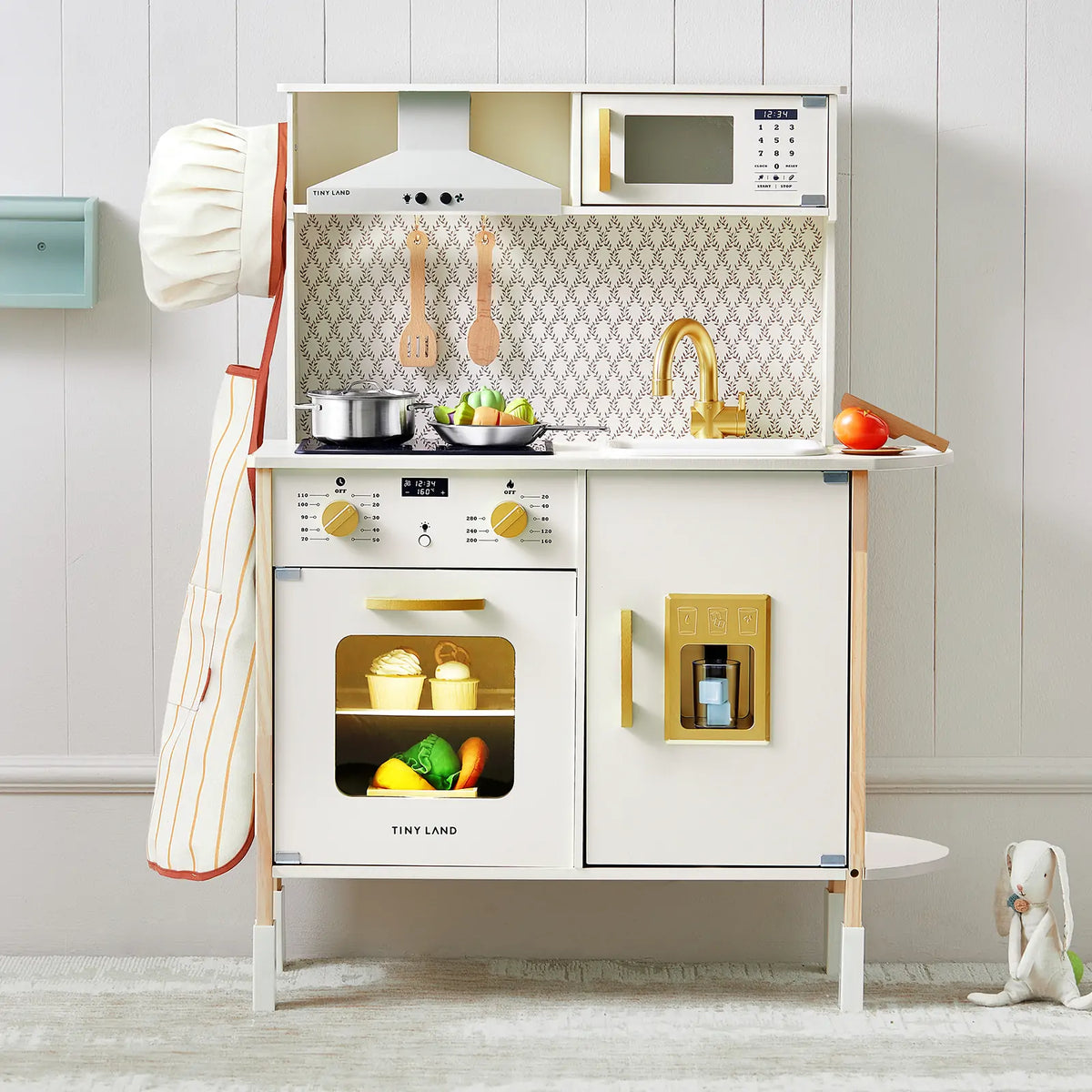
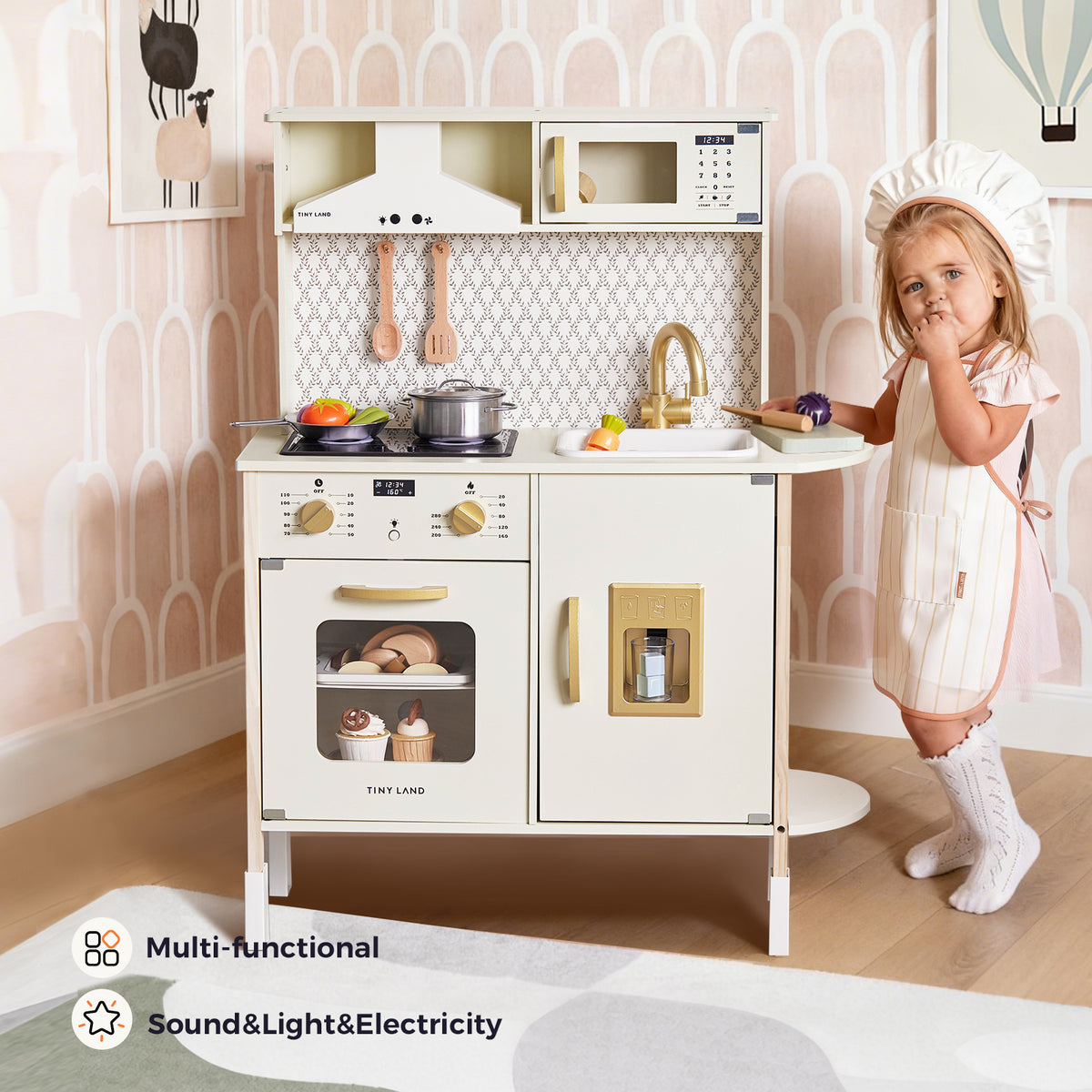
Add a Tiny Land play kitchen and transform the storefront into a local café serving warm drinks and pretend baked goods. Children can write daily drink specials, take orders, and serve customers.

Create Four Grocery Store Zones
Dividing your kids grocery store into clear functional areas organizes the space and guides independent play:
-
Produce and Food Display: Place shelves or crates at eye level so children can easily reach items.
-
Shopping Area: Leave enough open floor space for kids to move around safely with baskets or push carts.
-
Checkout Counter: Position a flat table or dedicated play counter with a register, buttons, and a scanner space to mark the end of the transaction; some playsets also add a conveyor belt to make checkout feel more realistic.
-
Storage and Cleanup Area: Keep storage bins nearby to quickly clear items off the floor at the end of the day.

10 Pretend Grocery Store Activities
Keep farmers market pretend play engaging with these simple, skill-building activities for the whole family:
-
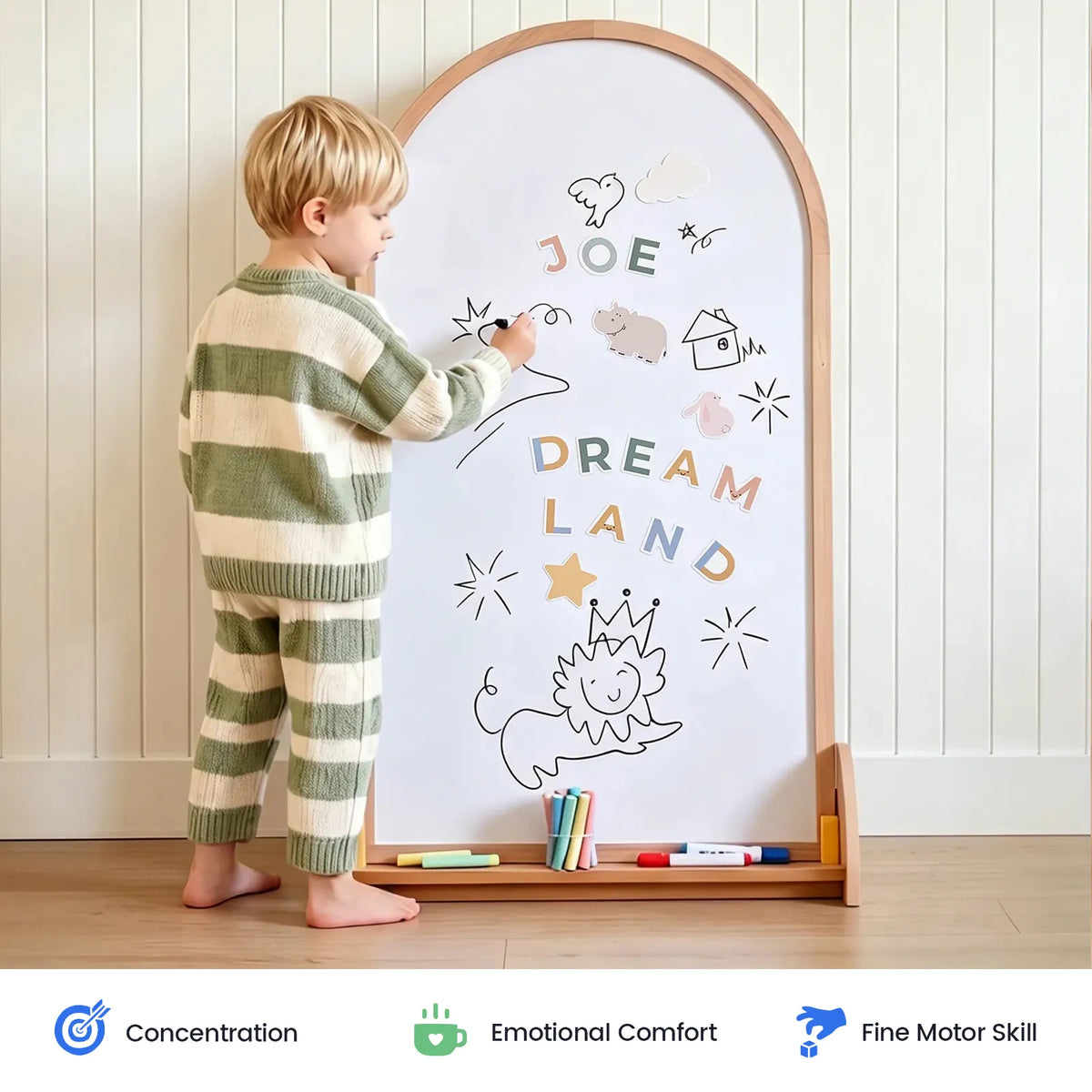
Make a Shopping List: Have children draw pictures or write words on a paper list before they start shopping.
-
Sort and Stock the Shelves: Group items by type, color, or shape before opening the doors.
-
Take Turns as Customer and Cashier: Practice social greetings, asking for assistance, and taking turns, and talk about how shopping during non-peak hours can mean shorter waits and less crowding.
-
Add Pretend Prices: Use chalk or markers to write simple numbers (1 to 5) on price tags.
-
Count Items at Checkout: Count each wooden piece out loud as it moves into the shopping bag.
-
Choose a Daily Special: Let your child highlight one item of the day on a small hanging sign.
-
Restock the Store: Role-play a delivery driver delivering fresh wooden produce to the back of the shop.
-
Run a Farmers Market: Focus strictly on fruit, vegetables, and floral displays for an outdoor market vibe.
-
Open a Pretend Coffee Shop: Pair your store with play kitchens for kids to serve pretend snacks and drinks.
-
Close and Clean the Store: Turn clean-up into part of the game by closing shop and wiping down counters at the end of playtime.

Pretend Grocery Store Ideas by Age
Adapting role play activities for kids to match developmental stages keeps playtime engaging and frustration-free, and grocery-store role play works well both at home and at school as children grow.
Ages 3–4 (Motor Skills & Vocabulary)
-
Carrying baskets and loading items.
-
Naming food items out loud.
-
Placing play food into bins.
-
Simple sorting by color, shape, or food group.
Ages 5+ (Early Math & Storytelling)
-
Writing interactive shopping lists.
-
Using play money to calculate basic totals and give change.
-
Making custom chalkboard signs and price tags.
-
Assigning store roles and creating customer-cashier scenarios with one of the educational toys teachers or parents can use for math and storytelling practice.

How to Add Play Food to a Grocery Store Setup
A dedicated grocery store playset gives children a realistic structure for all their store activities.
The kids grocery store playset from Tiny Land provides a complete, double-sided play center designed for children ages 3 and up.
Crafted from eco-friendly plywood, MDF, and solid wood, this 16 lbs unit measures 23.4 × 12.8 × 36.4 inches, offering a stable play space that fits comfortably in playrooms or bedrooms.
This versatile playset easily transitions between a Farmers Market and a Coffee Shop using interchangeable signage.
The checkout side features a built-in cashier counter complete with a keypad, screen design, price labels, and chalkboard surfaces for custom menu writing.
On the reverse, six built-in storage spaces make it easy to neatly organize accessories, restock wooden produce, or combine the set with your favorite play food collections.
Ready to open a market at home? Explore the Tiny Land grocery store playset and add play food for shopping, checkout, and everyday pretend-play games.

Frequently Asked Questions
What is the ideal age for a pretend play grocery store?
Pretend store activities suit children ages 3 and up. Younger children (ages 3–4) enjoy simple shelf sorting and carrying baskets, while older children (ages 5+) engage in math games, price labeling, and detailed role-playing. For budget-friendly pieces, check facebook Marketplace or local Buy Nothing groups.
How do you make a pretend grocery store at home with limited space?
Use a compact, multi-sided unit with built-in storage to keep everything organized in a small footprint. Larger wooden units can hold a lot, but they need more room. You can also define the space with simple canvas bins, a small table for the register, and a floor mat for shoppers. If you want it to feel more like a real market, a removable fabric awning is an easy optional touch. A basic cash register or checkout tray also works well in a small setup.
How does store role-play benefit child development?
Running a play store builds fundamental math concepts (counting, basic addition), fine motor coordination, language development, and social cooperation through taking turns as customer and cashier.