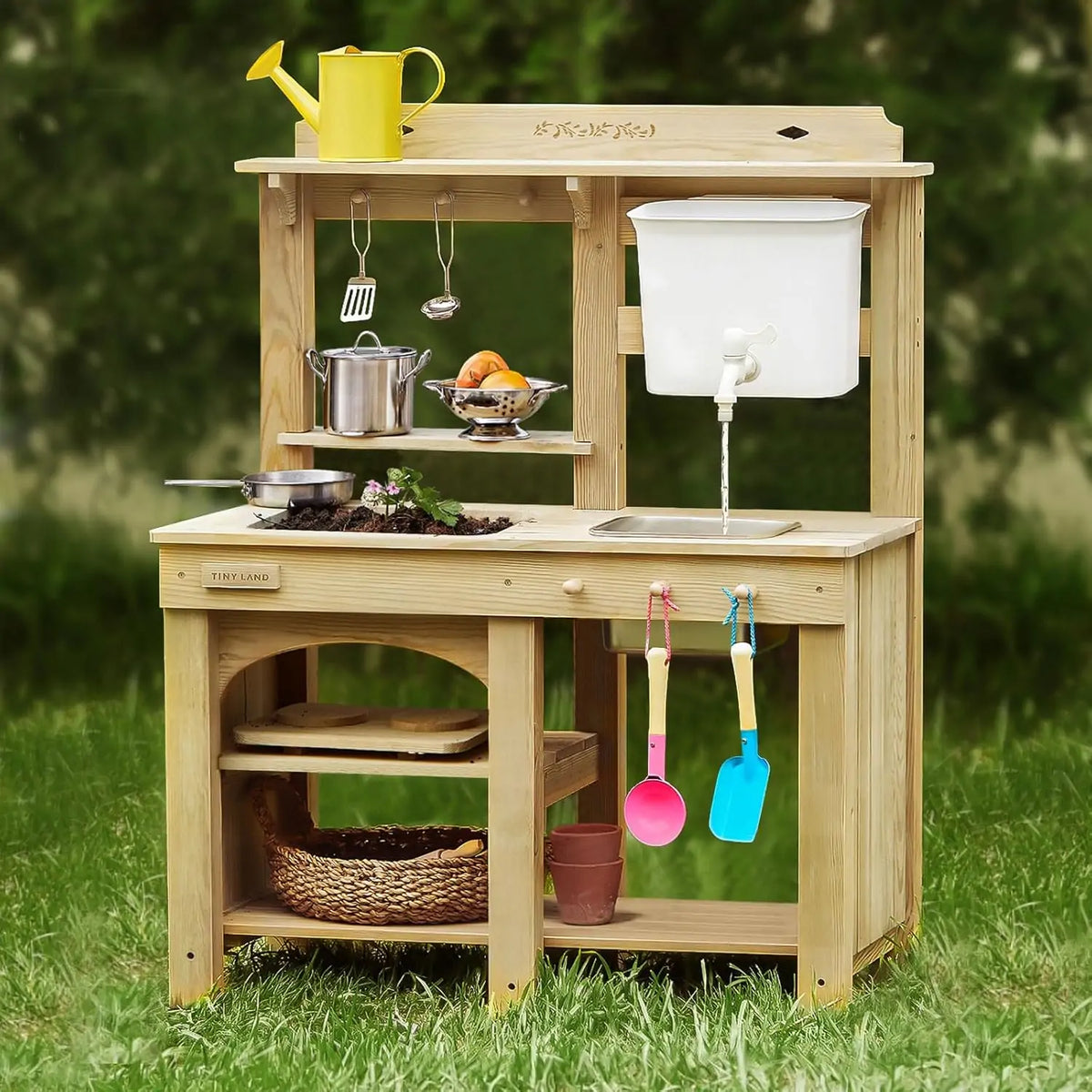
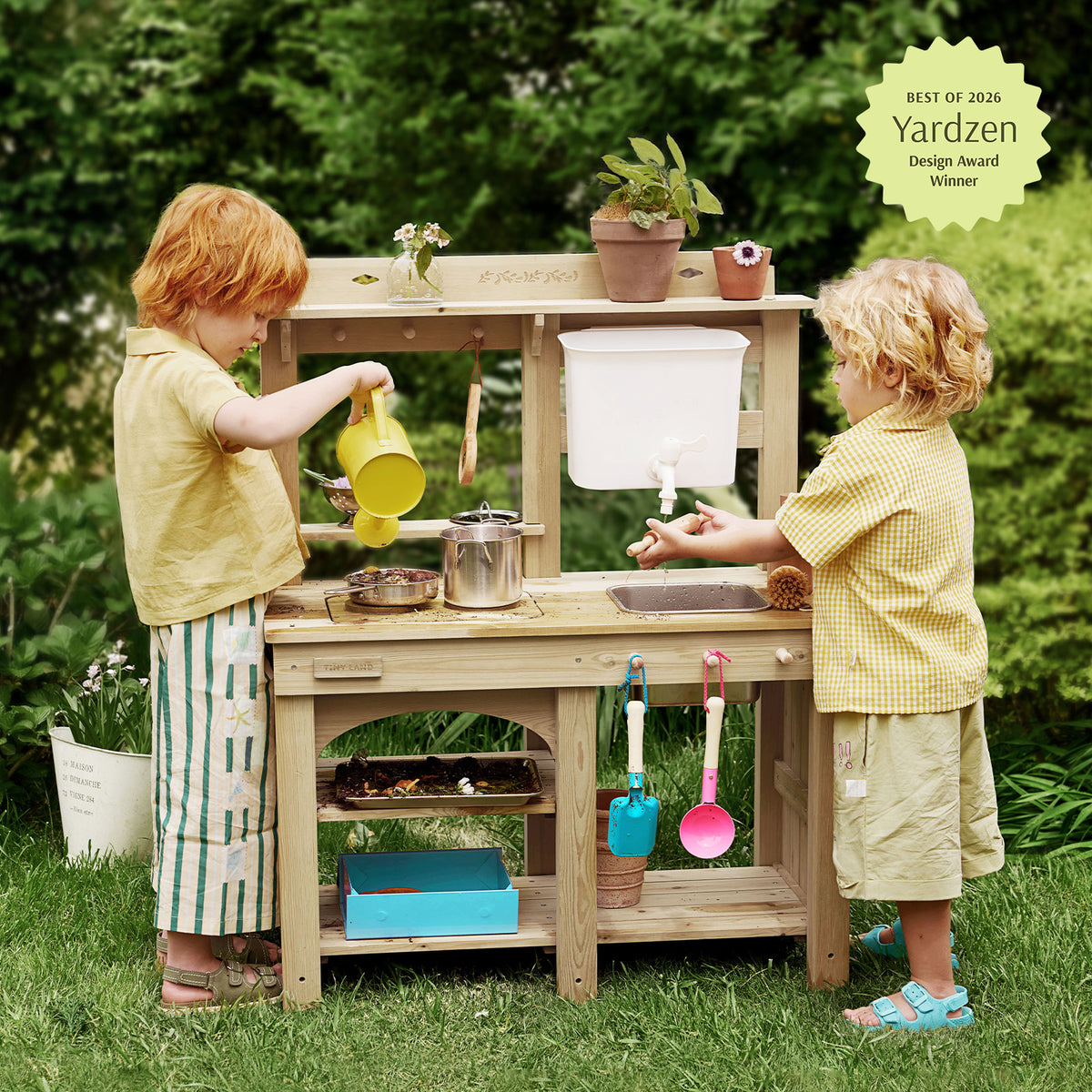
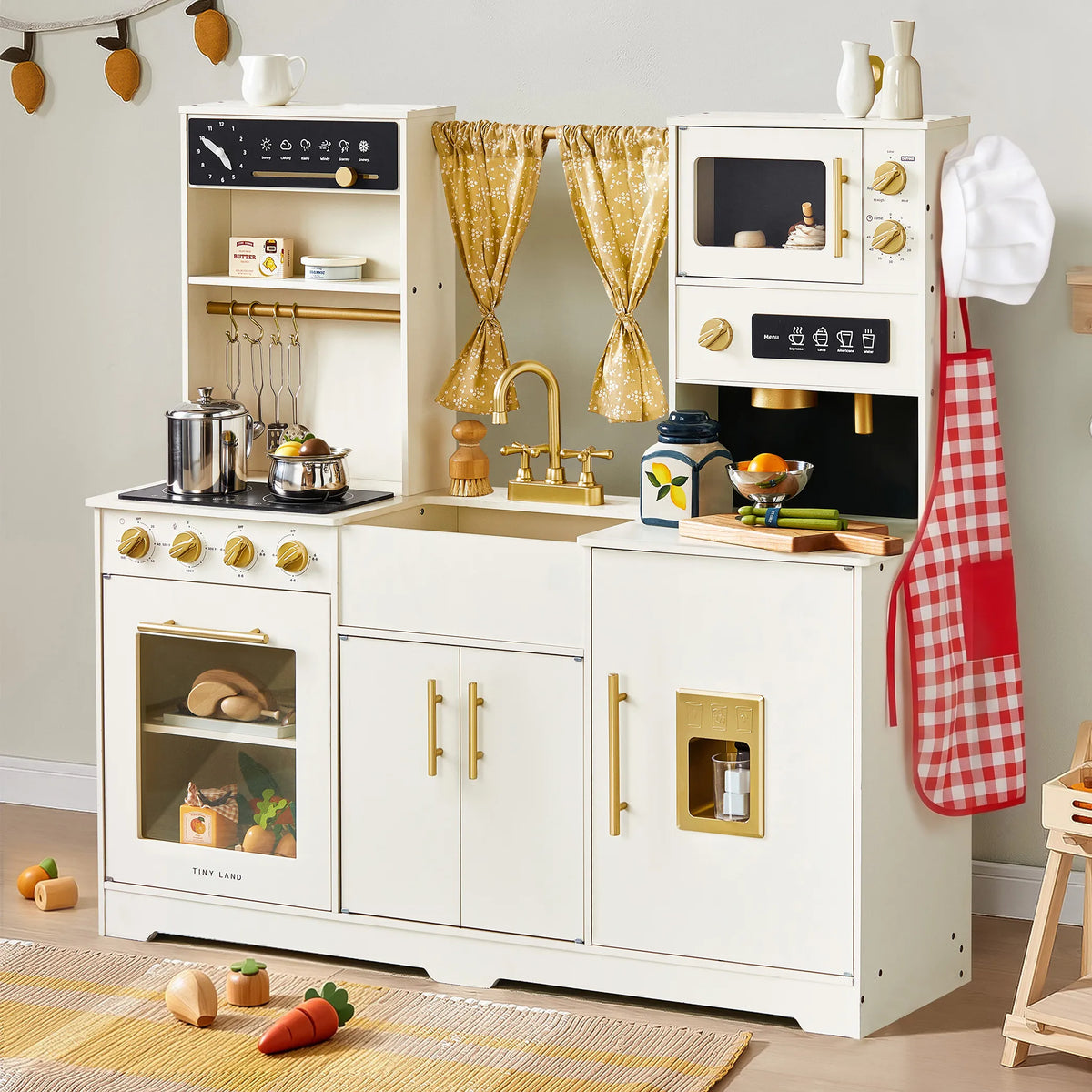
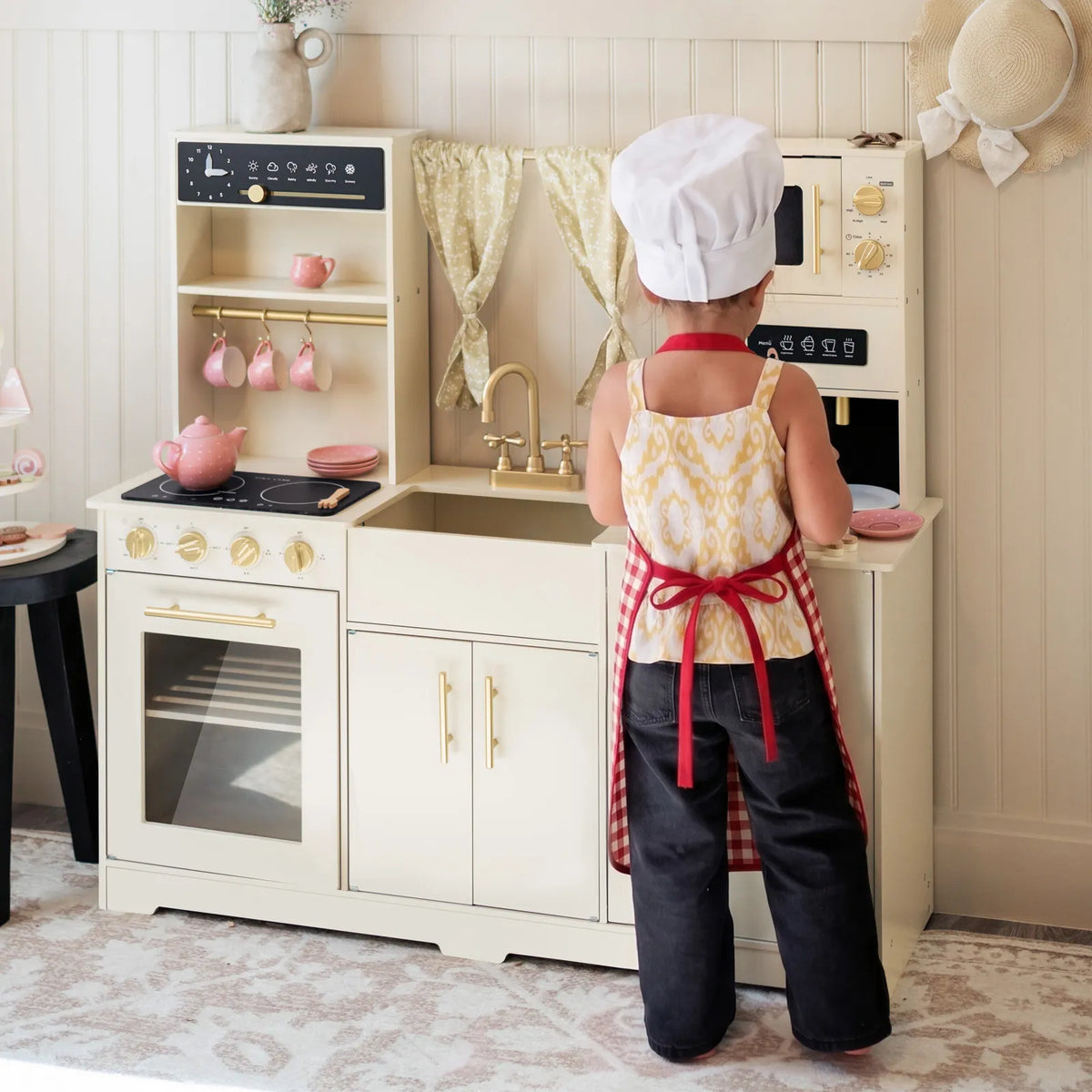
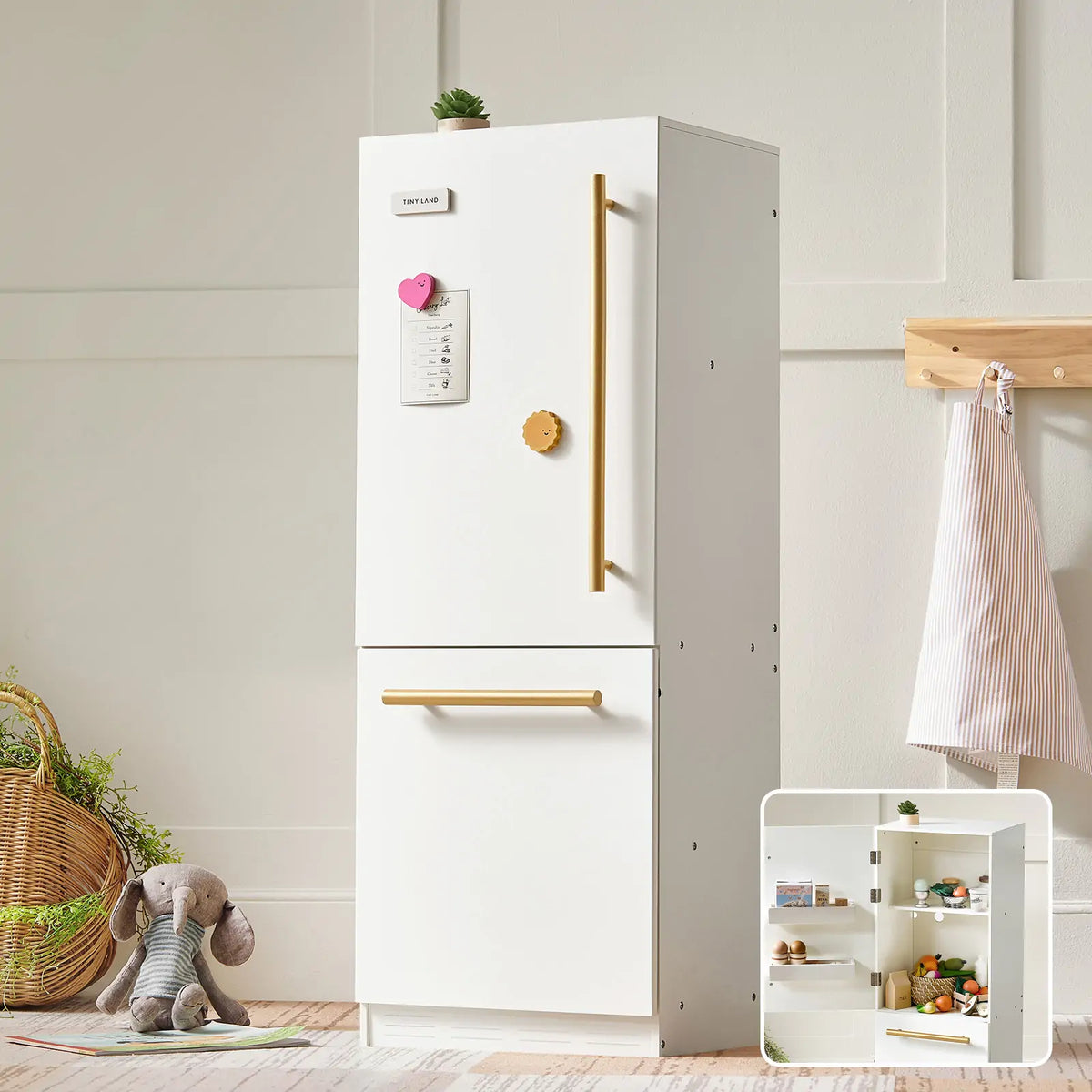
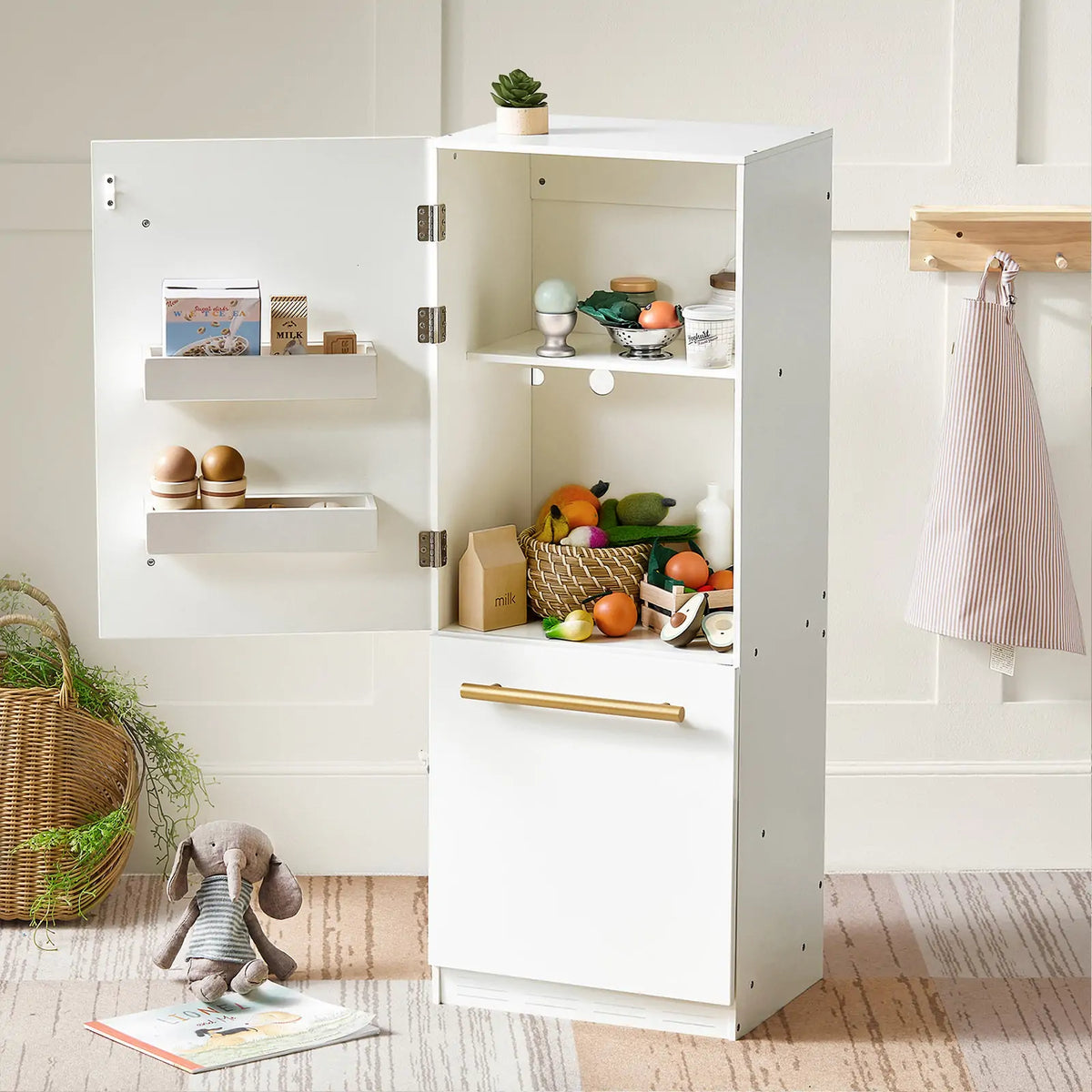
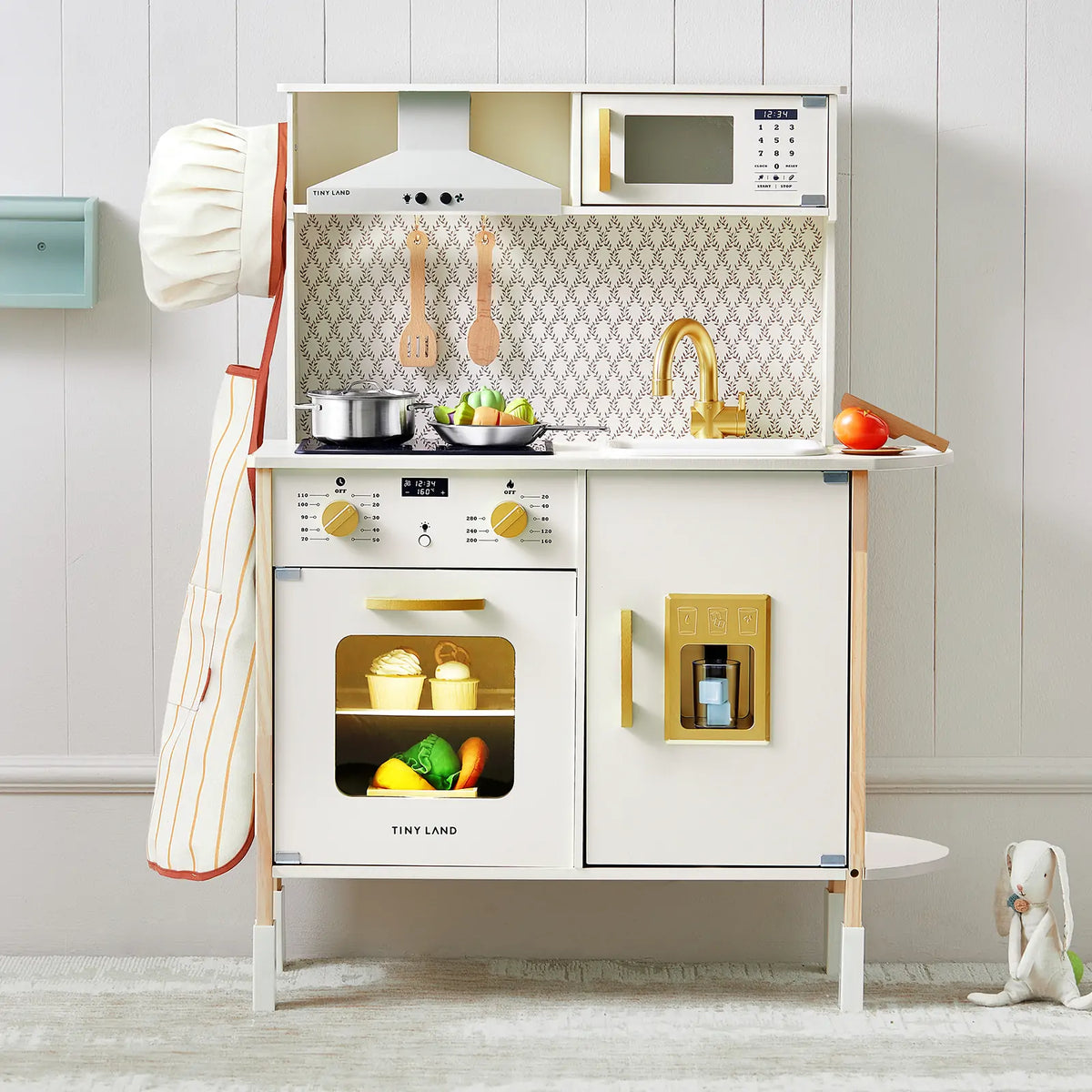
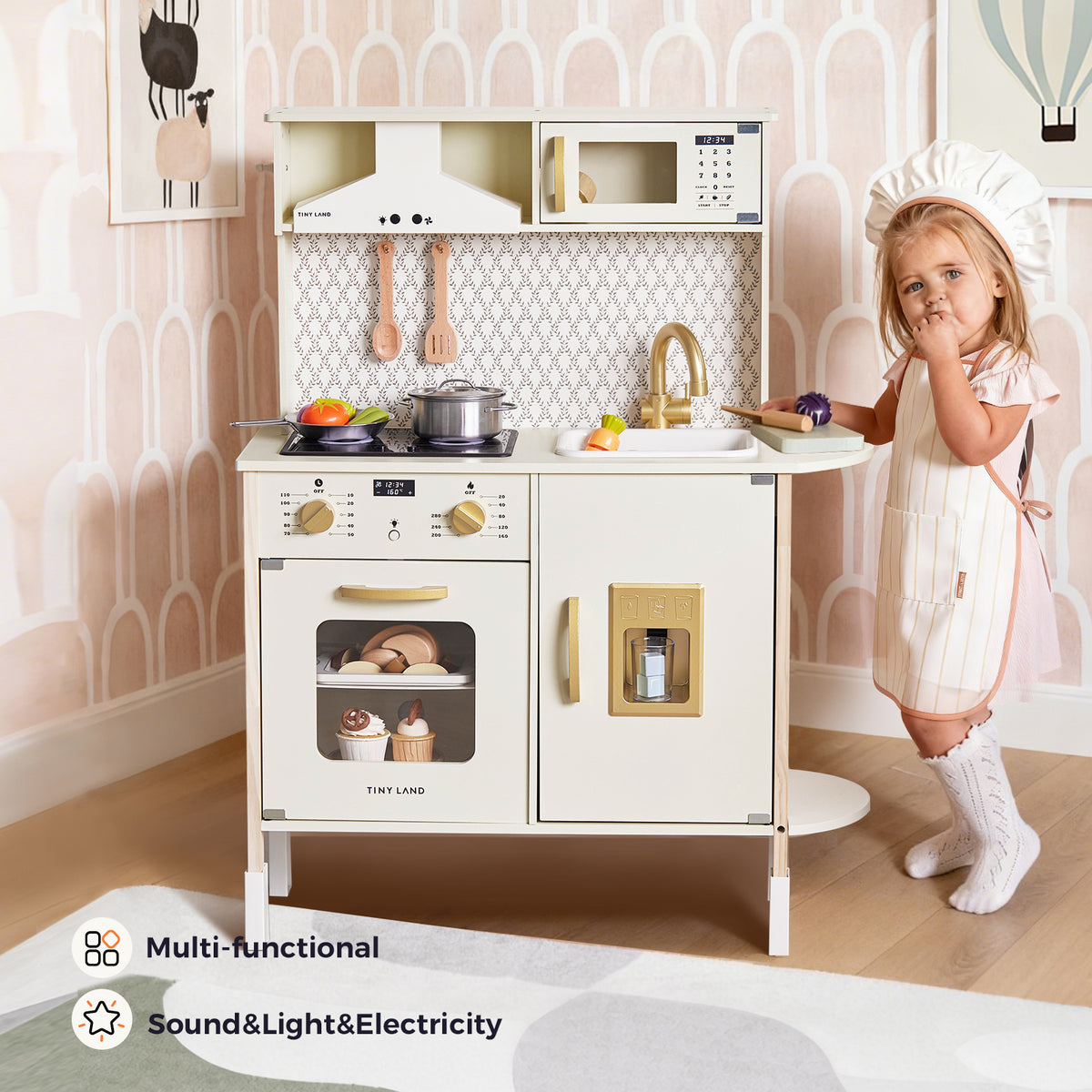




A storage play kitchen can give children more than a place to pretend to cook. It can create a dedicated play space, keep pretend-play accessories together, and give families a simple way to organize a children's play area.
For parents comparing a play kitchen with storage, the most useful features are often the ones that make the kitchen easy to play with and easy to keep organized.
This guide explains what a storage play kitchen is, why storage matters, how to organize one, and what to look for when choosing a kids' play kitchen.

What Is a Storage Play Kitchen?
A storage play kitchen is a children's pretend-play kitchen that combines a cooking play area with dedicated storage for cookware and other accessories.
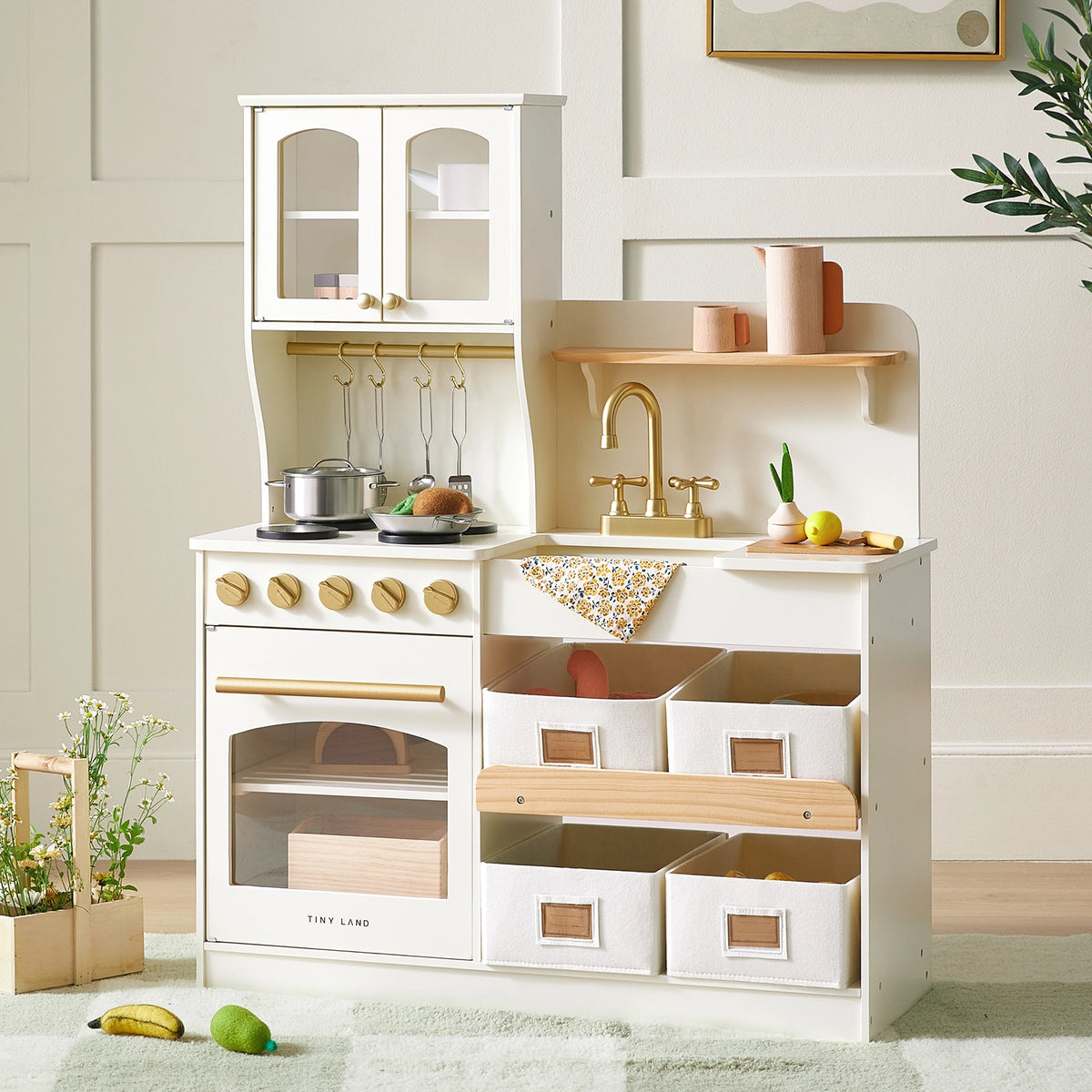
A typical pretend kitchen may include features such as a countertop, cookware, or a sink and faucet.
A storage-focused design adds places where children can keep those accessories when they are not being used.
This can make the play setup easier to manage, particularly when children have several small pretend-play items.
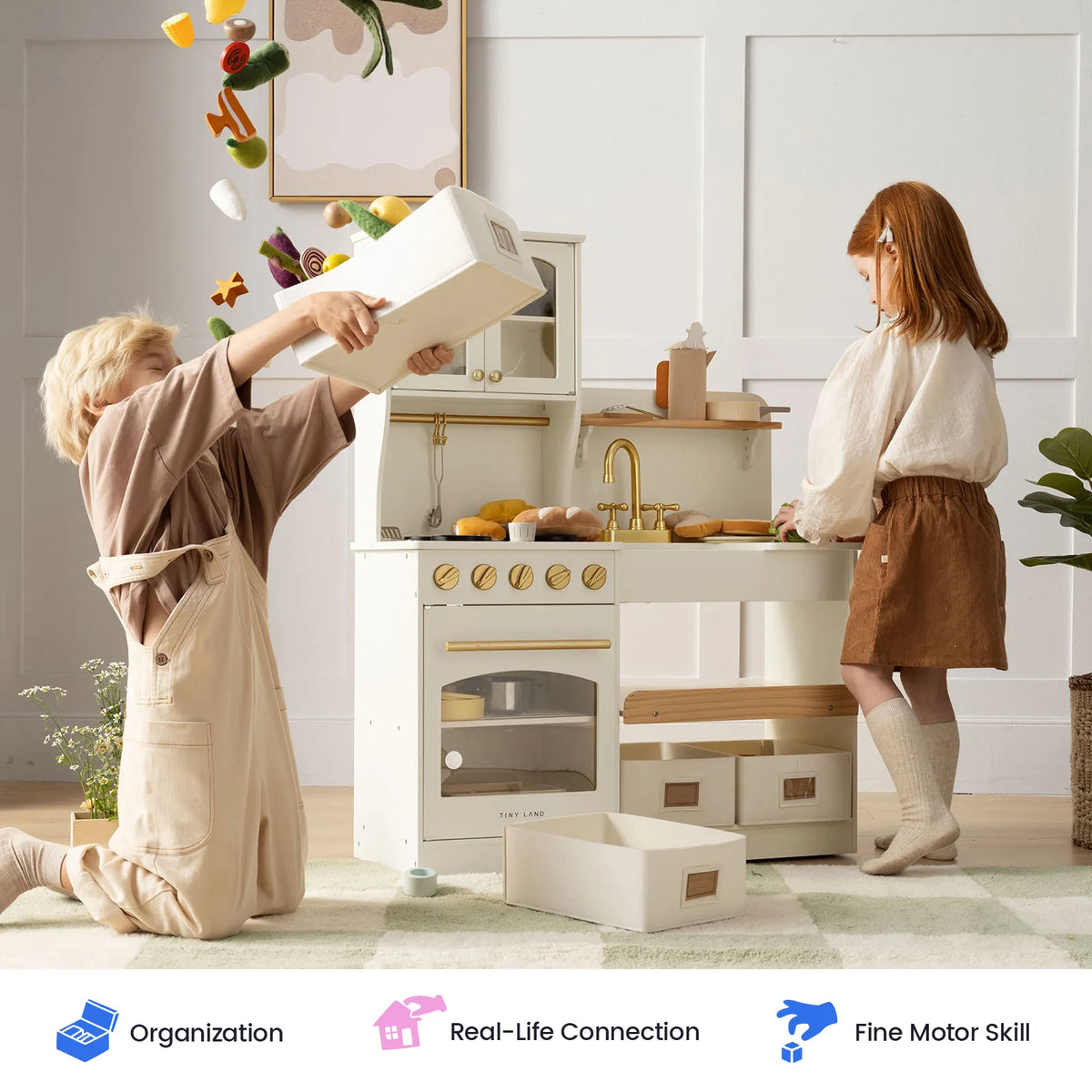
For example, a child might use a pretend frying pan, pot, or utensil during a cooking game and then return it to the kitchen's storage area when the game is finished.
The result is a simple connection between playing, using, and putting away.

Why Is Storage Useful in a Kids' Play Kitchen?
Storage is a practical feature, but it can also influence how a play kitchen works as part of a family's home.
It Keeps Accessories Together
Pretend kitchens often involve multiple accessories. Without a designated storage area, those pieces can end up scattered around the playroom.
Built-in bins or cupboard space give accessories a consistent place to go.
It Makes the Play Setup Easier to Reset
A dedicated storage area can make it easier to return accessories to the kitchen after play.
Instead of finding a separate container or shelf, children can put their pretend kitchen items back into the same space where they play.
It Keeps the Kitchen Ready for the Next Play Session
When accessories stay with the kitchen, children can find what they need when they want to start playing again.
This can make the play setup feel more complete and easier to maintain.

What Should You Look for in a Play Kitchen With Storage?
Not every storage system works the same way. When comparing play kitchens with storage, consider how the storage fits into the actual play experience.
Dedicated Storage Space
Look for storage areas that are part of the kitchen itself.
A cupboard, bins, or other integrated storage can keep accessories close to the pretend-play area.
Easy-to-Understand Organization
A storage system works best when it is simple.
Label-ready storage bins can give parents the option to add words, pictures, or other visual cues to help organize accessories.
Enough Pretend-Play Features
Storage is useful, but the kitchen still needs to function as a pretend-play environment.
Features such as a countertop, cookware, and an imitation faucet can provide familiar details that children can incorporate into their imaginary kitchen scenarios.
A Design That Fits the Home
A children's play kitchen can become a visible part of a living room, bedroom, or play area.
For families who want a toy that works with their home environment, the overall design and color can be important considerations alongside functionality.

How Do You Organize a Kids' Play Kitchen?
You do not need a complicated system to organize a play kitchen.
A simple approach can be enough.
Group Similar Accessories Together
Keep cookware and other similar pretend-play accessories in consistent storage areas.
Use Labels or Pictures
If the kitchen has label-ready bins, add simple labels to identify where items belong.
For younger children, pictures can be used as visual reminders alongside or instead of words.
Make Cleanup Part of the Play Routine
After pretend cooking, encourage children to return their accessories to their storage spaces.
The routine can be as simple as:
Play → use → put away → ready for next time.
Keep the System Flexible
The purpose of playroom organization is to make the space easier to use, not to create another complicated household task.
If the system becomes difficult to maintain, simplify it.

How Can a Play Kitchen Support Pretend Play?
Pretend cooking gives children a familiar setting for creating their own stories.
A play kitchen can become a family kitchen, restaurant, café, or any other setting a child imagines.
The Tiny Land Wooden Play Kitchen with Storage includes pretend cookware and an imitation faucet, adding familiar elements to kitchen role-play.
Children can decide what they are preparing, who they are serving, and what happens next.
Because pretend play does not have one fixed storyline, the same kitchen can be used for different scenarios over time.
The kitchen can also become a shared play space. Children may take on different roles, communicate with one another, and create a pretend scenario together, providing opportunities for social interaction and cooperative play.

Tiny Land Wooden Play Kitchen With Storage
The Tiny Land® Wooden Play Kitchen with Storage for Creative Toddlers combines pretend kitchen play with dedicated organization.
Its features include:
- 4 Label-ready storage bins
- A roomy cupboard
- Countertop space
- An imitation faucet
- Pretend cookware
- 15 pieces in total
The design takes inspiration from a chic cottage-core aesthetic, bringing a cozy look to the play space.
The play kitchen is available in the current product color options shown on the product page.

Materials and Safety Information
The Tiny Land Wooden Play Kitchen with Storage is made with:
- Eco-friendly MDF
- Plywood
- Gugertree
- New Zealand pine
- Water-based paint
It is recommended for children ages 3 and up.
The product specifications list:
- ASTM F963
- CE
- EN71
- CPC
The kitchen requires adult assembly, with an estimated installation time of 50–70 minutes.

Is a Storage Play Kitchen Right for Your Family?
A play kitchen with storage can be a practical choice for families who want pretend play and organization in the same setup.
It may be worth considering if you want:
- A dedicated space for pretend cooking
- Storage for cookware and accessories
- A simple way to organize small play items
- A play kitchen that works within a shared home environment
- A setting for imaginative and cooperative pretend play
The most important consideration is how the kitchen fits your child's play habits and your family's space.
A well-organized play kitchen does not need to look perfect. It simply needs to make it easy for children to find what they need, create their own play scenarios, and return their accessories when they are finished.

Frequently Asked Questions About Storage Play Kitchens
What is the benefit of a play kitchen with storage?
The main practical benefit is having a dedicated place for cookware and other pretend-play accessories. This can make the play area easier to organize and reset after play.
How do you organize a play kitchen?
Group similar accessories together, use simple labels or pictures where helpful, and make returning items to their storage areas part of the regular play routine.
What should I look for in a storage play kitchen?
Consider the available storage, how easy it is to organize accessories, the pretend-play features, the recommended age, materials, and whether the design works in your home.
What age are play kitchens suitable for?
Age recommendations vary by product. The Tiny Land Wooden Play Kitchen with Storage is recommended for children ages 3 and up.
Does the Tiny Land play kitchen include cookware?
Yes. The set includes a cookware set, storage box, and additional accessories, with 15 pieces in total.
Does the Tiny Land play kitchen have storage?
Yes. It includes label-ready storage bins and a roomy cupboard for pretend-play accessories.

Create a Play Space With Room to Imagine
A children's play kitchen does not have to be complicated to become a meaningful part of everyday play.
With a dedicated cooking space, pretend cookware, practical storage, and room for imagination, children can create their own kitchen stories while families have a simple way to keep accessories organized.
The Tiny Land Wooden Play Kitchen with Storage brings those elements together in a home-friendly design.
Whether the kitchen becomes a family restaurant, a pretend café, or simply a place to prepare an imaginary meal, the story is created by the child.
Play, organize, and make room for the next little adventure.