A great baby walker does more than help children move—it creates opportunities for discovery.
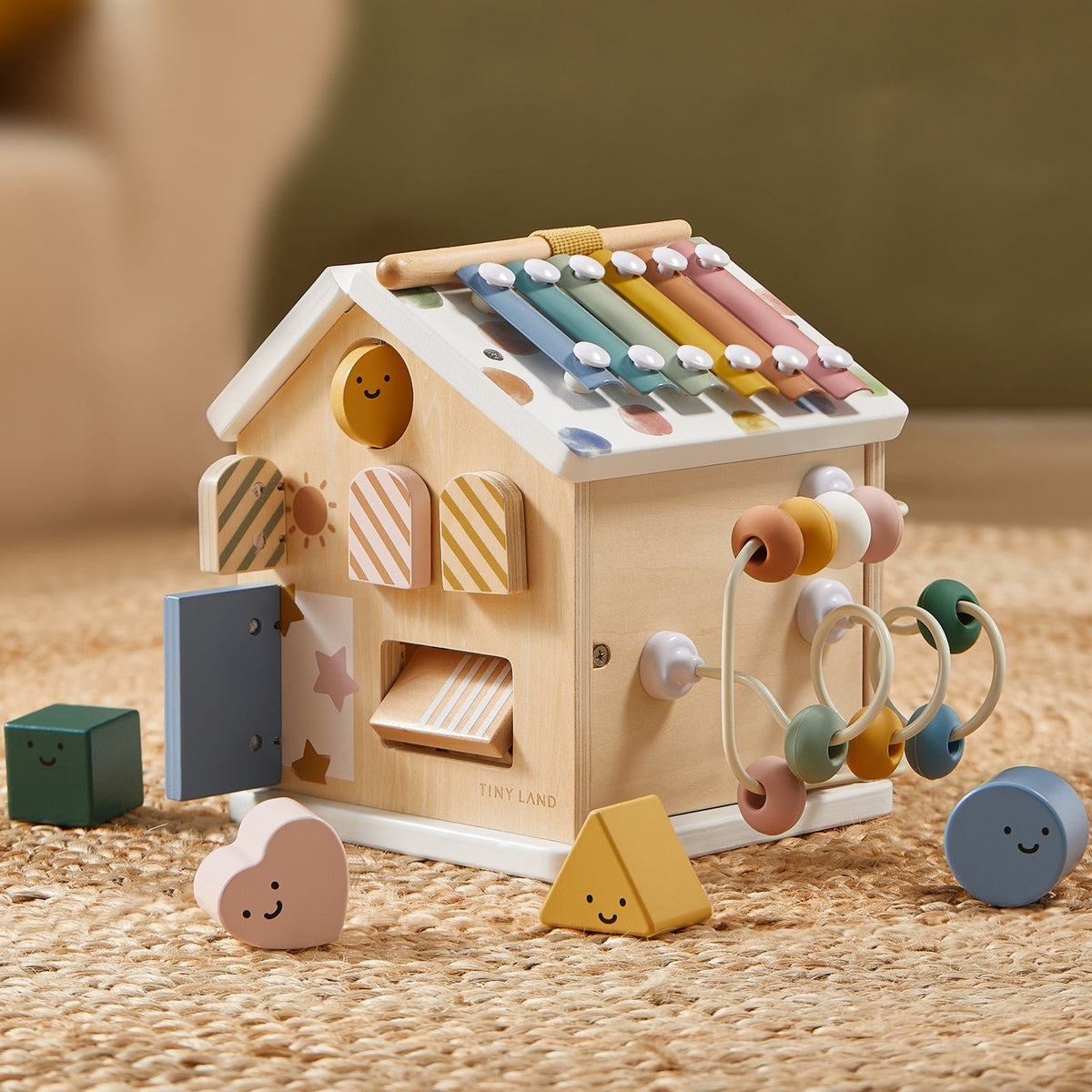
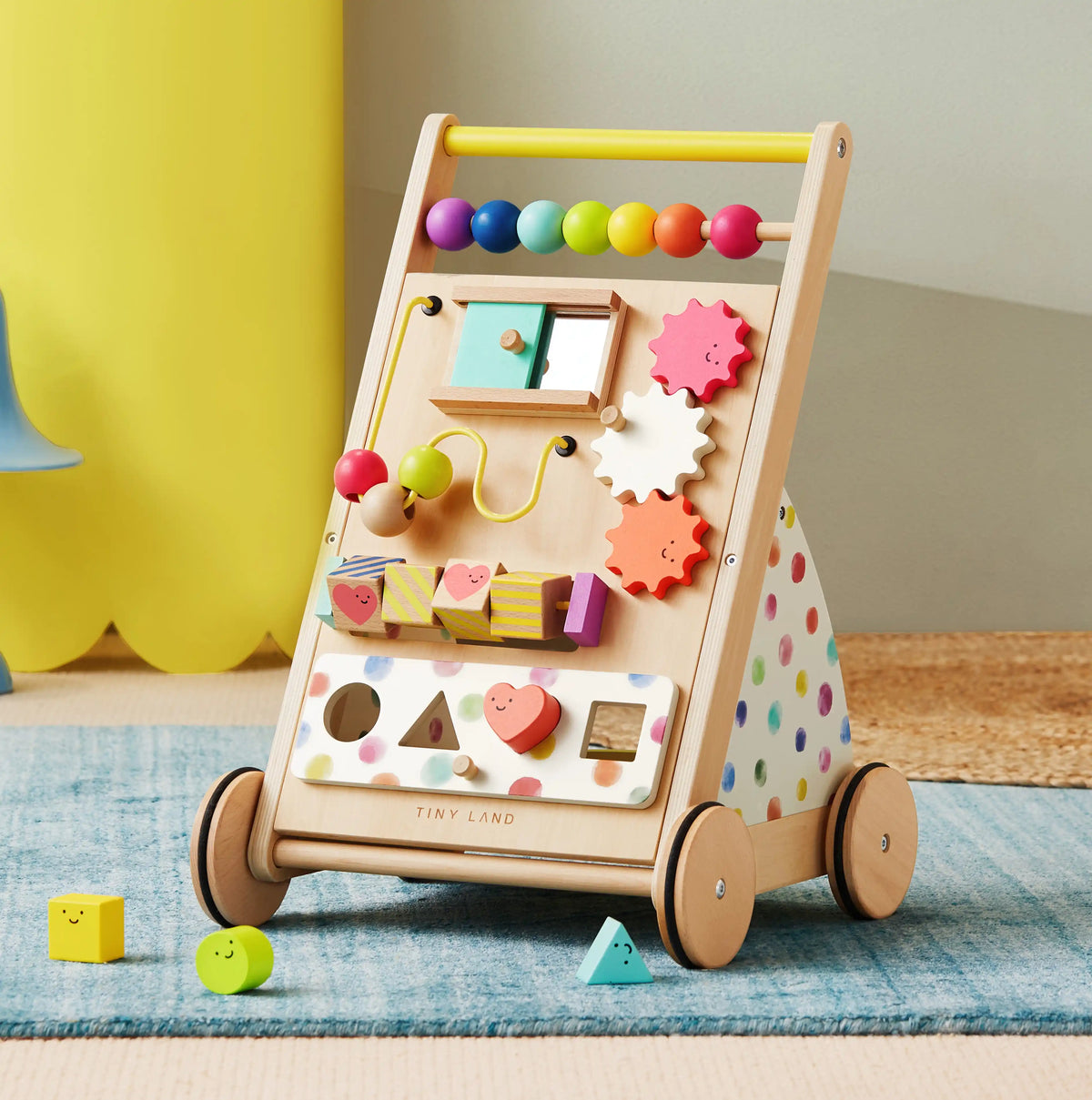
Many wooden activity walkers combine walking practice with hands-on learning features, such as:
These activities encourage children to explore cause and effect, practice hand-eye coordination, and develop fine motor skills through independent play.
Tiny Land wooden baby walker combines a push walker with a Montessori-inspired activity board, allowing children to continue exploring even when they are not practicing walking.
This means the walker can remain engaging beyond the first-step stage.
Winner: Wooden Activity Walker
4. Hands-On Learning: Encouraging Active Exploration Without Electronic Distractions
During early childhood, children learn not only by seeing and hearing, but also by actively interacting with the world around them. Opportunities to touch, move, experiment, and discover help toddlers build understanding through their own actions.
Rather than relying on flashing lights, sounds, or pre-programmed functions to capture attention, children can explore through hands-on activities—turning, moving, touching, and experimenting at their own pace.
Early childhood experts often emphasize the importance of active play, where children are participants rather than passive observers.
A wooden activity walker supports this approach by creating opportunities for curiosity, confidence, and independent exploration.
Winner: Wooden Activity Walker
5. Durability: Built for Everyday Adventures
Baby products need to handle everyday use.
A walker may be pushed across different surfaces, bumped into furniture, and used repeatedly during playtime. This is why many families look for durable materials and reliable construction.
Wooden baby walkers are popular because of their sturdy structure and long-lasting design. A well-made wooden walker can remain part of a child’s play environment even after they become confident walkers.
Plastic baby walkers can also be durable when made with quality materials. However, some lightweight designs may show scratches or wear more quickly with frequent use.
Winner: Wooden Baby Walker
6. Safety: Quality Design Matters Most
When choosing products for babies and toddlers, safety should always come first.
The material alone does not determine whether a walker is safe.
Parents should consider:
- Stable construction
- Smooth edges and surfaces
- Appropriate age recommendations
- Recognized safety testing
Tiny Land wooden baby walkers are designed with child safety in mind and tested to meet recognized standards, including ASTM F963, EN71, CE, and CPC requirements.
A well-designed walker should provide opportunities for exploration while always being used with proper adult supervision.
Winner: Depends on Design Quality
7. Quality Craftsmanship & Timeless Design
For many families, baby products become part of the home environment.
Wooden baby walkers are loved for their natural materials, thoughtful craftsmanship, and timeless appearance. Soft Morandi-inspired colors and playful rainbow designs create a warm and inviting look while blending beautifully with modern homes.
Beyond appearance, thoughtfully designed toys can help children develop an appreciation for creativity, quality, and beautiful details from an early age.
Tiny Land’s wooden baby walkers are crafted with natural wood materials, functional play features, and designs that families enjoy keeping in their homes.
Plastic walkers often feature bright colors or character-based themes, which can be exciting for children. However, families looking for a more timeless design often prefer wooden options.
Winner: Wooden Baby Walker

How to Choose the Best Wooden Baby Walker for Your Toddler
When choosing a wooden push walker, consider these important features:
Look for a walker with a sturdy structure that feels stable during pushing.
A walker with adjustable speed control can adapt as your child becomes more confident.
- Hands-On Learning Features
Activity elements such as gears, blocks, and sensory features can extend play beyond walking practice.
- Safe Materials and Construction
Choose products made with child-friendly materials and tested according to recognized safety standards.
- Design That Grows With Your Child
A multifunctional activity walker can continue providing play value even after your child masters walking.
When Is the Right Time to Introduce a Push Walker?
Every child develops at their own pace, but many babies begin showing readiness for a push walker when they can:
- Pull themselves up to stand
- Stand with support
- Show interest in moving independently
During the early stage, a push walker can provide opportunities for supported movement practice.
As children become more confident walkers, activity features can continue encouraging independent play and exploration.
A good walker should support multiple stages of development—not just a few weeks of use.
Which Baby Walker Should You Choose?
- A sturdy walker for first walking practice
- Adjustable resistance that grows with your child
- Hands-on activity features
- Montessori-inspired independent play
- Durable materials and long-term value
-
A timeless design that fits your home
A plastic baby walker may be a better option if you:
- Prefer a lightweight design
- Need something easy to transport frequently
- Prefer electronic or character-based features
Both wooden and plastic baby walkers can provide enjoyable experiences. The best choice depends on your child’s needs, your lifestyle, and the features that matter most to your family.
Frequently Asked Questions
- Are wooden baby walkers better than plastic walkers?
Both wooden and plastic baby walkers can support early walking practice. Many families choose wooden walkers because they value sturdy construction, durability, hands-on learning features, and timeless design.
- Do babies need a push walker to learn how to walk?
No toy replaces a child’s natural development process. A push walker is simply a tool that provides opportunities for supported practice, exploration, and play while children develop their own walking skills.
- What age is best for a wooden push walker?
Many push walkers are designed for babies around 12 months and older. However, babies should show signs of readiness, such as pulling themselves up and standing with support, before using a push walker.
- Are wooden activity walkers safe?
A well-designed wooden activity walker with stable construction, smooth edges, appropriate safety testing, and adult supervision can provide a positive play experience for toddlers.
Final Verdict
Both wooden and plastic baby walkers can bring excitement to a child’s first steps.
However, for families looking for a combination of durability, thoughtful design, hands-on learning, and long-term value, a wooden activity walker can be an excellent choice.
With adjustable speed control, Montessori-inspired activities, natural wooden materials, and timeless Rainbow and Morandi designs, Tiny Land’s wooden baby walkers are created to support children’s early exploration while growing with them through different stages of play.
From first pushes to independent play, a thoughtfully designed wooden walker can become part of many meaningful moments during early childhood.