



When most parents think of an easel, they picture art—drawing, coloring, and creative play. But an easel can be much more than that.
According to Josilyn Ovenell, a licensed Speech-Language Pathologist and founder of Rise Above Speech Therapy LLC, open-ended tools like Tiny Land easels can support how children build language, manage emotions, and develop essential motor skills—all through everyday play.
Here’s what that looks like in practice.
Building Speech, Language, and Early Literacy Skills
Early literacy begins with how children understand and use language in everyday play.
At an easel, activities like direction-based scavenger hunts, letter matching and sounds, category sorting, sentence building, story sequencing, and word searches—as shared by Josilyn Ovenell—help children build these skills in a natural, engaging way.
For example, matching letters and sounds helps children connect sounds to words. With magnetic letters on the easel, children can move, place, and rearrange letters as they explore—turning learning into something they can see and touch. Sorting and sentence-building activities support vocabulary and expression, while story sequencing encourages early storytelling.
Direction-based games, like scavenger hunts, also strengthen listening and the ability to follow multi-step instructions.
Even simple word search-style activities can support focus and visual attention.
Together, these play experiences help children build communication skills, attention, and confidence over time.

Supporting Emotional and Behavioral Regulation
Young children are still learning how to recognize and manage their emotions. Consistent, visually supported environments can help make this process more manageable.
Within an easel-based learning space, visual supports can be easily displayed and used in hands-on ways. For example, a visual schedule can be placed alongside or on the easel, allowing children to see the sequence of their day step by step. A feelings chart can be attached to the easel so children can point to or choose how they are feeling in the moment. These supports bring structure and predictability into daily routines, as shared by Josilyn Ovenell.
The easel area can also be positioned as part of a calming setup, where children can step in to draw, pause, or reset when they need a break. This creates a natural space for emotional regulation within everyday play.
Together, these supports help children build a stronger sense of safety and emotional control. Over time, this supports smoother transitions, more sustained engagement in learning, and healthier responses to everyday challenges.

Strengthening Fine Motor and Visual-Motor Skills
Before children can write, they need strength, coordination, and control in their hands.
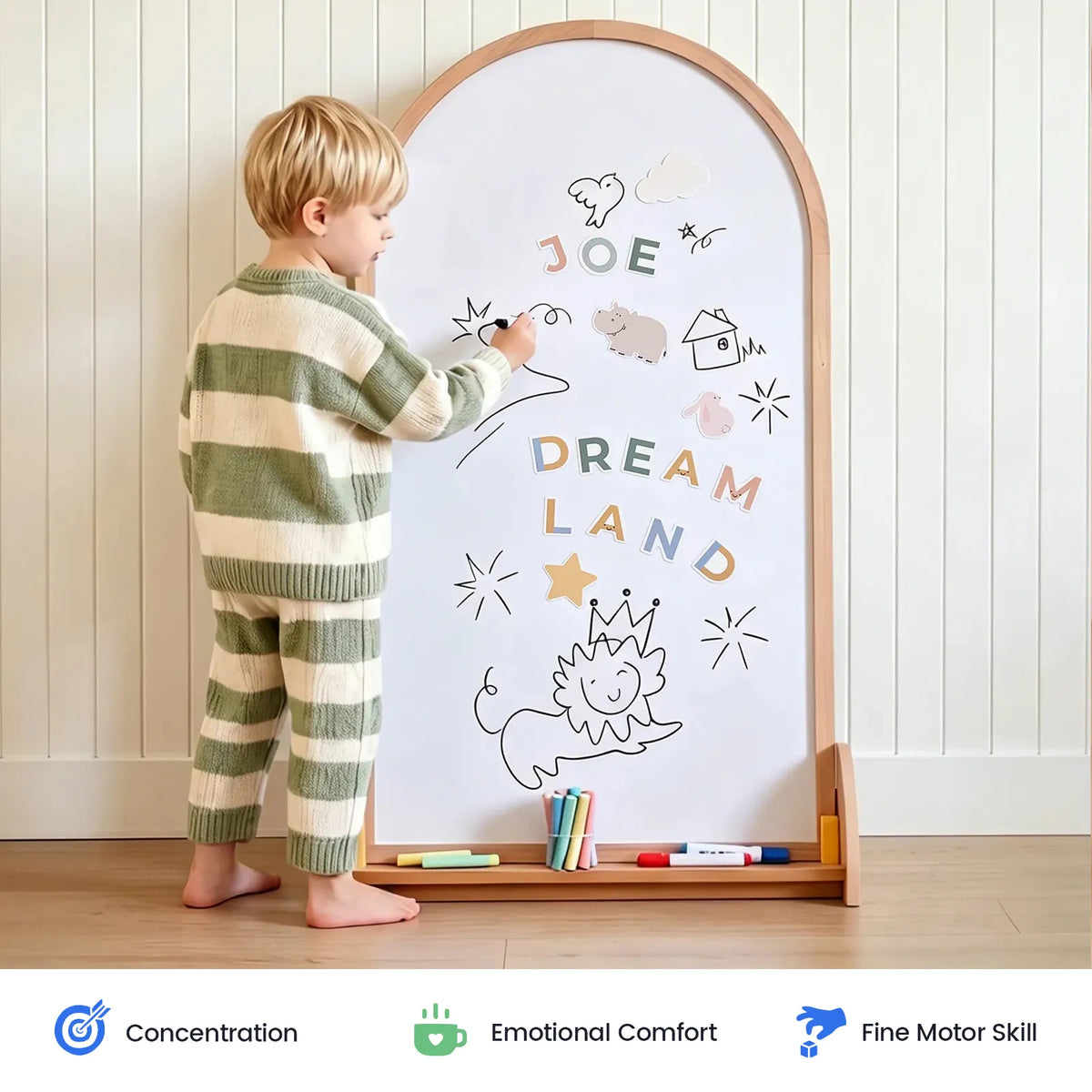
At an easel, activities such as drawing and coloring, tracing objects, and copying activities support the development of early writing skills through hands-on practice.
Drawing and coloring help children build control over small hand movements as they create shapes, lines, and images. Tracing objects encourages focus and coordination as children follow outlines with increasing accuracy. Copying activities support early spatial awareness and help children understand how forms and patterns are structured.
Working on a vertical surface like an easel naturally adds another layer of development. It encourages more upright posture, engages core muscles, and promotes steadier, more intentional hand movements compared to flat-table work.

Why the Arched Easel Environment Makes a Difference
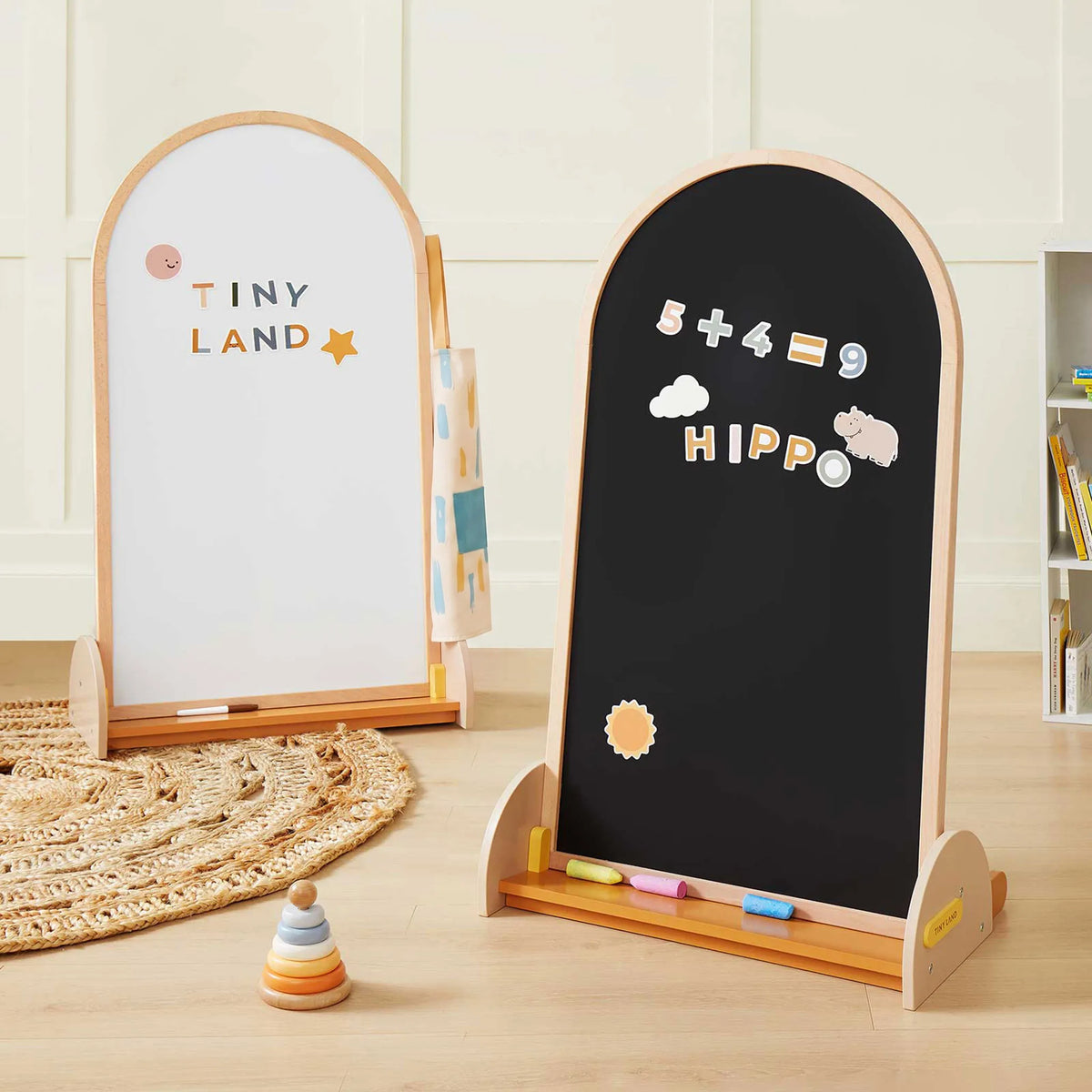
What makes the arched easel unique is how its design expands both physical space and learning opportunities.
The larger curved writing surface gives children more room to draw, write, and explore ideas in a natural, open way. This expanded workspace supports deeper engagement and more fluid movement between activities.
Built into the easel is a magnetic learning system—including alphabet, number, emotion, and animal magnets. Together, these elements transform the easel into a multi-sensory learning environment rather than a traditional art station.
Within this setup, children can shift seamlessly between drawing, spelling, counting, storytelling, and emotional expression—all within one continuous play experience.
Rather than separating skills into isolated tasks, the arched easel brings language, early math, emotional awareness, and fine motor development together in a connected way.
Final Thoughts
The arched easel is more than a creative surface. It is an integrated learning environment where children naturally build foundational skills through hands-on exploration and play.