
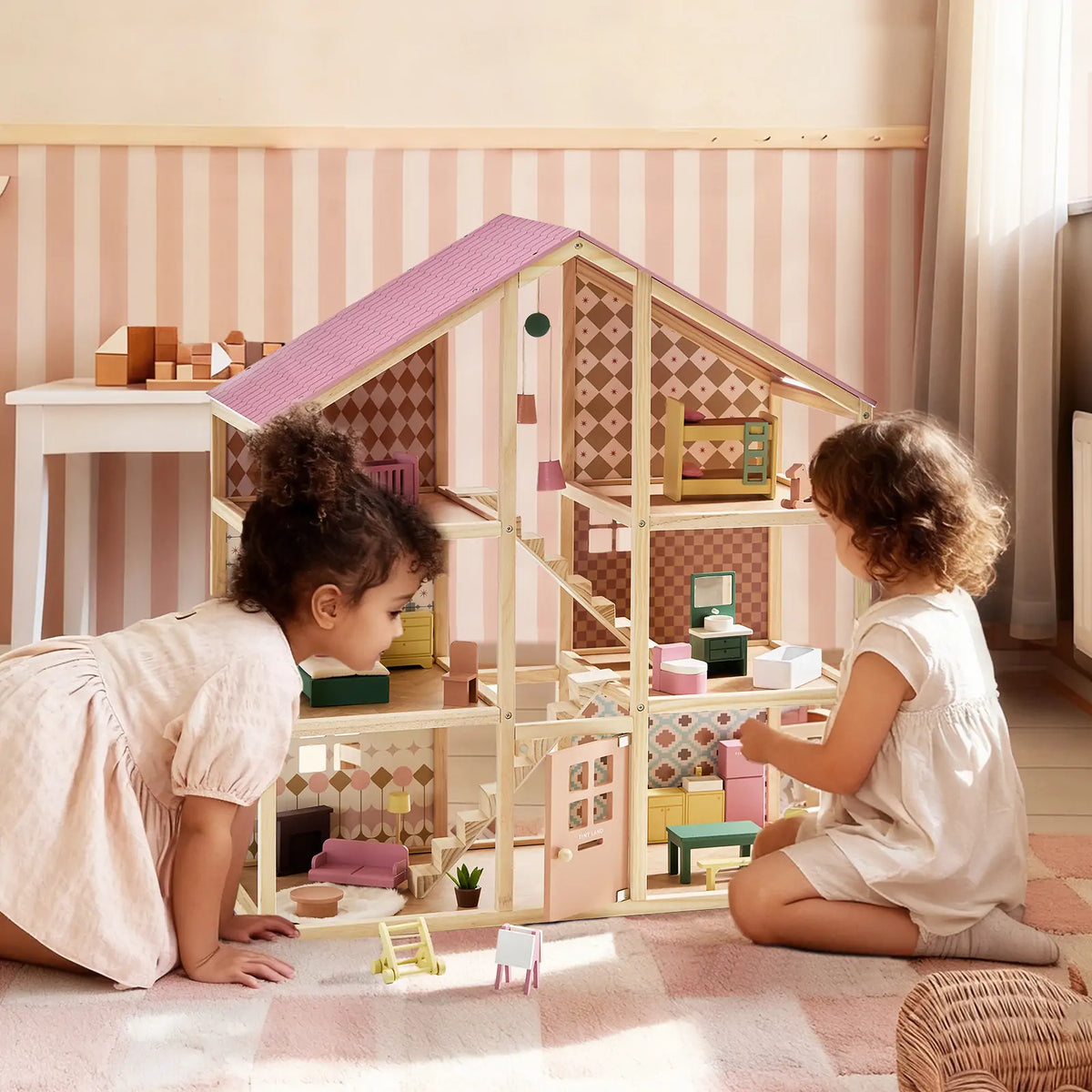
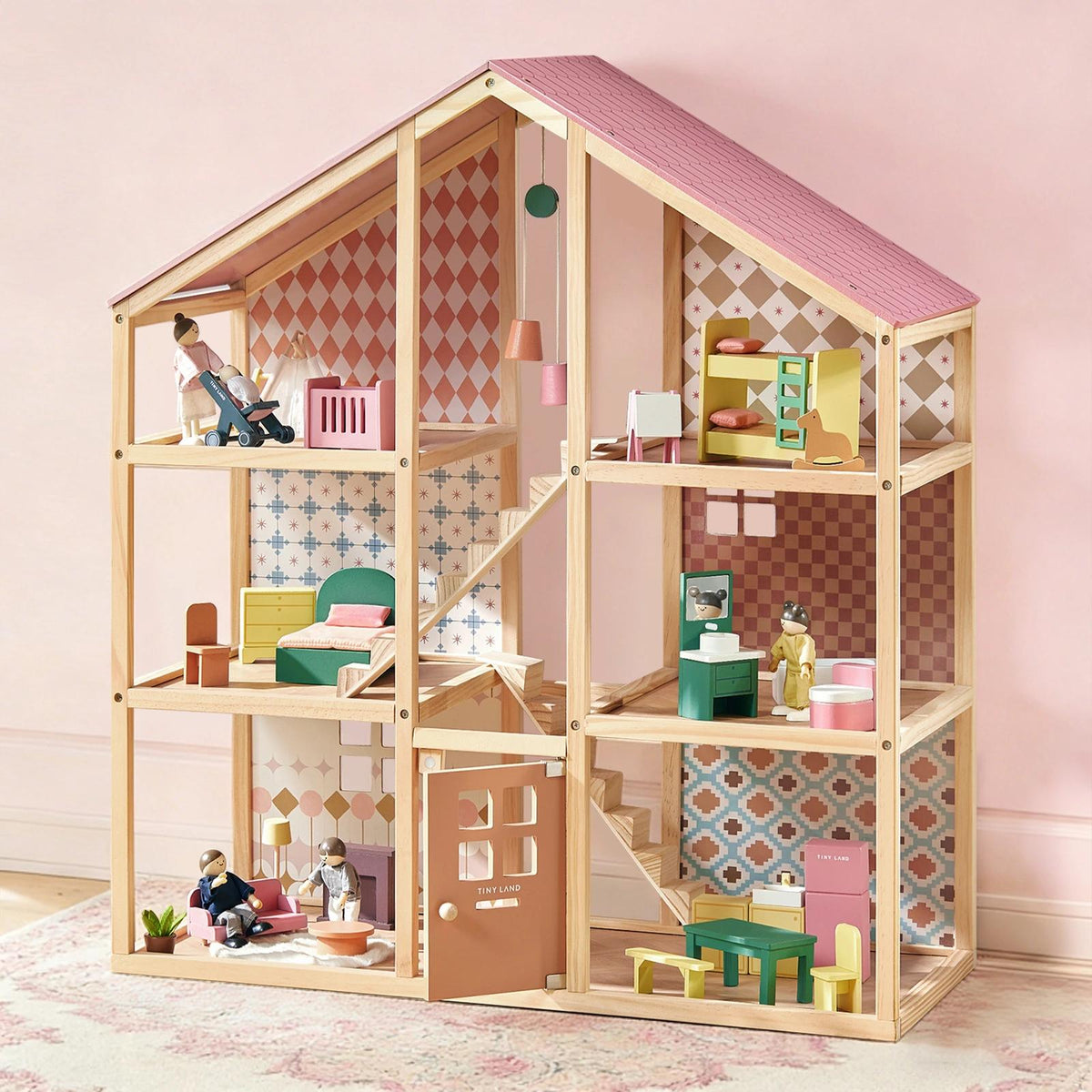



A dollhouse may look like “just play” to an adult. But for a toddler, it can become a space to move, reach, arrange, explore, and create.
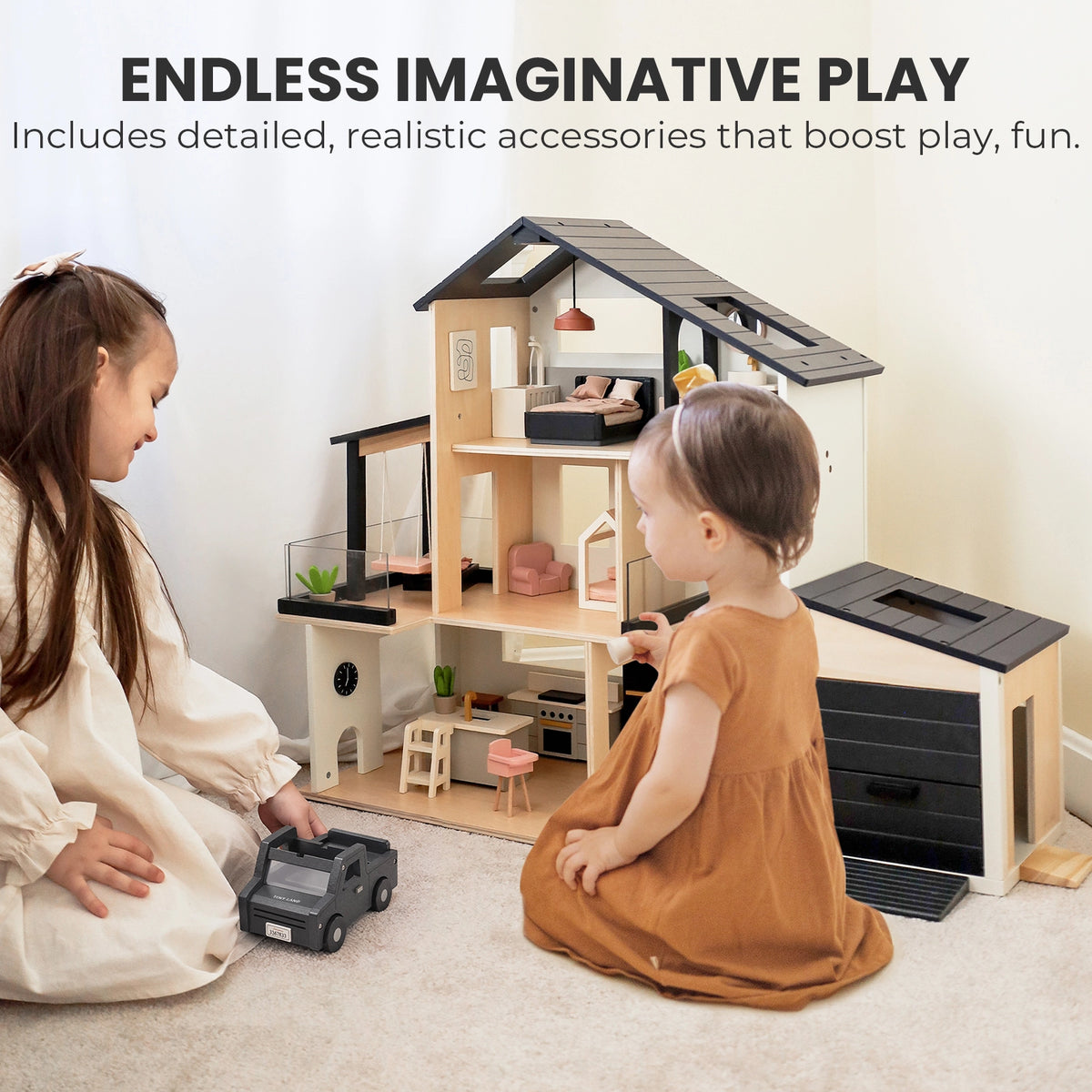
That is what Victoria Watson, PT, DPT, PMP, a pediatric physical therapist, mom of four, noticed while watching her two-year-old play with the Tiny Land® Dollhouse and Doll Set.
“As a pediatric PT, I love a toy that looks like ‘just play’ but is actually building so many skills at once.”
What stood out to Victoria was not one specific activity. It was how many different things her daughter was naturally doing within the same play experience.
What a Pediatric PT Saw in Dollhouse Play
As her toddler interacted with the dollhouse, Victoria observed movement throughout the play.
Her daughter was standing, squatting, reaching, and walking around the house. She was also transitioning in and out of different positions as she moved between activities.
For Victoria, these everyday actions were part of what made the play meaningful.
The dollhouse gave her toddler a reason to move because there was something she wanted to reach, pick up, arrange, or explore.
And the movement did not need to be presented as an exercise.
It was simply part of playing.

Fine Motor Development in the Details
The same play experience also involved plenty of hands-on activity.
Victoria noticed her daughter:
-
Opening doors
-
Picking up small pieces
-
Placing furniture
-
Moving dolls
-
Using both hands together
-
Setting up different areas of the dollhouse
These observations are particularly meaningful because they happened in the context of something her toddler was already interested in doing.
She was not being asked to practice a skill.
She was trying to make the dollhouse look the way she wanted it to, move the dolls where she wanted them to go, and create her own play setup.
“She’s only 2, but she already knew to put the bedroom items in the bedroom and started creating different rooms on her own.”
Children can arrange the furniture, move the dolls, change the rooms, and decide what happens next.
The setup can change because the child's ideas can change.
That is one of the qualities Victoria values in open-ended play: developmental opportunities can become part of an activity a child is genuinely motivated to explore.

From a Play Setup to a Story
Once a child starts deciding who belongs where and what happens in each space, the dollhouse can become a setting for pretend play.
A bedroom might become part of a bedtime story. A family might move from one room to another. Dolls can take on different roles, and a familiar room can become the beginning of a completely new story.
The Dollhouse and Doll Set gives children physical objects and spaces to work with while they create those scenarios.
Importantly, this does not require children to follow a particular storyline.
They decide what the story is.
That freedom is central to the kind of open-ended play Victoria values.

Following the Child’s Play
For parents, open-ended play also leaves room to participate without taking over.
If a child moves a doll into the bedroom, a parent can simply follow the story:
“Who is in the bedroom?”
If the doll moves to another room:
“Where are they going?”
If the child begins rearranging furniture:
“What are you making?”
The goal is not to tell the child how to play.
It is to stay curious about what the child is already creating.

Why This Perspective Comes From Both PT and Motherhood
Victoria's perspective is shaped by both her clinical background and her experience as a mother.
She is a pediatric physical therapist whose clinical experience includes early intervention services for children ages 0–3, as well as work in a level-one hospital setting and inpatient rehabilitation for adults.
She holds a bachelor's degree in Psychology and a Doctorate of Physical Therapy, with a post-baccalaureate specialization in neurodevelopmental disabilities.
She is also a mom of four, including premature twins.
Her content brings together pediatric PT education and real-life motherhood, helping families approach child development in ways that feel practical and approachable.

More Than “Just Play”
Watching a toddler play can reveal more than an adult might expect.
A child may squat to pick something up. Reach for a piece. Open a door. Move a doll. Arrange a room. And create a story around what happens next.
The Tiny Land Dollhouse and Doll Set offers a play environment where those choices can happen naturally—where a child can decide what belongs in each room, where the dolls go, and what story comes next.
Sometimes, what looks like “just play” is simply a child learning, exploring, and creating in their own way.