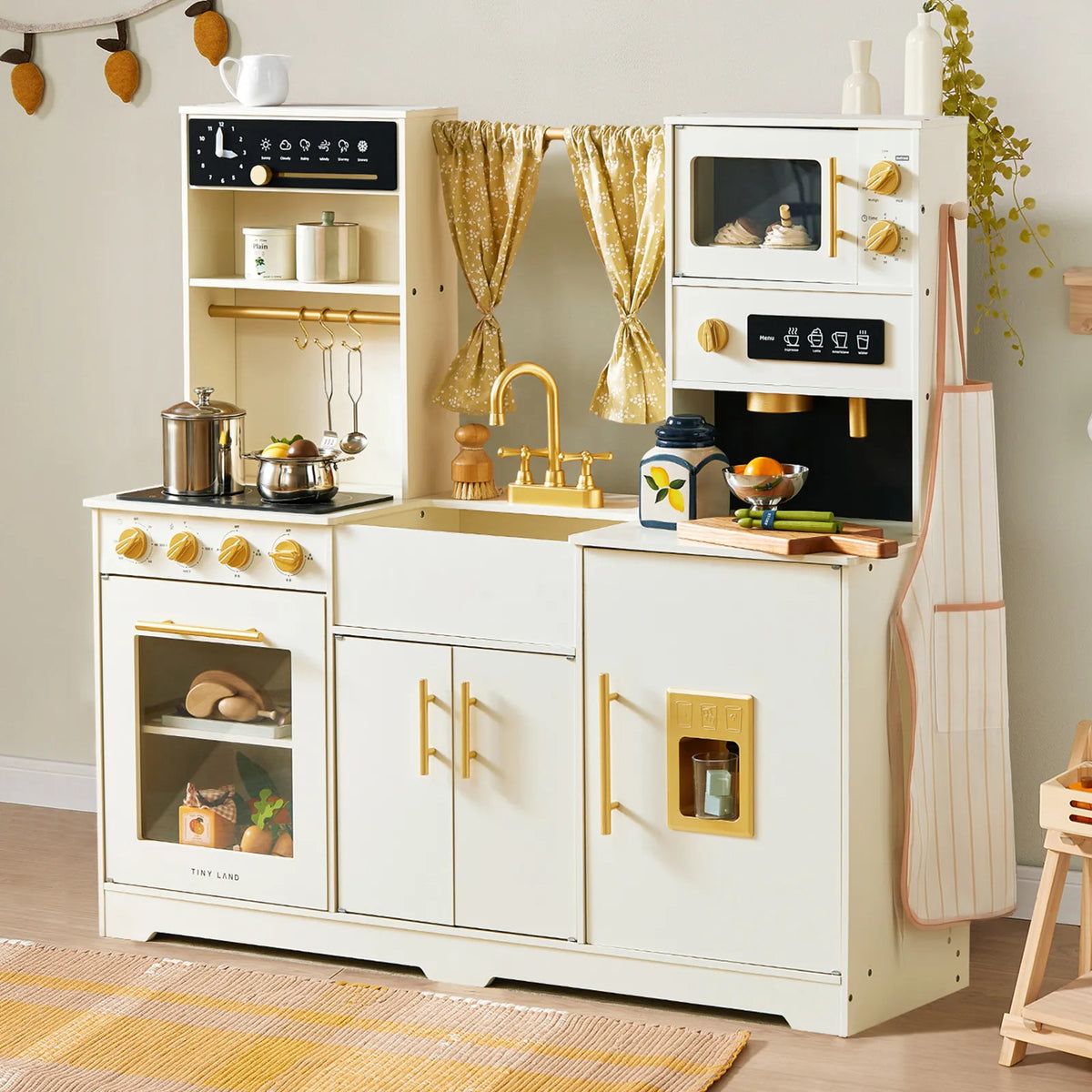
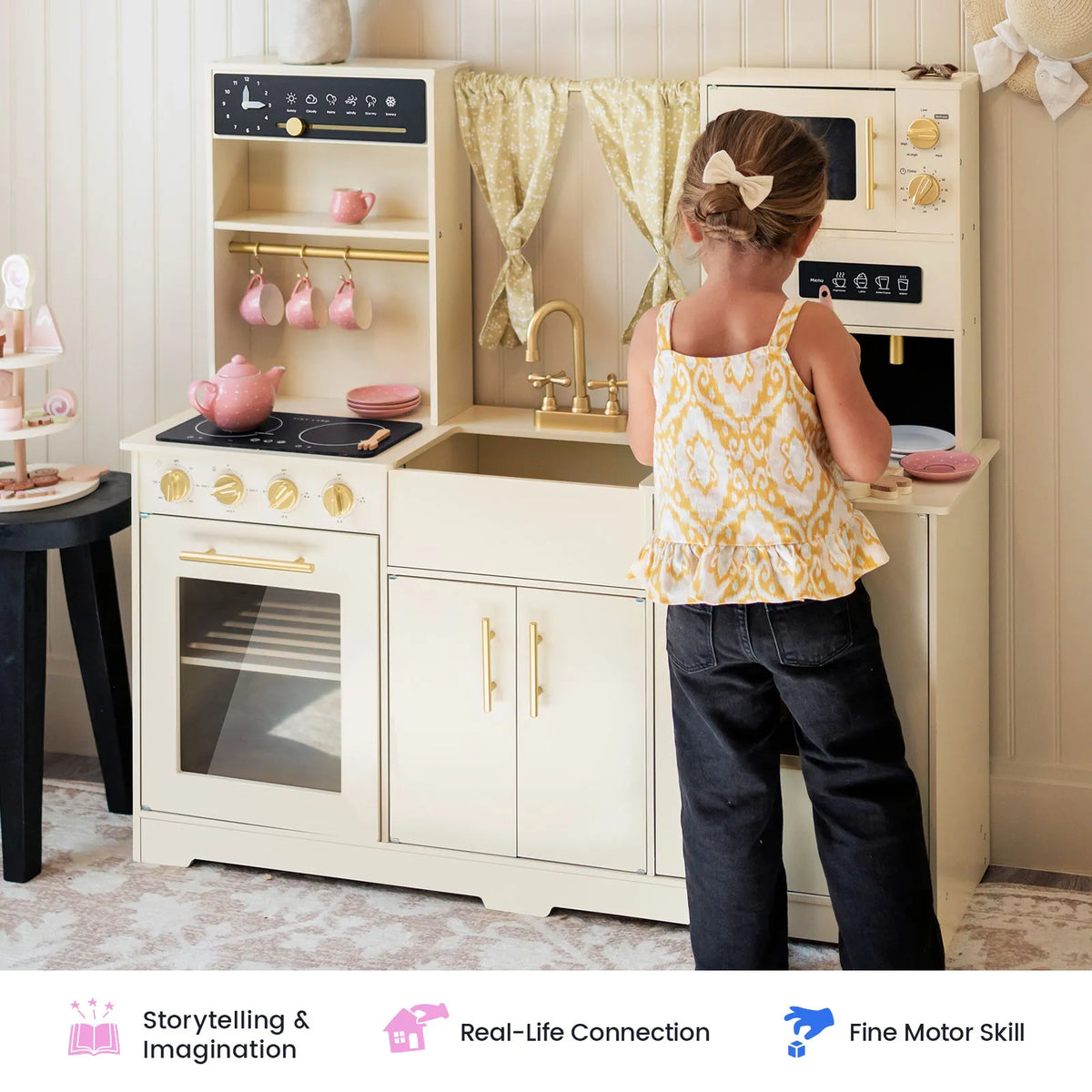
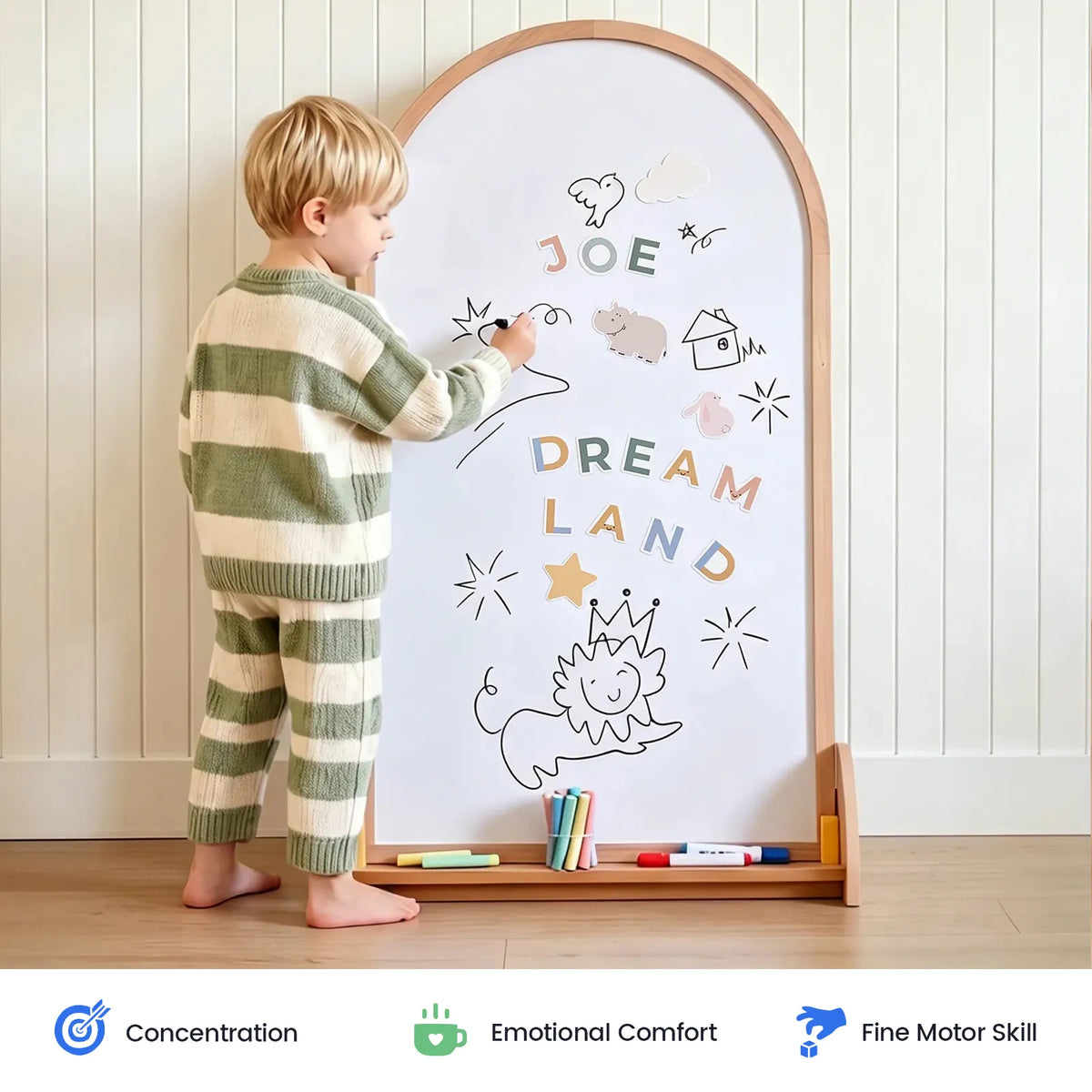
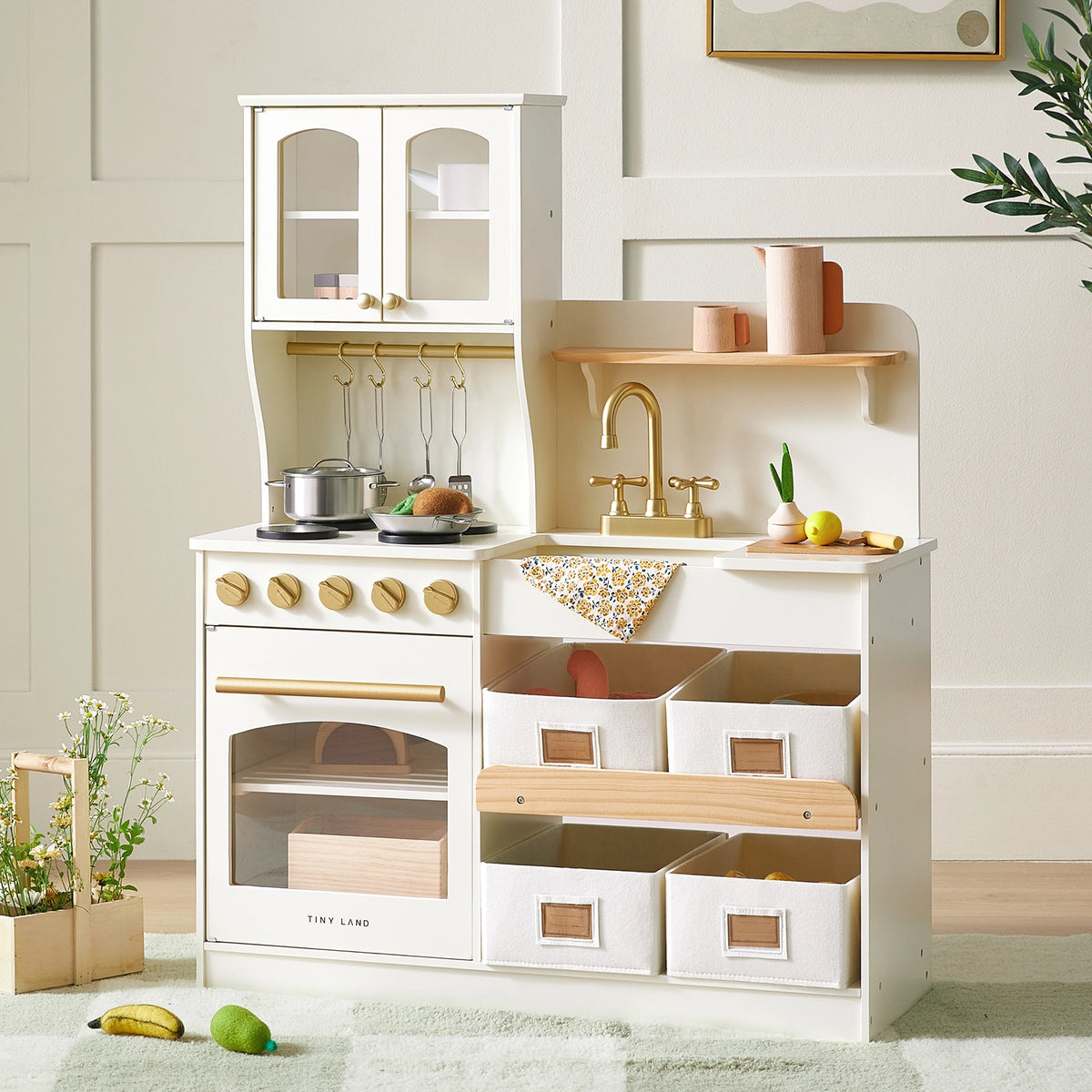
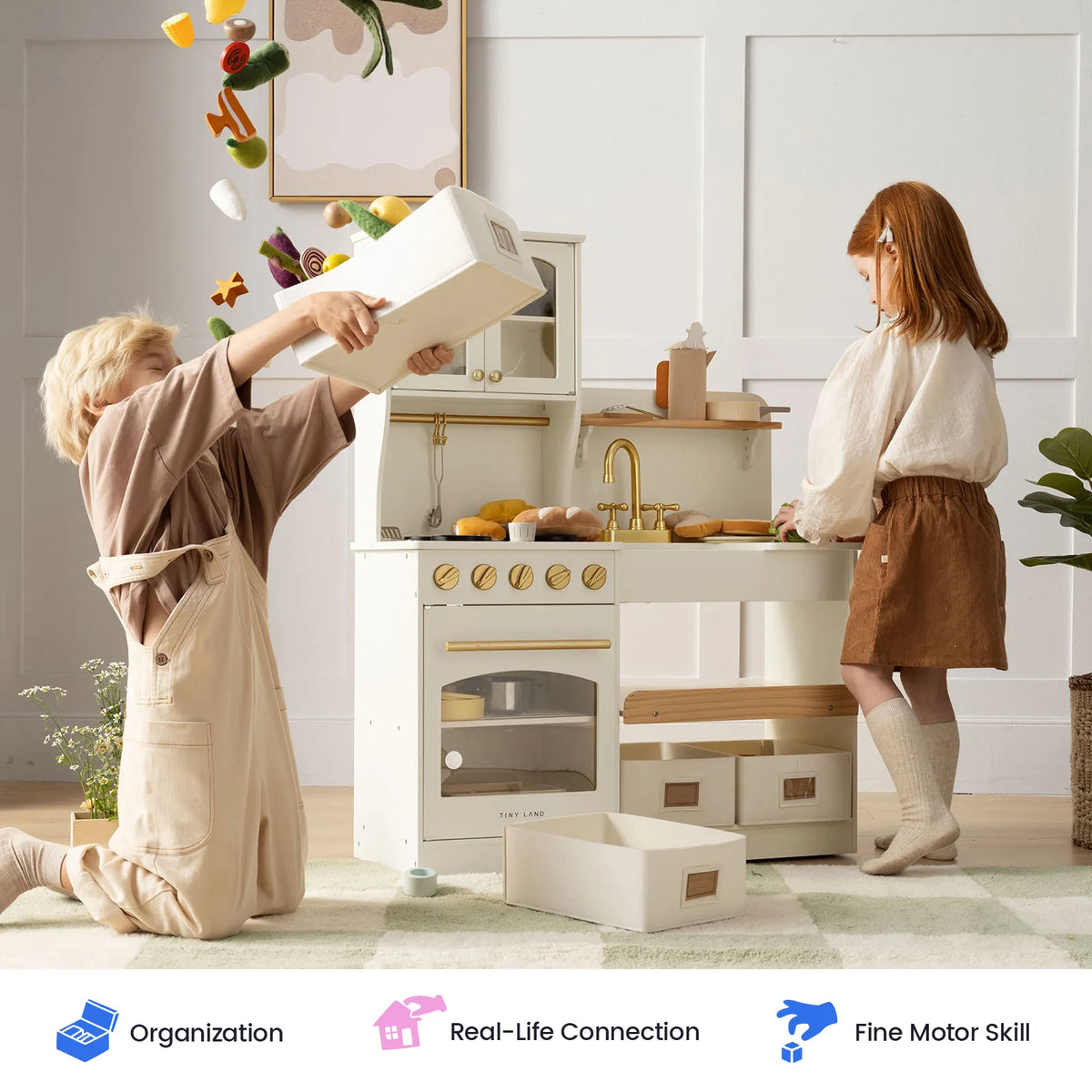
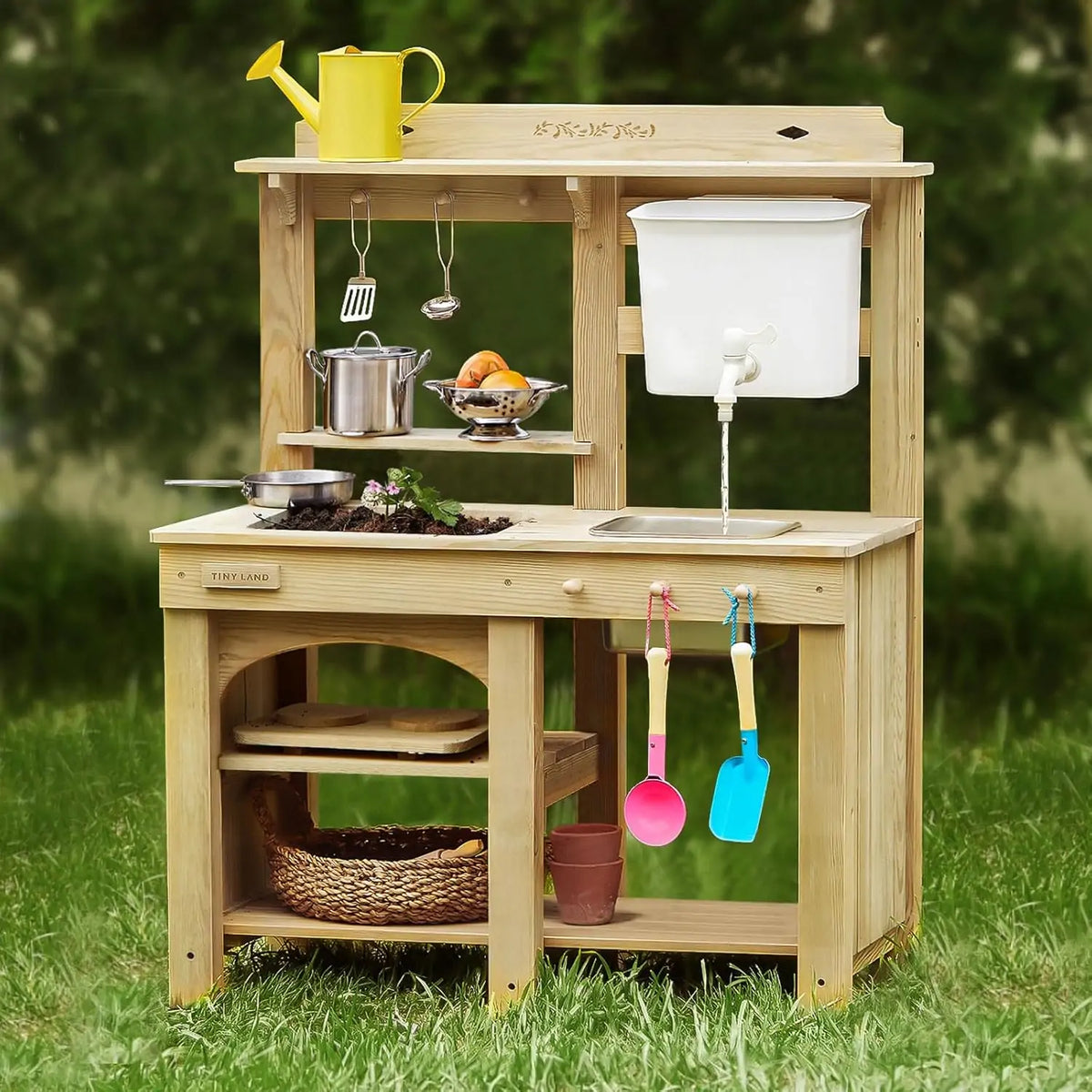
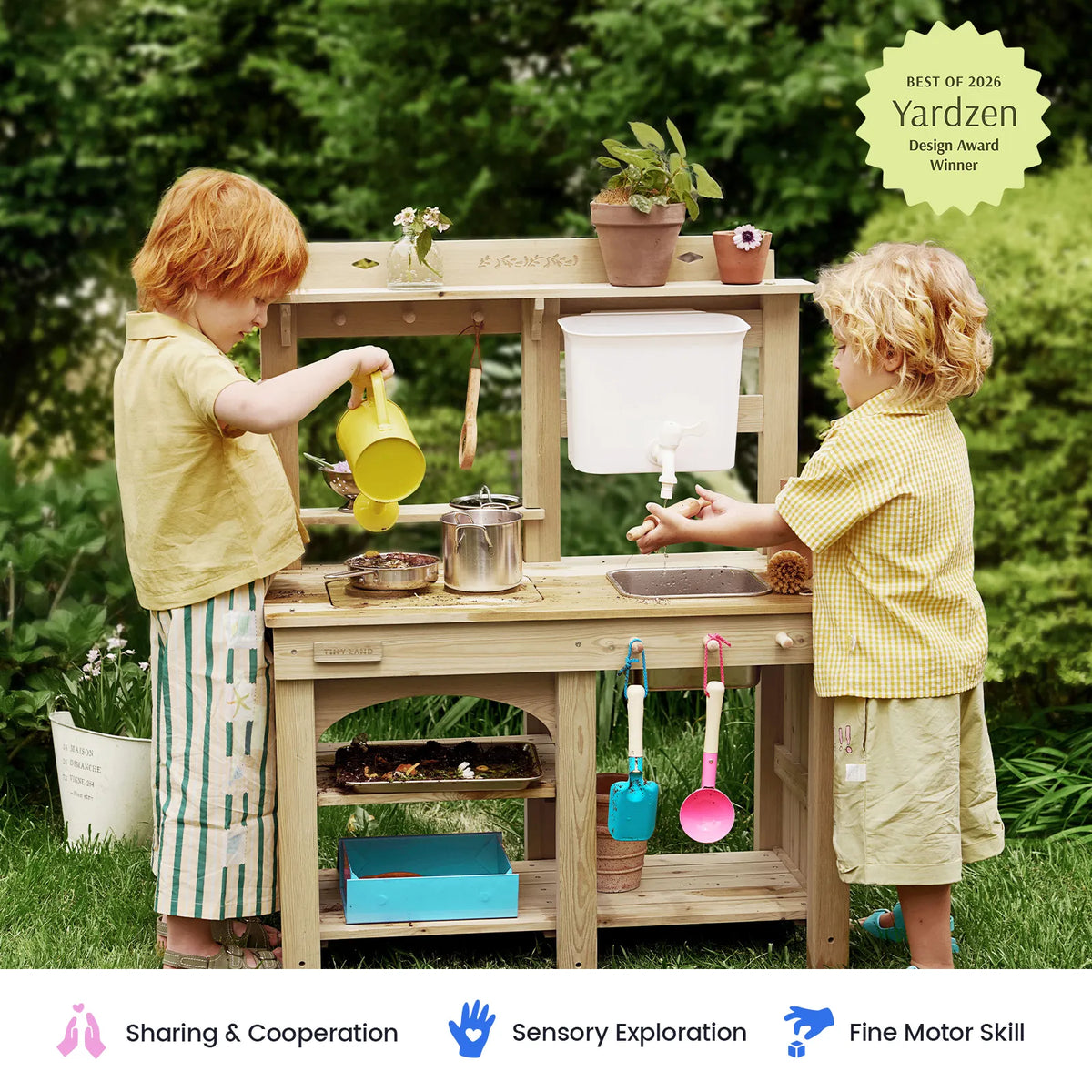
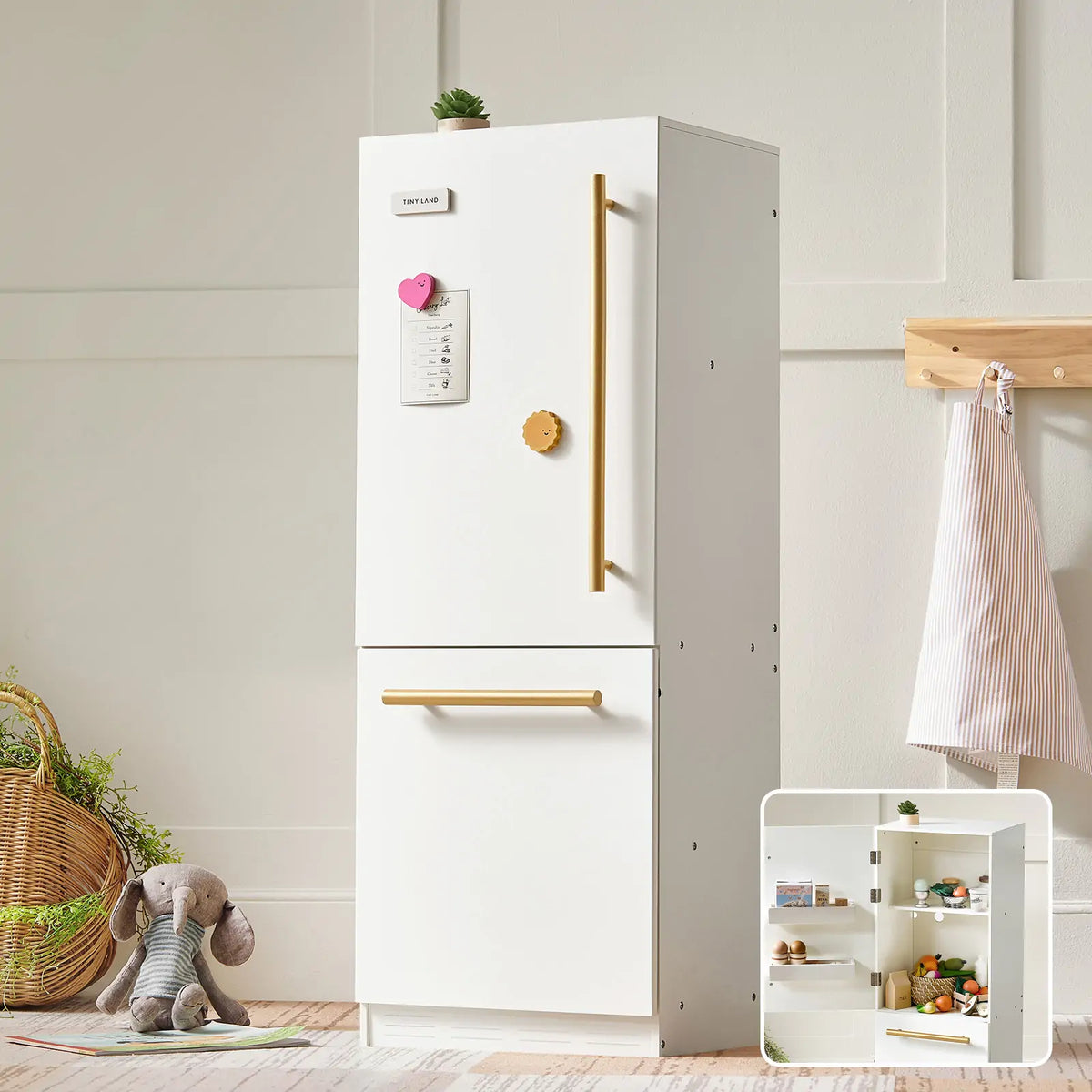
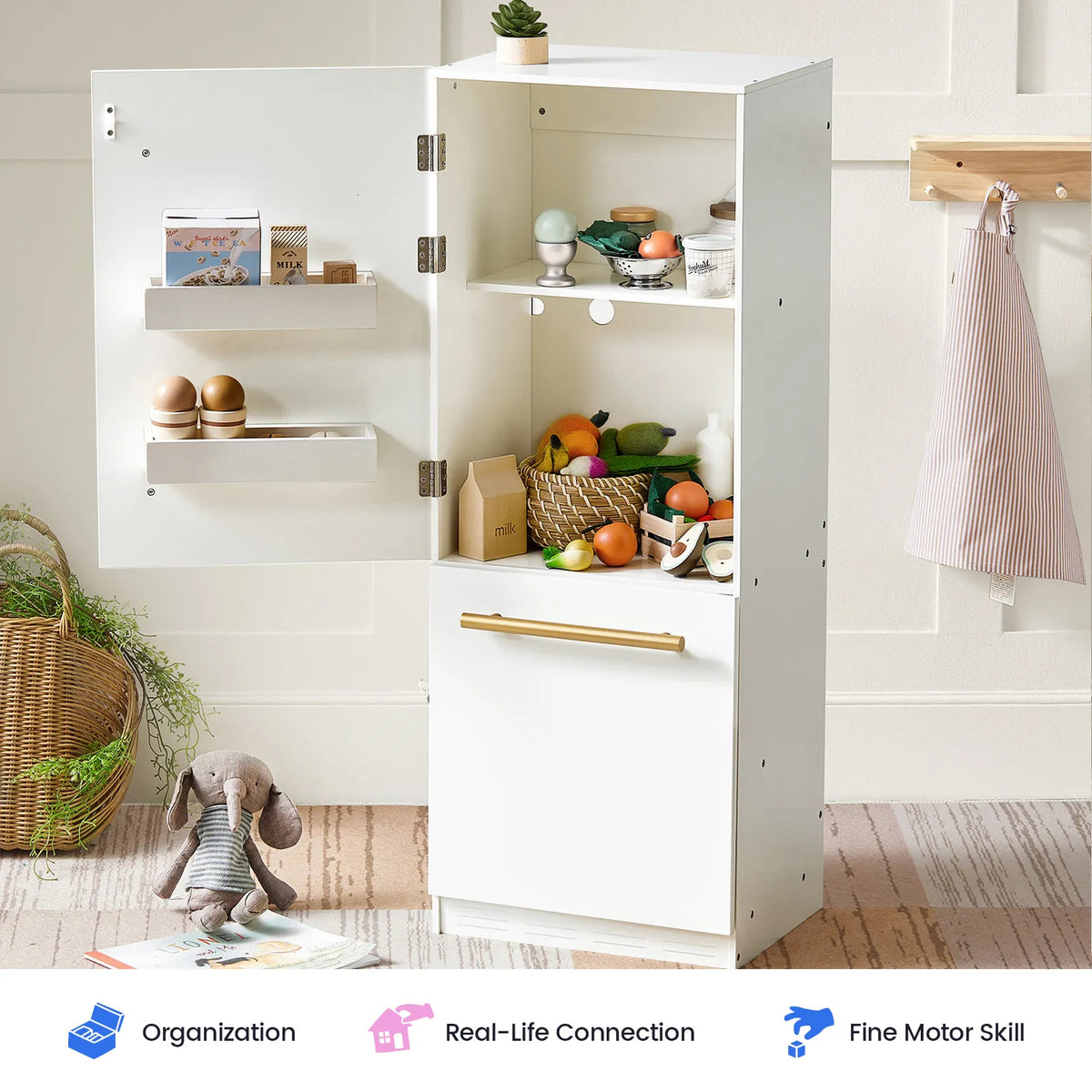
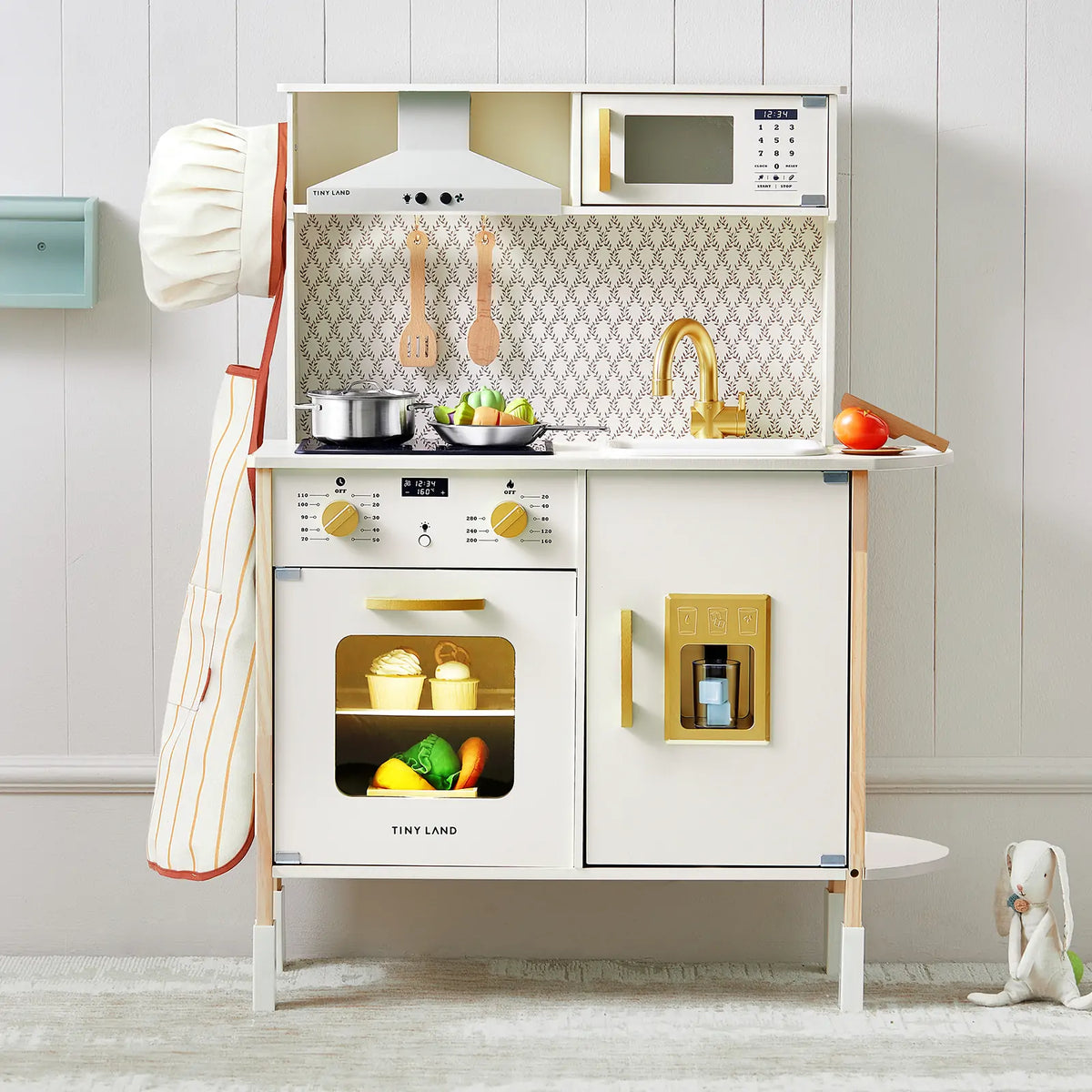
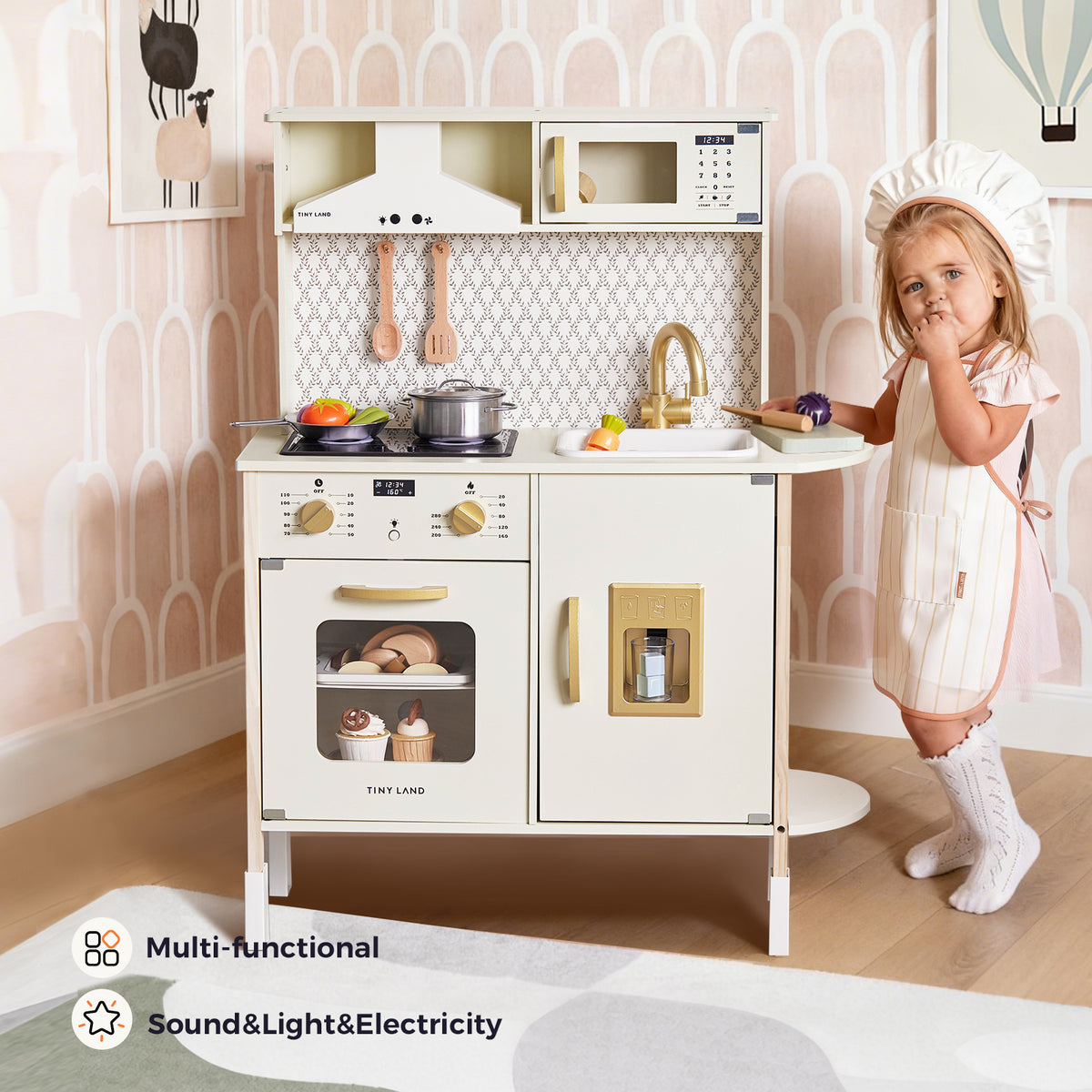




A play kitchen can create everyday opportunities for children to practice communication, follow directions, take turns, and explore through pretend play.
According to pediatric Speech-Language Pathologist Chelsea Swanson, M.S., CCC-SLP, the kitchen itself is only part of the picture.
“Independent play matters, genuinely. But it’s only one piece. You’re the other piece.”
For Chelsea, the way parents join their children’s play is an important part of making these everyday moments more interactive and language-rich.
About Chelsea Swanson, M.S., CCC-SLP
Chelsea Swanson, M.S., CCC-SLP is an ASHA-certified pediatric Speech-Language Pathologist with six years of experience and the owner of Little Swans Learning Center, a private pediatric practice in South Florida.
Chelsea specializes in early intervention and feeding therapy. Her approach focuses on parent coaching and helping children develop communication and feeding skills through meaningful, play-based interactions.
She is passionate about helping parents turn everyday play and routines into opportunities for learning, connection, and communication.

Here are some of the ways Chelsea uses pretend kitchen play to create opportunities for communication and interaction at home.
Start by Narrating, Not Quizzing
One of Chelsea’s simplest suggestions is to talk about what the child is already doing rather than constantly asking questions.
“I’m not asking him anything, not quizzing him. I’m just narrating what we’re doing.”
For example, while playing with a kitchen knob, a parent might say: “Turn it... click... it’s on.”
Then pause.
“That pause? That’s him deciding if he wants to try the word too.”
The same approach can be used while playing with the oven: “put it in... close the door... wait for it...”
Chelsea recommends keeping the phrases short and simple while talking through the actions.
The goal is to follow what is happening in the play rather than turning the interaction into a series of questions.

Give Children a Reason to Communicate
Chelsea also suggests creating natural opportunities for children to request something during play.
Instead of handing over every piece at once, she might give a child one piece, such as a pan, and hold onto the rest.
That creates a reason for the child to communicate:
- “More.”
- “Open.”
- “Help.”
These are functional words the child can use because they are connected to something they want or need during the activity.
Put Words Into Action
Pretend cooking gives parents a simple way to connect words with actions.
Chelsea suggests cooking something together and naming each step out loud: “Stir. Pour. Hot. Cold.”
The same approach can be used throughout the kitchen. Parents can talk through what they and their child are doing as they turn a knob, put something into the oven, or wash dishes at the sink.
Rather than introducing a separate language exercise, Chelsea uses the child’s existing interest in play as the starting point.

Turn Kitchen Routines Into Simple Sequences
Once a child is comfortable with a few words, Chelsea suggests increasing the challenge by combining actions.
For example: “Put the spoon in the pot, then close the door.”
Chelsea describes this as a way to work on two-step directions, working memory, and sequencing during pretend play.
The oven itself can also provide a simple sequence: “In, close, cooking... it’s ready.”
For Chelsea, these moments allow parents to introduce more than one step while staying within an activity the child already wants to do.
Let Pretend Food Become Part of Food Discovery
With her experience in feeding therapy, Chelsea also incorporates pretend food into play.
“Pretend food is often the bridge to real food.”
If a child is nervous around something new, Chelsea suggests starting with the pretend version: “Touch it, name it, serve it to someone else.”
The child can explore the food through pretend cooking and serving before encountering it on a real plate.

Make Room for Back-and-Forth Play
Pretend kitchen play can also become an opportunity for turn-taking.
Chelsea suggests trading roles while cooking: “Your turn. My turn.”
She describes this as pragmatics—waiting, watching, and responding to another person.
The sink can provide another natural opportunity for back-and-forth interaction. Parents and children can wash dishes or wash their hands side by side: “Your turn. My turn.”
“That’s a real conversation — just with bubbles instead of words on a page.”
Use Everyday Kitchen Play as the Setting
Chelsea’s approach can be applied across different moments in pretend kitchen play.
- A knob can become an opportunity to practice a word and an action: “Turn-turn turn... Turn it on.”
- The oven can become a simple sequence: “In, close, cooking... it’s ready.”
- The ice machine can become an opportunity to follow a direction: “Put the cup under, push.”
- At the sink, a familiar routine can become: “Wash, rinse, dry, done.”
- Even a small curtain can become part of a language game: “Open, close... where’d it go... there it is.”
These examples reflect Chelsea’s approach: rather than asking the toy to do the teaching on its own, parents can join the play, describe what is happening, and create opportunities for the child to participate.

You Don’t Have to Do It All at Once
Parents do not need to turn every play session into a structured activity.
Chelsea’s advice is simple:
“You don’t have to do all of this at once. Just pick one moment today, get down on the floor with them, and start talking through it. That’s really it.”
A play kitchen can be the setting, but the interaction happens between parent and child.
By narrating what is happening, pausing to give the child room to respond, creating natural reasons to communicate, and taking turns, parents can bring more language and interaction into everyday pretend play.