


A preschool classroom can change quickly. One day, children may be exploring animals and storytelling; the next, they may be practicing names, letters, or seasonal vocabulary.
For teachers, having a flexible creative space can make it easier to adapt activities to children's interests without starting from scratch each time.
Lindsay, a preschool teacher with 15+ years of experience and the creator behind Party in Preschool, recently incorporated the Tiny Land Magnetic Chalkboard & Whiteboard into her classroom.
For her setup, she started with an animal theme and used the board as an open-ended space for her preschoolers to create, explore, and play.

A Flexible Setup for Preschool Play
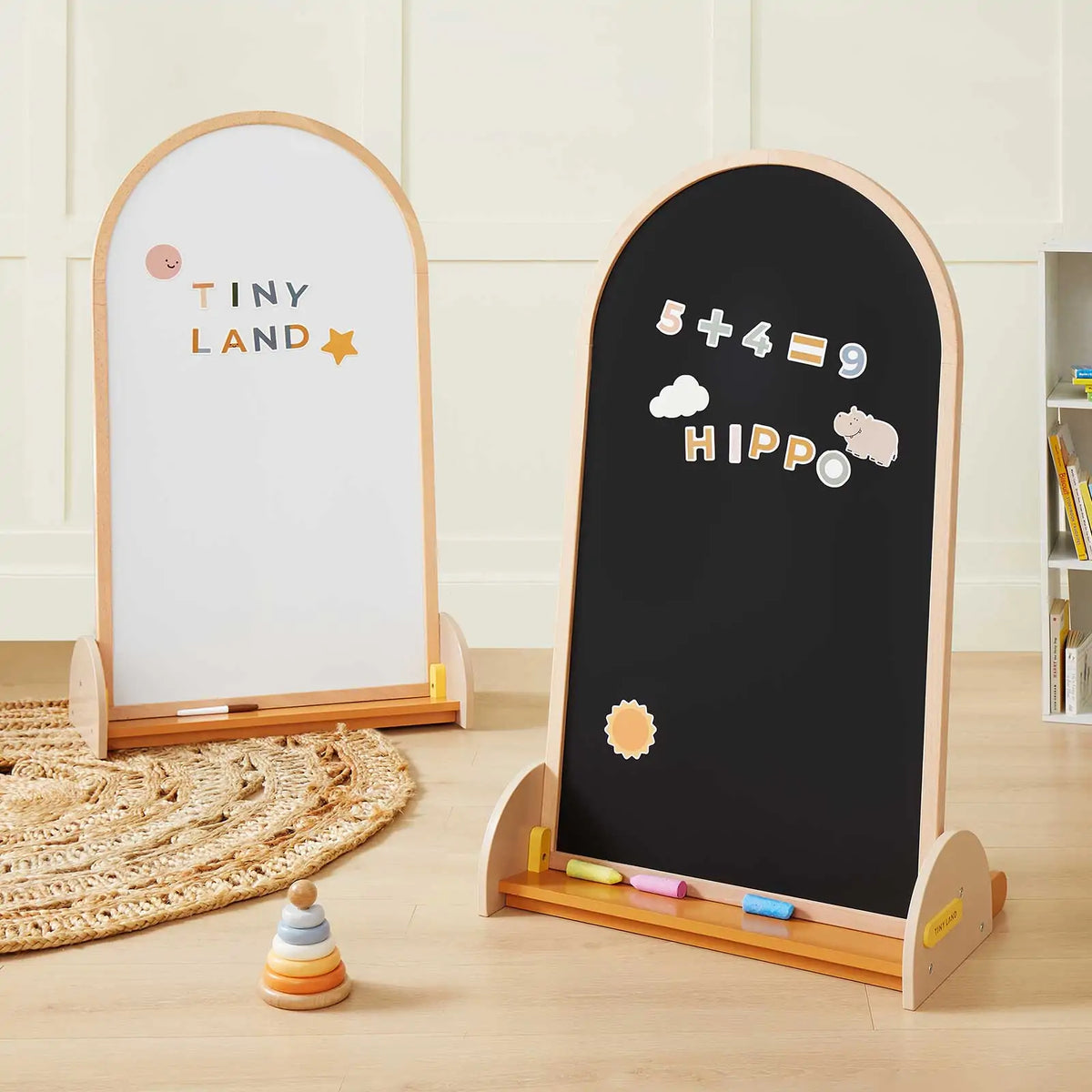
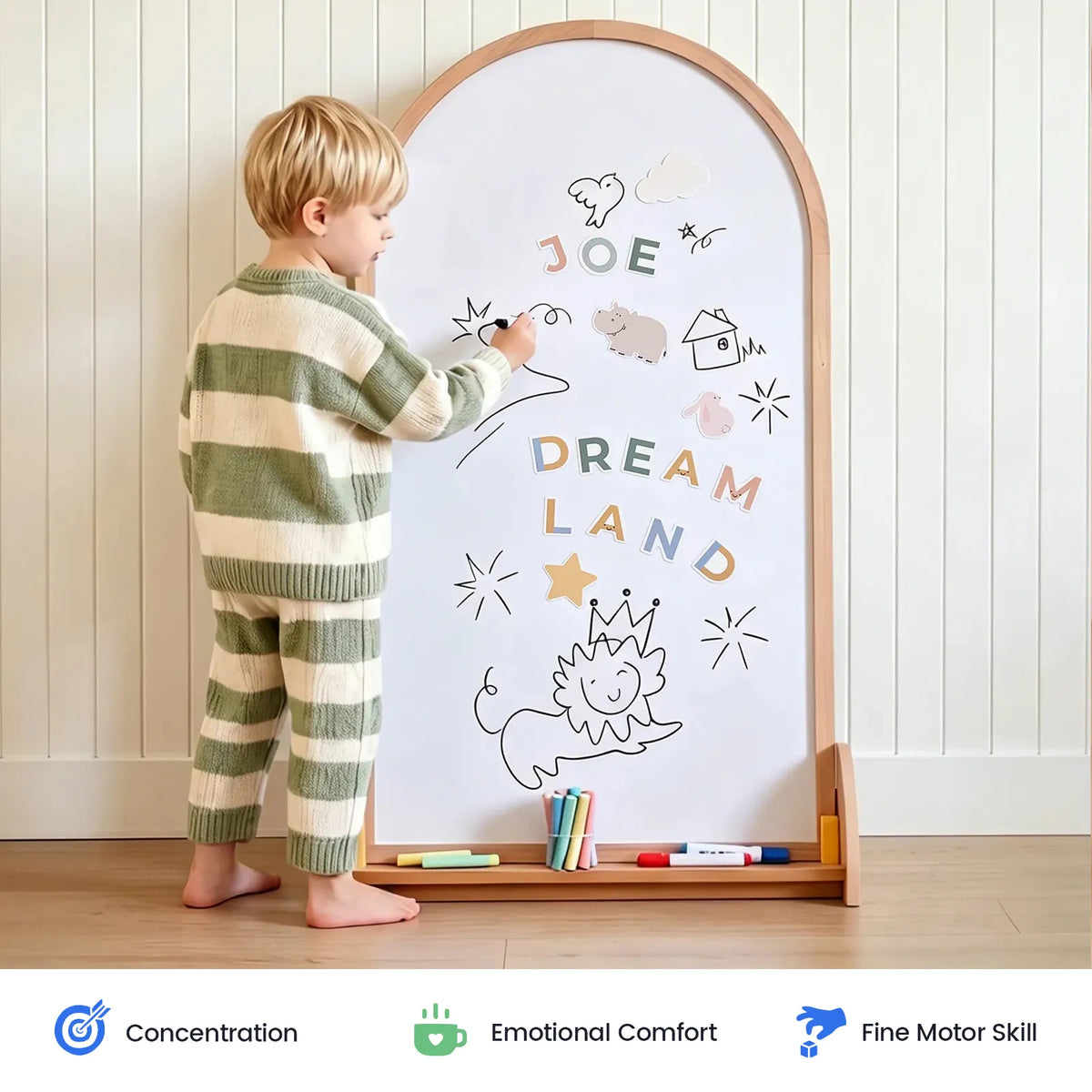
The Tiny Land Magnetic Chalkboard & Whiteboard combines a chalkboard and whiteboard in one large creative space. Both sides feature magnetic surfaces, allowing children to use letters, numbers, and themed magnets alongside drawing and writing activities.
For Lindsay's classroom, the setup began with animals.
Animal magnets can become characters in a child's story, objects to describe, or prompts for conversations.
Rather than giving children one specific task, teachers can introduce a theme and allow children to decide how they want to interact with it.
As Lindsay explains:
“I love having an open-ended space where my preschoolers can use magnets to create, tell stories, practice language, explore letters and numbers, and just… PLAY.”
From Storytelling to Language Practice
The magnetic surface gives children a visual and hands-on starting point for storytelling.
A teacher might ask:
- Where is the animal going?
- What is it doing?
- Who does it meet?
- What happens next?
As children build their own scenes, the activity can naturally lead to conversations and vocabulary practice.
The included animal, weather, and emotion magnets also give teachers different ways to introduce new words and classroom themes. An animal activity can become a conversation about habitats, while emotion magnets can help children describe how a character might feel.
The goal isn't to create one perfect story. It's to give children a starting point for expressing their own ideas.

Bringing Letters and Numbers Into Play
The board can also shift from imaginative play to early literacy and numeracy activities.
The included alphabet and number magnets can be used for simple classroom activities such as:
- Practicing children's names
- Identifying familiar letters
- Building simple words
- Counting objects or magnets
- Incorporating numbers into pretend play
Because the letters and numbers can be moved around on the magnetic surface, children can interact with them as part of a larger creative activity rather than using them only as standalone learning materials.
One Board, Different Classroom Themes
An open-ended setup doesn't have to stay the same throughout the year.
Lindsay sees possibilities beyond her animal theme, including storytelling, vocabulary, name practice, seasonal activities, and different learning invitations.
The same board could become a weather scene, a seasonal display, a space for name practice, or a storytelling prompt.
The chalkboard and whiteboard surfaces also give teachers different ways to adapt the activity. Children can draw, write, arrange magnets, or combine several types of materials in one setup.
And because the board can be detached from its base for tabletop play, the creative space can also be moved into different classroom configurations or used with a smaller group.

From Classroom Play to Home Learning
The flexibility creates room for preschoolers to create, tell stories, practice language, explore letters and numbers, and simply play.
And this kind of open-ended play doesn't have to stay in the classroom. Parents can bring the same approach into everyday play at home by giving children a theme, a few materials, and the freedom to decide what happens next.
An animal theme might turn into a family storytelling game. A collection of letters can become a name-practice activity. Weather or seasonal magnets can spark conversations about what children see around them.
The goal isn't to turn every play moment into a lesson. It's to create opportunities for children to learn naturally while they imagine, communicate, experiment, and play.
Whether it's used in a preschool classroom or at home, an open-ended creative space can give children room to follow their curiosity and make play their own.