



For Montessori educator Alex, meaningful play can give children opportunities to participate in familiar activities, practice independence, and engage with hands-on learning.
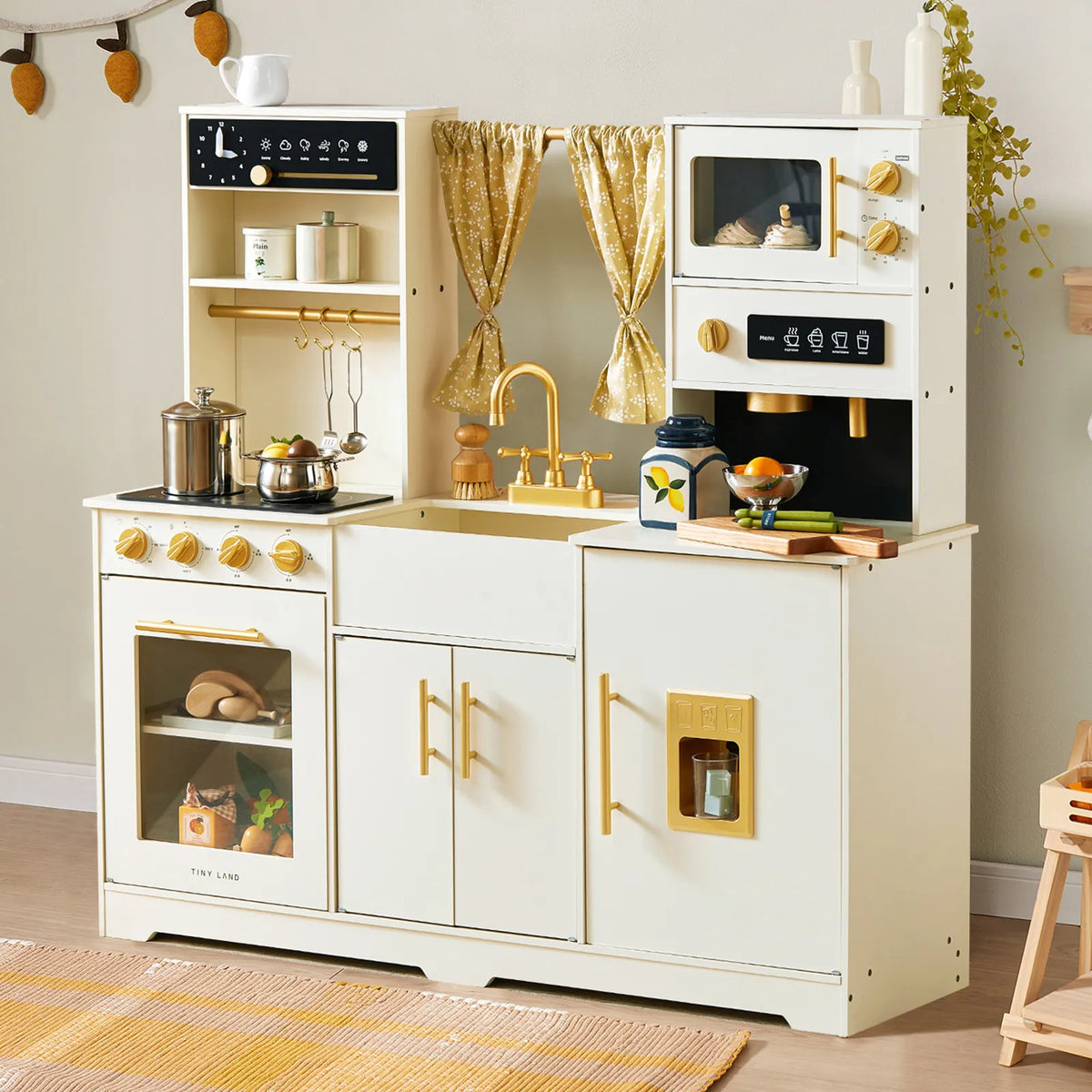
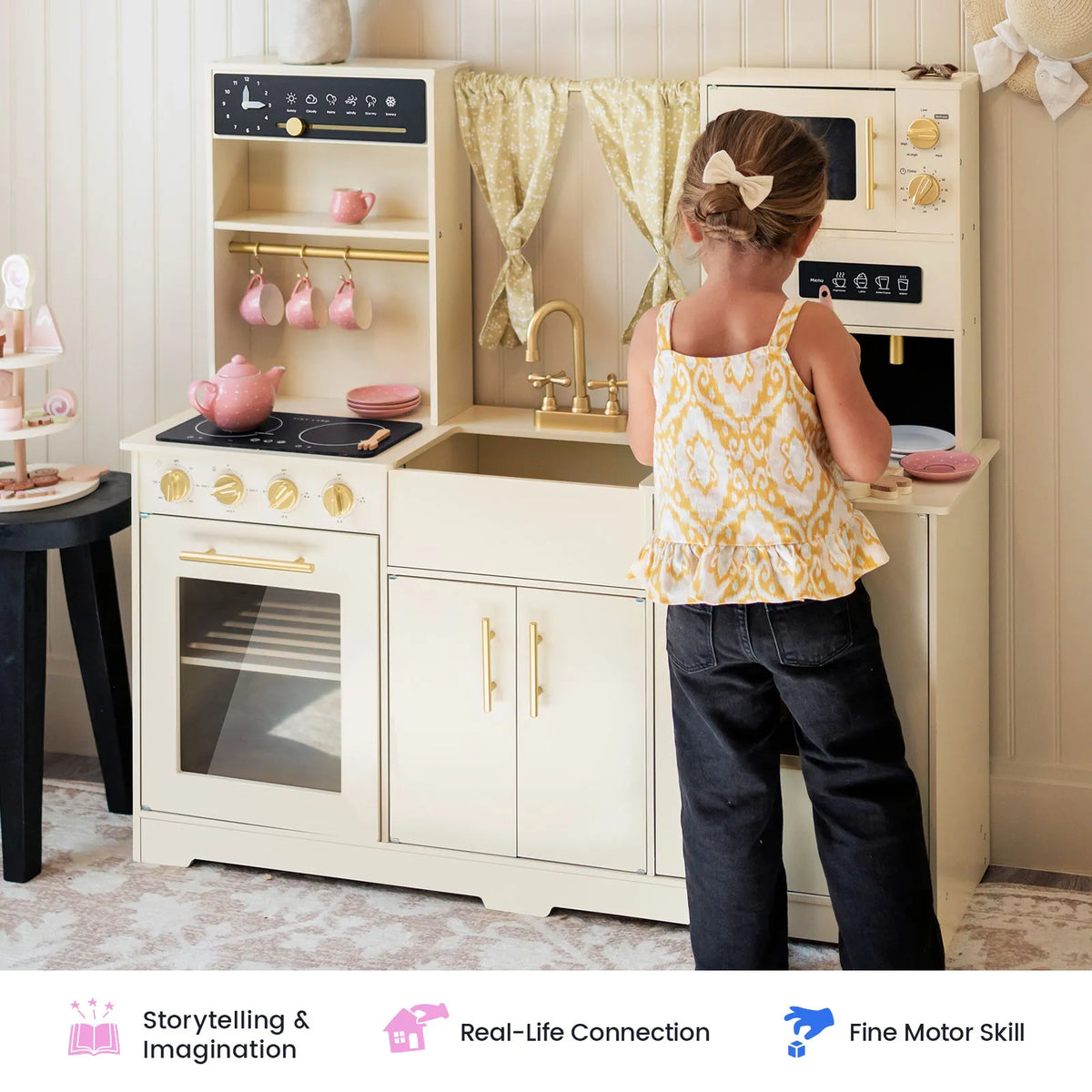
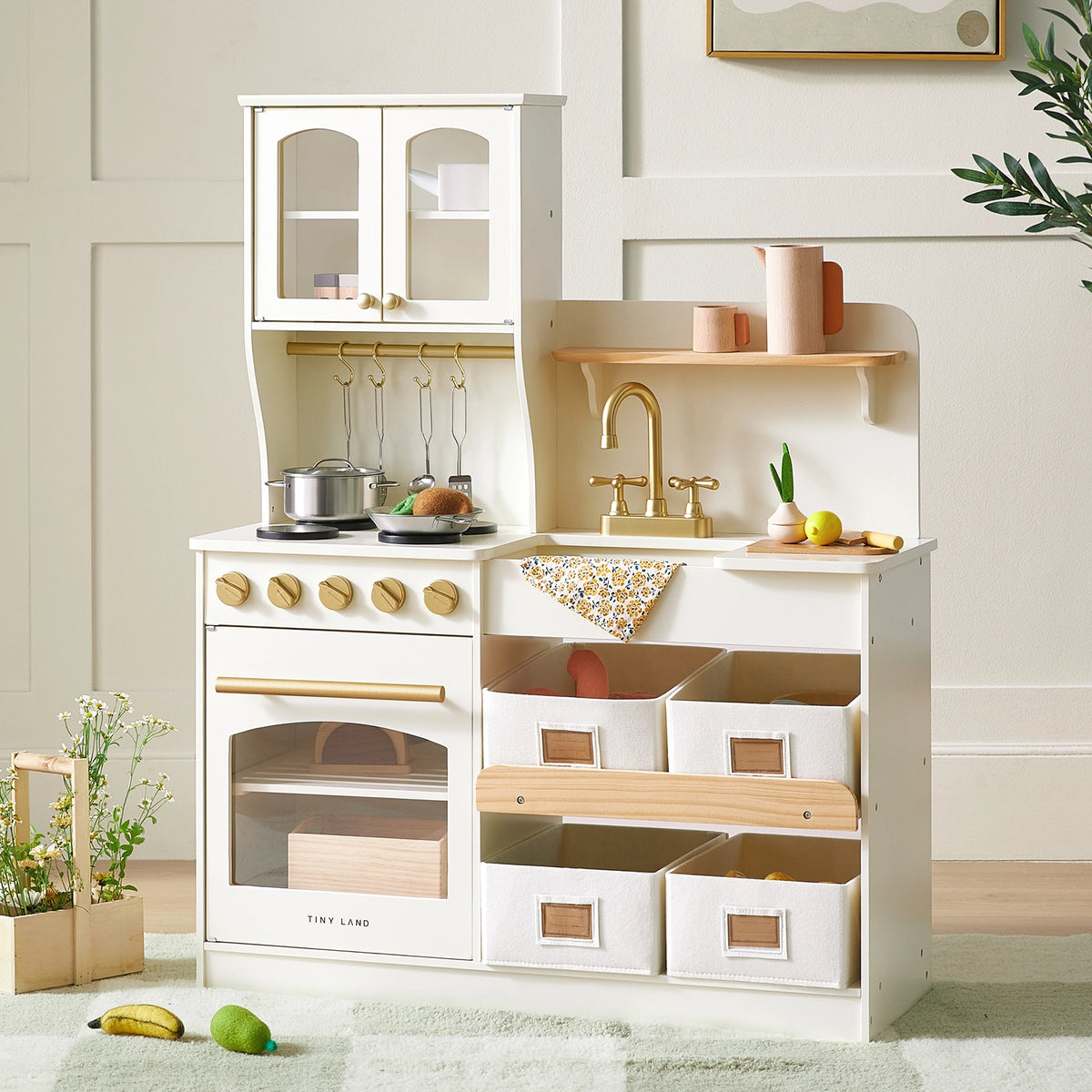
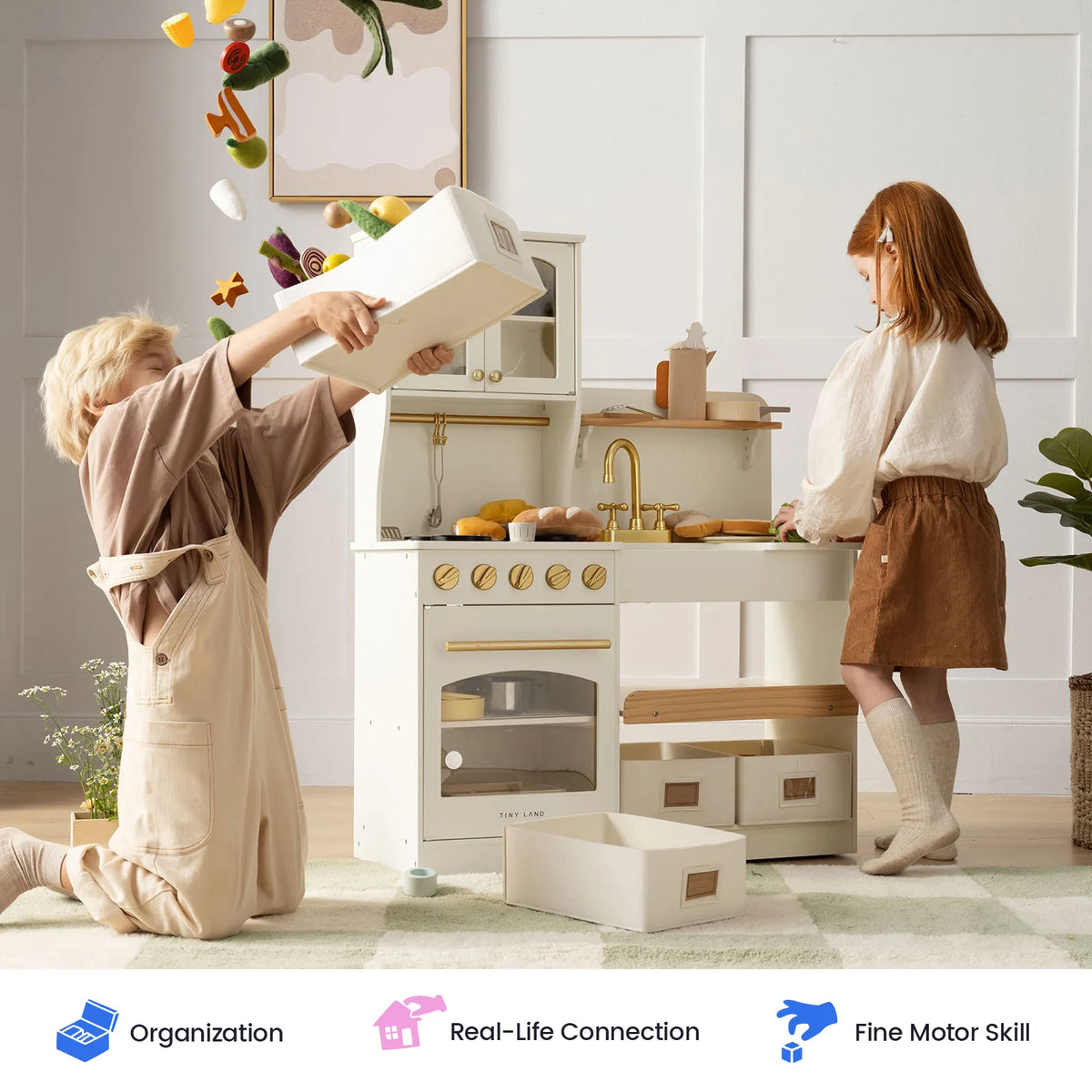
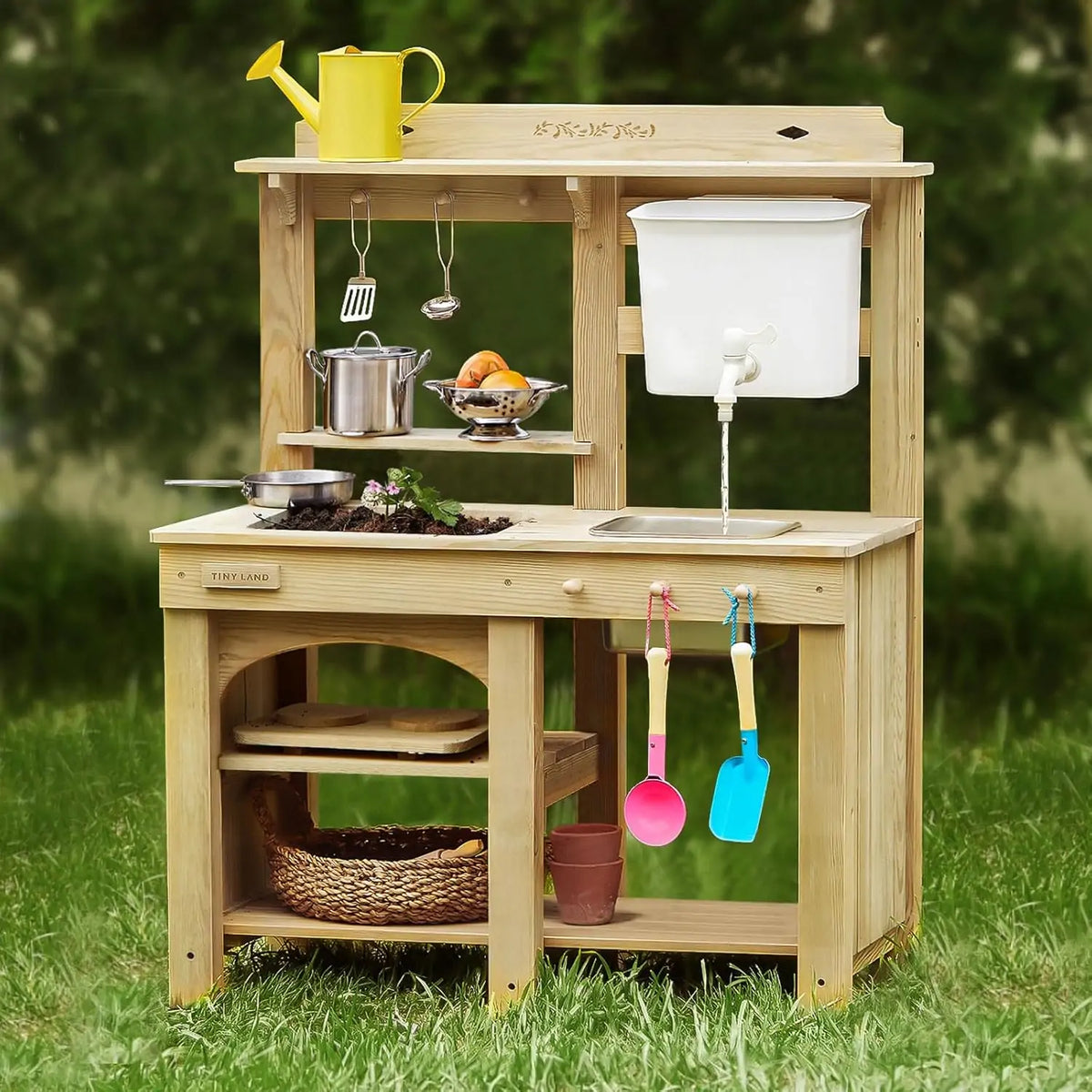
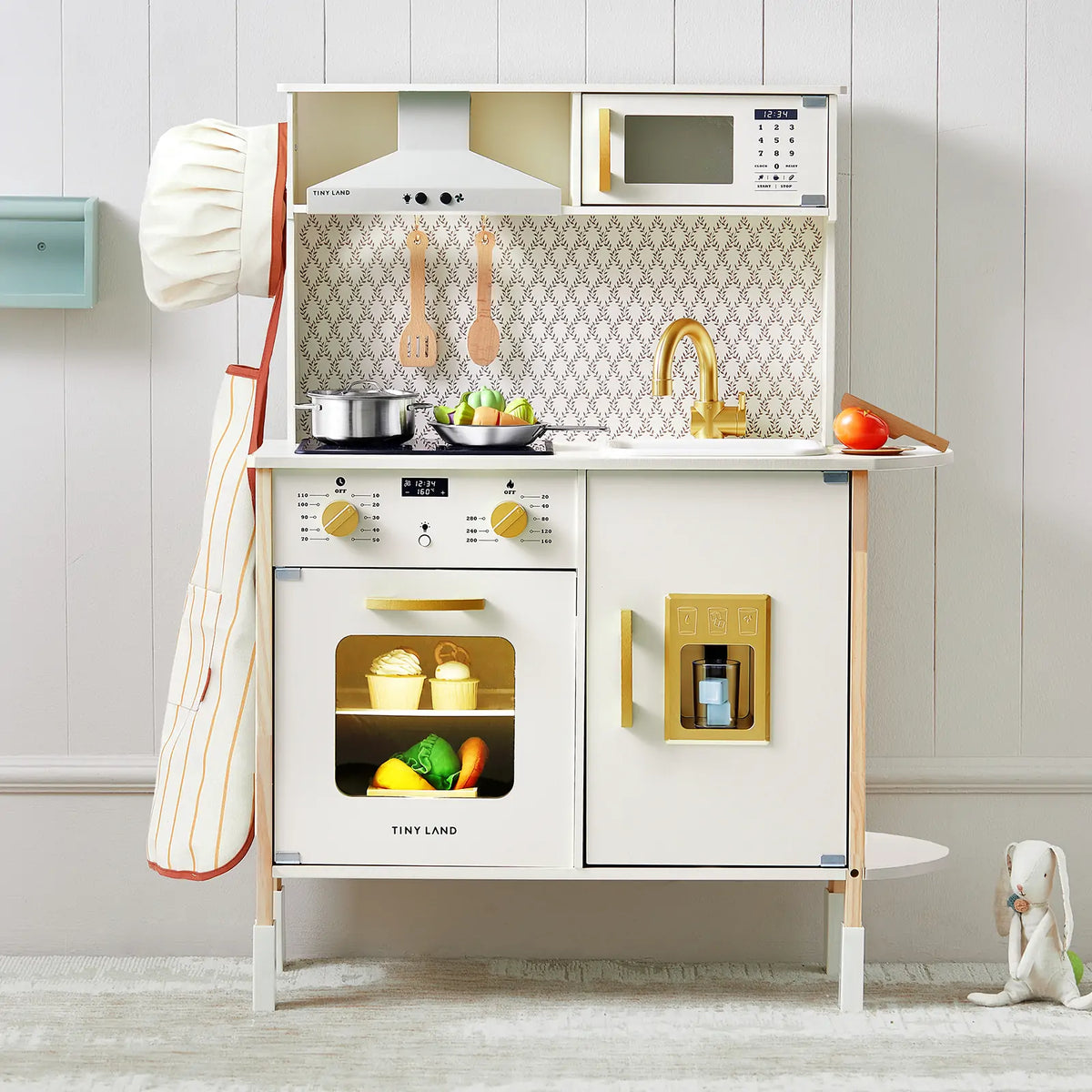
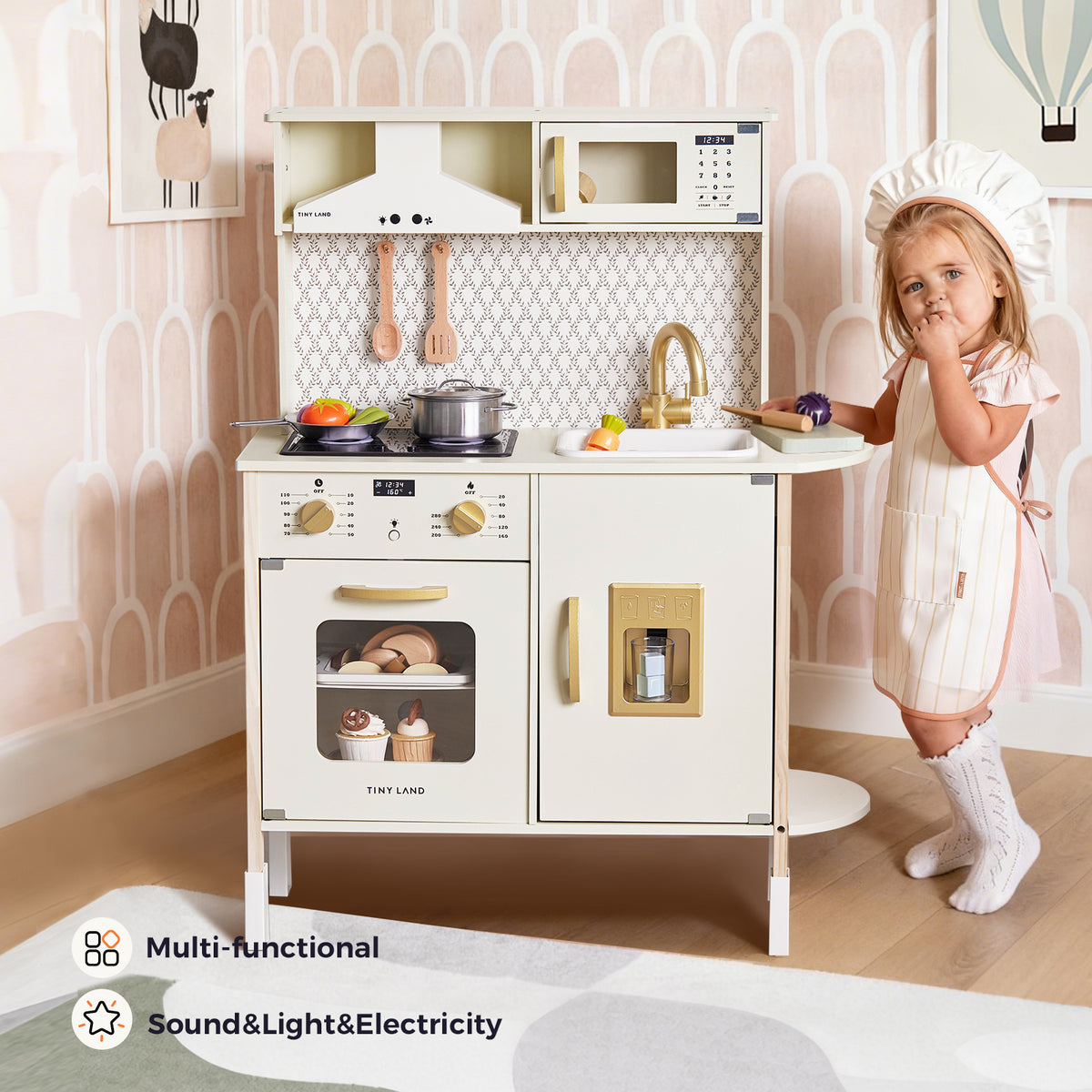
That is what drew Alex to the Tiny Land Play Kitchen with Running Water.
“As a Montessori educator, I love that the running water feature brings practical life skills into children’s play.”
From Pretend Play to Hands-On Practice
Pretend kitchens give children a familiar setting to recreate activities they see in everyday life. They can pretend to cook, wash dishes, or prepare food.
But Alex points out one challenge with traditional pretend kitchens:
“One of the biggest challenges with pretend kitchens is that children can only imitate washing dishes or rinsing produce.”
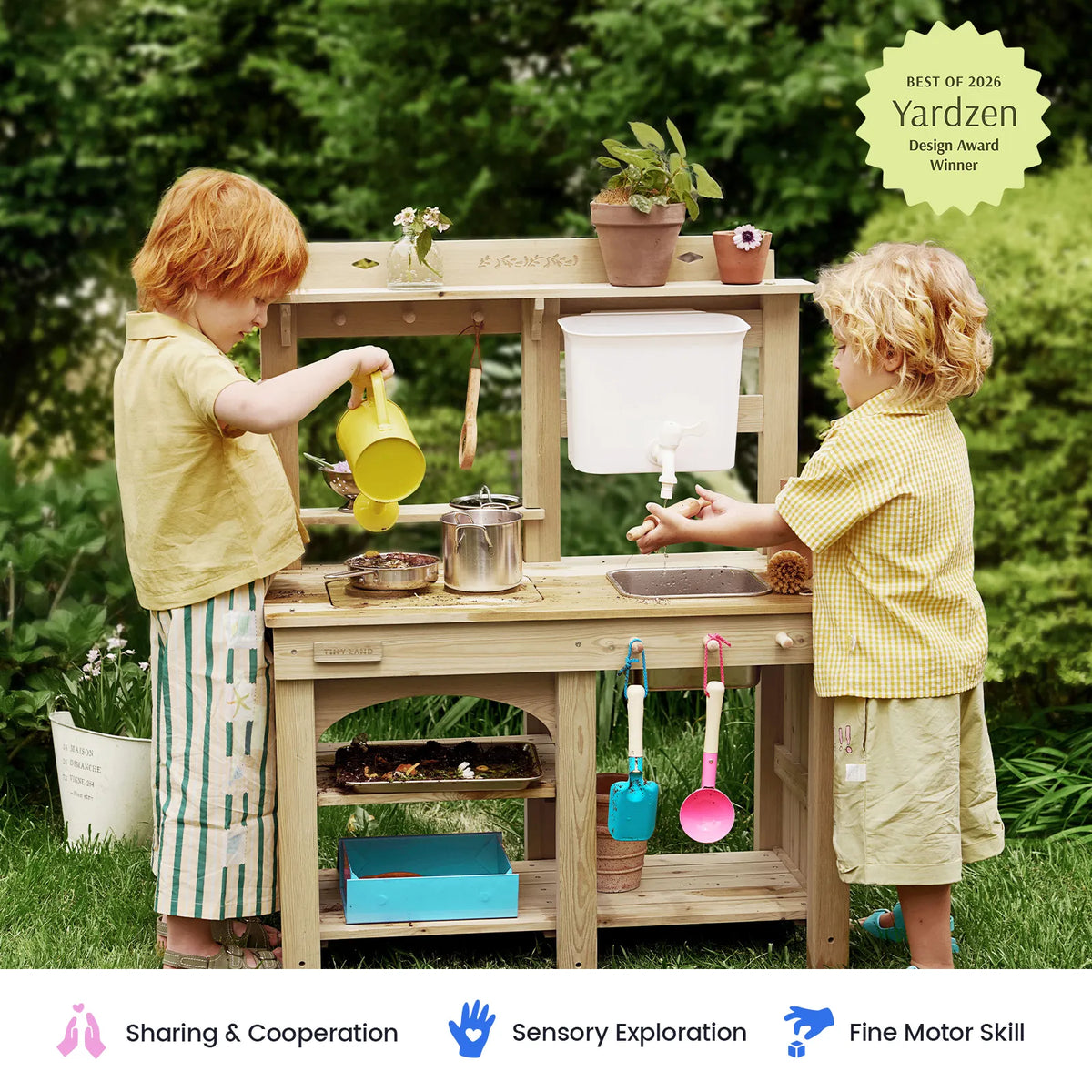
With running water, children can move beyond simply imitating those activities. They can practice rinsing fruits and vegetables, washing dishes, filling cups, transferring water, and cleaning up after themselves.
For Alex, this hands-on element is what makes the running-water feature especially meaningful within kitchen play.

Bringing Practical Life Into Play
Kitchen activities naturally involve actions such as filling, pouring, transferring, rinsing, washing, and cleaning.
With running water available, children can participate in these familiar activities while playing. They can work through the actions themselves rather than only pretending to do them.
Alex explains that these experiences can help develop independence, fine motor skills, hand-eye coordination, sequencing, and concentration.
They also give children opportunities to care for their environment. Washing and rinsing can be followed by cleaning up, allowing children to participate in both the activity and what comes afterward.
“These hands-on experiences help develop independence, fine motor skills, hand-eye coordination, sequencing, and concentration while giving children opportunities to care for their environment in an authentic way.”
 Supporting Independence at Home
Independence is an important part of Alex’s Montessori philosophy.
She believes children thrive when they are given opportunities for independence, meaningful work, and environments that respect their natural development.
Her passion is helping parents bring authentic Montessori principles into their homes in practical, approachable ways. Through educational content, product demonstrations, and resources, she works to make Montessori concepts accessible and realistic for everyday families.
Tiny Land running-water play kitchen provides one practical setting for this approach. Children can take part in simple kitchen activities such as rinsing produce, washing dishes, filling cups, transferring water, and cleaning up.
These activities give children an opportunity to engage with familiar everyday tasks while developing the skills Alex sees as important to hands-on learning and independence.

A Practical Approach to Montessori at Home
Alex’s work centers on helping families make Montessori principles practical for everyday life.
Rather than presenting Montessori as something that only happens in a classroom, she focuses on simple ways parents can create environments that support children’s independence, meaningful work, and natural development.
Tiny Land running-water kitchen is one example of how an everyday play environment can incorporate hands-on activities.
Children can explore familiar kitchen tasks while practicing the actions involved in washing, rinsing, filling, transferring, and cleaning.
For families interested in bringing more hands-on experiences into everyday play, this creates an approachable opportunity to let children participate in activities they already see at home.

About Alex
Alex holds a Bachelor of Science degree in Early Childhood and Elementary Education with an emphasis in Special Education from the University of Mary.
She assisted in a Montessori classroom for two years before earning her AMS 3–6 (Primary) certification from the Montessori Education Center of the Rockies.
She helped establish St. Joseph Montessori School in Mandan, North Dakota, where she served as the Lead Guide in her own Montessori 3–6 classroom for six years.
Her passion is helping parents bring authentic Montessori principles into their homes in practical and approachable ways.
She believes children thrive when they are given opportunities for independence, meaningful work, and environments that respect their natural development.
These values closely align with Tiny Land’s mission to create thoughtfully designed play environments that support children’s independence, curiosity, and meaningful play.