




Climbing blocks can be useful way before your baby is actually climbing.
According to pediatric physical therapist, Dr. Anastasia Bach, climbing blocks can support tummy time, strength, coordination, balance, and new movement skills as a baby grows.
The way a baby uses them can change over time, from exploring an incline during tummy time to crawling up and over and challenging balance as a new walker.
You don't have to wait until your baby is climbing to introduce this type of movement play.

Ramps Can Make Tummy Time Easier to Love
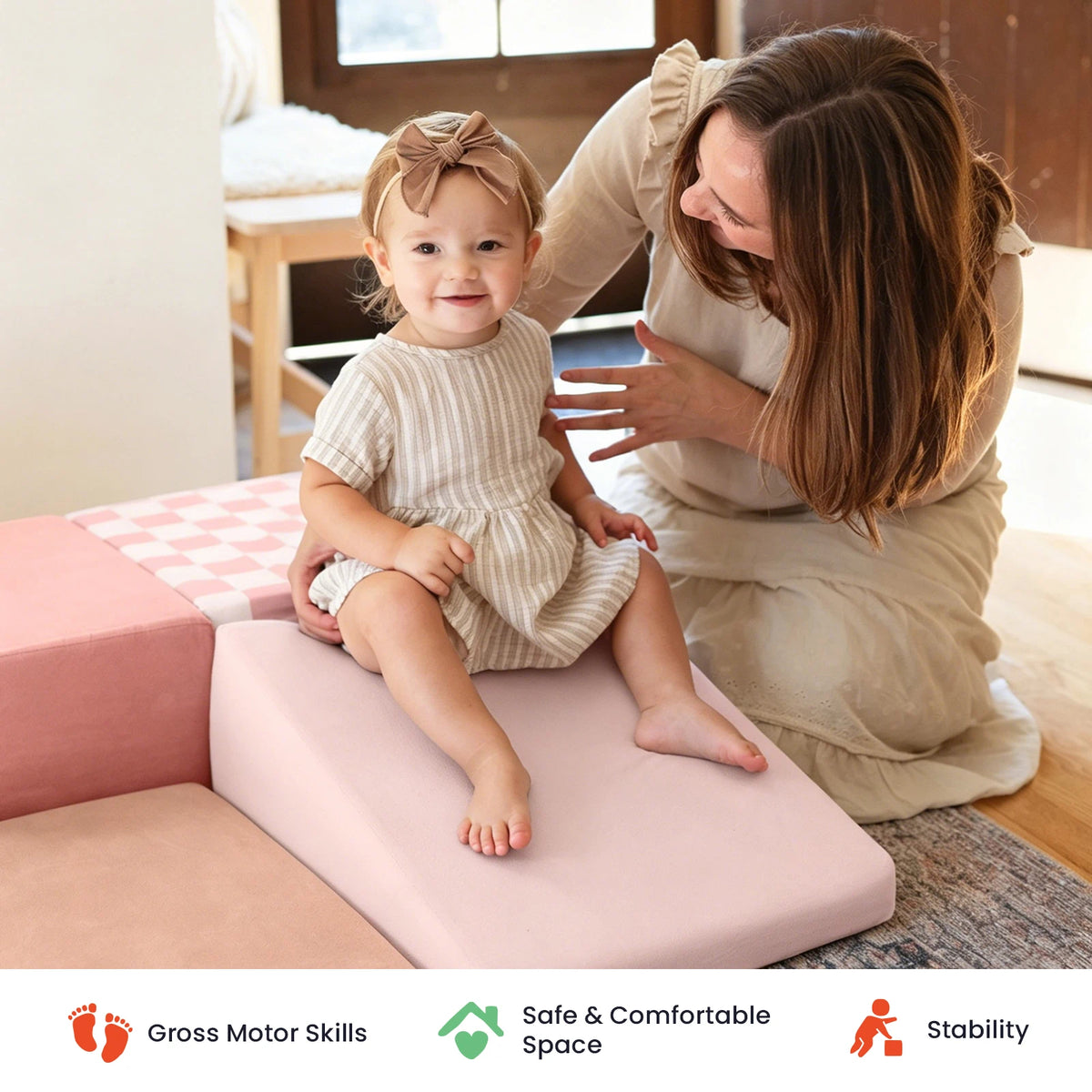
For younger babies, a gentle incline can offer another way to approach tummy time.
According to Dr. Anastasia Bach, a gentle incline still gives babies a chance to work against gravity while reducing the demand compared with flat tummy time.
This gives babies an opportunity to work on head, neck, shoulder, and trunk control, with less protest.
At this stage, the activity can be simple. Babies can explore the inclined position and reach toward something within their reach.
The focus isn't on climbing. It is another way for a baby to experience tummy time and movement during supervised floor play.
Climbing Is Full-Body Strength Training
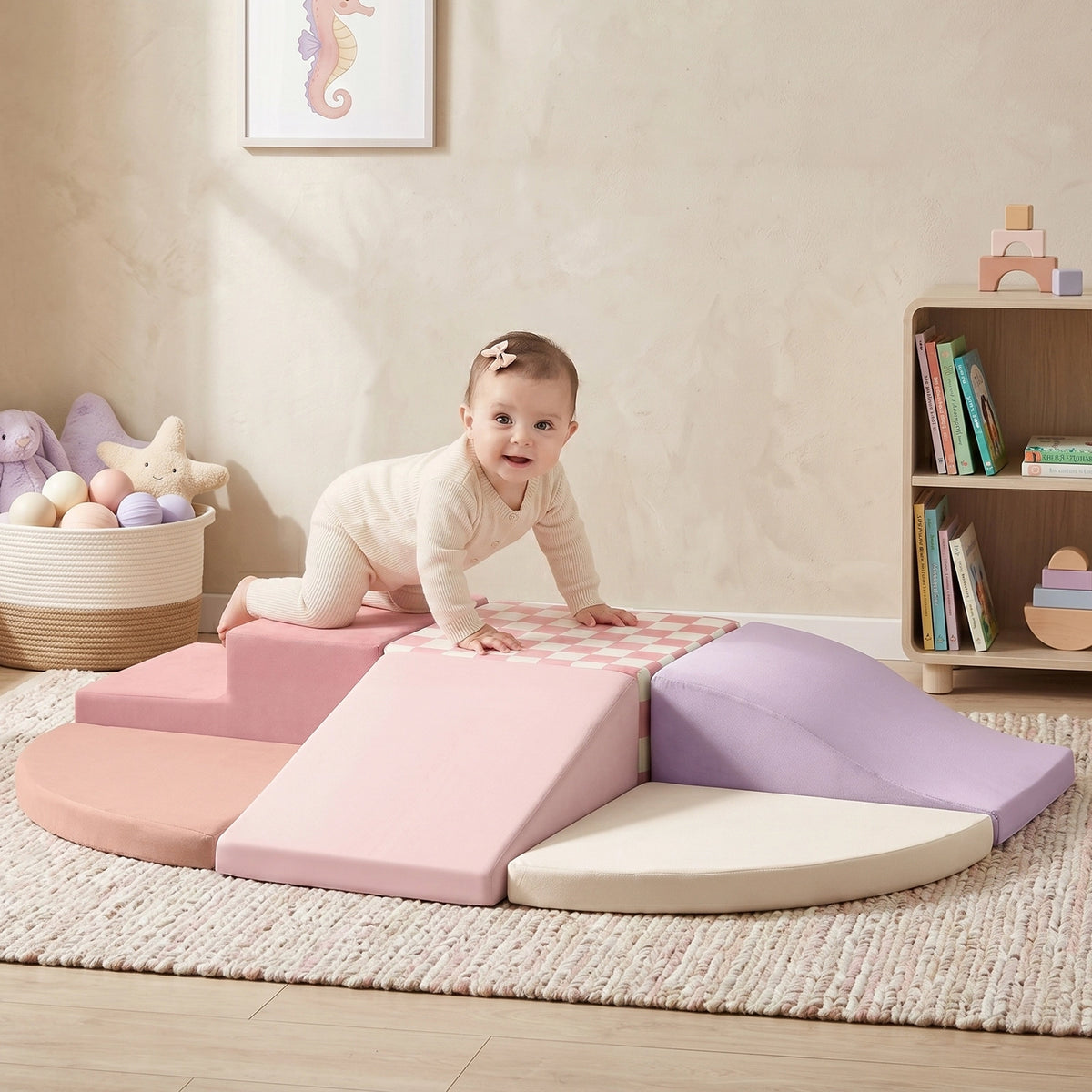
As babies become more mobile, climbing can become a more active form of movement play.
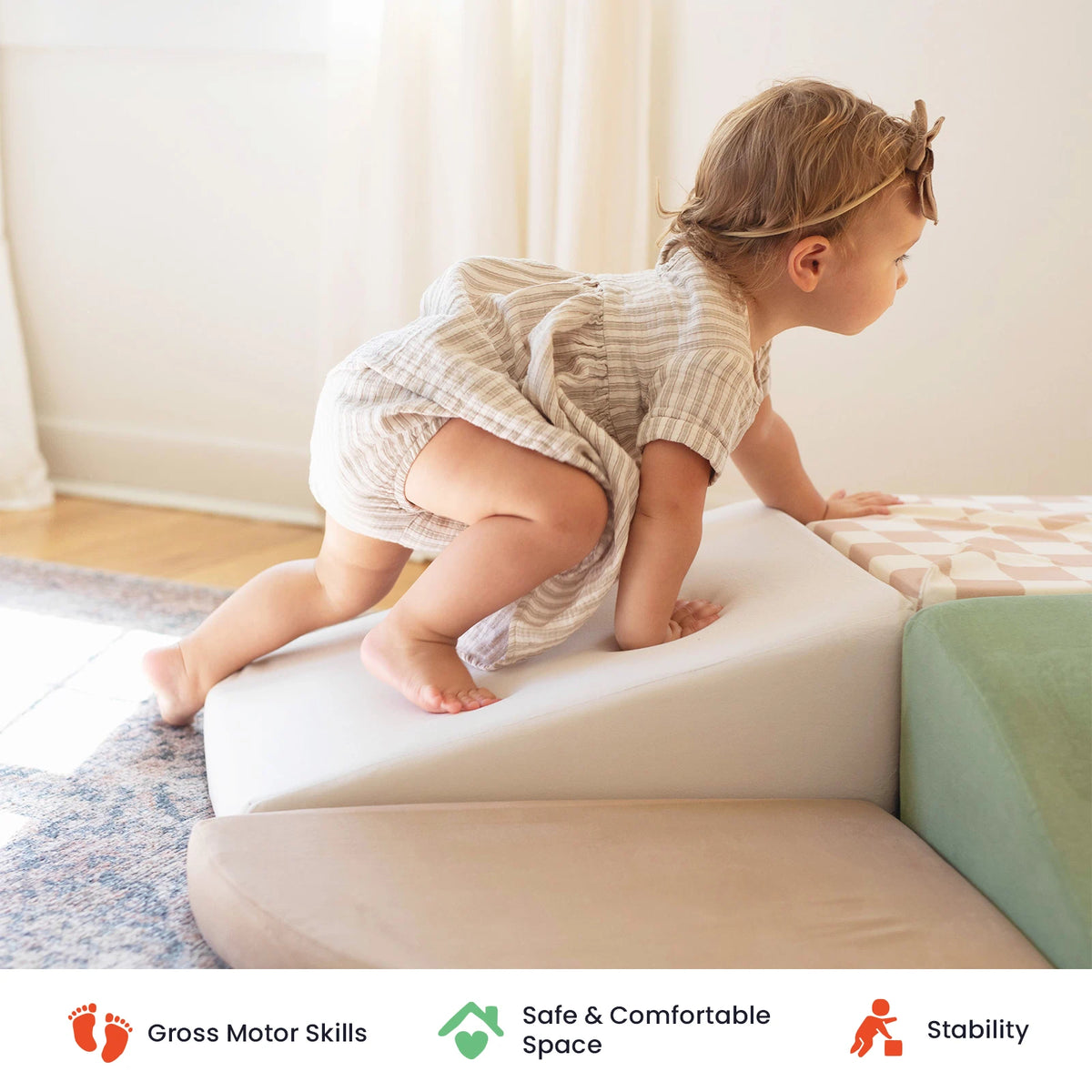
Dr. Anastasia Bach describes climbing as “full-body strength training.” Crawling up and over asks babies to work on weight shifting, core stability, and arm-leg coordination.
These skills support later transitions such as pulling to stand, cruising, and walking.
A crawling baby may explore moving:
-
Up a ramp
-
Over the top
-
Across the surface
-
Feet-first back down
The way a baby interacts with the equipment can change as their movement skills develop.

It Grows With Your Baby
Climbing blocks can be used differently as a baby's movement skills change.
Early Months: Inclined Tummy Time + Reaching
Before a baby is crawling, Dr. Anastasia Bach recommends using climbing blocks for:
-
Inclined tummy time
-
Reaching
-
Exploring a gentle incline
At this stage, the focus is on inclined tummy time and reaching rather than climbing.
Crawlers: Up, Over, and Feet-First Back Down
Once a baby is crawling, the blocks can become part of more active movement play.
A crawler can explore moving:
-
Up
-
Over
-
Feet-first back down
Crawling up and over involves weight shifting, core stability, and arm-leg coordination.
New Walkers: A Soft Place to Land
For new walkers, Dr. Anastasia Bach describes climbing blocks as “a soft place to land while they challenge balance.”
At this stage, children can continue to explore balance and new movement skills through soft-play activities.
The way children use climbing blocks can continue to change as their movement skills grow.

What a Pediatric PT Looks For in Climbing Blocks
When choosing climbing blocks for a young child, Dr. Anastasia Bach recommends looking for several practical features.
1. Low Heights for Brand-New Movers
For children who are just beginning to explore movement, look for low heights for brand-new movers.
2. Firm Foam
Another consideration is firm foam that doesn't sink under hands and knees.
3. Pieces That Rearrange as Skills Grow
Dr. Anastasia Bach also recommends looking for pieces that rearrange as skills grow.
4. Washable and Easy to Clean
Look for climbing equipment that is washable and easy to clean.
5. Tested for Safety
Finally, look for climbing blocks that are tested for safety.
Parents should always follow the manufacturer's age and safety instructions and supervise children during floor play.

Expert Recommendation: Tiny Land PlayNest Climbing Blocks
Based on her experience as a pediatric physical therapist and the features she looks for in climbing blocks, Dr. Anastasia Bach recommends Tiny Land PlayNest Climbing Blocks, noting that the set “checks every box.”
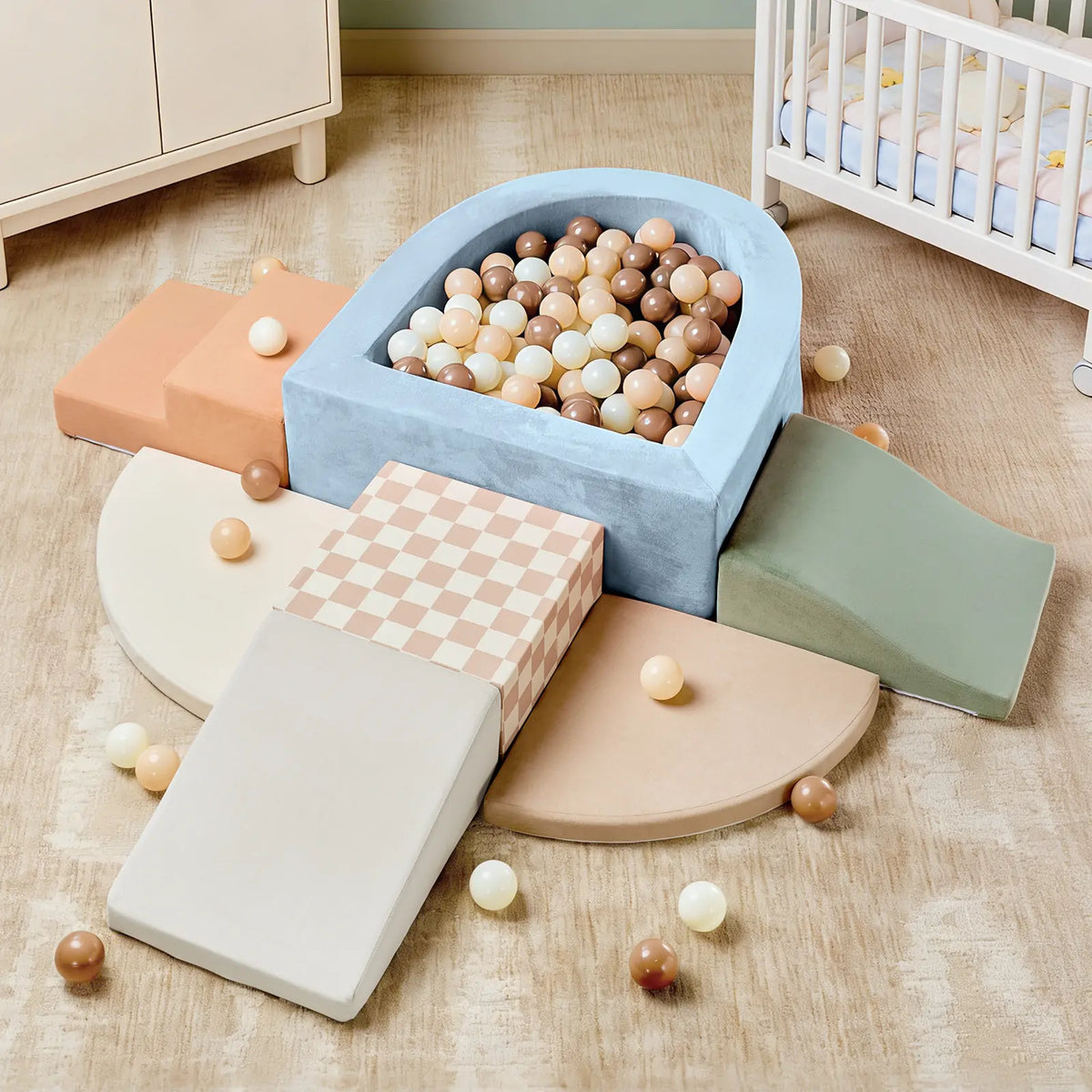
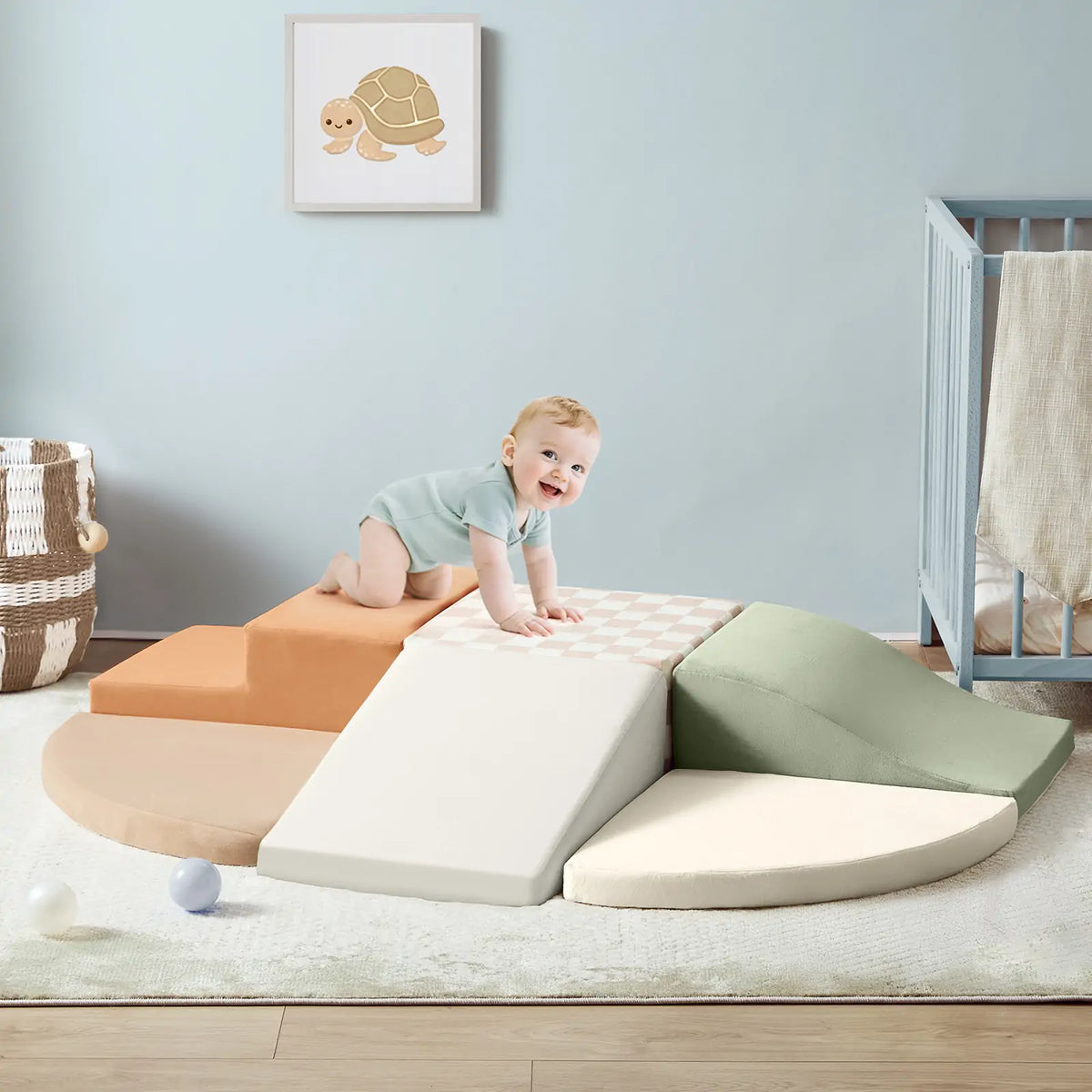
The Tiny Land PlayNest Climbing Blocks are a six-piece foam climber. The set includes:
-
One stair block
-
One square play mat
-
Two ramps
-
Two quarter-circle pads
The six pieces can be freely arranged for climbing, crawling, sliding, and creative building. The pieces can also be rearranged into different configurations as children explore different types of play.
The set is made with high-density foam and a soft, non-toxic matte velvet surface. The surface is waterproof and easy to wipe clean.
These product features correspond with several of the practical considerations highlighted in Dr. Anastasia Bach's checklist, including rearrangeable pieces and an easy-to-clean surface offers a practical feature for everyday floor play.

Meet Dr. Anastasia Bach, PT, DPT
Dr. Anastasia Bach, PT, DPT, is a licensed pediatric physical therapist with more than a decade of clinical experience in pediatric motor development.
Her professional work focuses on supporting children as they develop foundational movement skills and helping families better understand typical developmental milestones.
Dr. Bach currently provides physical therapy services in a public school setting, where she works with children with diverse developmental needs.
She is also the founder of Tummy Time Texts, a platform that provides parents with access to pediatric physical therapy resources and guidance related to early childhood development.
Her clinical areas of focus include infant and pediatric gross motor development, tummy time, early movement skills, and developmental milestone progression. She also helps families recognize when a child's development may warrant additional professional guidance.