



Choosing a baby walker can be part of preparing your home for a child who is beginning to stand, cruise, and explore first steps.
Parents may have questions about when to introduce a walker, what features matter, and how to create a safe space for supervised walking practice.
A baby push walker can give a child an opportunity to practice pushing, holding, and moving while standing.
However, a walker is not intended to make a baby walk earlier. The right choice should be based on your child’s current stage, the product’s intended use, and your home environment.

What Is a Baby Walker?
A baby walker is a walking support toy designed to be used as a child develops an interest in standing and moving.
Different products can have very different designs and intended uses, so it is important to understand which type you are considering.
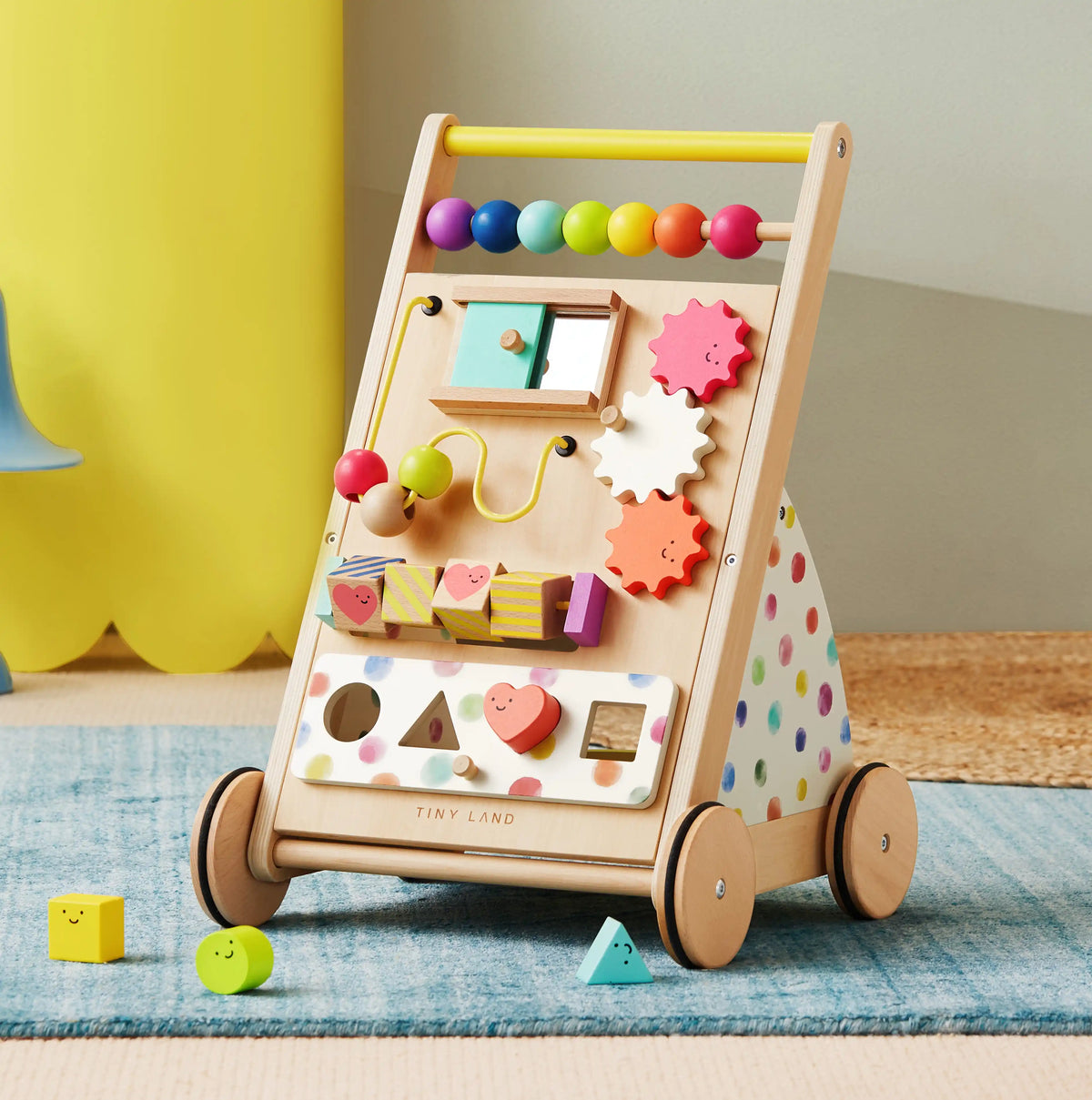
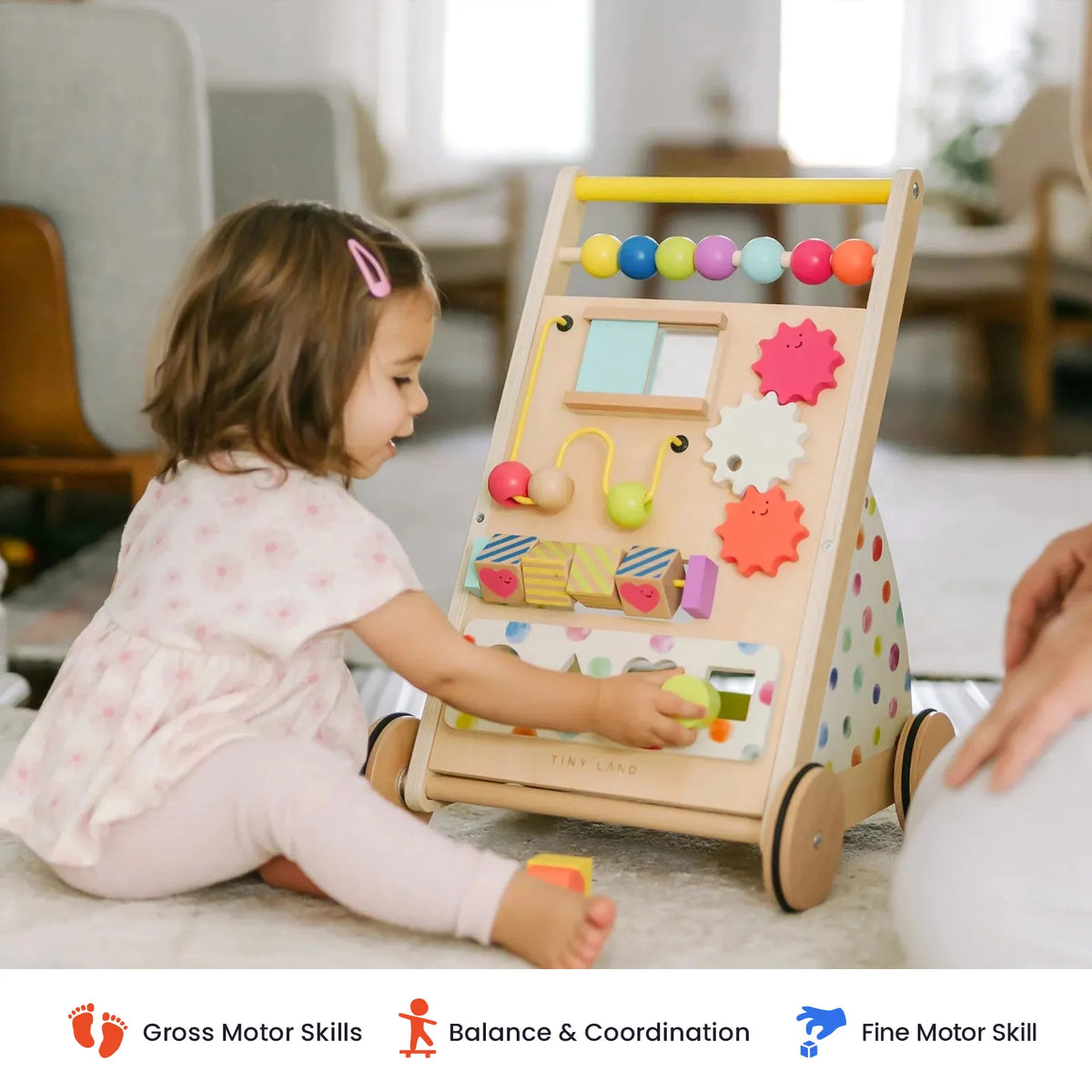
For parents looking for a baby walker for first steps, a push walker is designed to be used from behind: the child stands, holds the handle, and pushes the walker forward during supervised walking practice.
Baby Push Walkers vs. Seated Walkers
A seated walker and a baby push walker are not the same type of product.
A seated walker has a frame that surrounds a child while the child sits inside it. The American Academy of Pediatrics advises against traditional wheeled sit-in baby walkers, and experts advise against using traditional seated walkers at any age. They can move up to four feet per second, which increases the severe safety risk of tipping, rolling into hazards, or reaching dangerous objects before an adult can respond.
A push walker is used while the child stands behind the product and holds a handle to move it forward.
This guide focuses on push walkers as a walking support toy for supervised practice, since experts favor push-style or sit-to-stand designs over mobile sit-in walkers because they offer better control and better support natural development toward a stable standing position.
Traditional sit-in walkers can delay crawling, standing, and walking milestones. Always check the manufacturer’s instructions, age guidance, and intended use for the specific product before introducing it to your child.

When Parents Usually Start Looking for a Walker
Parents may start considering a walker when their child begins showing interest in standing, pulling up, cruising, or taking supported steps.
There is no universal age at which every child should start using a walker.
Instead, parents should consider whether their child is ready to use the product as intended and whether the product’s manufacturer guidance matches their child’s stage: most babies are ready for push walkers around 9 to 10 months, many use them from about 9 months to 12–15 months, and some models list ages six months and up depending on design. For early walkers, stability and support matter most.
A baby walker for first steps should be introduced as part of supervised play, rather than as a tool intended to speed up walking development; stand-behind push toys are usually introduced around 9 to 12 months, when the child is already showing readiness signs.

What to Look for in a Baby Walker
When choosing a baby walker, consider how the product is designed, how it will move through your home, and whether it is appropriate for your child’s current stage.
Stable Base and Smooth Movement
A stable base is an important consideration when choosing a push walker, ideally with a wide base and movement that is not too freely rolling.
The walker should be appropriate for the type of movement it is designed for, and parents should consider the flooring and available space where it will be used.
On hardwood floors, rubber wheels or wheel grips can help reduce sliding. Before giving the walker to your child, check that it moves as intended, especially at the rear wheels, and follow the manufacturer’s instructions for use.
The goal is not to find a walker that moves as quickly as possible. For new walkers, some models include adjustable rolling resistance or speed settings to help parents control movement and reduce tip risk.
For supervised walking practice, parents should be able to stay close and guide the activity.

Easy-to-Grip Handle on a Baby Push Walker
A handle gives a child a place to hold while standing behind a baby push walker.
Look for a handle that is easy for small hands to grip and that is appropriate for the child according to the product’s intended use.
Parents should also consider whether the child can comfortably stand behind the walker while holding the handle.
Durable Materials and Rounded Edges
Because a walker can become part of everyday play, parents may want to consider its overall construction and finish.
Look for sturdy construction, a sturdy feel, and smooth, rounded surfaces. If you are considering a wooden baby walker, check the product page for the exact materials and construction details rather than assuming that every wooden walker uses the same materials.
Wood options often appeal to families interested in longer-term durability, while plastic ones are usually lighter and may cost less. A well-built walker may also hold up for multiple children.

Age Guidance and Supervised Use
Always check the manufacturer’s age guidance before choosing a toddler walker or baby walker. Where applicable, check that the product meets the relevant safety standards and follow all manufacturer safety instructions.
A push walker should be used only as intended and with adult supervision. Parents should keep a close eye during walking practice and follow the manufacturer’s safety instructions.
If you have concerns about your child’s walking or development, talk with your child’s pediatrician rather than using a walker as a developmental assessment.
How to Use a Baby Walker at Home
A baby walking toy can be introduced as part of short, supervised play sessions in an appropriate area of the home.
The environment matters just as much as the product. Before beginning, check the floor and surrounding area for potential hazards.
Short Practice Sessions
Start with short periods of early walking practice and give your child time to become familiar with the walker.
A child may first explore the handle, stand behind the walker, or move it only a short distance.
Babies develop walking skills naturally and at their own pace, so this is for practice rather than rushing independent steps. There is no need to turn walking practice into a structured exercise.
If your child seems too reliant on it, try putting the walker away between short sessions so practice stays balanced with other floor play. Let your child take breaks when they become tired or lose interest, and always supervise the activity.

Clear Floor Space
Create a clear area before using a push walker for babies.
Remove toys and other objects that could interfere with movement. Keep the walker away from stairs, unstable furniture, and other hazards in the walking path, and make sure an adult can stay nearby throughout the activity.
A simple, open floor area can give your child more room to explore movement while keeping the focus on supervised play. Flat surfaces such as hardwood floors can make it easier for a child to navigate the walker when an adult stays nearby.
Parent-Led Play Ideas
A baby push walker can be incorporated into simple play rather than being used only for walking from one point to another.
For example, parents can place a familiar toy or simple play activity nearby and let the child move toward it while supervised.
Interactive features can make the walker more fun, but they should still support supervised play rather than distract from movement practice. Features like lights, a shape sorter, or other hands-on activities can also support fine motor skills during play.
Keep activities consistent with the product’s intended use, and do not attach additional objects or accessories unless they are specifically designed for the product. These added play elements can help keep a little one interested and build walking-related skills.

Wooden Baby Walker Benefits
For parents considering a wooden walker for baby, a wooden design can offer a simple option for combining movement with open-ended play.
The benefits of a wooden baby walker depend on its specific design and construction, so parents should always check the individual product details before making a purchase.
Simple, Open-Ended Play
A simple wooden baby walker can fit naturally into everyday play.
Instead of relying on a fixed activity, children can use a push walker while moving around their play space, exploring different areas, or incorporating the walker into pretend play that can later develop into imaginative play as they get older.
This gives the product potential value beyond a single walking activity.
Play Value Beyond First Steps
A first steps toy does not necessarily have to be used only during the earliest stage of walking practice.
Depending on the design, a walker can become part of a child’s broader play routine. Parents may look for products that can remain useful as their child becomes more comfortable standing, pushing, and moving independently.
When comparing options, consider both the product’s intended walking use and how it fits into your child’s everyday play environment.

How to Choose the Right Baby Walker for Your Child
The right baby walker depends on your child, your available space, and how you plan to use the product.
Rather than choosing based only on appearance or the number of features, compare the basic product information first.
Product facts to confirm before comparison
Before buying a wooden baby walker or another type of baby push walker, check:
-
Age guidance: Confirm that the product is intended for your child’s age and stage.
-
Product dimensions: Make sure the walker fits comfortably in the area where you plan to use it.
-
Materials: Check the manufacturer’s product details for the exact materials.
-
Construction: Look at the handle, base, wheels, and overall design.
-
Intended use: Confirm that the product is designed for the type of supervised walking practice you have in mind.
-
Safety instructions: Read and follow the manufacturer’s instructions before use.
These details can help parents compare a wooden walker for baby with other options without relying on assumptions about materials, features, or performance.
For families exploring options, Tiny Land baby walkers can be reviewed alongside the product information and guidance provided on each individual product page.
Frequently Asked Questions
What is a baby walker?
A baby walker is a product designed to support a child’s movement in a specific way. A push walker is used from behind while the child stands and holds the handle. Because walker designs vary, parents should always check the manufacturer’s intended use and age guidance.
Is a baby push walker good for first steps?
A baby push walker can provide an opportunity for supervised walking practice when a child is ready to stand and move with support. It should not be presented as a way to make a child walk earlier.
What is the difference between a baby push walker and a seated walker?
A seated walker supports a child while sitting inside a frame, while a push walker is used while standing and pushing the product from behind. They are different product types and should not be treated as interchangeable.
When can a baby use a baby walker?
The appropriate time depends on the individual child and the manufacturer’s guidance for the specific product. Many push walkers are introduced around 9 to 10 months, when babies can pull to stand, though readiness varies by child and product guidance. Check the recommended age and intended use before introducing a walker, and supervise your child during use.
Is a wooden baby walker a good choice?
A wooden baby walker can be an option for parents who prefer a simple wooden design. It may also appeal to parents who want a sturdy design with play value that can last. When comparing one, check the exact materials, construction, age guidance, dimensions, and intended use listed by the manufacturer.
How do you use a baby walker safely at home?
Use the walker with adult supervision in a clear area, and an adult should keep a close eye on the child and stay nearby during use. Remove floor obstacles, keep the walker away from stairs and other hazardous areas, and follow the manufacturer’s safety instructions. Pay close attention during assembly and setup so the walker rolls as intended and all parts are secure.
Safety also means watching for toe-walking or movement on the toes during use rather than a flat-footed stance. If you have questions about your child’s walking development, consult your child’s pediatrician.

Support Your Child’s First Steps Through Play
A baby walker can be part of supervised walking practice and everyday play when it is appropriate for your child and used according to the manufacturer’s guidance.
Ready to support your child’s first steps at home? Explore Tiny Land’s baby walkers for supervised walking practice, simple play, and everyday movement.