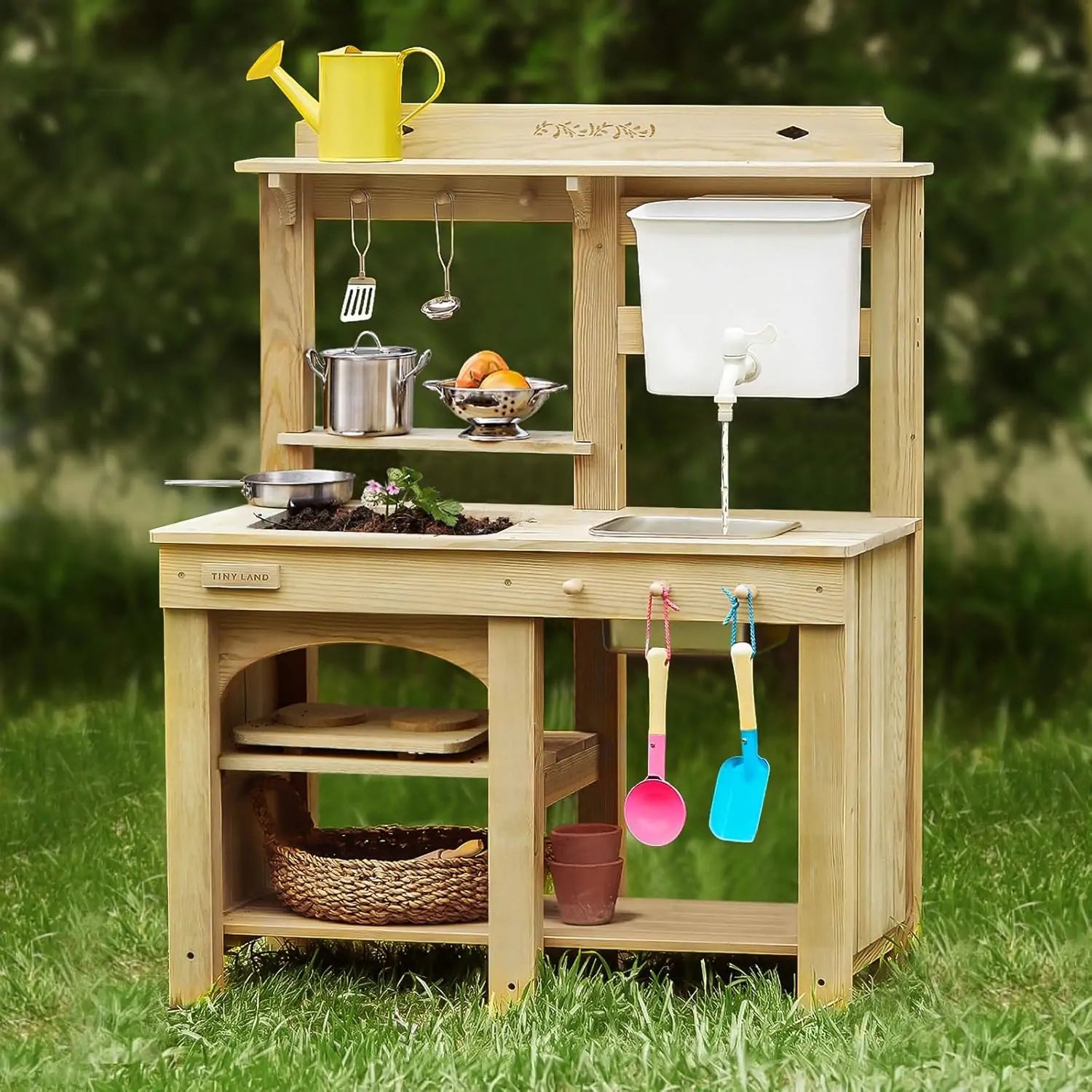

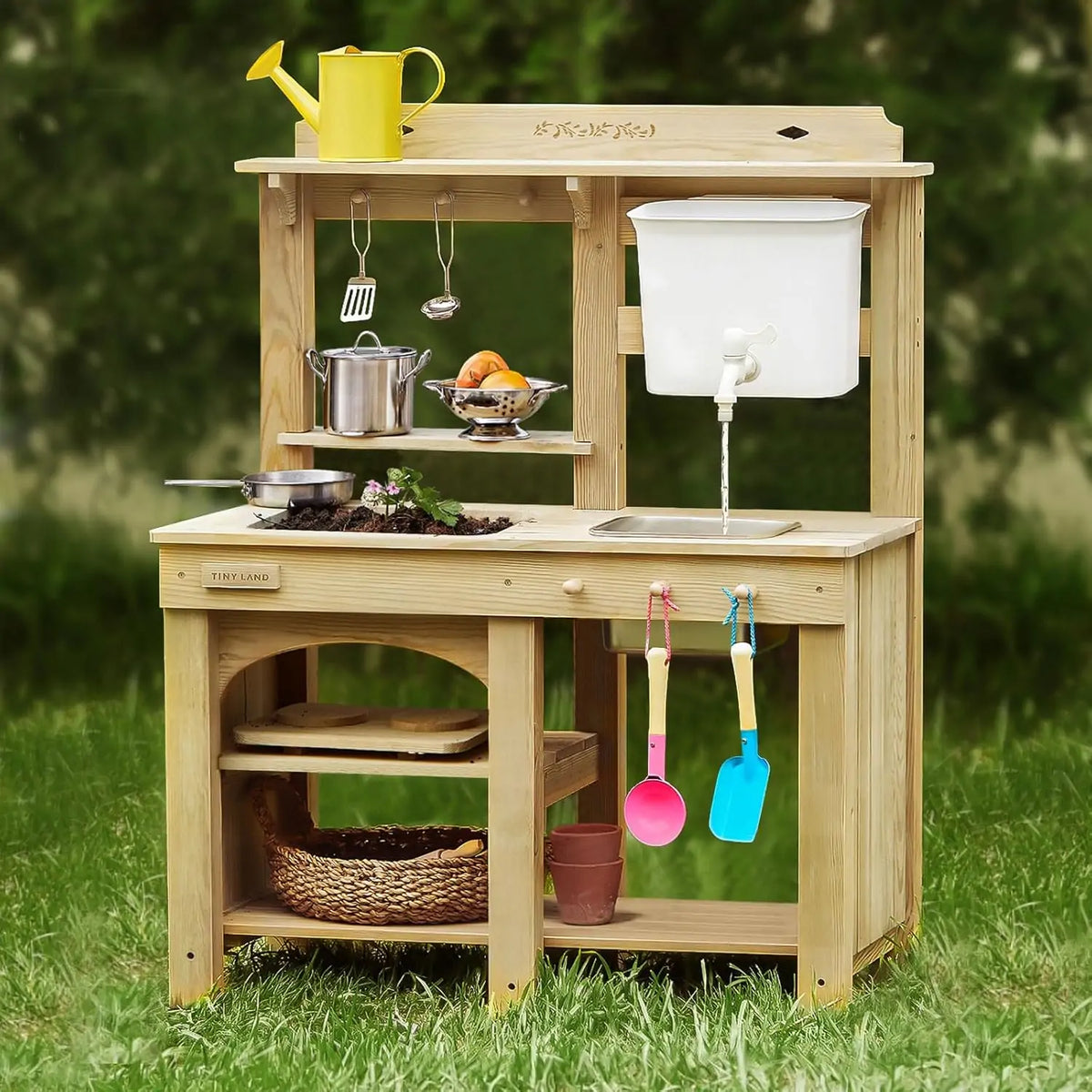
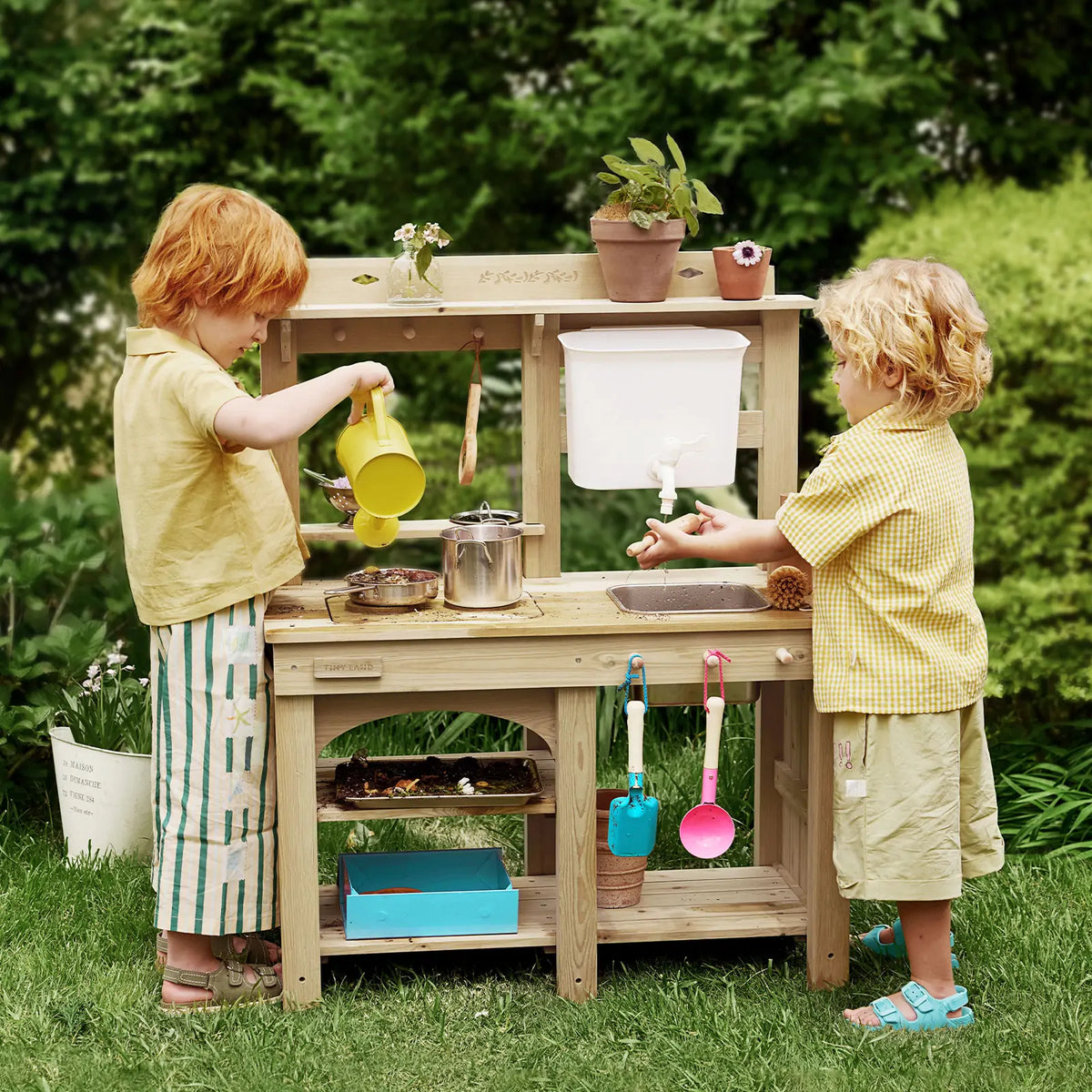



A mud kitchen is supposed to be messy. Children scoop dirt into old pots, pour water into cups, decorate mud pies with grass, and turn rocks into pretend food. That freedom is what makes mud play so enjoyable.
Because kids touch, mix, splash, and explore everything in the space, choosing safe materials matters. A well-designed outdoor mud kitchen should support imaginative play and sensory play without exposing children to peeling paint, sharp edges, unsafe plastics, or chemically treated wood.
Here is how to choose safer materials for your own mud kitchen while keeping the experience fun and creative.

Start With Safe, Sturdy Wood
Wood is one of the best natural materials for an outdoor play kitchen. It looks attractive in a backyard or garden and can handle years of outdoor play when properly maintained.
Avoid using old reclaimed wood unless you know exactly where it came from. Older boards may contain lead paint, industrial chemicals, hidden nails, or strong preservatives.
Choose smooth, sturdy wood from a reliable source. Cedar, cypress, and other naturally weather-resistant woods are good options. Pine can also work, but it may need more protection from rain and wet weather.
Before children begin to play, make sure:
-
All surfaces are sanded smooth.
-
Corners are rounded.
-
Screws are covered or recessed.
-
The table and sink do not wobble.
-
There are no loose pieces or splinters.
A stable mud kitchen allows toddlers and older children to focus on creativity instead of parents worrying about every movement.

Choose Child-Safe Paints and Finishes
Paint can make a mud kitchen look more inviting, but not every product is suitable for children’s play equipment.
Look for water-based, low-VOC, or zero-VOC paint that is labeled for toys or children’s furniture. These options are generally safer than finishes containing strong solvents.
Natural oils and waxes may also protect wood, but always read the full label. Some products described as natural still contain fungicides or chemical drying agents.
Allow paint or finish to cure completely before children use the kitchen. Once the mud kitchen is outdoors, inspect it regularly. Pouring water, scraping pans, wet dirt, and changing weather can cause paint to chip over time.

Pick Safe Mud Kitchen Toys and Accessories
Pots, pans, cups, spoons, and bowls are basic mud kitchen essentials. They encourage role play, pouring, mixing, grinding, and pretend cooking.
Stainless steel is a practical choice because it is sturdy, easy to wash, and resistant to cracking. Old mixing bowls, muffin tins, measuring cups, whisks, and saucepans can all become safe mud kitchen toys when they are in good condition.
Food-grade silicone is also useful for little hands. Silicone tools are soft, easy to grip, and suitable for water play and mud play.
Avoid adding:
-
Rusty metal tools
-
Chipped ceramic cups
-
Flaking non-stick pans
-
Sharp utensils
-
Cracked plastic
-
Containers that held chemicals
-
Small accessories that may be choking hazards
A mud kitchen does not need dozens of fancy accessories. A few strong pots, cups, spoons, and bowls often create more fun than a crowded shelf of poor-quality toys.

Be Careful With Plastic
Plastic can be useful outdoors because it is lightweight and easy for children to carry. However, damaged plastic should not be kept in the play area.
Avoid containers that are cracked, sticky, faded, or brittle. Heat, sunlight, and repeated exposure to wet conditions can weaken plastic over time.
When possible, choose durable, food-grade plastic or products made specifically for kids. Check all accessories regularly and replace anything with sharp edges or broken parts.
Check the Soil and Natural Materials
Parents often focus on the kitchen structure but forget to check what children are actually mixing.
Use clean garden soil from an area free from pesticides, pet waste, broken glass, sharp rocks, and poisonous plants. If you are unsure about the dirt in your yard, clean bagged topsoil without fertilizer or manure may be a better choice.
Children may collect grass, leaves, flower petals, sticks, sand, and rocks to decorate their muddy masterpieces. These natural materials help them connect with nature and create new pretend recipes.
Always check collected items for:
-
Thorns
-
Mold
-
Animal droppings
-
Toxic plants or berries
-
Chemical sprays
-
Small pieces unsafe for toddlers
This preparation keeps outdoor play safer without taking away the joy of exploration.

Create a Simple Water Play Area
A sink or basin can turn an ordinary mud kitchen into a world of pouring, washing, and mixing.
Use clean tap water rather than water that has been sitting outdoors for a long time. Empty the sink when play is finished so standing water does not attract insects or become dirty.
A small watering can, funnel, ladle, or cup gives children plenty of opportunities to splash and practice motor skills. These simple tools also help children develop coordination and control while pouring water.
Young children should always be supervised around buckets, sinks, and other containers filled with water.
Keep Real Food Out of the Mud Kitchen
Mud pies, stone soup, flower cakes, and worm stew are all part of the imagination. However, real food should usually stay inside the house.
Meat, dairy, rice, sugar, and other food scraps can attract animals and insects. They may also develop mold or unpleasant smells when left outdoors.
Instead, encourage kids to create pretend food using leaves, rocks, flowers, sticks, grass, and sand. Children do not need real ingredients to enjoy hours of creative play.

Match Accessories to the Child’s Age
A mud kitchen for older children may include measuring tools, grinders, realistic pans, and smaller loose parts. A kitchen for toddlers should be simpler.
Choose large cups, lightweight pans, shallow bowls, and wide wooden spoons for younger children. Avoid tiny rocks, heavy cookware, pointed tools, and accessories with long cords.
The mud kitchen can grow with the child. New tools and ideas can be added as their motor skills, social skills, and confidence develop.
Clean With Mild Products
A mud kitchen does not need to be spotless, but basic cleaning helps it stay safe and sturdy.
After play, empty standing water, rinse the tools, remove old natural materials, and wipe the surface with warm water and mild soap. Allow the wood and accessories to dry properly.
Harsh bleach and strongly scented cleaners are usually unnecessary. The goal is not to remove every bit of mud. It is to prevent mold, buildup, or unsafe dirt.

Let the Messy Play Begin
The best mud kitchens are often simple: a sturdy wooden table, a secure sink, a few pans and cups, clean soil, water, and natural materials from the backyard.
From there, children can dig, pour, mix, wash, decorate, and create their own world. Through messy outdoor play, they build imagination, creativity, motor skills, and social connection.
Choose the materials carefully, check the space regularly, and then step back and enjoy watching the muddy fun begin.