
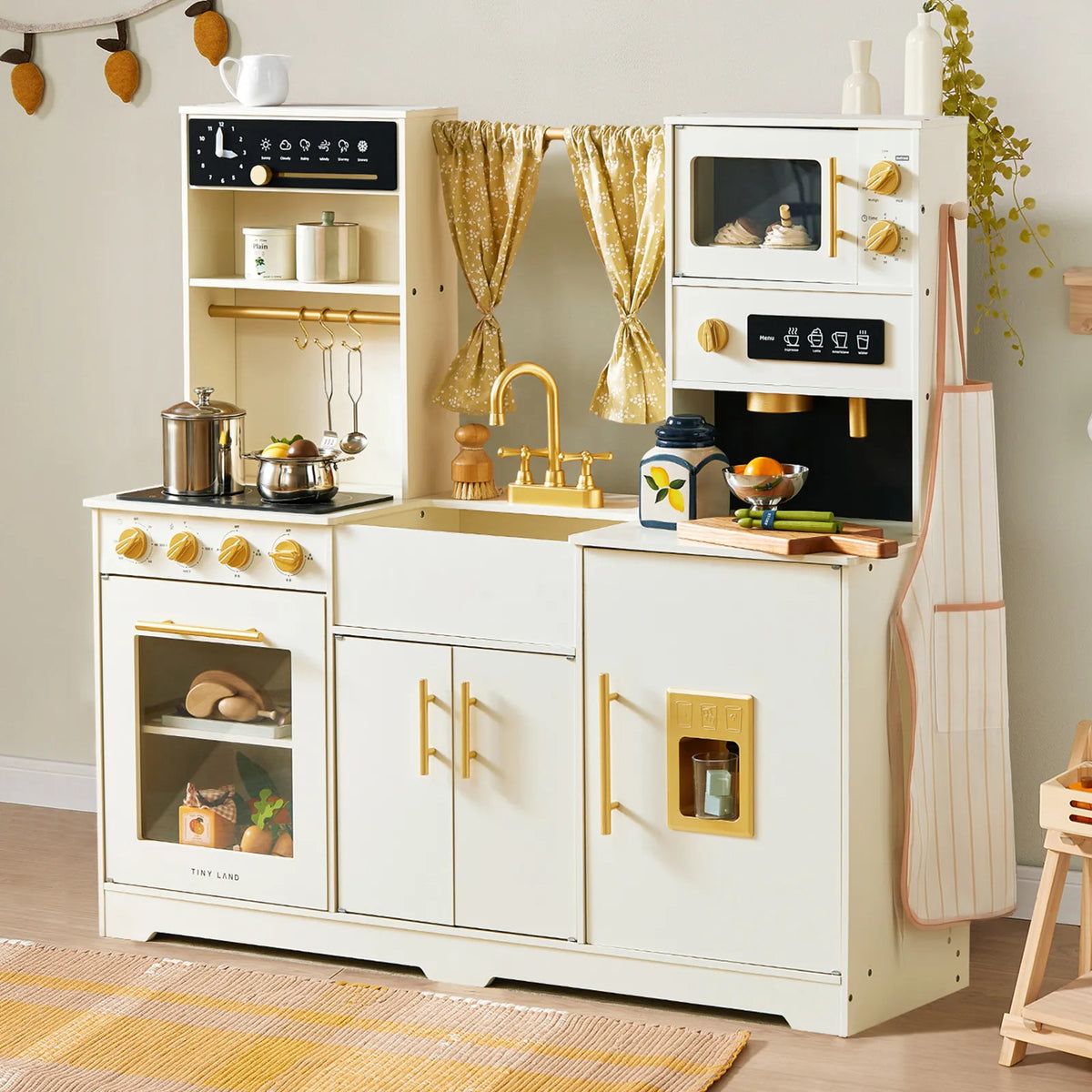
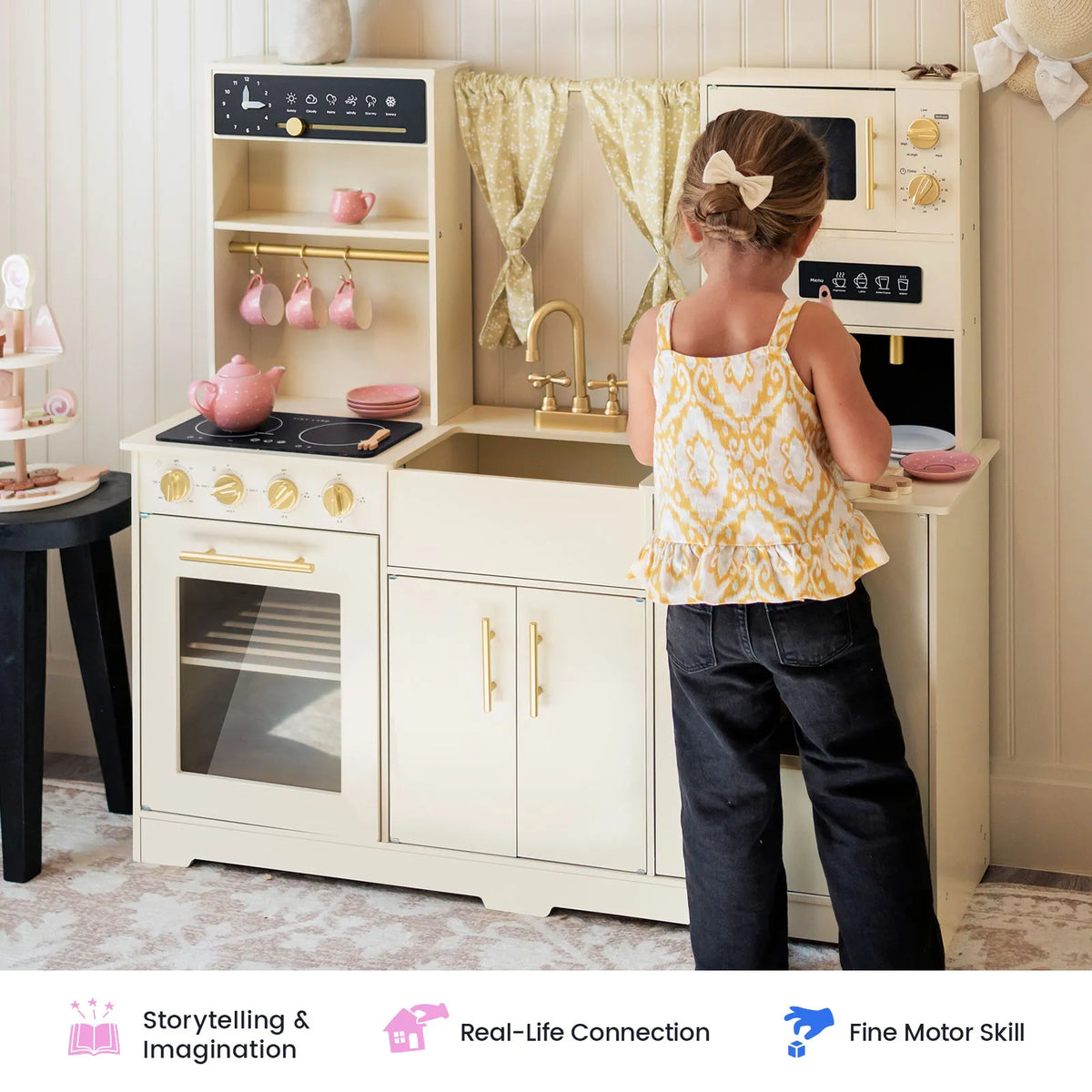
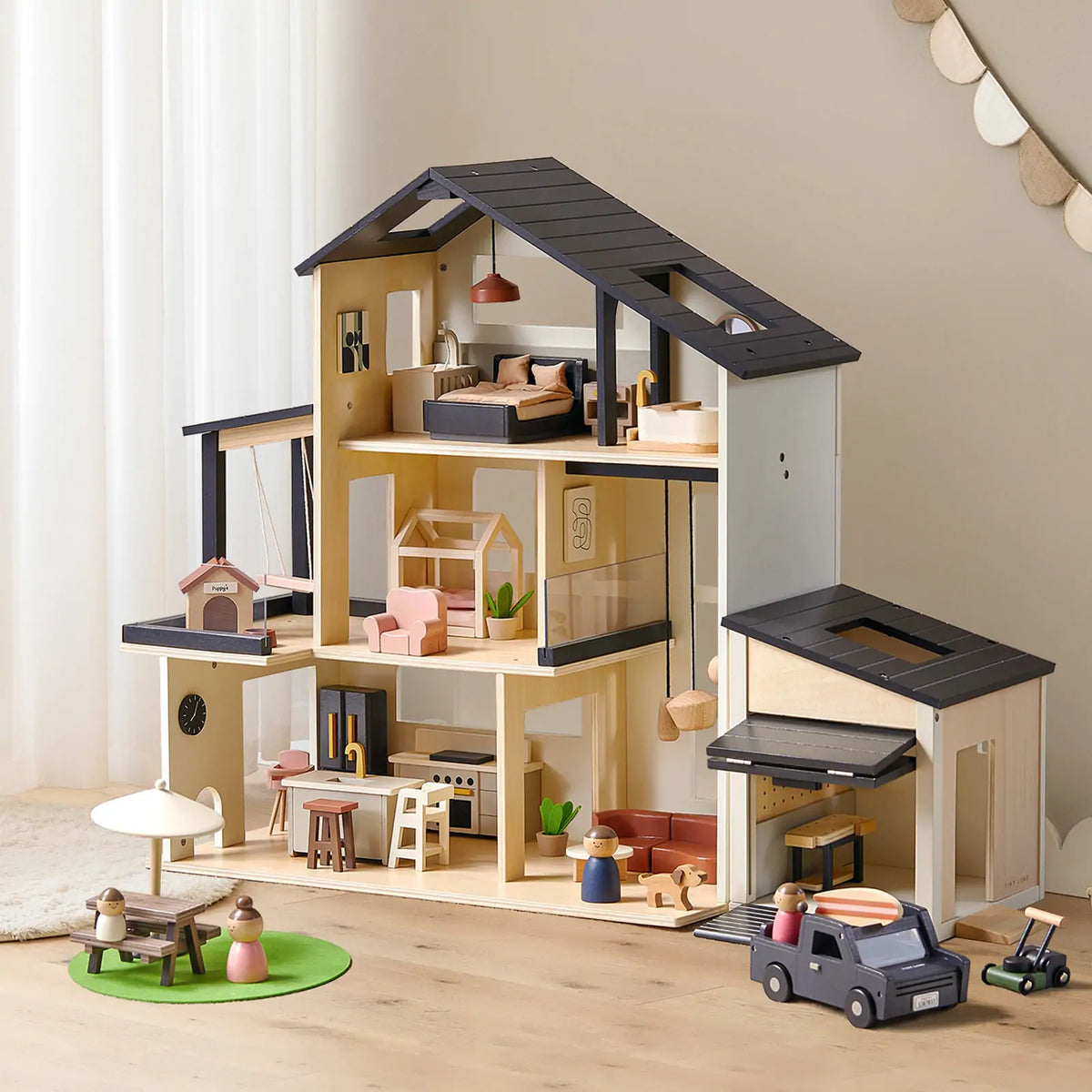
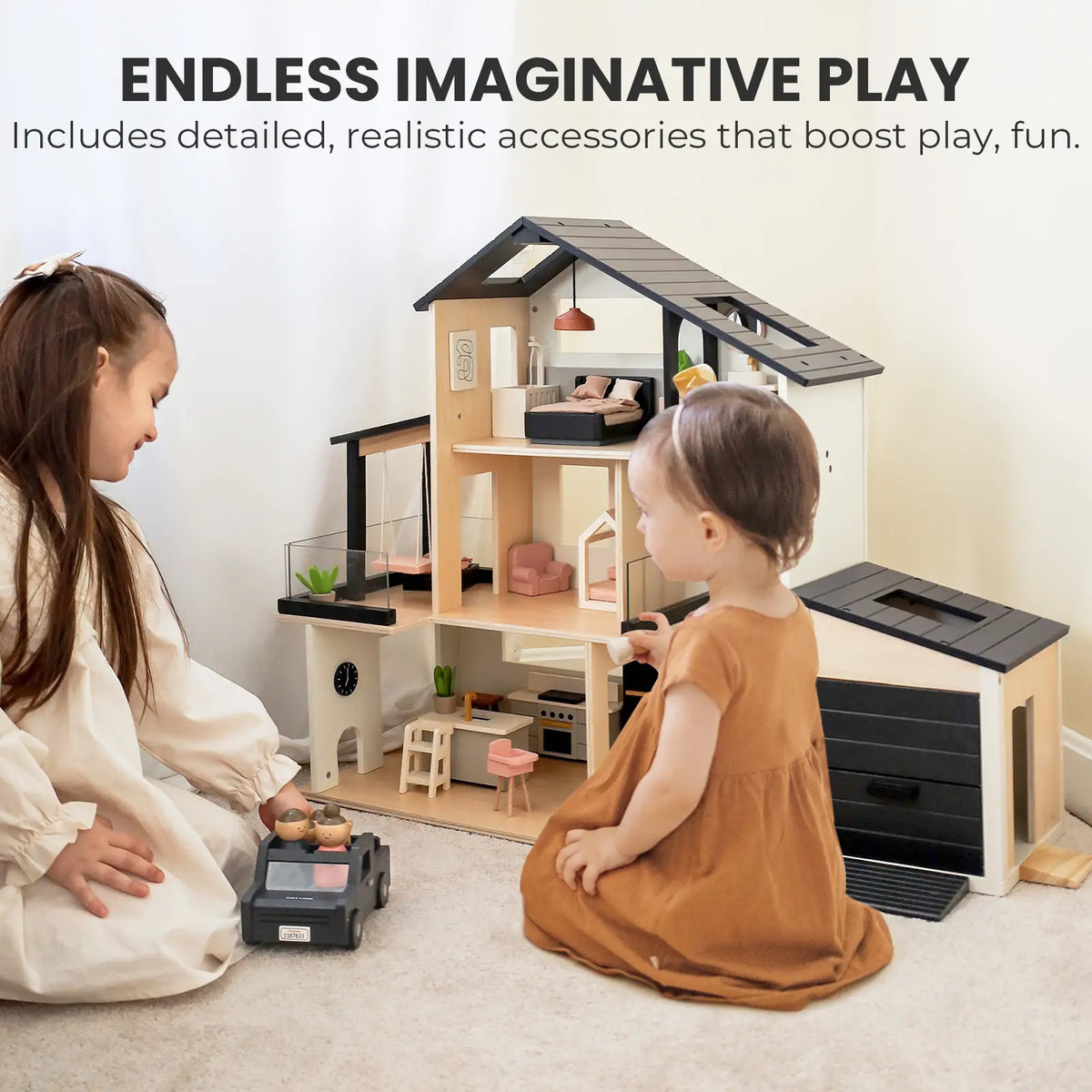
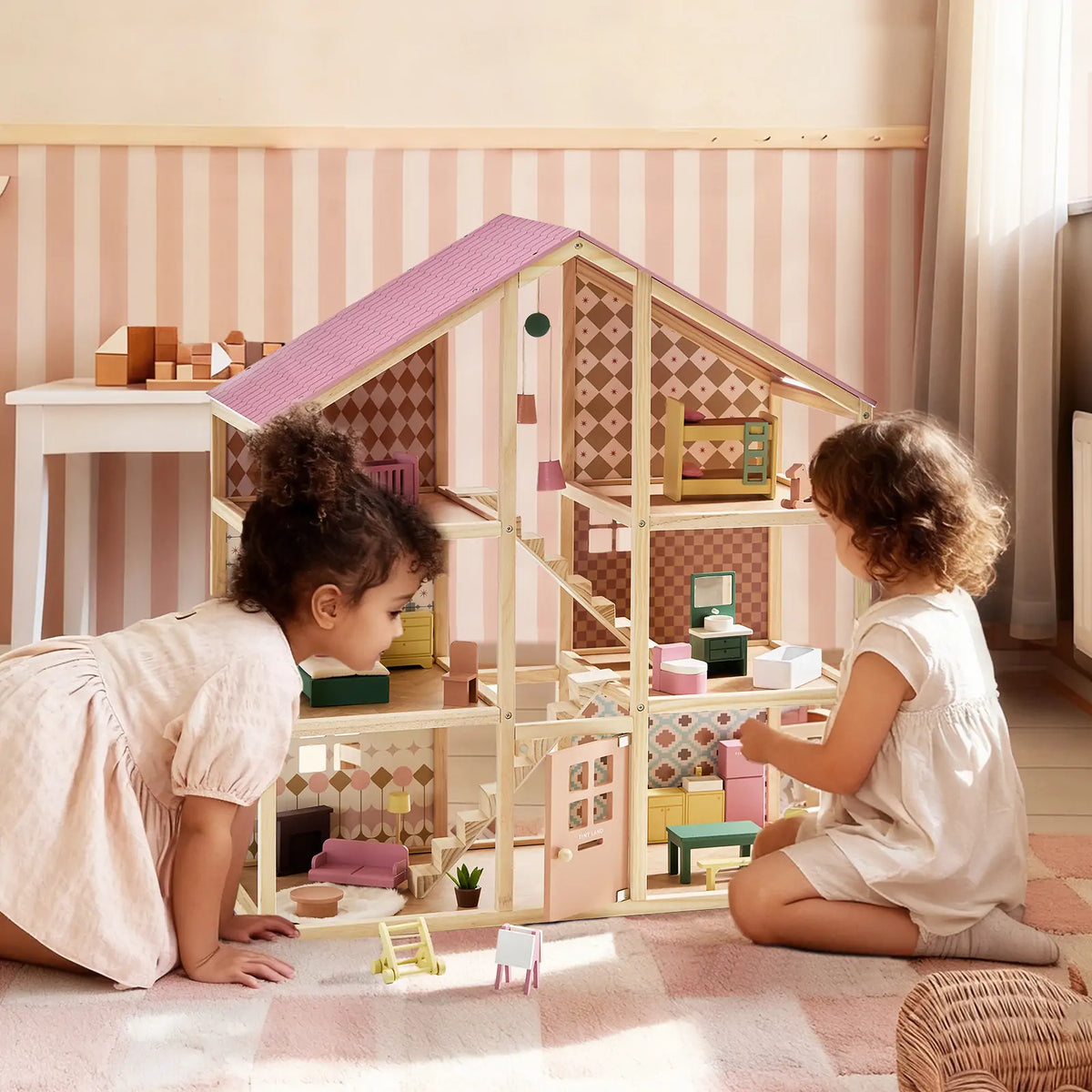
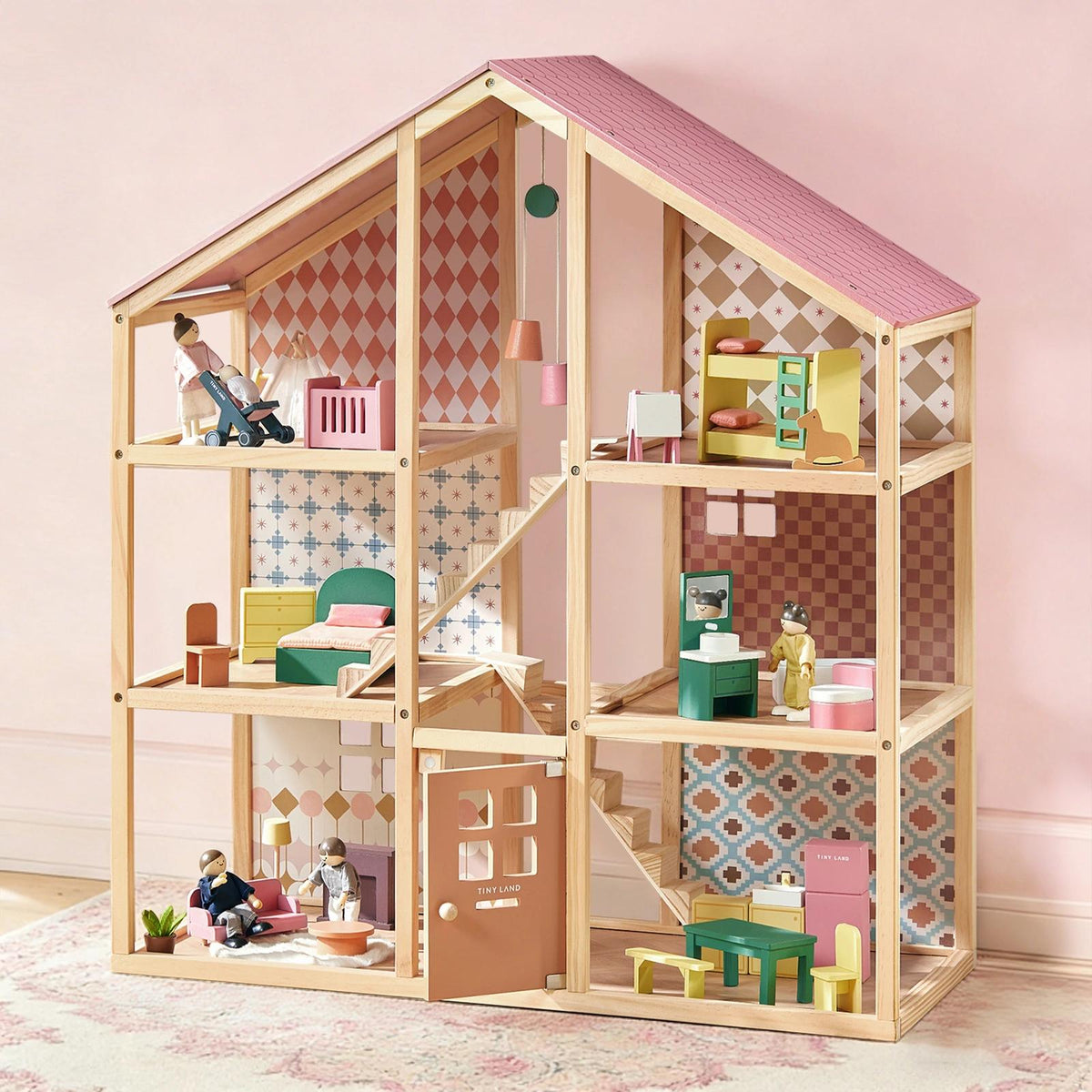
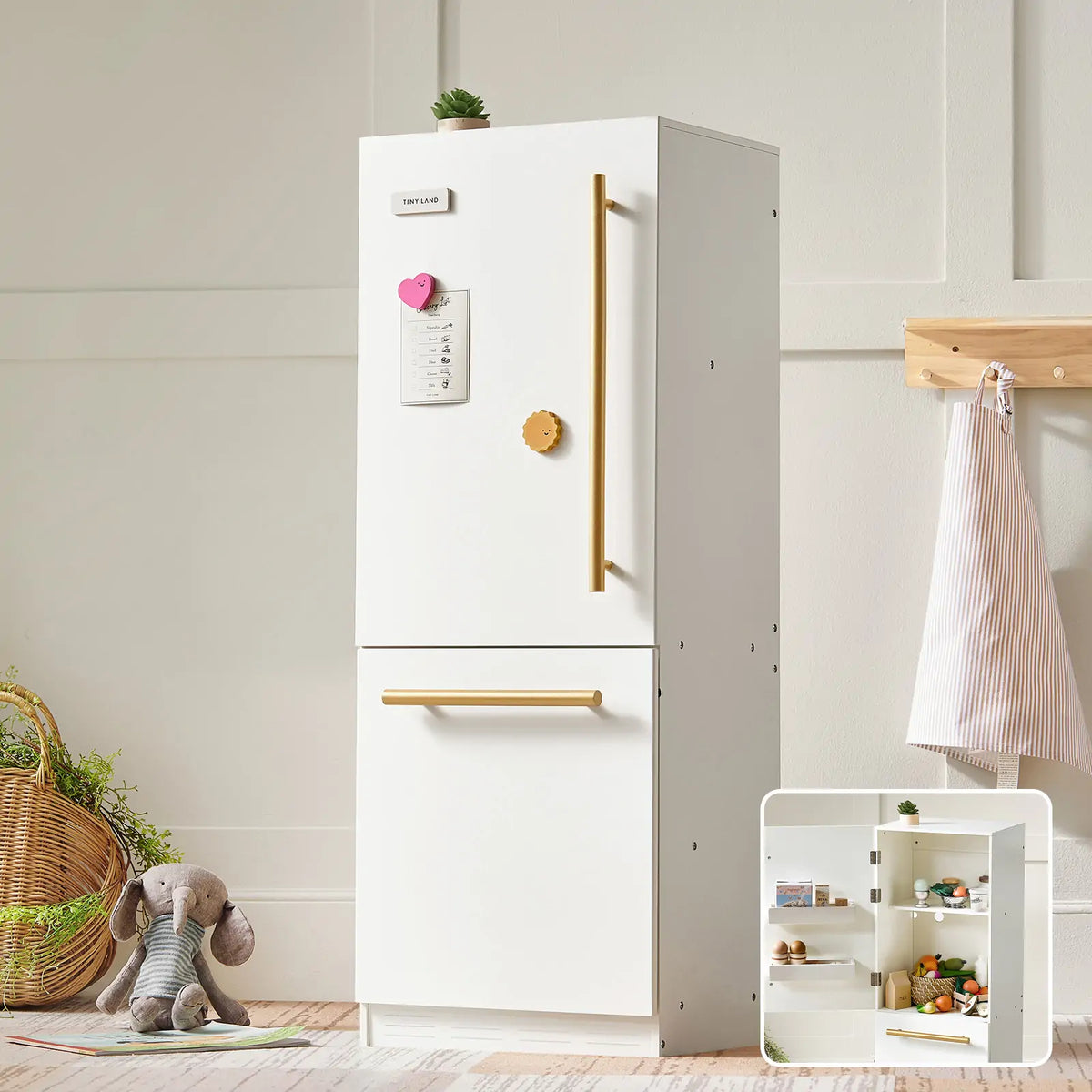
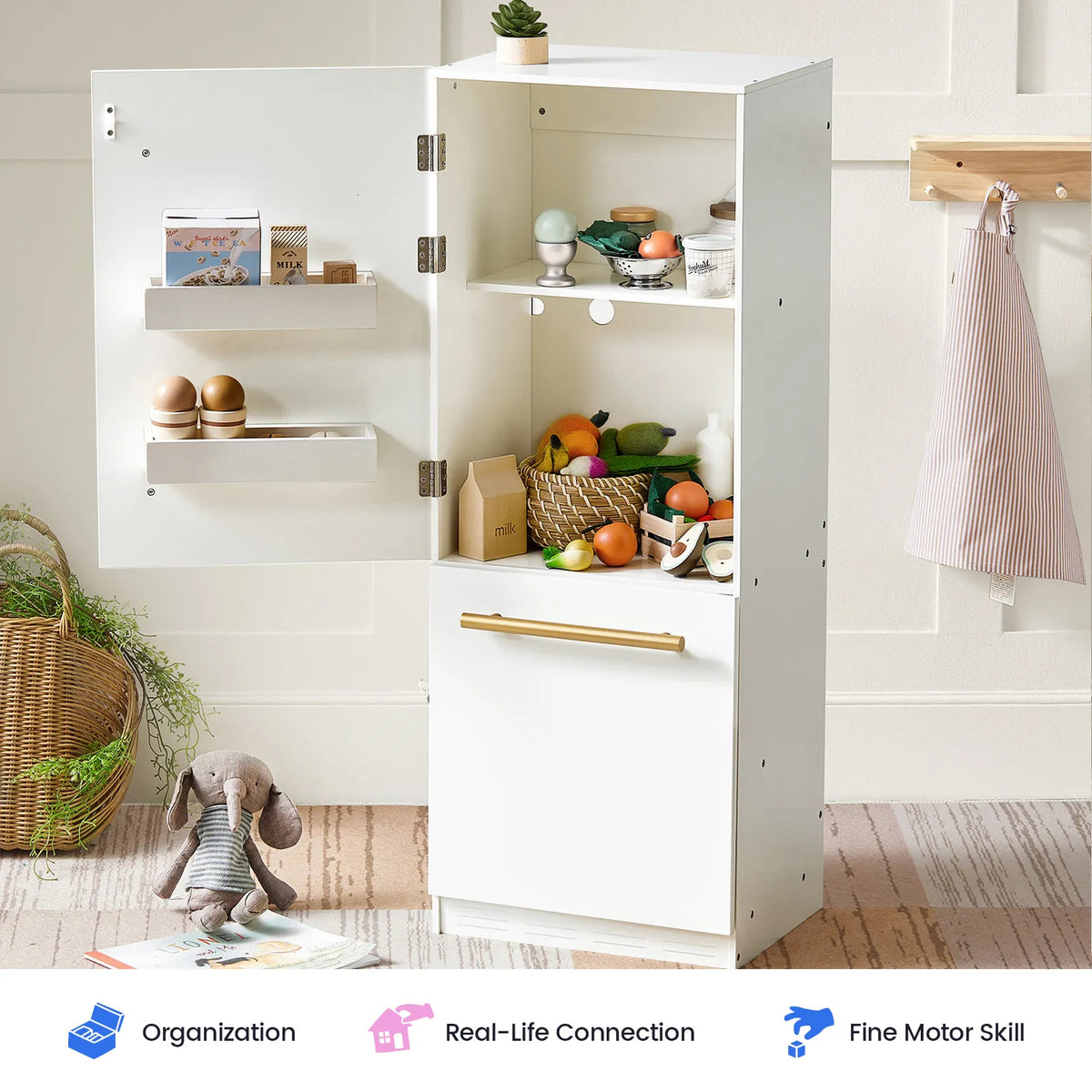
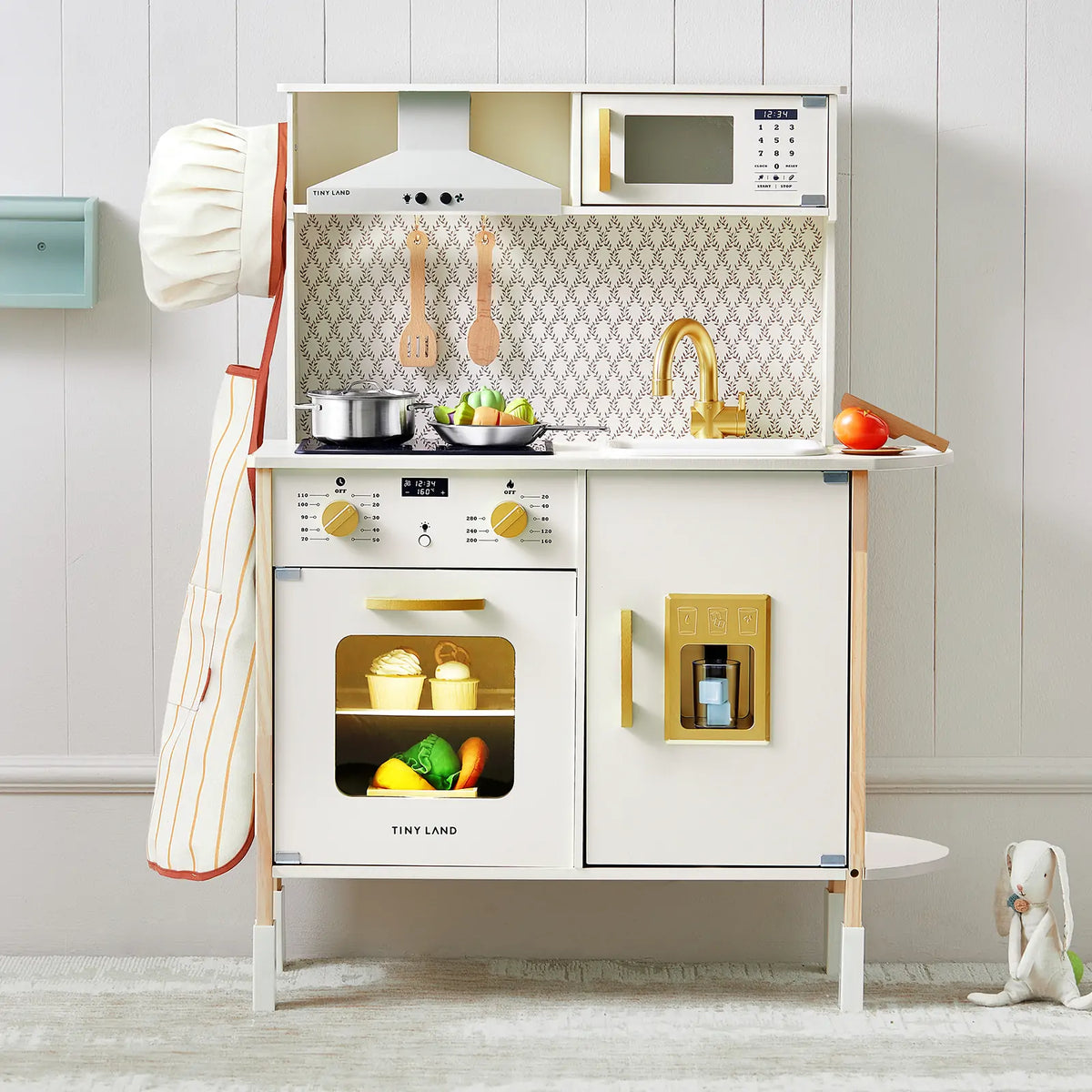
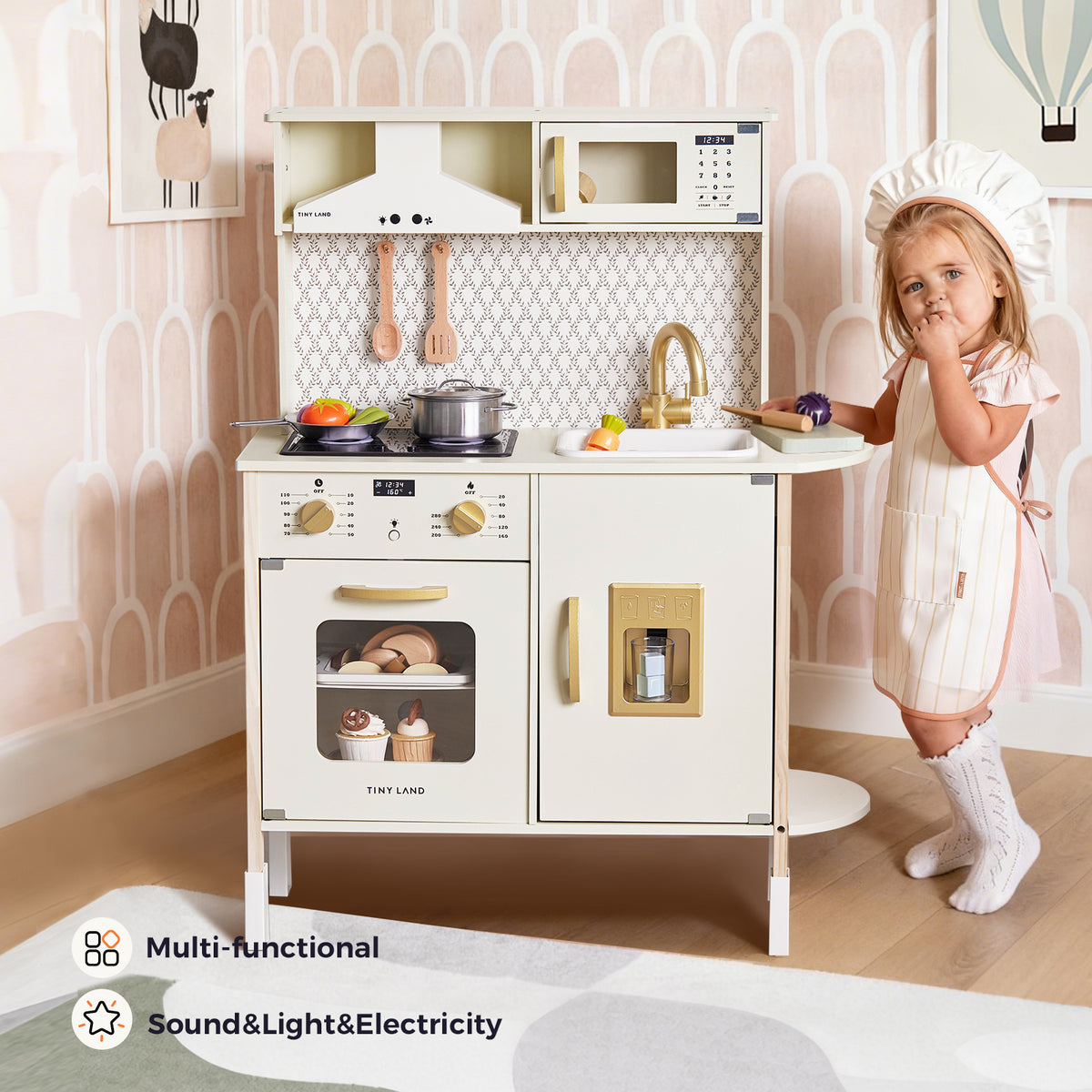


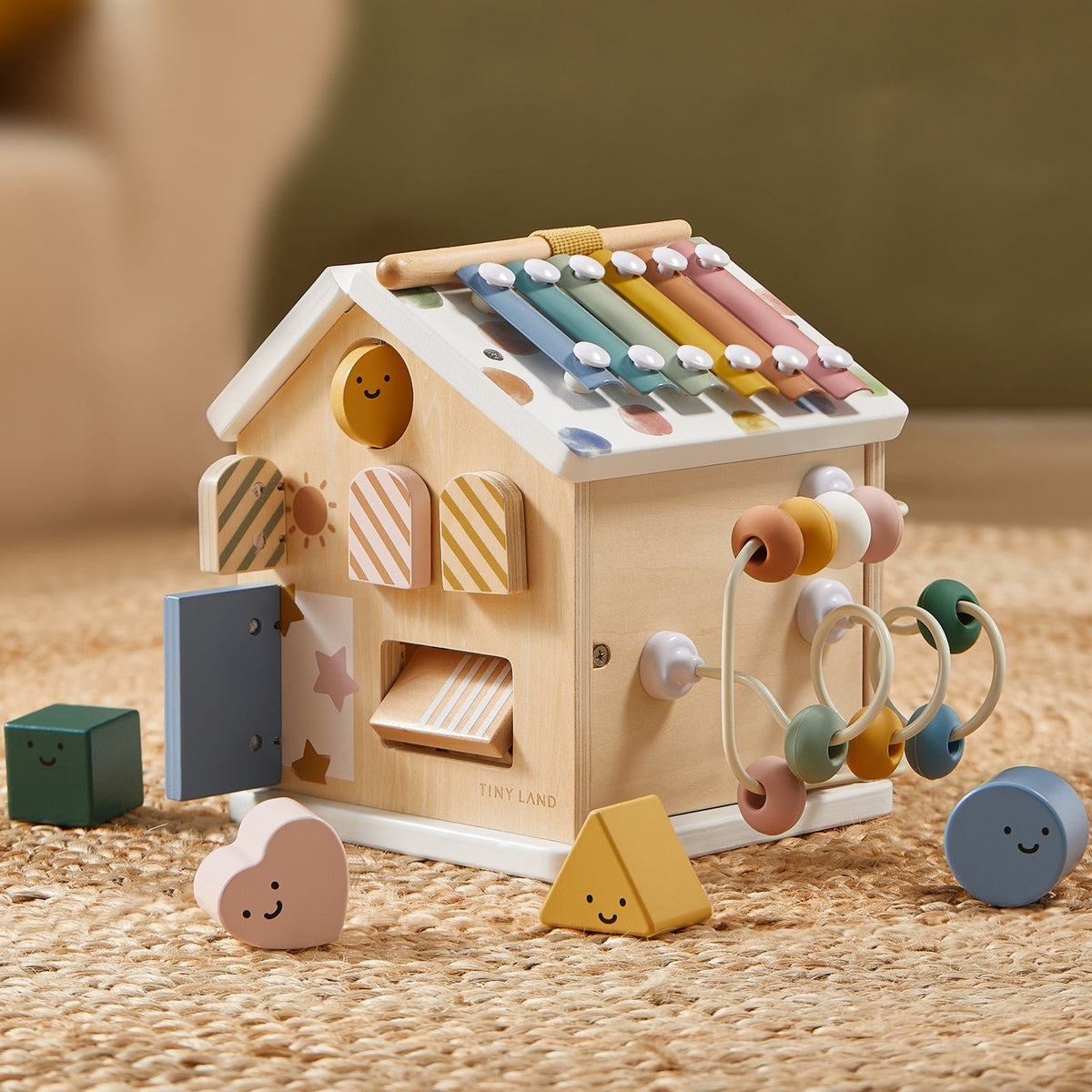
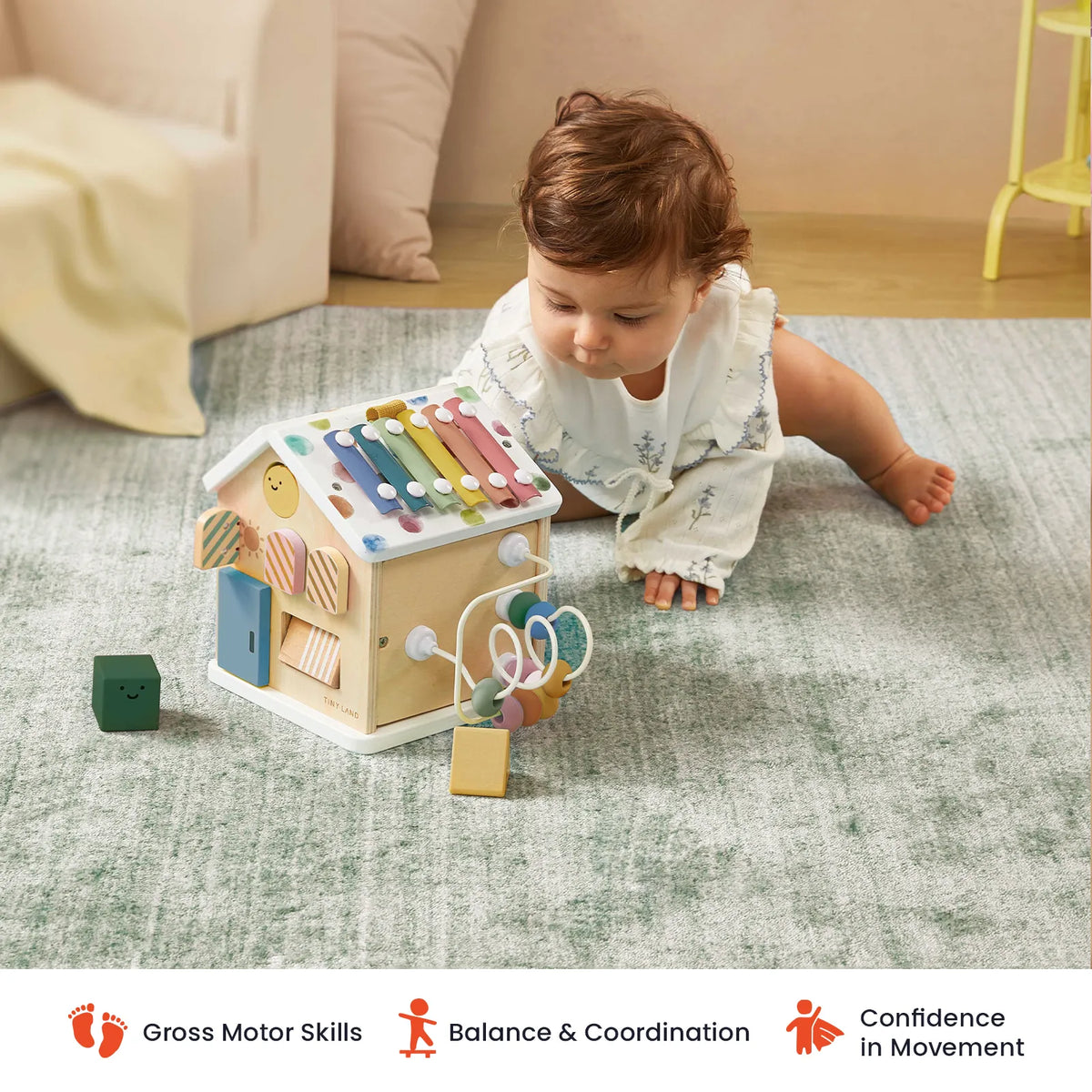
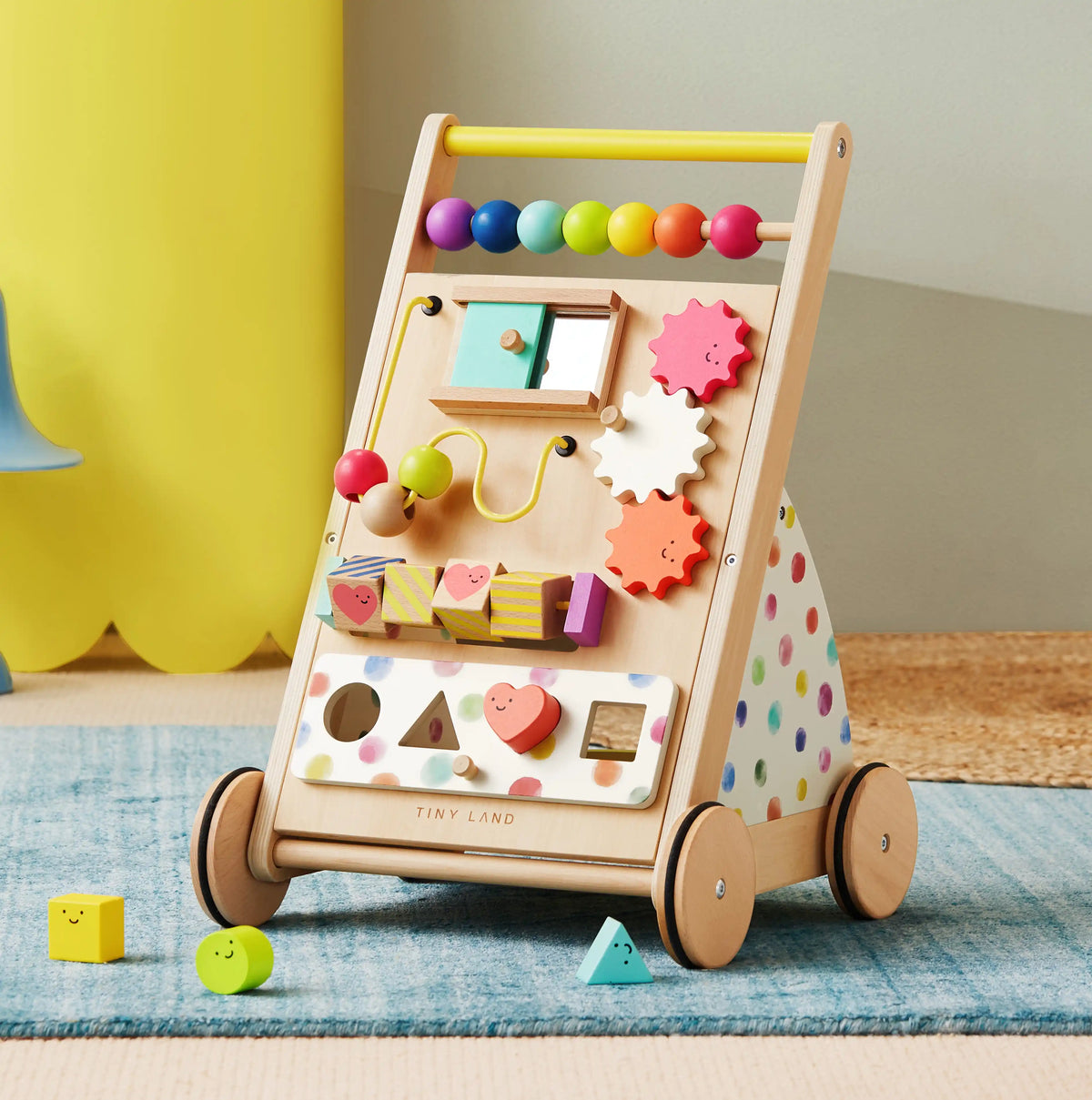
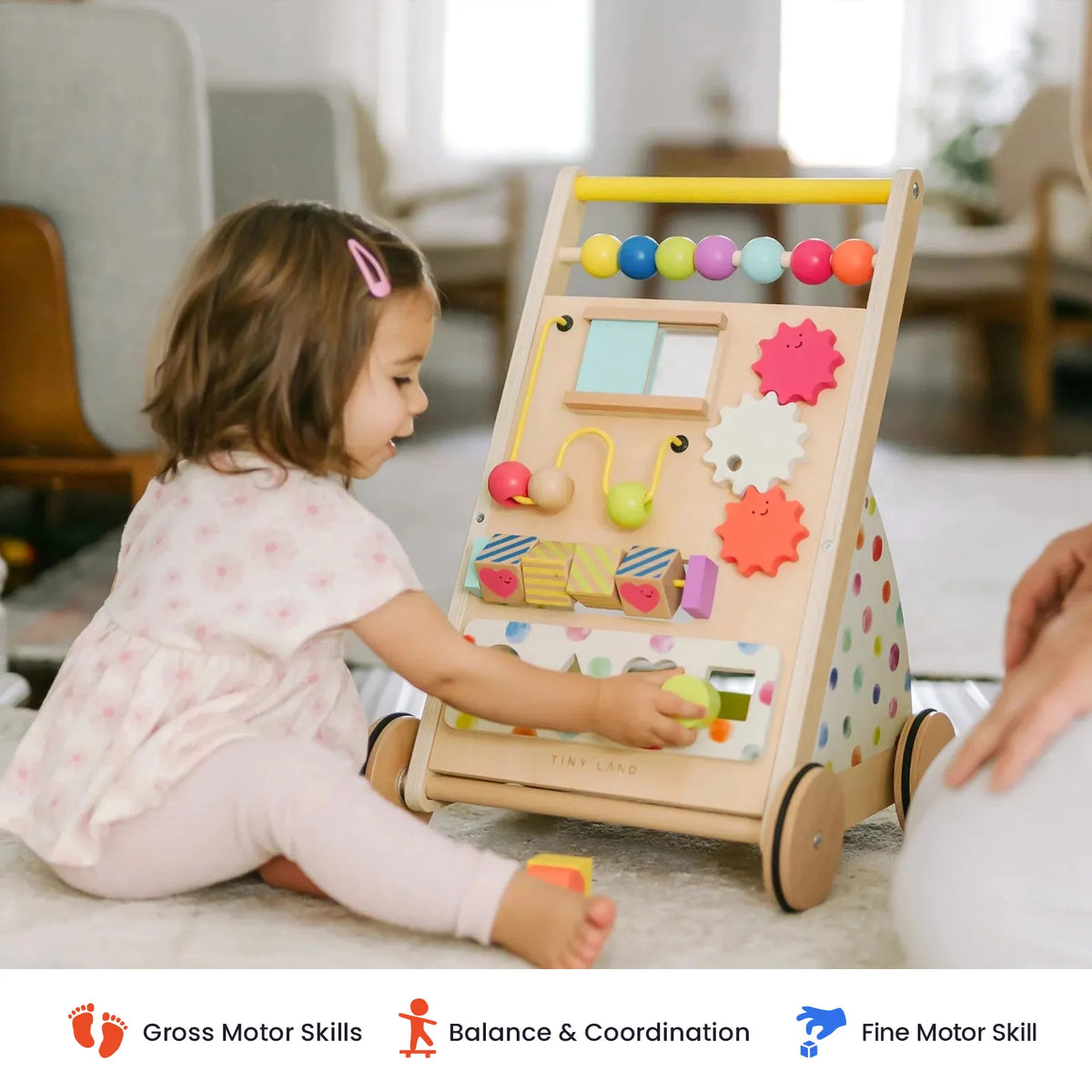


A dollhouse for kids can become almost anything a child imagines: a family home in the morning, a café at lunchtime, a neighborhood in the afternoon, or the setting for a completely new story.
That flexibility makes dollhouse play a natural fit for open-ended pretend play. Instead of following one fixed way to play, children can decide who lives in the house, what the characters are doing, and what happens next.
With a little creativity, the same dollhouse can become a small world where children can discover new roles, create stories, and find joy in everyday pretend play.
For toddlers and preschoolers, familiar everyday experiences can provide an easy starting point.
Getting ready for the day, making dinner, visiting a neighbor, caring for a pet, or celebrating a birthday can all become simple dollhouse play ideas and role play activities.
Here are 10 open-ended setups to try at home.

What Is Open-Ended Dollhouse Play?
Open-ended play does not have one fixed outcome. Children can choose the characters, actions, setting, and direction of the story.
A dollhouse naturally supports this type of play because the same rooms and objects can be used in many different ways.
A kitchen can become part of a family breakfast, a pretend restaurant, or a gathering with friends. A bedroom can become the setting for bedtime, a quiet afternoon, or an entirely imaginary adventure.
Dollhouse furniture can also take on different roles as children play. A table can become a place for a family meal or a restaurant counter, while a bedroom can become part of a new story or imaginary world.
There is no single right way to use a dollhouse. The goal is to give children room to make choices and develop their own ideas. The setup does not need to be perfect; even a small change can open the door to a new story.

Why Everyday Scenes Make Good Pretend Play
Young children often draw from experiences they already know.
Daily routines such as eating, sleeping, shopping, cleaning, visiting family, and welcoming guests are easy to recognize and recreate through pretend play.
A simple trip to shop for groceries, for example, can become a longer story once the characters return home.
These familiar situations also give children a starting point for dollhouse storytelling. Once the basic scene is established, they can change the characters, add new events, and decide what happens next.
For example, a simple pretend breakfast might become a story about a character who is running late, a visitor who arrives unexpectedly, or a family preparing for a special day.
The story can change completely depending on a child's ideas and personality.
What You Need to Get Started
You do not need a large collection of accessories to create meaningful dollhouse play.
Start with:
-
A dollhouse
-
A few dolls or small figures
-
Basic furniture or pretend-play accessories
-
Small household objects that are appropriate for the child's age
-
Time and space for the child to lead the play
A crafted wooden dollhouse can provide a familiar setting, while simple accessories can give children more ways to create their own scenes.
Keep the setup simple at first. A few familiar objects can give children enough to begin creating their own scenes. Even adding one small object can change the story a bit.
For toddlers and young children, always follow the manufacturer's age guidance and supervise play as appropriate. Check the dollhouse and accessories regularly for broken, loose, or damaged parts.

Best Dollhouse for Kids: 10 Open-Ended Play Ideas
1. Family Morning Routine
Start the day inside the dollhouse.
The characters can wake up, get dressed, prepare breakfast, and get ready to leave the house. Your child can decide what each character needs to do and in what order.
Try asking:
-
Who woke up first?
-
What are they having for breakfast?
-
Who needs to get ready?
-
What happens before they leave?
Because the scene is based on a familiar routine, children can connect their own experiences with the pretend story.
You can even make it part of a weekly play routine and see how the story changes from one week to the next.
2. Bedtime Story
Turn the dollhouse into a home at the end of the day.
The characters might put away their things, get ready for bed, read a story, or say goodnight.
Then let your child decide what happens next.
Maybe a character cannot find a favorite toy. Maybe someone wants another bedtime story. Maybe a visitor arrives at the door.
A simple bedtime routine can quickly become an open-ended story when children are allowed to change the situation themselves.
There is no need to wait for a complicated idea—the familiar routine can be enough to get started.

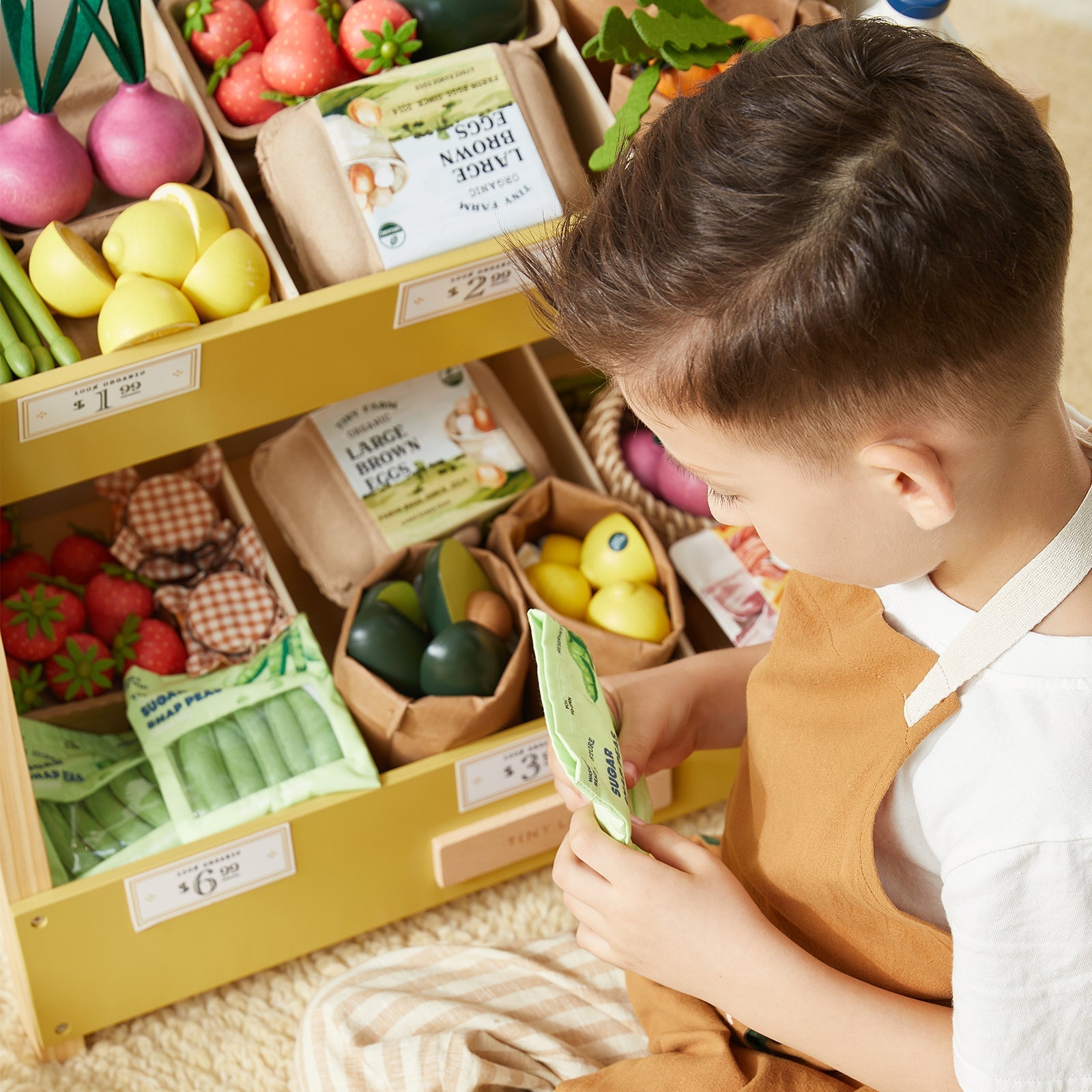
3. Fun Pretend Grocery Trip
Take the characters shopping.
Use a small basket, pretend food, or other age-appropriate objects to create a simple grocery trip.
Your child can decide what the family needs, who goes shopping, and what happens when they return home.
Ask:
-
What do we need for dinner?
-
Who is carrying the basket?
-
What should we buy?
-
Where should everything go when we get home?
-
What's new dolls' fun life?
The shopping trip can continue back at the dollhouse, where children can unpack the groceries and prepare a pretend meal.
This simple setup can also become a small shop of their own, with children deciding what to sell and who comes to visit.
4. Birthday or Family Gathering
Set up the dollhouse for a special occasion.
The characters can prepare food, arrange a table, welcome guests, open pretend gifts, or create their own celebration.
You can introduce a few simple props, but let your child decide what the event is about.
Maybe it is a birthday. Maybe it is a family dinner. Maybe everyone is gathering to celebrate something completely imaginary.
This type of creative play gives children an opportunity to build a story around a familiar social event.
A little “hooray” moment can also make the scene feel special without needing a complicated setup.

5. Moving Day
Imagine that the characters are moving into a new home.
Children can decide where furniture belongs, carry objects from one room to another, and help the characters settle in.
Ask:
-
Where should the bed go?
-
Which room should this belong in?
-
What should they unpack first?
-
What does the new home need?
There does not have to be one correct arrangement. Children can move things around, change their minds, and create their own version of the story.
Moving day can also become a chance to discover how different arrangements change the way the characters use their home.
6. Pet Care Scene
Add a pet to the story.
A character might need to feed a pet, find its missing toy, clean its space, or take care of it after an imaginary adventure.
A small stuffed animal or other appropriate toy can become part of the scene. Depending on your child's interests, the story could even imagine a trip to a zoo or another animal-filled world.
Rather than telling your child exactly what to do, ask questions that leave room for their ideas:
“What happened to the pet?”
“What does it need?”
“Where should we take it?”
The answers can become the next part of the story. This gives children a helpful starting point while still leaving the direction of play up to them.

7. Neighborhood Visit
Expand the story beyond the dollhouse.
Pretend that the characters live in a neighborhood and one family is visiting another. A character can knock on the door, bring something to a neighbor, invite someone over, or stop by for a meal.
You can use another small play space or set of figures to represent a nearby home.
This setup gives children a chance to create relationships between characters rather than focusing only on what happens inside one house. They can imagine a whole neighborhood, giving their world more characters and stories.
8. Rainy Day at Home
What would the characters do if they had to stay inside all day?
Create a rainy-day scene where the characters read, cook, clean, play, or find something new to do.
Start with: “It is raining today. What should everyone do?”
Your child can take the story in any direction.
Maybe the characters bake something. Maybe they build a play area. Maybe a friend comes over. Maybe everyone decides to have an indoor picnic.
Because the setup starts with a familiar situation, it is easy to turn into pretend home play without needing many additional toys. It can be simple entertainment, or it can grow into a completely new story.

9. Restaurant or Café Scene
Give the dollhouse a new role by creating a pretend restaurant or café.
One character can welcome guests. Another can take an order. Someone else can prepare the food.
Children can create a simple menu, decide what the restaurant serves, and invent conversations between customers and staff.
The same household objects used for family play can take on a completely different purpose in this setup.
That is one of the benefits of open-ended play: children can change the meaning of familiar objects and spaces as their stories develop.
A familiar home can become a café, while ordinary objects can become part of a new pretend world.
10. Make Your Own Story
Once your child is comfortable creating familiar scenes, let them invent the entire story. That kind of imagination can turn play into a shop, campsite, spaceship, or any world they imagined beyond a standard setup.
Start with three questions:
Who is in the story?
Where are they?
What happens next?
The characters might be preparing for a trip, meeting a new neighbor, looking for something they lost, or simply spending an ordinary day at home.
You can introduce one unexpected event to keep the story moving:
-
Dolls knock on the door.
-
A character loses a toy.
-
A visitor arrives.
-
Someone needs help.
-
The weather changes.
-
Dinner is ready.
A story can also begin with a cardboard box or other simple materials made into a playhouse.
Kids can even make dolls from felt or simple furniture from egg cartons. Then step back and let your child decide what happens next.
There is no need for the story to be perfect. Sometimes the most imaginative ideas come from a small surprise or a bit of magic in an imagined space, whether that means adding wallpaper to a homemade room or trying open-ended storytelling on a shelf or in fairy gardens.

Creative Play Ideas for Toddlers and Preschoolers
Dollhouse play does not have to look the same at every age.
Toddlers may focus on individual actions, such as feeding a character or putting someone to bed. Preschoolers may connect several actions into a longer story with different characters and events.
The important part is to keep the setup manageable and allow children to participate at their own level.
For younger children, an adult might model one simple action and then pause.
For older preschoolers, an adult can introduce a situation and let the child decide how the story develops.
Whether a child is playing independently, with a sibling, or alongside a parent, the same dollhouse can support different styles of creative play.
How Dollhouse Play Encourages Imaginative Play
A dollhouse gives children a familiar setting, but it does not determine what happens inside it.
The story can also change as the child plays.
That is the value of imaginative play: the child can decide what the objects and characters mean within the story.
These moments can also support communication skills as children create conversations between characters, explain what is happening, and respond to new events in the story.

What Can Children Learn Through Dollhouse Play?
Dollhouse play can give children opportunities to practice skills through familiar, self-directed scenarios.
For example, children may practice:
-
Language: naming objects, describing actions, and creating conversations
-
Sequencing: deciding what happens first, next, and last
-
Storytelling: creating characters, events, and simple narratives
-
Problem-solving: deciding how characters respond to an unexpected situation
-
Social interaction: acting out visits, celebrations, family routines, and other everyday situations
These opportunities do not require a structured lesson. They can happen naturally while children create and change their own stories.
This combination of learning and entertainment is one reason dollhouse play can remain engaging as children discover other ideas to use the same space.
Dollhouse Ideas by Age
A dollhouse for children and one used by a preschooler may support different types of play. Always start with the manufacturer's recommended age range for the specific product.
Toddlers
Toddlers often begin with simple actions and familiar routines.
Easy dollhouse activities include:
-
Feeding a character
-
Putting someone to bed
-
Preparing pretend food
-
Cleaning a room
-
Visiting another character
-
Taking care of a pet
At this age, an adult can model a simple action and then give the child an opportunity to continue.
For example, put a character at the table and say, “They are having breakfast.”
Your child can then decide what happens next.
A daughter, son, or any young child can bring their own interests and personality into the scene, changing the story based on what feels familiar or fun to them.
Keep accessories appropriate for the child's age and follow the manufacturer's recommendations, especially when a playset contains small or removable pieces.
Preschoolers
Preschoolers may begin creating longer and more connected stories.
They can give characters different roles, create conversations, move between scenes, and introduce problems that characters need to solve.
A simple family dinner, for example, might turn into a story about an unexpected visitor or a missing object.
At this stage, try asking open-ended questions instead of directing the story:
-
What happened?
-
Where are they going?
-
What does this character need?
-
What should happen next?
The child remains the storyteller while the adult provides a little structure when needed.

How to Build a Dollhouse Story
If your child enjoys moving figures around a dollhouse but needs help getting a story started, use a simple five-step structure.
1. Choose the Characters
Who is part of the story?
They could be family members, friends, neighbors, visitors, pets, or imaginary characters.
2. Choose the Setting
Where does the story take place?
The dollhouse can represent a home, but the story can expand into a store, café, neighborhood, or another imaginary setting.
3. Choose an Everyday Activity
What are the characters doing?
Starting with a familiar activity makes it easier for young children to begin.
4. Add One Change
Something unexpected happens.
Someone visits. Something goes missing. Someone needs help. The weather changes.
5. Let the Child Finish the Story
Instead of solving the problem for the characters, ask your child what they think should happen next.
This simple structure can turn a few figures and a dollhouse into a longer dollhouse storytelling activity. Over time, children can discover that the same setting can hold many different stories.

How to Choose the Right Wooden Dollhouse for Kids
When choosing a dollhouse for kids, consider how your child will actually use it for pretend play.
Product Facts to Confirm Before Comparison
Dollhouses can vary in their design and included features, so check the manufacturer's product information for:
-
Recommended age
-
Materials
-
Dimensions
-
Included accessories
-
Assembly requirements
-
Safety information
-
Care instructions
It is also worth considering whether the dollhouse can support different types of pretend play rather than only one fixed scenario.
A flexible play space can become a family home, a restaurant, a neighborhood setting, or the starting point for a child's own story.
For Tiny Land products, check the individual product page for the current specifications and included features before making a purchase.

Frequently Asked Questions
What can kids do with a dollhouse?
Kids can use a dollhouse for family routines, pretend shopping, bedtime stories, pet care, celebrations, restaurant play, neighborhood visits, and original storytelling.
The same setup can support many different stories because children can change the characters, activities, and situations.
Is a dollhouse good for kids?
A dollhouse can be part of pretend play for toddlers when the specific product is appropriate for the child's age.
Always check the manufacturer's recommended age range and supervise young children as appropriate. If the product includes small or removable parts, follow the manufacturer's safety guidance carefully.
What are some easy dollhouse play ideas?
Simple ideas include a family morning routine, bedtime, pretend grocery shopping, a birthday party, moving day, pet care, a neighborhood visit, a rainy day at home, a pretend restaurant, and creating an original story.
How do you use a dollhouse for pretend play?
Start with a familiar situation, such as breakfast or bedtime. Choose a few characters and objects, then let your child decide what happens next.
Open-ended questions such as “Who is coming over?” or “What should they do now?” can help extend the story without directing it.
What age is best for a dollhouse?
There is no single best age for every doll house. The appropriate age depends on the specific product and its manufacturer's guidance.
Toddlers may begin with simple everyday actions, while preschoolers may create longer stories involving multiple characters and events.
What should I look for in a dollhouse for kids?
Consider the manufacturer's recommended age, materials, dimensions, included accessories, assembly requirements, safety information, and how accessible the play areas are for your child.
It can also help to consider whether the dollhouse supports different kinds of pretend play rather than limiting children to one type of scenario.

Create a New Story Every Time
A dollhouse does not need to tell the same story twice.
Today, it might be a family home. Tomorrow, it could become a café, a neighborhood, or the setting for a completely new adventure.
For child and preschoolers, familiar everyday scenes can provide an easy starting point, while open-ended storytelling gives children the freedom to decide what happens next.
There is a lot of joy in watching a familiar play space become something new. A child can discover a new character, create a new story, or simply enjoy a few minutes of imaginative entertainment.
Ready to create a new story at home? Explore Tiny Land's wooden dollhouses for kids for open-ended family, neighborhood, and everyday pretend play—and choose a beautiful, well-made handmade dollhouse that can become a family heirloom.