


Play food for toddlers can turn an ordinary afternoon into a simple opportunity for pretend shopping, cooking, sorting, sharing, and storytelling.
You do not need a large playroom or a complicated setup.
With a few pieces of pretend food, a basket or shopping cart, and a safe place to play, parents and caregivers can create easy play food for kids activities that fit naturally into everyday routines while encouraging imaginative play.

What Toddlers Learn Through Play Food
Pretend play gives toddlers a way to copy familiar routines and make them their own.
Naming a banana, choosing what goes in a basket, or serving lunch to a stuffed animal can encourage conversation, imaginative play, and a child's imagination.
Play food activities can also introduce early sorting and counting.
Children may group foods by color, put three items on a plate, or compare which pretend item is bigger.
The goal is not to turn play into a lesson. Keep the activity flexible and let your child change the rules as they explore.
Sharing pretend meals can invite turn-taking and social skills.
A child can practice asking for a piece, offering food to a caregiver, or deciding what a guest should eat. These small moments make play food useful for both independent and shared play.
For toddlers, the value of pretend play often comes from the process rather than the finished result.
There is no need for a child to follow a recipe correctly or name every food accurately. When children choose what to cook, decide who gets served, or change the story halfway through, other children can also join the story and build on their ideas.

15 Play Food Activities for Toddlers
Sorting and Matching
-
Color sorting: Place two or three bowls on the floor and ask your child to sort pieces by color. Start with only a few items, then add more when the activity stays engaging. Once your toddler understands the game, let them choose the colors or decide which pieces belong together.
-
Fruit and vegetable match: Make two groups and invite your toddler to decide where each item belongs. Use simple words such as fruit, vegetable, bread, and drink. There is no need to correct every answer; naming the foods together keeps the activity conversational.
-
Count and plate: Ask your child to put one, two, or three pieces on a plate. Count together as the pieces are moved. For an older toddler, change the number or ask which plate has more without turning the game into a formal math exercise.
-
Build a pretend sandwich: Stack bread, cheese, lettuce, or other pieces in any order. Describe what your child is making and let the finished sandwich become part of a pretend meal or story. There is no right recipe—the open-ended choices let budding chefs create their own combinations and keep the activity fun.
-
Find the pair: Put out two matching pieces, or match a pretend food item with a simple drawing or photograph. This works well as a short, low-prep game. Start with two or three pairs and add more as your child becomes familiar with the activity.

Pretend Grocery Shopping
-
Make a picture shopping list: Draw two to five foods on a piece of paper. Your child can look for each item and place it in a basket or cart. For younger toddlers, point to each picture together; older toddlers can carry the list and remember what comes next.
-
Stock the shelves: Use a low shelf, basket, or empty box as the store. Let your toddler arrange and stock items by type, color, or personal preference. Once the shelves are ready, turn the setup into a shop and invite your child to shop for the next activity.
-
Take turns as shopper and shopkeeper: One person asks for an item and the other finds it. Keep the exchange simple, then switch roles. Use short phrases such as “Can I have an apple?” or “Here you go” to make the pretend conversation feel natural. Watch how your child changes the conversation as they take on different roles.
-
Use pretend money: Add a few play coins or paper circles. For toddlers, focus on handing over an item and receiving it back rather than accurate prices or math. The goal is to recreate a familiar shopping routine, not to teach currency.
-
Choose a daily special: Pick one item and give it a playful role, such as the apple of the day or the special snack for a teddy bear. This adds storytelling without requiring extra supplies. Let your child decide why that food is special.

Play Kitchen Routines
-
Follow a three-step recipe: Draw or describe three simple steps, such as putting the food on a plate, adding a cup, and serving it. Let your child complete the steps in any order. As they become more comfortable, let them invent their own three-step recipe and add different foods.
-
Set up breakfast, lunch, and dinner: Invite your toddler to choose foods for one meal. Ask questions such as, “What should we serve first?” or “Who is having lunch?” without correcting the answer. The goal is to let familiar mealtime routines become pretend-play stories.
-
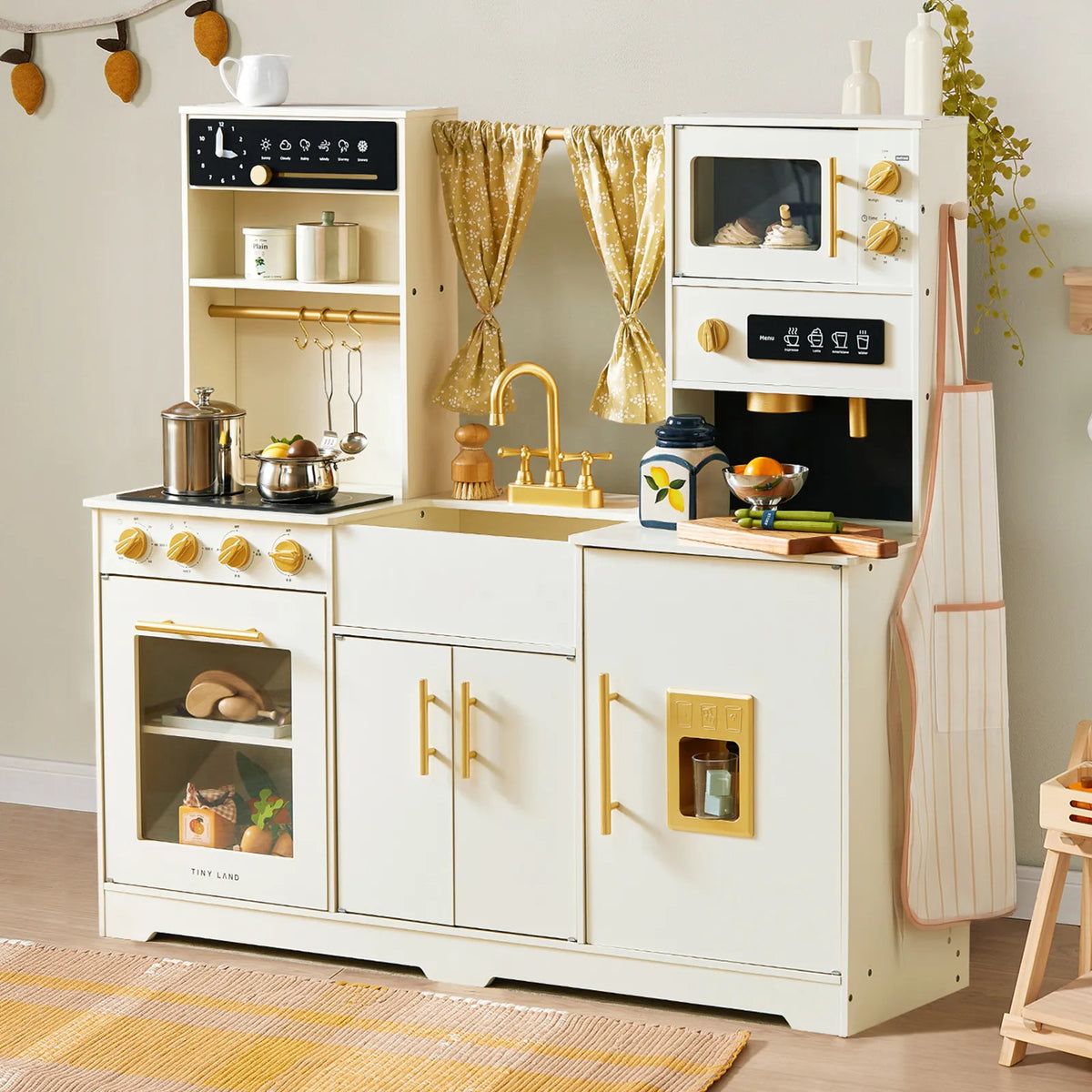
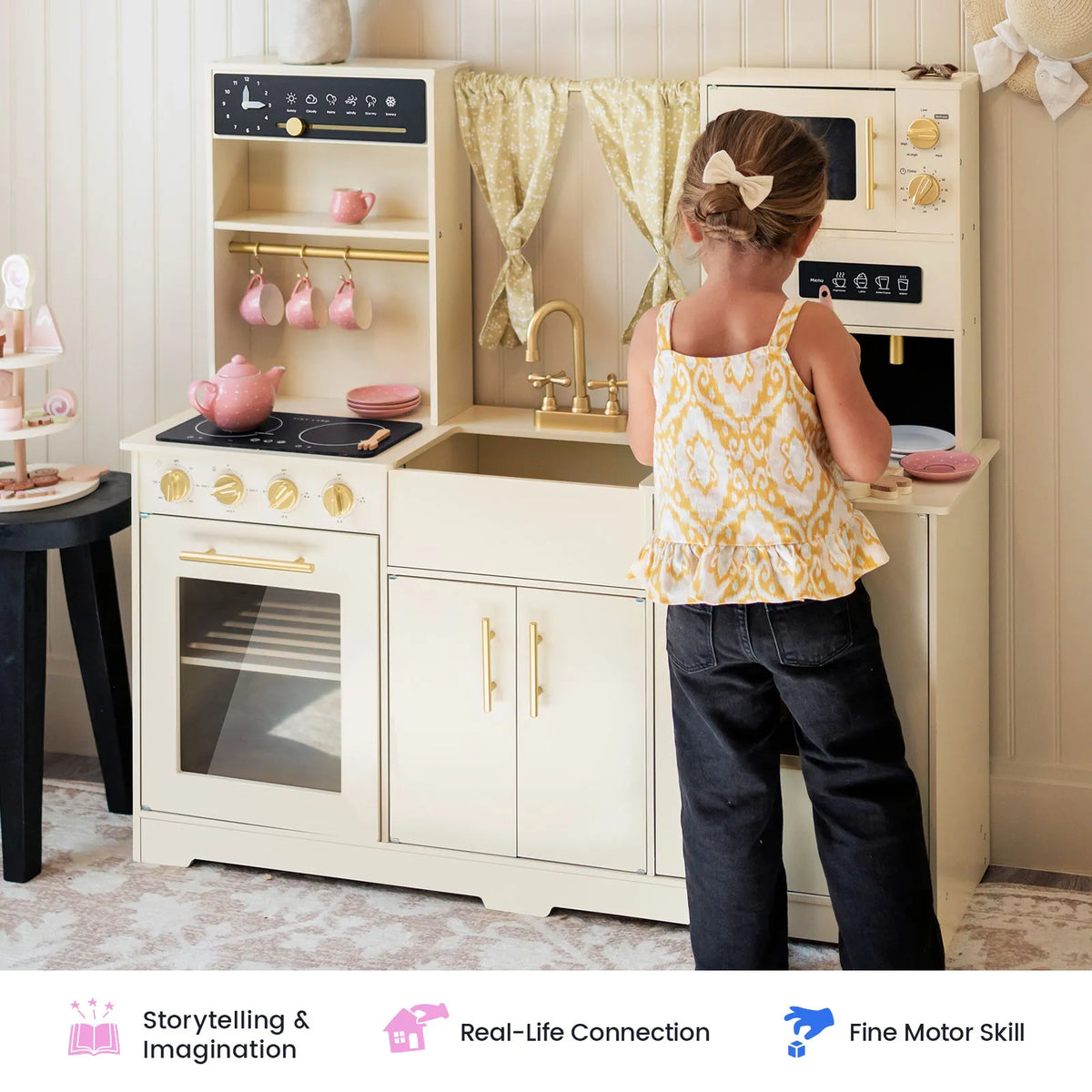
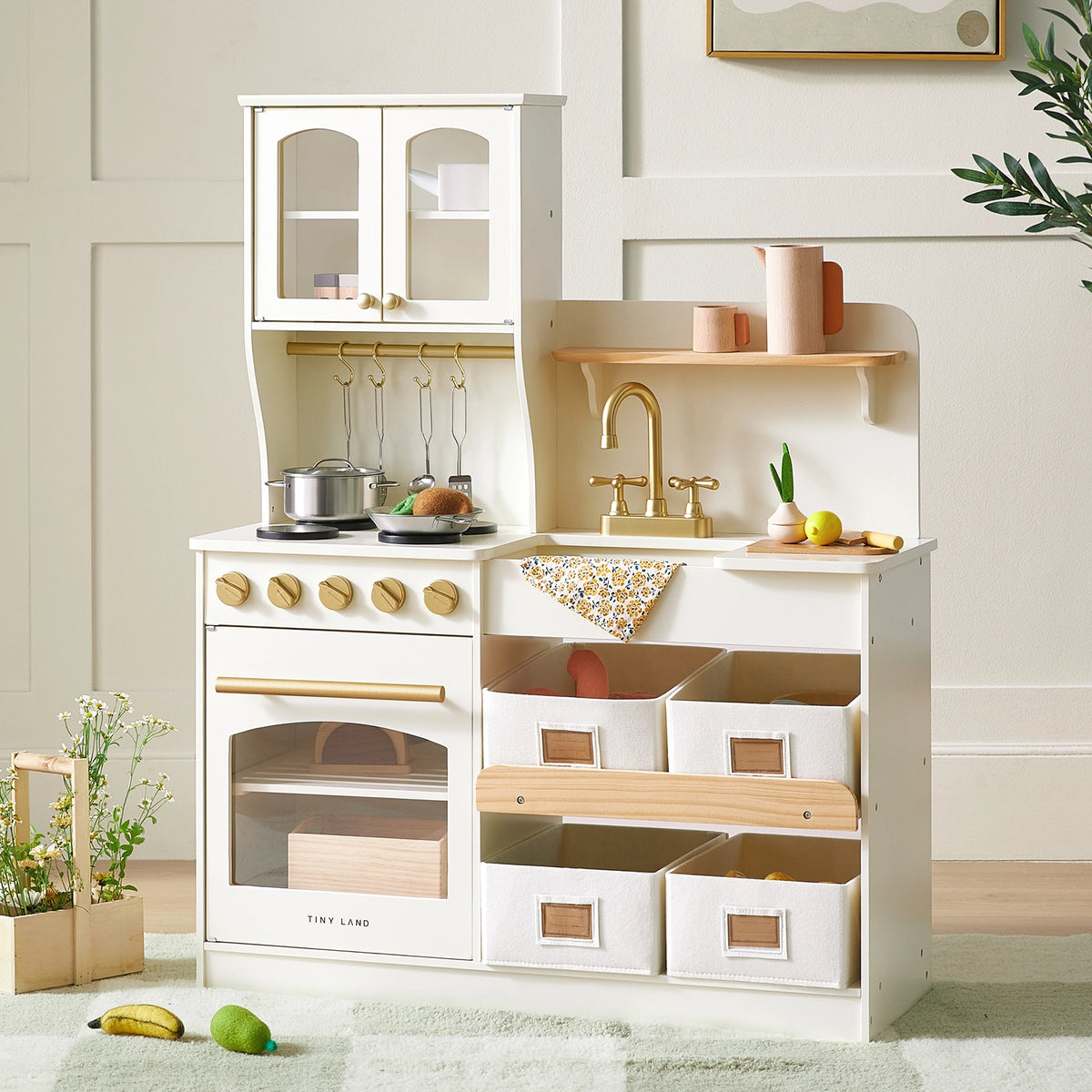
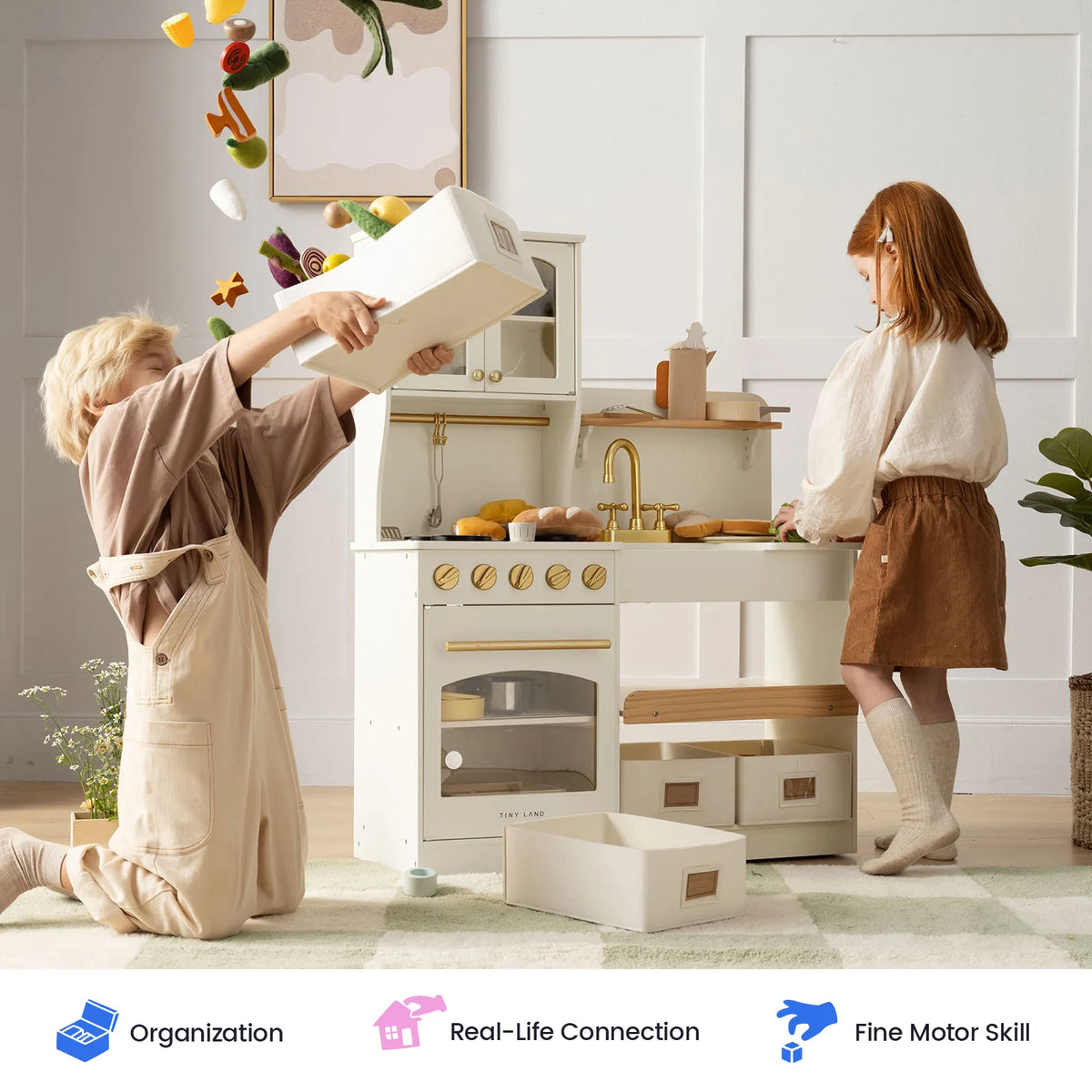
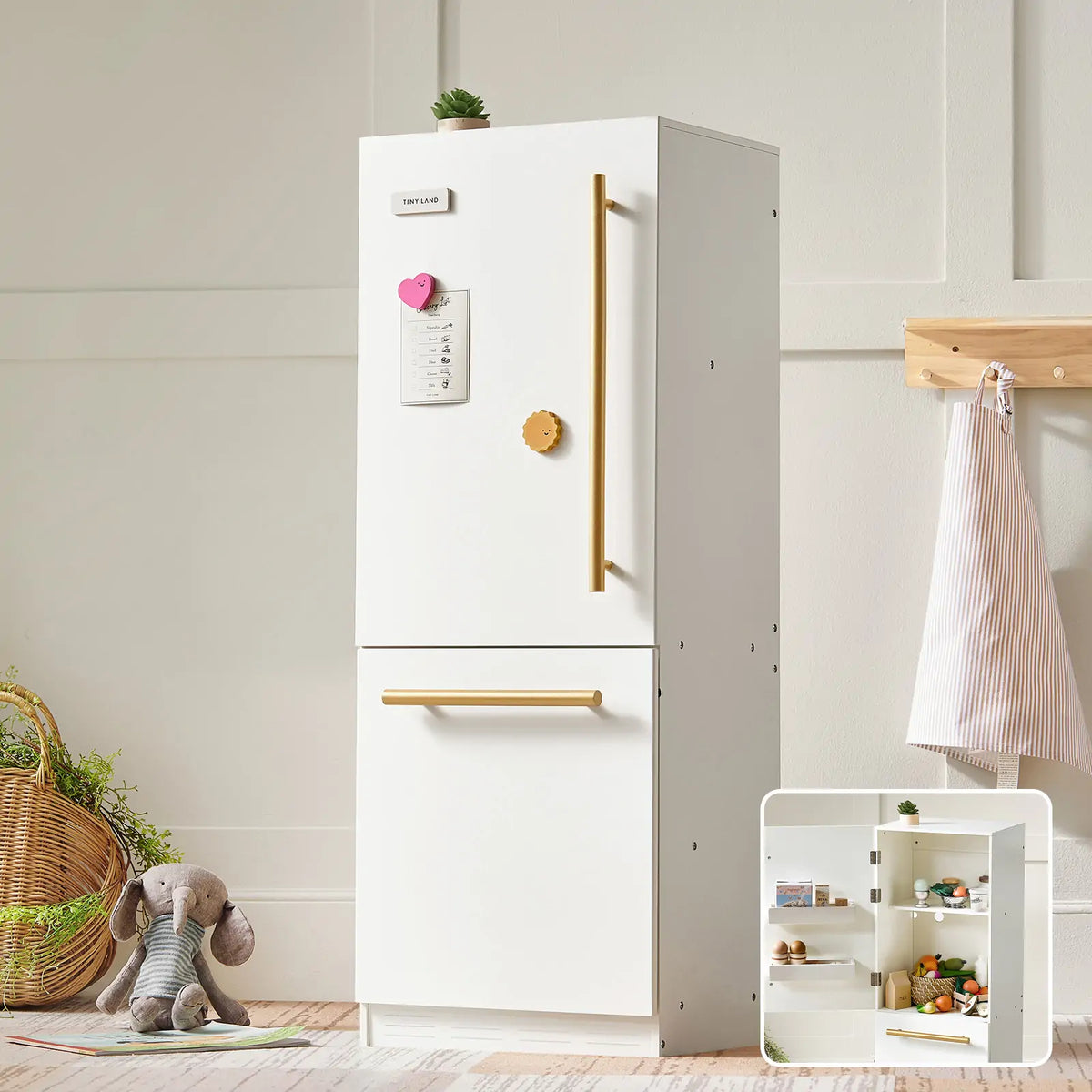
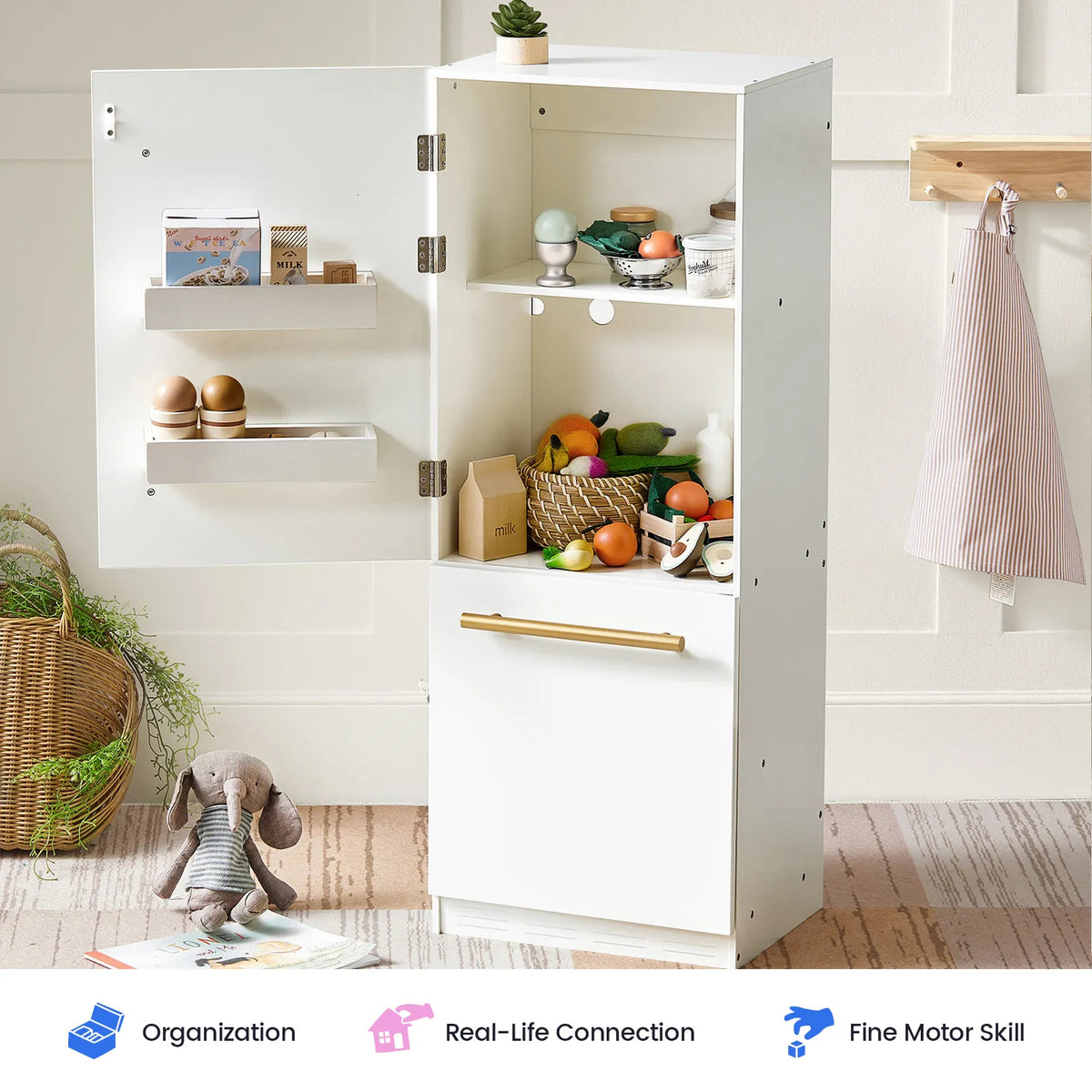
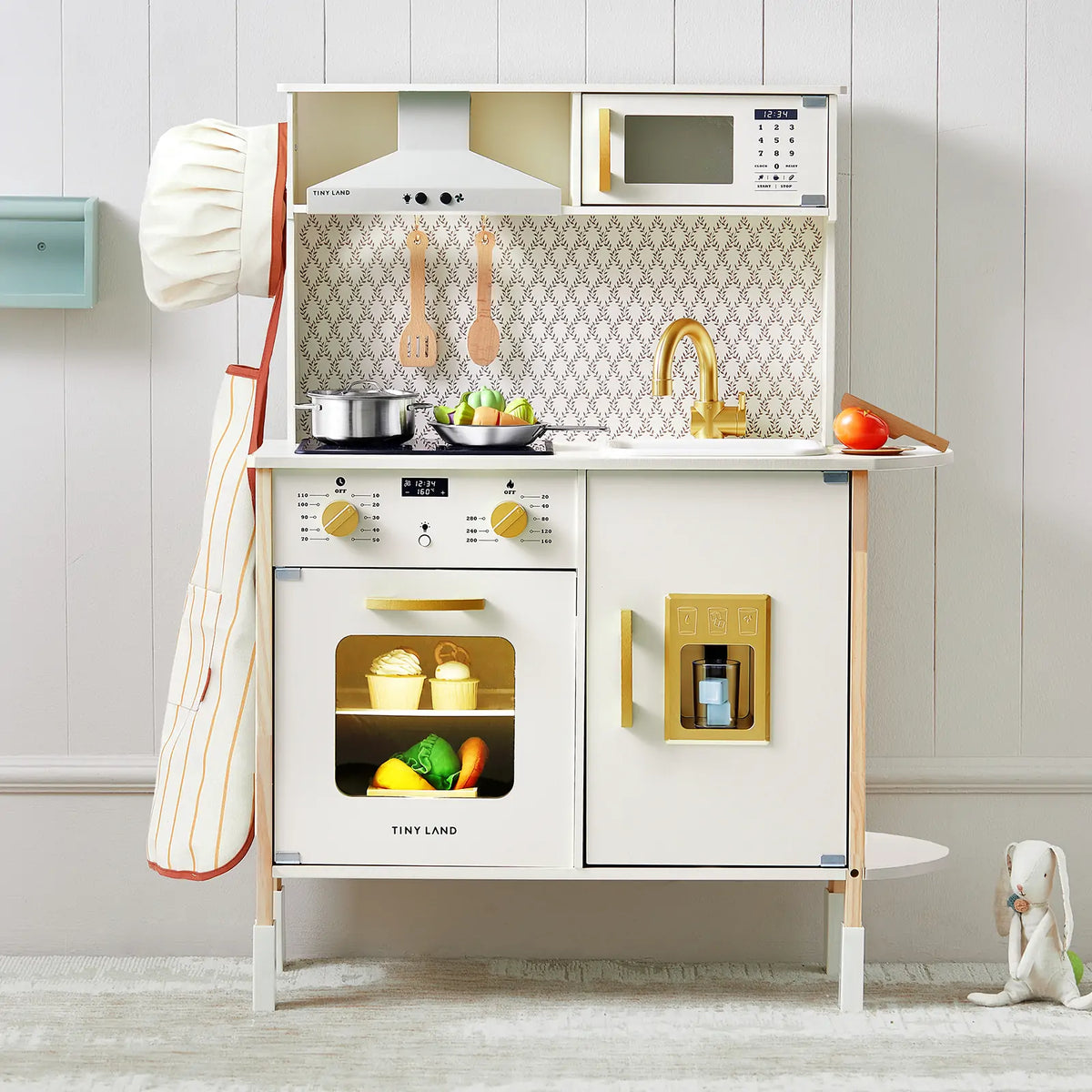
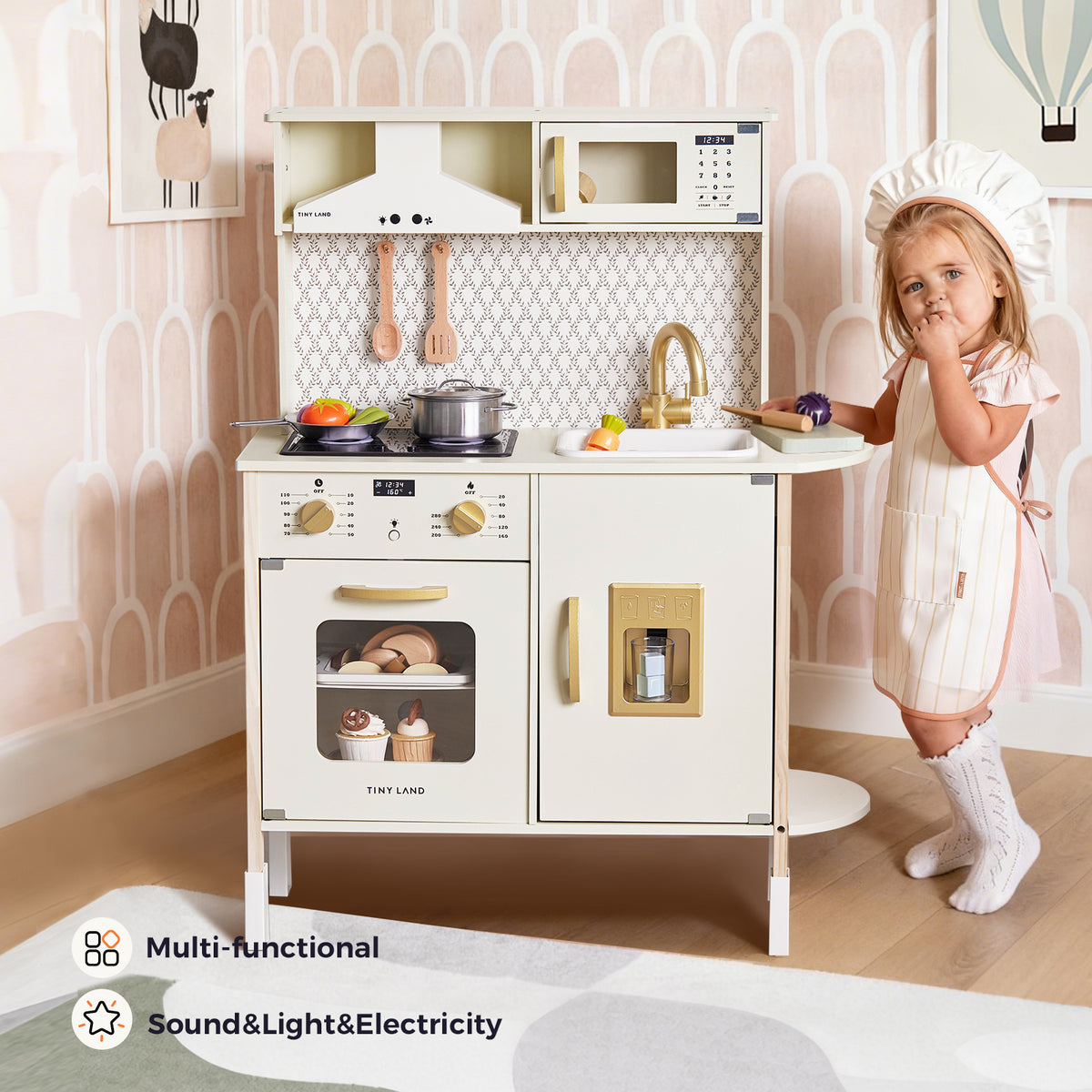
Open a pretend cafe: Use a small table as the counter. Your child can take an order, prepare it, and bring it to a caregiver or stuffed animal. Pairing the activity with play kitchens for kids can create a more complete pretend-play space, especially for children who enjoy realistic kitchen routines.

Serving, Sharing, and Cleanup
-
Host a picnic: Spread a blanket, invite stuffed animals, and let your child serve each guest. Practice phrases such as “more, please,” “your turn,” and “all done.” Older toddlers can also decide where each guest should sit or what each guest should eat.
-
Make cleanup part of the game: Give each food group a home and race a gentle countdown to put everything away. Sorting while cleaning helps the routine feel like part of the story. Let your child decide where different foods belong so cleanup becomes another simple sorting activity.
Adjusting Play Food Activities by Age
Ages 2–3
Keep activities short and concrete. Offer only a few pieces at a time, name what you see, and focus on one idea such as matching, putting food in a basket, or serving a stuffed animal.
Toddlers may play beside a caregiver rather than follow a shared storyline, and that is fine.
At this age, familiar actions often work best: putting food into a basket, moving items from one container to another, pretending to feed a doll, or matching two pieces.
Follow your child's interest instead of expecting them to complete an activity from beginning to end.
Choose play food according to the manufacturer's age guidance. Supervise younger children, especially when a set contains small or detachable parts, and remove any piece that is cracked, broken, or damaged. This can create a safer play environment while allowing children to explore at their own pace.

Ages 3–4
Children in this age range may enjoy longer pretend scenarios with several steps. They can create a grocery list, assign roles, prepare a pretend meal, and invite others to join. Add simple comparisons, such as more and less, big and small, or hot and cold, while keeping the focus on open-ended play.
At this stage, children may also begin combining several activities into one story. A grocery trip can lead to cooking dinner, serving guests, and cleaning the kitchen. Let your child decide what happens next rather than setting too many rules for the scenario.

How to Set Up Simple Play Food at Home
A basket or low shelf can become a small market or kitchen station. Keep the setup close to where family routines happen so your child can connect pretend play with familiar everyday experiences.
A cardboard box can become a counter, delivery box, or refrigerator, while a small cart can make pretend grocery shopping more engaging.
You do not need to put out an entire collection at once. Start with a small selection that supports the activity you want to try, then rotate a few items when interest drops.
Everyday containers such as muffin tins, paper bags, and empty boxes can support sorting, shopping, and serving games.
Toy rotation can also help keep a play area manageable. Put away some pieces and bring them back later rather than keeping every item available at once.
A smaller selection can make it easier for children to see what is available, explore different combinations, and decide what they want to play.
Keep water away from wooden pieces unless the care instructions specifically allow it. For cleaning, follow the manufacturer's instructions and use a lightly damp cloth when appropriate.
This simple routine can help keep the pieces clean while protecting the material.
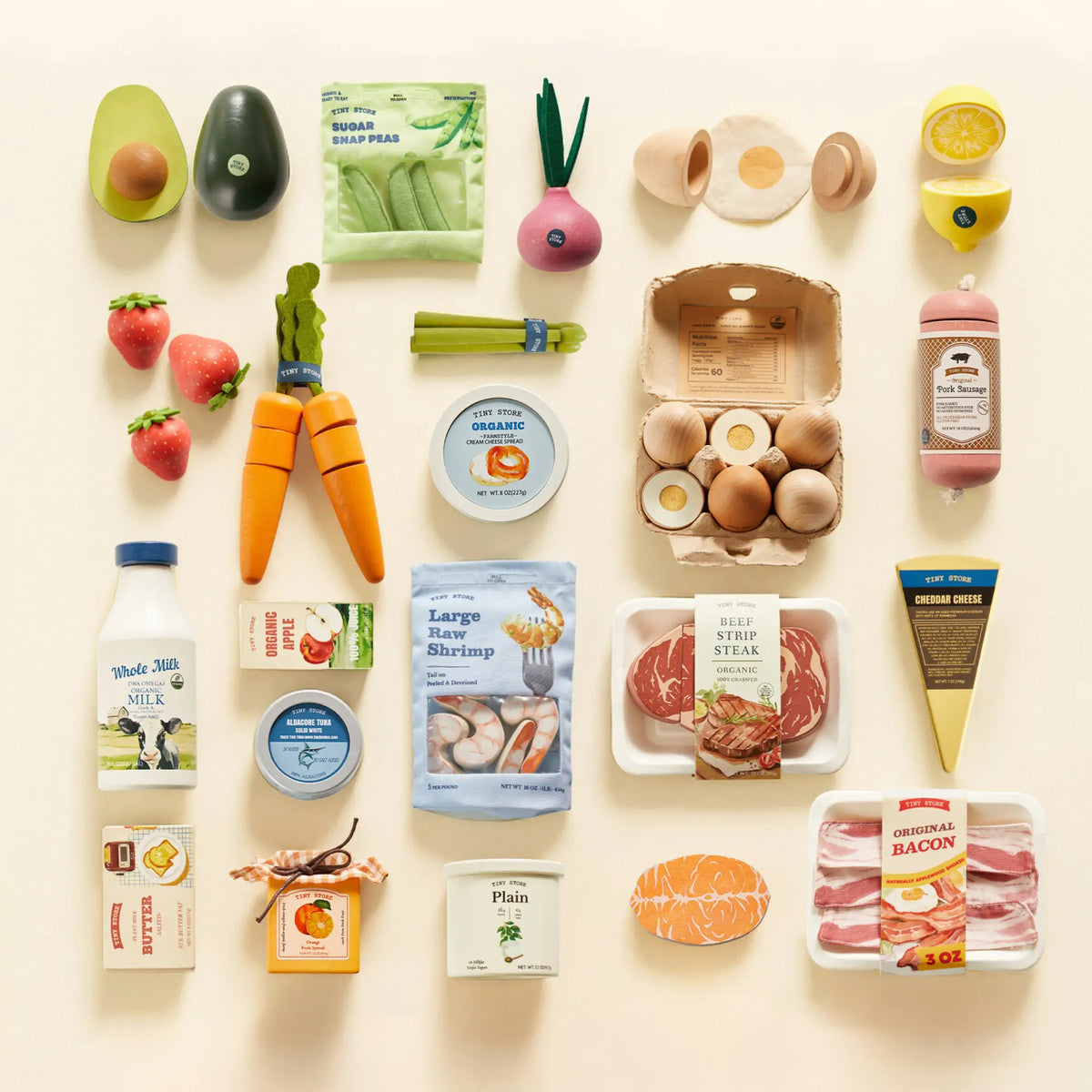
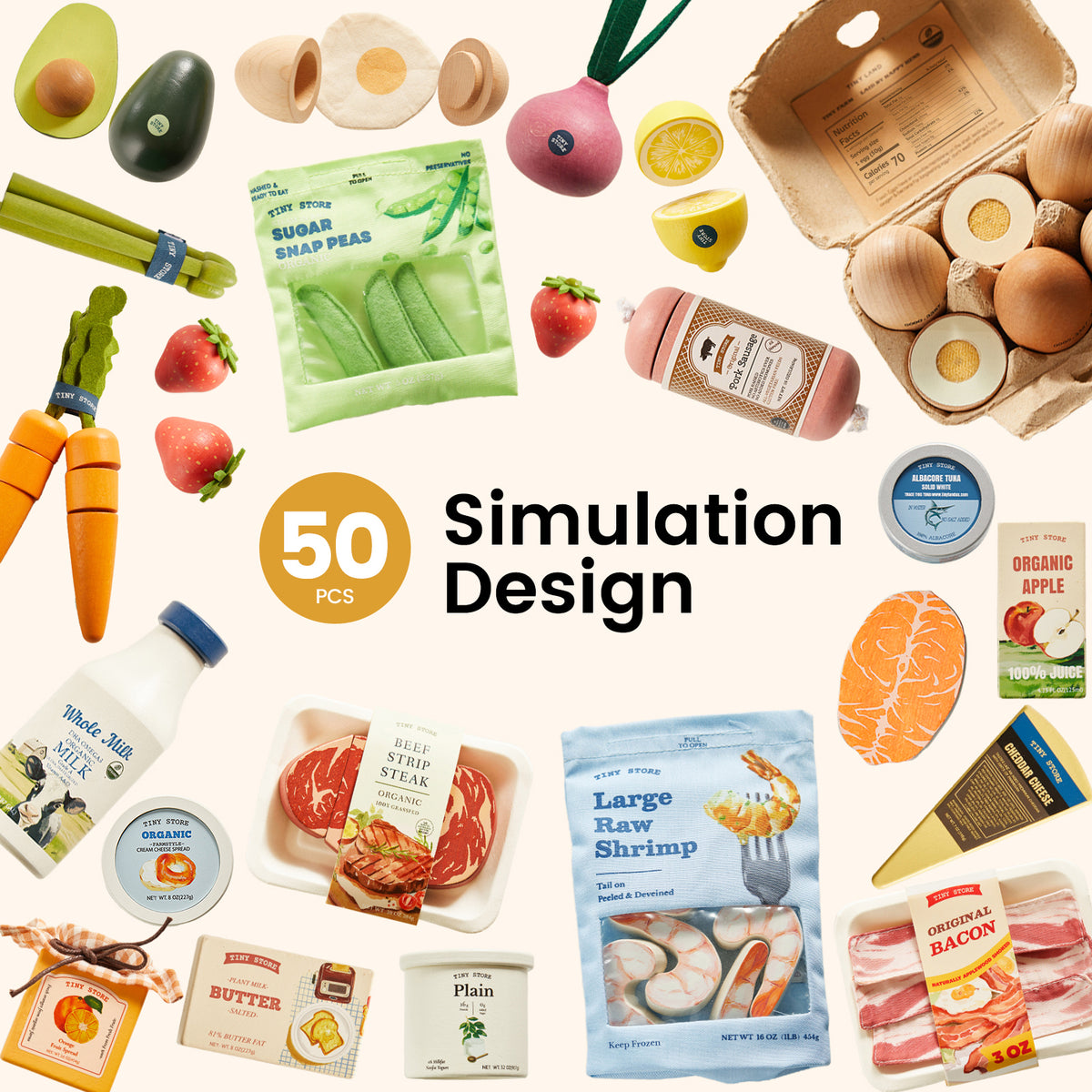
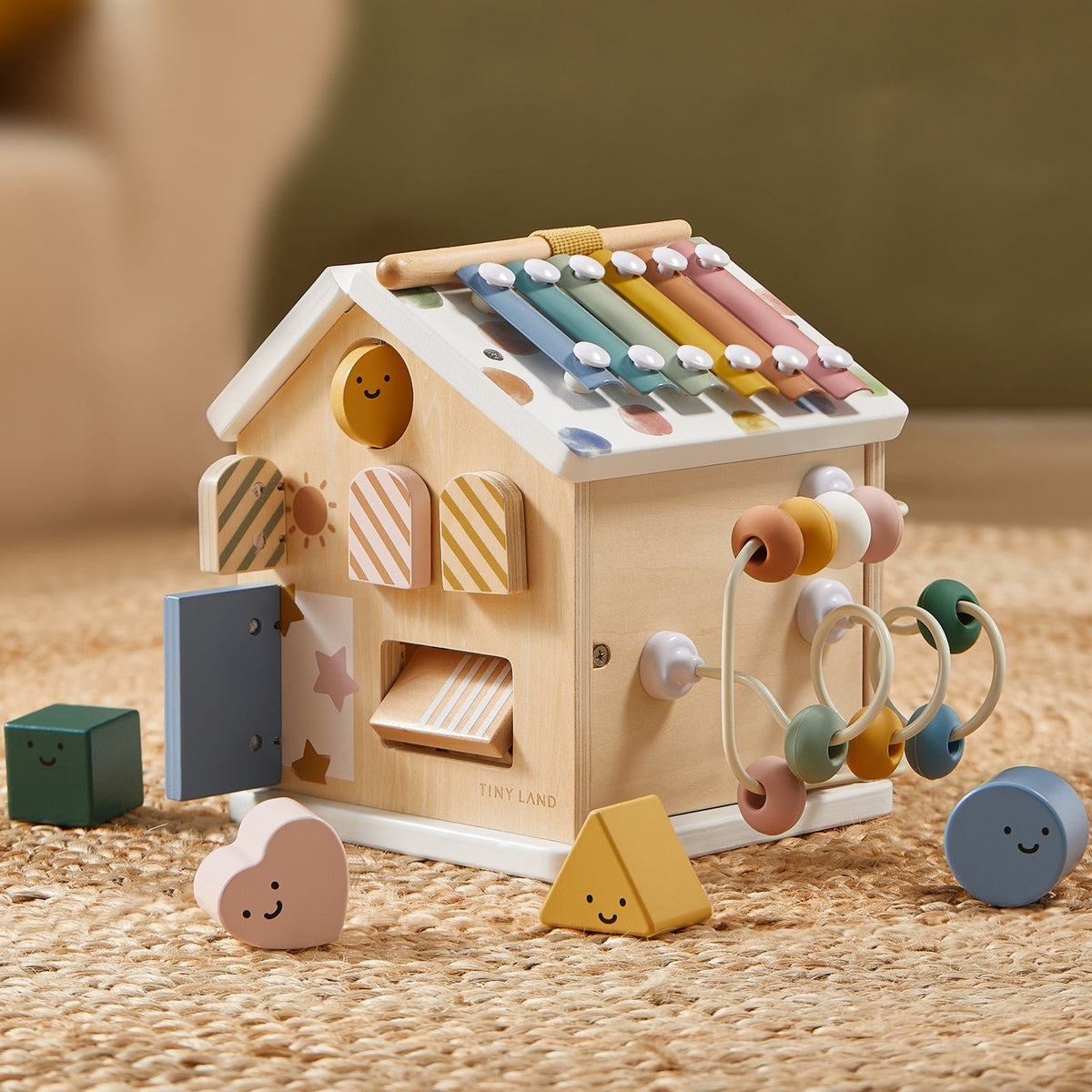
For a focused starting point, explore Tiny Land's wooden play food sets. Choose pieces that support the activities your child enjoys, such as sorting, pretend shopping, or making meals.

How to Choose a Play Food Collection
Look for clear manufacturer age guidance, smooth surfaces, securely attached details, and well-crafted pieces that are easy for a child to handle.
Check the product instructions for cleaning and care, and inspect the set regularly for loose parts, cracks, splinters, or peeling finish.
A useful starter mix can include a few fruits, vegetables, bread items, and serving pieces, with different pieces designed to support sorting, shopping, serving, and pretend meals. Variety matters more than having a very large collection.
A smaller selection can support several types of pretend play when children can sort, combine, serve, shop, and create their own stories with the same pieces.
Consider the available play space as well. A compact set may work well for a small kitchen station, while a larger collection may be useful when several children play together.
Choose pieces that can be used in more than one activity rather than buying a large number of items that serve only one purpose.
Realistic details can also help children recreate familiar experiences. A child may recognize foods they see at home and naturally incorporate them into a pretend breakfast, grocery trip, cafe, or family meal.
The goal is not perfect realism, but giving children enough familiar details to build their own stories.

Play Food FAQs for Toddlers
What age is wooden play food suitable for?
Age guidance varies by product. Follow the manufacturer's label and supervise younger children. For toddlers, choose pieces that are appropriate for their age and remove damaged or loose parts.
Do toddlers need a play kitchen to use pretend food?
No. A basket, low table, cardboard box, or blanket can become a store or kitchen. A play kitchen can add structure to pretend play, but it is not required.
How do I clean wooden play food?
Follow the care instructions for the specific set. When a lightly damp cloth is allowed, wipe the surface and let the pieces dry fully. Do not soak wooden pieces unless the manufacturer says it is safe.
What are some easy pretend-play activities for toddlers?
Start with sorting by color, filling a basket, serving a stuffed animal, or making a simple pretend meal. Add shopping lists and role-play as your child becomes interested in longer games.
How can I keep play food activities interesting?
Change one part of the setup at a time. A basket can become a grocery cart, a picnic basket, or a delivery box. You can also switch the roles, such as turning a grocery store into a cafe or a picnic into a restaurant. Let your child lead the story and follow their perfect ideas.
How much play food do toddlers need?
There is no perfect number of pieces. A small group of pieces can support sorting, counting, shopping, and pretend meals. Add variety gradually based on the activities your child returns to most often. A collection does not need to be large to provide plenty of opportunities for open-ended play.