







Choosing foam climbing blocks for toddlers is about more than simply comparing colors and shapes.
Parents may also wonder about the foam inside the blocks: Is higher-density foam better? Should toddler climbing blocks be soft or firm? And what does a foam specification such as 31A actually mean?
The key is to look at the complete product design, rather than focusing on just one foam specification.
Foam density, foam firmness, shape, stability, construction, as well as age and weight guidance, can all help parents compare foam climbing blocks.
Tiny Land uses 31A foam in its foam climbing blocks. Below, we'll look at what parents should consider when choosing toddler climbing blocks.

What Does Foam Density Mean in Climbing Blocks?
When comparing foam climbing blocks, you may see different foam specifications listed by different brands.
These specifications can help you understand the material used inside a product, but foam density alone does not tell you whether a climbing block will feel soft or firm.
Foam Density vs. Foam Firmness
These are two different concepts:
- Foam density: The amount of foam material contained within a specific volume.
- Foam firmness: The degree to which foam resists compression when pressure is applied.
Therefore, higher foam density does not necessarily mean that the foam is firmer, and a density specification alone cannot tell you how a finished foam climbing block will perform during use.
Is Higher-Density Foam Always Better?
Not necessarily.
For toddler climbing blocks, parents should consider more than just the density number. When choosing foam climbing blocks, parents should pay attention to the following factors.

What Should Parents Look for in Foam Climbing Blocks?
If you're comparing different foam climbing blocks for toddlers, the following factors are worth considering.
1. Foam Firmness and Shape Retention
The foam should provide an appropriate balance of support and cushioning for its intended activities.
It's also important to consider whether the foam climbing blocks can maintain their original shapes during normal use. Different shapes, such as ramps, wedges, or steps, are typically designed for different types of movement.
2. Stability
Consider how the climbing blocks sit on the floor and how they are designed to work together.
Foam climbing blocks should be used on a suitable, stable surface, and parents should follow the manufacturer's setup and usage instructions.
3. Covers and Overall Construction
Children come into direct contact with the outside of the foam climbing blocks, so parents should also consider:
- Cover material
- Seam construction
- Zippers or other closures
- Whether the cover is removable
- Whether the cover is washable
- Cleaning instructions
4. Age and Weight Guidance
Always check the manufacturer's recommended age and weight guidance before purchasing.
This information can help parents determine whether a set of toddler climbing blocks is appropriate for their child's current developmental stage and intended use.
5. Play Possibilities
Consider the different ways the set can be used.
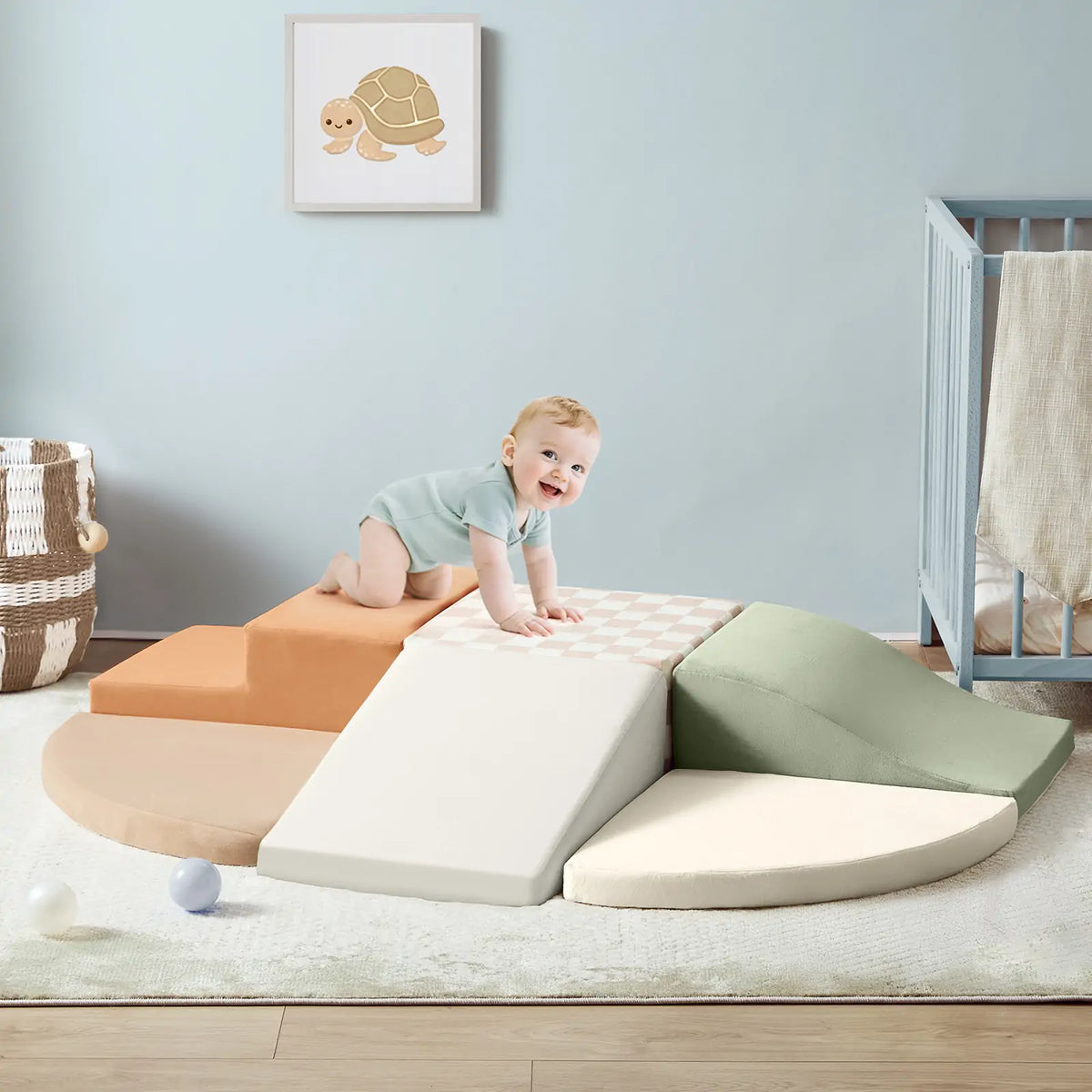
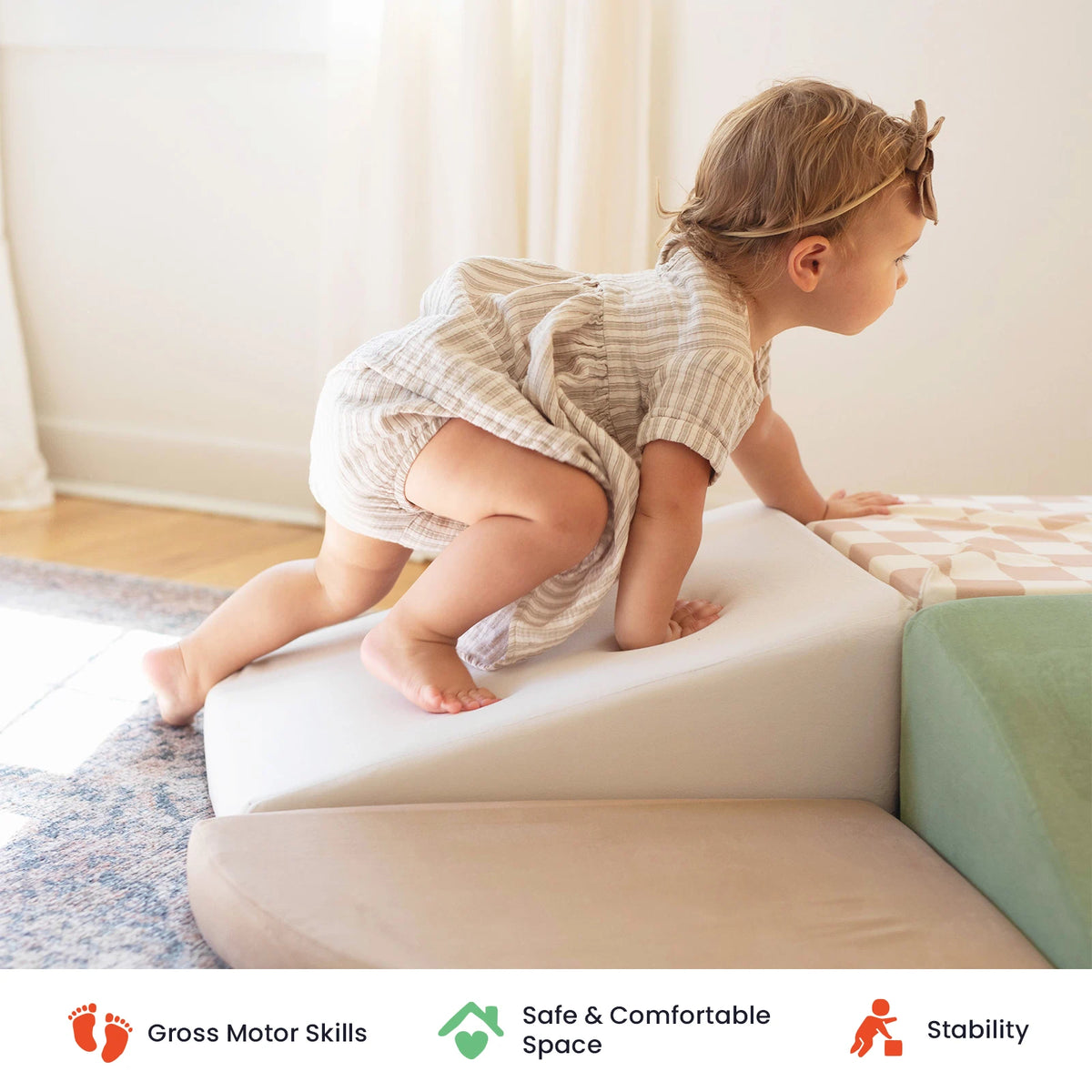
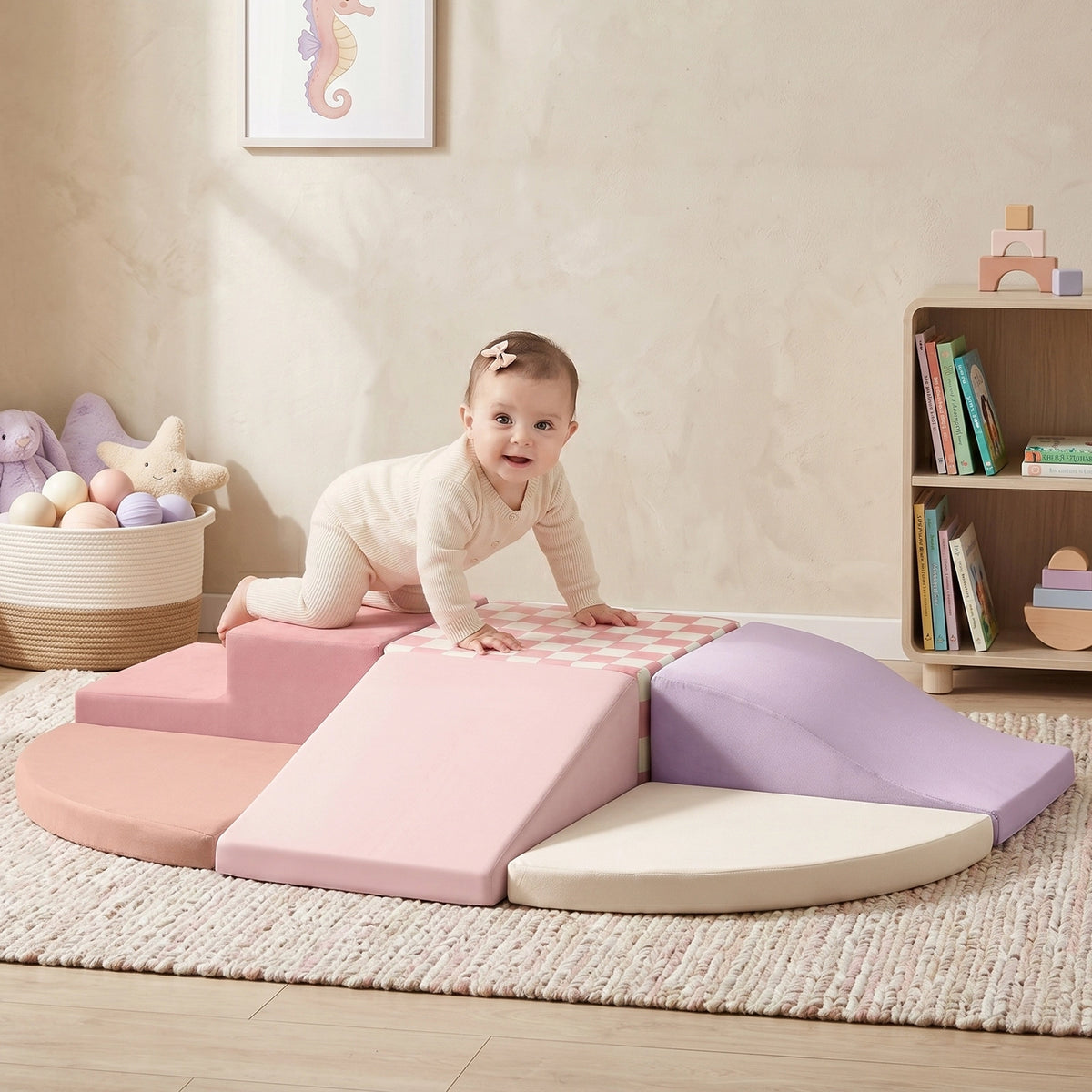
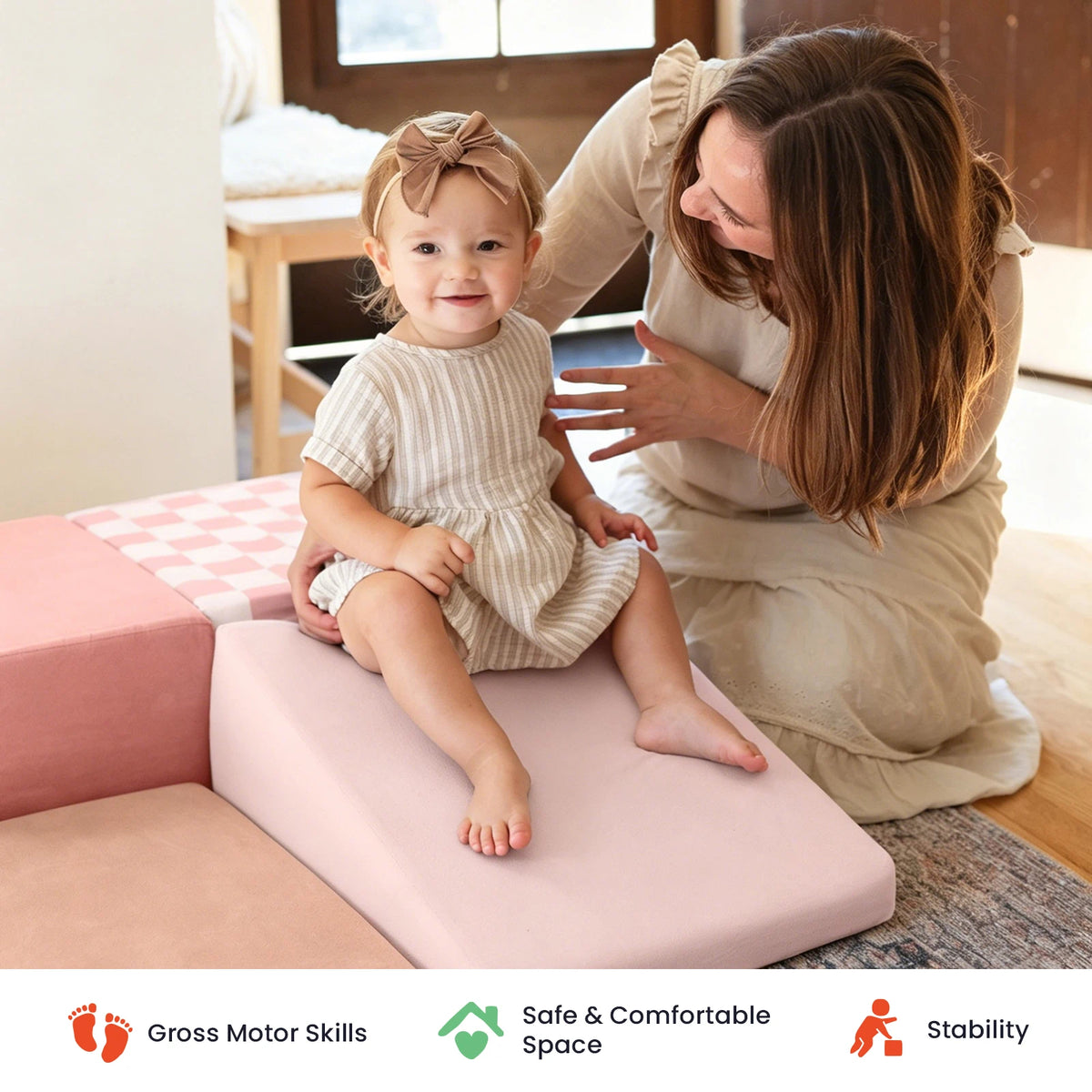
Depending on the design, foam climbing blocks can allow children to crawl, climb, step, practice balance, and create simple indoor obstacle courses.
Modular climbing blocks can also be rearranged to create different play setups.

Soft or Firm Climbing Blocks: Which Is Better?
There isn't one ideal firmness level that applies to every foam climbing block.
Too soft: The foam may compress significantly when pressure is applied.
Too firm: The surface may provide less cushioning.
Rather than simply choosing the softest or firmest option, consider how the foam works together with the product's shape, construction, and intended use.
Why Does Tiny Land Use 31A Foam?
Tiny Land's foam climbing blocks use 31A foam as part of the product's construction.
The foam works together with the blocks' shapes, construction, covers, and modular configurations as part of the overall product design.
Through different configurations, children can use the pieces for climbing, crawling, stepping, balancing, and creating different play setups.
For this reason, we recommend that parents look at the complete product rather than choosing foam climbing blocks based on foam density alone.

What Else Matters Beyond Foam Density?
Foam is only one part of a climbing block. Parents should also consider the following factors.
Soft or Rounded Shapes
Soft edges and rounded shapes can provide more comfortable contact points as children interact with the pieces.
Washable Covers
Foam climbing blocks may become part of a child's everyday play space. Removable or washable covers can make routine cleaning easier.
Always follow the manufacturer's product care instructions when cleaning.
A Suitable Play Area
Place the climbing blocks on a suitable, stable surface and keep unnecessary obstacles away from the surrounding play area.
Adult Supervision
Children should be supervised according to their age, abilities, and the manufacturer's instructions.
Parents should also pay attention to how children use the foam climbing blocks and avoid activities that go beyond the product's intended use.

Foam Climbing Blocks Buying Checklist
Before purchasing foam climbing blocks for toddlers, check:
- Foam specification
- Foam firmness
- Shape retention
- Stability
- Covers and seams
- Ease of cleaning
- Recommended age
- Weight guidance
- Suitable activities
- Available configurations
Frequently Asked Questions About Foam Climbing Blocks
What Foam Density Is Best for Toddler Climbing Blocks?
There is no single foam density that is universally best for all toddler climbing blocks.
Parents should consider density together with firmness, shape, stability, construction, and the age and weight guidance provided for the product.
Tiny Land's foam climbing blocks use 31A foam.
Are Higher-Density Foam Climbing Blocks Better?
Not necessarily.
Higher density does not mean that the overall performance of a product will necessarily be better. Parents should evaluate the complete product rather than choosing based on foam density alone.
Should Toddler Climbing Blocks Be Soft or Firm?
They should provide an appropriate balance of support and cushioning for their intended activities.
The ideal firmness depends on the overall design of the product.
How Can I Tell If Foam Is Too Soft?
You can observe how much the foam compresses when pressure is applied and whether it returns close to its original shape after the pressure is released.
Product specifications and demonstrations can also help parents make a comparison.
Do Foam Climbing Blocks Become Softer Over Time?
Foam can change with long-term use, depending on the material, construction, frequency of use, and storage conditions.
Parents should regularly check the foam and cover for noticeable changes in shape, damage, or other signs of wear.
Are High-Density Foam Climbing Blocks Safe for Babies?
Foam density alone cannot determine whether a foam climbing block is appropriate for babies.
Always follow the manufacturer's recommended age, weight guidance, intended use, and supervision requirements.
How Long Do Foam Climbing Blocks Last?
There is no universal lifespan for all foam climbing blocks.
The durability of a product can be affected by factors such as construction, frequency of use, children's activity levels, cleaning, and storage.
Regularly inspect the foam, cover, seams, and closures, and follow the manufacturer's care and replacement recommendations.

Final Thoughts: Don't Focus on Foam Density Alone
When choosing foam climbing blocks for toddlers, foam density is certainly useful information to understand, but it is only one part of the purchasing decision.
Parents should consider foam density, firmness, shape, stability, construction, covers, age guidance, weight guidance, and intended use together.
Tiny Land foam climbing blocks use 31A foam and feature modular shapes that provide children with different ways to climb and stay active indoors.
The best choice isn't necessarily the climbing block with the highest foam density. It's the one that matches your child's age, abilities, and the ways they will actually play.
This approach can help parents make a more practical comparison when choosing foam climbing blocks and find a set that fits their child's play needs.