




Finding the right indoor climbing toy for a toddler is about more than choosing a set with the most pieces.
Parents may need to consider age, height, shape, stability, materials, available space, cleaning, and how the set can be used as a child grows.
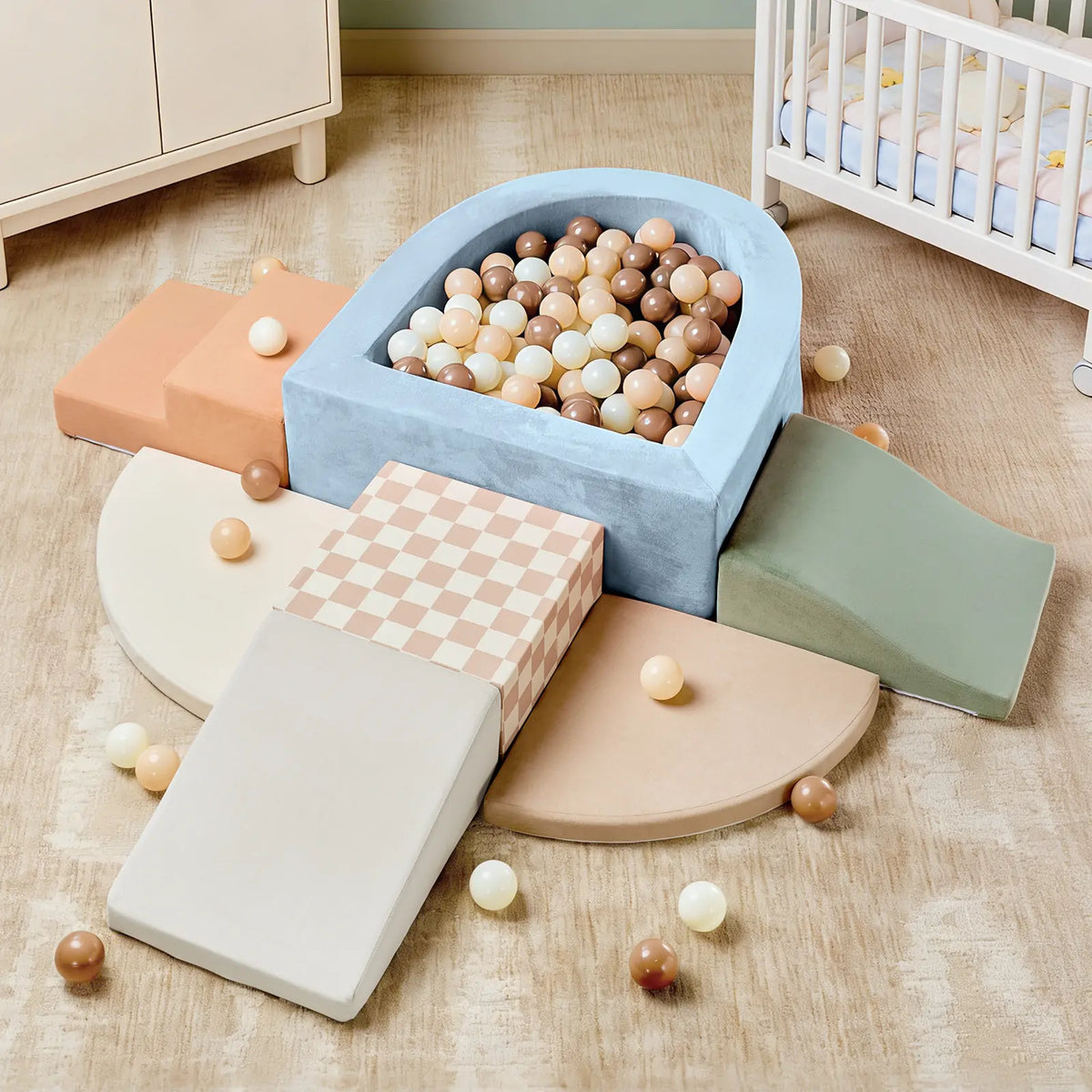
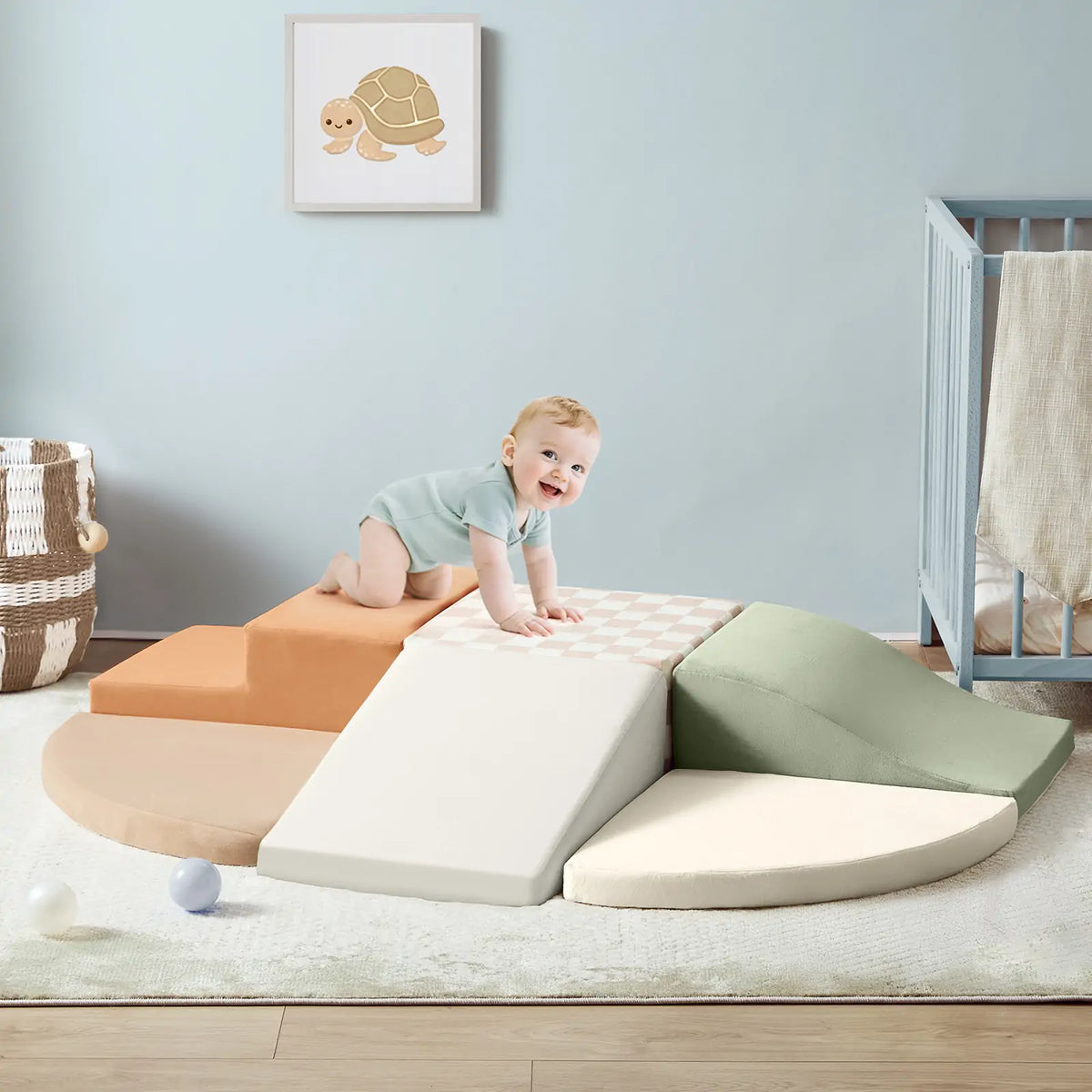
Foam climbing blocks for toddlers are one option for creating a soft indoor play area where children can crawl, climb, step, slide, stack, and build simple obstacle courses.
Their modular design can also make them useful for open-ended play in a playroom, nursery, living room, or small apartment play corner.
If you're comparing the best foam climbing blocks for toddlers, this guide explains what to look for, how different setups work for different ages, and when features such as a ball pit may or may not make sense for your home.

Why Soft Play Foam Climbing Blocks Are Popular for Toddlers
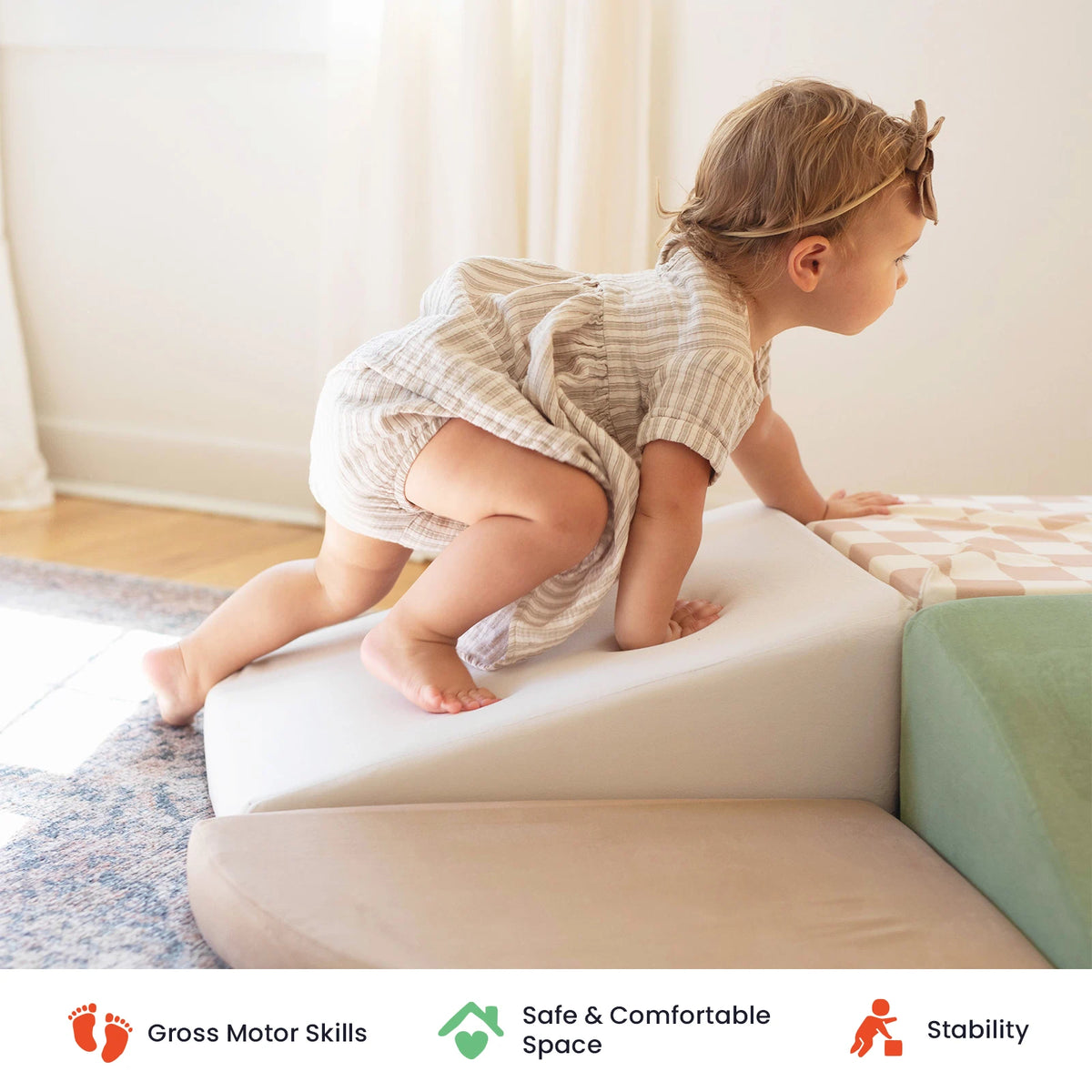
Toddlers are naturally active during play. They may want to crawl through spaces, climb over low obstacles, step from one surface to another, or repeatedly try the same movement in a new way.
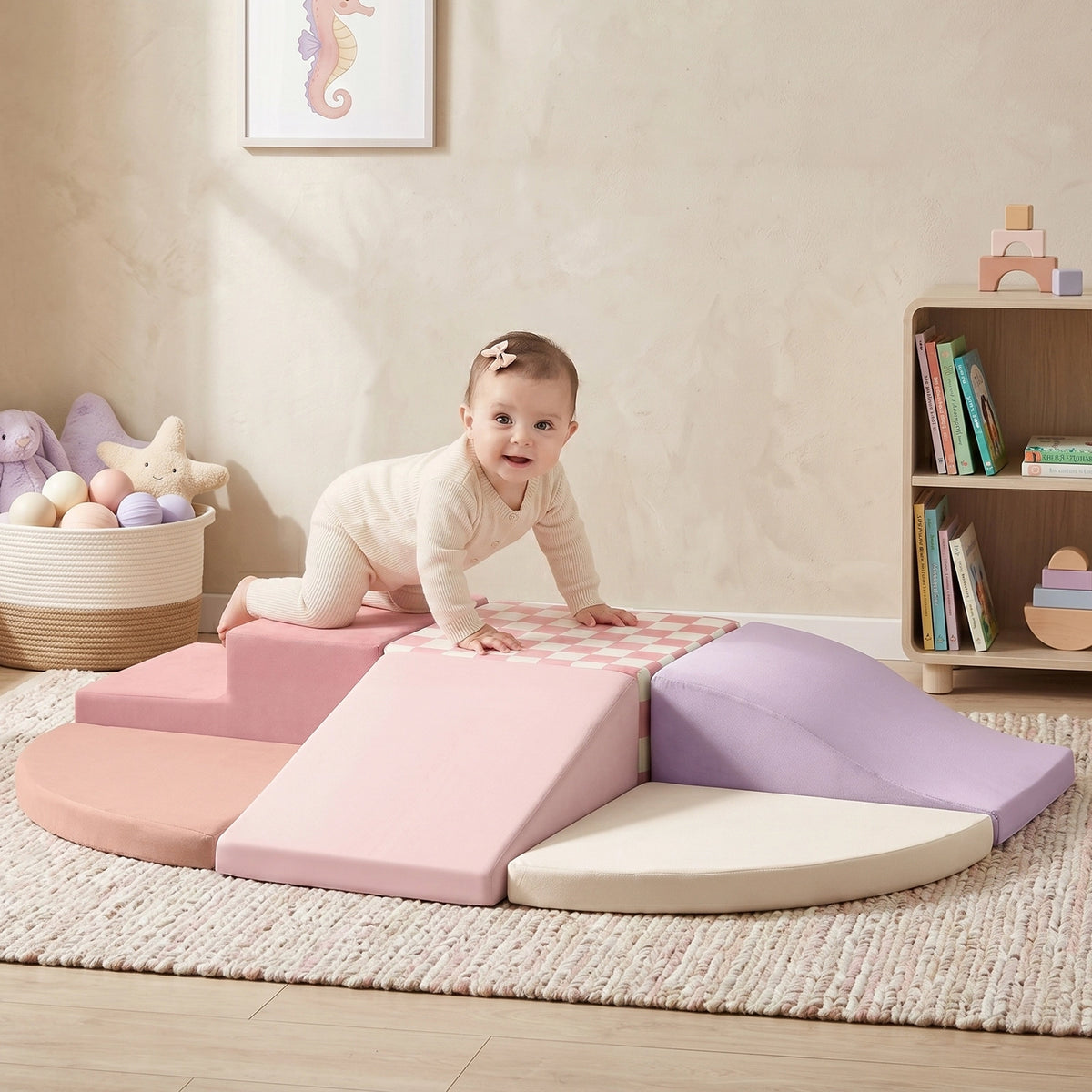
Soft climbing blocks give families a way to bring some of these activities indoors without relying on a fixed climbing structure. Different pieces can be arranged and rearranged to create simple movement routes or imaginative play setups.
For example, a toddler may use the same foam climbing blocks to:
-
Crawl over or around soft pieces
-
Climb onto a low wedge
-
Practice stepping across different surfaces
-
Create a mini obstacle course
-
Build a pretend mountain or castle
-
Combine climbing with imaginative play
-
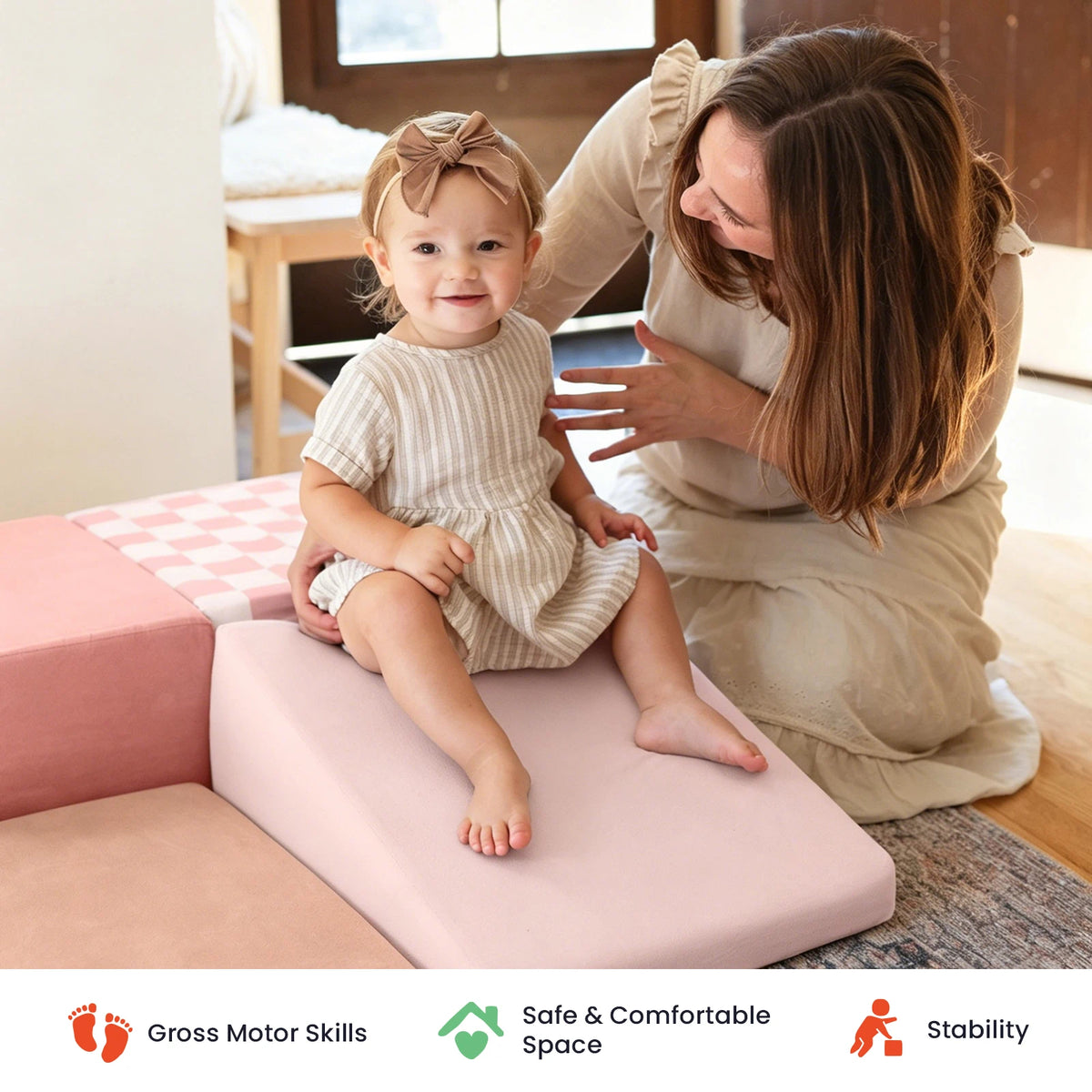
Play alongside a parent or sibling
This flexibility can be particularly useful for families who want indoor soft play for toddlers without dedicating an entire room to one fixed activity.
A modular foam play set can also fit into different home environments. In a playroom, the pieces may stay assembled as a climbing area.
In a living room or smaller apartment, they can be rearranged or stored when the space is needed for other activities.

What to Look for in Foam Climbing Blocks
The right foam climbing blocks for toddlers should match both the child's current abilities and the space where the set will be used.
Instead of choosing based only on the number of pieces or overall appearance, consider these five factors.
Soft but Supportive Foam
Foam climbing play blocks should provide a comfortable surface for indoor movement while still maintaining its intended shape during normal use.
When comparing soft foam climbing blocks, check the manufacturer's information about the foam construction, dimensions, recommended age, and intended use.
The goal is not simply to find the softest material. Parents should also consider whether the pieces provide enough support for the types of climbing, crawling, stepping, or sliding activities they are designed for.
Toddler-Friendly Height
Height can make a significant difference when choosing climbing blocks for toddlers.
For younger toddlers who are just exploring climbing, lower pieces can provide a simpler starting point. As children become more comfortable with movement, they may enjoy combining pieces into different routes.
When comparing sets, look at the height of individual pieces rather than only the overall dimensions of the complete set.
Large foam climbing blocks may provide more possibilities for older or more experienced toddlers, but larger pieces also require more floor space. The right size depends on both the child's age and the available play area.

Stable Shapes and a Non-Slip Play Setup
Shape and placement are important when creating an indoor climbing setup.
Wedges can create climbing or sliding surfaces, while blocks can be used for stepping, stacking, or building. Different combinations can produce different movement patterns.
Parents should also pay attention to the surface underneath the set and the area surrounding it. Use the product on a suitable, level surface and leave clear space around the equipment.
Avoid positioning climbing blocks directly next to sharp furniture edges, stairs, doors, or other household hazards.
Foam climbing blocks should be used according to the manufacturer's instructions and with appropriate adult supervision.
Easy-to-Clean Covers
Indoor climbing equipment can become part of a toddler's everyday play routine, so easy maintenance is worth considering.
Look for information about whether covers can be removed, whether surfaces can be wiped clean, and how the manufacturer recommends handling spills or stains.
This is particularly useful for families considering foam climbing blocks with ball pit features, since additional play surfaces and balls may require their own cleaning routine.

Modular Pieces for Open-Ended Play
One of the main differences between modular foam climbing blocks and fixed indoor play equipment is flexibility.
A set with multiple shapes, often including wedges, cylinders, and steps, can be rearranged into different configurations as children explore new ways to play.
Depending on the pieces included, one setup might become a crawl path, while another might become a climbing route or pretend-play structure.
This kind of open-ended setup can support foundational physical and cognitive skills in toddlers as part of early development.
This makes modular foam climbing toys useful for families who want active movement and imaginative play from the same set.

Best Foam Climbing Blocks by Age
There is no single foam climbing setup that works the same way for every toddler. Age recommendations vary by product, so parents should always check the manufacturer's guidance first.
The child's experience, confidence, and the way the equipment is arranged also matter.
Best Foam Climbing Blocks for 1-Year-Olds
For a 1-year-old, simple and low-height setups are generally easier to introduce than more complex climbing arrangements.
At this stage, foam blocks can be used for crawling, moving around low obstacles, pulling up, and exploring different shapes and surfaces. Simple, low setups for children around 1-3 years can help them practice body awareness and spatial navigation in a safer, supervised way.
Parents can start with a simple arrangement rather than building a larger obstacle course. The goal is to allow the child to explore movement at an appropriate level while an adult remains nearby.
When shopping, pay particular attention to the product's minimum recommended age and intended use.
Best Foam Climbing Blocks for 2-Year-Olds
Two-year-olds may be ready for more active combinations of movement.
A toddler might climb over a wedge, step across blocks, move through a simple route, or experiment with stacking and rearranging pieces.
At this age, toddler foam climbing blocks can also become part of imaginative play. A group of blocks might become a pretend mountain, bridge, or small obstacle course.
Parents can change the arrangement based on the child's interests while keeping the setup age-appropriate and supervised.
Best Foam Climbing Blocks for 3-Year-Olds
Three-year-olds may be interested in combining several movements into one play route.
For example, a simple course could include crawling, climbing, stepping, and sliding. Children may also begin creating their own pretend scenarios around the equipment, using the pieces to build pretend houses or other play setups.
This is where modular foam blocks for toddlers can offer more flexibility and continue to grow with the child when used in age-appropriate ways. Instead of using the pieces in one fixed configuration, families can create different layouts for active play, building, and pretend play.
Even as children become more confident, climbing equipment should still be used according to the manufacturer's guidance and with appropriate supervision.

Foam Climbing Blocks vs. Pikler Triangle vs. Play Couch
Parents comparing indoor climbing options may also come across Pikler triangles and play couches. These products can all support indoor play, but they are designed around different types of use.
|
Option |
Primary use |
What to consider |
|---|---|---|
|
Soft indoor climbing, crawling, sliding, and building |
Modular and easy to rearrange; consider size and floor space |
|
|
Structured climbing |
Typically a wooden climbing structure; requires appropriate space and supervision |
|
|
Play couch |
Lounging, building, and imaginative play |
More focused on open-ended building and comfort; climbing may not be its primary purpose |
Foam climbing blocks are particularly relevant when the goal is soft, low-height indoor climbing and movement.
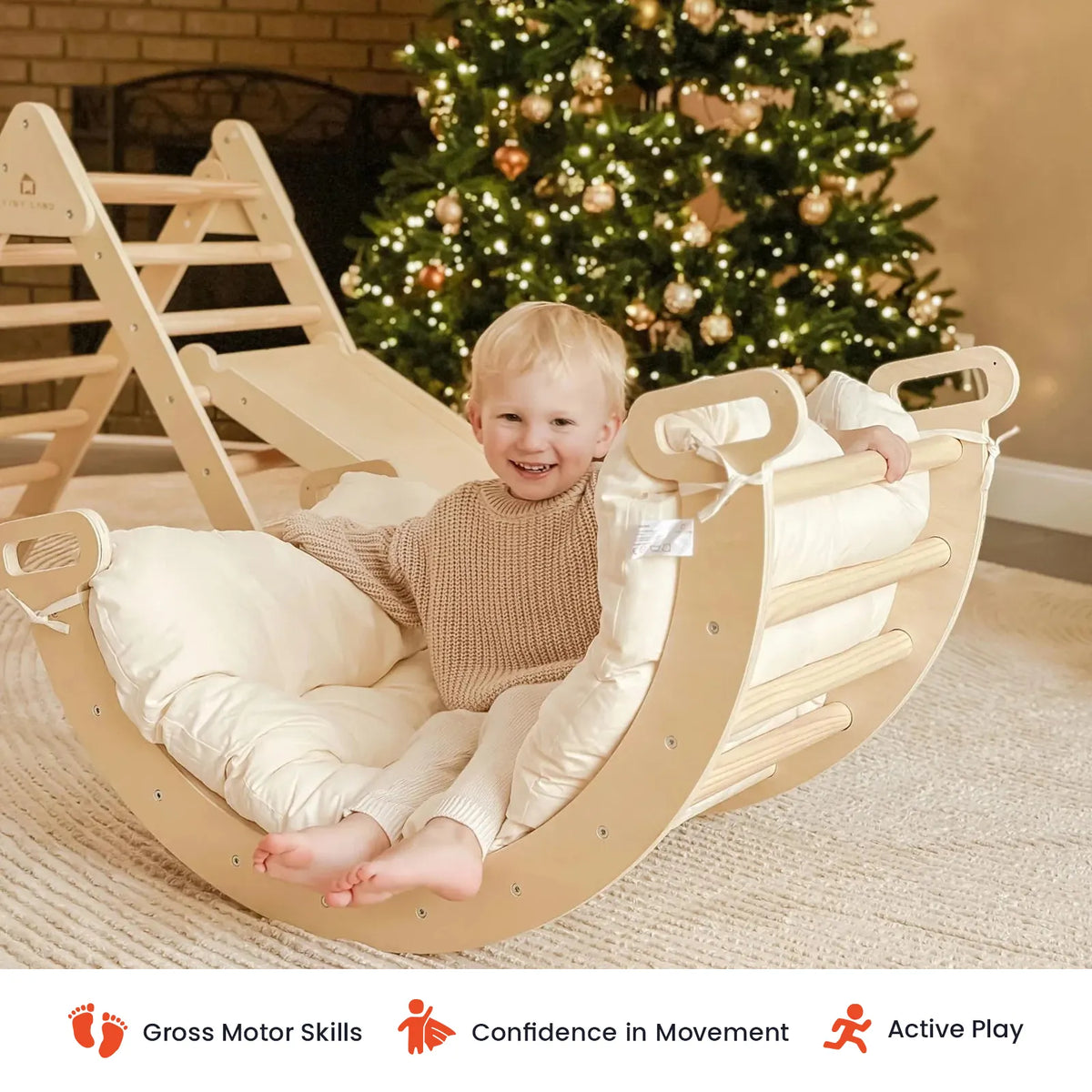
A Pikler triangle may be a better match for families specifically looking for a wooden climbing structure with a defined climbing frame.
A play couch may be more suitable when building, lounging, forts, and imaginative play are the main priorities.
Rather than choosing based on which product is universally "better," consider the type of movement and play you want to create, the child's age, and how much space you have available.

Should You Choose Foam Climbing Blocks with a Ball Pit?
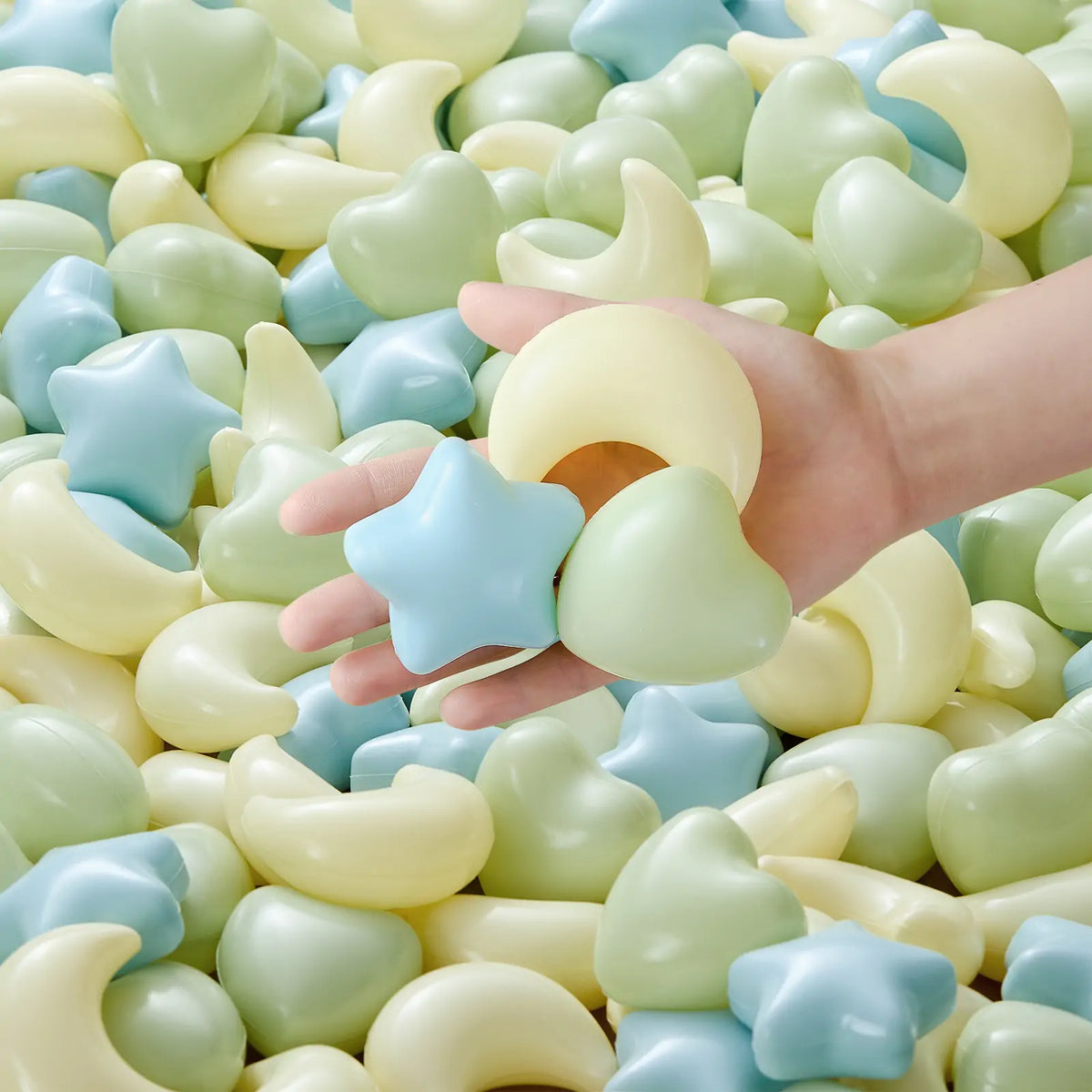
Some families choose foam climbing blocks with a ball pit because the combination adds another way for toddlers to play.
A ball pit can become part of climbing, crawling, ball play, color activities, or pretend play. For children who enjoy moving between different activities, it can make a modular play area more varied.
However, a ball pit also changes the space and maintenance requirements.
When a Ball Pit May Be Useful
A ball pit can be worth considering if:
-
Your child enjoys ball-based play.
-
You have enough floor space for the complete setup.
-
You want to combine climbing with another type of active play.
-
You are comfortable with the additional cleaning and storage involved.
What to Consider Before Buying
Space: A ball pit takes up additional floor space. Measure the complete play area rather than only the footprint of the climbing pieces.
Cleaning: Balls and the inside of the pit can collect dust and debris during regular use. Check the manufacturer's cleaning instructions before purchasing.
Storage: Consider where the balls and foam pieces will go when the play area needs to be cleared.
Number of balls: More balls are not necessarily better for every home. Consider how many your space can comfortably accommodate and how easy they will be to clean and store.
For smaller play areas, a simpler foam climbing set without a ball pit may be easier to manage.

Best Places to Use Foam Climbing Blocks at Home
Where you use your soft play climbing blocks can be just as important as which set you choose.
Before setting up the equipment, look for a flat surface with enough clear space around the play area.
Playroom
A dedicated playroom gives you the most flexibility.
You can leave the climbing blocks assembled and change the configuration periodically to create new play routes.
Keep other toys, shelves, and furniture far enough away that the child has a clear area around the equipment.
Nursery
A nursery may work for a smaller foam setup, particularly when the room has sufficient open floor space.
For younger toddlers, a simple low-height arrangement can be easier to manage than a larger climbing course.
Living Room
A living room can also become a temporary indoor play area.
Modular pieces can be arranged when the child is playing and moved or stored when the family needs the space for other activities.
Measure the available area first, especially if you're considering large foam climbing blocks.
Basement Play Area
A basement can provide a larger dedicated space for active indoor play.
Before setting up a climbing area, check that the floor and surrounding environment are appropriate for the product and that there are no nearby hazards such as sharp corners, exposed equipment, or stairs.
Small Apartment Play Corner
Families in smaller homes do not necessarily need an entire room for soft play.
Start by measuring the available floor space. Then consider how much room the blocks require when arranged for play and how much storage space they need when not in use.
For small apartments, modular pieces can be useful because the configuration can be adjusted to fit the available area.

Cleaning and Care Tips
Regular care can help keep foam climbing equipment ready for everyday indoor play.
Wipe the Surface Regularly
Follow the manufacturer's cleaning instructions for the specific cover material.
For surfaces designed to be wiped clean, regular maintenance can help remove everyday dirt, food marks, and other residue.
Avoid cleaning products that are not recommended for the material.
Clean Ball Pit Areas Regularly
If your set includes a ball pit, remember that both the pit and the balls may need regular cleaning.
Follow the manufacturer's instructions for cleaning and drying each component.
How frequently you clean the equipment can depend on how often it is used and whether multiple children share the play area.
Check Zippers and Seams
Periodically inspect removable covers, zippers, seams, and other components for signs of wear or damage.
If you notice an issue, follow the manufacturer's recommendations before continuing to use the equipment.
Check the Foam Shape
Over time, foam can be affected by how it is stored or used.
Check the pieces periodically to make sure they continue to maintain their intended shape. Follow the manufacturer's storage recommendations and avoid placing heavy objects on the foam for extended periods unless specifically permitted.

Foam Climbing Block Play Ideas
The same set of foam climbing blocks can support different activities depending on how the pieces are arranged.
Crawl Tunnel
Create a simple route as one of many crawling toys parents can use to encourage your toddler to move around, underneath, or between soft pieces at home.
Keep the path short and simple for younger toddlers.
Mini Obstacle Course
Arrange several pieces into a basic sequence such as crawl, climb, step, and slide.
Change the layout each week to create a different challenge and keep the activity interesting without needing additional toys.
Climb and Slide Route
If your set includes a suitable wedge or slide-shaped piece, combine it with other blocks to create a simple climb-and-slide route.
Keep the height and configuration appropriate for the child's age and follow the manufacturer's usage instructions.
Color Sorting with Balls
If you have a ball pit, introduce a simple color activity.
Toddlers can collect balls and sort them by color into different containers or areas, such as putting every yellow ball in one spot. They can do the same with purple balls to keep it simple and age-appropriate.
Pretend Mountain or Castle
Foam blocks do not have to be used only for physical play.
Arrange them as a pretend mountain for toy animals or as part of a castle, fort, or imaginative play scene that kids may turn into houses, forts, or castles.
This can turn soft foam climbing blocks into part of a broader open-ended play setup that also supports creativity.

Parent-Child Active Play and Gross Motor Play
Parents can participate by creating simple movement games.
Take turns crawling through a route, climbing over a block, moving from one piece to another, or building a new configuration together.
The goal is not to make the course as complicated as possible. Simple, supervised movement games can be enough to keep toddlers engaged for hours while making indoor play more active.
FAQ
What age are foam climbing blocks best for?
The appropriate age depends on the specific foam climbing set and its manufacturer's recommendations.
Many foam climbing sets are marketed for toddlers around 1 to 3 years, though exact age guidance still varies by product. Always check the product's recommended age range, dimensions, and intended use before purchasing.
Are foam climbing blocks safe for toddlers?
Foam climbing blocks are designed for indoor active play, but no climbing equipment should be considered completely risk-free.
Choose equipment appropriate for your child's age, place it on a suitable surface, keep the surrounding area clear, and follow the manufacturer's instructions for use and supervision.
Are foam climbing blocks good for indoor play?
Foam climbing blocks can be a practical option for indoor play because their modular pieces can support crawling, climbing, stepping, sliding, and imaginative play. They also appear in daycares, preschools, and therapeutic settings as soft play structures.
They are also used in children's climbing camps, youth gyms, and some gymnastics or parkour training progression, while toddler home sets are made for different uses. Loose foam blocks used in foam pits serve a different purpose by helping absorb the impact of high falls in training.
They can be used in suitable playrooms, nurseries, living rooms, basements, and smaller play areas as long as there is adequate clear space.
What is the difference between foam climbing blocks and a Pikler triangle?
Foam climbing blocks are soft and modular, making them useful for low-height indoor climbing, crawling, sliding, and open-ended play.
A Pikler triangle is generally a wooden climbing structure with a more defined frame.
The better fit depends on whether your priority is a soft modular setup or a more structured wooden climbing experience.
Should I buy foam climbing blocks with a ball pit?
Consider a ball-pit configuration if your child enjoys ball play and you have enough space for the additional footprint.
Also consider cleaning and storage before buying. If space is limited, a basic foam climbing set may be easier to manage.
How do you clean foam climbing blocks?
Cleaning methods depend on the cover material and the manufacturer's instructions.
Check whether the covers are removable or wipeable and use only cleaning methods recommended for the product.
For a ball-pit set, clean both the pit and balls according to the manufacturer's care instructions.
How much space do foam climbing blocks need?
The amount of space depends on the dimensions of the individual pieces and how you arrange them.
Measure the available play area before purchasing and allow additional clear space around the equipment. If you're considering a ball pit or large foam climbing blocks, account for their full footprint rather than measuring only one piece.

Final Recommendation: How to Choose the Right Foam Climbing Blocks
When comparing the best foam climbing blocks for toddlers, focus on how the set fits your child and your home and whether it offers great long-term value for families rather than simply counting the number of pieces.
Before buying, consider:
-
Age: Is the set appropriate for your child's age and current level of experience?
-
Height: Are the individual pieces suitable for the type of climbing and movement you want to encourage?
-
Stability: Can the pieces be arranged on an appropriate, level surface with enough room around them?
-
Materials: Does the foam and cover construction match your expectations for everyday indoor play?
-
Cleaning: Can you maintain the covers and, if applicable, the ball pit easily?
-
Flexibility: Can the pieces support climbing, crawling, building, and pretend play?
-
Space: Will the complete setup fit comfortably in your playroom, nursery, living room, or apartment?
For families looking specifically for soft indoor climbing, modular foam climbing blocks can provide a flexible way to create an active play area at home, and many are designed to adapt through different stages of active play.
You can explore foam climbing blocks for toddlers to compare available options, or take a closer look at the Tiny Land PlayNest Climbing Blocks as one option for a soft indoor climbing setup.
If you're also comparing different types of toddler climbing toys, you can browse Pikler triangle and wooden climbing toys to explore another type of indoor climbing setup.