



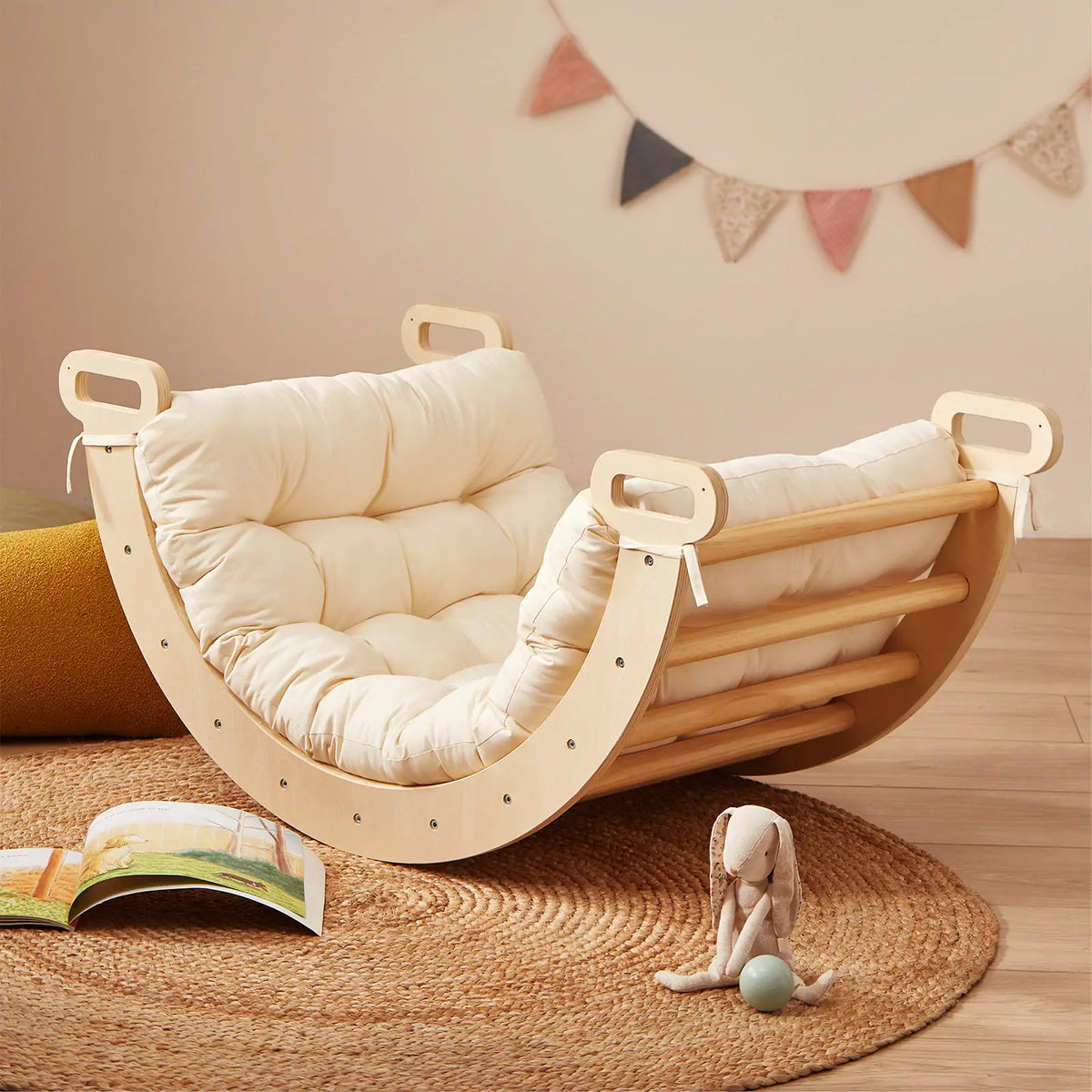
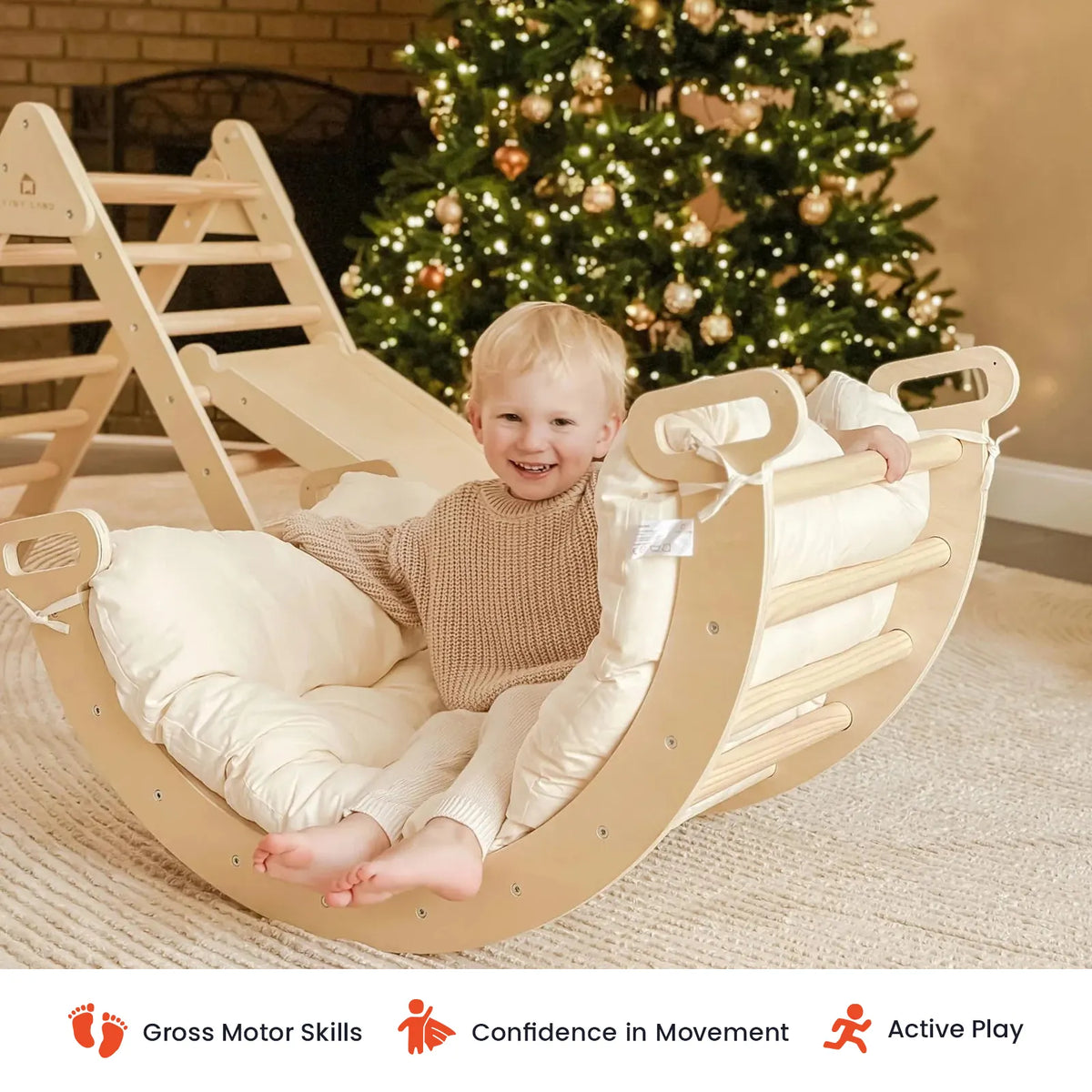
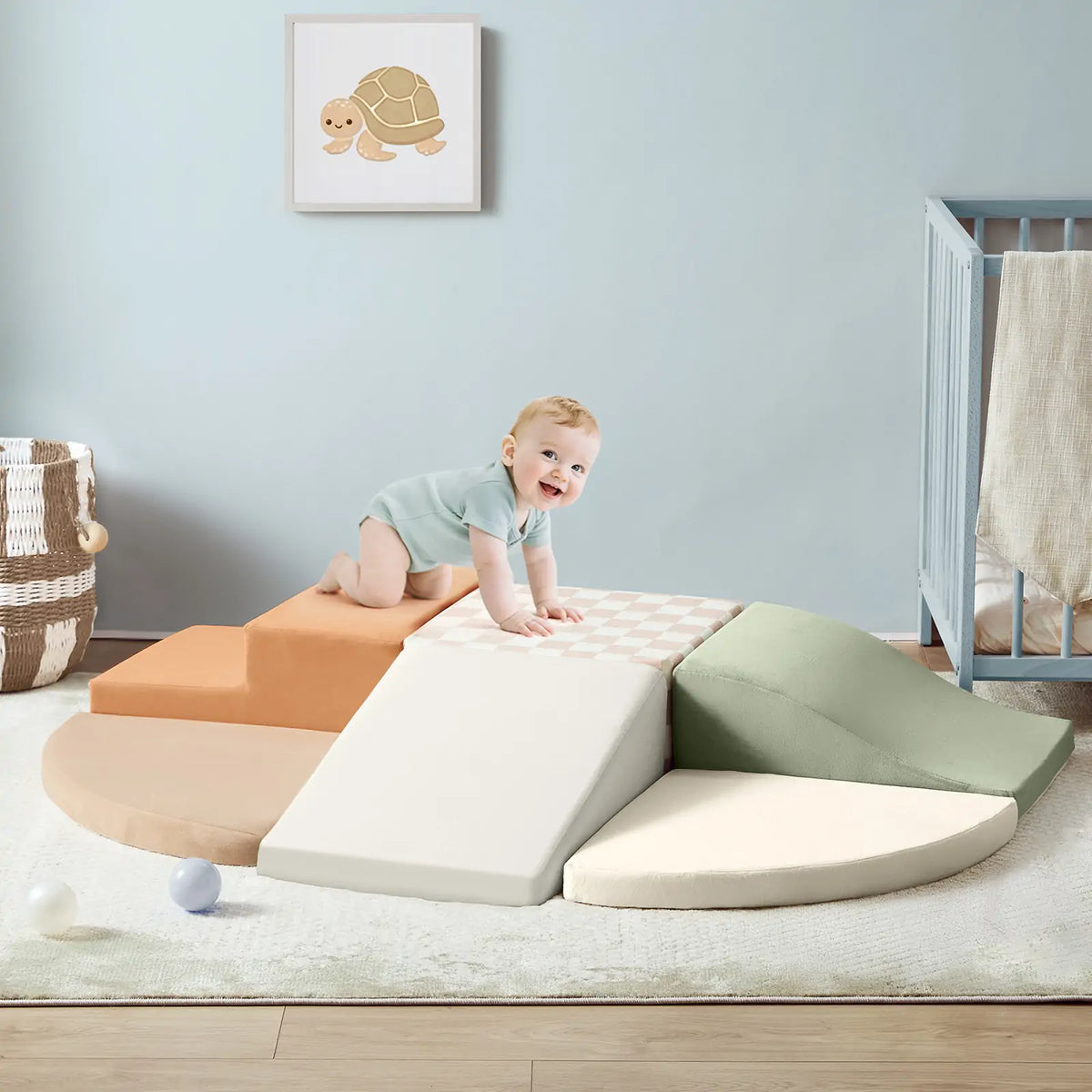


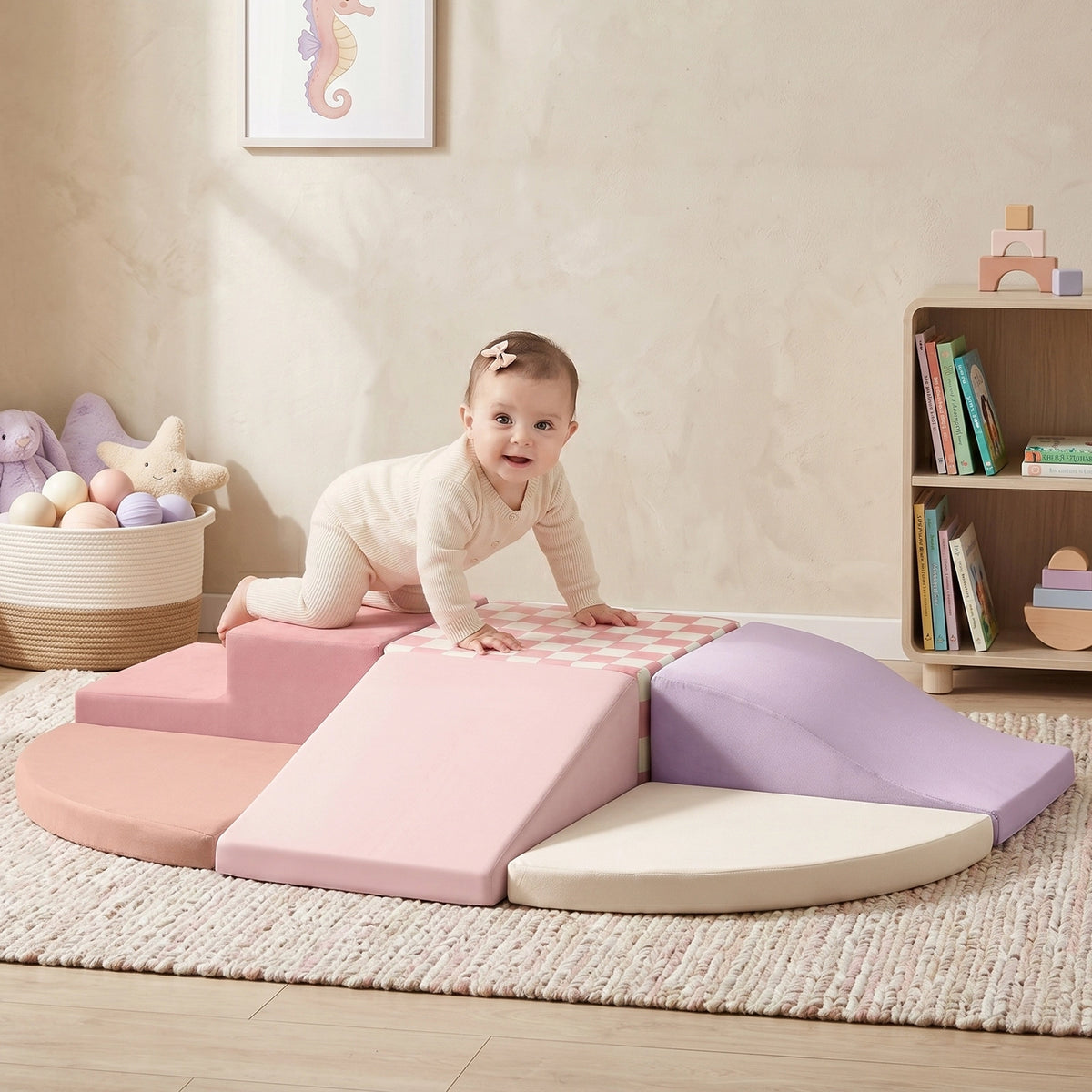
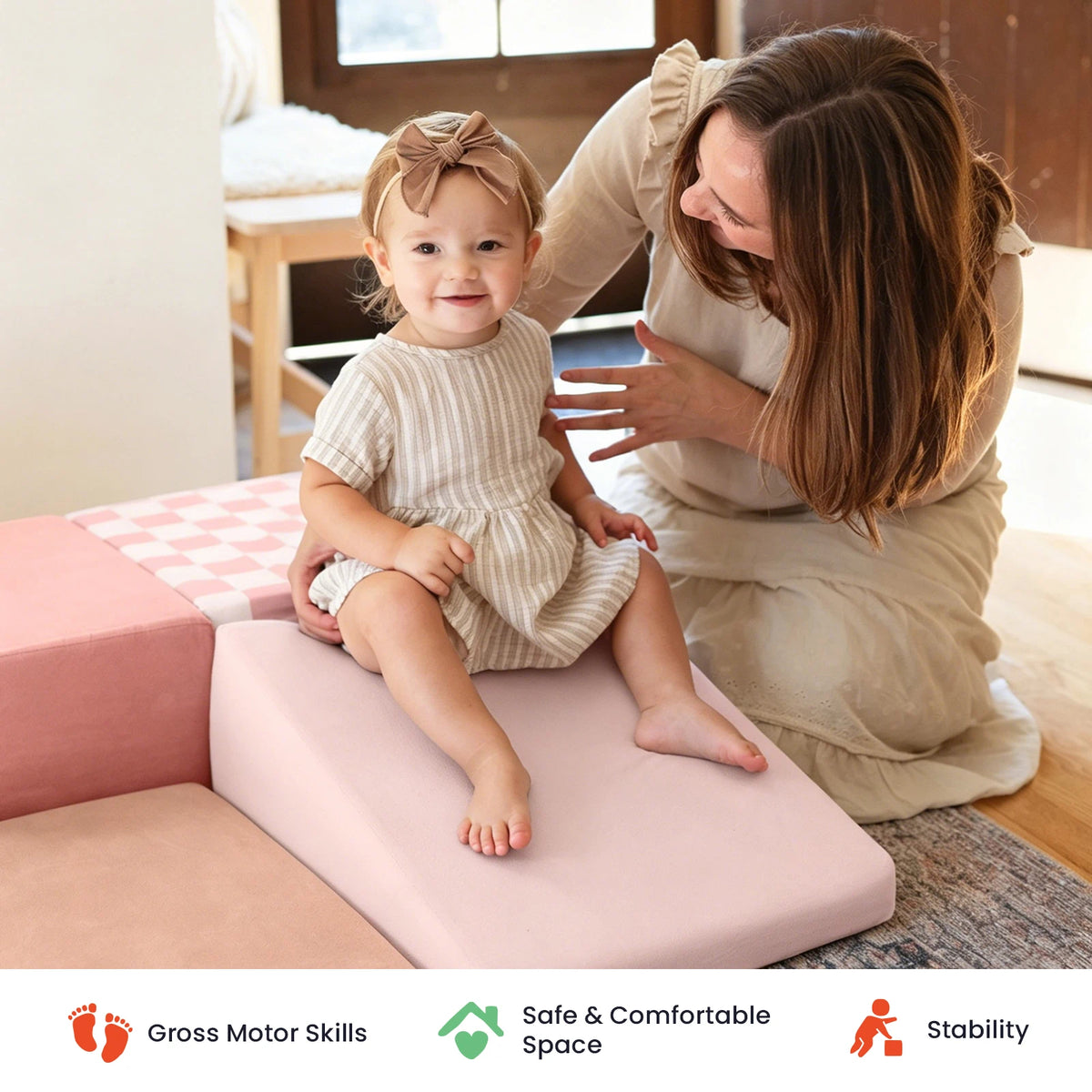


Most children use a Pikler Triangle between 2 to 8 years old, depending on their stage of physical development.
Choosing a Pikler Triangle often comes down to one key question:
Is my child the right age for it—and how long will they actually use it?
The answer is more flexible than most parents expect. A Pikler Triangle is not designed for a single age stage, but for progressive motor development from early toddlerhood into early school age.

Pikler Triangle Development Guide (Montessori-Inspired Overview)
This table is a general guide inspired by Montessori and Pikler principles. Every child develops at their own pace, and movement exploration may look different for each individual.
| Age Range (Approx.) | Typical Development Focus | How Children May Engage | What They May Develop |
|---|---|---|---|
| Around 2–3 years | Early movement exploration | May begin exploring climbing with support, low-height interaction, repeated movement play | Balance, body awareness, early coordination, confidence |
| Around 3–5 years | Growing independence in movement | Often begins independent climbing, sliding, and repeated physical exploration | Gross motor strength, coordination, spatial awareness |
| Around 5–7 years | Expanding challenge and creativity | May engage in obstacle-style play, combining movements, experimenting with structure | Problem-solving, agility, creativity, movement planning |
| Around 7–8 years | Advanced movement exploration | May create more complex play patterns, obstacle courses, and imaginative physical games | Endurance, full-body coordination, creative thinking |
In Montessori and Pikler-inspired approaches, movement development is not viewed as a fixed age-based system, but as a continuous process shaped by each child’s environment, confidence, and curiosity.
Children are encouraged to explore movement freely, at their own pace, with appropriate supervision and a safe environment.

What age is best for a child to use a pikler triangle
Most children begin engaging with a Pikler Triangle around 2 years old, when climbing behavior becomes intentional rather than accidental.
At this stage, children naturally:
-
Start climbing onto furniture
-
Explore height and movement
- Repeat physical actions to gain mastery
A Pikler Triangle provides a safe, structured environment for this instinct, allowing children to build confidence through movement instead of restriction.

Is a Pikler Triangle Worth It for Toddlers?
For toddlers between 2 and 4 years old, a Pikler Triangle is often one of the most valuable movement tools.
This is a stage where children:
-
Need frequent physical activity
-
Prefer independent, self-directed play
- Learn through repetition and exploration
Instead of structured instructions or screens, a Pikler Triangle encourages open-ended movement where children learn at their own pace.
This is why many parents find it becomes one of the most frequently used items at home during early childhood.

Is There an Age Limit?
There is no strict upper age limit.
While the peak usage period is early childhood, many children continue using it up to around 8 years old, especially when combined with additional accessories such as ramps, slides, or climbing boards.
As children grow, the way they interact with it naturally changes:
-
From basic climbing → to structured challenges
-
From repetition → to creative obstacle design
- From physical exploration → to imaginative movement games
Rather than outgrowing it, children simply upgrade how they play.

Why It Grows With Your Child
The value of a Pikler Triangle lies in its adaptability and how it can support a child’s evolving movement exploration over time.
Rather than being tied to a fixed stage, it offers opportunities for open-ended physical play that may look different as children grow.
Around 2–3 years: early balance exploration, confidence building, and supported climbing experiences
Around 3–5 years: increasing strength, coordination, and more independent movement play
Around 5–7 years: more complex movement patterns, problem-solving, and creative play structures
Around 7–8 years: advanced movement exploration, imaginative setups, and obstacle-style play
This flexibility reflects a core principle in Montessori and Pikler-inspired approaches: children engage with movement in different ways depending on their individual development, environment, and curiosity.
Rather than being a short-term toy, it can remain a meaningful part of a child’s physical development journey for several years.

How to Know If Your Child Is Ready
Age is only one factor. Readiness often matters more.
Your child is likely ready if they:
-
Show interest in climbing or stepping onto furniture
-
Enjoy repetitive physical movement
-
Are developing balance and coordination
- Prefer active play over passive toys
If these behaviors are present, a Pikler Triangle can be introduced safely with supervision.
Final Takeaway
A Pikler Triangle is designed to grow with your child.
Most families find it useful from around 2 years old through early school age (up to about 8 years old), adapting naturally as strength, coordination, and imagination develop.

Not Sure Which Setup to Choose?
Different sizes and configurations support different stages of development.
Explore our Pikler Triangle collection by stage and find the best fit for your home.