


Which Play Kitchen Accessories Are Essential?
When introducing a play kitchen to young children, starting with a thoughtful baseline of core items allows kids to dive into imaginative play without becoming overwhelmed by clutter.
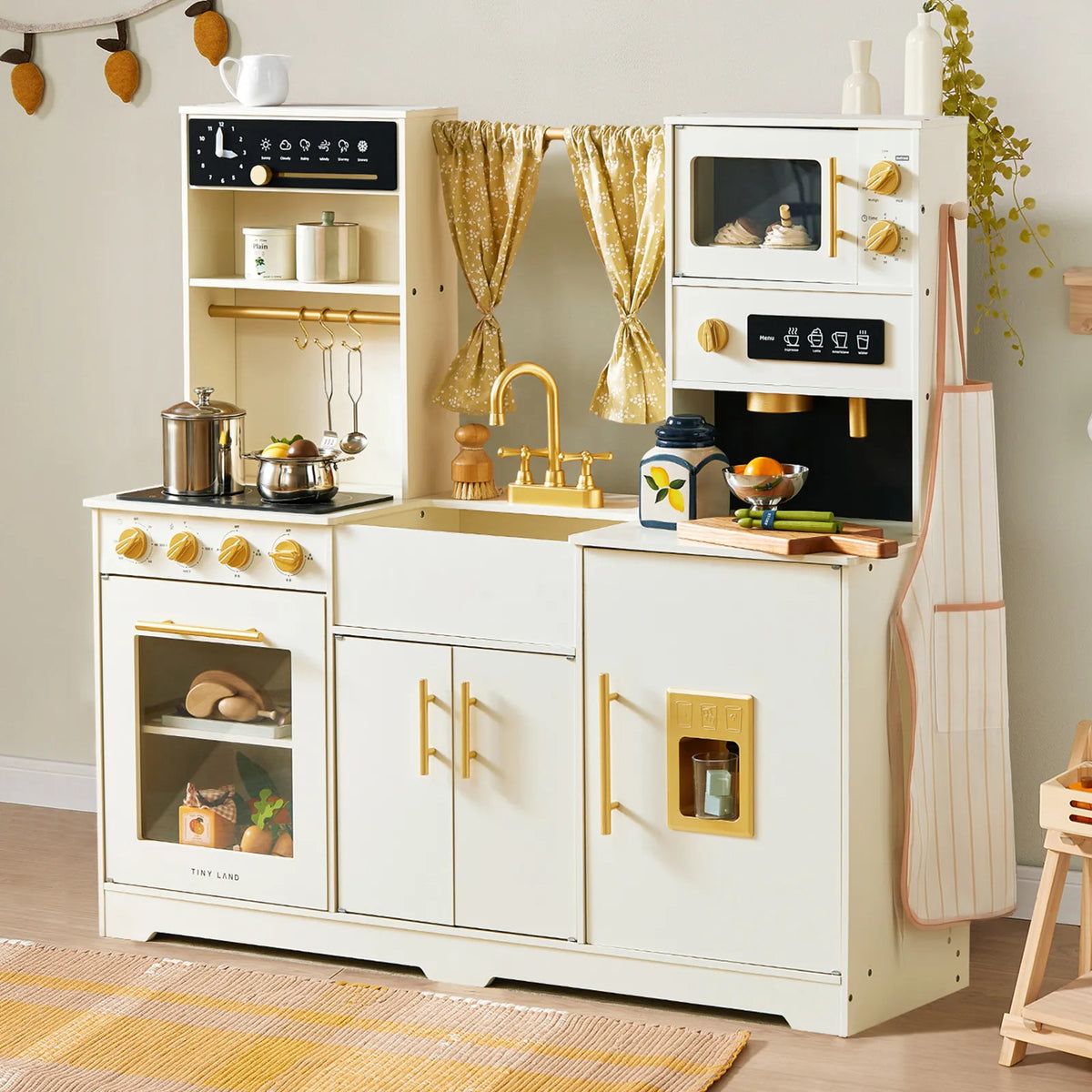
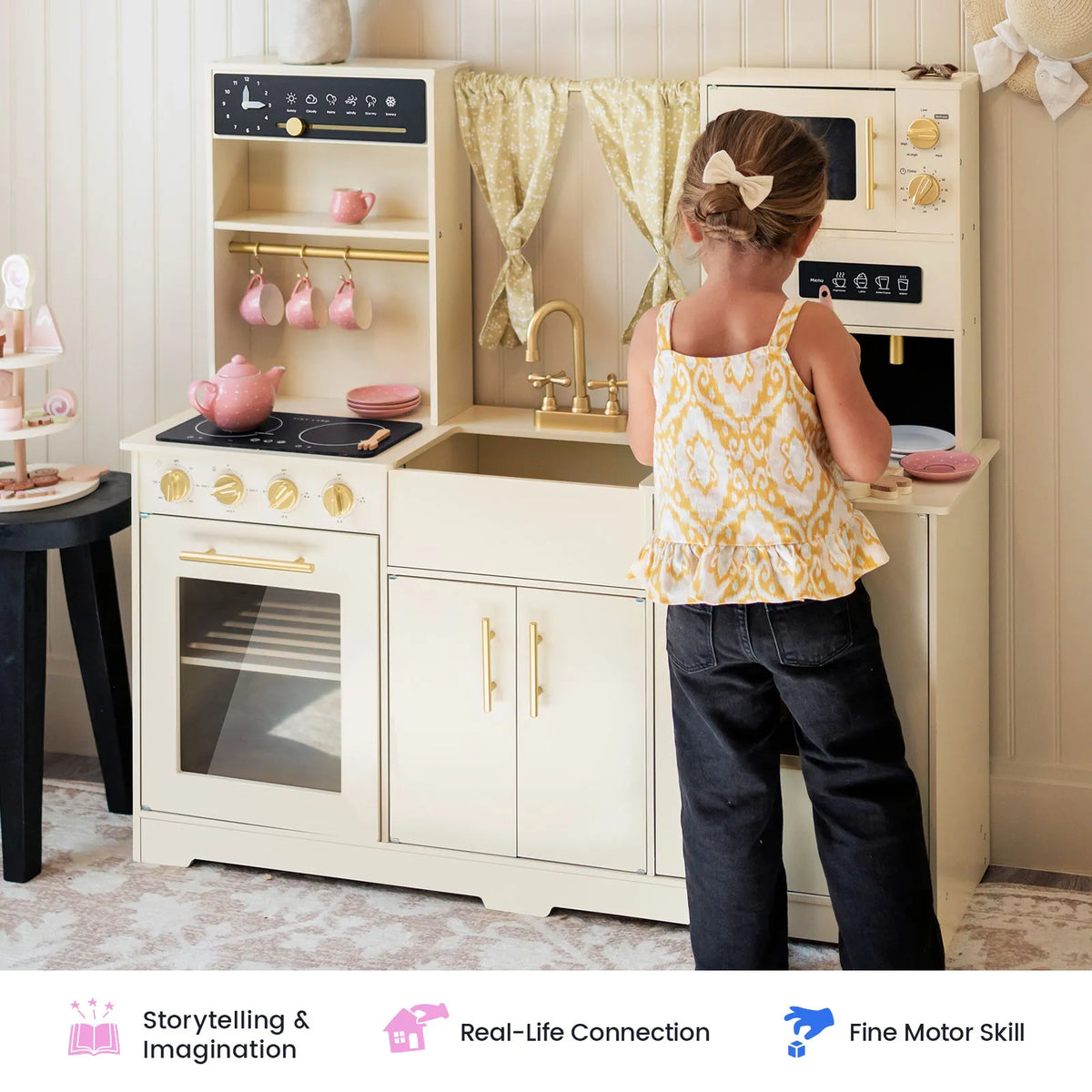
Choosing essential play kitchen accessories helps create a playful kitchen environment and focus early pretend routines around familiar everyday actions like cooking, serving, and sharing meals.

Play Food Sets
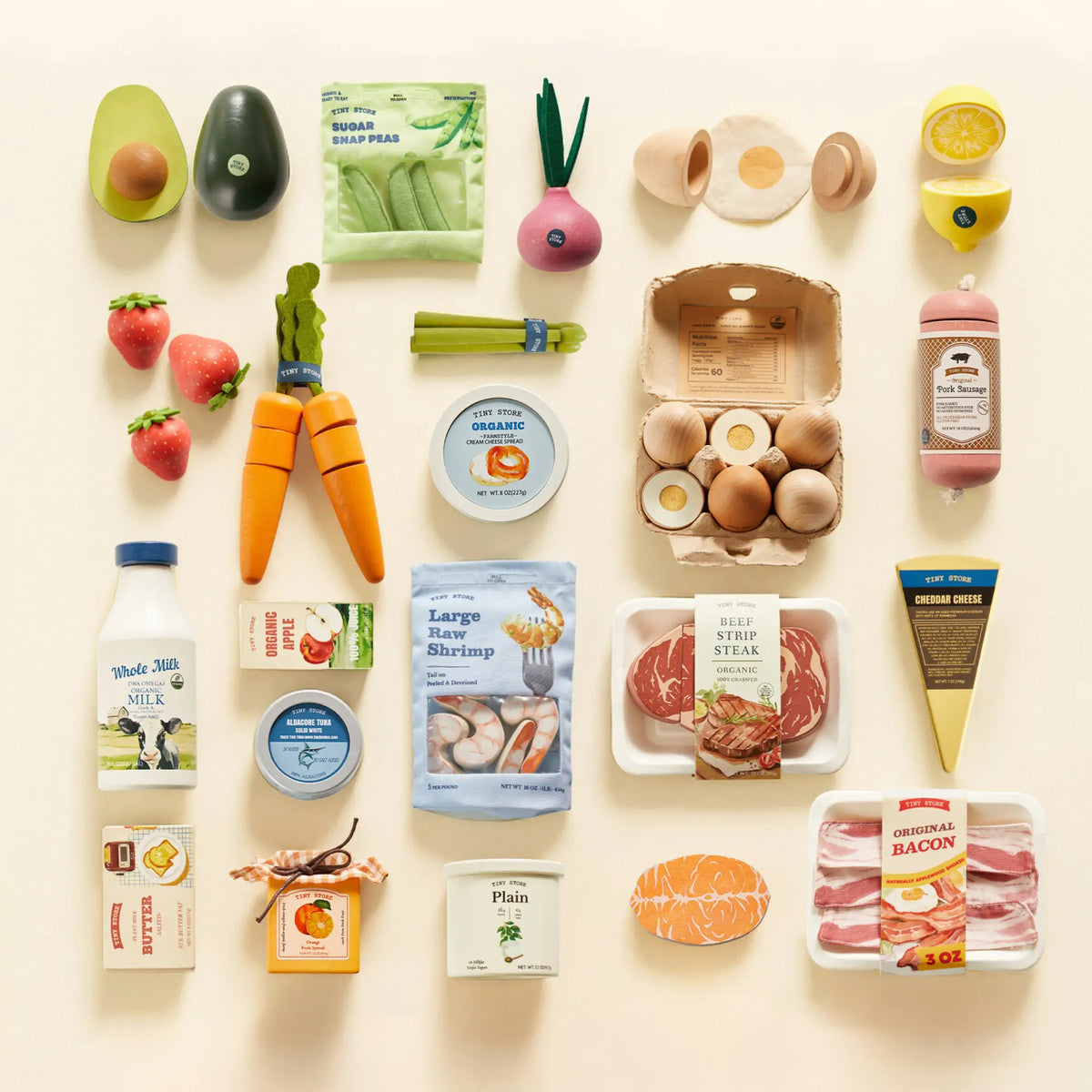
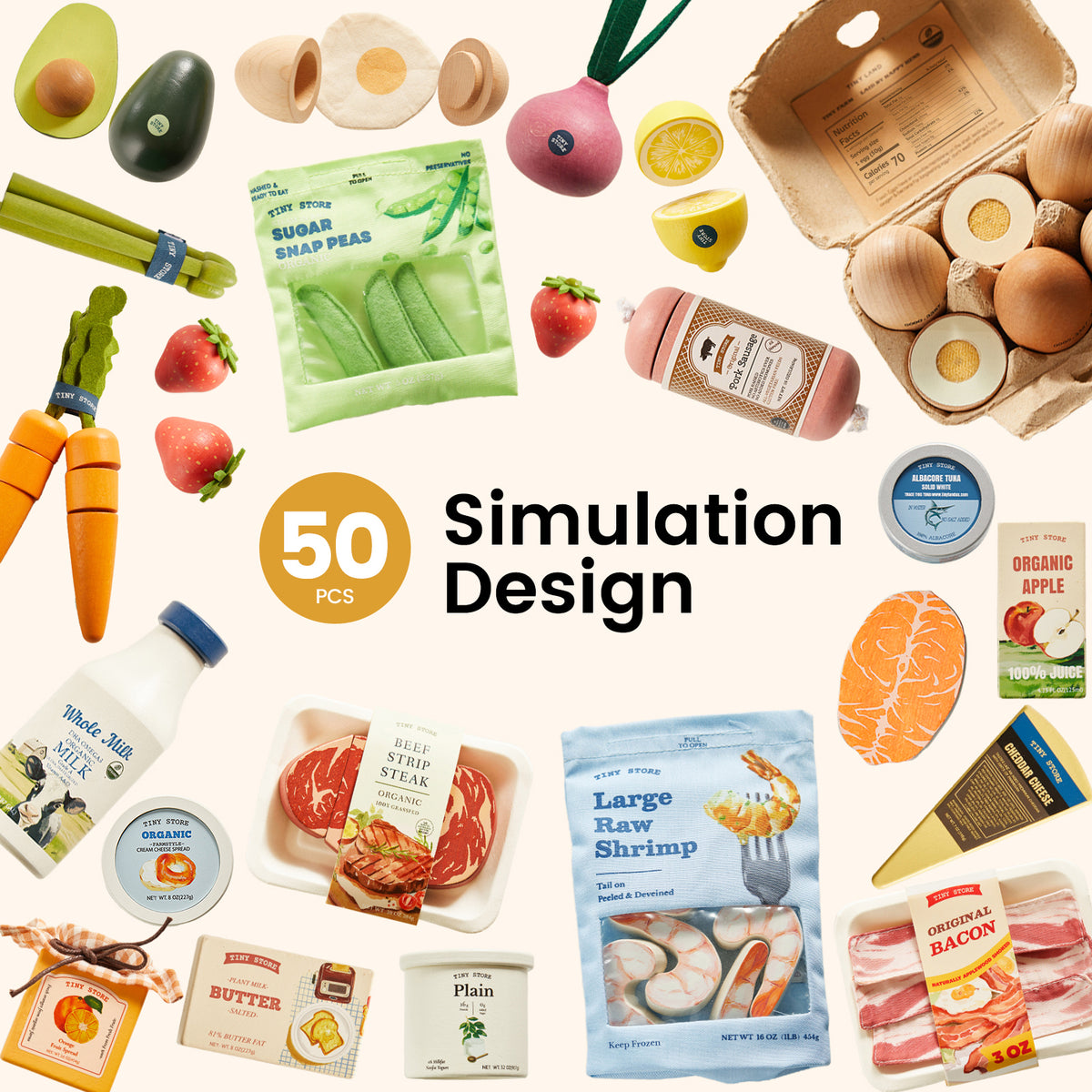
Play food and food sets form the heart of pretend kitchen activities.
For toddlers, starter sets that feature identifiable items—such as fruits, vegetables, bread, and proteins—encourage vocabulary development and early classification skills, and these kitchen toys can support creativity during everyday pretend meals throughout the day.
High-quality wooden play food with sliceable velcro sections adds a satisfying tactile element, teaching fine motor coordination and basic concepts of parts versus whole.

Pots, Pans, and Cooking Tools
A simple cookware set allows toddlers to mimic the motions they observe adults perform in the home kitchen.
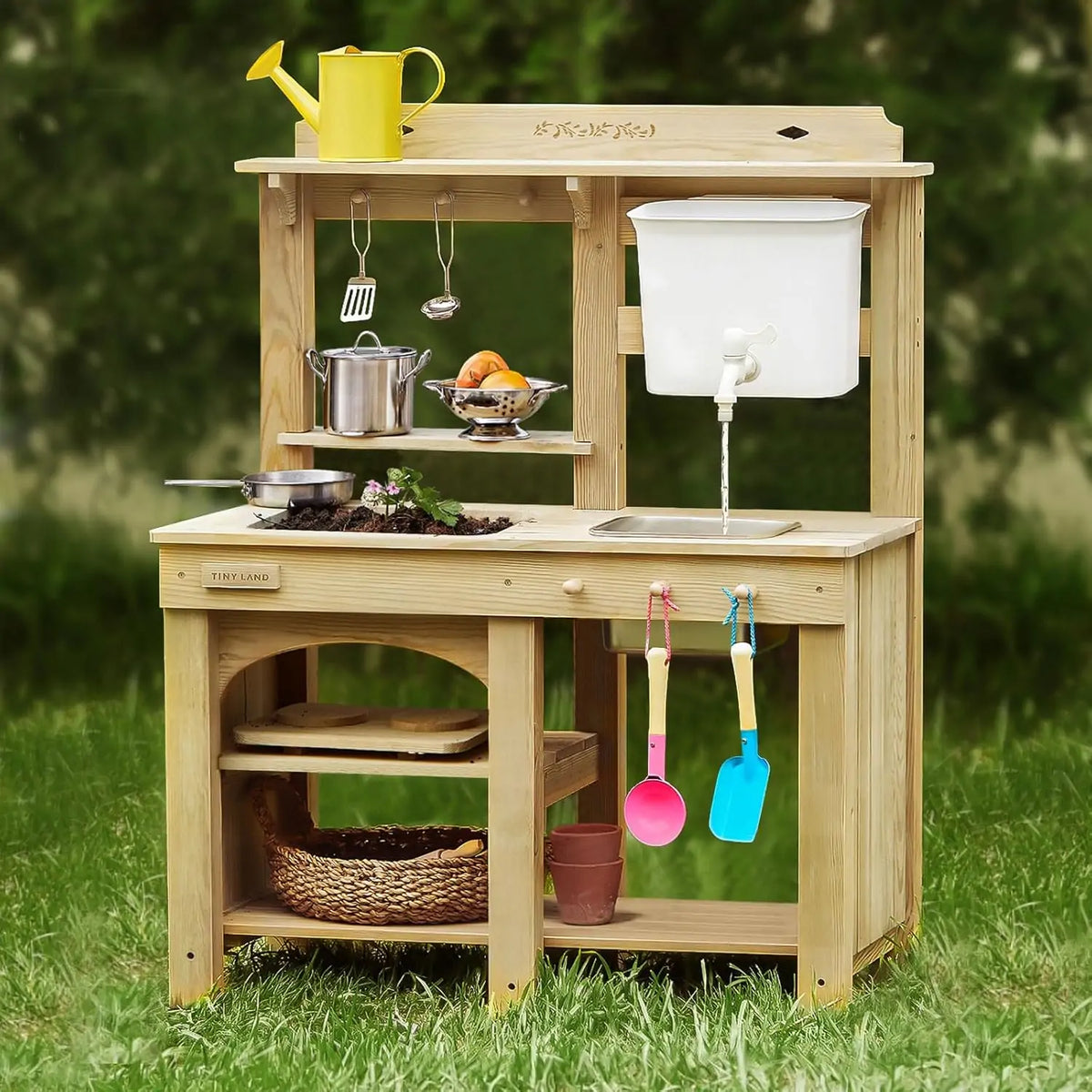
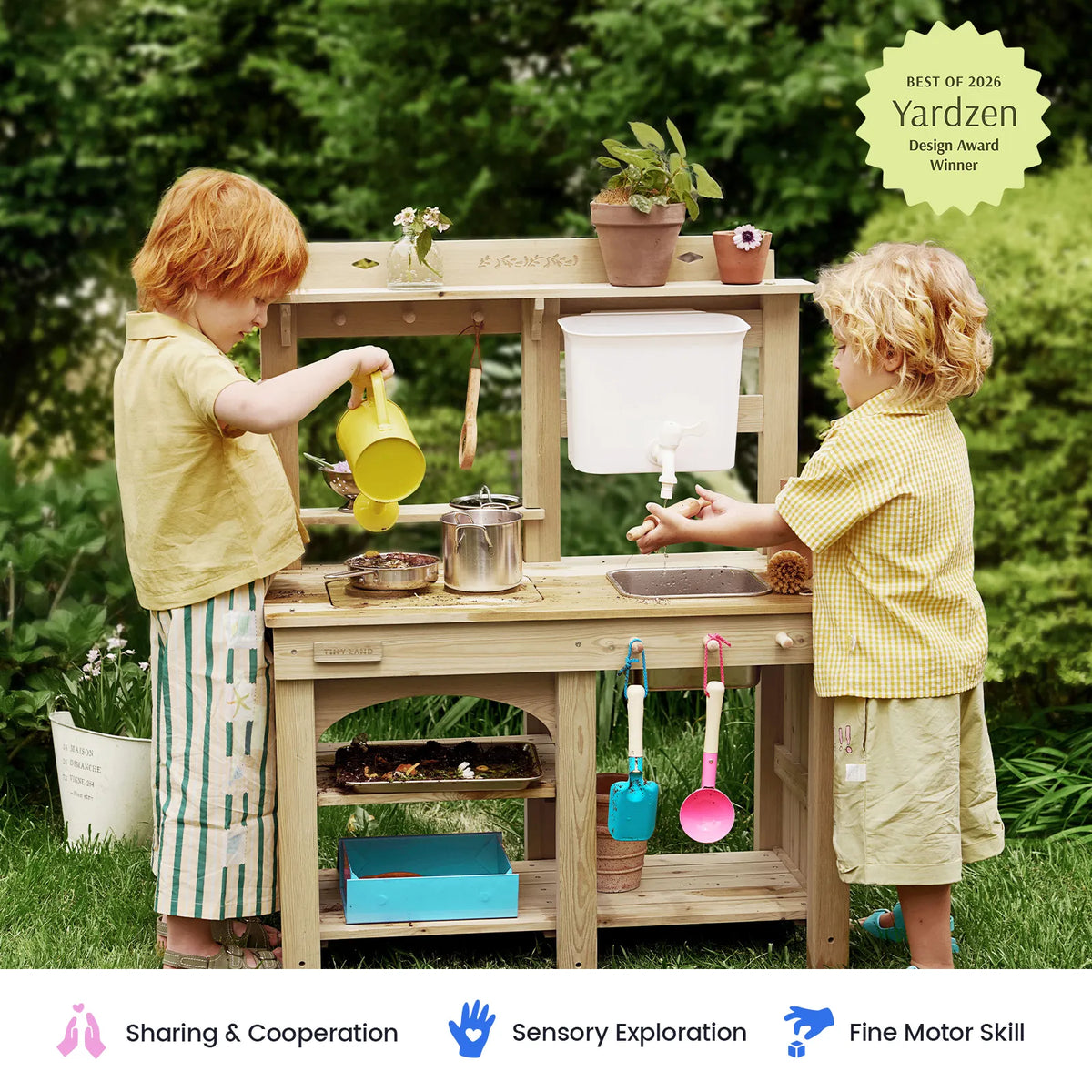
Key pieces include a small stockpot with a lid, a frying pan, a sturdy spatula, a stirring spoon, and toy salt and pepper shakers. Scaled appropriately for small hands, these essential wooden play kitchen accessories foster physical dexterity and realistic cooking role-play.
Plates, Bowls, Cups, and Utensils
Tableware encourages social play and hospitality routines.
A foundational set usually includes two to four plates, matching bowls, small cups, and child-friendly forks and spoons, often well suited to toddler ages 2 to 4.
Having matching sets allows toddlers to practice turn-taking, set the table, and serve pretend meals to family members, playmates, or stuffed animals.

Which Accessories Can You Add Later?
Once a toddler has mastered basic cooking and serving play, added accessory categories can be introduced gradually to keep play fresh and fun over time, reflect growing interests, and enrich learning opportunities.
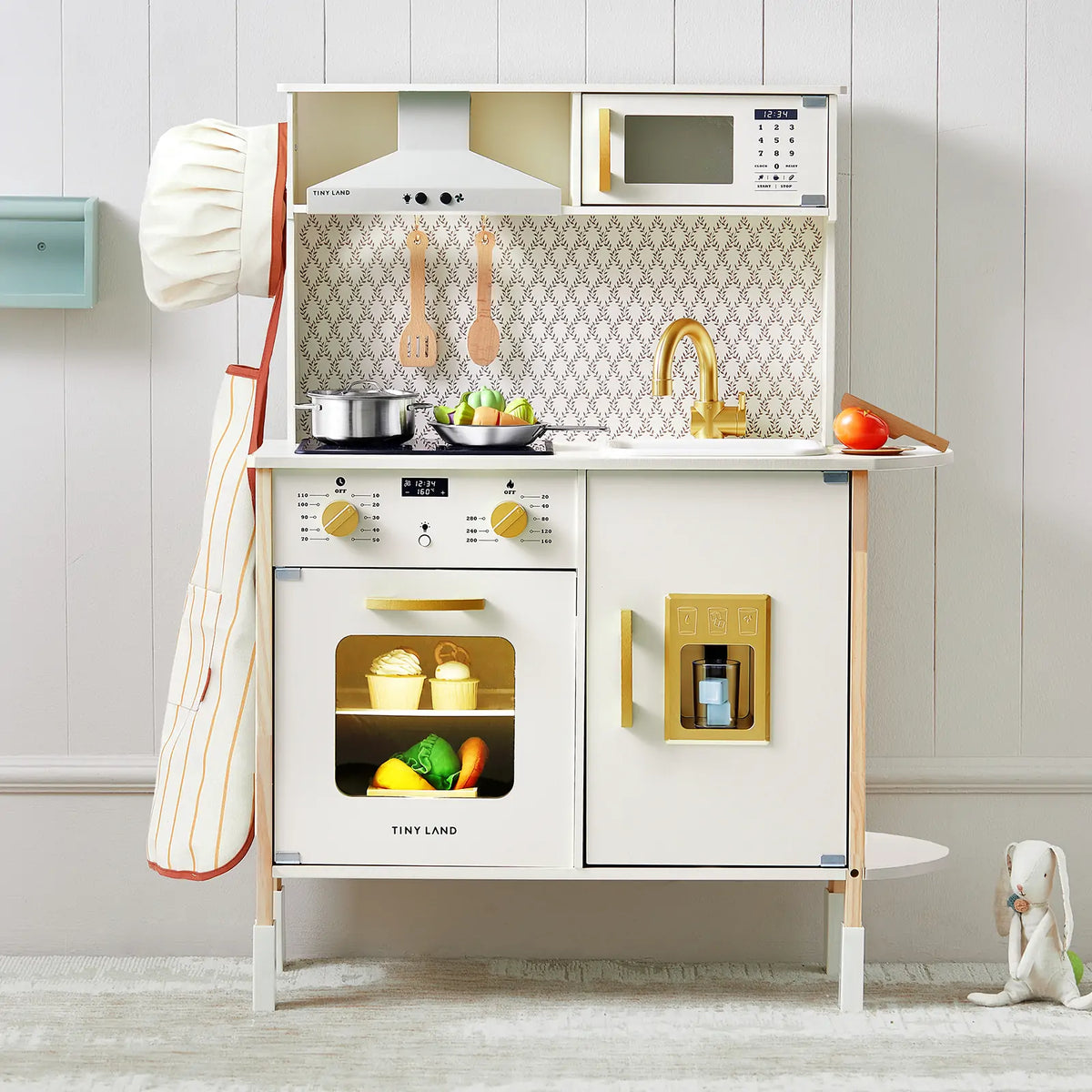
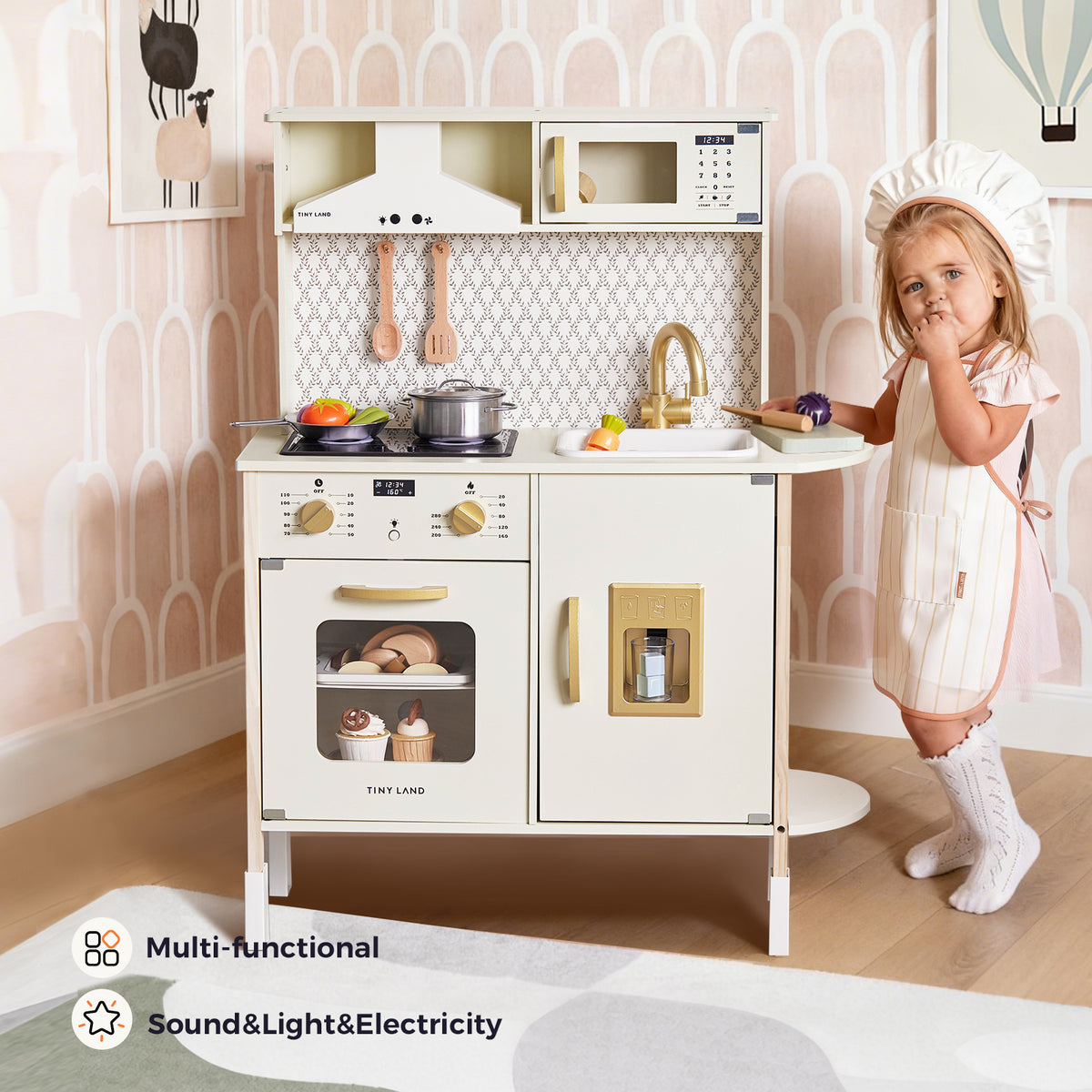
Aprons, Chef Hats, and Menus
Role-play apparel and restaurant props help children step deeply into character.
Wearing an apron or chef hat fosters identity exploration and immersive play.
Simple dry-erase or printed menus introduce early literacy and symbolic play as children pretend to take orders and run their own home kitchen or café.
Shopping Baskets and Pretend Money
Adding a shopping basket, market bag, or play cash register bridges kitchen play with market play routines.
Children can practice selecting ingredients, placing pretend groceries in a cart, counting items, checking prices, and exploring early mathematical concepts like transaction and exchange during pretend grocery trips.
Extra Furniture and Display Pieces
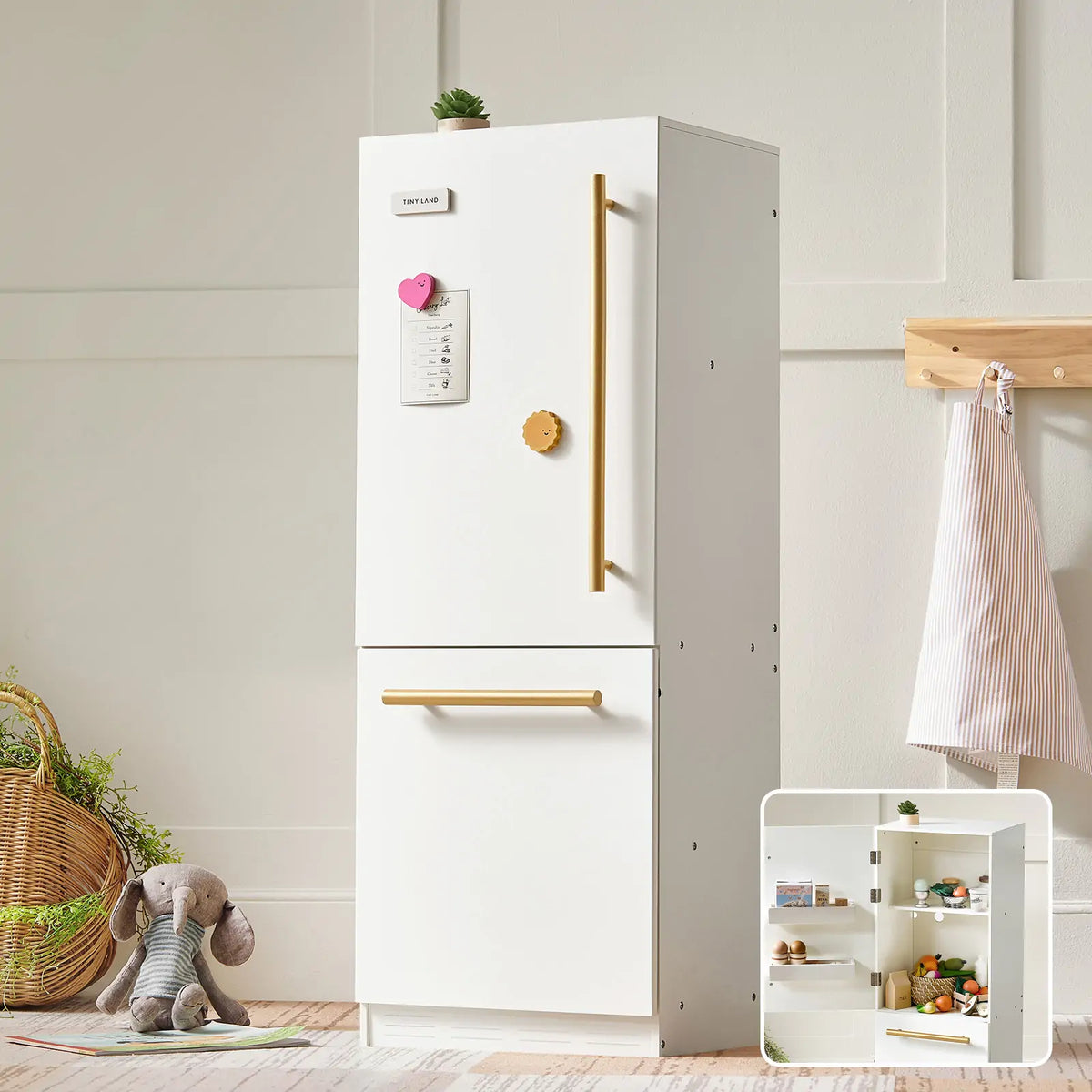
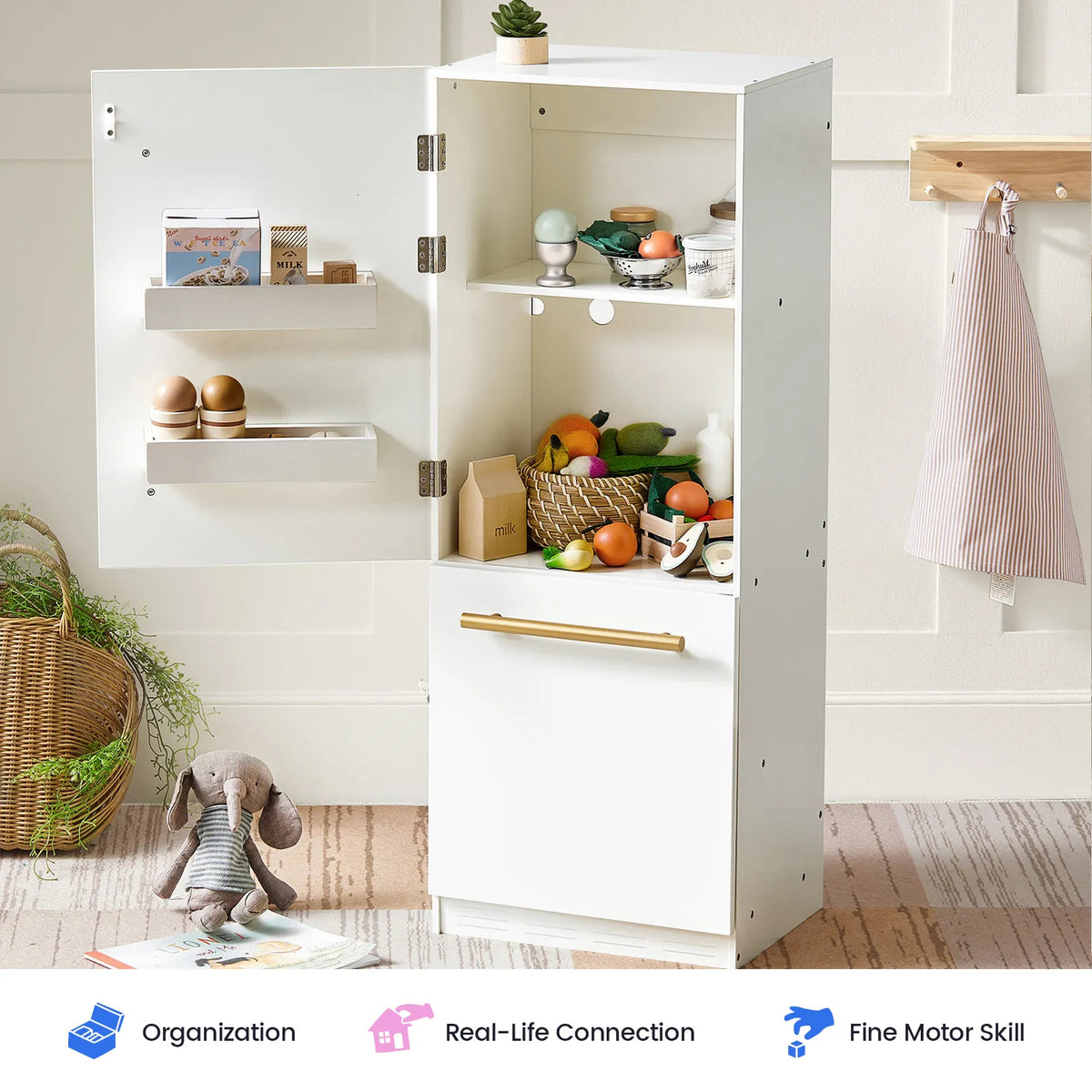
Supplementary pieces—such as standalone play refrigerators, market stands, or dedicated dish racks—can be added as space and budget allow.
These larger elements extend the physical boundaries of play and, when multiple children join in, can provide hours of extended pretend play with designated zones for expanded group activities.

How to Choose Accessories for Toddlers
Selecting accessories for toddlers requires balancing play functionality with safety and physical development.
Easy-to-Handle Pieces
Toddlers are still developing fine motor control. Choose accessories with comfortable handles, smooth edges, and realistic proportions.
Pots, pans, and utensils should be lightweight enough for easy lifting and balancing, preventing frustration during play.
Age Guidance and Small Parts
Always review current official age guidance and product specifications before introducing items.
Accessories designed for toddlers aged 3 and under should be free of small parts that present potential choking hazards.
Verify that pretend food items with removable or magnetic elements meet safety standards for young age groups.
Durable and Easy-to-Clean Materials
Play kitchen items undergo daily handling, dropping, and occasional chewing. Select materials engineered for longevity.
Smooth, non-toxic finishes on wood and food-grade, BPA-free plastics withstand active play and can be easily wiped clean with a damp cloth and mild soap, and some families also weigh sustainability when choosing between wood and plastic materials.

Play Kitchen Accessories by Pretend Play Scenario
Different accessory combinations unlock specific developmental play scenarios. For step-by-step game ideas and guided routines, check out our full guide on play kitchen activities.
Pretend Cooking
Focuses on preparation, mixing, and heating. Essential accessories include pots, pans, spatulas, cutting boards, play knives, and raw ingredients like sliceable vegetables.
Family Meal and Serving
Centers on hospitality, social interaction, and mealtime etiquette. Requires plates, bowls, cups, cutlery, and prepared pretend dishes like pizza or sandwiches.
Grocery Store and Market Play
Connects sourcing food with cooking. Incorporates shopping baskets, play money, crates of fresh produce, and price tags or chalkboards.
Restaurant or Cafe Play
Encourages cooperative play and language practice. Key items include chef aprons, order pads, menus, coffee makers, tray servers, and baked goods.

How to Organize Play Kitchen Accessories
A well-organized play kitchen reduces visual overwhelm and supports independent cleanup routines for young children.
Group Similar Items Together
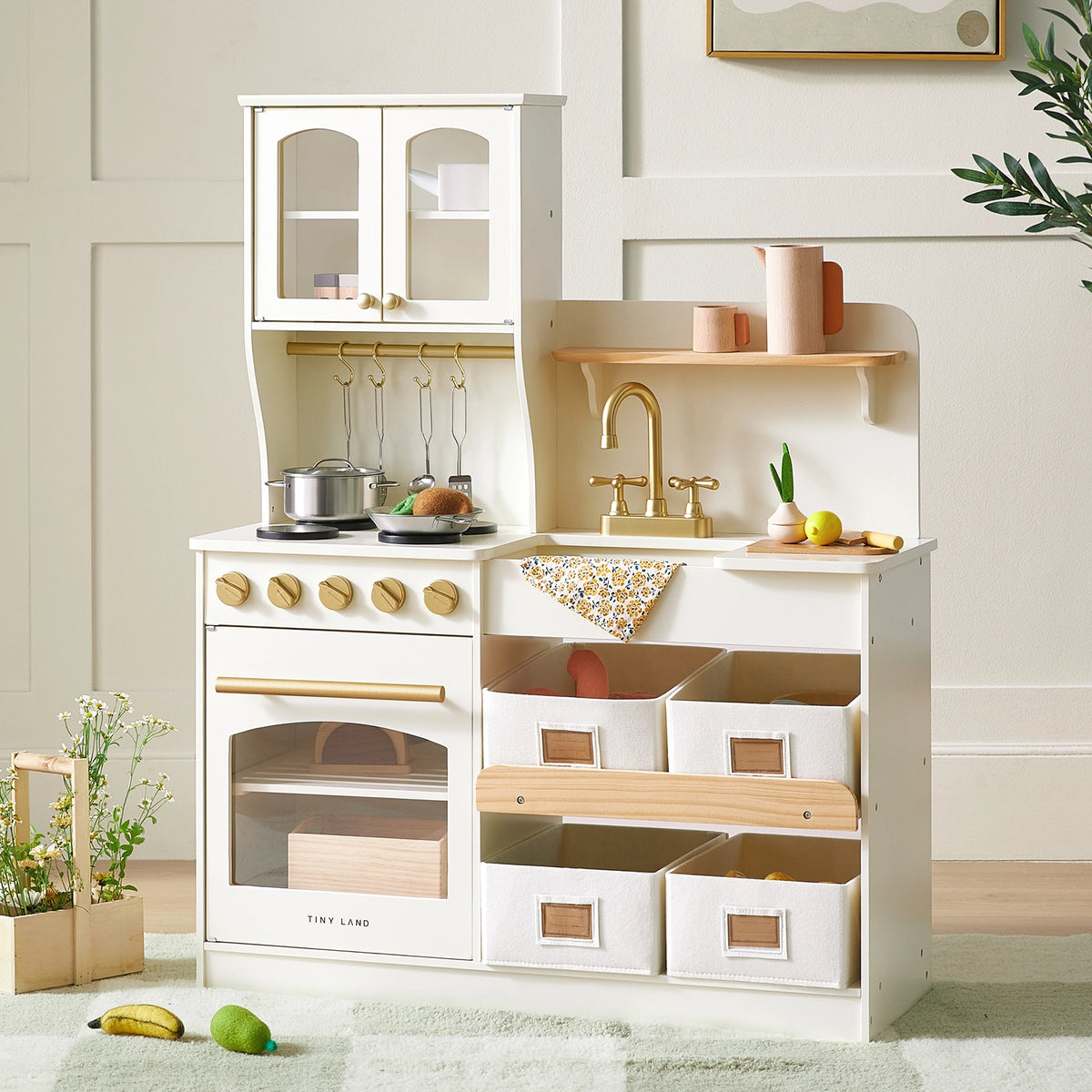
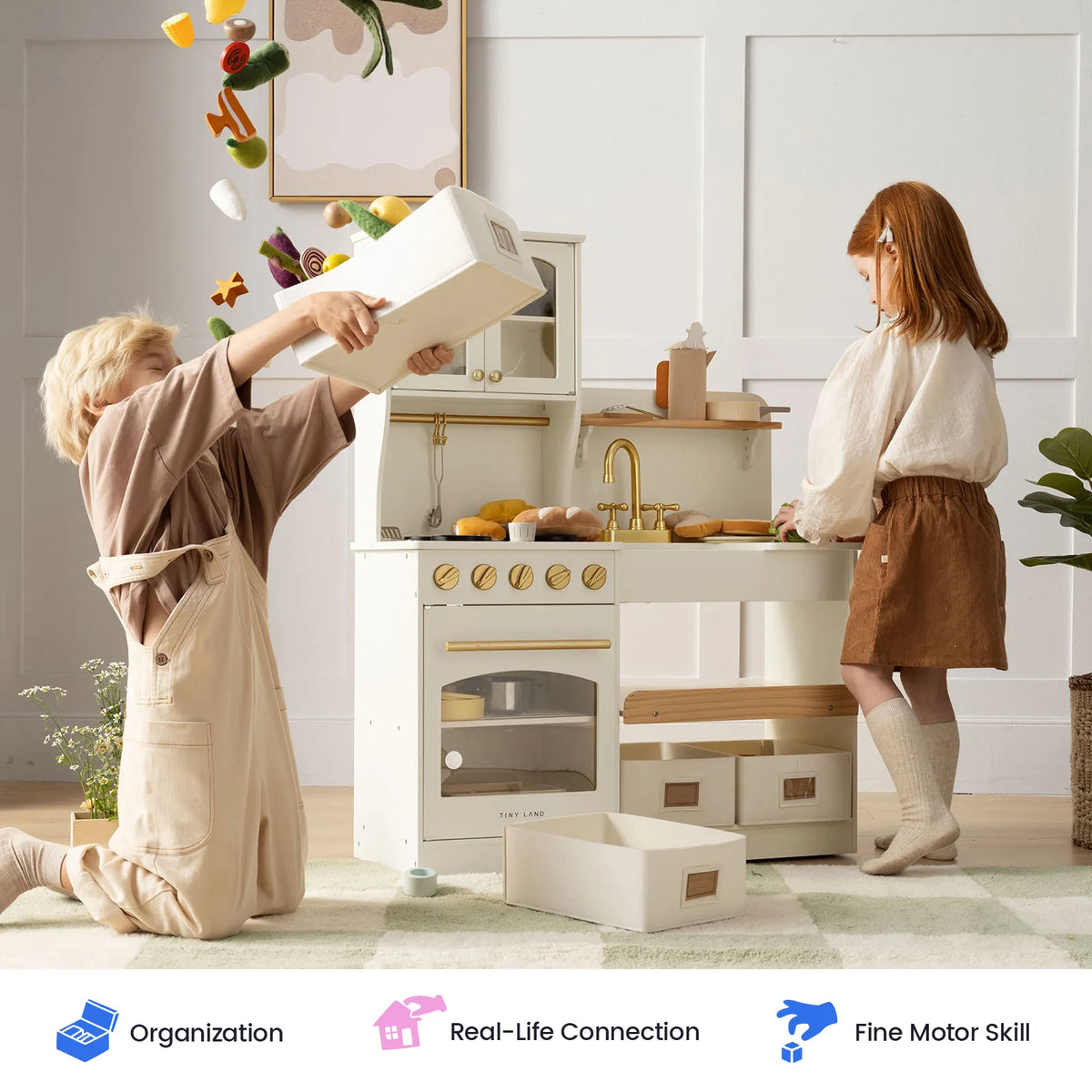
Categorize items into intuitive groups—such as cookware, tableware, fruits/vegetables, and dry pantry items. Store them in open, shallow bins or fabric baskets so toddlers can quickly identify where items belong.
Keep Frequently Used Items Accessible
Position core essentials like pots, pans, and main utensils on low shelves or hanging hooks within direct reach of the toddler. Less frequently used items can be stored slightly higher or brought out for specific play sessions.
Rotate Accessories to Reduce Clutter
Rather than keeping every accessory out simultaneously, implement a simple rotation of kitchen toys. Keeping a curated selection visible maintains high engagement, prolongs interest in individual items, and makes post-play tidying quick and manageable.

Wooden vs. Plastic Play Kitchen Accessories
Both wooden and plastic accessories offer distinct advantages depending on family preferences, aesthetic goals, and usage patterns.
|
Feature |
Wooden Accessories |
Plastic Accessories |
|---|---|---|
|
Durability |
Sturdy, long-lasting, resistant to cracking |
Flexible, impact-resistant, lightweight |
|
Weight & Tactile Feel |
Substantial weight, warm natural texture |
Very light, easy for young toddlers to lift |
|
Cleaning & Maintenance |
Wipe with damp cloth; avoid submerging |
Washable in water; easy to sanitize |
|
Design & Aesthetics |
Classic, timeless, neutral decor integration |
Vibrant colors, detailed molded textures |
|
Family Preferences |
Preferred for eco-conscious, sustainability-minded & organic aesthetic |
Preferred for water play & quick cleaning |
A Simple Starter Checklist
Rather than purchasing a rigid, overwhelming bundle, start with this adaptable collection tailored to your child's interest and available space:
-
1 Stockpot with lid & 1 Frying pan
-
1 Wooden spatula & 1 Cooking spoon
-
1 Cutting board & child-safe play knife
-
6–8 Sliceable pretend fruits and vegetables
-
2 Plates, 2 Bowls, and 2 Cups
-
2 Sets of forks and spoons
-
1 Open fabric bin or wooden crate for easy storage

Frequently Asked Questions
What accessories should I buy first for a play kitchen?
Start with a core set of cookware (pot, pan, spatula) and basic play food (fruits, vegetables). A first set can also make one of those practical gifts for children who enjoy pretend cooking. Adding a couple of plates and cups allows toddlers to engage in complete cooking and serving routines without cluttering the play area.
Do toddlers need many play kitchen accessories?
No. Toddlers often engage in deeper, more creative play when offered a small, well-chosen set of versatile items, which often leaves more room for creativity and longer-lasting engagement. Too many accessories can lead to sensory overload and make cleanup difficult for young children.
What play food works with a play kitchen?
Both wooden play food with velcro attachments and realistic fabric or safe plastic food, plus other pretend-play toys used with a kitchen, work exceptionally well for both boys and girls. Choose items that reflect foods your family eats regularly to help children build real-world connections.
How do I store play kitchen accessories in a small space?
Utilize open bins, cloth baskets, or the cabinets inside the play kitchen itself. Categorizing items into small containers and rotating items regularly keeps small spaces organized and functional.
Are wooden accessories better than plastic?
Neither material is universally better; it depends on your family's needs, and delivery timing, such as an estimated Sep arrival, may also matter when choosing between options. Wooden accessories offer classic aesthetic appeal, durability, and a warm tactile feel. Plastic accessories are lightweight, budget-friendly, and ideal for water-based pretend play.
Start with the essentials and build your play kitchen setup that fits your child's interests, your space, and your family's everyday routines.