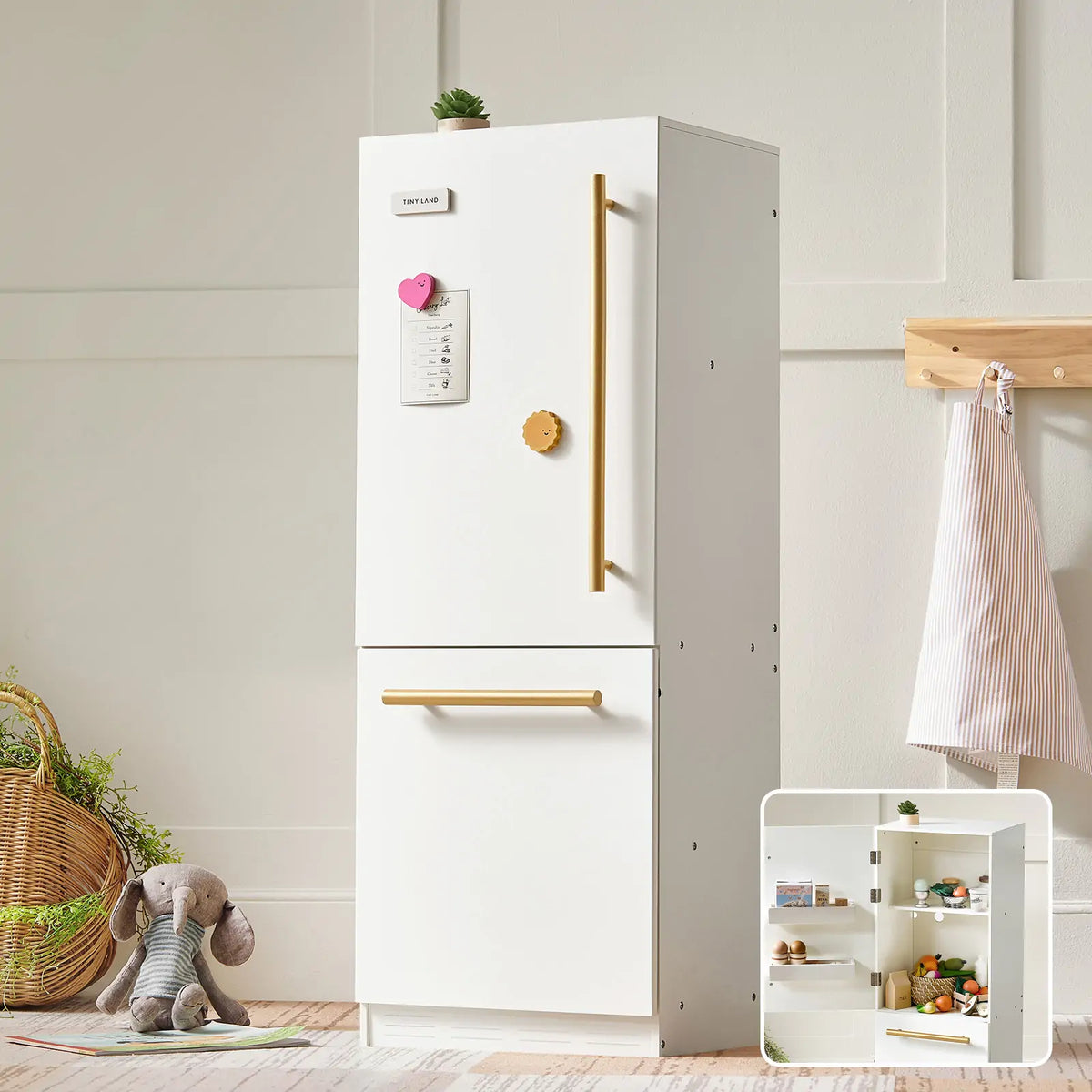
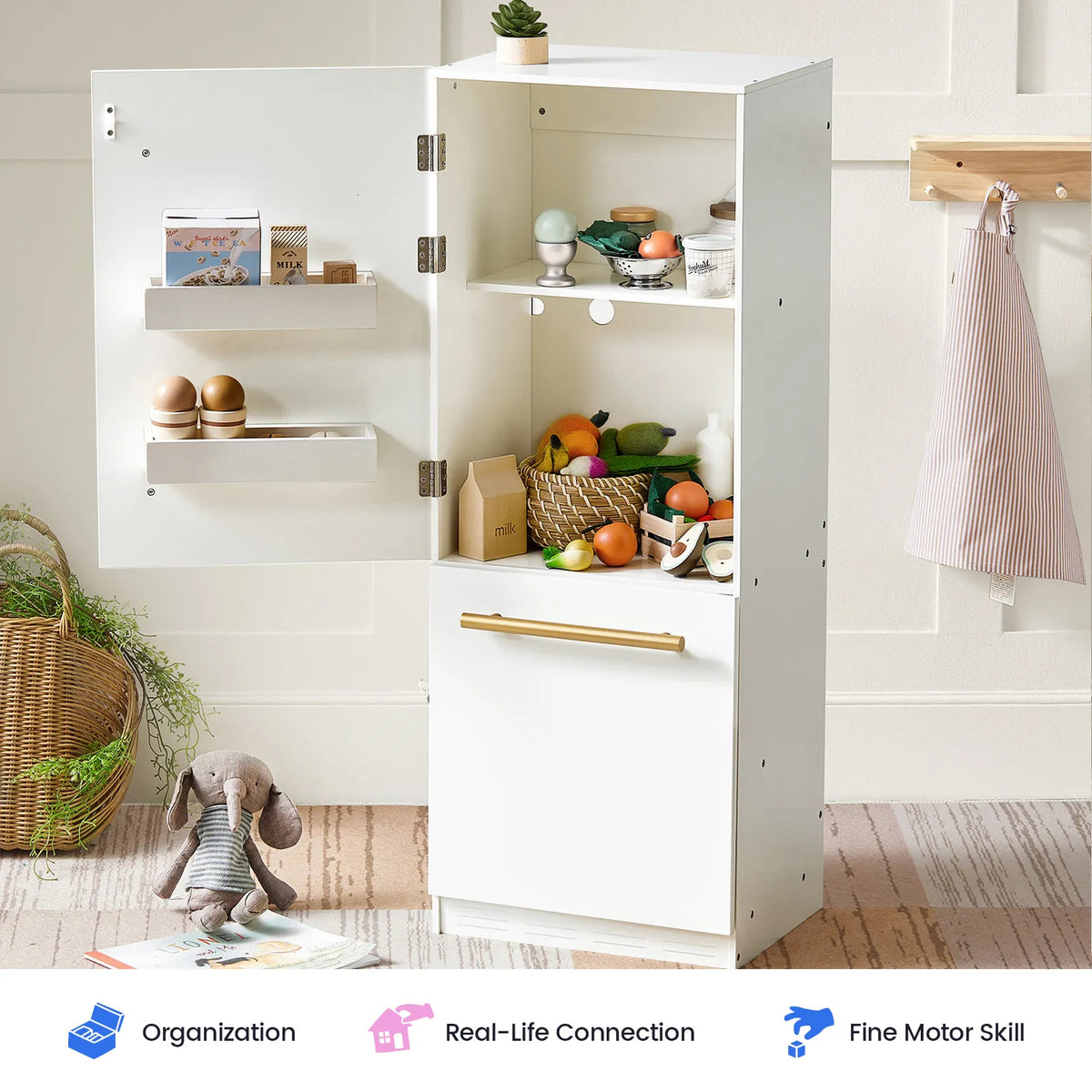
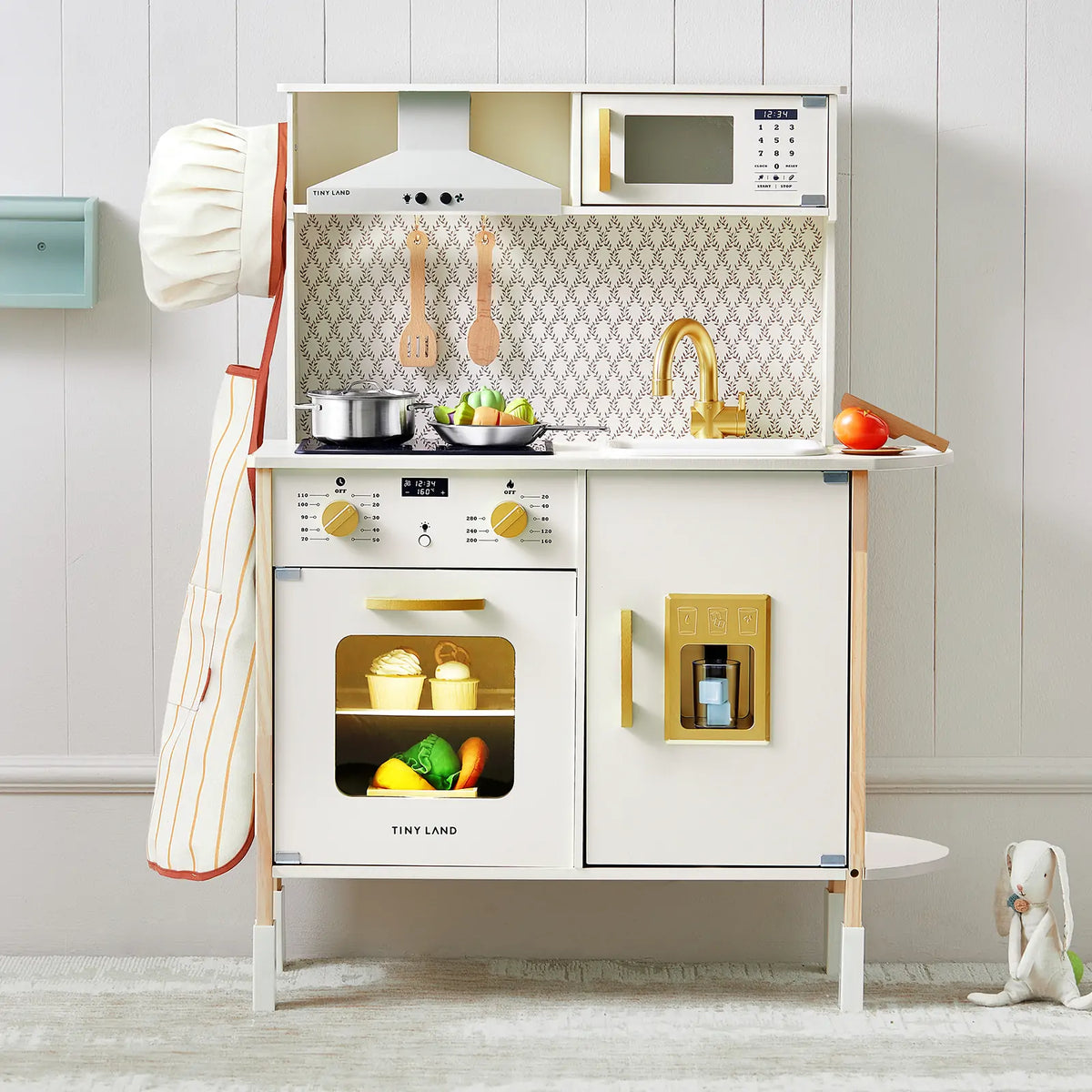
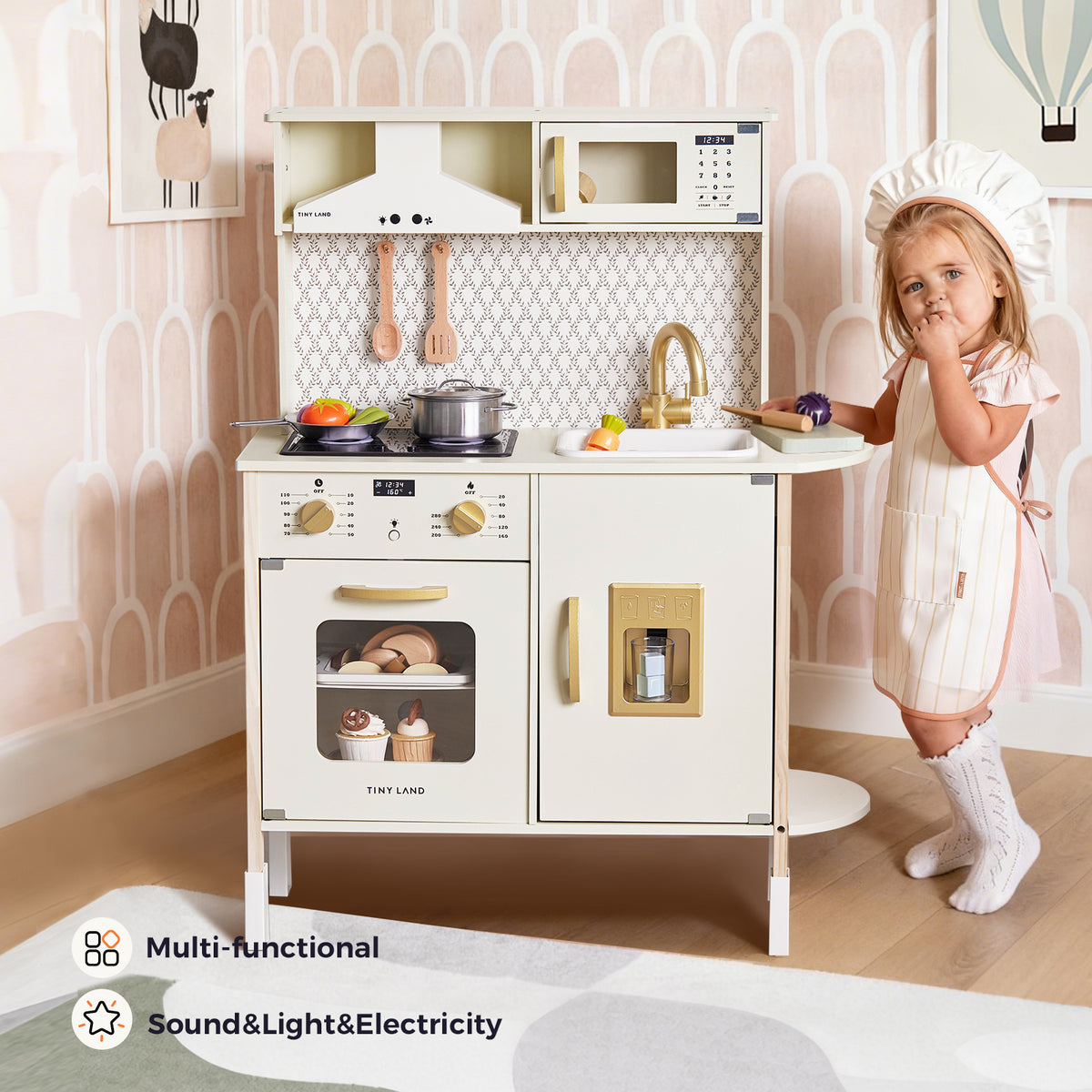


If you're building a pretend-play setup for your child, you may be wondering:
Should you buy a play kitchen first, or start with play food?
The short answer is simple:
Choose a play kitchen first if your child needs a dedicated space for pretend cooking, serving, and everyday role-play.
Choose play food first if you already have a pretend-play setting or want a smaller, more flexible way to start.
Neither is universally better. The right first purchase depends on how your child already plays, what pretend-play toys you own, how much space you have, and what you want to add later.
Think of it this way:
A play kitchen creates the setting. Play food creates the props.
And once you understand that difference, the decision becomes much easier.

Play Kitchen vs. Play Food: What's the Difference?
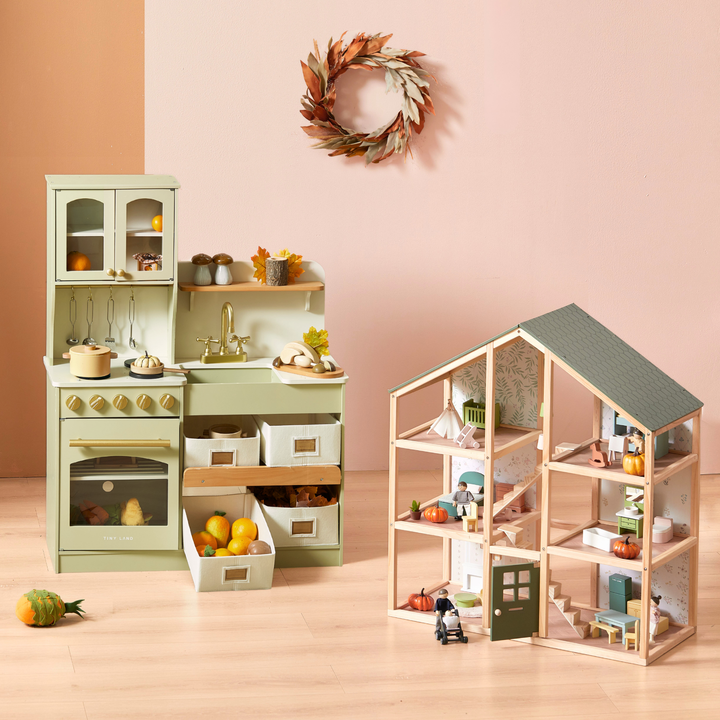
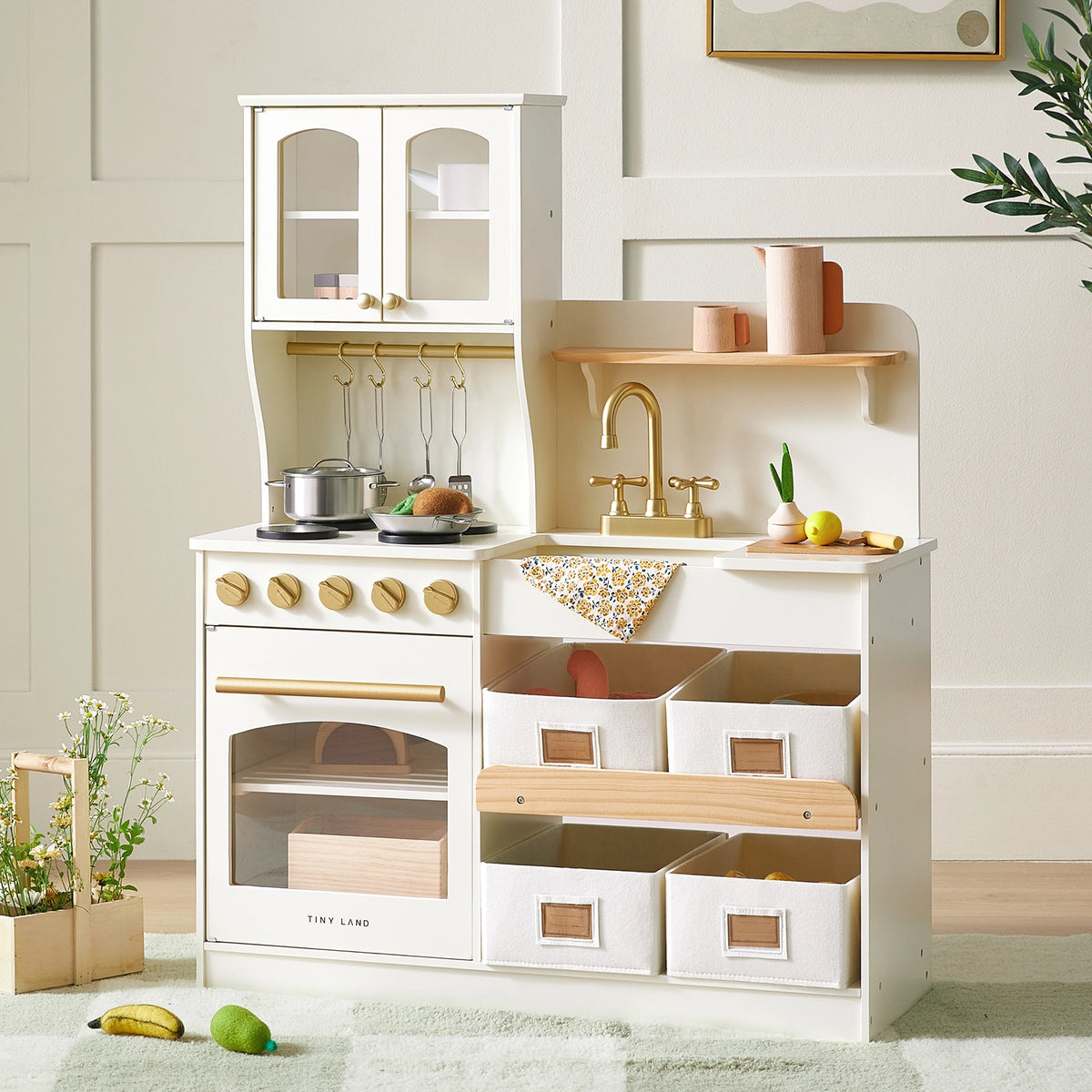
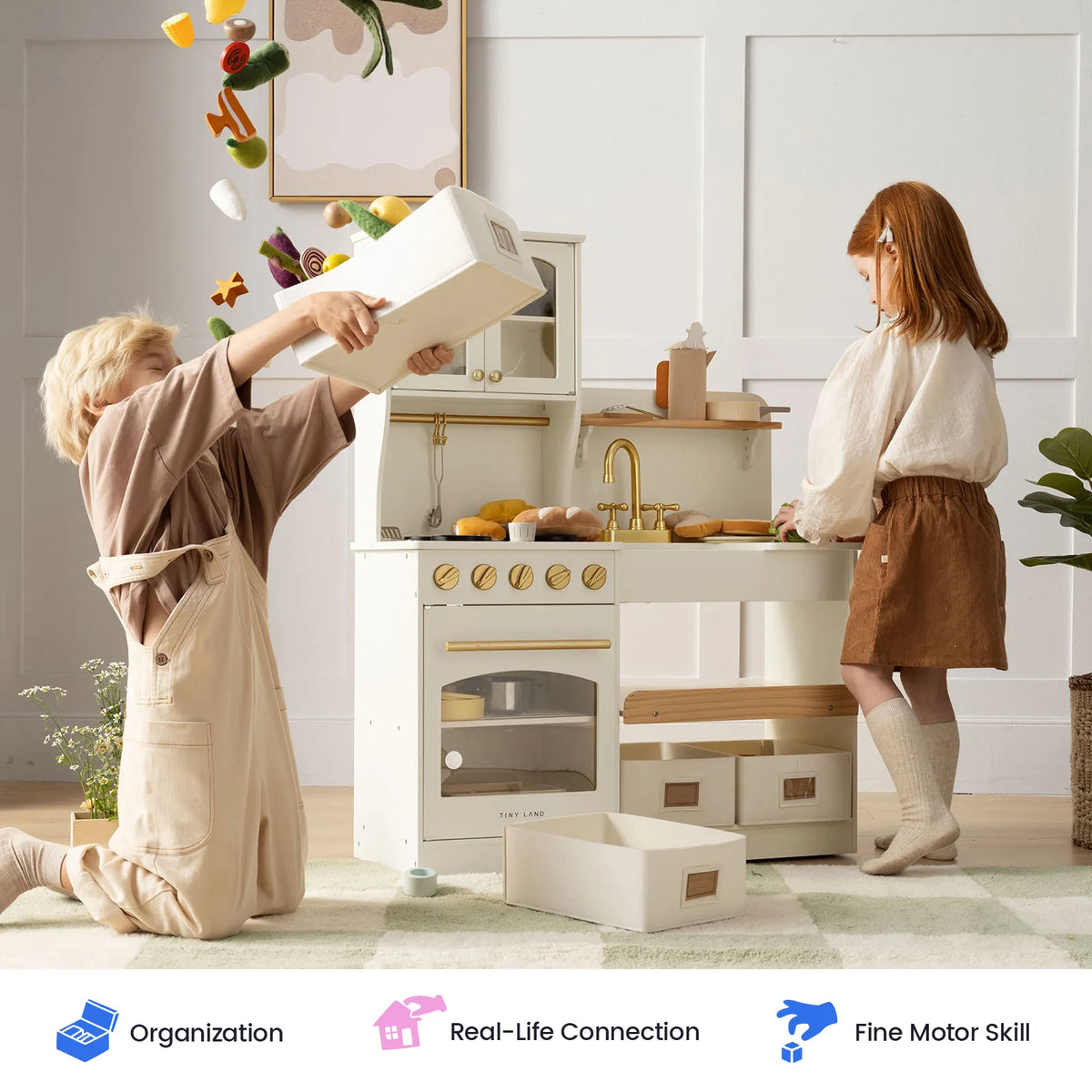
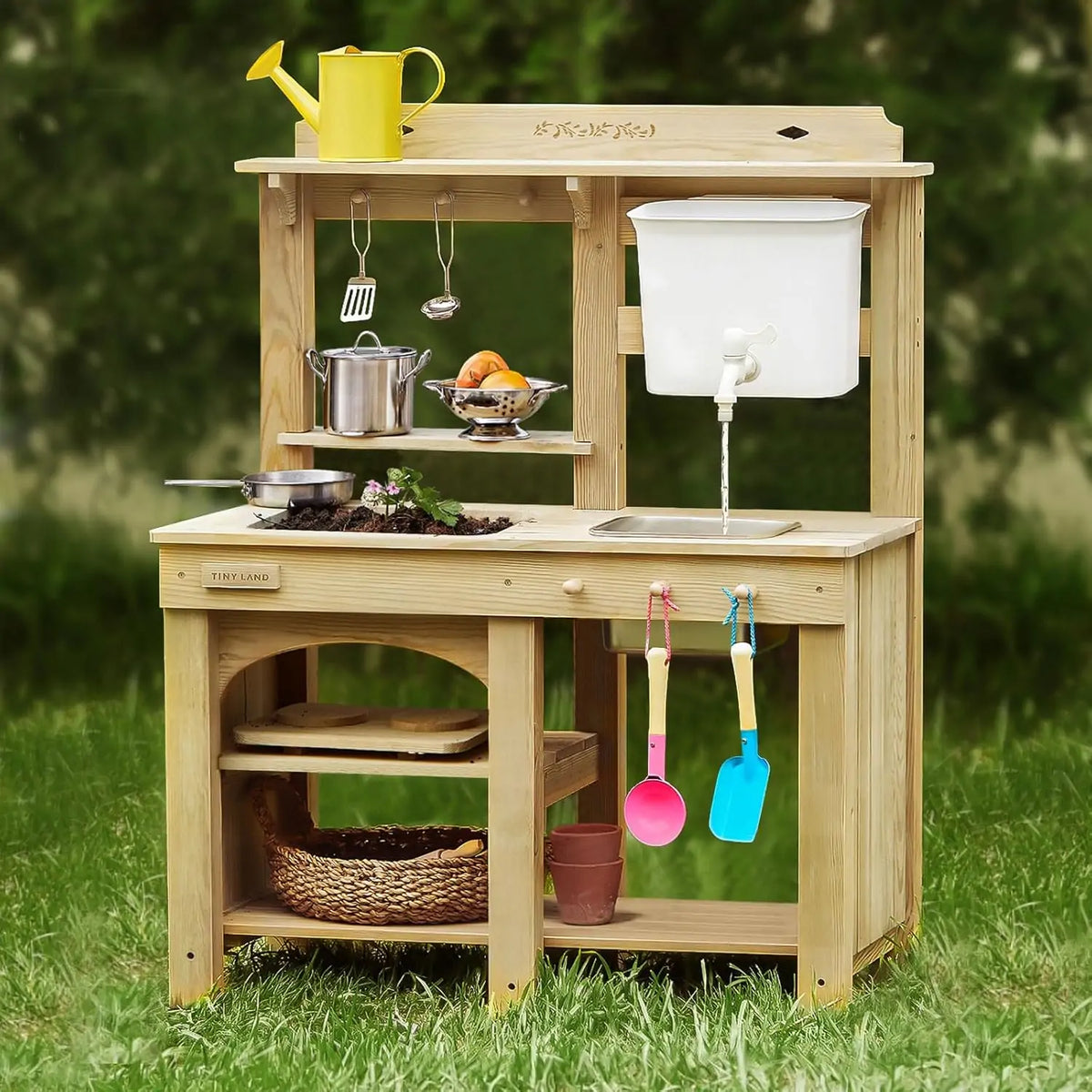
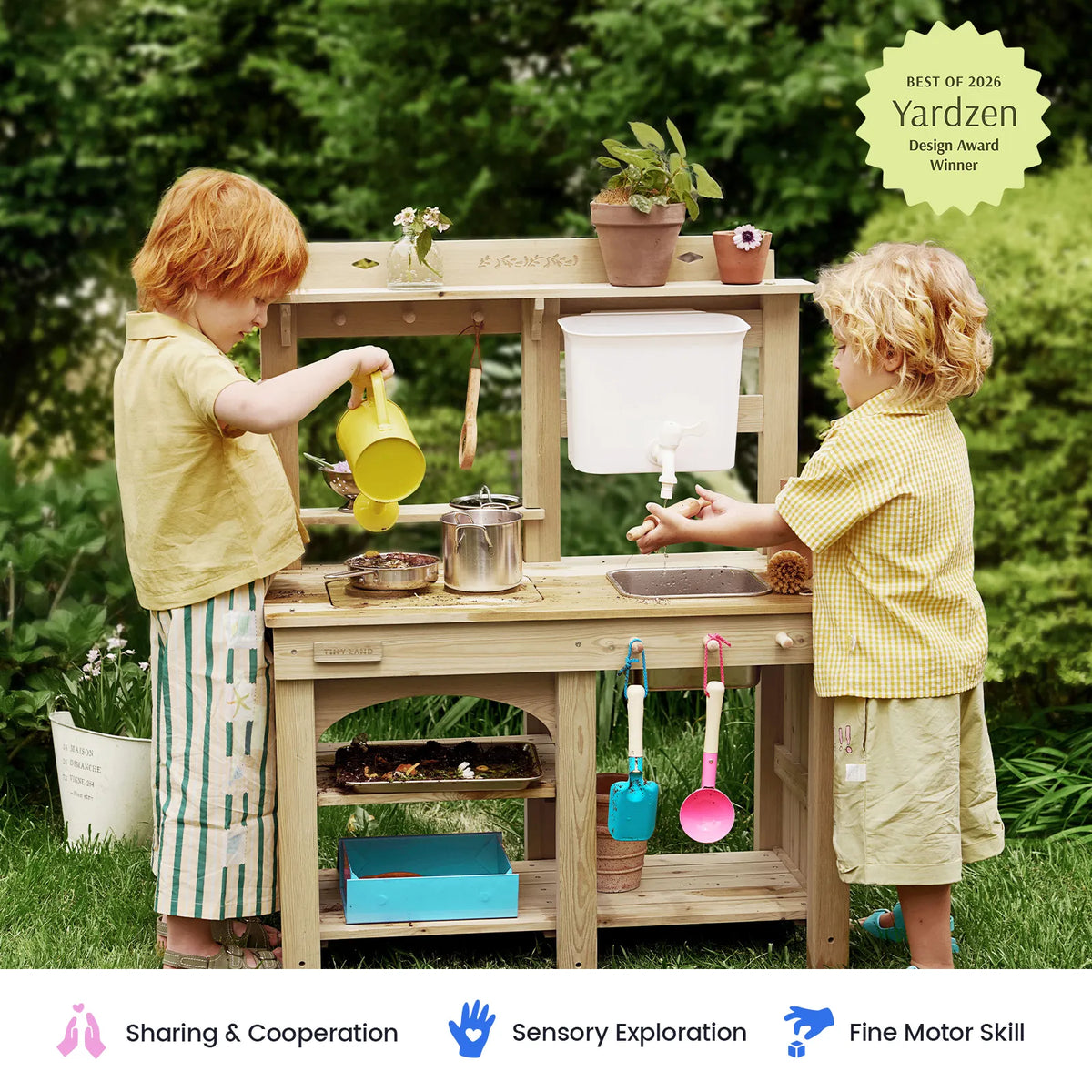
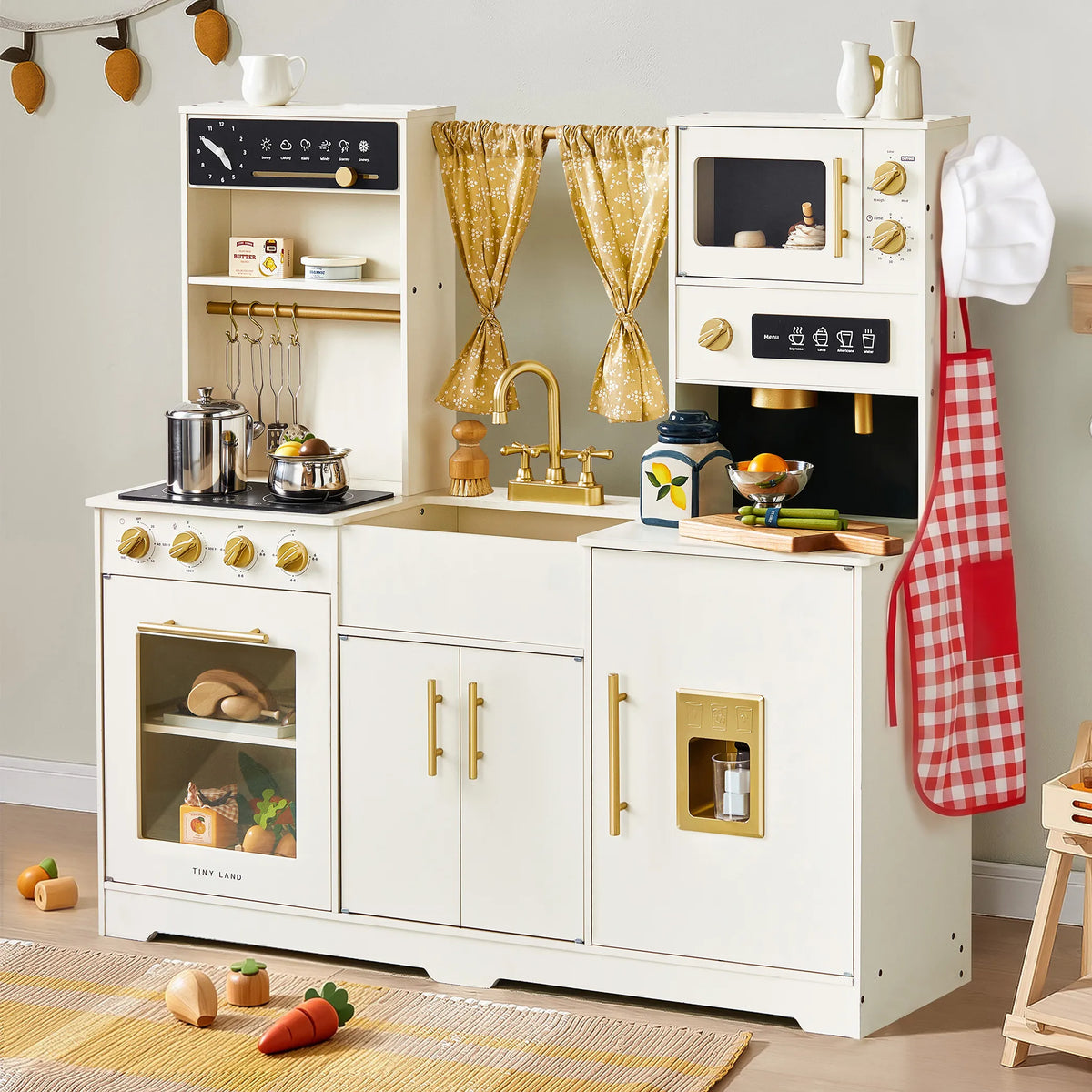
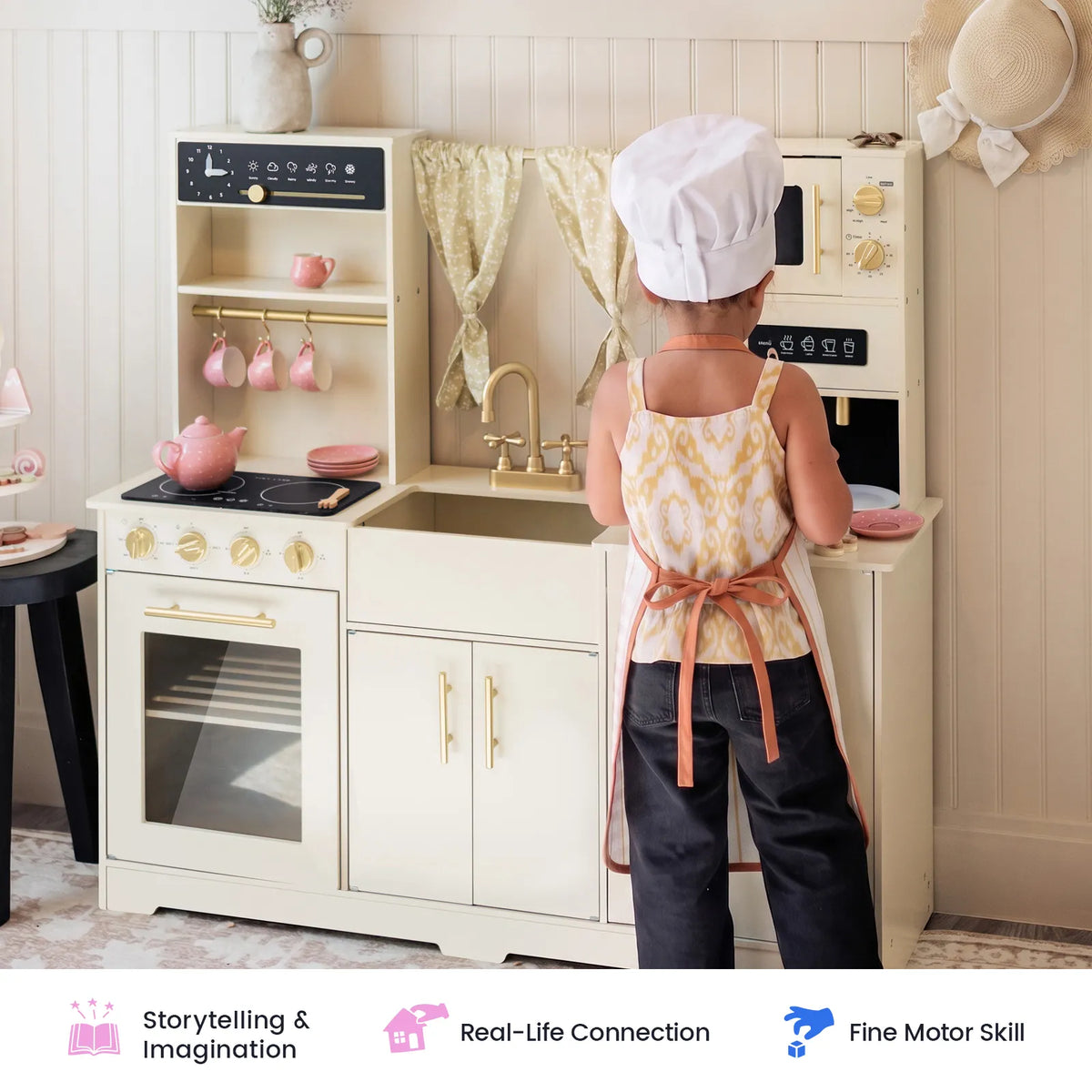
A play kitchen is a larger pretend-play environment designed around everyday routines.
Children can pretend to cook, serve meals, wash dishes, organize ingredients, open cabinets, or run a restaurant.
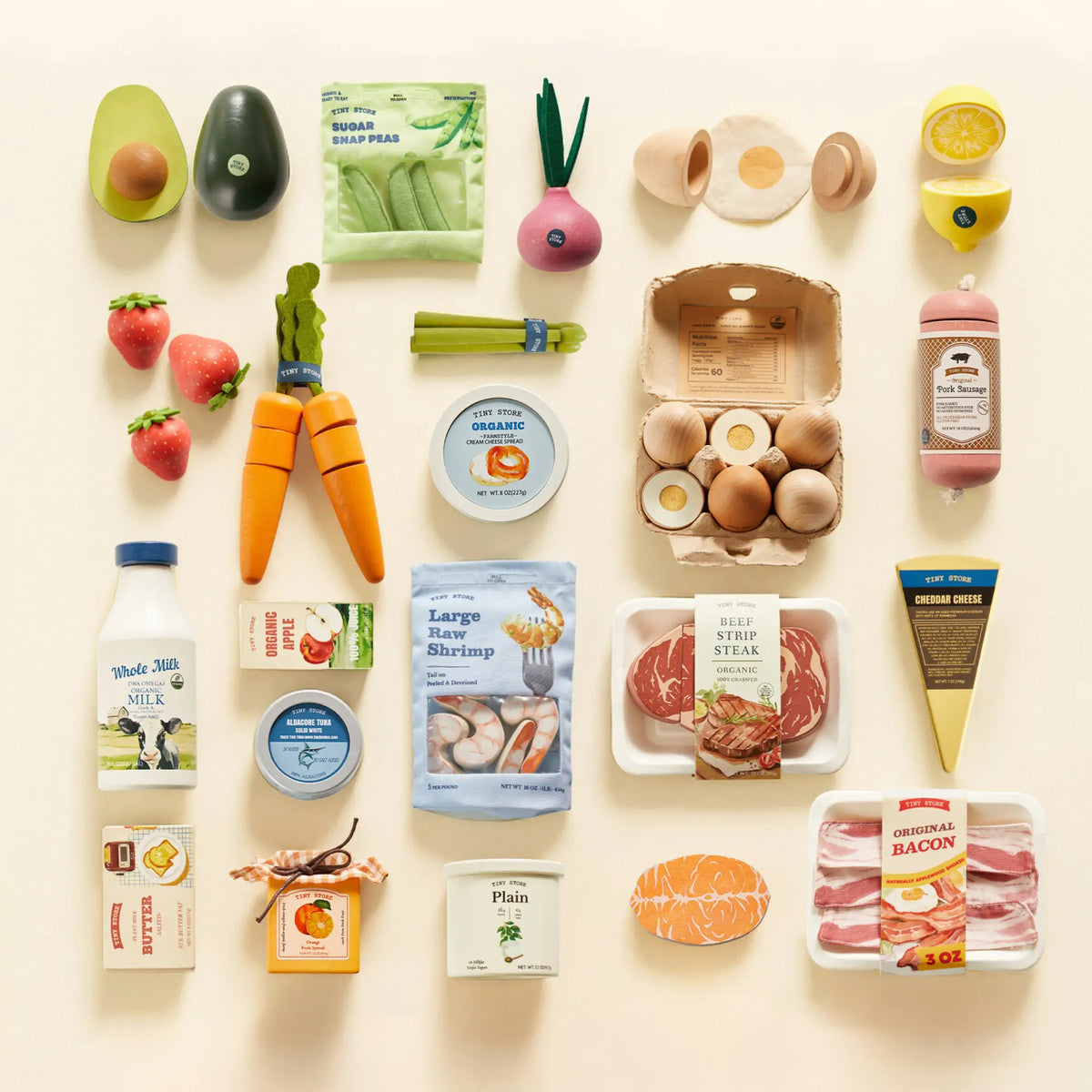
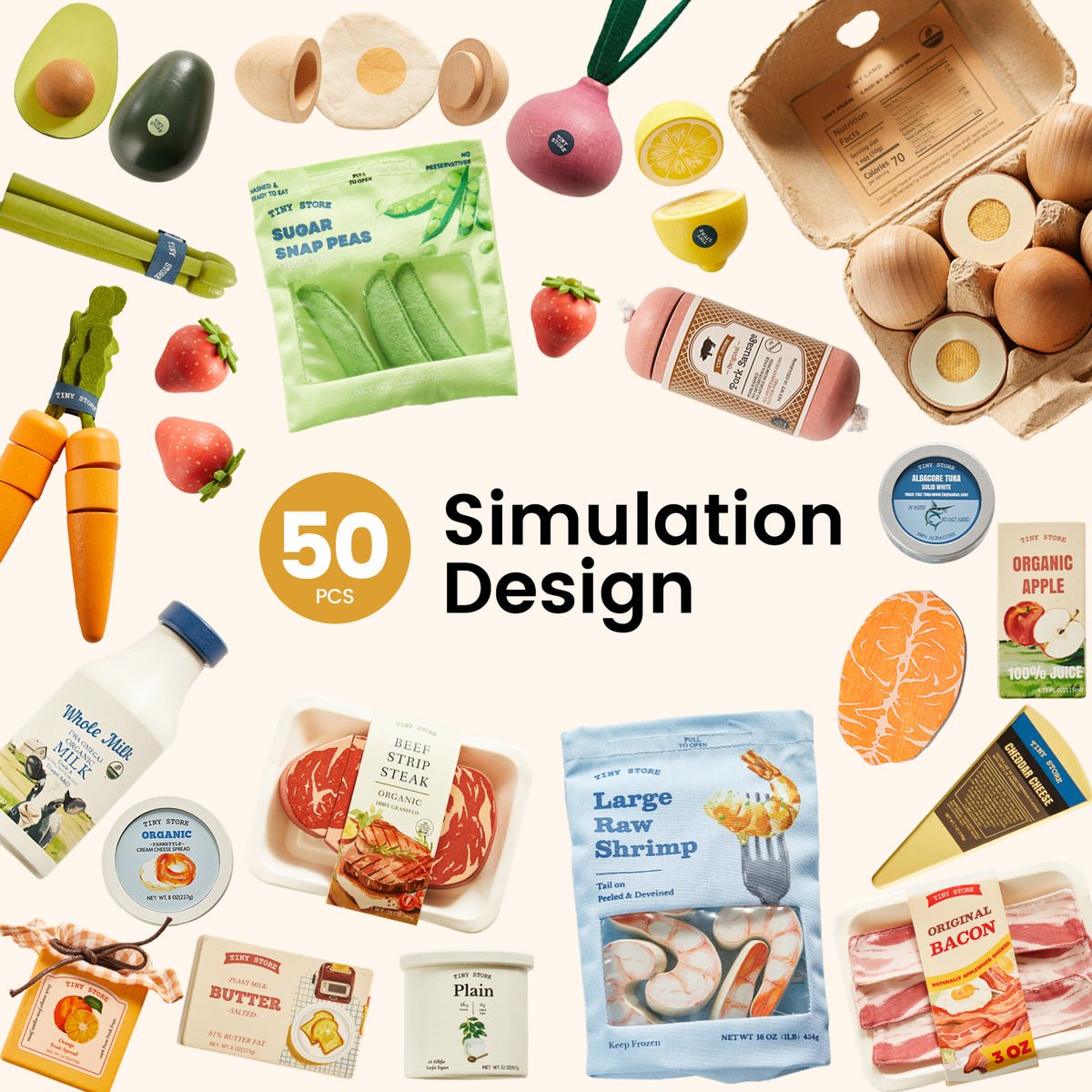
Play food is a collection of pretend ingredients and meals that can move between different play environments.
Children can use it for cooking, grocery shopping, restaurant play, picnics, dollhouse stories, or pretend family meals.
| Play Kitchen | Play Food | |
|---|---|---|
| Main purpose | Creates a dedicated pretend-play environment | Adds props to pretend-play scenarios |
| Common play | Cooking, serving, organizing, cleaning | Shopping, sorting, preparing, serving |
| Space needed | Larger floor footprint | Small storage area |
| Storage | May include cabinets or shelves | Usually needs a basket, bin, drawer, or shelf |
| Works with | Play food, cookware, dolls, stuffed animals | Kitchens, market stands, dolls, tables, grocery stores |
| Best first choice when | Your child needs a pretend-play centerpiece | You already have a play environment |
| Flexibility | Creates a consistent setting | Easy to move between different settings |
The biggest difference is therefore not what each toy is.
It is the role each one plays in the child's pretend-play world.

What Should You Buy First?
If you can only buy one right now, use these three questions.
1. Does your child already have a pretend-play setting?
No? → Consider a play kitchen.
A play kitchen can immediately create a dedicated place for pretend cooking and everyday role-play.
Yes? → Consider play food.
If your child already has a market stand, play table, toy shelf, grocery setup, or another suitable environment, play food may be enough to expand the play.
2. What does your child already pretend to do?
Watch what happens during everyday play.
If your child frequently:
- Pretends to cook
- Stirs bowls
- Serves food
- Opens and closes cabinets
- Pretends to wash dishes
- Organizes kitchen objects
- Runs a pretend restaurant
a play kitchen may be the better starting point.

If your child frequently:
- Pretends to go grocery shopping
- Sorts food
- Feeds dolls or stuffed animals
- Packs pretend meals
- Serves food to family members
- Creates picnics or parties
play food may be a useful first addition.

3. What will give you more new play opportunities?
This is the most useful question.
Don't ask: “Which toy is better?”
Ask: “Which purchase adds something we don't already have?”
If you already have plenty of pretend food but nowhere to cook, a play kitchen fills the gap.
If you already have a kitchen but little to prepare, play food fills the gap.
This simple “fill the gap” rule can prevent you from buying duplicate toys and help you build a more useful pretend-play setup over time.
When Should You Buy a Play Kitchen First?
A play kitchen is often the better first choice when you want a pretend-play centerpiece.
It creates a physical environment that children can return to again and again.
A Play Kitchen May Be a Good Fit If Your Child:
Loves Imitating Everyday Routines
Your child may already pretend to:
- Cook dinner
- Pour drinks
- Wash dishes
- Prepare breakfast
- Put food away
- Serve meals
A play kitchen gives these familiar actions a dedicated place.
Enjoys Hands-On Play
A kitchen naturally involves opening, closing, placing, moving, stirring, serving, and organizing.
The child can decide what each action means within the pretend scenario.
Likes Restaurant or Café Play
A play kitchen can quickly become more than a kitchen.
It can become:
A restaurant.
A café.
A bakery.
A family kitchen.
The child can change the setting without changing the toy.
Doesn't Already Have a Pretend-Play Center
If your child's current pretend play is spread across random household objects, a play kitchen can provide a clear, accessible starting point.

When Should You Buy Play Food First?
Play food can be the smarter first purchase when you want flexibility without adding a large piece of furniture.
Play Food May Be a Good Fit If Your Child:
Already Has a Play Kitchen
This is the simplest situation.
If you already have the kitchen, play food adds the ingredients and objects children can use within it.
Has a Small Play Area
Play food can be stored in a small container and brought out when needed.
You don't need a dedicated furniture piece to create a pretend food scenario.
Enjoys Grocery Shopping
Play food can become part of a simple shopping story:
Choose food → put it in a basket → bring it home → prepare it → serve it.
Likes Feeding Dolls or Stuffed Animals
A pretend meal can become part of a much larger story.
A doll can have breakfast.
A teddy bear can come to a picnic.
A stuffed animal can “order” something at a pretend restaurant.
The food becomes a prop that can move between stories.

What Can Kids Do With Play Food Without a Play Kitchen?
A play kitchen isn't required.
This is one of the biggest advantages of play food.
You can create pretend-play scenarios with things you already have at home.
Pretend Grocery Store
Use a basket or box as a shopping cart.
Let your child choose what to “buy.”
Then sort the food when they get home.
Pretend Restaurant
Use a small table as the restaurant.
One person can be the customer.
Another can be the chef or server.
Let the child decide what is on the menu.
Teddy Bear Picnic
Put play food into a basket.
Invite dolls, stuffed animals, or toy figures.
Let the child decide where the picnic takes place.
Family Dinner
Set the table.
Choose the food.
Serve everyone.
Then pretend to clean up.
The same pieces of play food can be used across all four scenarios.
That's what makes pretend play food so flexible.

What Can Kids Do With a Play Kitchen Without Play Food?
A play kitchen can also work without a large collection of accessories.
Children can use imagination to turn everyday objects into pretend ingredients.
A bowl might contain soup.
A cup might contain juice.
A block might become a piece of food.
A stuffed animal might become a customer.
The child can decide what each object represents.
Adding play food later simply gives the child more concrete props to incorporate into the story.
So if you already own a play kitchen, you don't need to buy an enormous accessory set immediately.
Start with what you have and add pieces based on what your child actually uses.
 Which Takes Up More Space?
If space is a major consideration, play food generally requires less dedicated space than a play kitchen.
But don't compare only the product dimensions.
For a play kitchen, consider:
- Width
- Depth
- Height
- Standing space
- Cabinet and oven clearance
- Accessory storage
For play food, consider:
- Storage bin or basket
- Shelf or drawer space
- How easily pieces can be sorted
- Whether small pieces will be accessible to younger children
A useful rule is: Measure the play zone, not just the toy.
A kitchen may technically fit against a wall but still need additional space in front for comfortable play.

Which Is Easier to Store?
Neither is automatically easier.
They simply create different storage challenges.
Play Kitchen Storage
A play kitchen is larger, but some designs include:
- Cabinets
- Shelves
- Hooks
- Countertop storage
This can keep frequently used accessories close to the play area.
Play Food Storage
Individual pieces are smaller but can be numerous.
A simple basket or labeled container can make cleanup easier.
The most useful question is: Can our family realistically put everything away after play?
Good storage isn't just about saving space.
It helps keep pretend-play materials accessible and makes cleanup part of the everyday routine.
What If You Already Own Other Pretend-Play Toys?
Your existing toys should influence what you buy next.
Already Have a Play Kitchen?
Add play food.
You can expand the kitchen into:
- A family kitchen
- Restaurant
- Café
- Bakery
- Grocery preparation area
Already Have a Market Stand or Grocery Store?
Play food may be the better next step.
Children can shop for ingredients and then bring them into another pretend-play setting.
Already Have Dolls or Stuffed Animals?
Play food can connect naturally to them.
The characters can eat meals, attend picnics, visit restaurants, or participate in family routines.
Already Have Lots of Play Food?
Consider adding a play kitchen.
The kitchen provides a consistent environment where existing food pieces can be used in new ways.
This is the key idea:
Don't Build Your Pretend-Play Collection From Scratch.
Build on what your child already uses.

Play Kitchen + Play Food: Why They Work Better Together
Although the question is “play kitchen vs. play food,” the two aren't really competing products.
They serve different functions.
Play Kitchen = the setting
Play Food = the props
Together, they can create a much larger pretend-play world.
Story 1: Grocery Shopping
Shop for food → bring it home → organize the ingredients → prepare dinner → serve the family.
Story 2: Pretend Restaurant
Take an order → prepare the food → serve the customer → clean up → open again.
Story 3: Family Routine
Make breakfast → pack lunch → prepare dinner → serve everyone → clean up.
Story 4: Picnic
Choose food → pack a basket → travel to the picnic → serve everyone → clean up.
The important part is that the child decides what happens next.
The same play kitchen and play food can support completely different stories from one day to the next.

A Simple Play Kitchen vs. Play Food Decision Guide
| If your child... | Consider first |
|---|---|
| Pretends to cook with household objects | Play Kitchen |
| Already has a kitchen but little food | Play Food |
| Has very limited floor space | Play Food |
| Loves grocery-shopping pretend play | Play Food |
| Loves opening cabinets and organizing | Play Kitchen |
| Loves feeding dolls or stuffed animals | Play Food |
| Already has lots of play food | Play Kitchen |
| Doesn't have a dedicated pretend-play area | Play Kitchen |
| Loves restaurant or café role-play | Play Kitchen + Play Food |
| Wants a portable pretend-play option | Play Food |

The 5-Question Buying Quiz
Still deciding?
Answer these five questions.
1. Does your child already have a pretend-play setting?
No → Play Kitchen
Yes → Play Food may be enough to start
2. What does your child already pretend to do?
Cooking and serving → Play Kitchen
Shopping and feeding → Play Food
3. How much space do you have?
Dedicated floor space → Play Kitchen
Limited space → Play Food
4. What do you already own?
Lots of play food → Play Kitchen
Kitchen but little food → Play Food
5. What would add the most new play possibilities?
Choose the product that fills the biggest gap.
That is usually a better buying strategy than simply choosing the product with more accessories or features.

So, Which Should You Buy First?
If you need one simple answer:
Buy a Play Kitchen First If:
- Your child doesn't have a dedicated pretend-play environment.
- They frequently imitate cooking and household routines.
- You have enough floor space for a play kitchen.
- You want a long-term centerpiece for pretend play.
Buy Play Food First If:
- You already have a kitchen, market, or suitable pretend-play setup.
- Your child enjoys shopping, sorting, feeding, or serving.
- You have limited floor space.
- You want a smaller and more flexible starting point.
And If You Already Own One...
The other can be a natural next step.
A play kitchen gives children a place to play.
Play food gives them props to play with.
Together, they can support a much wider range of pretend scenarios.

How to Build a Pretend-Play Setup Without Buying Everything at Once
You don't need to create an entire playroom in one purchase.
A simple progression might look like this:
Step 1: Start With the Child's Interest
Notice what your child already pretends to do.
Step 2: Choose One Centerpiece
If they need a setting, start with a play kitchen.
If they already have a setting, start with play food.
Step 3: Use What You Already Own
Dolls, stuffed animals, baskets, toy dishes, blocks, and tables can all become part of pretend play.
Step 4: Add Accessories Based on Actual Play
If your child repeatedly pretends to shop, add grocery-style accessories.
If they repeatedly play restaurant, add food and serving pieces.
Step 5: Let the Play World Grow
Over time, a kitchen, market stand, play food, dolls, and vehicles can become connected parts of one larger imaginary world.
This approach keeps the play environment flexible rather than overloaded.

Frequently Asked Questions
Is play food necessary for a play kitchen?
No. Children can pretend to cook using imagination and other safe play materials. However, play food provides concrete props that can be sorted, prepared, served, and incorporated into different pretend-play stories.
Can toddlers play with play food without a play kitchen?
Yes. Play food can be used with tables, market stands, grocery setups, dolls, stuffed animals, and other pretend-play toys. Always check the specific product's recommended age range and safety information.
Is play kitchen or play food better for a small space?
Play food generally requires less dedicated space. It can be stored in a basket, drawer, bin, or shelf, while a play kitchen requires a larger area for the furniture itself and enough space for comfortable play.
What should I buy first if my child loves cooking?
If your child doesn't already have a pretend-play setting, a play kitchen may be the better first purchase. If you already own a kitchen, adding play food can expand the play experience.
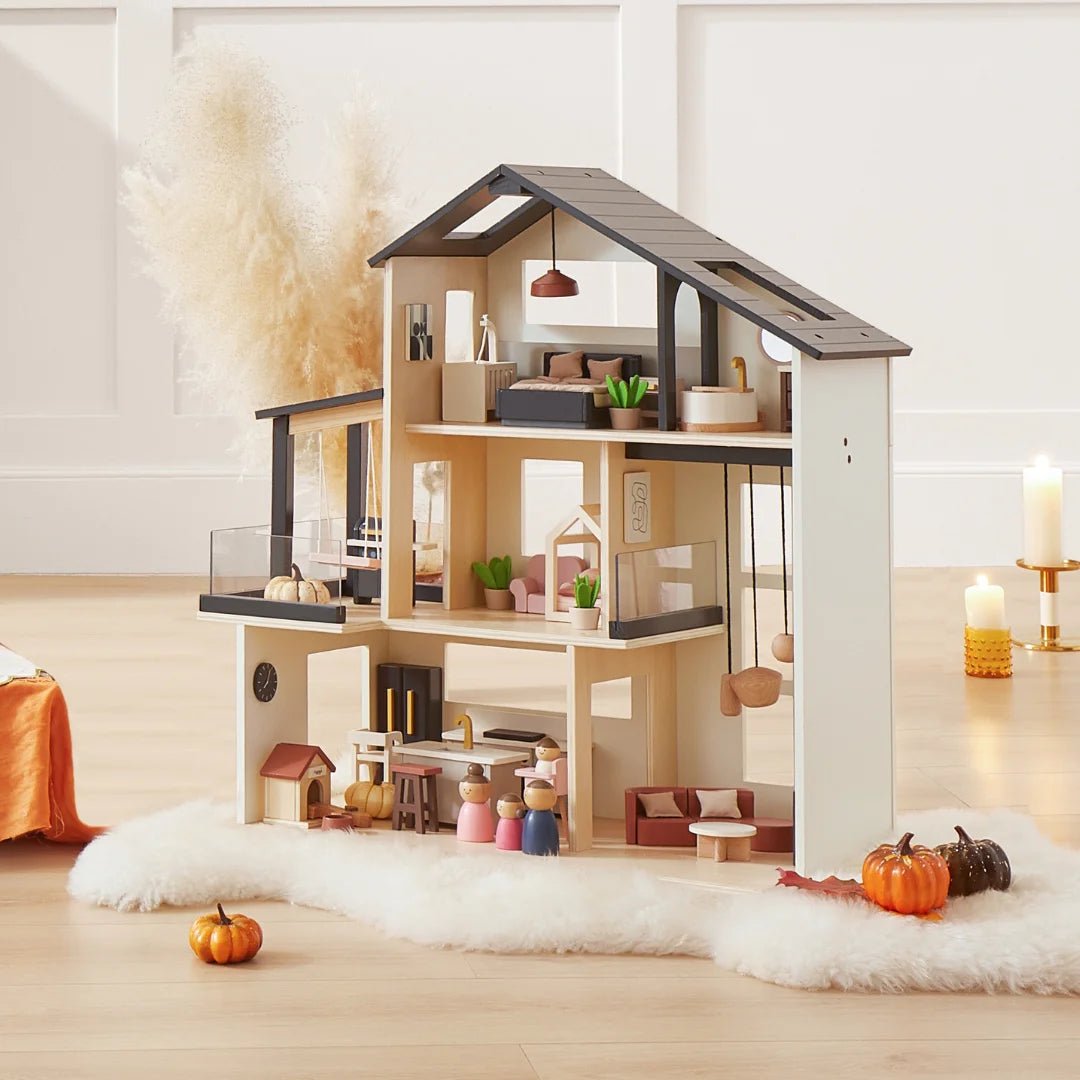
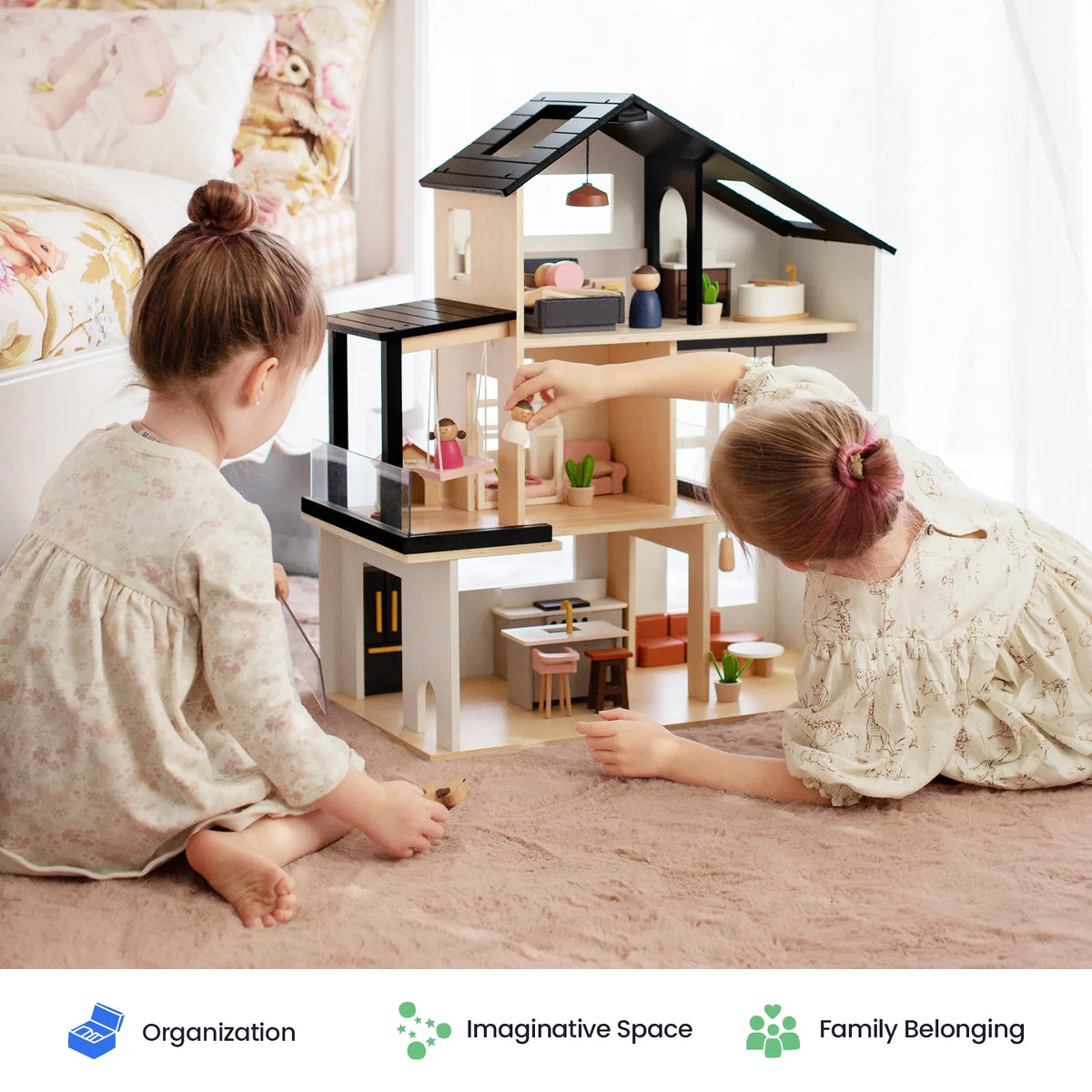
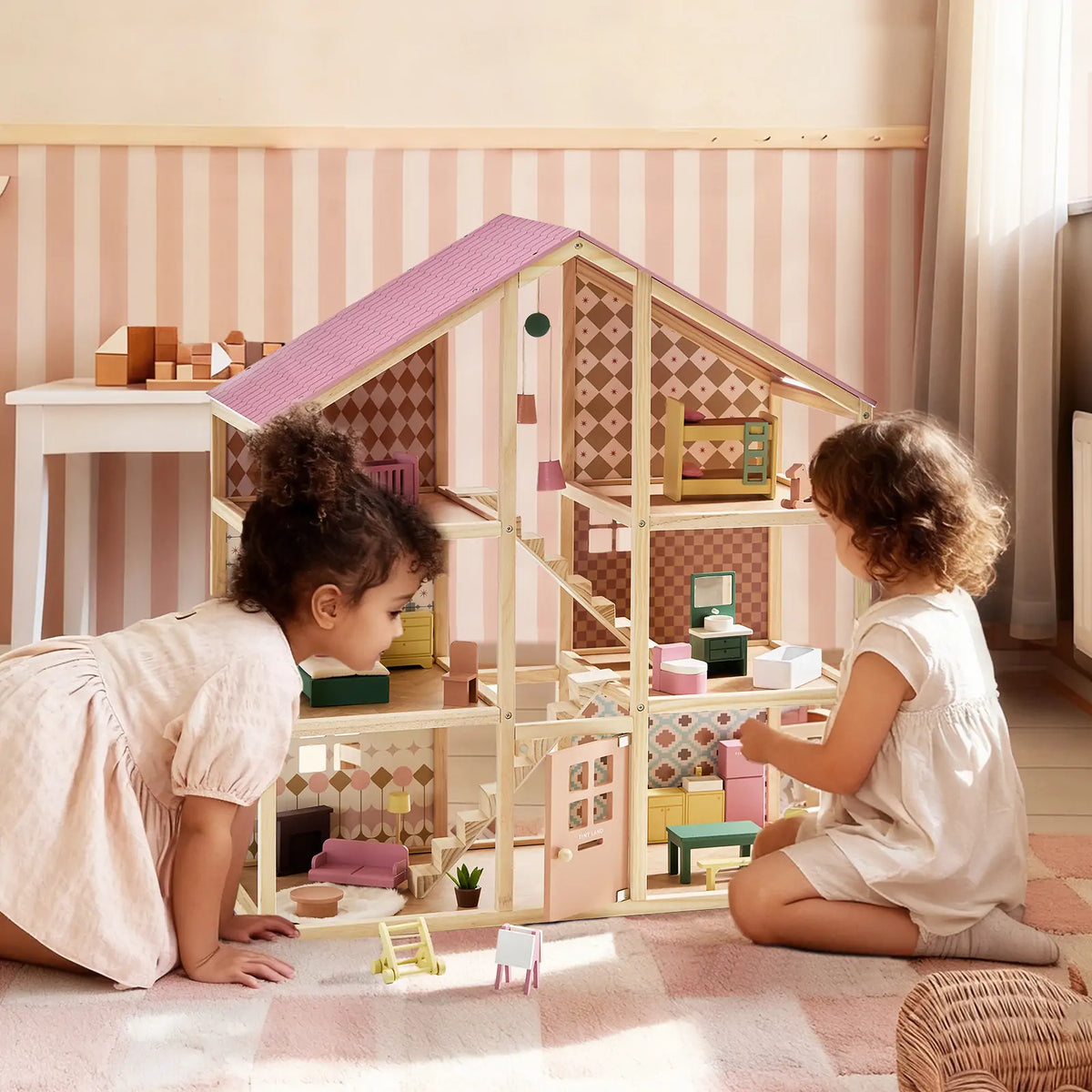
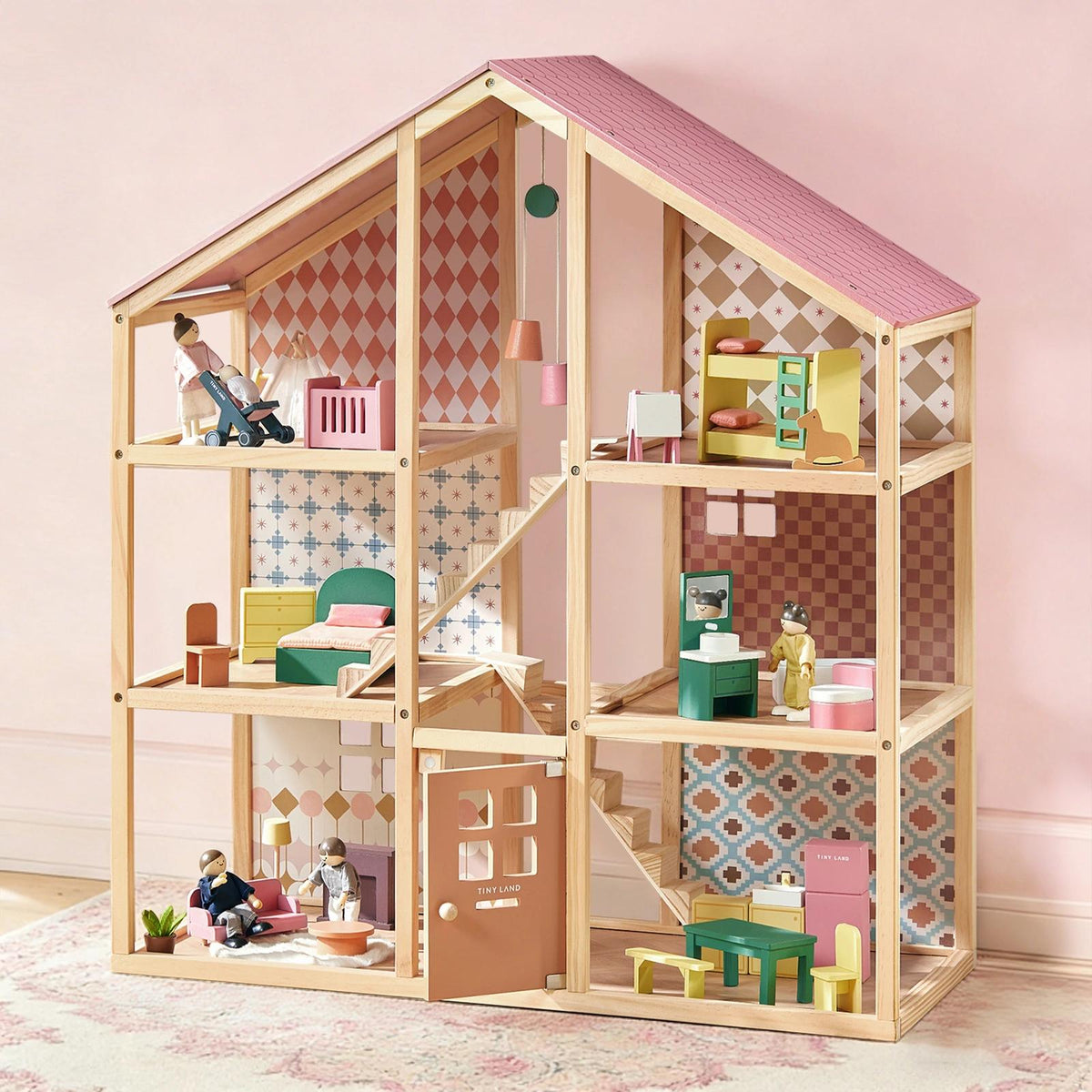
Can play food be used with a dollhouse?
Yes. Play food can become part of dollhouse stories, family meals, picnics, parties, grocery trips, and restaurant scenarios.
What age is best for play food?
There isn't one universal age for every play-food set. Check the manufacturer's recommended age range and safety information for the specific product, particularly when a set contains small pieces.

Build Your Pretend-Play World
Choosing between a play kitchen and play food doesn't have to be complicated.
Start with what your child already enjoys.
If they need a place for pretend cooking and everyday role-play, start with a play kitchen.
If they already have a setting and need more props, start with play food.
Then let the play grow naturally.