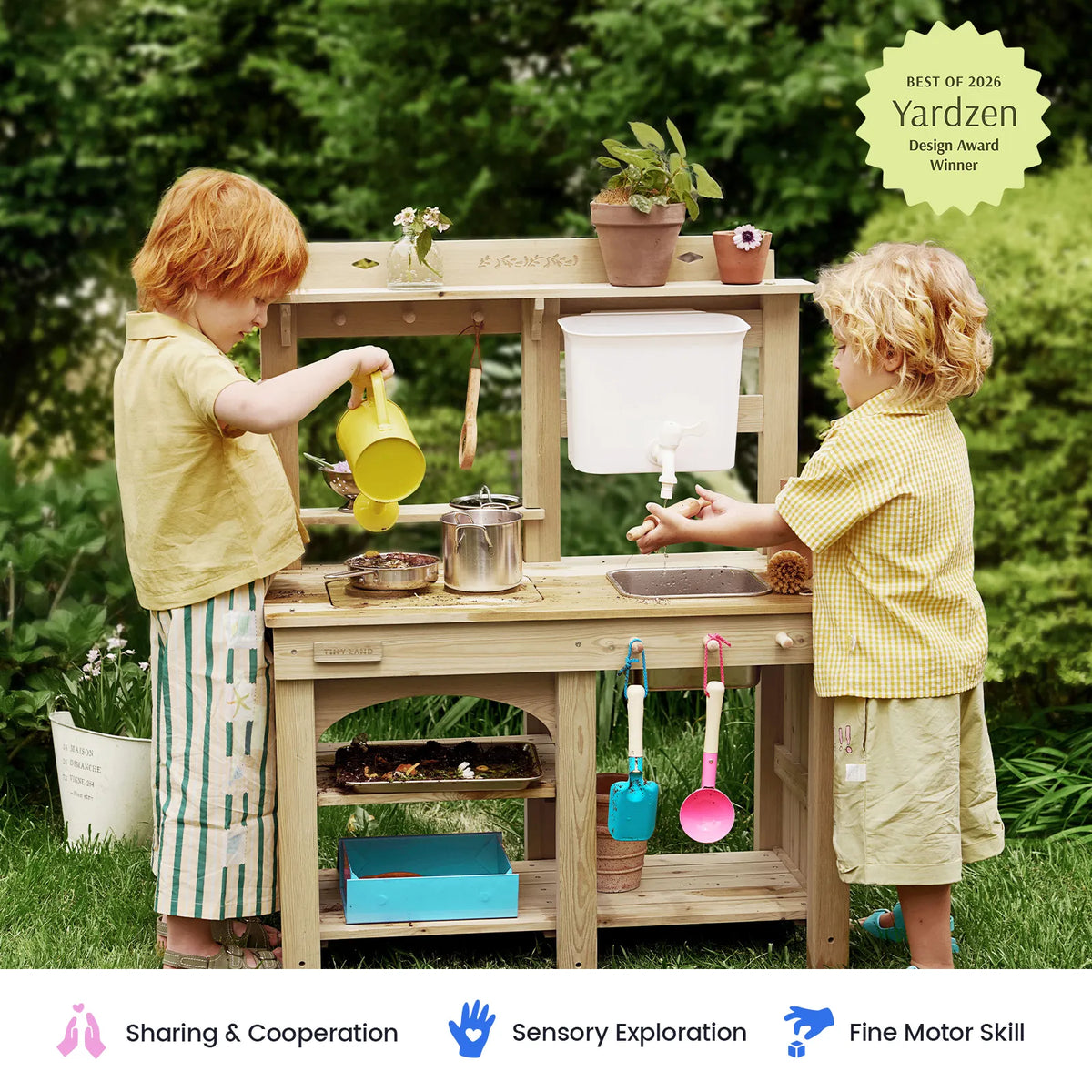
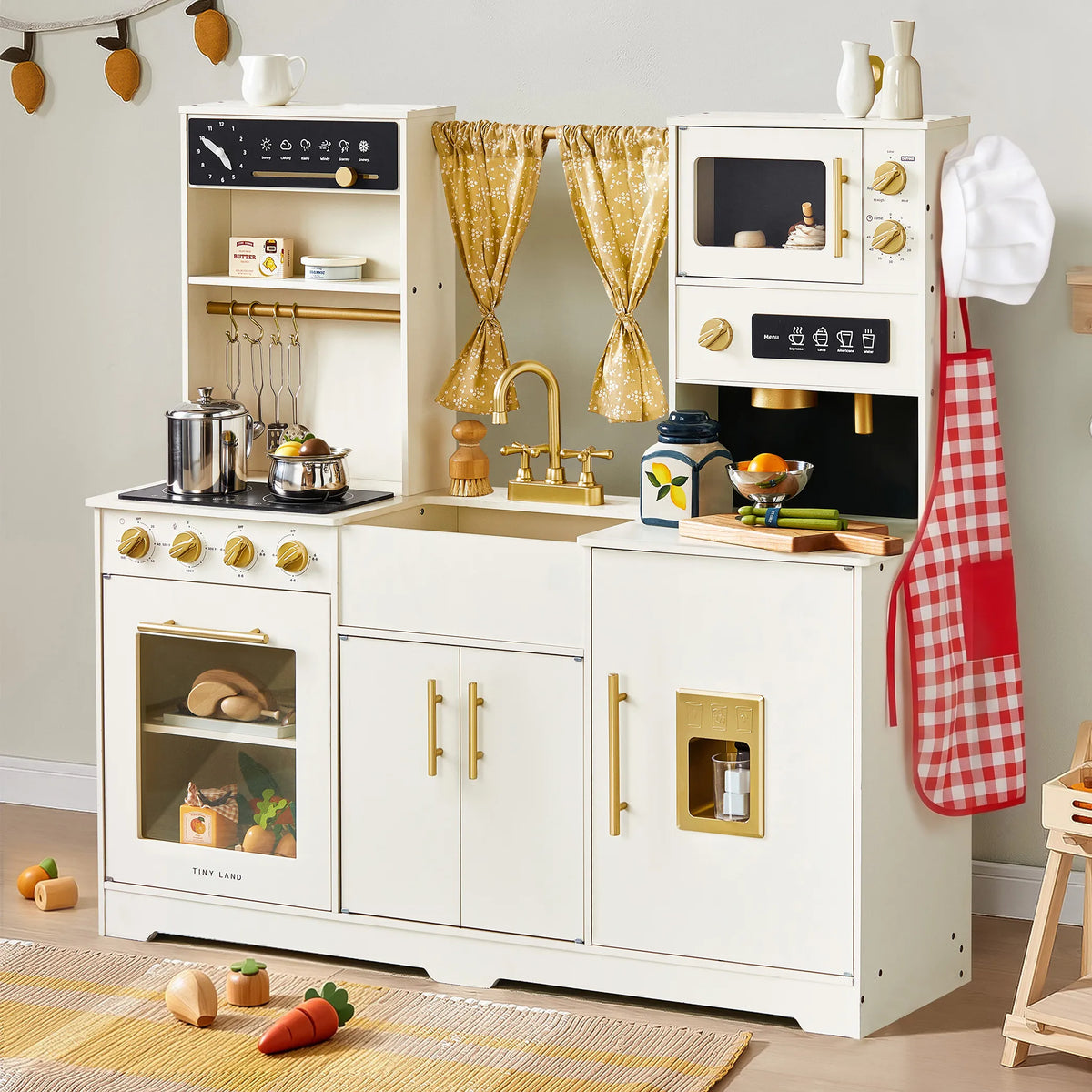
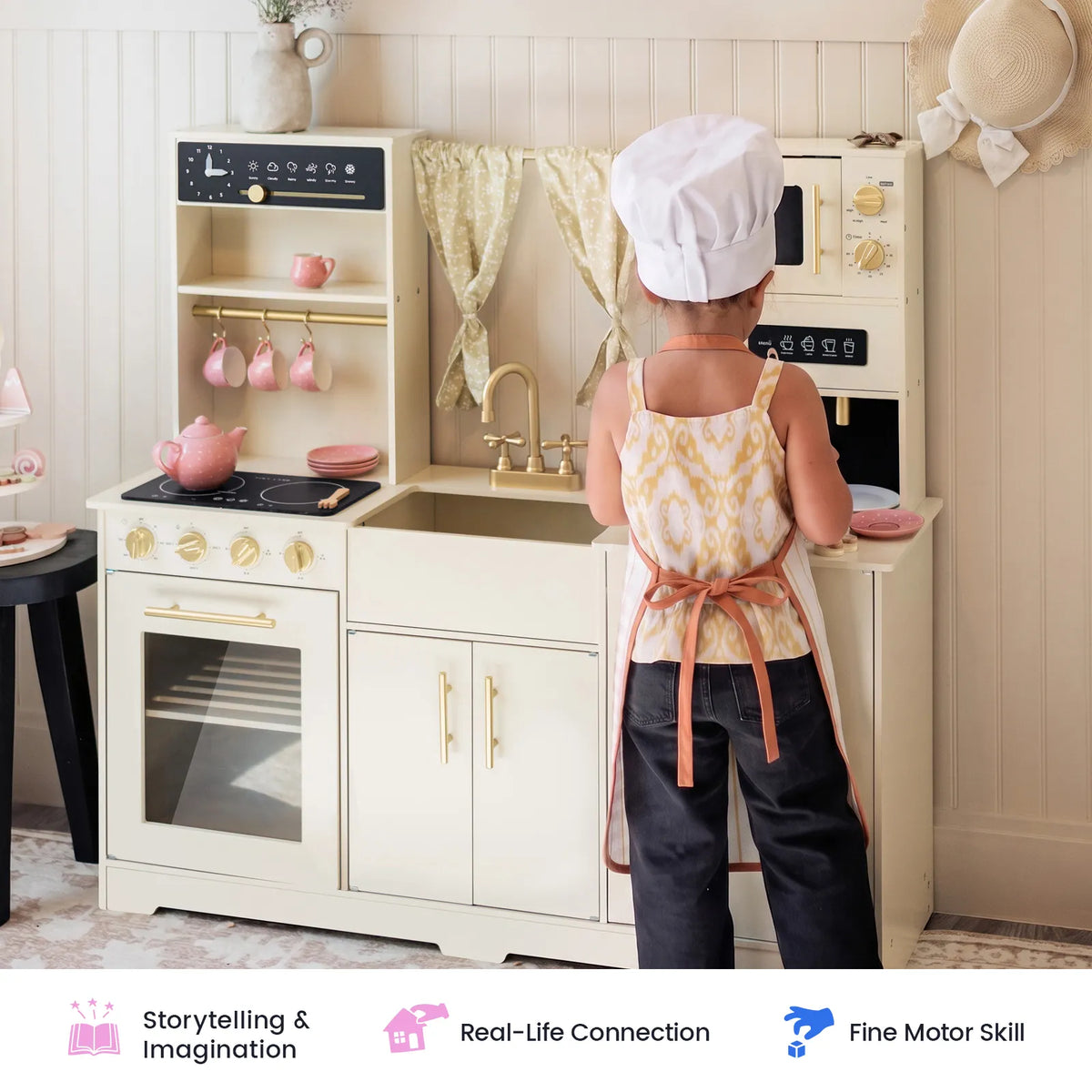



If you're choosing a pretend-play toy for your child, you may be wondering: Should you get a dollhouse or a playhouse?
Both can inspire imaginative play, but they create very different play experiences.
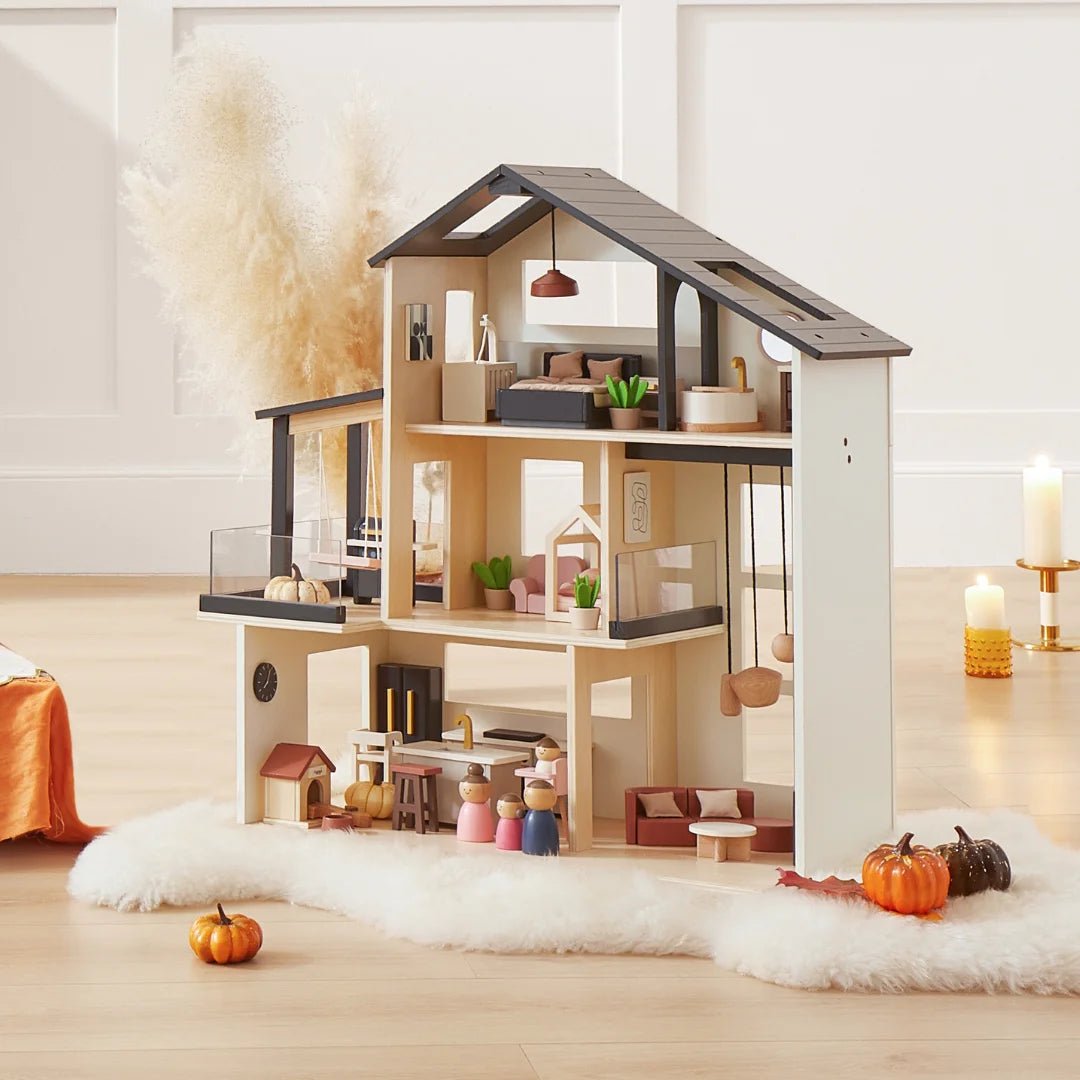
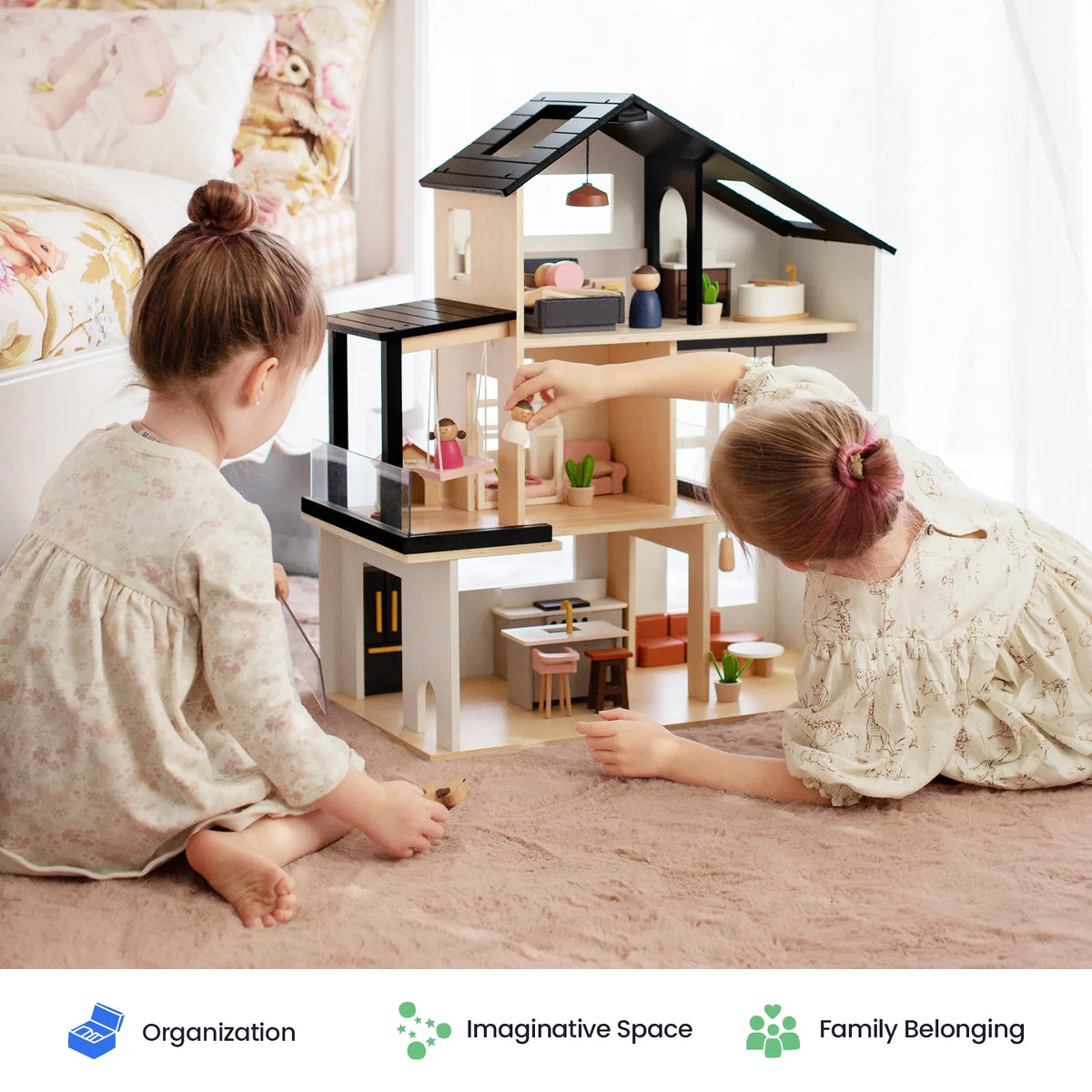
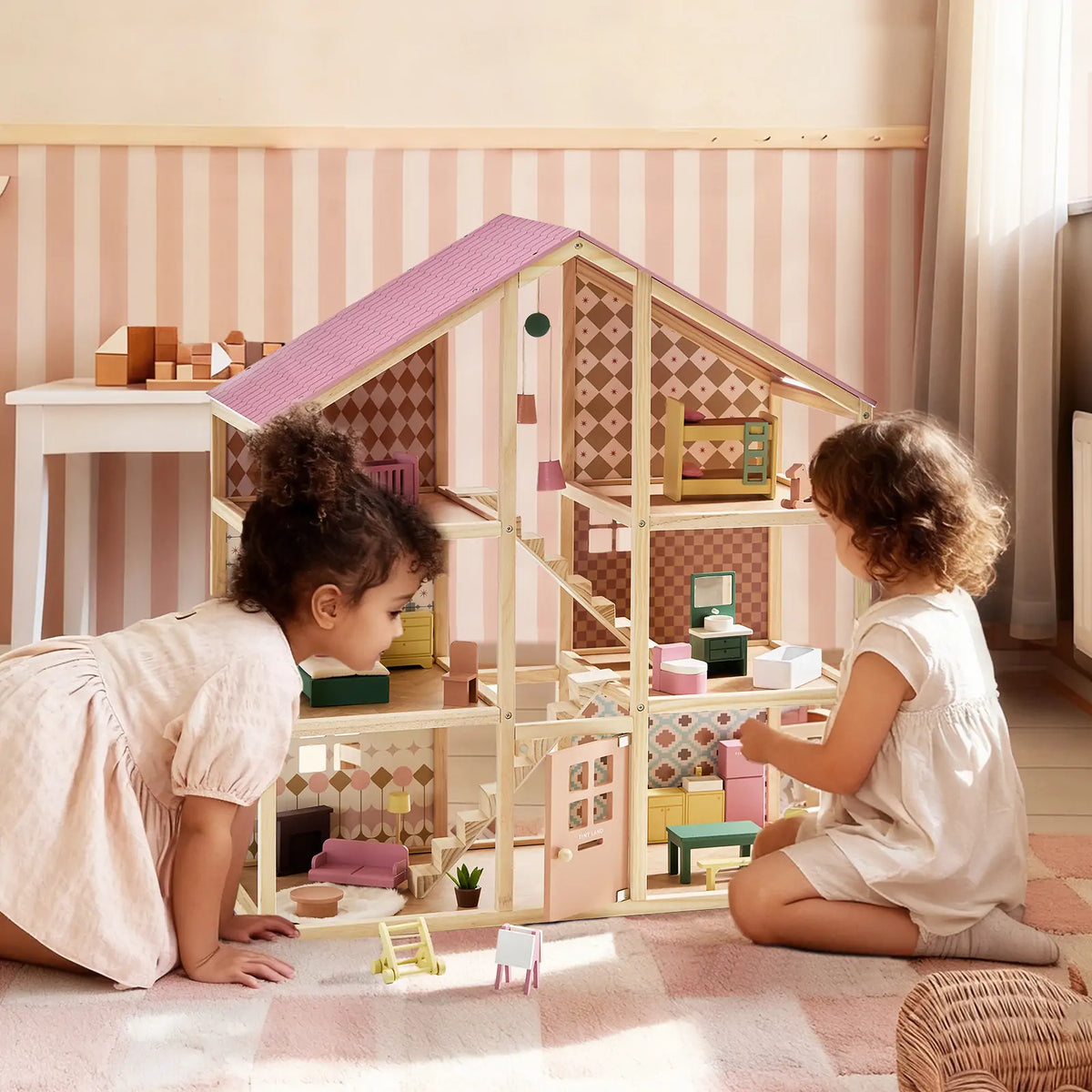
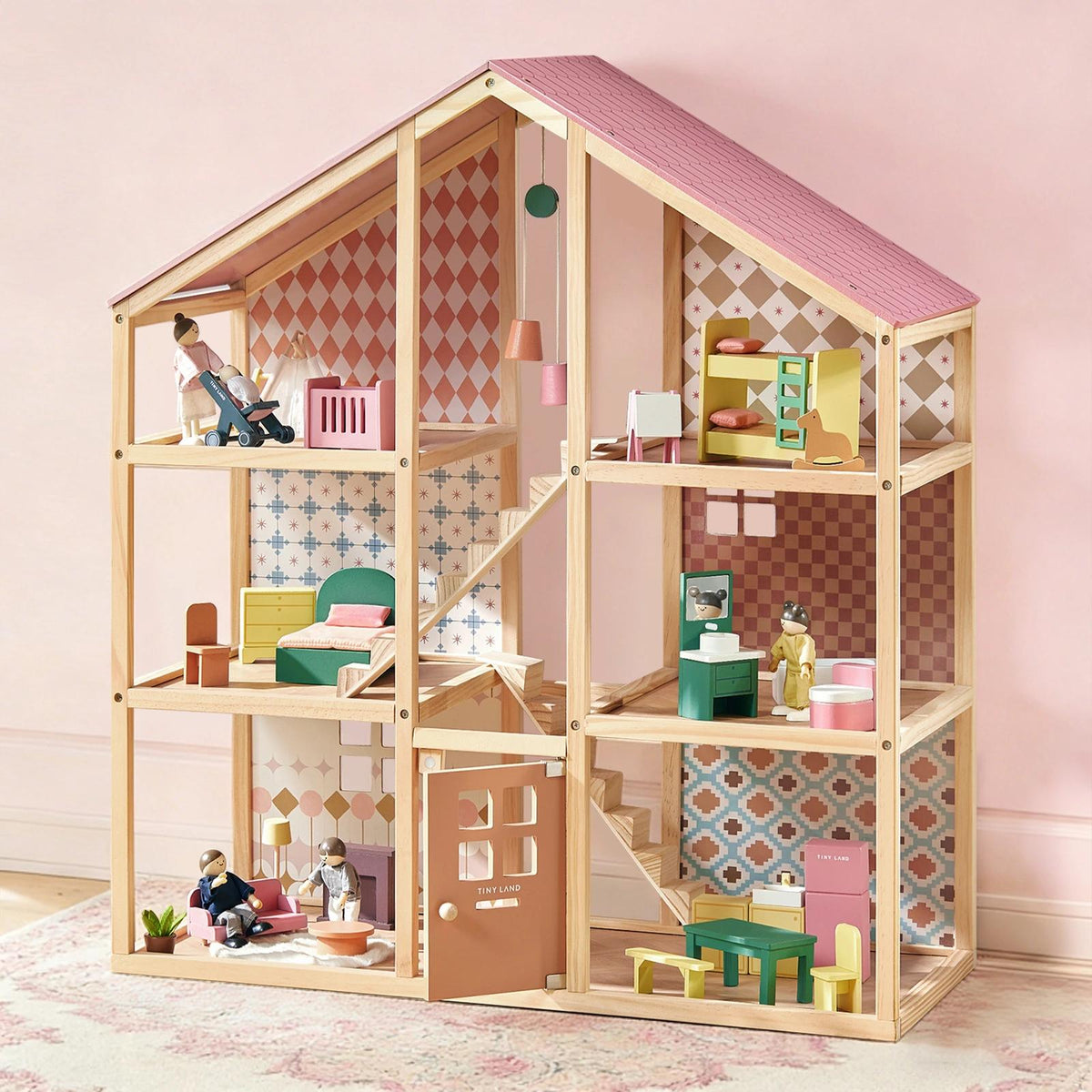
A dollhouse gives children a miniature world to explore with dolls, figures, furniture, and accessories.
A playhouse gives children a child-sized space they can step into and transform through pretend play.
So which one is better?
There isn't one right answer. The best choice depends on your child's interests, play style, available space, and the kind of pretend play you want to encourage.

Dollhouse vs. Playhouse: At a Glance
| Dollhouse | Playhouse | |
|---|---|---|
| Play environment | Miniature | Child-sized |
| How children play | Manipulate figures and accessories | Physically enter the pretend space |
| Best for | Small-world play and storytelling | Immersive role-play |
| Typical play themes | Home, family, school, pets | Home, camping, reading, shops, clubhouse |
| Space needed | Usually less | Usually more |
| Best for shared play | Good with figures and accessories | Good for siblings, friends, and parents |
| Play experience | Create and control a miniature world | Become part of the pretend world |
The biggest difference is simple: A dollhouse creates a world for children to play with. A playhouse creates a space for children to play inside.
 What Is a Dollhouse?
A dollhouse is a miniature home or environment designed for pretend play.
Children can use dolls, figures, furniture, and accessories to create stories and everyday scenarios. They might pretend to cook dinner, put a doll to bed, welcome visitors, decorate a room, or care for a family.
Because children control the characters and environment, dollhouses are naturally suited to small-world play and storytelling.
A dollhouse can also change as a child's interests change. The same rooms might become a family home one day, a classroom the next, or an imaginary hotel after that.
What Kind of Child Enjoys a Dollhouse?
A dollhouse may be a good choice if your child enjoys:
-
Playing with dolls or miniature figures
-
Creating detailed stories
-
Arranging furniture and accessories
-
Pretending about familiar family routines
-
Small-world play
-
Independent storytelling
If your child already spends a lot of time creating stories with dolls, stuffed animals, or small figures, a dollhouse can give those stories a more defined setting.

What Is a Playhouse?
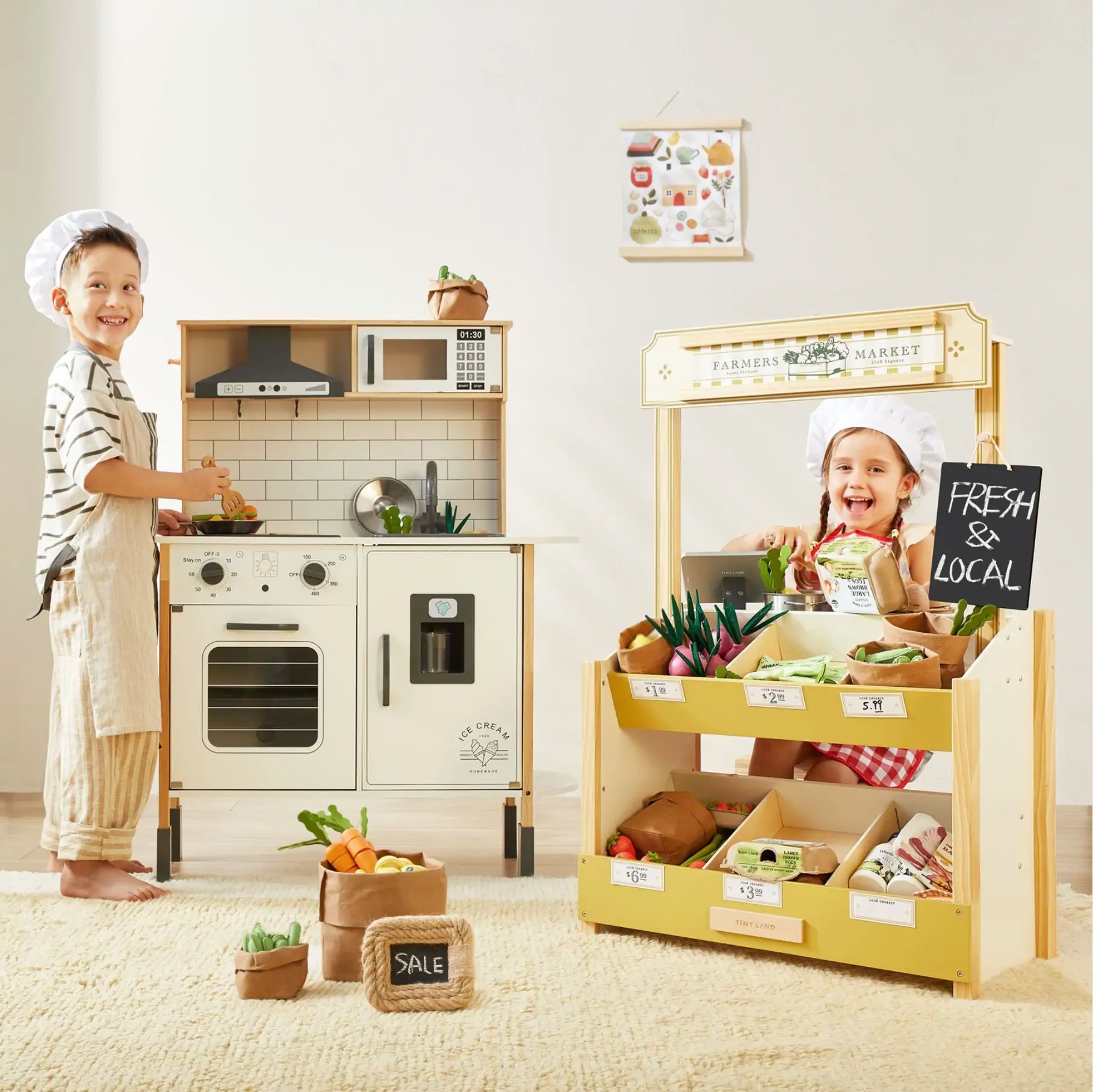
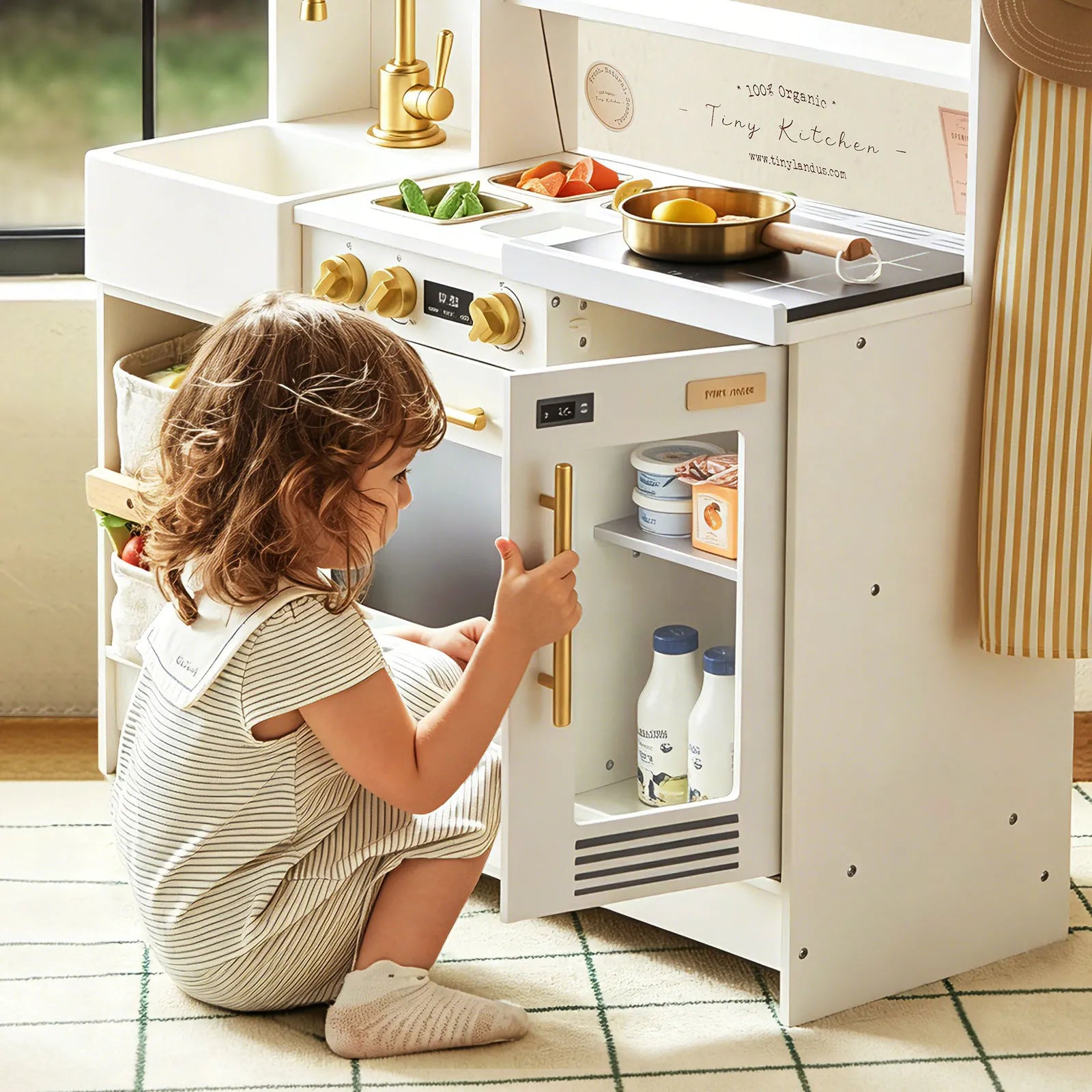
A playhouse is a larger, child-sized pretend-play environment that children can enter.
Unlike a dollhouse, the child becomes part of the play environment.
A playhouse can become almost anything a child imagines:
-
A family home
-
A camping tent
-
A reading nook
-
A secret clubhouse
-
A pretend shop
-
A restaurant
-
A cozy hideaway
-
A space station
The environment stays the same, but the story can change every time.
That's what makes playhouses particularly appealing for open-ended and immersive pretend play.

Dollhouse vs. Playhouse: 5 Key Differences
1. Miniature Play vs. Immersive Play
The most obvious difference is scale.
With a dollhouse, children typically play from the outside and manipulate small characters and objects.
With a playhouse, children can physically enter the space, move around, and act out their own roles.
For example, a child might make a doll cook dinner inside a dollhouse. In a playhouse, the child can pretend to be the person cooking dinner themselves.
Neither style is better. They simply offer different ways to tell a story.
2. Storytelling With Characters vs. Becoming the Character
Dollhouses naturally encourage children to create stories around characters.
They might decide:
-
Who lives in the house
-
What each character is doing
-
Where the family is going
-
What happens next
A playhouse gives children the opportunity to take on the role themselves.
A child can become the parent, shopkeeper, camper, chef, teacher, or anything else they imagine.
This makes the two toys particularly complementary.
3. Smaller Footprint vs. Dedicated Play Space
A dollhouse generally requires less floor space and can fit into a playroom, bedroom, or common living area.
A playhouse or play tent needs enough space for children to enter and move around comfortably.
If your family has limited space, a dollhouse may be easier to keep permanently set up.
If you have room for a dedicated pretend-play area, a playhouse can create a more immersive destination for play.
4. Accessories vs. Open-Ended Props
Dollhouse play often benefits from accessories such as:
-
Dolls
-
Miniature furniture
-
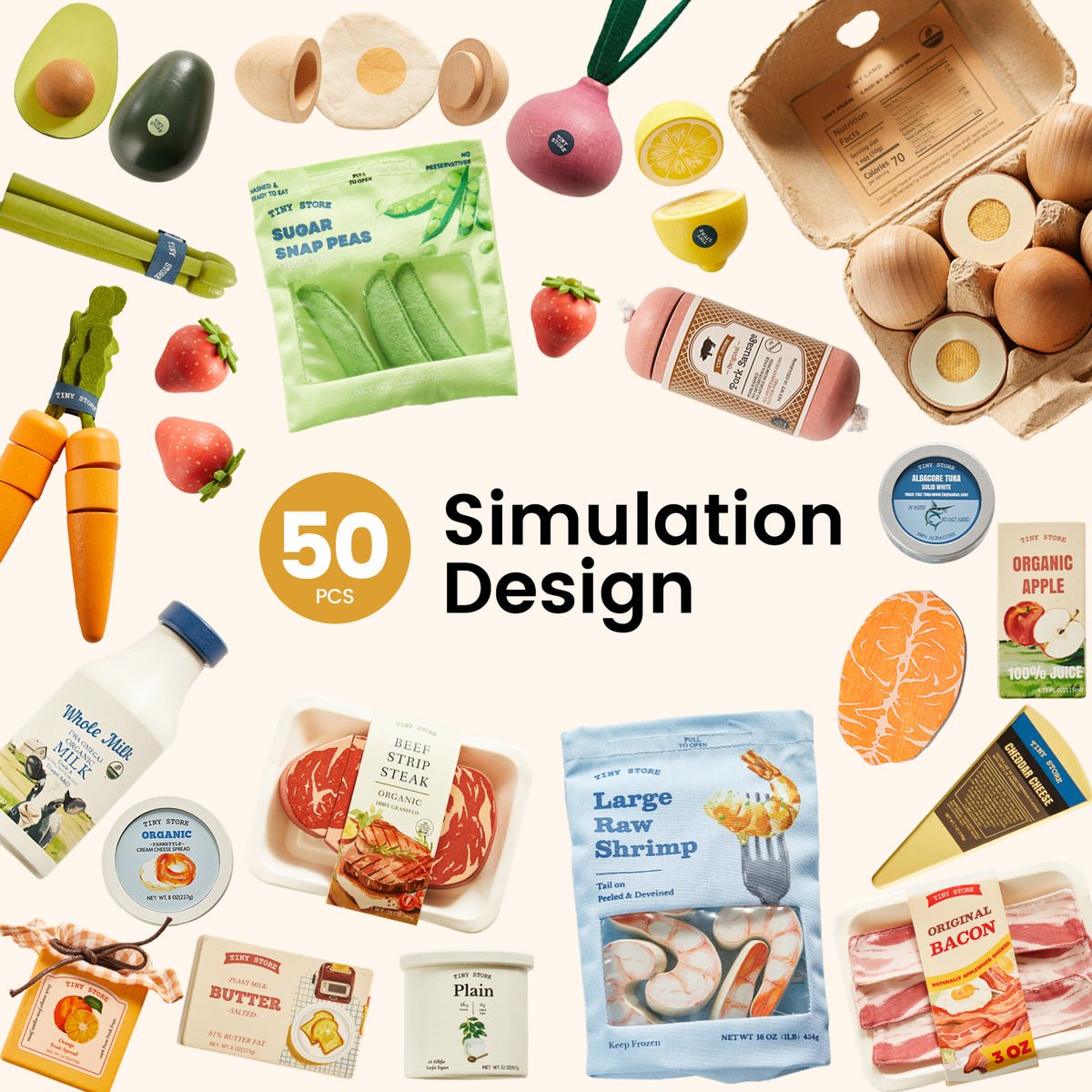
Food
-
Pets
-
Vehicles
-
Household items
Playhouse play doesn't require as many specialized accessories.
A blanket can become a picnic mat. A cardboard box can become a grocery basket. A stuffed animal can become a pet.
This open-ended quality allows children to use everyday objects as part of their pretend stories.
5. Individual Storytelling vs. Shared Role-Play
Dollhouses can be wonderful for independent play, especially when a child enjoys controlling several characters.
A larger playhouse can make it easier for multiple children to enter the same pretend scenario.
Two siblings might turn a play tent into a restaurant. A parent might join them as a customer. Friends might transform it into a clubhouse.
The more physical space there is, the more naturally the play environment can accommodate shared roles.

Dollhouse or Playhouse: Which Should You Buy First?
If you're deciding between the two, start with how your child already likes to play.
Choose a Dollhouse First If Your Child:
-
Loves dolls and miniature figures
-
Enjoys detailed storytelling
-
Likes arranging and decorating spaces
-
Enjoys family or household role-play
-
Prefers quieter, small-world play
A dollhouse can give these interests a dedicated environment to grow.
Choose a Playhouse First If Your Child:
-
Likes physical and active pretend play
-
Enjoys creating forts or hideaways
-
Likes pretending to run a home, store, restaurant, or campsite
-
Enjoys reading or relaxing in a cozy space
-
Often turns ordinary spaces into imaginary worlds
A playhouse gives children a physical environment that can change with the story.

What About a Play Tent?
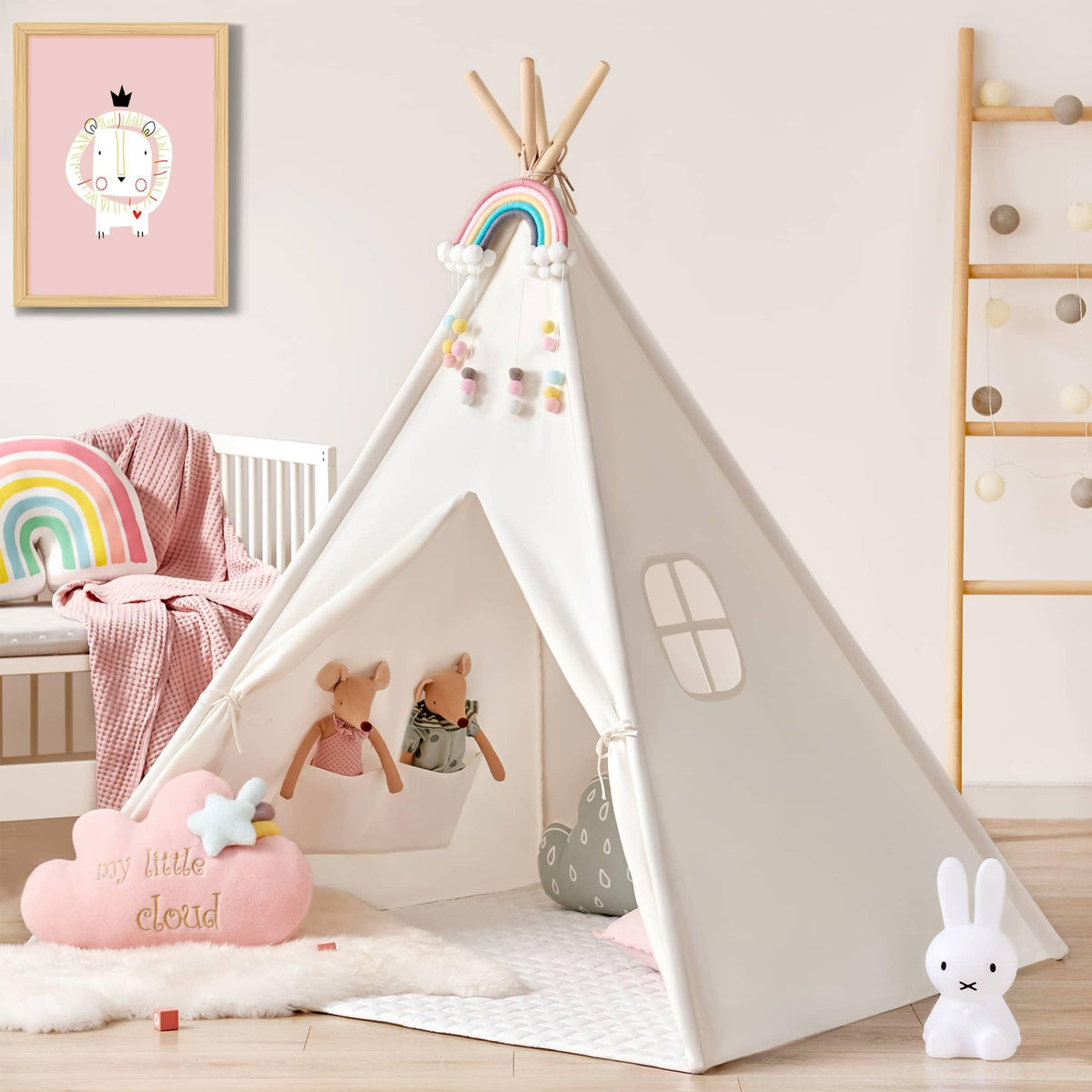
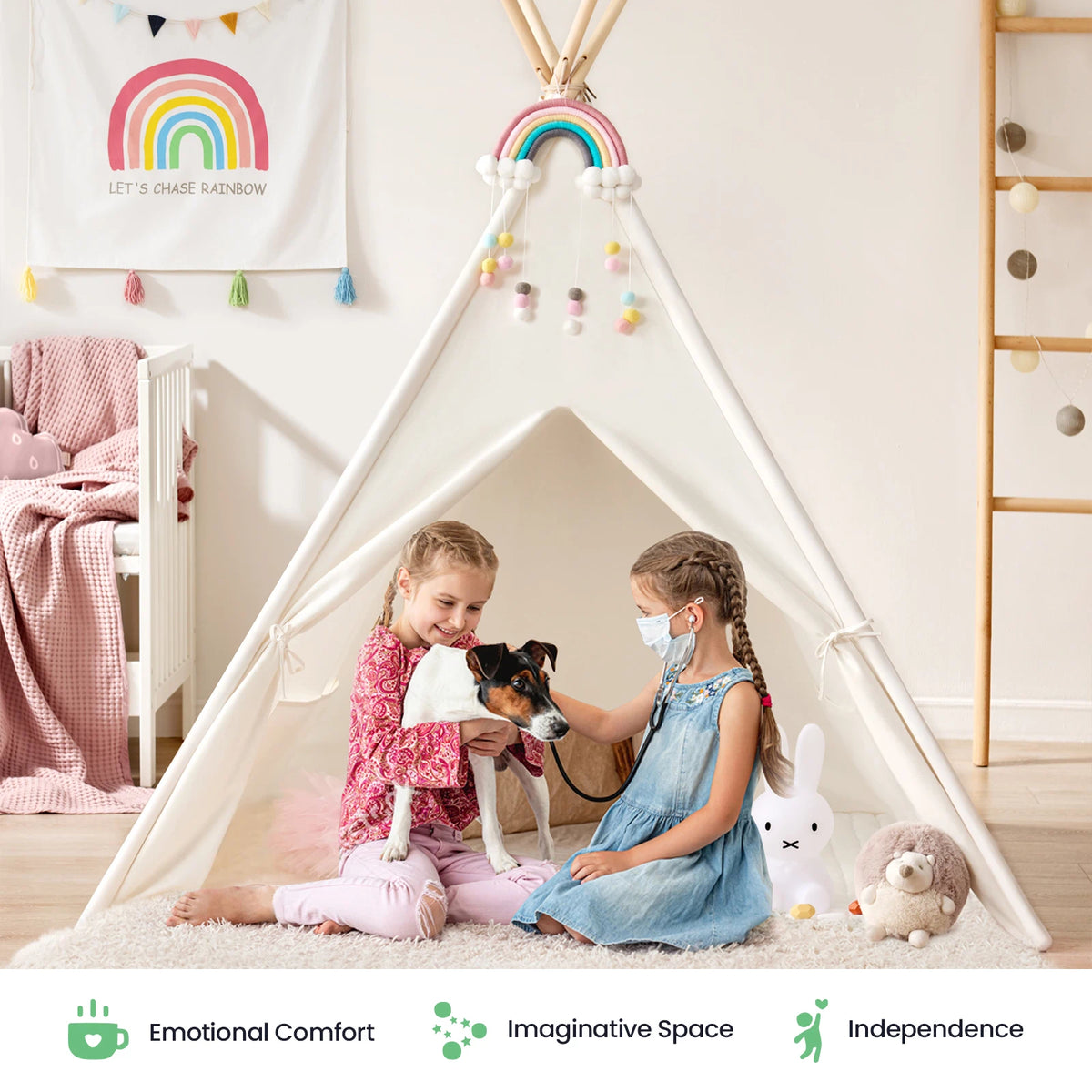
A play tent can serve as a flexible playhouse-style space for children who enjoy immersive pretend play.
Unlike a permanent play structure, a play tent can often be moved between rooms or used for different purposes throughout the day.
For example, the same play tent might become:
Morning: A reading nook
Afternoon: A pretend grocery store
Evening: A camping tent
This flexibility can be especially useful for families who want to introduce immersive pretend play without committing a large amount of space to a dedicated play structure.
For Tiny Land families, a play tent can therefore complement a dollhouse rather than replace it.

Dollhouse vs. Play Tent: Which Is Better?
If you're specifically comparing a dollhouse and play tent, the biggest difference is still the type of play they support.
A dollhouse is designed around a miniature world.
A play tent creates a child-sized environment.
Choose a dollhouse if your child loves:
Dolls + miniature furniture + small-world storytelling
Choose a play tent if your child loves:
Role-play + physical immersion + flexible pretend spaces
If your child enjoys both types of play, they can work together particularly well.
Can You Use a Dollhouse and Play Tent Together?
Yes. In fact, combining them can create more opportunities for imaginative storytelling.
Think of the dollhouse as the child's main miniature world, while the play tent becomes another location within the larger story.
For example:
Dollhouse → Family Home → Play Tent → Camping Trip
Dollhouse → Bedroom → Play Tent → Cozy Reading Space
Dollhouse → Family House → Play Tent → Backyard Clubhouse
The child decides what the space represents.
This is one of the strengths of open-ended pretend play: children don't have to use a toy in only one way.
 Which Is Better for Small Spaces?
If floor space is limited, a dollhouse is generally easier to keep set up because children can play around it rather than needing to enter it.
A play tent can still be a practical option when flexibility matters. Look for a design that can be moved or stored when the play space needs to serve another purpose.
Before buying either toy, consider:
-
Where the toy will be placed
-
How much floor space it requires
-
Whether children can move around it safely
-
How often you expect to store it
-
Whether it can be used for more than one type of play
The best pretend-play toy is one that your family can actually use comfortably.
Which One Encourages More Imaginative Play?
Both can encourage imaginative play, but they do it in different ways.
A dollhouse gives children a defined miniature environment while leaving the characters, dialogue, and story open-ended.
A playhouse gives children a physical environment while leaving the purpose, roles, and story open-ended.
For example, a play tent doesn't have to remain a tent.
Today it might be a house.
Tomorrow it might be a shop.
Next week it might become a spaceship.
The value comes from the child's ability to decide what the space becomes.

How to Choose the Right Pretend-Play Toy
Before buying, ask yourself four simple questions:
1. What does my child naturally play with?
If they already love dolls and miniatures, start with a dollhouse.
If they build forts, create pretend shops, or love hiding spaces, a playhouse-style toy may be a better fit.
2. Does my child prefer small-world or immersive play?
Some children love controlling tiny characters.
Others want to physically become the character.
Watching what your child does during unstructured play can give you a useful clue.
3. How much space do we have?
Measure your intended play area before purchasing.
Remember to consider not only the toy's footprint but also the space children need to comfortably play around or inside it.
4. Can the toy support different kinds of play?
Open-ended toys can remain interesting longer when children can give them different roles.
A play tent that works as a reading nook, clubhouse, camping space, and pretend home offers more than one play scenario.
A dollhouse that can be rearranged and populated with different characters can similarly support evolving stories.

Dollhouse vs. Playhouse: The Bottom Line
A dollhouse and a playhouse are both excellent options for pretend play, but they offer different experiences.
Choose a dollhouse if your child enjoys miniature worlds, dolls, figures, furniture, and detailed storytelling.
Choose a playhouse or play tent if your child enjoys stepping into pretend scenarios, creating their own spaces, and taking on different roles.
And you don't necessarily have to choose just one.
A dollhouse and play tent can work together to create two levels of imaginative play: one miniature and one child-sized.
Ultimately, the best choice isn't the toy with the most features. It's the one that gives your child the most opportunities to say:
“Let's pretend…”
 Frequently Asked Questions
What is the difference between a dollhouse and a playhouse?
A dollhouse is a miniature environment designed for playing with dolls, figures, furniture, and accessories. A playhouse is a larger, child-sized space that children can enter and use for immersive pretend play.
Is a play tent considered a playhouse?
A play tent can function as a playhouse-style pretend-play space. Children can enter it and transform it into different environments, such as a home, clubhouse, campsite, or reading nook.
Is a dollhouse or playhouse better for a 3-year-old?
It depends on the child's interests and developmental abilities. A child who enjoys dolls and miniature objects may enjoy a dollhouse, while a child who prefers active role-play and creating enclosed spaces may prefer a playhouse-style toy such as a play tent. Always follow the manufacturer's recommended age range and safety guidance.
Can a dollhouse and play tent be used together?
Yes. A dollhouse can provide a miniature setting for storytelling, while a play tent can become another location within the child's pretend-play world.
Which takes up less space, a dollhouse or playhouse?
A dollhouse generally requires less floor space. A play tent requires enough room for children to enter and move around, although a movable tent can offer greater flexibility than a permanent play structure.
What should I buy first: a dollhouse or play tent?
Choose based on your child's natural play style. If they enjoy miniature figures and detailed storytelling, start with a dollhouse. If they enjoy forts, role-play, cozy spaces, and physically entering their pretend world, a play tent may be the better first choice.