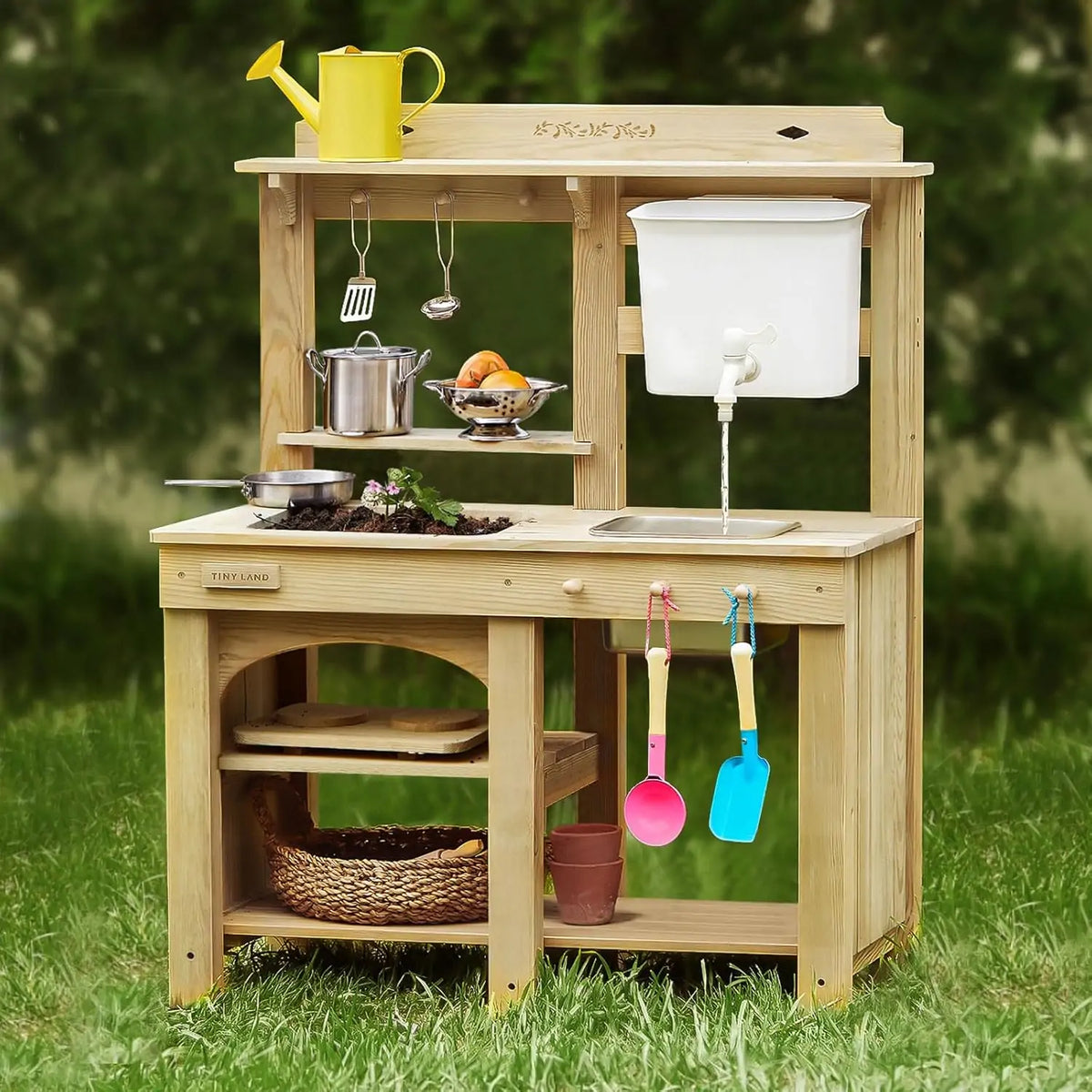
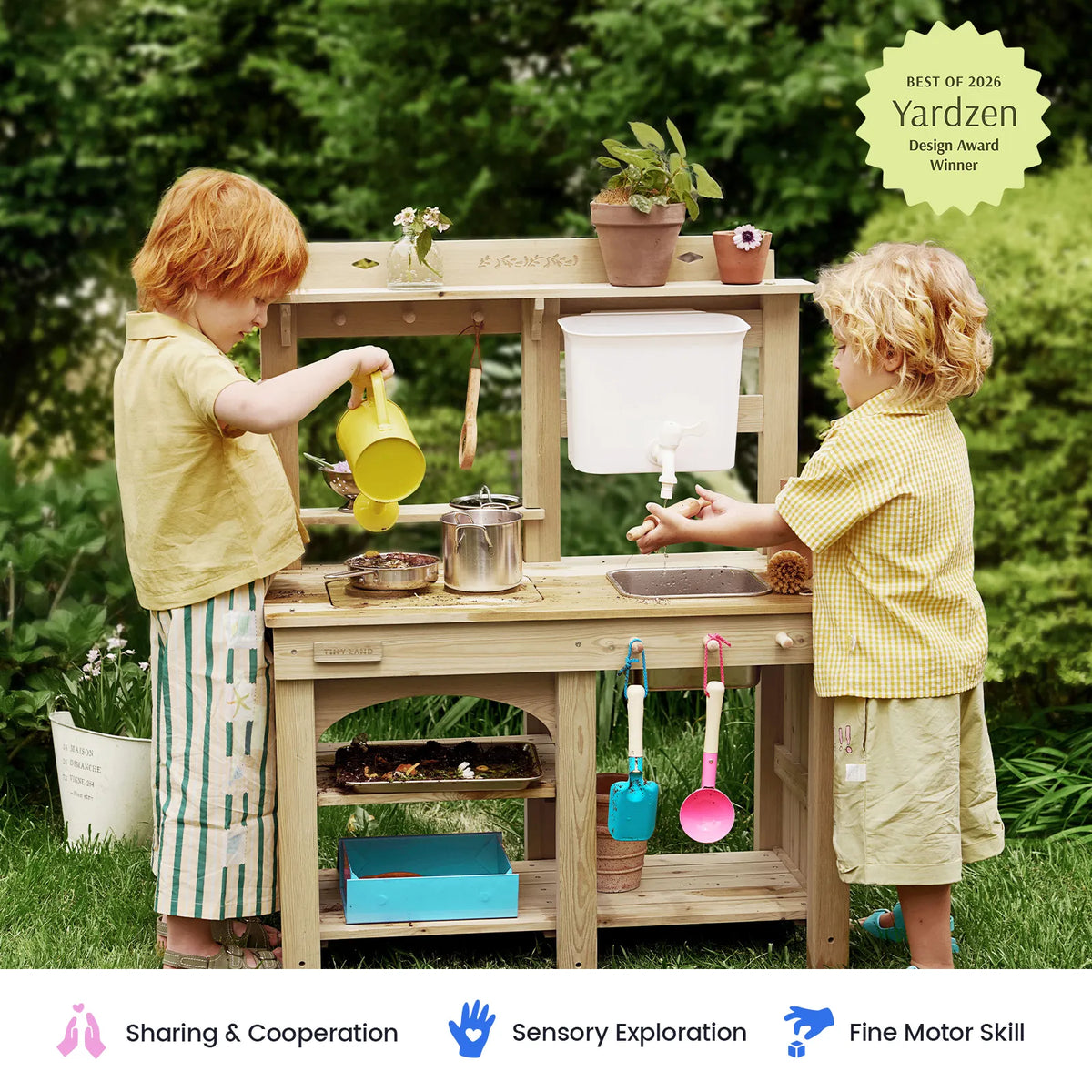
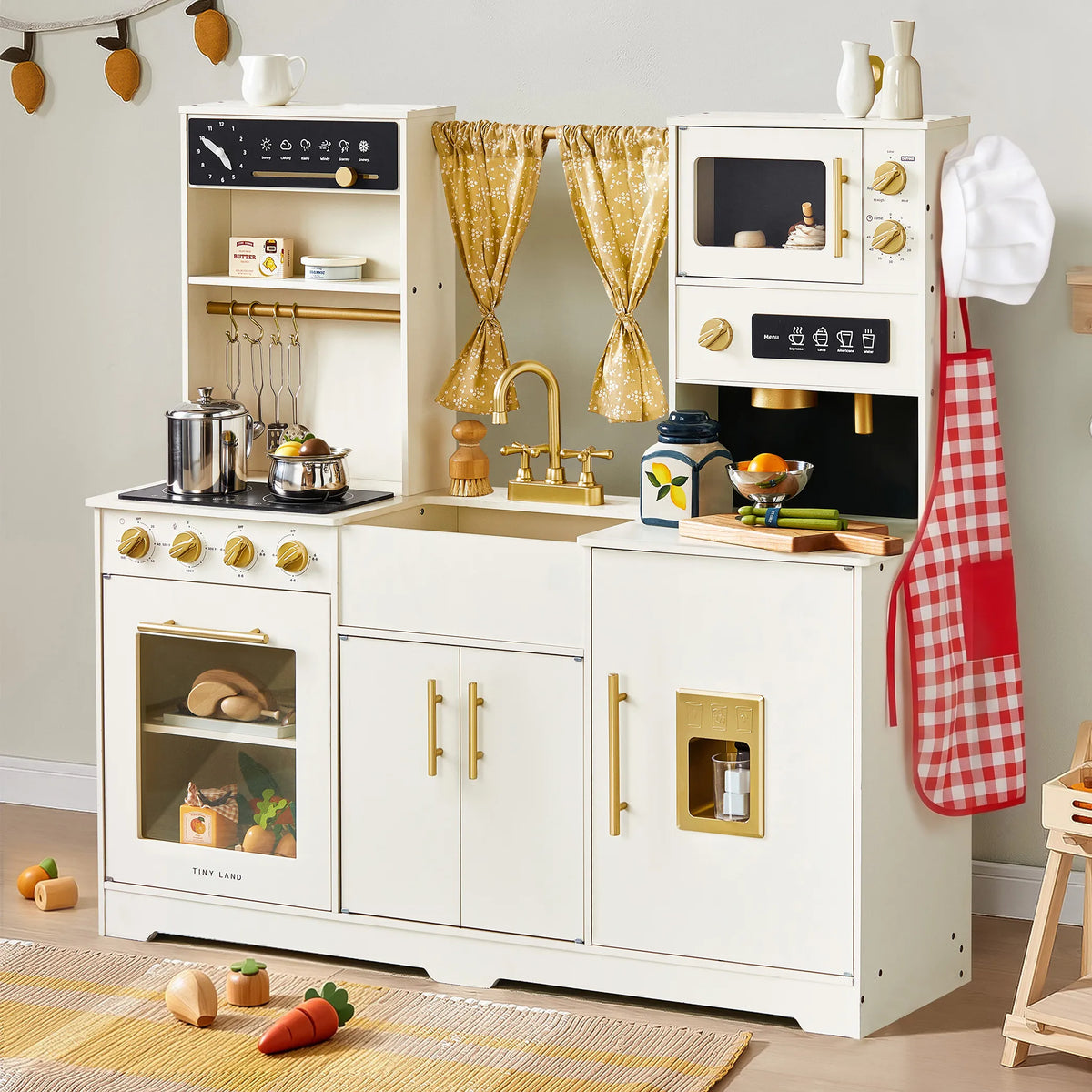
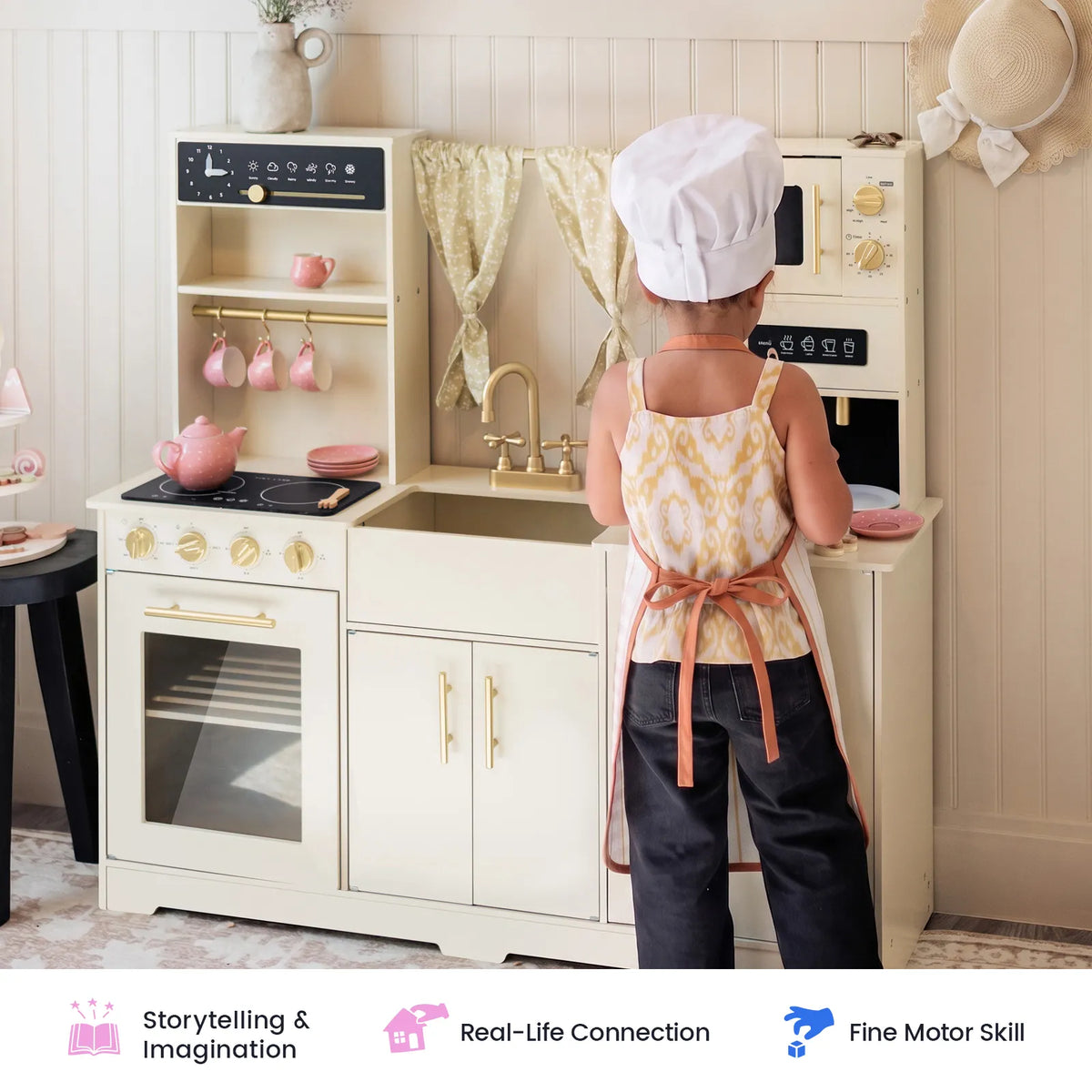
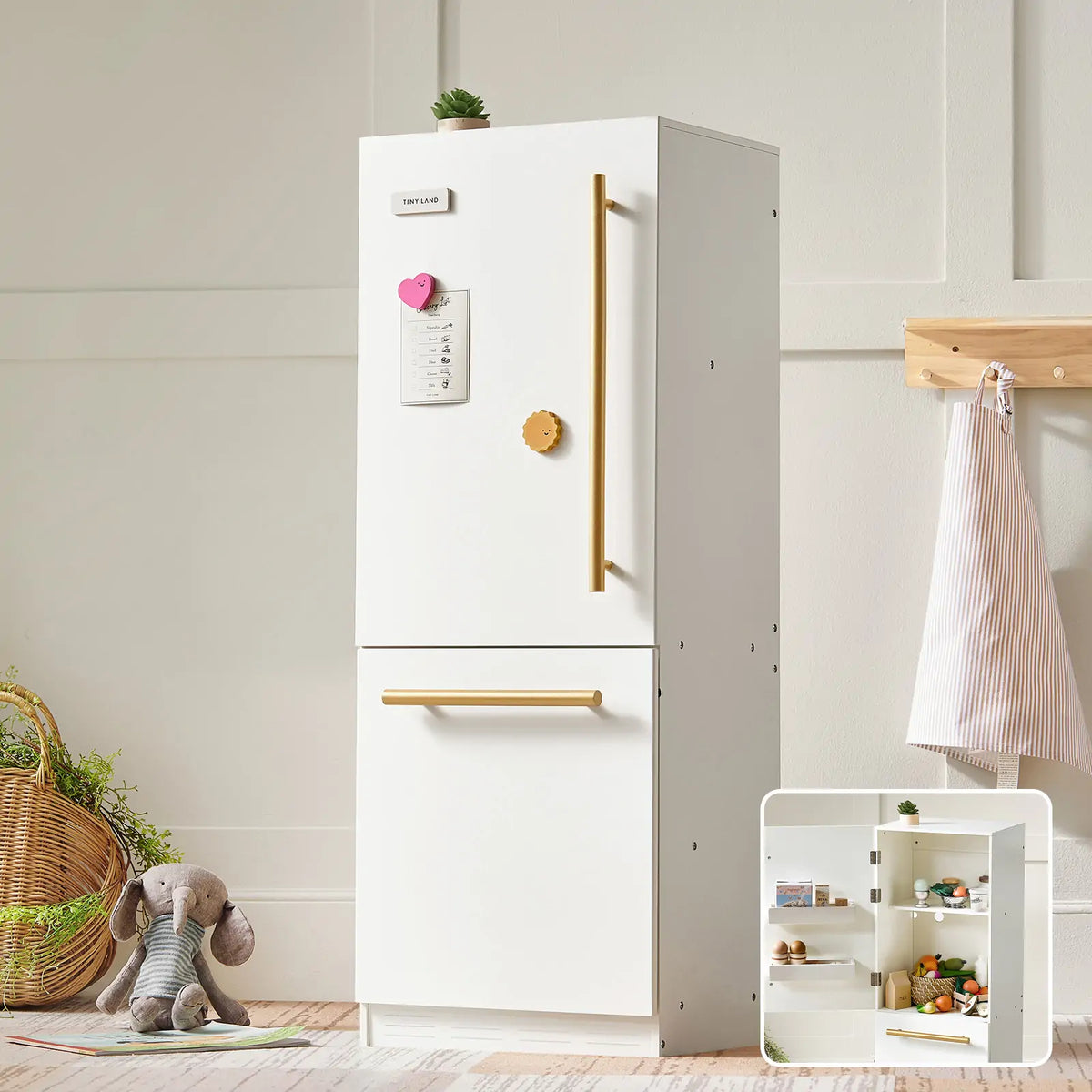
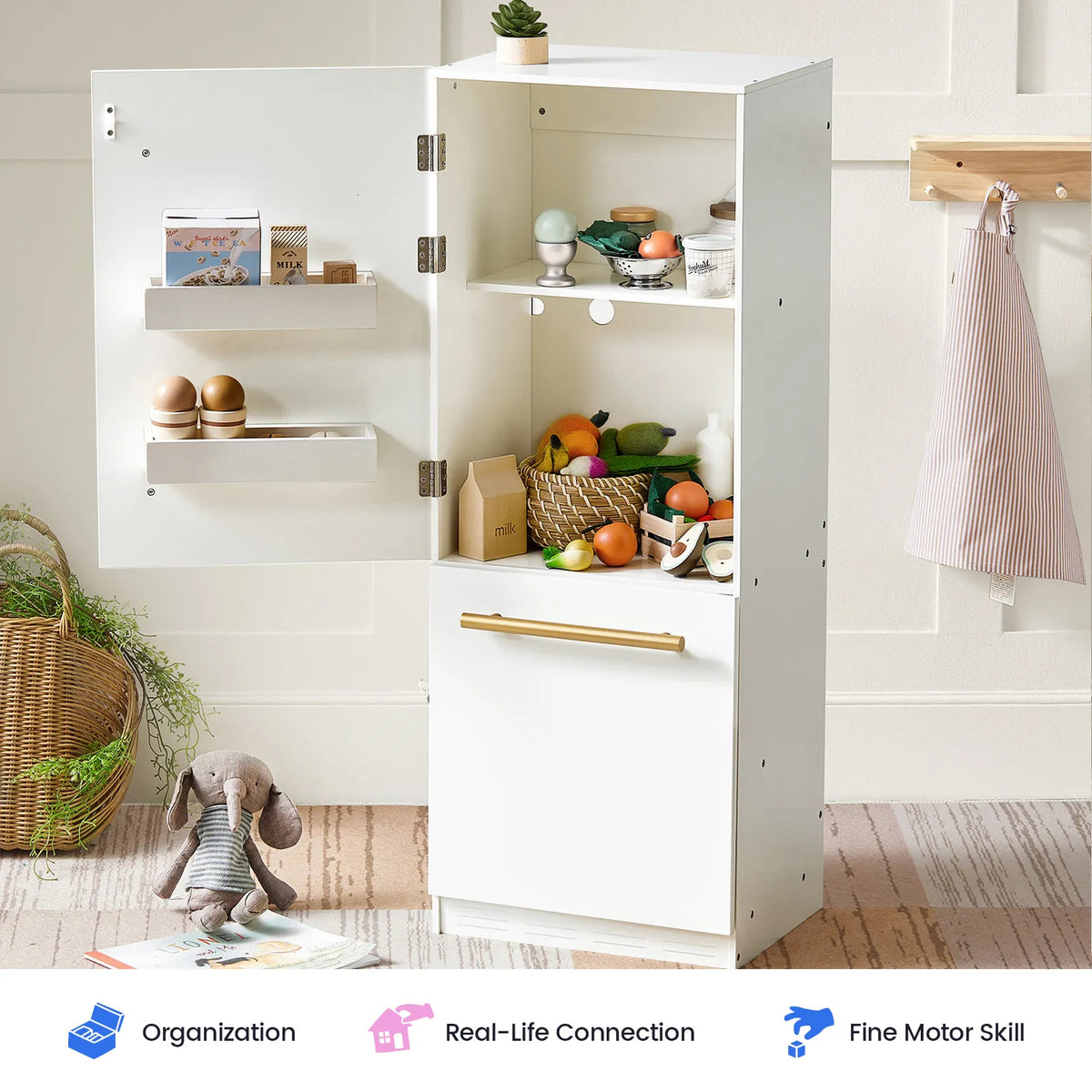
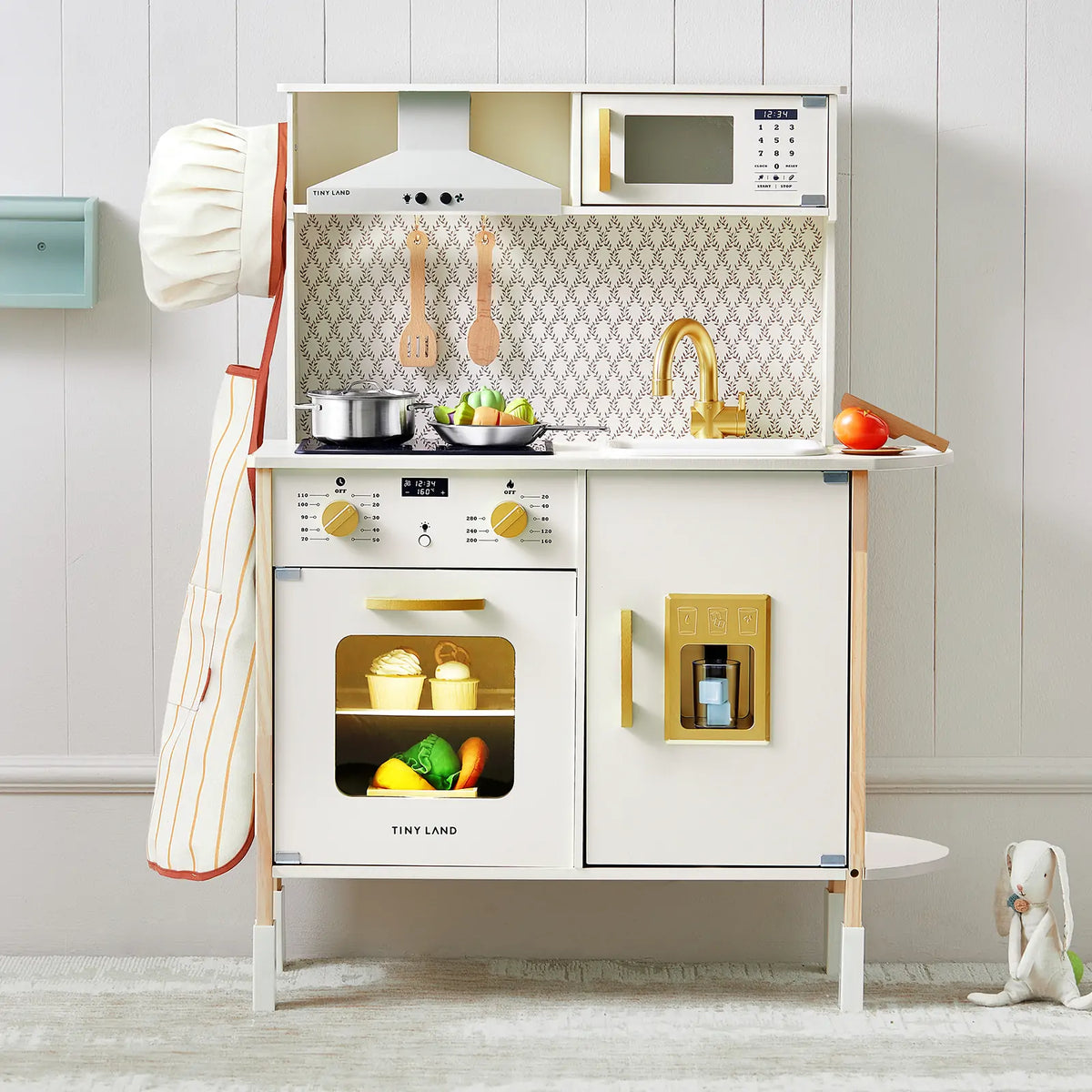
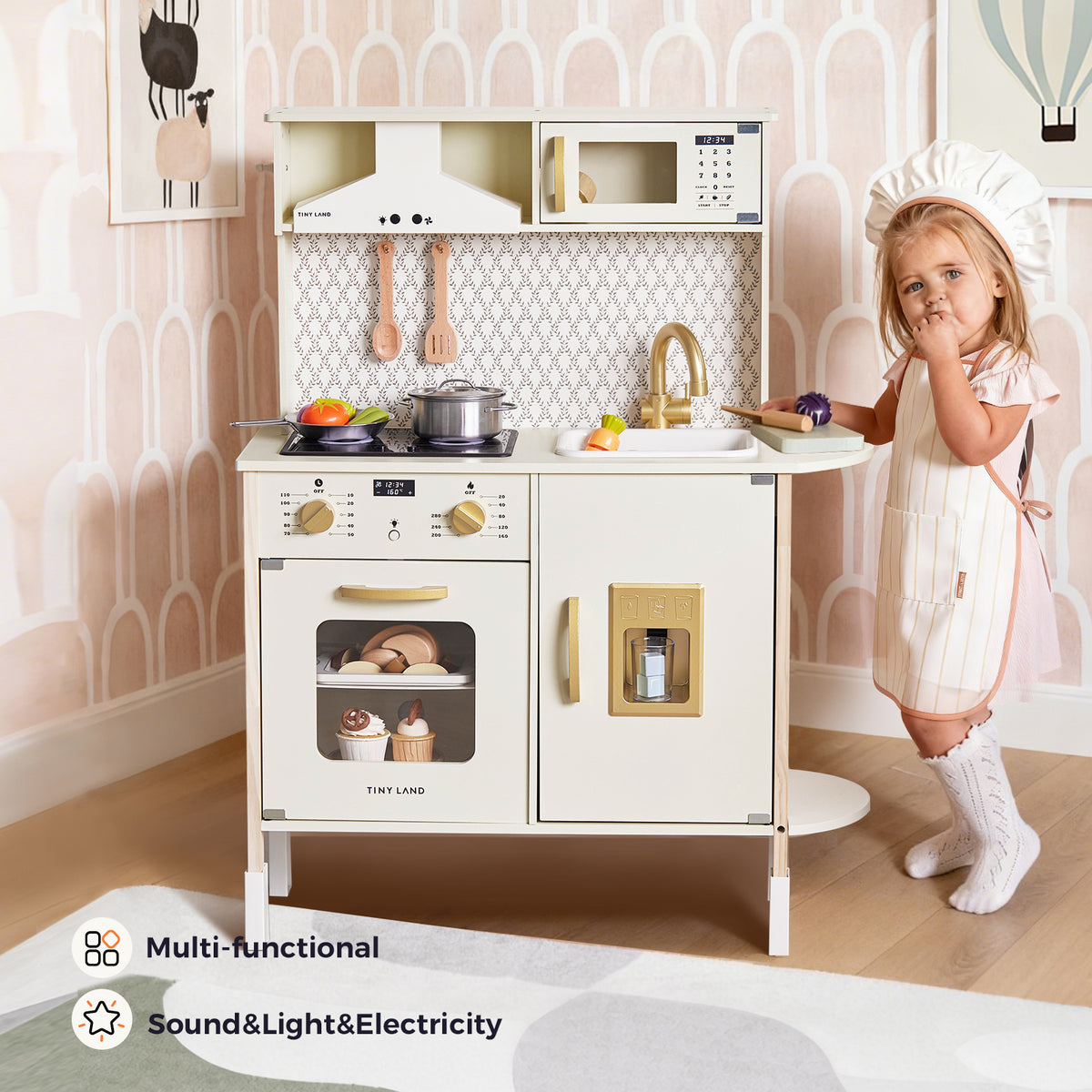



If you're deciding between a play kitchen and a pretend grocery store, you're really choosing between two different types of pretend play.
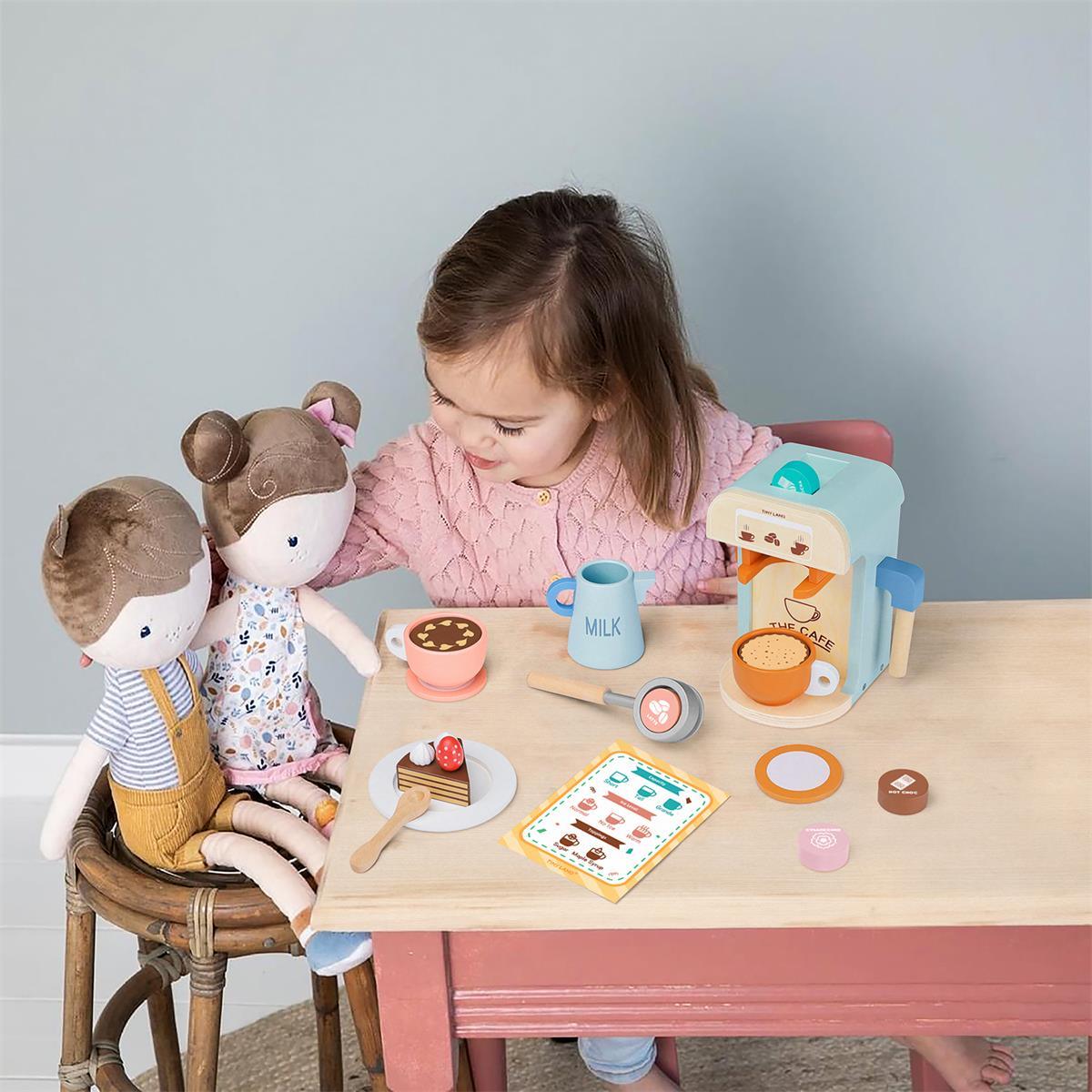
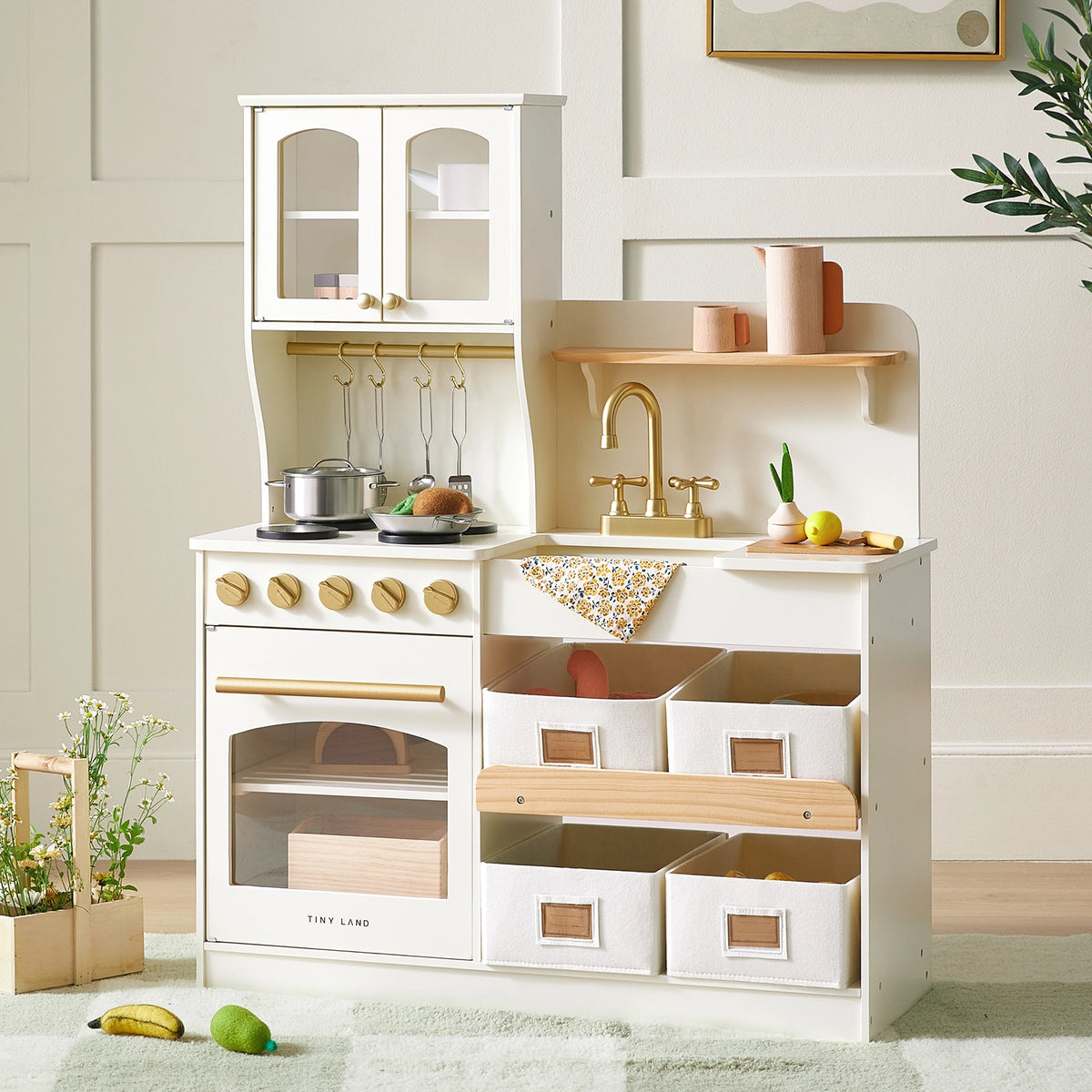
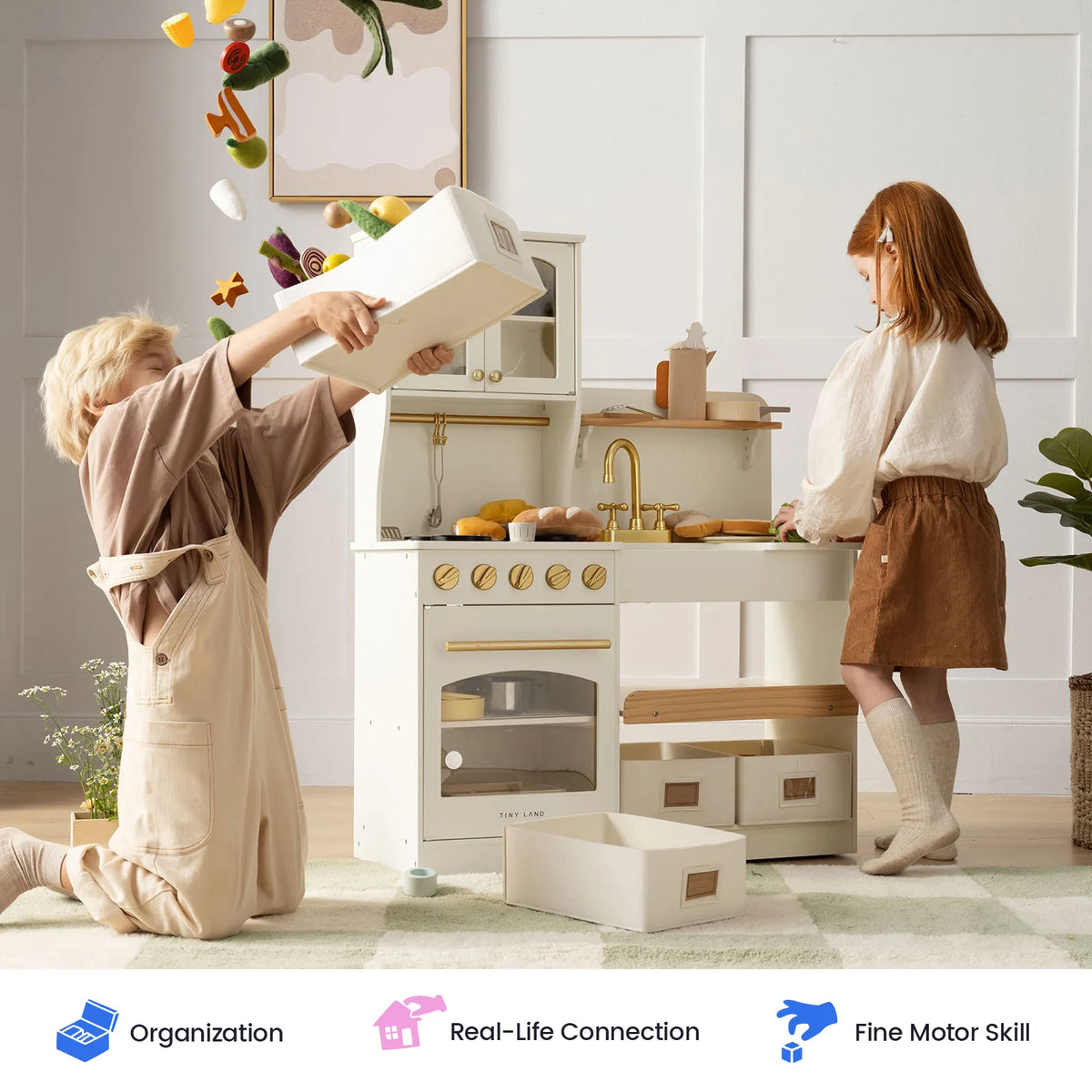
A play kitchen gives children a space to cook, prepare food, and recreate familiar home routines.
A pretend grocery store or market stand lets children shop, sell, sort, organize, communicate, and take on different roles.
So which one should you buy first?
Choose a play kitchen if your child is especially interested in cooking and food preparation.
Choose a market stand if your child enjoys shopping, organizing, interacting with others, or pretending to run a business.
And if you already have a play kitchen, a market stand can add a completely different layer of pretend play.

Play Kitchen vs. Grocery Store: What's the Difference?
The easiest way to compare them is to look at the type of play each one naturally invites.
| Play Kitchen | Pretend Grocery Store / Market Stand | |
|---|---|---|
| Main play theme | Cooking and food preparation | Shopping, selling, and organizing |
| Common roles | Chef, parent, baker, restaurant owner | Customer, shopkeeper, cashier, market owner |
| Typical activities | Cooking, serving, washing, preparing meals | Choosing, sorting, displaying, buying, selling |
| Social play | Cooking together, restaurant play | Customer-and-seller role play, turn-taking |
| Story possibilities | Home, restaurant, bakery, café | Grocery store, farmers market, bakery, café, lemonade stand |
| Best fit for children who enjoy | Food and household routines | Shopping, communication, organizing, and role switching |
Neither toy is better for every child.
The better choice depends on what your child wants to pretend to do.

What Can Kids Do With a Play Kitchen?
A play kitchen recreates familiar activities children see at home and in restaurants.
Children can pretend to:
-
Cook breakfast or dinner
-
Prepare snacks
-
Wash dishes
-
Make drinks
-
Bake
-
Serve meals
-
Run a restaurant
-
Open a café
-
Cook for dolls or stuffed animals
Because these experiences are familiar, children often have an easy entry point into pretend play.
A simple cooking game can quickly turn into a restaurant, bakery, family dinner, or imaginary café.
Play Kitchen Pretend-Play Ideas
Family Kitchen
Your child prepares a pretend meal for the family.
Restaurant
One child becomes the chef while another becomes the customer.
Bakery
Children make and “sell” imaginary cakes, cookies, or bread.
Café
They take orders and serve pretend drinks and snacks.
A play kitchen is therefore a natural choice for children who repeatedly gravitate toward cooking, food preparation, and household routines.

What Is a Pretend Grocery Store?
A pretend grocery store recreates another familiar real-world experience: shopping.
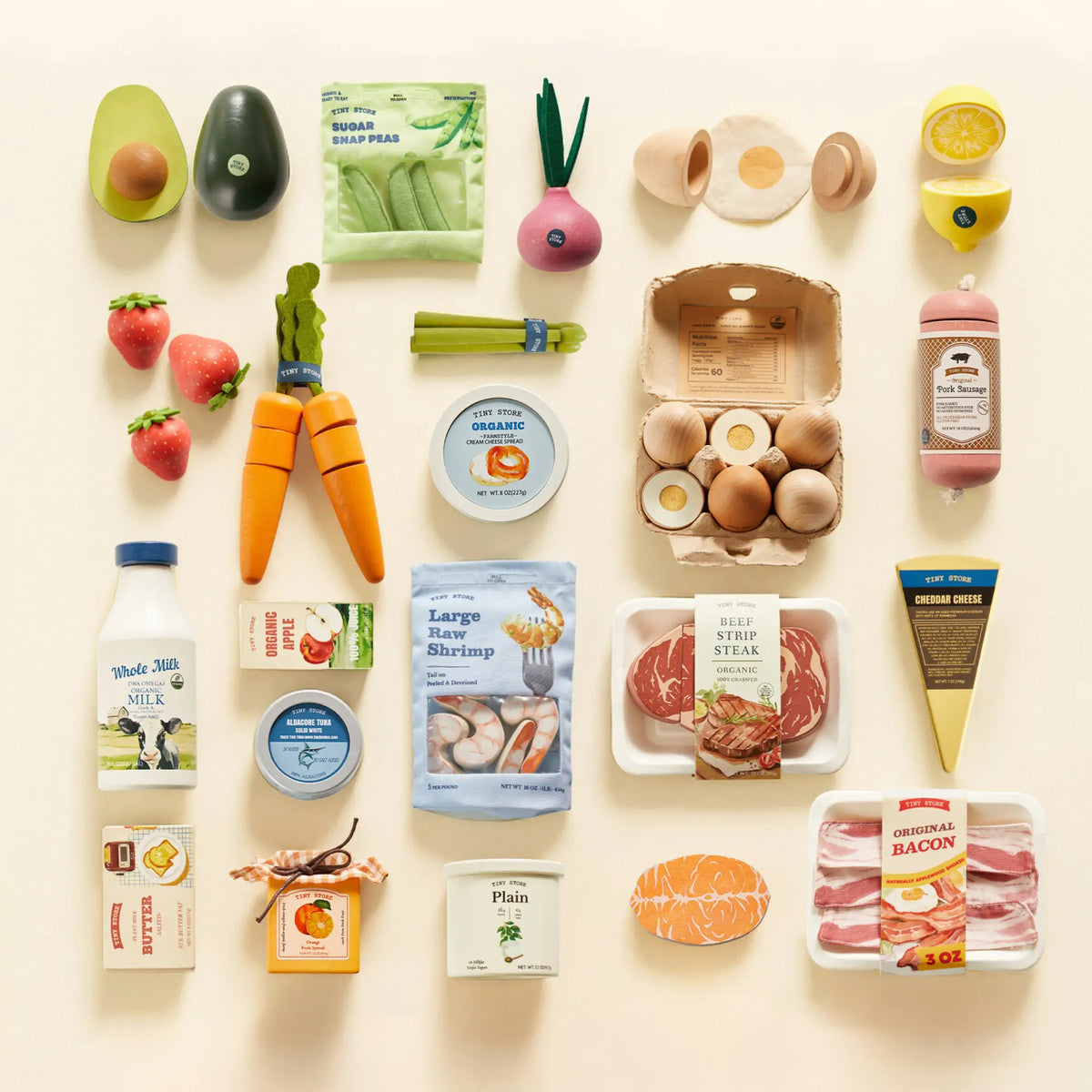
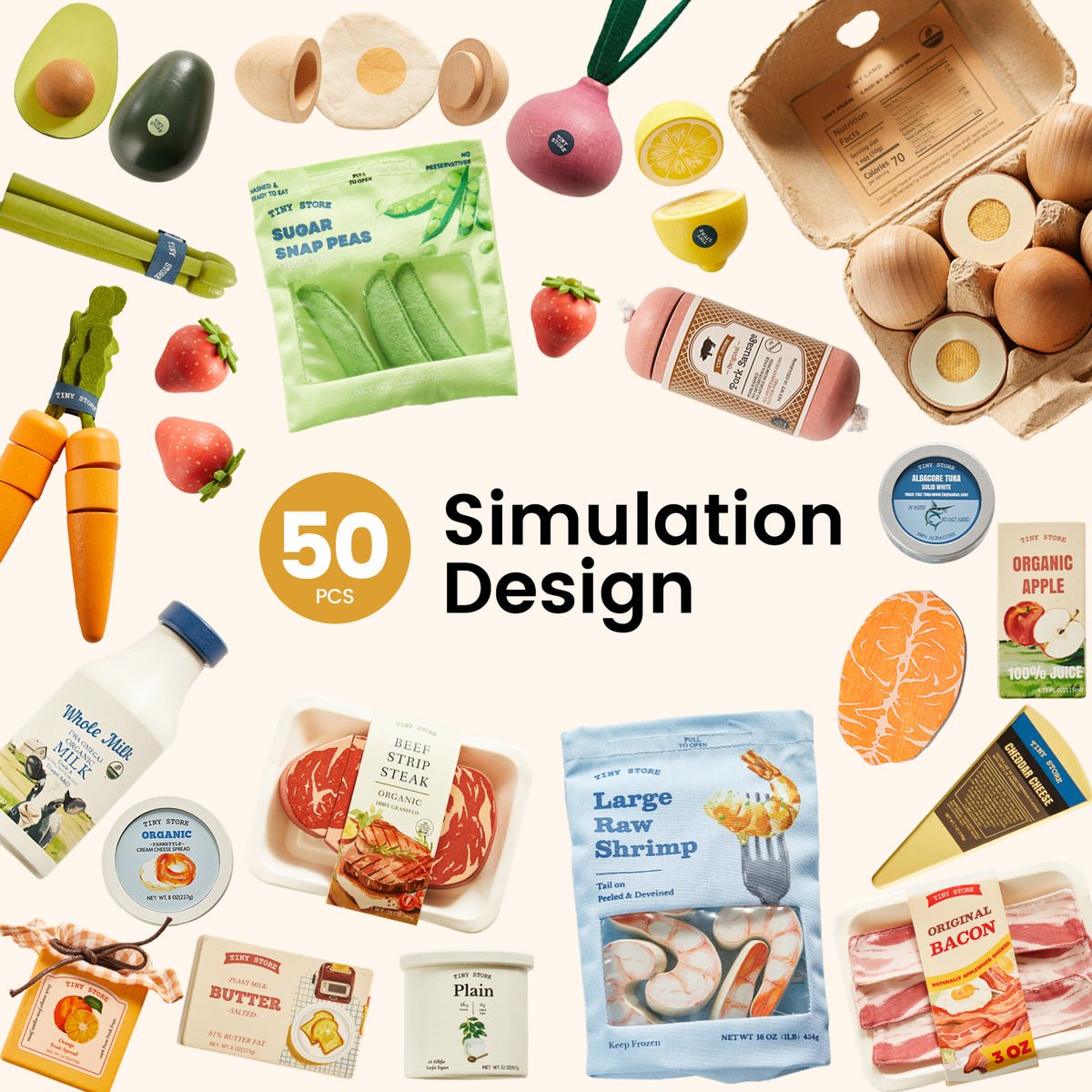
Instead of primarily preparing food, children can pretend to run a store, arrange products, serve customers, or shop for ingredients.
A pretend grocery store can include:
-
Pretend fruits and vegetables
-
Grocery bags or baskets
-
Product displays
-
Shopping lists
-
Price tags
-
A checkout area
-
A market stand
The play becomes even more flexible when children can switch between being the shopkeeper and the customer.
For example:
“Welcome to my store!”
“I need two apples.”
“Here you go!”
“Thank you!”
These simple exchanges turn an everyday shopping experience into a pretend-play story.

What Are the Benefits of Pretend Grocery Store Play?
Pretend grocery store play combines imagination with a familiar real-world setting. Research and early-childhood resources have used grocery-store dramatic play to explore communication, role-taking, sorting, literacy, and early math concepts.
Here are some of the ways children can learn through the play itself.
1. Communication Through Realistic Roles
A grocery store gives children a reason to communicate.
They may:
-
Ask for an item
-
Answer a customer
-
Name foods
-
Describe products
-
Make a shopping list
-
Pretend to take an order
-
Welcome customers
The language is connected to the story rather than presented as a separate exercise.
The American Academy of Pediatrics also notes that pretend play can support children's language, socialization, problem-solving, and independence.
2. Turn-Taking and Social Play
A pretend grocery store naturally creates multiple roles.
One child can be the shopkeeper while another becomes the customer.
Then they can switch.
With more children, additional roles can appear:
-
Cashier
-
Shopper
-
Store owner
-
Delivery person
-
Store helper
In group dramatic-play settings, children can use familiar scenarios and defined roles to participate in shared play. Research-based early-childhood guidance also emphasizes that role-playing helps children understand how different people interact within a setting.

3. Sorting and Organizing
Running a pretend store gives children a reason to organize products.
They might put:
-
Fruits together
-
Vegetables together
-
Drinks together
-
Baked goods together
They can also decide how products should be displayed.
This turns sorting into part of the pretend scenario.
Digital Promise specifically uses a pretend grocery activity to help preschoolers practice sorting and labeling food into groups and subgroups.
4. Early Math Through Pretend Shopping
Pretend shopping can introduce everyday math concepts without turning play into a worksheet.
Depending on the child's age, they might:
-
Count products
-
Compare quantities
-
Recognize numbers
-
Match prices
-
Create shopping lists
-
Pretend to pay
-
Work out simple totals
For a younger child: “Can you find two apples?”
For an older preschooler: “The apples cost $2. How much will two bags cost?”
The important part is keeping the activity playful and appropriate to the child's level.

5. Early Literacy Through Signs and Lists
A pretend grocery store can also create a natural reason to use print.
Children can make:
-
Store signs
-
Product labels
-
Shopping lists
-
Menus
-
“Open” and “Closed” signs
-
Special offers
The Toy Foundation's early-childhood guidance recommends using familiar settings such as grocery stores and creating authentic writing opportunities through signs and other play props.
Writing “OPEN” on a pretend store sign has a clear purpose inside the child's story: the store needs to tell customers that it is open.
 Play Kitchen vs. Market Stand: Which Is Better for Social Pretend Play?
If your child enjoys playing with siblings, parents, or friends, a market stand can create particularly natural opportunities for role switching and interaction.
A play kitchen can absolutely support social play. Children can cook together, play restaurant, or prepare meals for dolls and family members.
But a market stand creates an immediate buyer-and-seller relationship.
That gives children a reason to:
-
Take turns
-
Ask questions
-
Make choices
-
Respond to one another
-
Switch roles
-
Build a shared story
Pretend play in groups can involve planning, negotiating roles, listening, and working together toward a shared scenario.
For example:
Child 1: “I'm the shopkeeper.”
Child 2: “I'm buying apples.”
Child 1: “Here are your apples.”
Child 2: “Thank you!”
Then they can switch.
The same market can become a completely different game a few minutes later.

7 Pretend Grocery Store and Market Stand Ideas
One of the biggest advantages of a market stand is its flexibility.
It doesn't have to remain a grocery store.
The same play space can become a different business simply by changing the story.
1. Farmers Market
Display pretend fruits and vegetables.
Children can become farmers, sellers, or shoppers.
2. Grocery Store
Organize products into sections and create simple shopping lists.
3. Lemonade Stand
Pretend to sell lemonade to family members.
Children can create a sign and decide what their lemonade costs.
4. Bakery
Turn the market into a pretend bakery selling bread, cookies, or cakes.
5. Ice Cream Shop
Create a pretend menu and let customers choose their flavors.
6. Flower Shop
Use pretend flowers and let children create bouquets for customers.
7. Café or Coffee Shop
Children can take orders and serve pretend drinks and snacks.
This is where a market stand can become more than a pretend grocery store.
The setting stays the same. The story changes.
 How to Set Up a Pretend Grocery Store at Home
You don't need a large playroom or a complicated collection of toys.
A small market stand, some pretend food, and a few simple props can be enough to get started. Even early-childhood activity resources recommend using everyday containers, baskets, food props, signs, and simple pretend money to create a grocery-store scenario.
Step 1: Choose What Your Store Sells
Let your child decide.
You might start with:
-
Fruits
-
Vegetables
-
Bread
-
Drinks
-
Snacks
-
Flowers
Step 2: Organize the Products
Ask: “Where should the apples go?”
Let your child decide how the store should be arranged.
Step 3: Make Store Signs
Create a simple sign together.
For younger children, use pictures.
Older preschoolers can add letters, words, or numbers.
Step 4: Create a Shopping List
Try:
2 apples
1 loaf of bread
3 carrots
Your child can find each item and place it in a pretend shopping bag.
Step 5: Switch Roles
Start as the customer.
Then let your child become the shopkeeper.
Switch again when they are ready.
Step 6: Follow Your Child's Story
If the grocery store suddenly becomes a dinosaur shop, that's okay.
If the bakery becomes a flower shop, follow along.
The goal isn't to make children play “correctly.”
The goal is to give them a setting where they can create their own ideas.
 Can You Use a Market Stand With a Play Kitchen?
Yes—and the two can work especially well together.
They represent different parts of a familiar pretend-play story.
Step 1: Shop
“I need ingredients for dinner.”
Step 2: Choose
“I'll take some apples and vegetables.”
Step 3: Bring Them Home
“Let's cook!”
Step 4: Prepare
The play kitchen becomes the cooking area.
Step 5: Serve
The child serves the meal to family members, dolls, or stuffed animals.
The resulting storyline becomes:
Shop → Choose → Buy → Cook → Serve
This is one reason a market stand can be a useful addition to an existing play kitchen: it expands the pretend-play world rather than simply repeating the same activity.
 Which Pretend-Play Toy Should You Buy First?
If you're buying only one, start with your child's interests.
Choose a Play Kitchen If Your Child Loves:
-
Pretend cooking
-
Food preparation
-
Baking
-
Playing restaurant
-
Serving meals
-
Household routines
-
Imitating adults in the kitchen
Choose a Market Stand If Your Child Loves:
-
Pretend shopping
-
Organizing objects
-
Buying and selling
-
Talking with others
-
Switching roles
-
Making choices
-
Creating different pretend businesses
Already Have a Play Kitchen?
A market stand can be a particularly useful next addition.
Instead of adding another toy centered around cooking, it introduces a new play context:
Kitchen → preparation
Market → shopping and selling
Together:
Market → kitchen → meal → restaurant
That creates more ways for children to connect separate pretend-play experiences into one story.

Why Choose a Market Stand for Open-Ended Pretend Play?
A market stand gives children a recognizable real-world setting without determining exactly how they must play.
It can be a grocery store in the morning and a bakery in the afternoon.
It can become a farmers market on the weekend or a café during family play.
The Tiny Land Market Stand is designed around this kind of flexible pretend play, giving children a dedicated space to create different market and shop scenarios.
Children can decide what the store sells, how it is organized, who works there, and who the customers are.
The point isn't to give children a fixed script.
The market stand provides the setting. Children create the story.
 Play Kitchen or Grocery Store: Which One Is Right for Your Child?
A play kitchen and a pretend grocery store can both become valuable parts of imaginative play, but they start from different everyday experiences.
Choose a play kitchen if your child is drawn to cooking, food preparation, and household routines.
Choose a market stand if your child is drawn to shopping, organizing, communication, selling, and role switching.
And if you already have a play kitchen, a market stand can open up an entirely different direction for pretend play.
Ultimately, you don't need the toy with the most features.
You need a play environment that gives your child room to make choices, create roles, build stories, and decide what happens next.
Because a market stand doesn't have to stay a grocery store.
Today it can be a farmers market. Tomorrow it can be a bakery. Next week, it can become whatever your child imagines.