


You can create a pretend grocery store for kids with just a few simple things: play food, a shelf or market stand, a shopping basket, and a simple shopping list.
Children can use the setup to pretend shop for groceries, sort food, count items, check out, and take their purchases home for pretend cooking.
The key is to give each piece of play food a purpose.
By organizing food into familiar grocery store sections and adding simple shopping games, you can turn everyday pretend grocery shopping into an engaging role-play activity.
Here's how to set up a grocery store at home and create simple grocery store pretend play activities for toddlers and preschoolers.

Why Create a Pretend Grocery Store at Home?
Grocery shopping is a familiar part of everyday family life, which makes it an easy activity for children to recreate through dramatic play.
Encourage Imaginative and Social Play
A grocery store gives children a setting for creating their own stories.
One child might be the shopper while another becomes the cashier. Children can switch roles, decide what the store sells, and create their own shopping scenarios.
When several children play together, they can also practice taking turns and communicating as they work through the same pretend shopping experience.
Practice Sorting, Counting, and Communication
Play food creates natural opportunities for simple learning through play.
Children can sort apples and bananas, count items in a shopping basket, compare quantities, identify colors, and use everyday words such as "buy," "sell," "pay," and "checkout."
You can make the activity easier or more challenging depending on your child's age.
Connect Pretend Play to Everyday Life
Children often see adults choosing groceries, paying at checkout, carrying shopping bags, and preparing food at home.
Through pretend shopping, children can recreate these familiar routines. They can decide what their pretend family needs, shop for ingredients, and bring the groceries home to prepare a meal.

What You Need for a Pretend Grocery Store
You don't need a large playroom or a complicated setup. Start with the basics and add accessories as your child's play develops.
A Pretend Grocery Store or Market Stand
A dedicated pretend grocery store gives children defined spaces for displaying food, shopping, checking out, and restocking.
Shelves and display areas also help children understand where different foods belong. If you have limited space, a small shelf, table, or designated play area can work too.
Play Food for Different Grocery Sections
Play food is the heart of the activity.
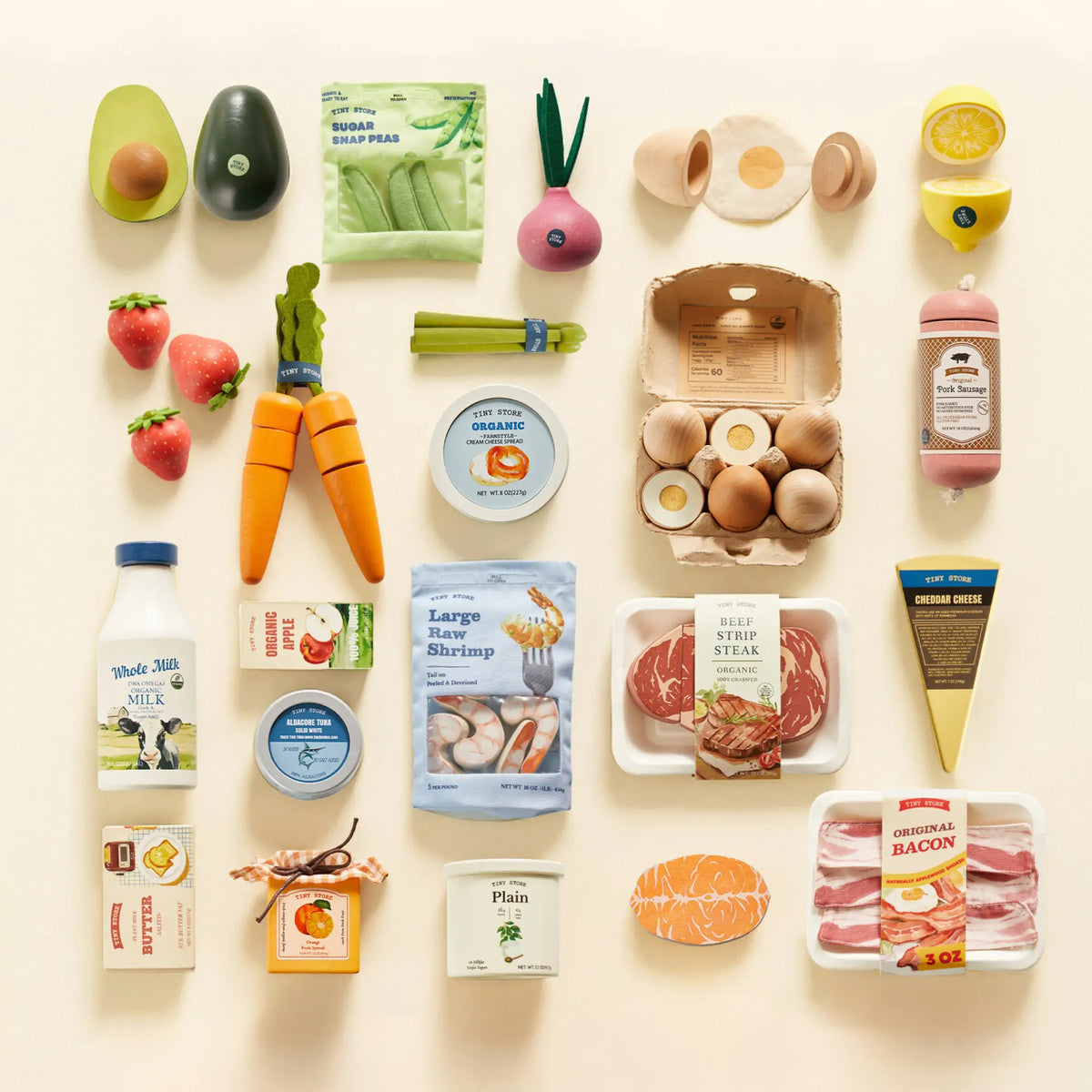
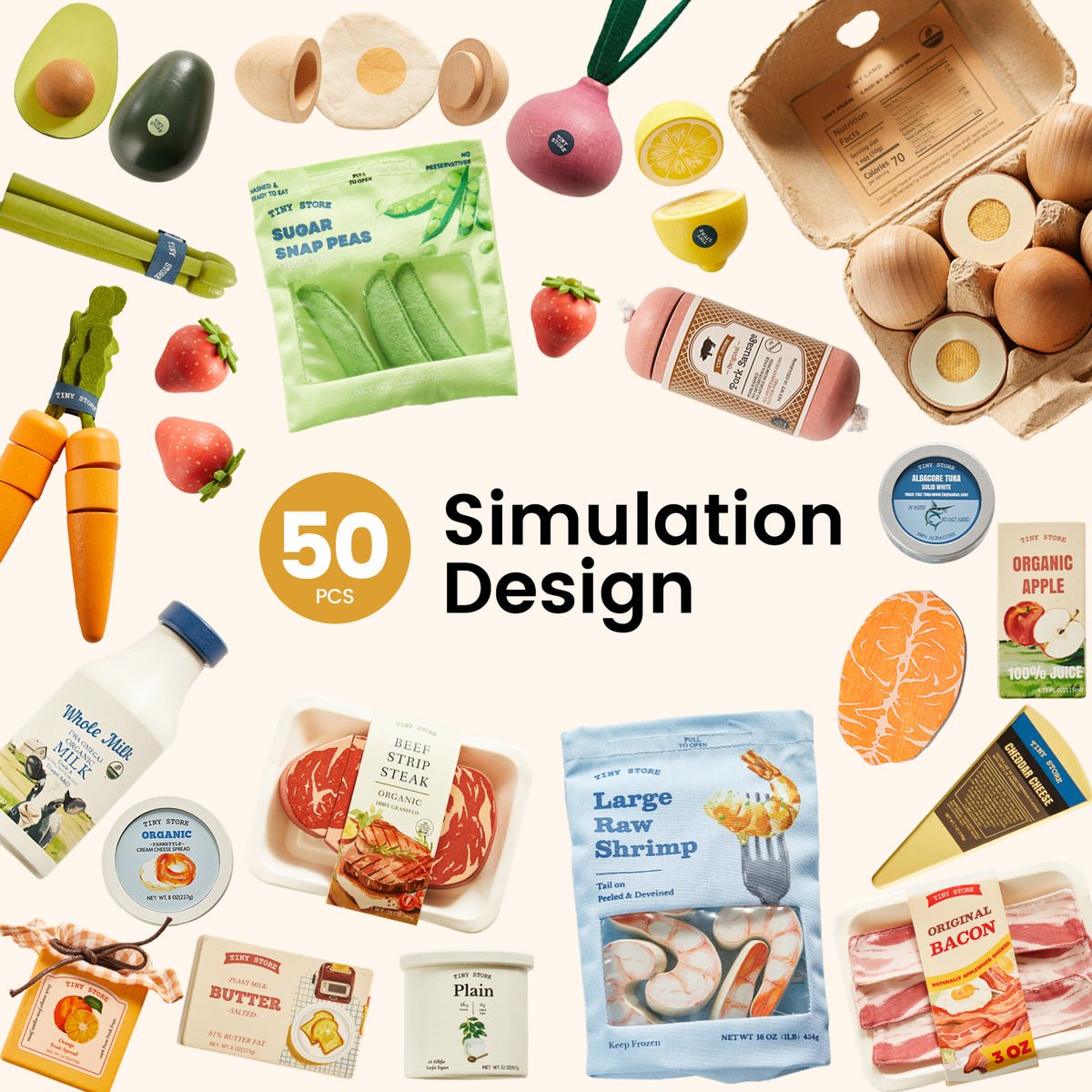
Choose familiar foods that can be grouped into different sections, such as fruits, vegetables, bakery items, breakfast foods, snacks, and drinks.
A variety of shapes, colors, and food types gives children more opportunities to sort, count, match, and create pretend meals.
Shopping Baskets and Reusable Bags
Add a shopping basket or reusable bag for collecting groceries.
The simple sequence of choose → place in basket → check out → take home helps turn individual pieces of play food into a complete pretend-shopping experience.
Shopping Lists, Price Tags, and Pretend Money
A simple shopping list gives children a reason to search the store.
For younger children, use pictures. Preschoolers can follow lists with simple words or numbers.
Pretend money and price tags can be added when children are ready to practice simple counting during checkout.
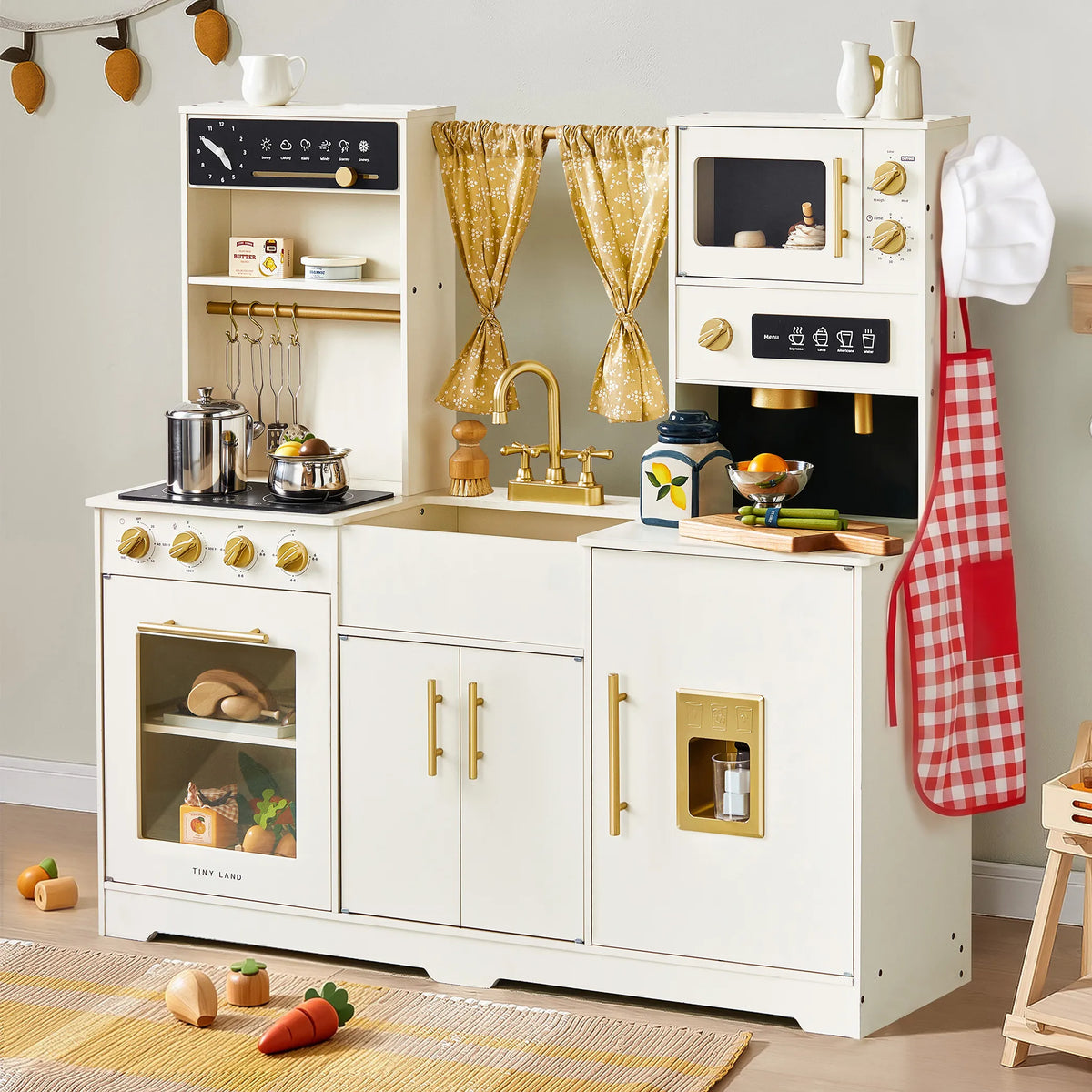
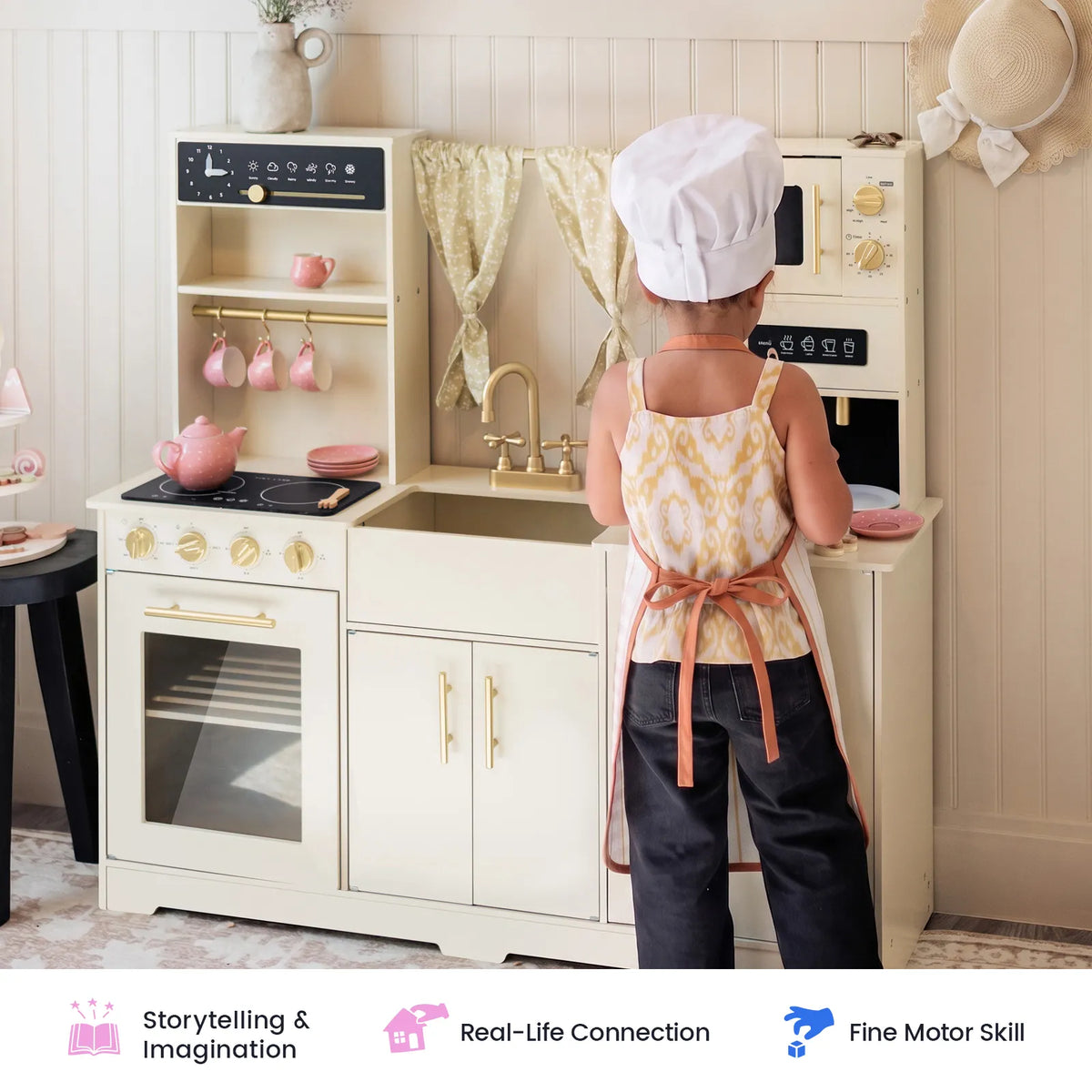
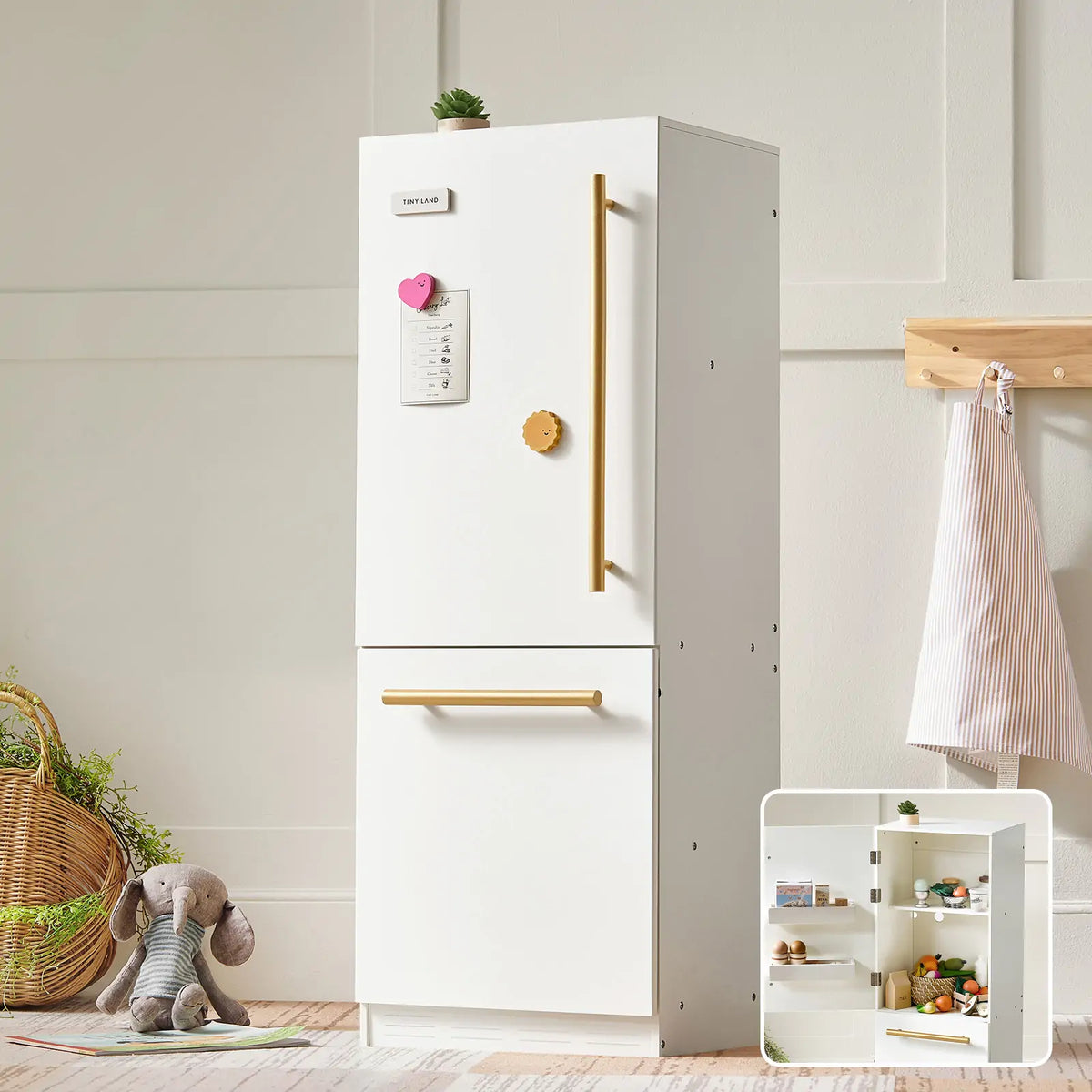
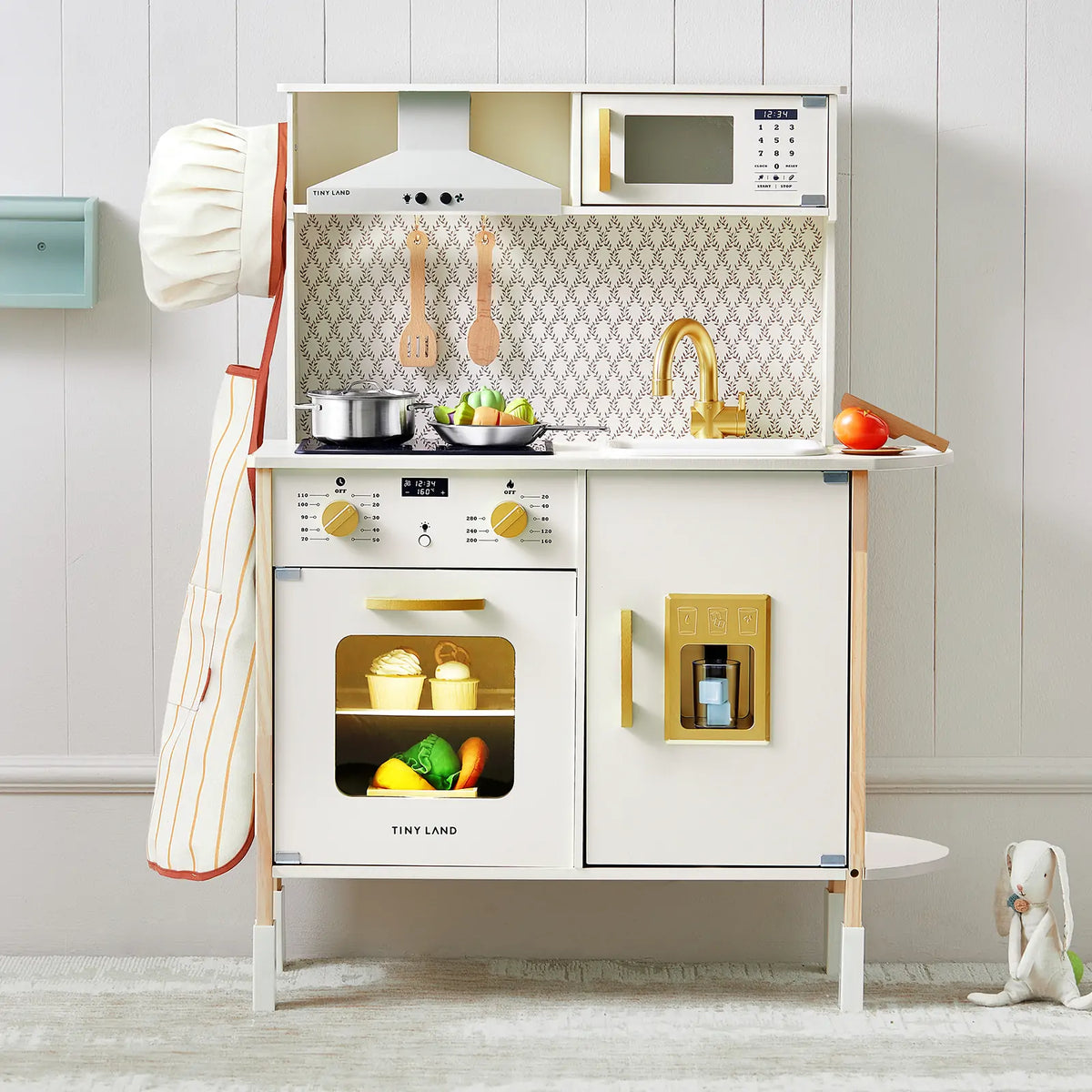
A Play Kitchen for the Next Step
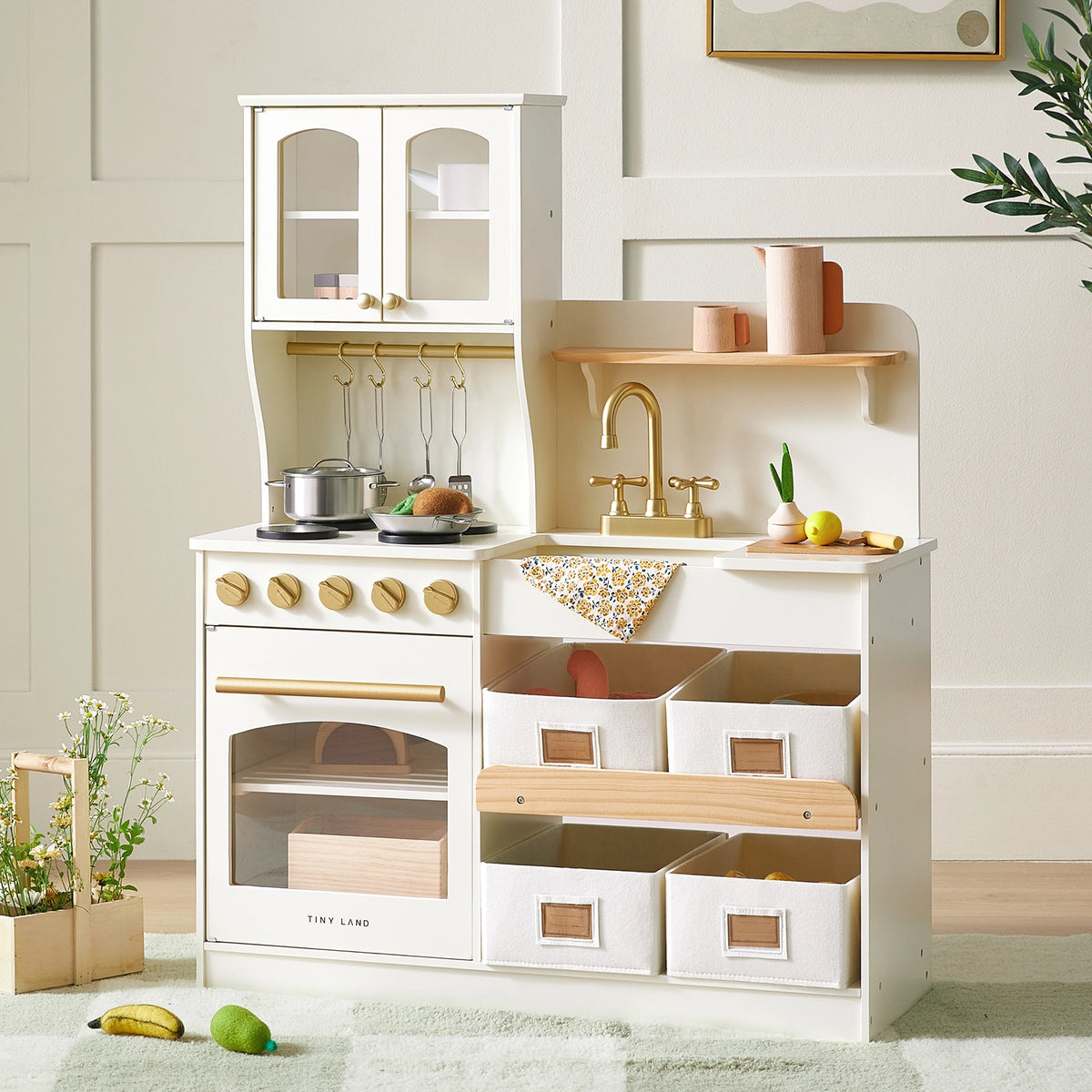
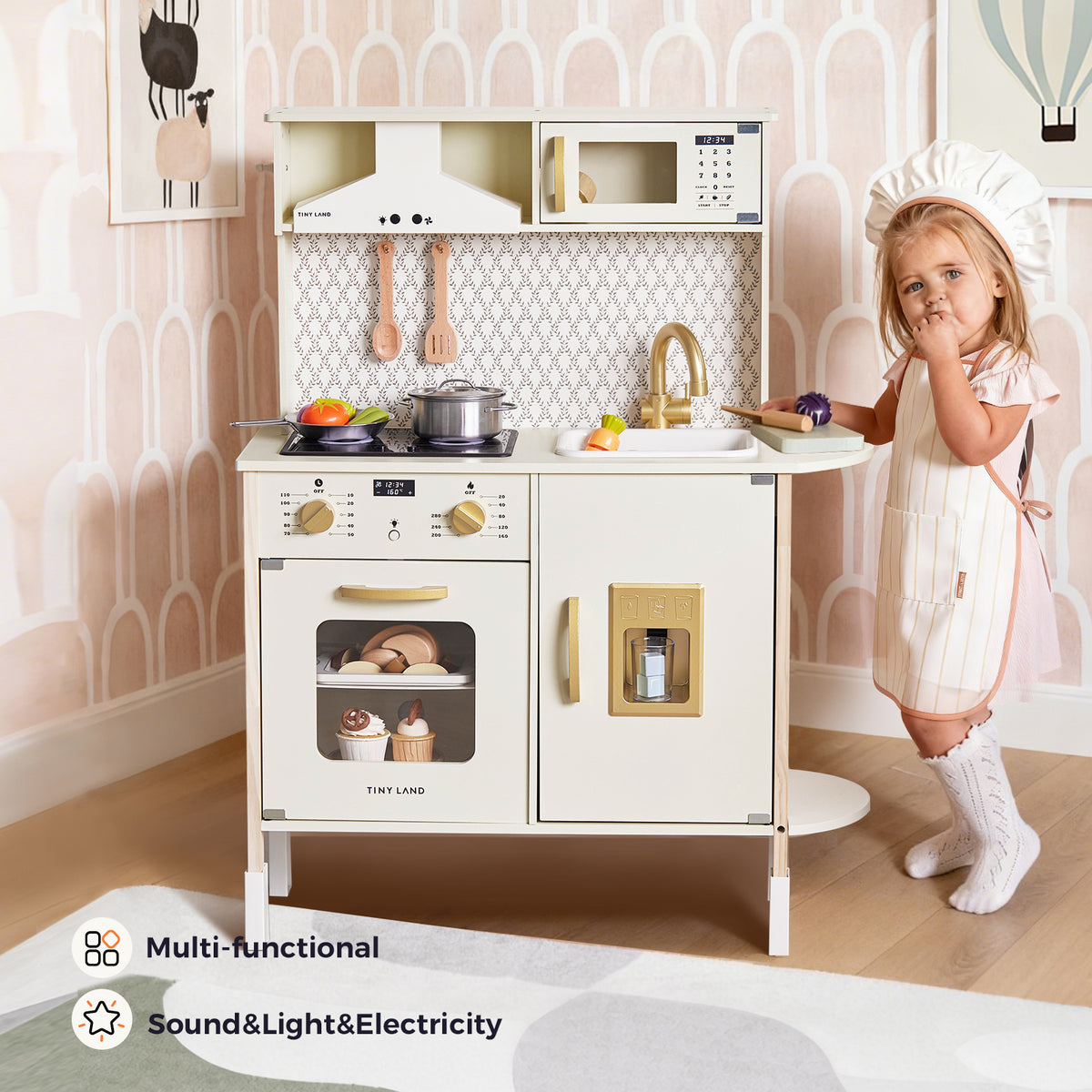
A play kitchen isn't required, but it can extend the story beyond the grocery store.
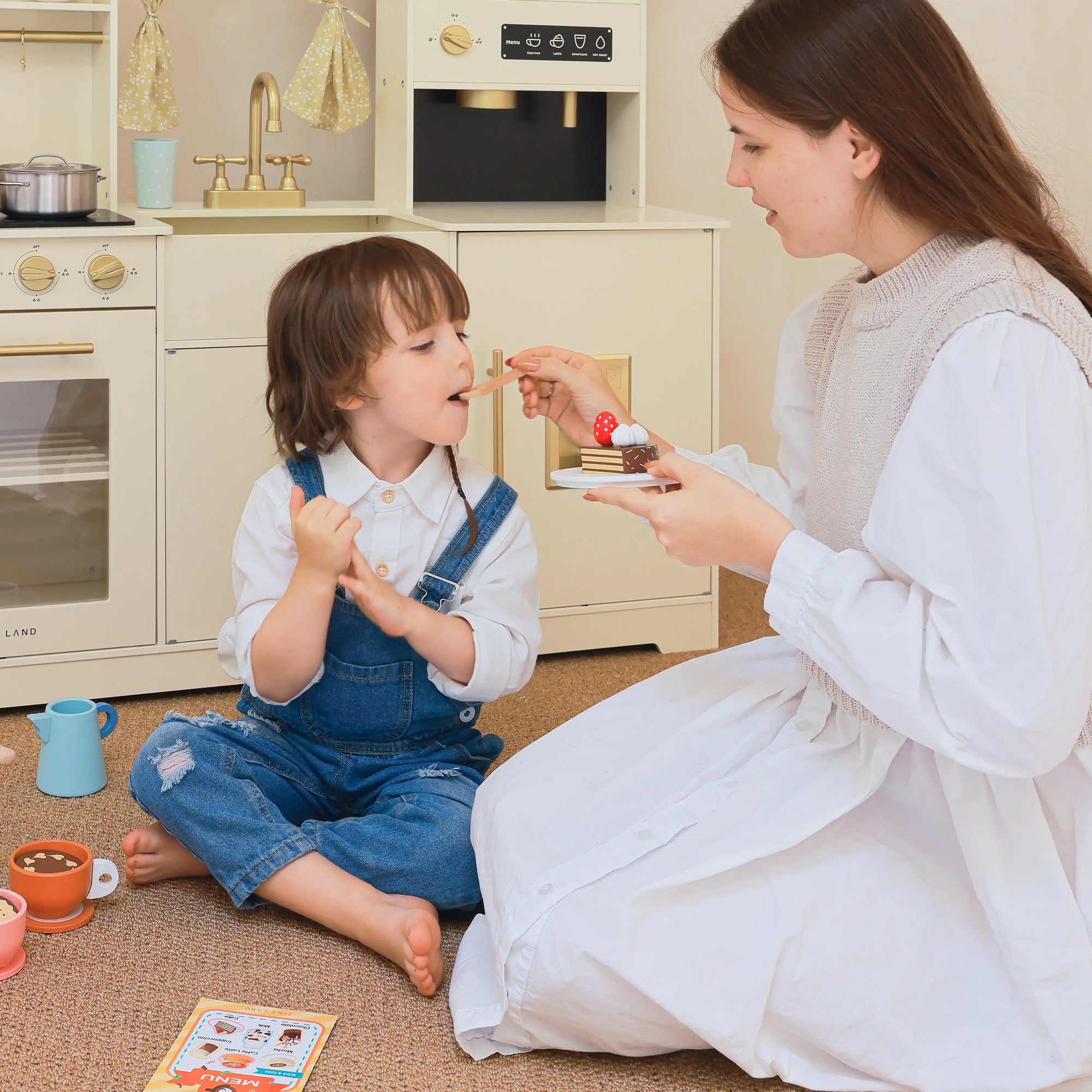
Children can shop for ingredients, take them home, prepare a pretend meal, and serve it to family members, dolls, stuffed animals, or pretend customers.

How to Organize Play Food Into Grocery Store Sections
You don't need to recreate a full supermarket. A few clearly defined sections are enough to make the store easy to understand and fun to explore.
Create a Fruit and Vegetable Section
Place fruits and vegetables together in one area.
You can organize them by type, color, or size. For example, children can separate fruits from vegetables or find all the red foods.
Try giving them a simple challenge: "Can you find two red fruits?"
Add a Bakery and Breakfast Section
Place bread, pastries, cereal, or other breakfast foods together.
This section can become part of a morning shopping game. Children can decide what their pretend family needs for breakfast and take the ingredients to the play kitchen.
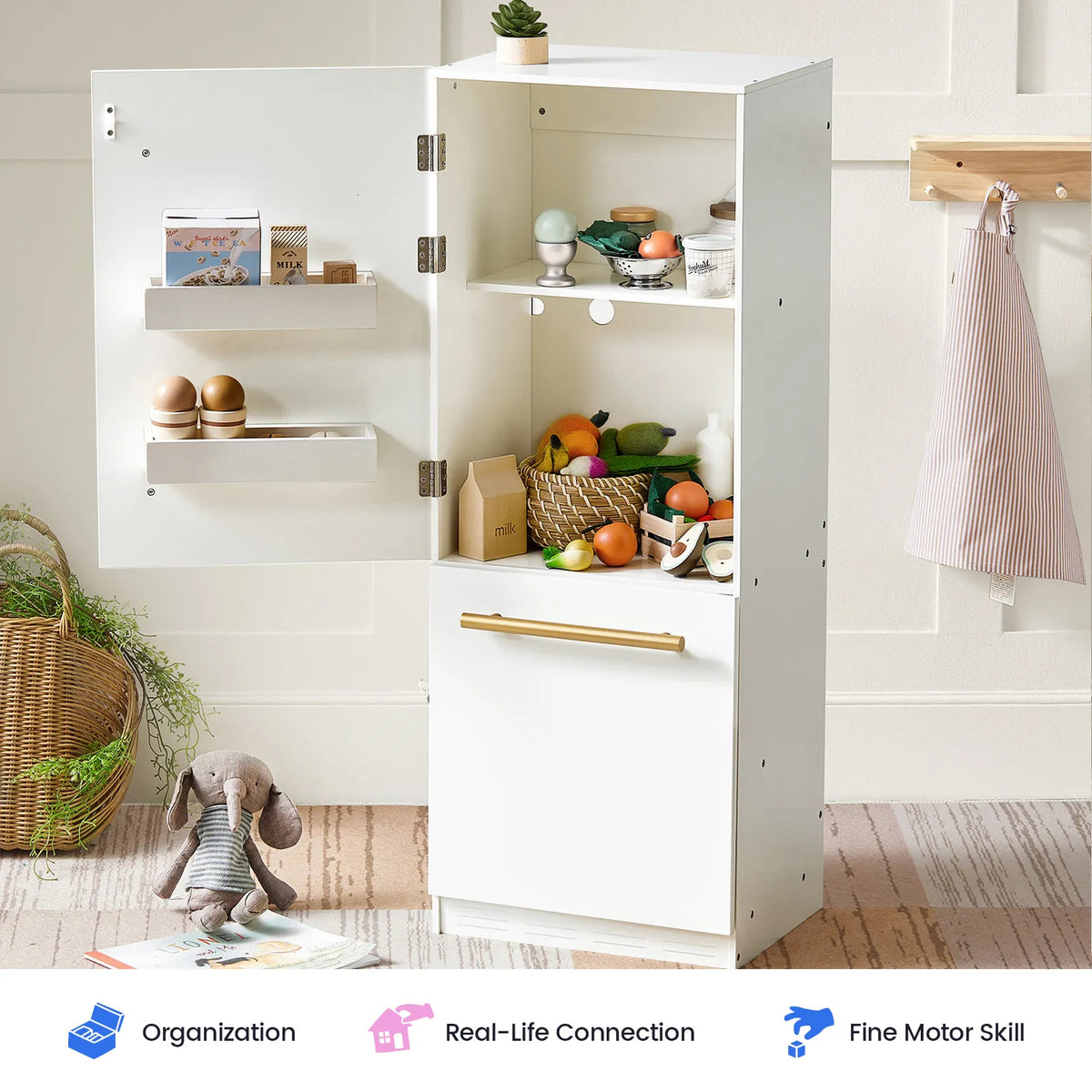
Set Up a Dairy or Refrigerated Food Section
Create a small area for foods such as milk, eggs, or other refrigerated items.
You don't need a toy refrigerator. A small shelf, basket, or container can define the section.
The goal is to give children clear places to find and return their play food.
Create a Checkout Counter
Give the grocery store a dedicated checkout area instead of having children pay wherever they finish shopping.
Children can place their groceries on the counter, count the items, announce a pretend total, exchange money, and pack the food.
Then switch roles and let the shopper become the cashier.
Add a Basket Return Area
Place an empty basket or container near the checkout for returning shopping baskets.
Children can finish their shopping trip by returning the basket and preparing the store for the next customer.
This small routine also makes cleanup part of the pretend-play experience.

Make Simple Grocery Store Signs and Price Tags
Signs can make the grocery store easier to navigate while giving children another reason to interact with the play environment.
Use Pictures for Younger Children
Pictures are useful for children who aren't reading yet.
Place a simple picture of an apple, carrot, or loaf of bread near the corresponding section.
You can use the same pictures to create simple shopping lists.
Add Words for Preschoolers
Older preschoolers can use simple labels such as:
-
FRUIT
-
VEGETABLES
-
BAKERY
-
BREAKFAST
-
DRINKS
This gives children a natural reason to notice familiar words during role play.
Use Simple Prices for Counting
Keep pretend prices easy to understand.
For example:
-
Apple — $1
-
Carrot — $2
-
Bread — $3
Children can count pretend coins, compare prices, or practice paying for several items.
Color-Code Food Categories
Color-coded signs can make sorting more visual.
For example, use one color for fruits and another for vegetables. You can even let children help decide which foods belong in each category.

5 Pretend Grocery Store Games to Try
Once the store is organized, simple challenges can turn ordinary shopping into engaging pretend play activities.
1. Find Everything on the Shopping List
Give your child a short shopping list.
For younger children, use pictures. Ask them to find each matching piece of play food and put it into their basket.
For example:
Shopping List
-
2 apples
-
1 carrot
-
1 loaf of bread
Once everything has been collected, head to checkout.
2. Sort the Play Food
Put several pieces of play food into a basket and ask your child to organize them.
They can sort by:
-
Food type
-
Color
-
Size
-
Grocery store section
For an extra challenge, ask them to explain why each item belongs in a particular group.
3. Shop for a Pretend Family Meal
Give your child a meal to plan.
For example: "We're making breakfast for the family. What do we need?"
Your child can choose ingredients, put them in a basket, check out, and take them to the play kitchen.
4. Restock the Grocery Store
After a shopping trip, switch roles.
Now your child can become the store worker and return the play food to the correct shelves.
When several children are playing, one can shop while another restocks the store.
5. Shop, Cook, and Serve
Turn the grocery trip into a complete pretend-play story.
First, children shop for ingredients. Then they take the groceries to the play kitchen, prepare a pretend meal, and serve it to customers.
The story can continue with opening a pretend café or restaurant.

Pretend Grocery Store Activities by Age
The same grocery store can grow with your child. Start with simple matching and sorting, then add more steps as children become ready for more complex role play.
Toddlers: Match, Sort, and Put Away
Younger toddlers can explore familiar play food by matching identical items, sorting colors, or putting food into baskets.
Keep the activity simple and let children lead the play.
Ages 2–3: Follow a Picture Shopping List
Give children a short picture shopping list with two or three items.
They can find the matching foods, place them in a basket, and bring them to checkout.
Preschoolers: Count, Shop, and Pay
Preschoolers can handle more steps.
Ask them to find a specific number of foods, compare quantities, follow a simple shopping list, or use pretend money at checkout.
Older Children: Plan, Shop, Cook, and Serve
Older children can create their own grocery shopping stories.
They might plan a family meal, write a shopping list, shop for ingredients, pay at the register, prepare the food in a play kitchen, and serve it at a pretend café.

Connect the Grocery Store to a Play Kitchen
One of the easiest ways to extend grocery store pretend play is to let the shopping trip continue after checkout.
Shop for Ingredients
Start by deciding what the pretend family wants to eat.
Children can make a shopping list and search the grocery store for the ingredients.
Prepare a Pretend Meal
After shopping, bring the groceries to the play kitchen.
Children can pretend to wash, cut, mix, cook, and arrange their ingredients.
The grocery store becomes the first step in a longer pretend-play sequence.
Serve Food at a Pretend Café
The finished meal can become the beginning of another role-play game.
Children can pretend to open a café or restaurant, take orders, serve customers, and create a menu using the food they purchased.
Return Ingredients to the Store
When the game is over, children can return unused food to the grocery store and restock the shelves.
This creates a simple, repeatable play cycle:
Shop → Check Out → Cook → Serve → Restock → Shop Again
 Explore Different Foods Through Pretend Play
Play food can introduce children to a variety of familiar foods while keeping the conversation playful.
Include Different Food Groups
Offer different types of play food rather than focusing on only one category.
Fruits, vegetables, grains, and other familiar foods give children more choices when planning pretend meals.
Talk About Colors, Textures, and Flavors
Use simple questions during play:
-
"What color is the apple?"
-
"Which foods are crunchy?"
-
"What would you put in a salad?"
-
"Which fruit would you choose for breakfast?"
Let the conversation follow your child's interests instead of turning the activity into a quiz.
Build a Pretend Meal
Ask children to choose foods for breakfast, lunch, or dinner.
They can explain what they are making and collect everything they need from the grocery store.
Keep Food Conversations Positive
Pretend play is a chance to explore different foods without dividing them into simply "good" or "bad" foods.
Let children describe foods, make choices, and talk about what they enjoy.

How to Store Play Food After Grocery Store Play
A simple storage system makes it easier to start the activity again later.
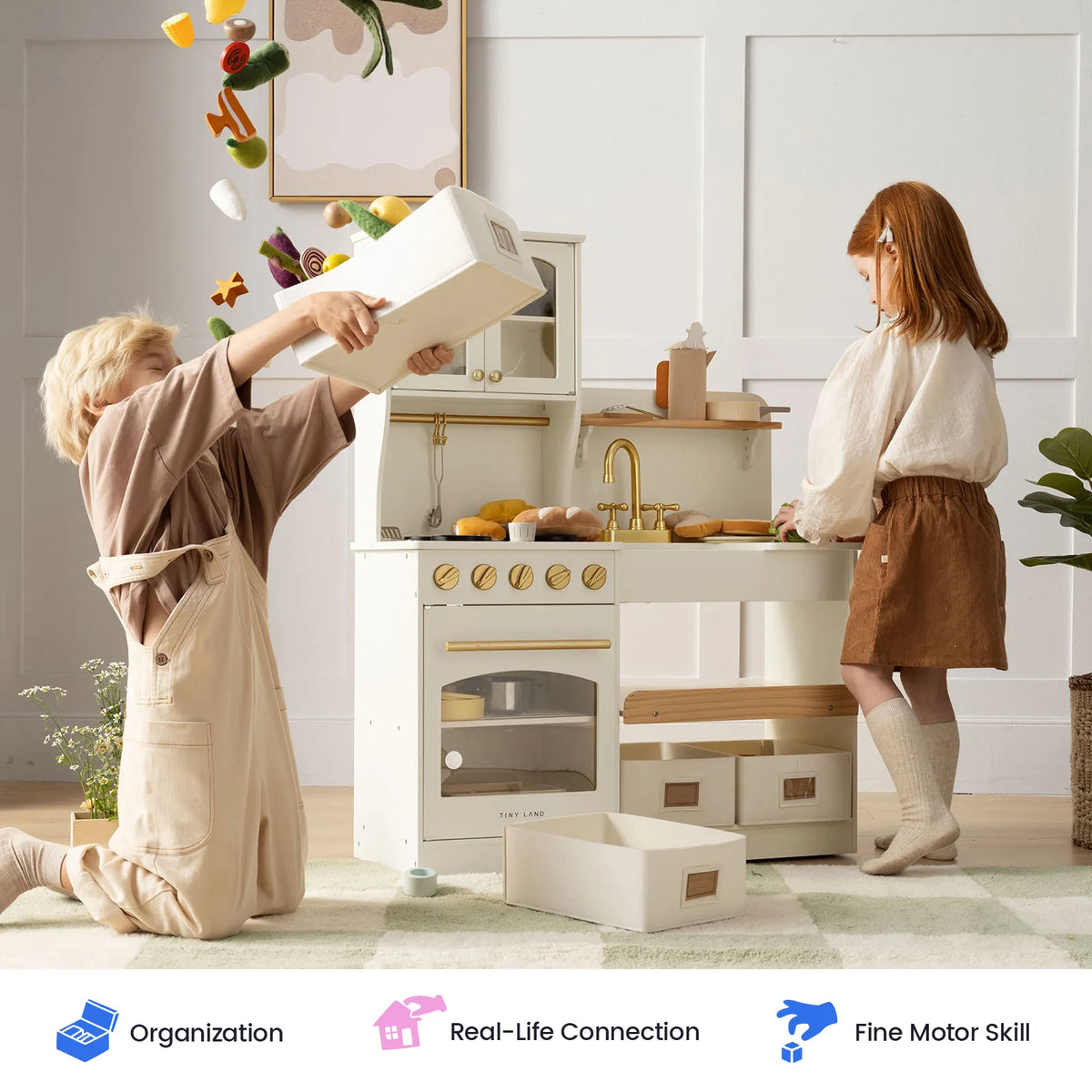
Sort Play Food Into Labeled Bins
Use separate containers for fruits, vegetables, bakery items, and other categories.
Picture labels can make cleanup easier for younger children.
Keep Frequently Used Pieces Within Reach
Place favorite play food, baskets, and accessories somewhere children can safely reach them.
Easy access can make it easier for children to start pretend play independently.
Rotate Play Food and Accessories
You don't need to put every piece out at once.
Rotate different foods and accessories to create new shopping scenarios.
One week might focus on a breakfast shop, while another could become a pretend farmers market or café supply trip.

Frequently Asked Questions
What Age Is Pretend Grocery Store Play Best For?
Pretend grocery store play can be adapted for different ages.
Toddlers can begin with simple matching and sorting, while preschoolers can follow shopping lists, count items, use pretend money, and create longer role-play stories.
Always follow the age and safety recommendations for the specific toys you use.
How Much Play Food Do Kids Need?
You don't need a large collection to get started.
A small selection of familiar fruits, vegetables, bakery foods, and other everyday items can support plenty of shopping games.
You can gradually add more play food as your child's pretend-play stories become more detailed.
Can You Create a Pretend Grocery Store Without a Market Stand?
Yes. A shelf, table, storage unit, or even part of a play kitchen can become a grocery store.
Use baskets, signs, and clearly defined food sections to make the space feel like a store.
What Play Food Should I Put in a Pretend Grocery Store?
Start with familiar foods that children recognize from everyday shopping trips.
A combination of fruits, vegetables, bakery foods, breakfast items, drinks, and other common groceries gives children plenty of options for sorting, shopping, and pretend meal planning.
Can a Play Kitchen Be Used With a Pretend Grocery Store?
Yes. A play kitchen can extend the activity from shopping to cooking and serving.
Children can shop for ingredients, take them home, prepare a pretend meal, and serve it to family members, dolls, stuffed animals, or pretend customers.
What Skills Do Kids Practice Through Grocery Store Play?
Depending on the activity, children can practice sorting, counting, communication, turn-taking, following simple directions, decision-making, and imaginative storytelling.
The activities can be adjusted to match your child's age and interests.

Turn Play Food Into a Complete Pretend-Play Adventure
Creating a pretend grocery store for kids doesn't have to be complicated.
Start with familiar play food, give each type of food a place in the store, and add simple activities such as shopping lists, sorting challenges, and pretend checkout.
When you're ready to extend the play, connect the grocery store to a play kitchen and let children turn their groceries into pretend meals.
The result is more than a shopping game. Children can create their own stories from start to finish:
Choose the Food → Shop → Check Out → Cook → Serve → Restock
With a few simple pieces and plenty of imagination, an ordinary collection of play food can become an entire pretend-play world.