




Toddlers have plenty of energy, but the right indoor toy can give that energy a place to go.
The best active toy for your toddler depends on more than age. Think about how your child naturally likes to move, how much space you have, and whether you want a dedicated climbing structure or a more flexible play setup.
To make the choice easier, we've selected five types of active toys for toddlers, each suited to a different kind of indoor play—from climbing and balancing to crawling and sensory exploration.
Each pick has been tested and enjoyed by real families, helping us focus on what these toys are actually like in everyday play.

How to Choose an Active Toy for Your Toddler
Start with three questions:
-
What does your toddler naturally enjoy?
A child who is constantly climbing may get more out of a Pikler triangle, while a toddler who loves crawling into spaces and exploring little hideaways may be better suited to a tunnel and tent. -
How much space do you have?
Larger structures can become a central part of a playroom, while stepping stones and other individual pieces are easier to move and store. -
Do you want flexibility or a more focused experience?
Foam climbing blocks offer an open-ended setup that can be rearranged, while a Pikler triangle provides a more dedicated climbing experience. A tunnel and tent, meanwhile, creates a defined space for crawling and exploration.With those factors in mind, here are five options worth considering.
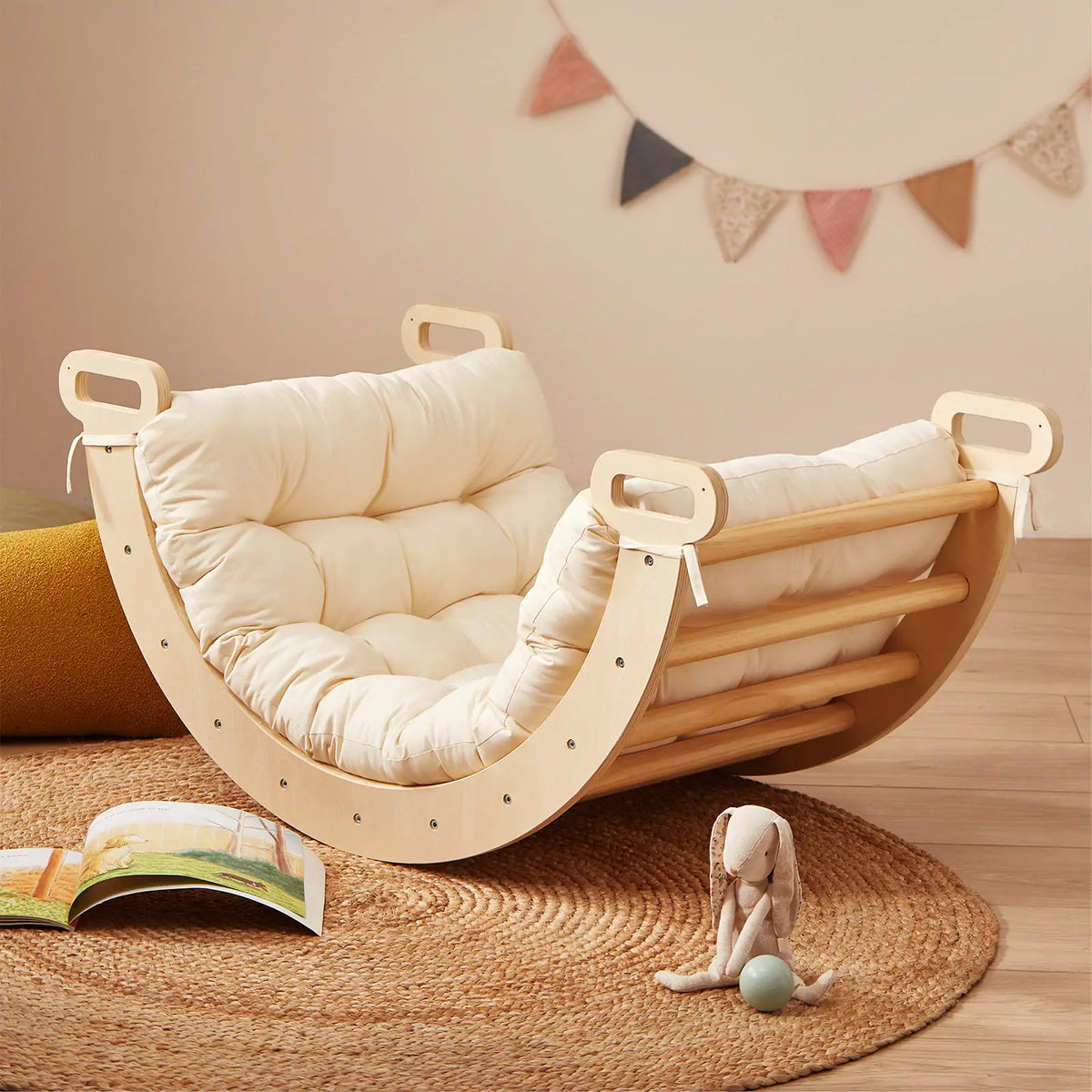
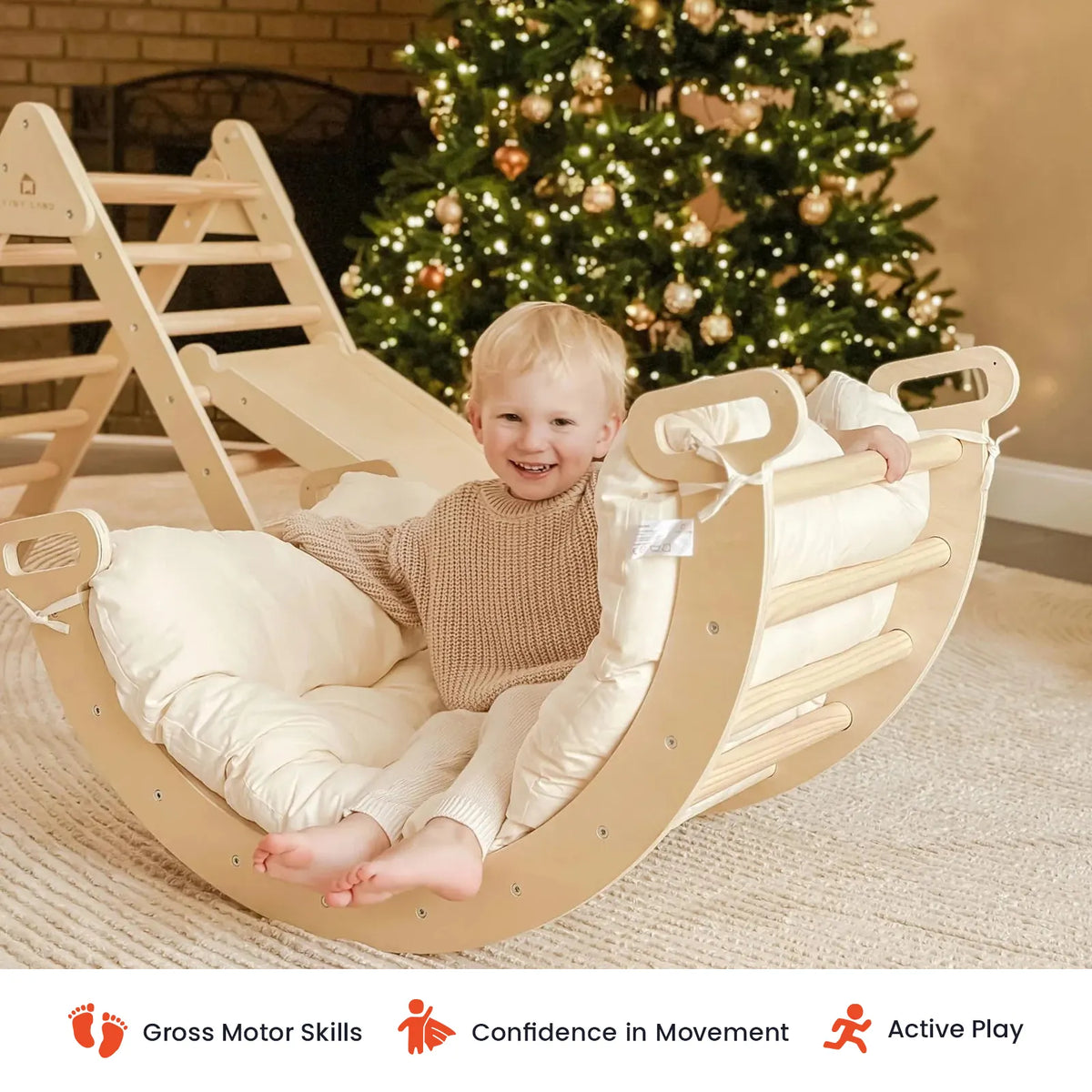
1. Wooden Pikler Triangle with Cushion
Best for Dedicated Climbing
Choose a Pikler triangle when climbing is your toddler's main attraction.
The biggest difference between a Pikler triangle and foam climbing blocks is focus. Foam blocks give you pieces to rearrange, while a Pikler triangle gives your child a consistent climbing structure to return to.
For toddlers who repeatedly seek out climbing challenges, that dedicated setup can make more sense than a product designed around multiple configurations.
Tiny Land's Pikler Triangle has a 160 lb weight capacity, giving families a clearly defined climbing structure for indoor play.
Why We Recommend It
- Climbing-focused: The structure is designed around climbing rather than multiple configurations.
- Consistent setup: Unlike movable blocks, the climbing structure remains the central feature.
- Wooden design: A natural choice for families who prefer the look of wooden play furniture.
- Includes a cushion: Adds another element to the indoor setup.
Best For
Toddlers who love climbing and families looking for a dedicated indoor climbing structure rather than a modular play setup.

2. Foam Climbing Blocks
Best for Open-Ended Climbing & Movement
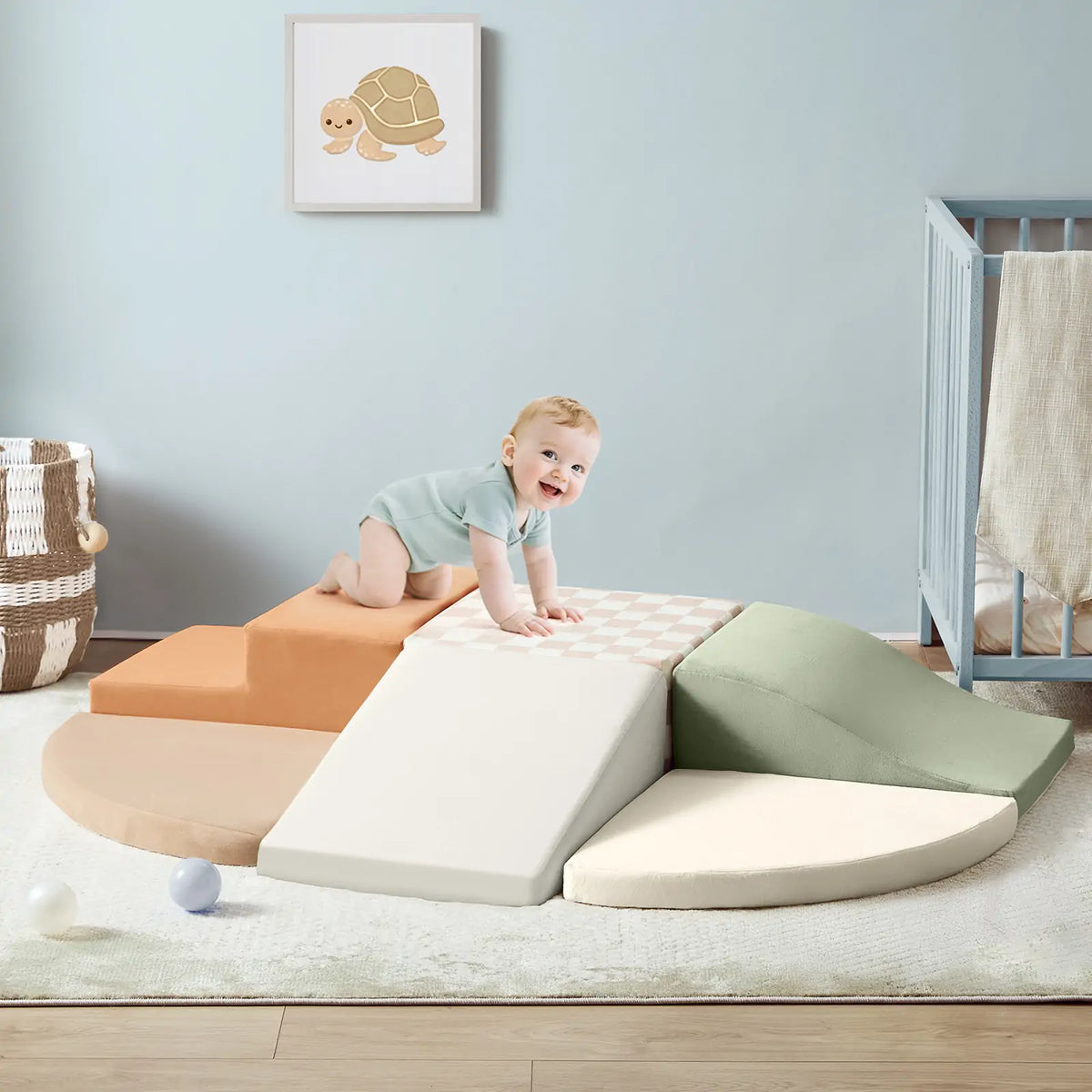
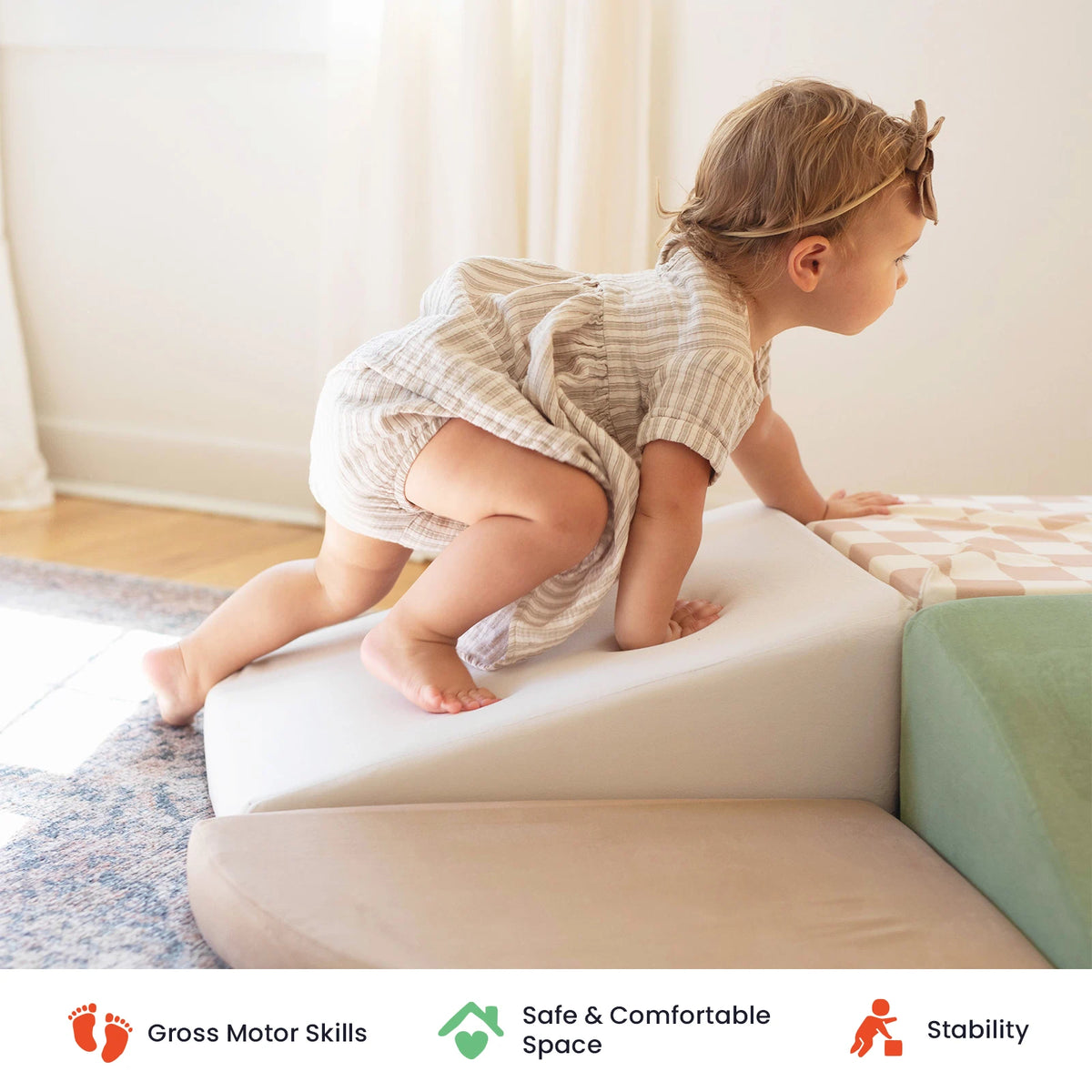
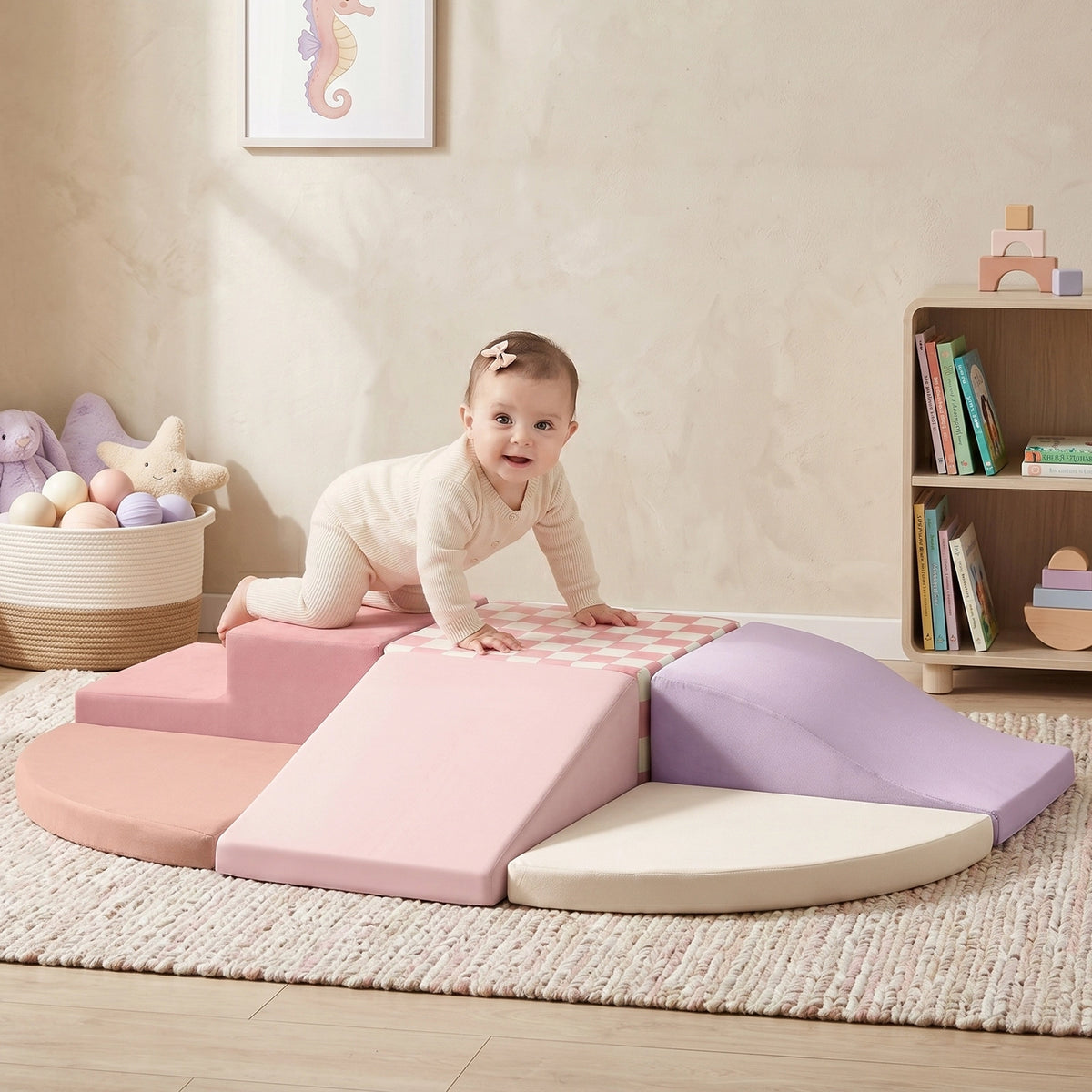
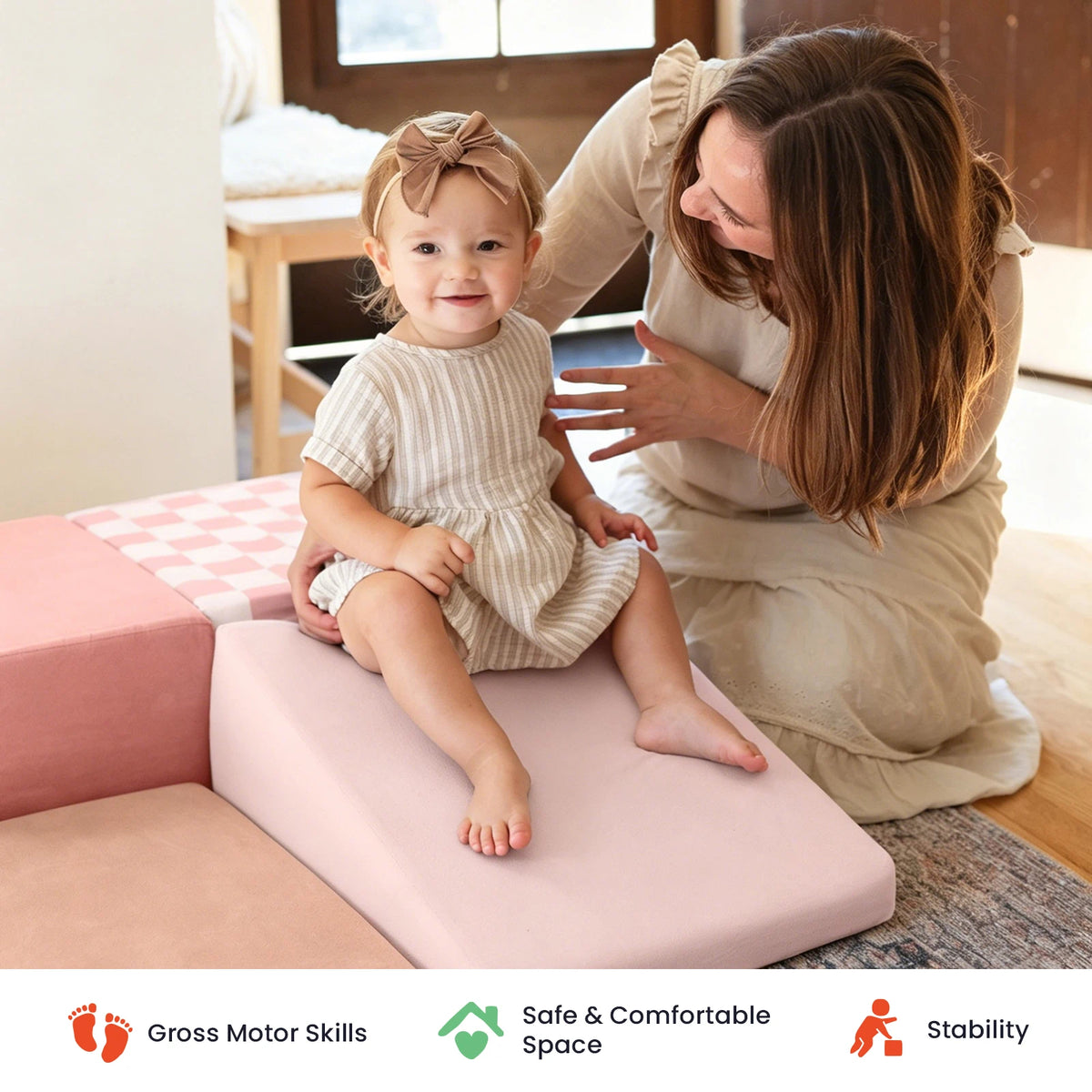
Choose foam climbing blocks when you want an active toy that can change with your child's play.
Unlike a single fixed structure, foam climbing blocks can be arranged in different configurations. That gives toddlers opportunities to climb over the pieces, step across them, move between them, or explore a new setup as the arrangement changes.
The biggest advantage is flexibility. Rather than creating one specific route or activity, the blocks can become part of an evolving movement setup.
Why We Recommend Them
- Open-ended setup: Multiple pieces can be rearranged rather than staying in one fixed configuration.
- More than climbing: Toddlers can climb, step, crawl around, and move between the pieces.
- Changes with play: The setup can be adjusted as your child's interests change.
- Flexible for indoor spaces: The soft format works naturally in a playroom or shared family space.
Best For
Toddlers who enjoy climbing and experimenting with different ways to move, and families looking for a flexible movement toy rather than one fixed structure.

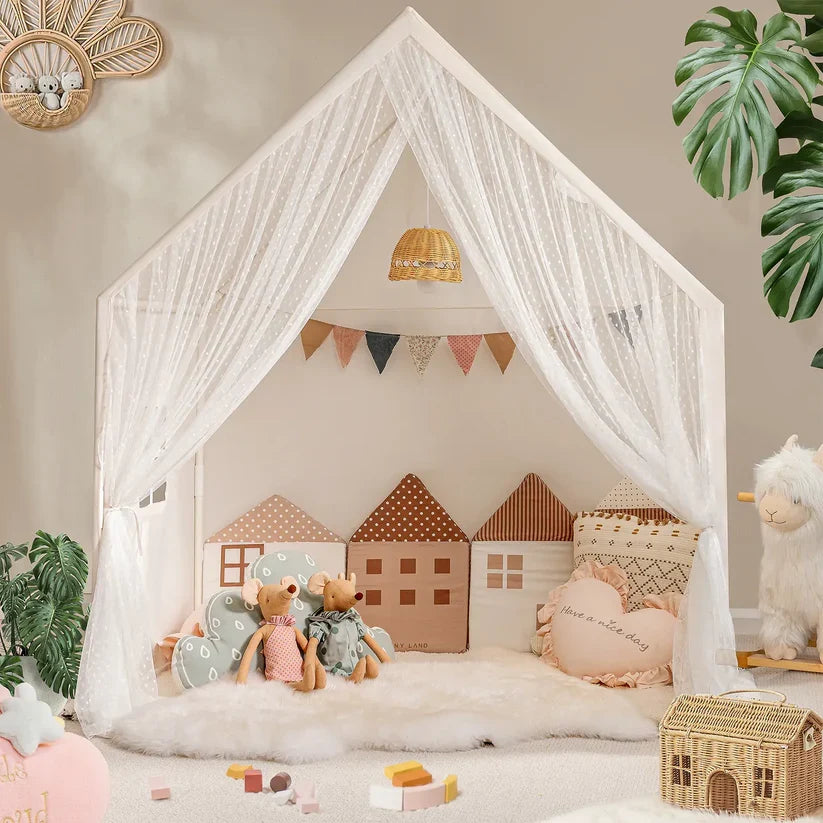
3. 3-in-1 Play Tunnel with Play Tent
Best for Crawling, Hideaways & Exploration
Choose a play tunnel with tent when your toddler loves having a space to crawl into, through, and around.
Unlike climbing blocks, this setup is less about creating different climbing challenges and more about creating a defined play environment.
The tunnel gives toddlers a space to crawl through, while the tent creates an enclosed area to explore, hide, and spend time inside.
Instead of changing the structure to create a new movement challenge, your child moves through and around an environment designed for exploration.
That makes it a particularly good fit for toddlers who enjoy going in and out of spaces and turning a play structure into their own little world.
Why We Recommend It
- Creates a defined play environment: The tunnel and tent give toddlers a dedicated space to explore.
- Crawling-focused: A natural choice for children who enjoy moving through spaces.
- Enclosed exploration: The tent adds a hideaway that climbing toys don't provide.
- More than movement: The setup can become a space for exploration and imaginative play as well as physical activity.
Best For
Toddlers who enjoy crawling, hideaways, and enclosed spaces, and families looking for an active toy that also creates a dedicated play area.

4. Stepping Stones
Best for Balance & Small Spaces
Choose stepping stones when space is limited or balance is the priority.
Unlike a climbing structure or play tent, stepping stones don't require you to dedicate a large part of the room to one permanent setup. Individual pieces can be positioned around the available space and moved when needed.
They offer a more focused movement experience: stepping, balancing, and figuring out how to move from one surface to another.
Why We Recommend Them
- Small footprint: A practical option for homes without room for a larger structure.
- Flexible placement: Individual pieces can be repositioned as needed.
- Balance-focused: Provides a more specific movement experience than a multi-purpose climbing toy.
- Easy to move: The pieces can be put away when the space needs to be used for something else.
Best For
Toddlers who enjoy stepping and balancing, and families who want an active toy that doesn't take over the room.

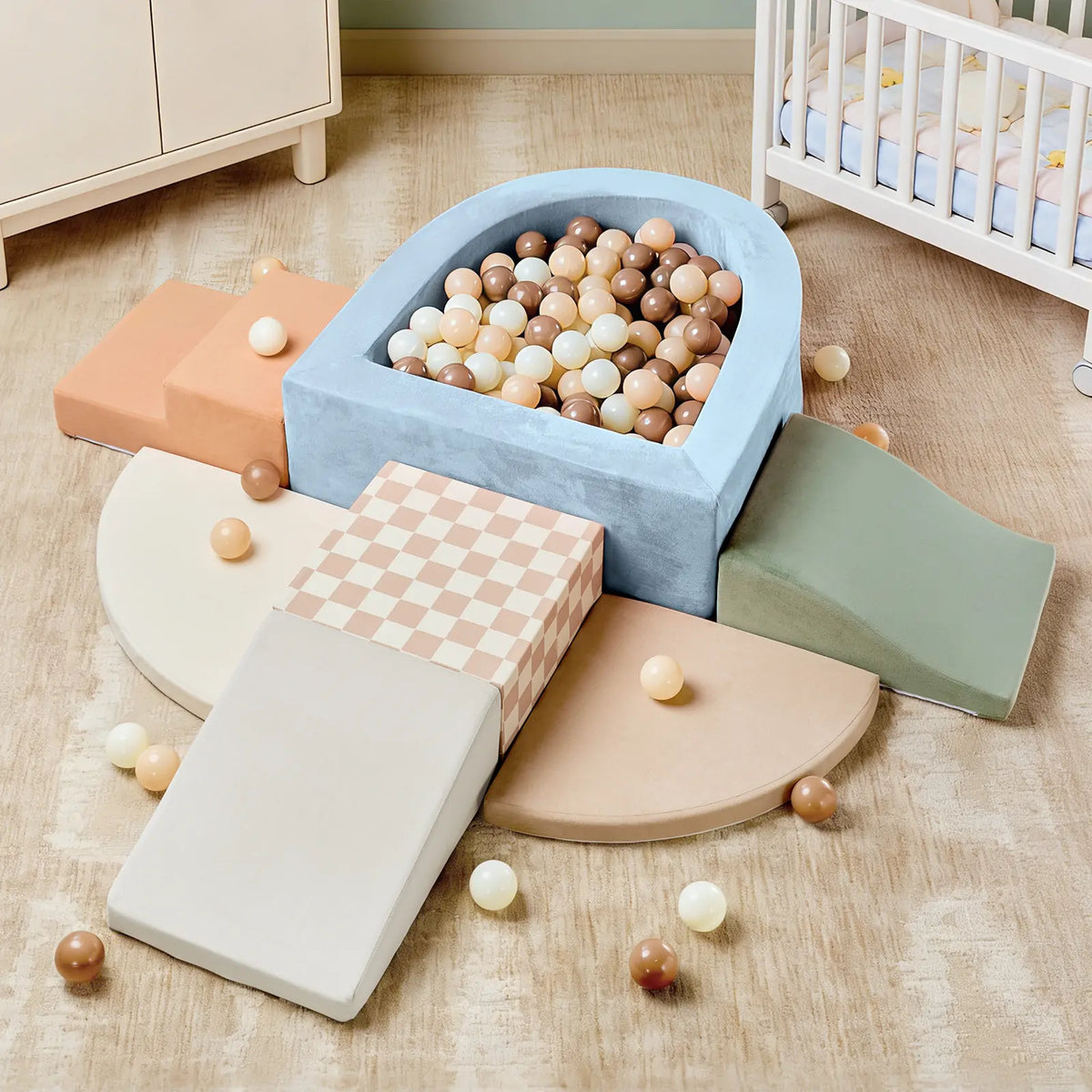
5. Ball Pit with Balls
Best for Active & Sensory Play
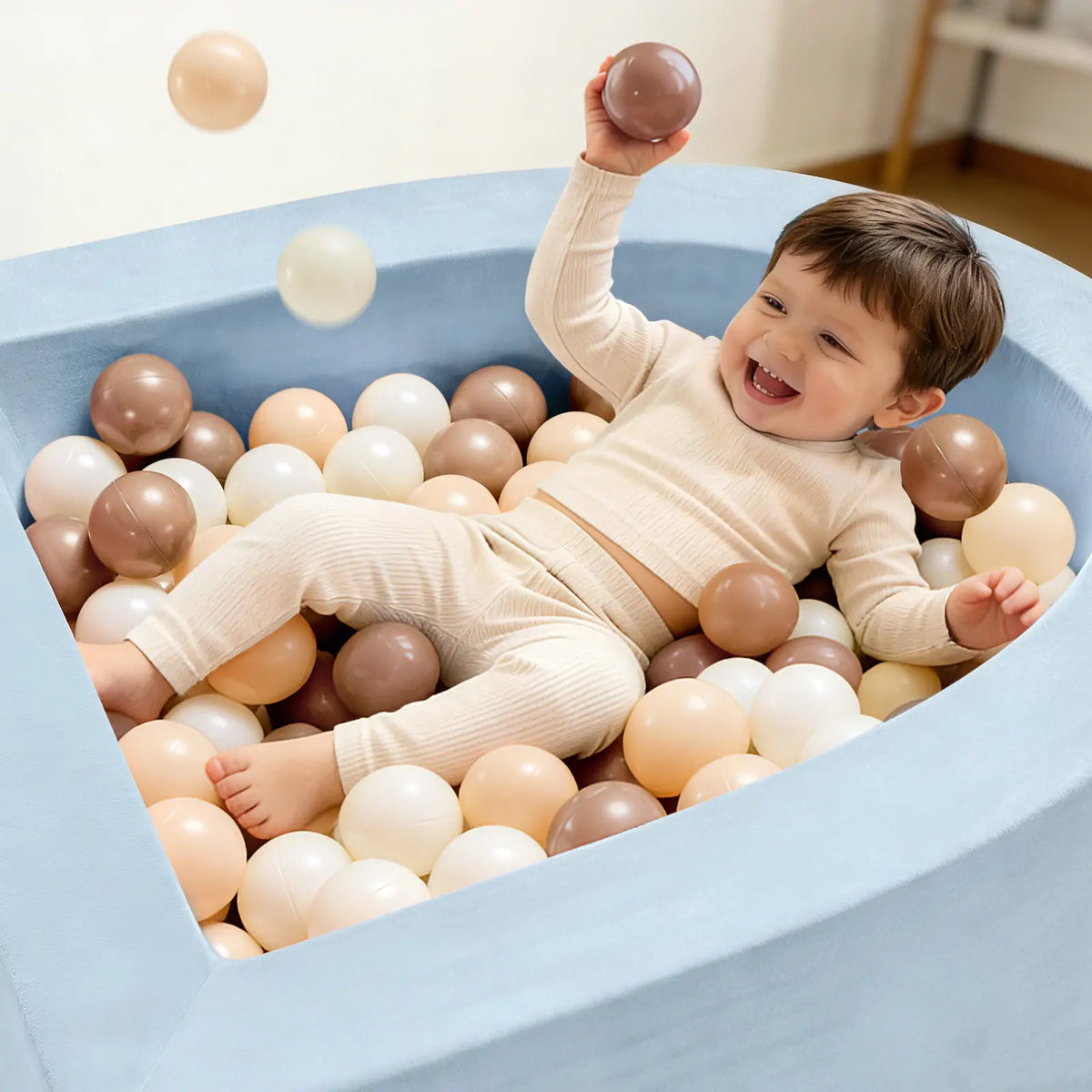
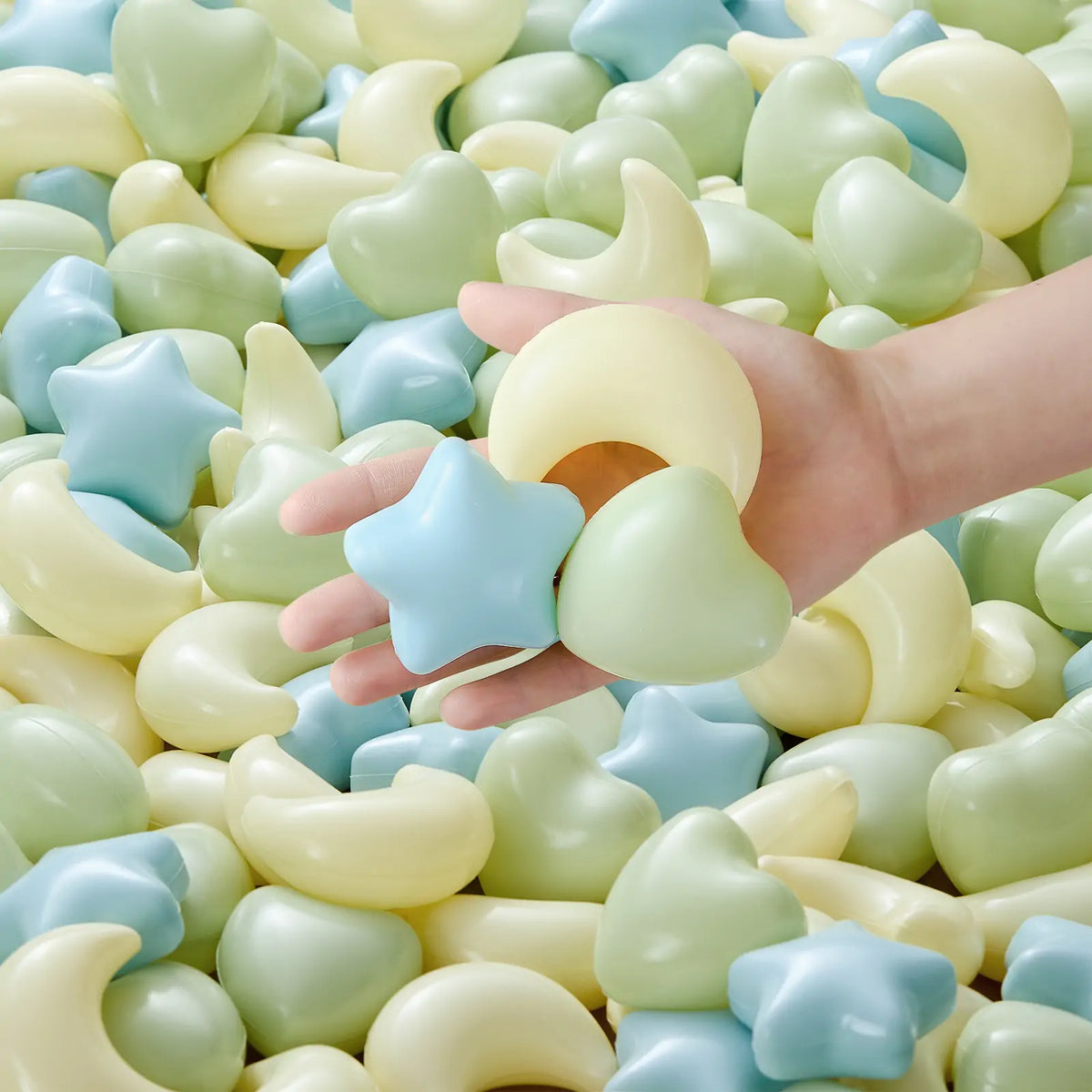
Choose a ball pit when your toddler enjoys movement but is especially drawn to sensory play.
A ball pit provides a different kind of active indoor experience from the other options on this list. Instead of focusing primarily on climbing, crawling, or balance, it combines movement with hands-on exploration.
That makes it a good choice for families who want to add variety to an indoor play space or for toddlers who are more interested in balls and sensory experiences than climbing structures.
Why We Recommend It
- Combines movement and sensory play: Offers physical activity alongside hands-on exploration.
- Different from climbing toys: A strong alternative for toddlers who aren't particularly interested in climbing.
- Creates a defined play area: Gives active play its own contained space.
- Adds variety: Provides a different experience from climbing, crawling, and balance-focused toys.
Best For
Toddlers who enjoy balls, sensory exploration, and movement, and families looking for something beyond traditional climbing toys.
 Which Active Toy Is Right for Your Toddler?
The best choice comes down to the type of play you want to prioritize.
| Your priority | Best choice | Why |
|---|---|---|
| Open-ended climbing and movement | Foam Climbing Blocks | Multiple pieces can be configured in different ways |
| Dedicated climbing | Wooden Pikler Triangle with Cushion | Provides a consistent climbing structure |
| Crawling and enclosed exploration | 3-in-1 Play Tunnel with Play Tent | Combines movement with a defined play space |
| Balance and limited space | Stepping Stones | Compact and easy to reposition |
| Movement plus sensory play | Ball Pit with Balls | Adds sensory exploration to active indoor play |
If You're Still Deciding
-
Want the most flexibility?
Go with foam climbing blocks. -
Want one dedicated climbing structure?
Choose the wooden Pikler triangle. -
Does your toddler prefer crawling and exploring spaces?
Consider the 3-in-1 play tunnel with play tent. -
Don't have much room?
Start with stepping stones. -
Want to combine active and sensory play?
A ball pit may be the better fit.

Final Thoughts
The best active toy for your toddler isn't necessarily the largest or most feature-packed option. It's the one that matches how your child likes to move and how naturally it fits into your home.
For open-ended movement, choose foam climbing blocks.
For dedicated climbing, choose a wooden Pikler triangle.
If crawling, hideaways, and enclosed exploration are more appealing, consider a 3-in-1 play tunnel with play tent.
For balance-focused play or smaller spaces, stepping stones are a practical choice.
And for movement combined with sensory exploration, a ball pit offers something different from traditional climbing toys.
Instead of trying to create the biggest play setup, start with the type of movement and exploration your toddler already enjoys. The right active toy should make it easier to bring that kind of play into your everyday indoor space.