


When parents first start researching pretend toys, one common question comes up: what is a play kitchen, and why do children enjoy it so much?
A play kitchen is a child-sized kitchen setup designed for pretend play. It gives children a familiar space where they can copy everyday routines they see at home, from cooking and serving food to washing dishes and organizing utensils. For many families, it becomes one of the most-loved toys in the home because it combines fun, learning, and imagination in a natural way.
Some children use it to make breakfast for the family. Others turn it into a bakery, a restaurant, or a pretend coffee where they can host tea parties with dolls and friends. That flexibility is what makes this type of toy so valuable. It supports role play, encourages independence, and gives little ones a way to explore the routines of the adult world in a child-friendly way.
In this guide, we’ll look at what a play kitchen is, the benefits it offers, the best ages for one, and how parents can choose the right option for their home.

What Is a Play Kitchen?
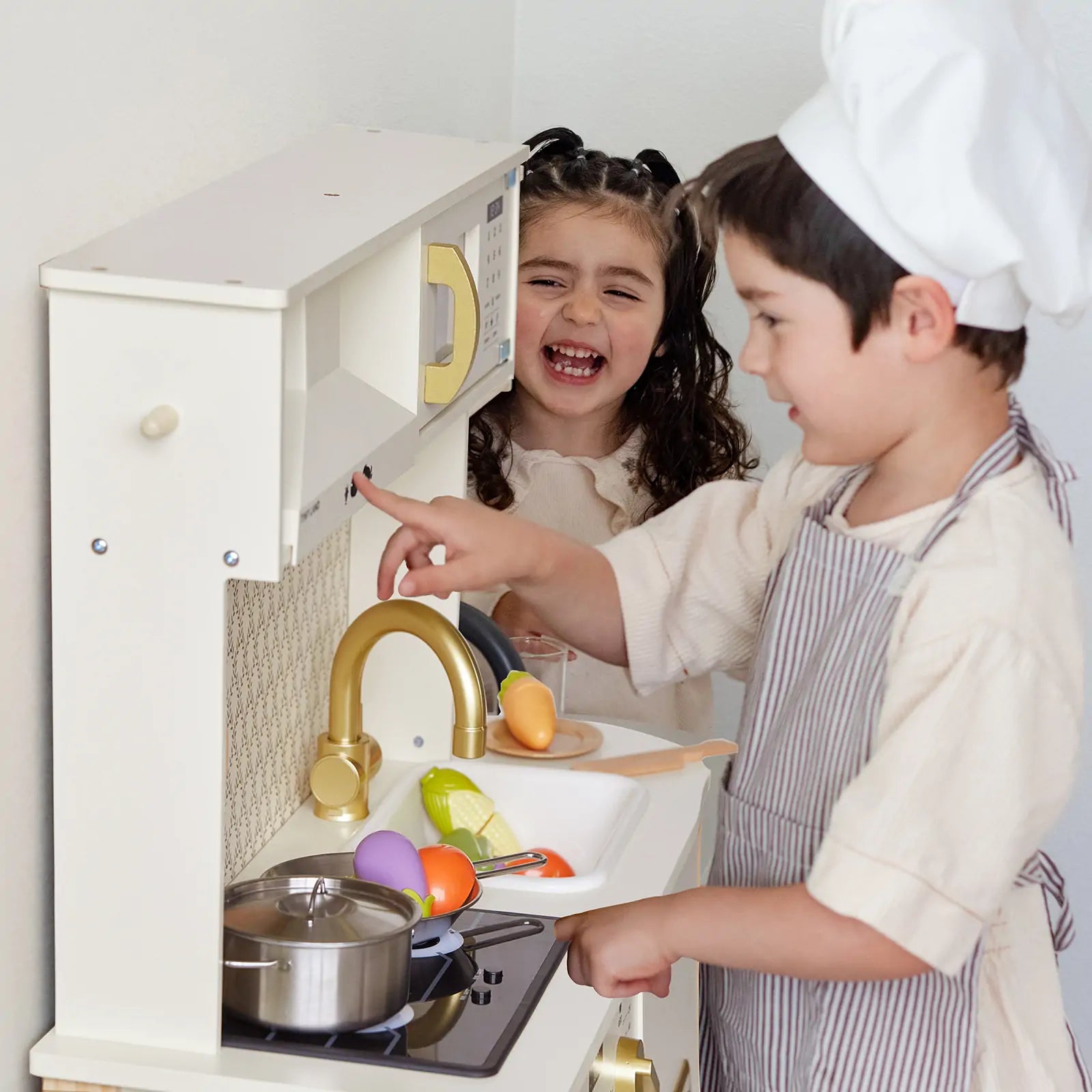
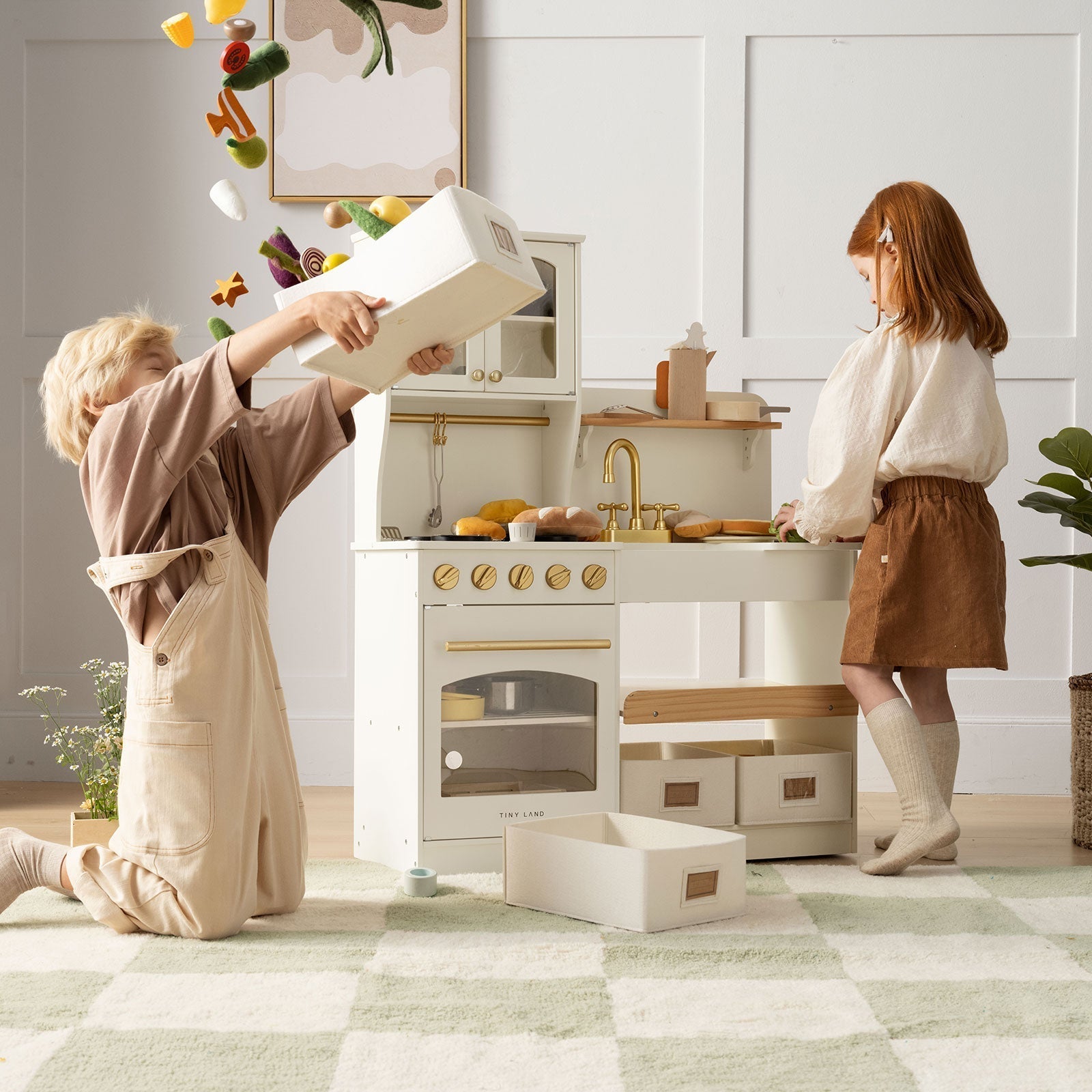
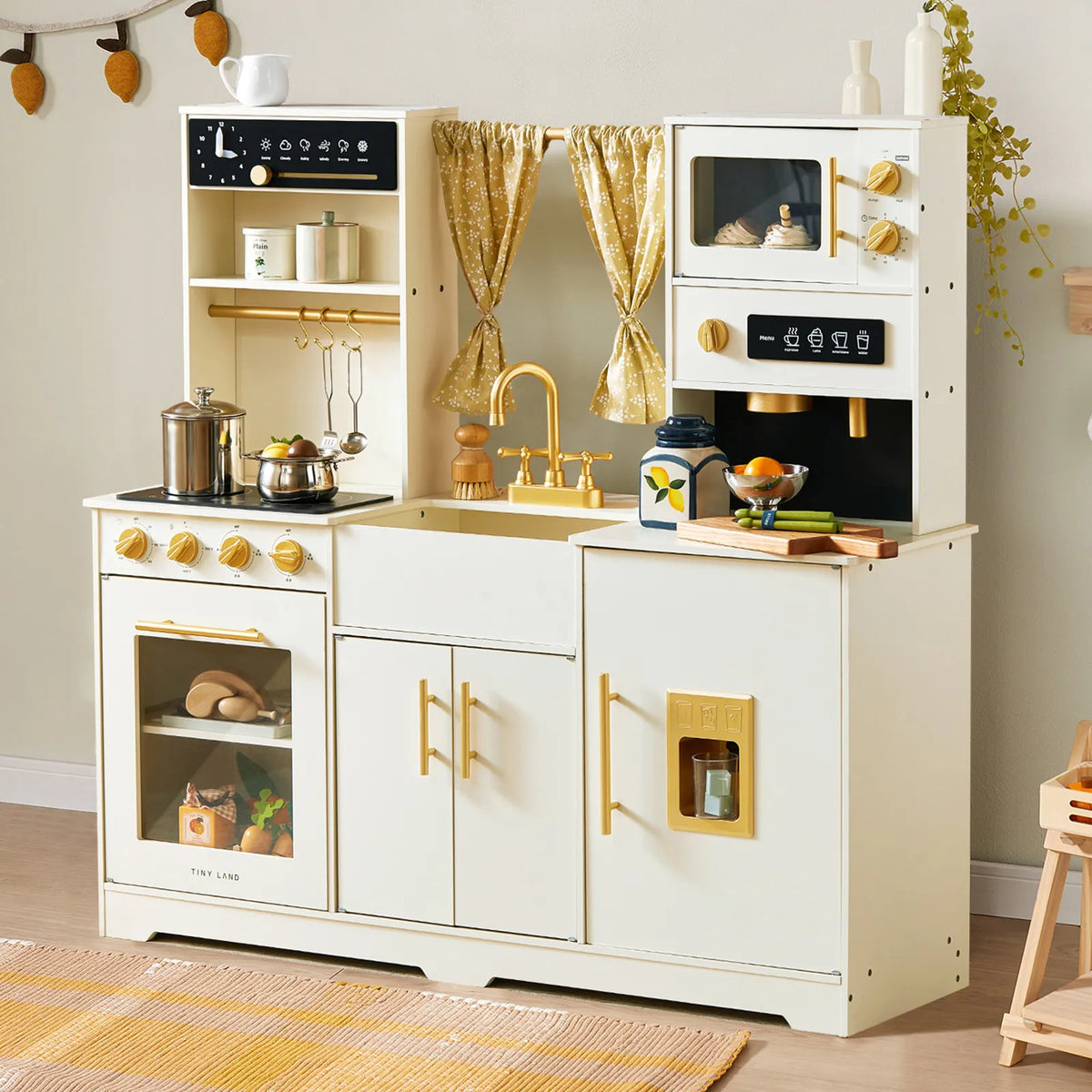
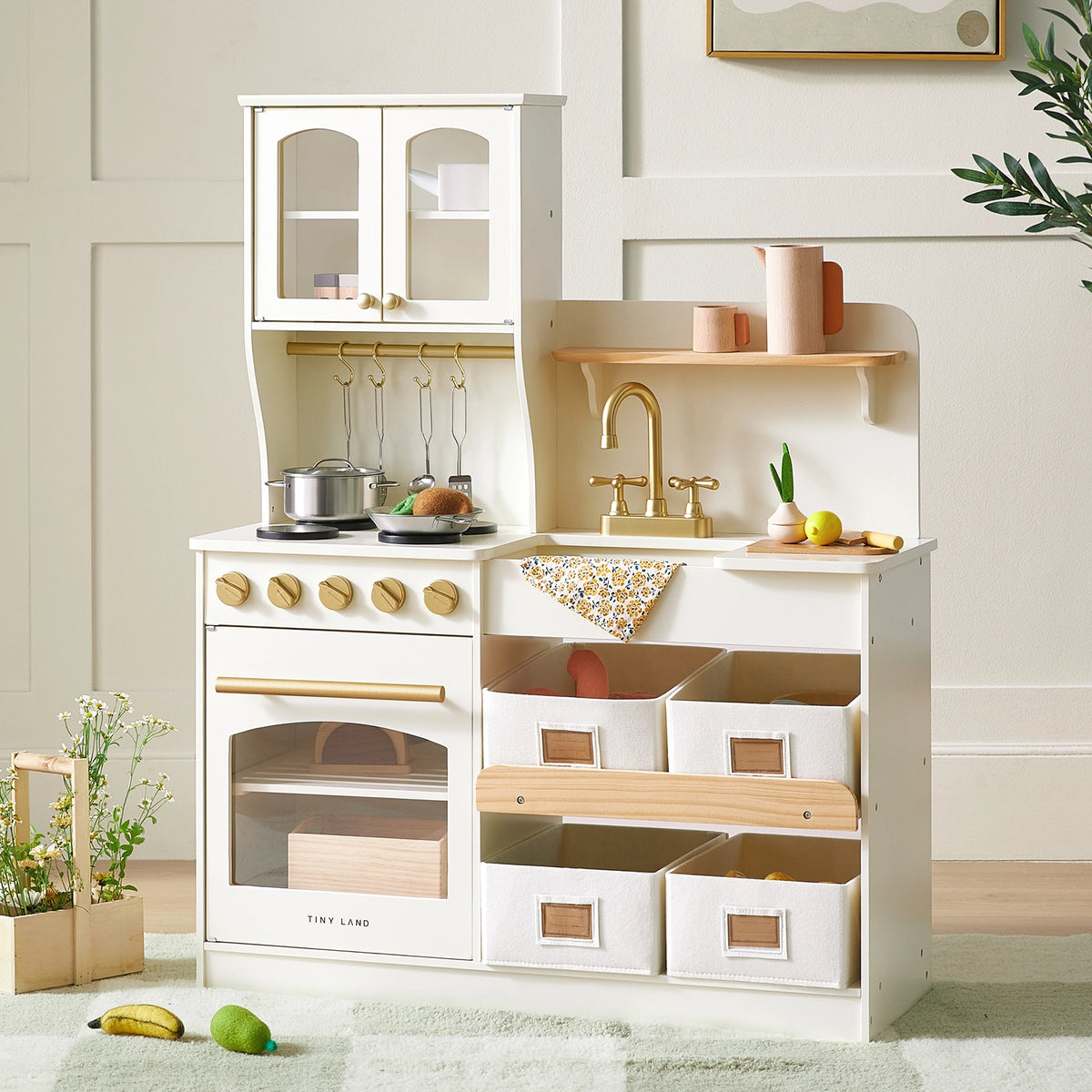
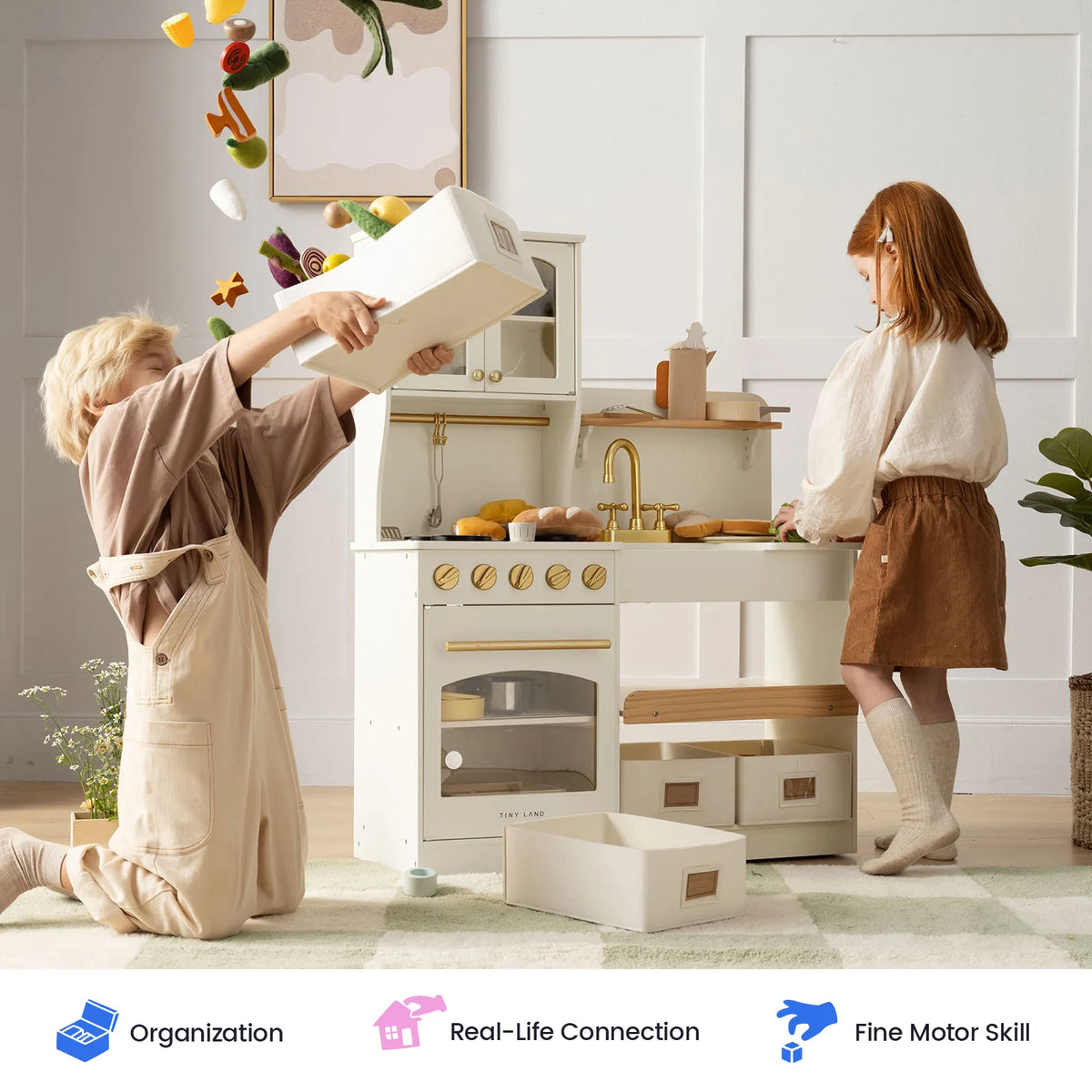
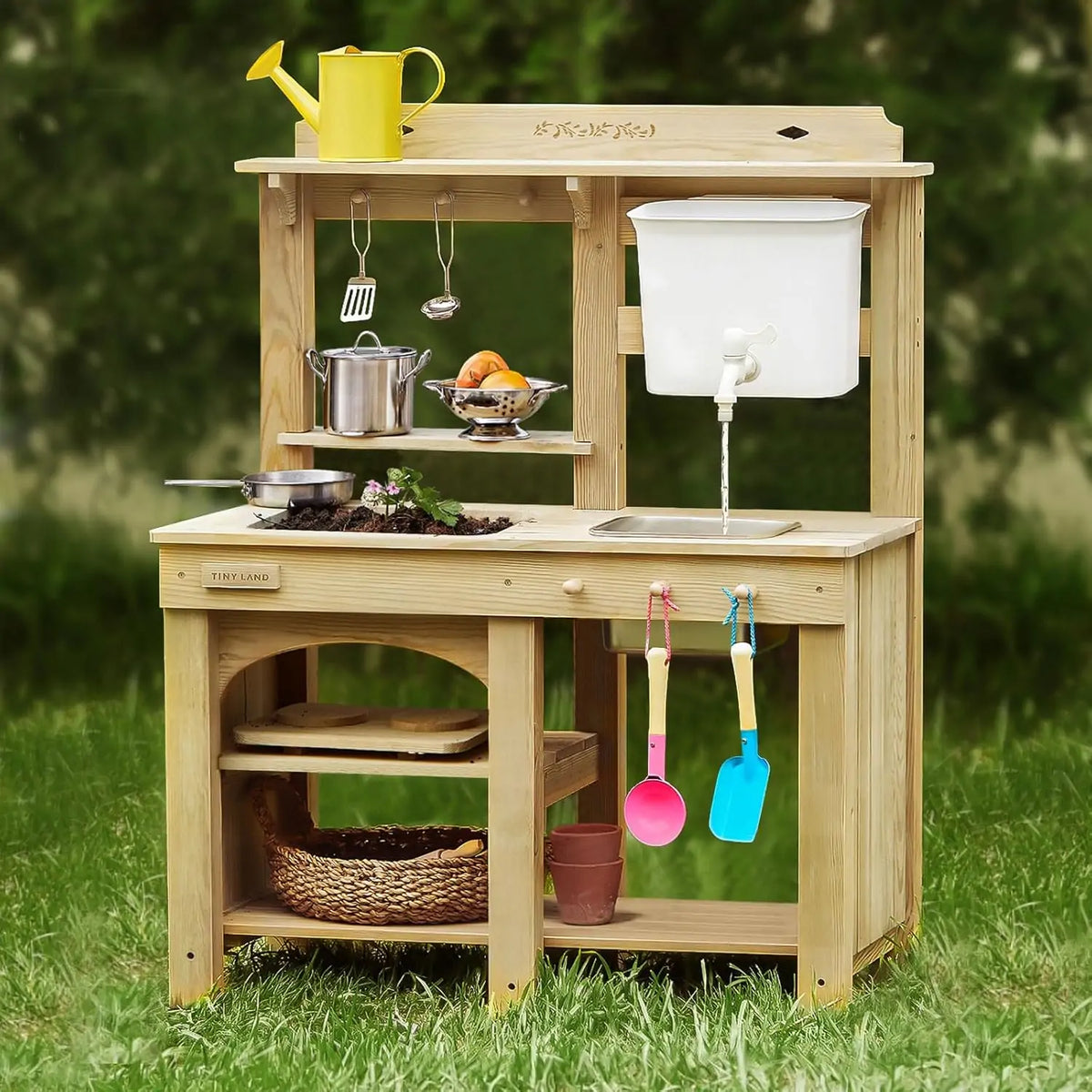
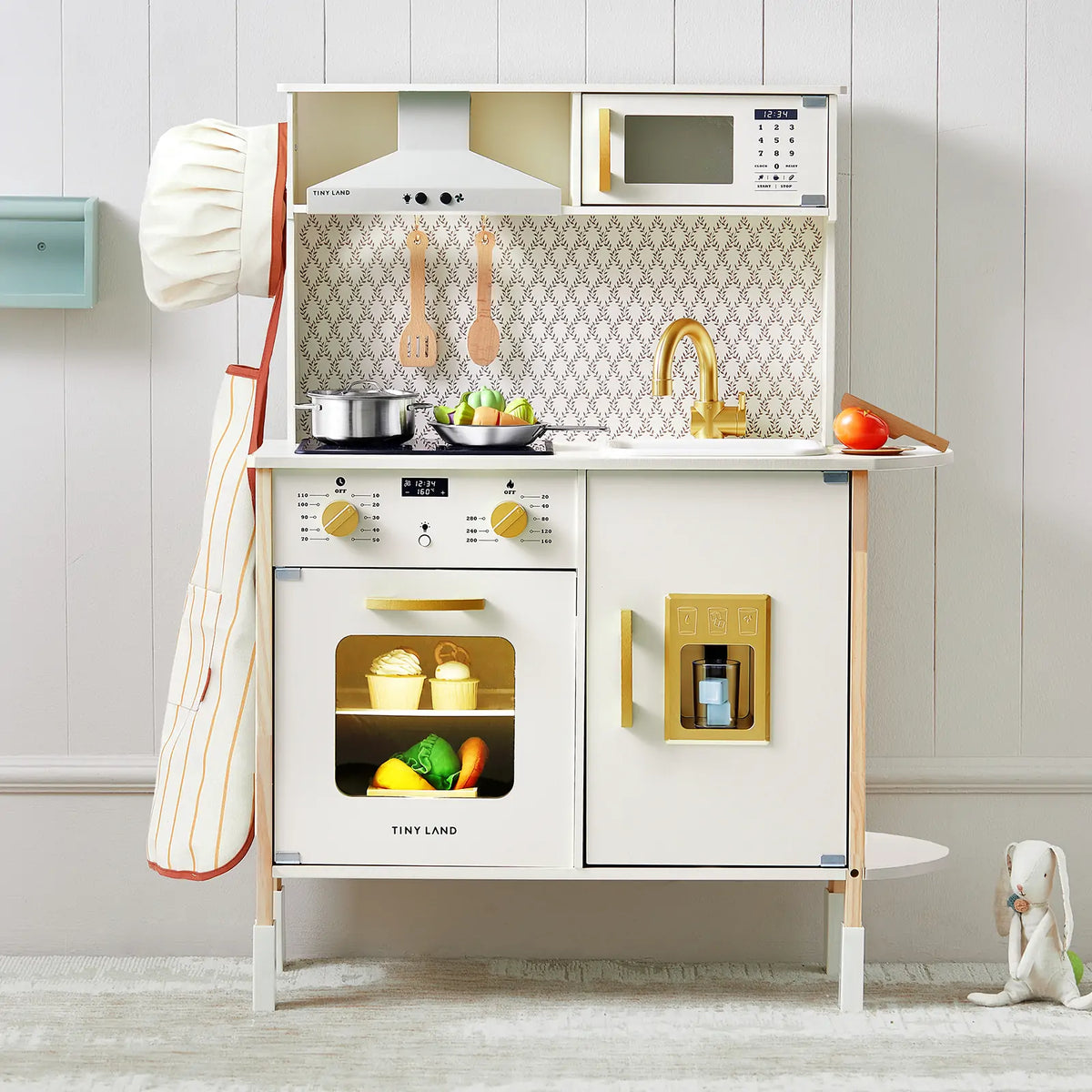
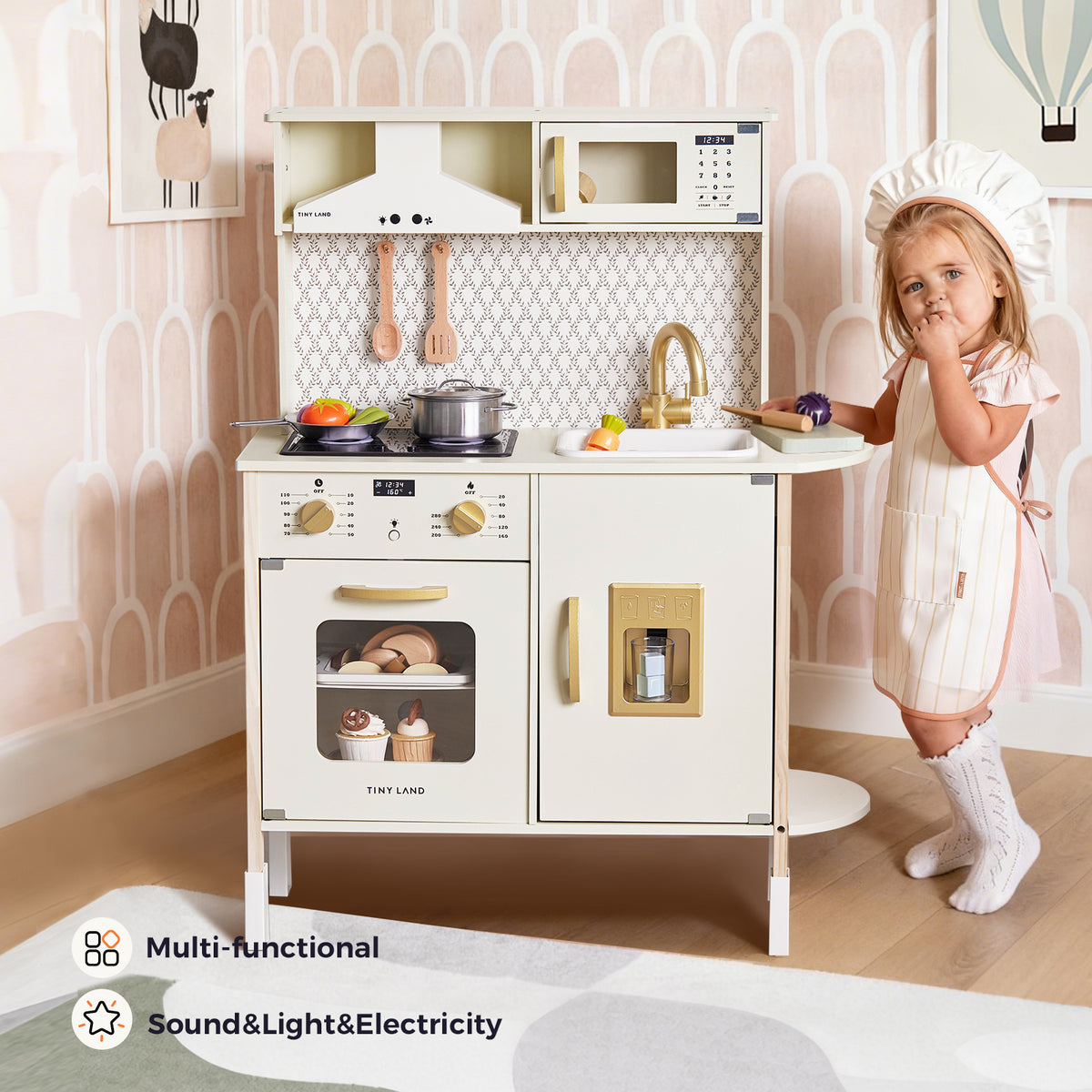
At its core, a play kitchen is a toy kitchen made for children to explore everyday home routines through pretend activity. Depending on the design, it may include an oven, stovetop, sink, cabinets, shelves, play food, and a range of kitchen accessories. Many modern kitchen playsets also include opening doors, storage space, and turning knobs that make the setup feel more like a real kitchen.
That sense of familiarity is part of the appeal. A child sees adults prepare meals, rinse produce, put away dishes, and move around the kitchen every day. A child-sized version gives them a chance to step into that routine in a way that feels safe, manageable, and exciting.
A well-designed pretend kitchen can also support many different styles of play. Some children enjoy simple pretend cooking with pots and pans. Others like organizing shelves, serving snacks, or setting up a full restaurant scene. Some families prefer a classic wooden play kitchen with warm, timeless details, while others may look for extra storage or interactive features that make the overall play experience feel even more engaging.
Why Do Kids Love Play Kitchens?
Children are naturally curious about the things adults do. They watch parents prepare dinner, wash fruit, set the table, and clean up after meals. A pretend play kitchen gives them a way to join that process through creative play.
That is one reason kids love this type of toy so much. It helps them feel involved in everyday life. A child may serve lunch to stuffed animals, make soup for siblings, or invite friends over for tea. One day they may be baking cupcakes. The next day they may be running a café and taking everyone’s order. This kind of open-ended play keeps the experience fresh and creates endless opportunities for imagination.
Small interactive details can make a big difference too. Features like turning knobs, opening cabinets, placing trays in the oven, or rinsing cups in the sink make the setup feel more realistic. For children who enjoy hands-on activity, those elements often help them stay engaged longer and return to the toy again and again.

Benefits of a Play Kitchen for Child Development
A play kitchen does much more than entertain. It can support several important areas of child development, especially during the early years.
1. It encourages pretend play and imagination
One of the biggest benefits of a pretend play kitchen is how naturally it supports imaginative play. Children use familiar routines as the starting point, then build their own stories around them. They may pretend to cook dinner, prepare a birthday cake, or open a pretend coffee for the afternoon.
Because there is no single right way to play, children are free to experiment, invent, and try new ideas. This kind of pretend play helps them grow their imagination, build creativity, and explore how the world around them works.
2. It helps build social skills and communication skills
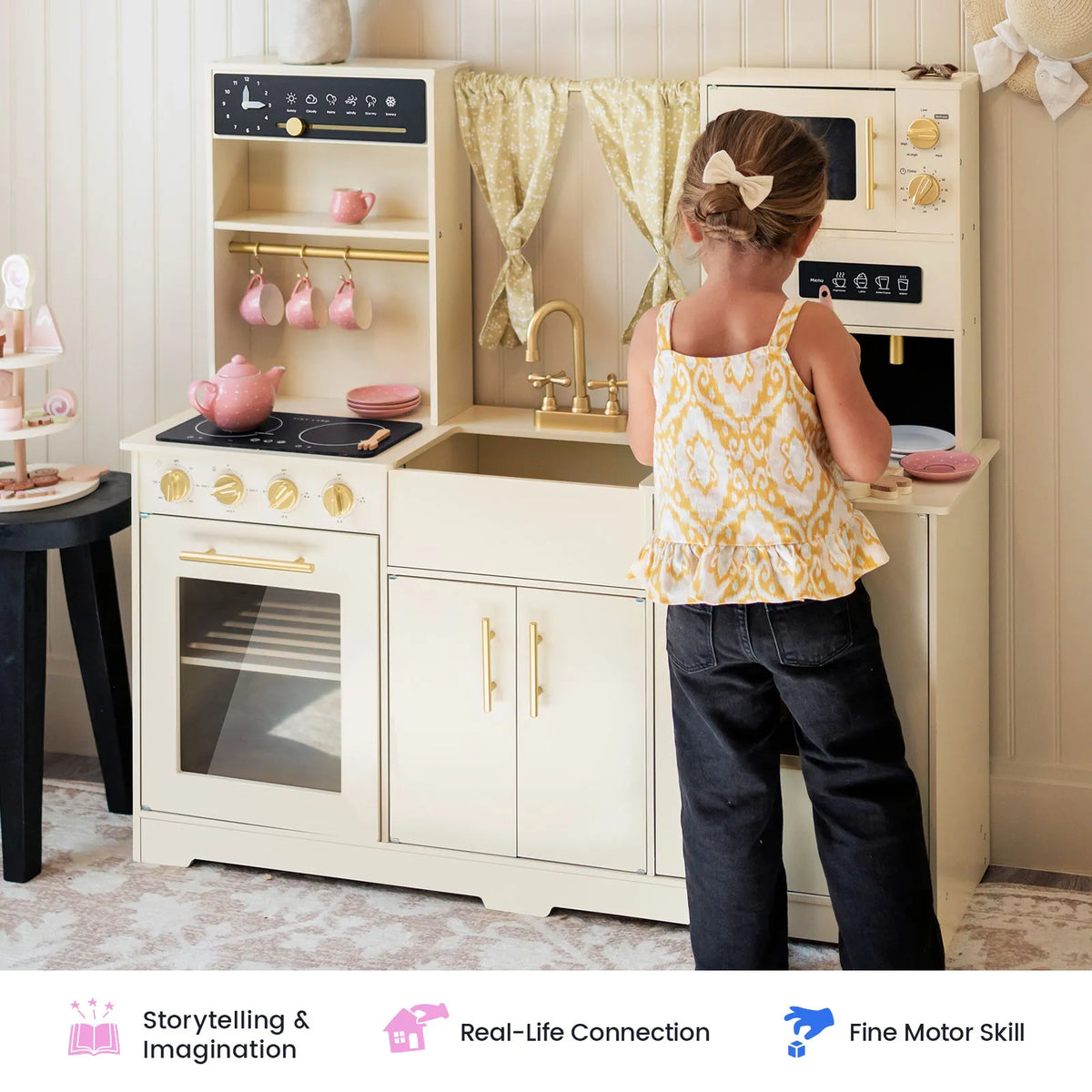
This kind of setup also works especially well for shared play. When children prepare meals together, assign roles, or take turns serving one another, they practice social skills and communication skills in a natural way.
A child might become the customer, the server, or the little chef. They learn how to ask questions, offer choices, and respond to others. Whether they are serving breakfast to the whole family or inviting friends to host tea parties, they are learning how conversation and cooperation work through role play.
3. It supports fine motor skills and motor skills
A play kitchen set can also help children strengthen both fine motor skills and broader motor skills. Picking up play food, placing items in the oven, arranging utensils, and moving cups and plates all require coordination and control.
For a toddler, these repeated motions are especially useful. Opening doors, stacking dishes, using spoons, and handling small accessories all support hand strength and precision. Even simple actions like turning a knob or placing a pot on the stovetop can help develop control in small but meaningful ways.
It introduces life skills and problem solving
A pretend kitchen gives children a playful introduction to early life skills. They begin to understand routines such as preparing ingredients, serving food, cleaning up, and keeping a space organized. These are simple ideas, but they reflect tasks children see in real life every day.
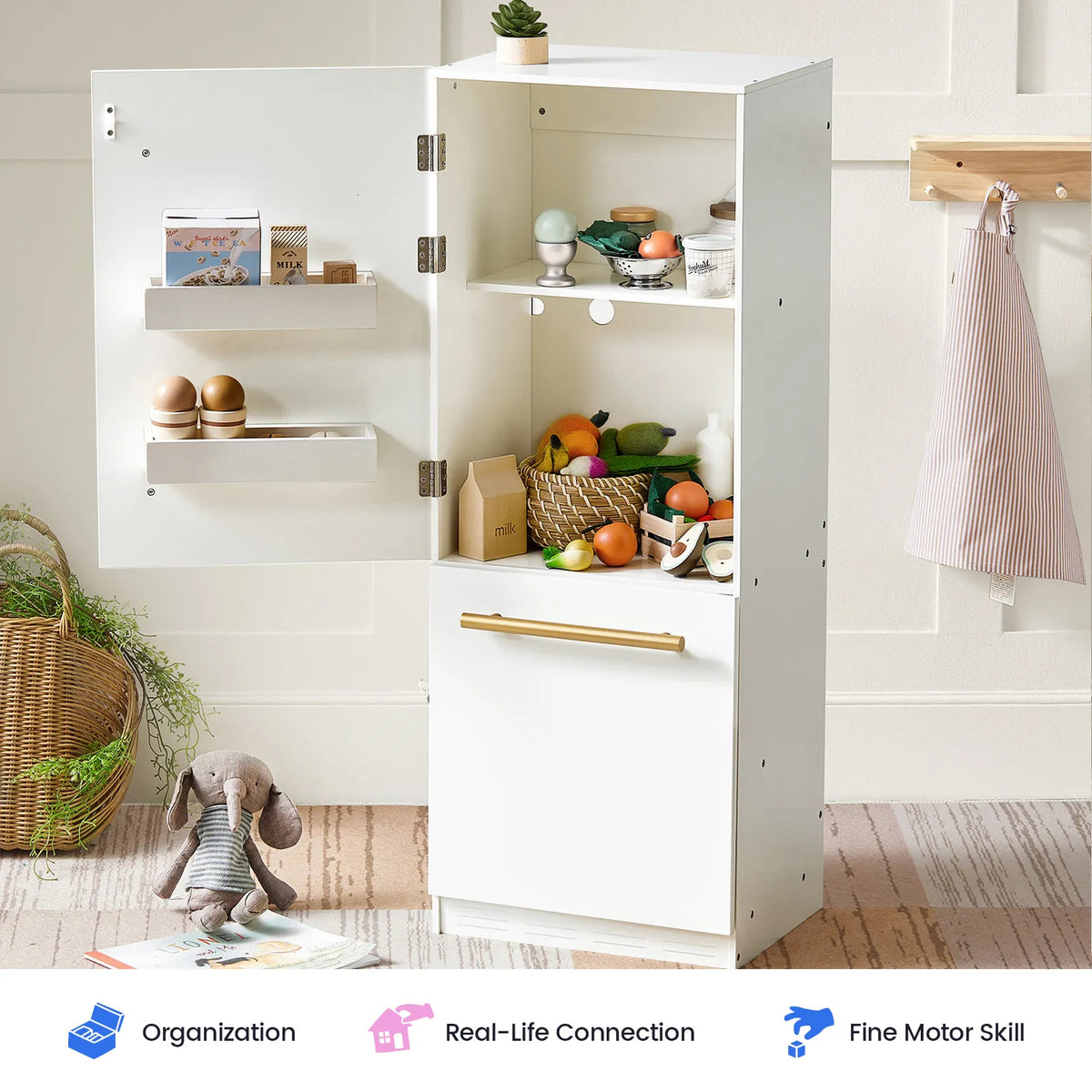
At the same time, this kind of play supports problem solving. Children decide what to cook, where things belong, and what they need next. They learn to sort, organize, and plan. A setup with shelves or cabinets can make that even easier by giving children a place to keep their kitchen accessories in order.
4. It connects play to the real world
One reason this toy remains so engaging is that it reflects the real kitchen. Children are not being asked to imagine something completely unfamiliar. They are acting out routines that already feel important to them. That makes the experience feel meaningful from the start.
This connection to everyday family life also supports cognitive development. As children plan pretend meals, remember steps, sort items, and repeat routines, they are learning through doing. That is part of what makes this kind of play so valuable.
 What Age Is a Play Kitchen Best For?
A play kitchen can work for a wide range of ages, but it is especially popular during the toddler and preschool years.
Many children begin enjoying simple kitchen-themed pretend activities around age 2. At this stage, they are often most interested in copying actions they see at home, such as stirring a pot, opening a cabinet, moving play food, or washing items in the sink. They may not create long stories yet, but they still enjoy the repetition and hands-on activity.
From ages 3 to 5, this kind of toy often becomes even more engaging. This is when imaginative play, storytelling, and role play tend to grow quickly. A child may prepare full meals, serve dolls and stuffed animals, or turn the setup into a bakery or café. As the child grows, the same toy can continue to feel fresh simply by adding new accessories, changing the pretend menu, or introducing new play routines.

How to Choose the Right Play Kitchen
If you are shopping for one, the best choice depends on your child’s interests, your available space, and the features that matter most to your family.
1. Think about space and layout
Start with where the toy will go. Some families have room for a larger setup, while others need something that works well in small spaces. Measuring the room first can help you choose something that fits comfortably without overwhelming the area.
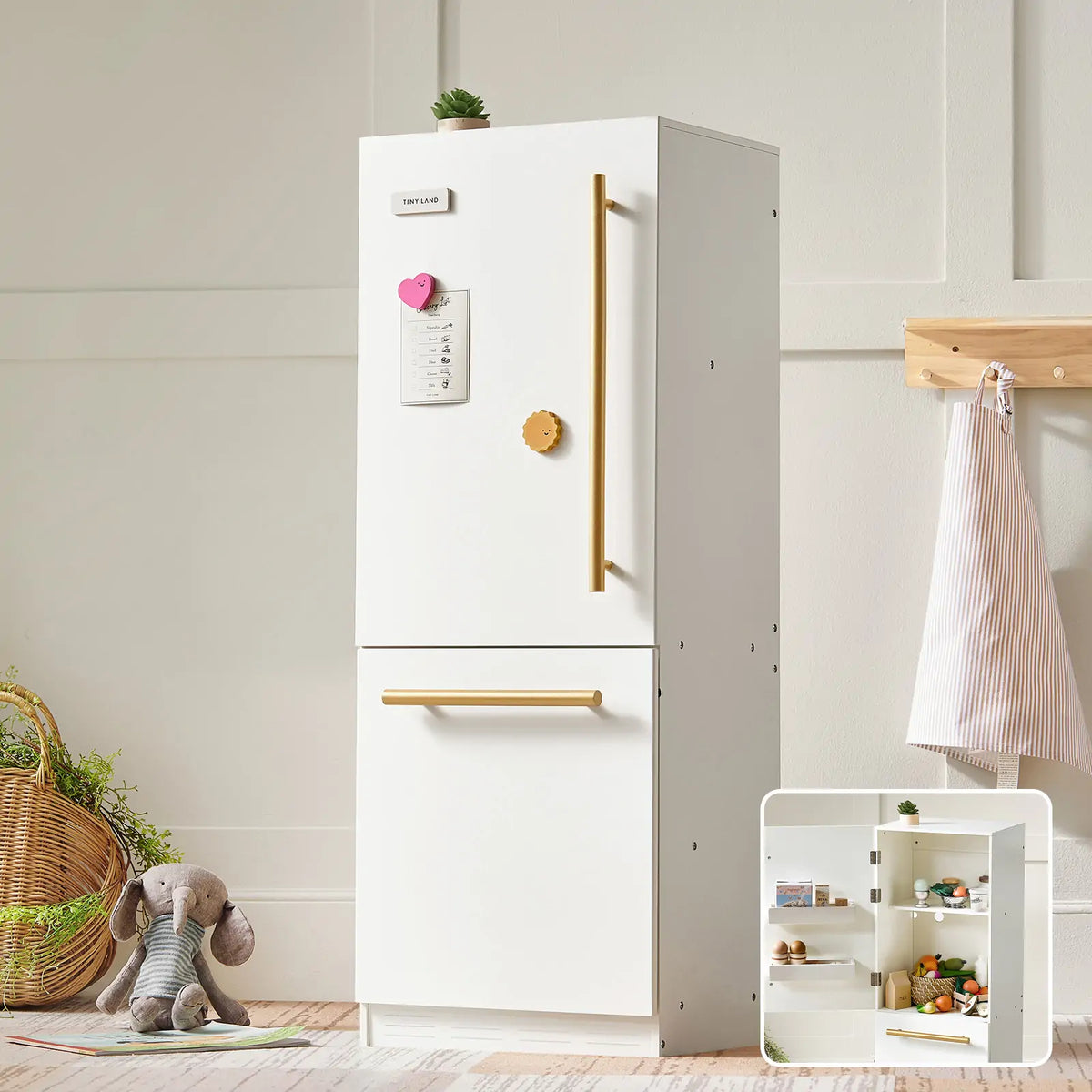
Storage is worth thinking about too. A model with cabinets or shelves can help keep play kitchen accessories, dishes, and play food organized, which makes cleanup easier and helps the play area stay tidy.
2. Choose durable, child-friendly materials
Many parents prefer a wooden play kitchen because it offers a warm look and long-term durability. A model made with sturdy materials, such as solid wood details or strong wood-based construction, often holds up well to everyday use.
Safe finishes matter too, especially for younger children. A thoughtfully made kitchen with child-friendly details can support daily kids play while also fitting beautifully into the home.
3. Match the features to your child’s play style
Some children love simple routines. Others are drawn to more interactive details. The right choice often depends on how your child likes to play.
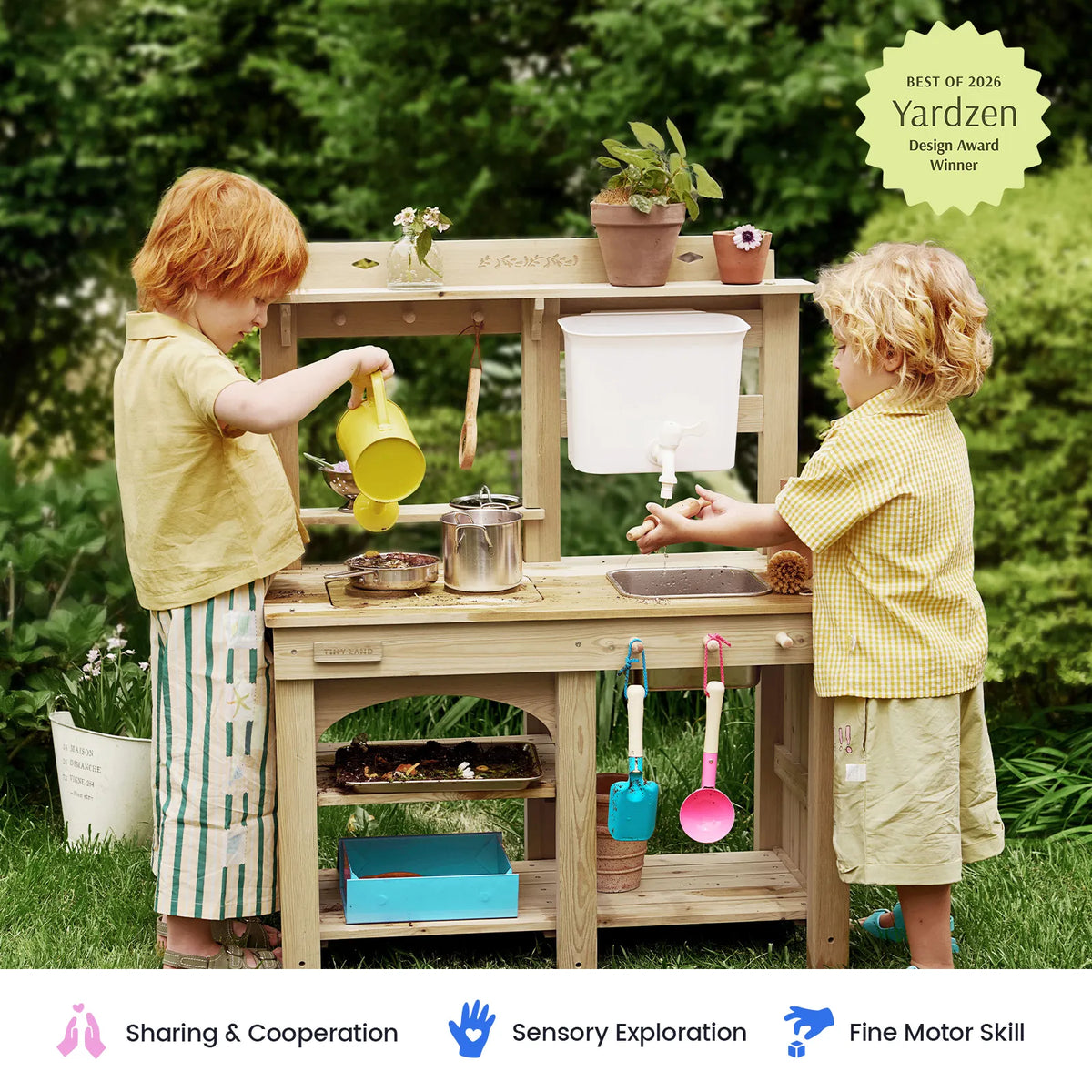
For example, some families may prefer a classic wooden play kitchen with features like an oven, stovetop, microwave, and coffee maker for a more complete pretend cooking setup. Others may look for a design with extra storage to keep everything organized. For children who enjoy sensory play, interactive elements such as a water feature can make washing and rinsing feel even more exciting.
4. Do not overlook accessories
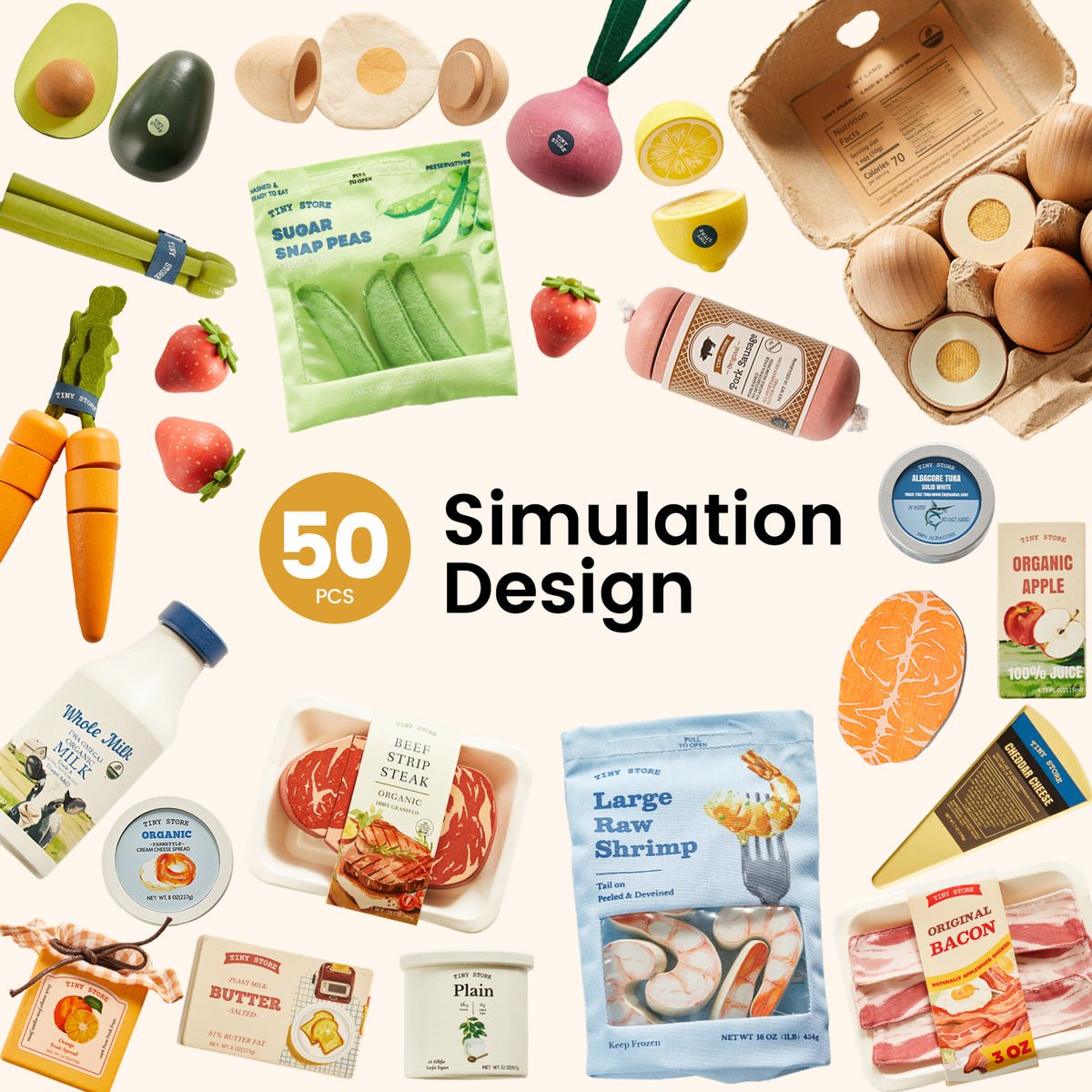
The right play kitchen accessories can make a big difference in long-term engagement. Pots, pans, cups, plates, pretend fruit, vegetables, and serving tools all help expand the ways children can use the toy.
Some families prefer a play kitchen set with accessories included, while others like adding pieces over time. Both approaches can work well. What matters most is that the setup gives children enough pieces to support pretend play, cooking, serving, cleaning, and storytelling.
5. Choose something that can grow with your child
A well-chosen setup should still feel useful as your child develops. At first, they may simply move cups and plates around or place food into a pot. Later, they may prepare lunch for dolls, serve dinner to family, or create a full café menu for friends.
The best options leave room for growth. A thoughtful design with good storage, durable materials, and inviting details can continue to support fun and learning long after the first day of play.

Helpful Play Kitchen Styles to Consider
When parents think about what kind of kitchen toy will work best, it often helps to focus on family needs rather than just looks.
Some families want a timeless, premium design with classic features such as an oven, stovetop, microwave, and coffee maker. Others care most about interactive play and may prefer features that make washing and sink-based activities feel more realistic. Some homes benefit from added storage, while others need something compact and easy to place in a smaller corner.
That is why there is no single perfect choice for every child. The right option is the one that fits your home, supports your child’s play style, and feels easy to use every day.

Final Thoughts
So, what is a play kitchen? It is much more than a toy. It is a space where children can explore routines they see every day, build confidence through pretend play, and enjoy meaningful, hands-on learning.
A well-made play kitchen can support imaginative play, social skills, fine motor skills, and early independence, all while bringing a lot of fun into everyday family life. Whether a child is serving snacks, washing the dishes, preparing meals, or inviting others into their own kitchen, this kind of toy creates a playful world that feels both familiar and full of possibility.