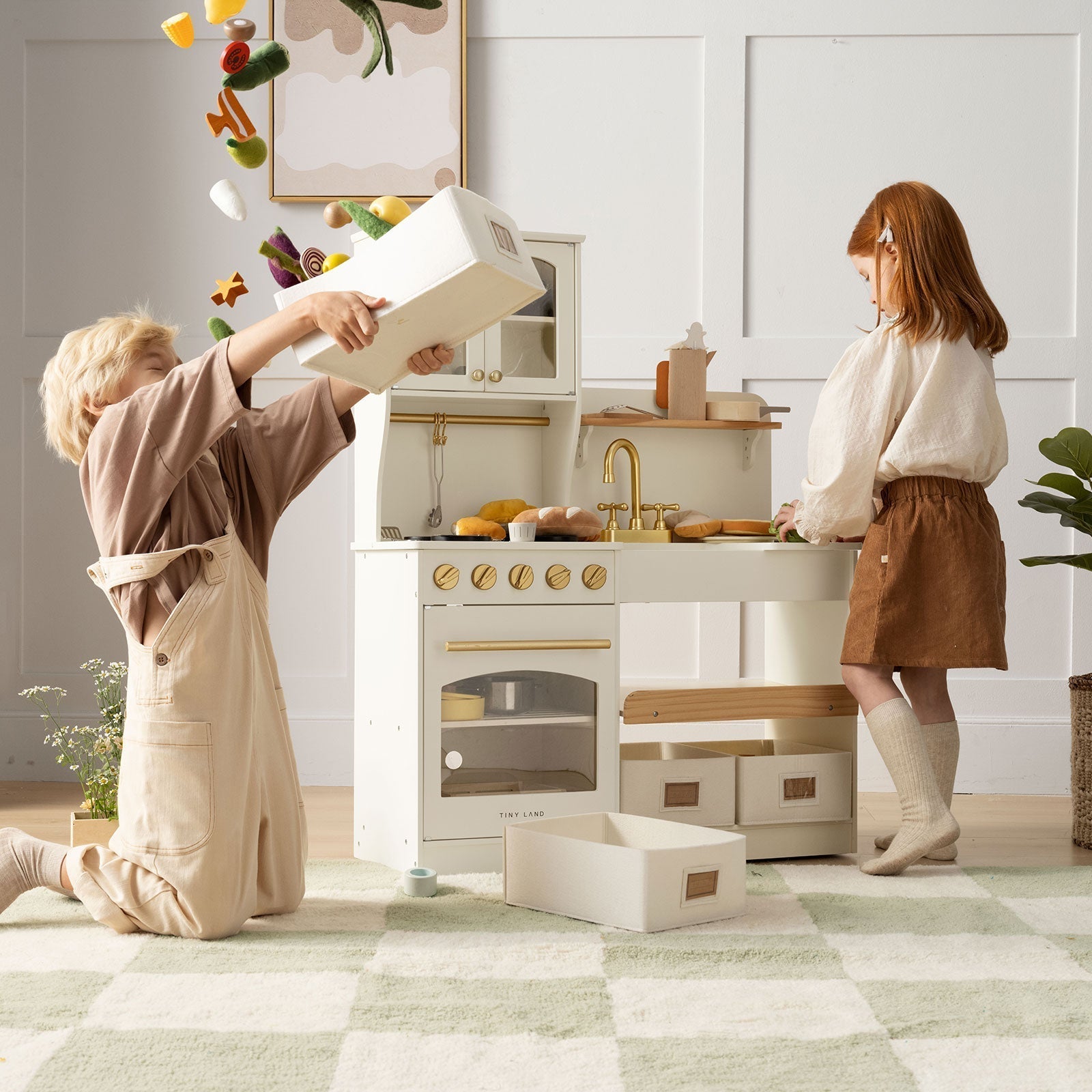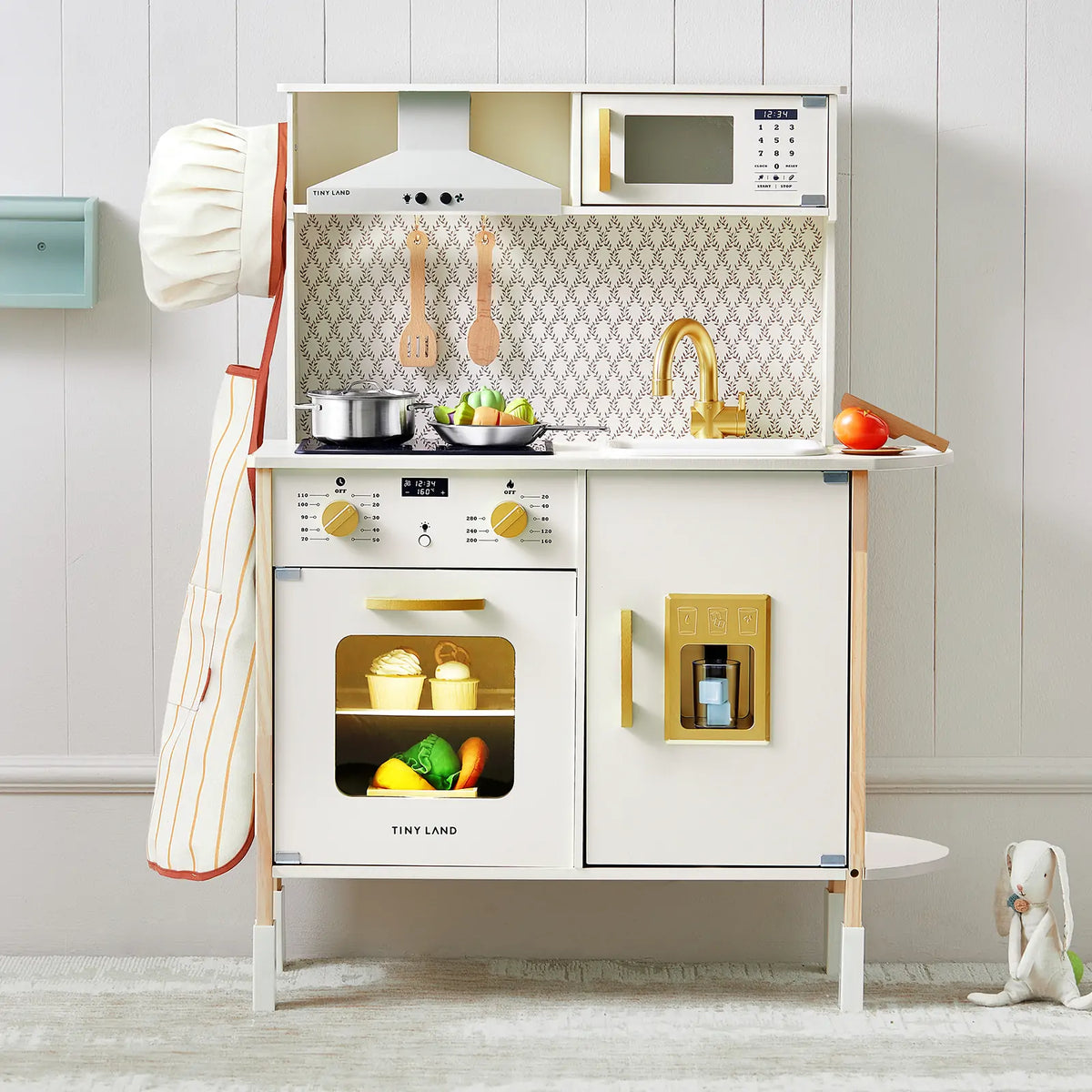
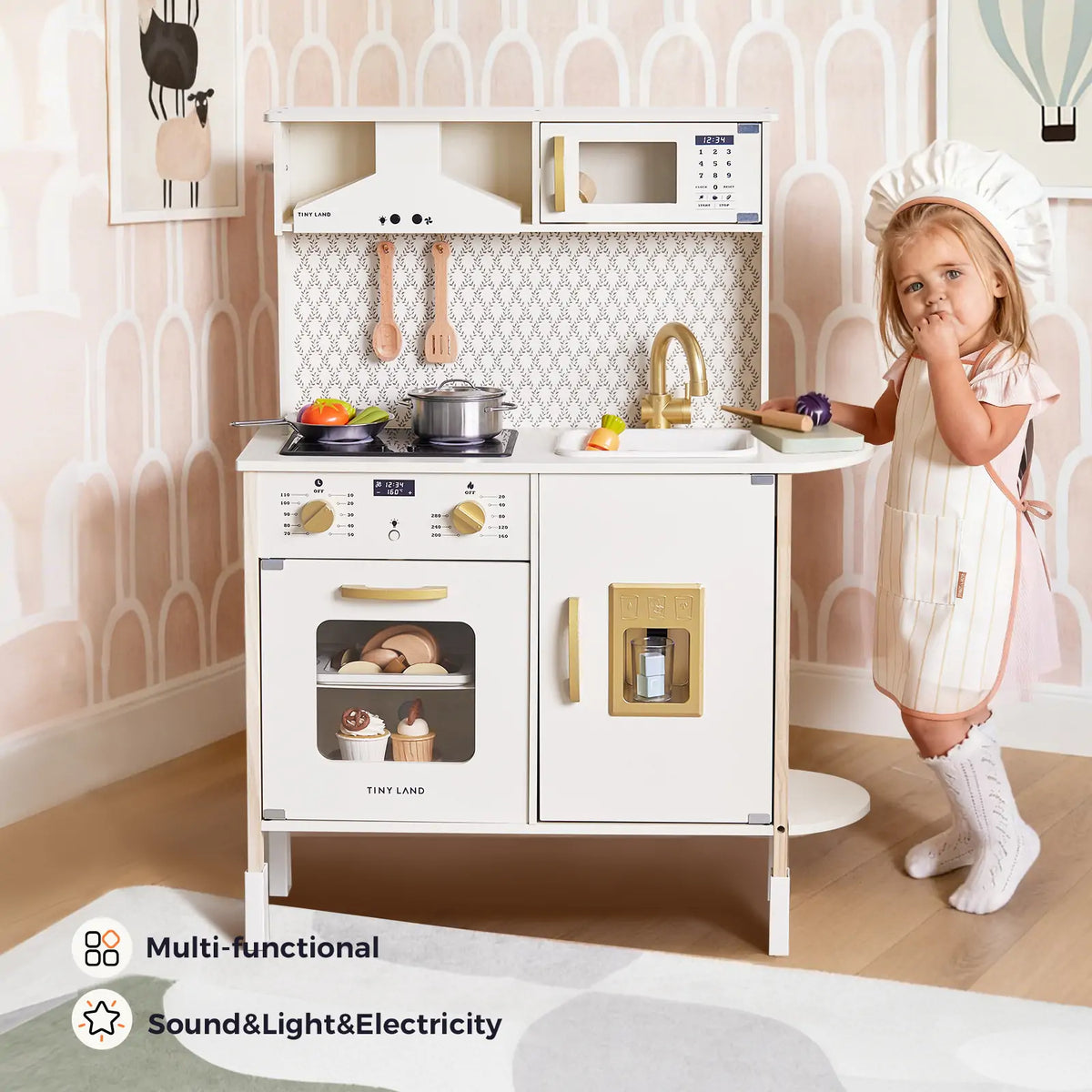



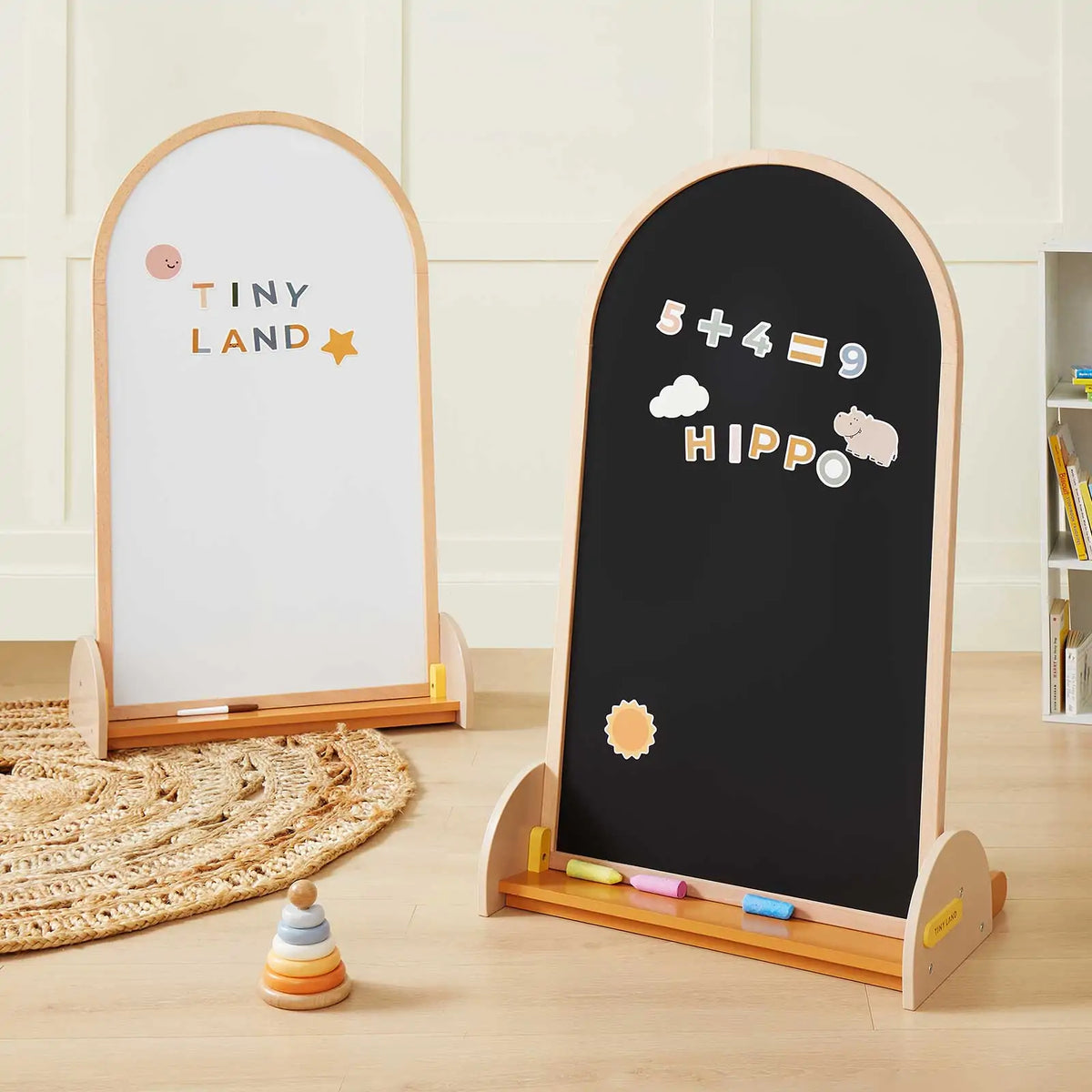
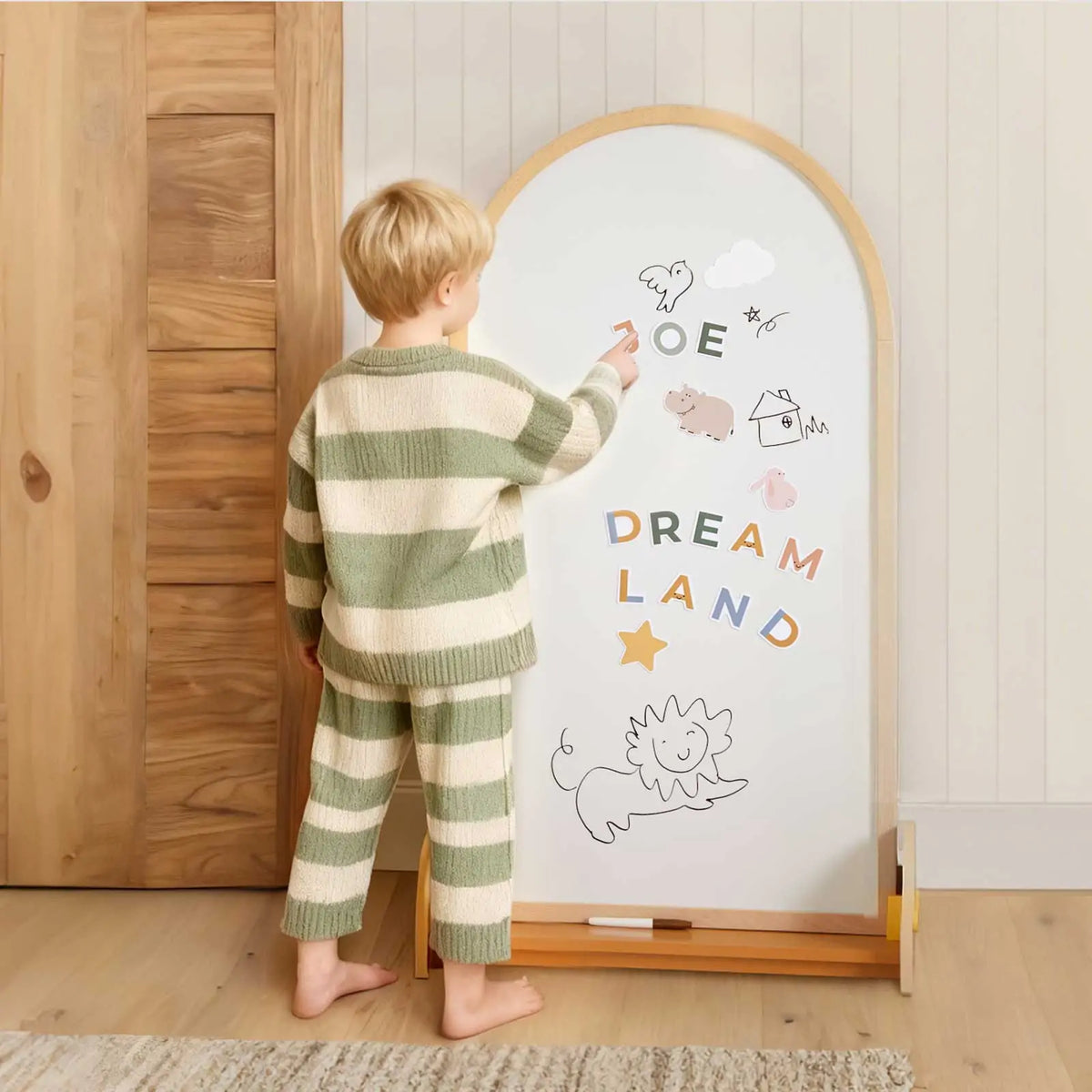
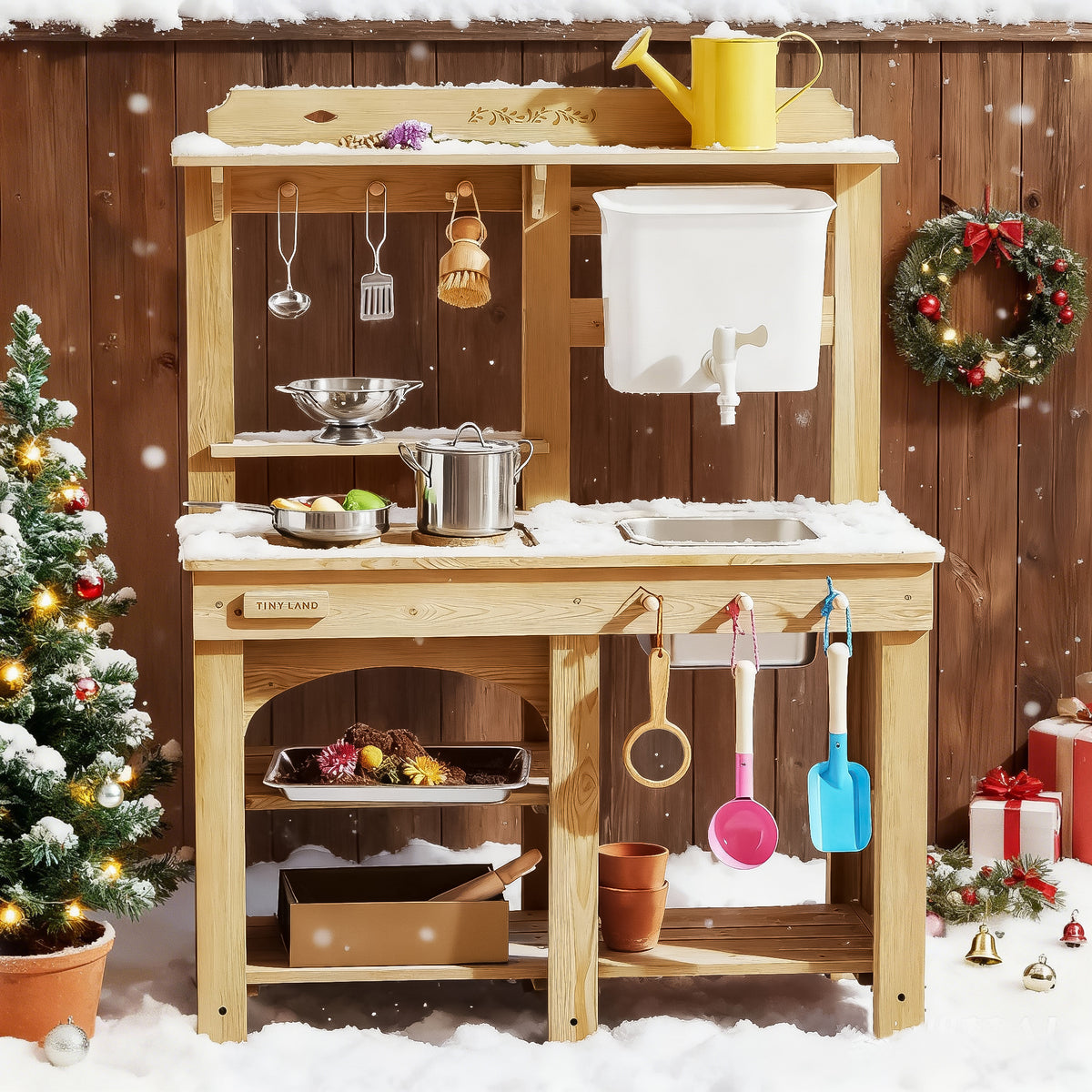
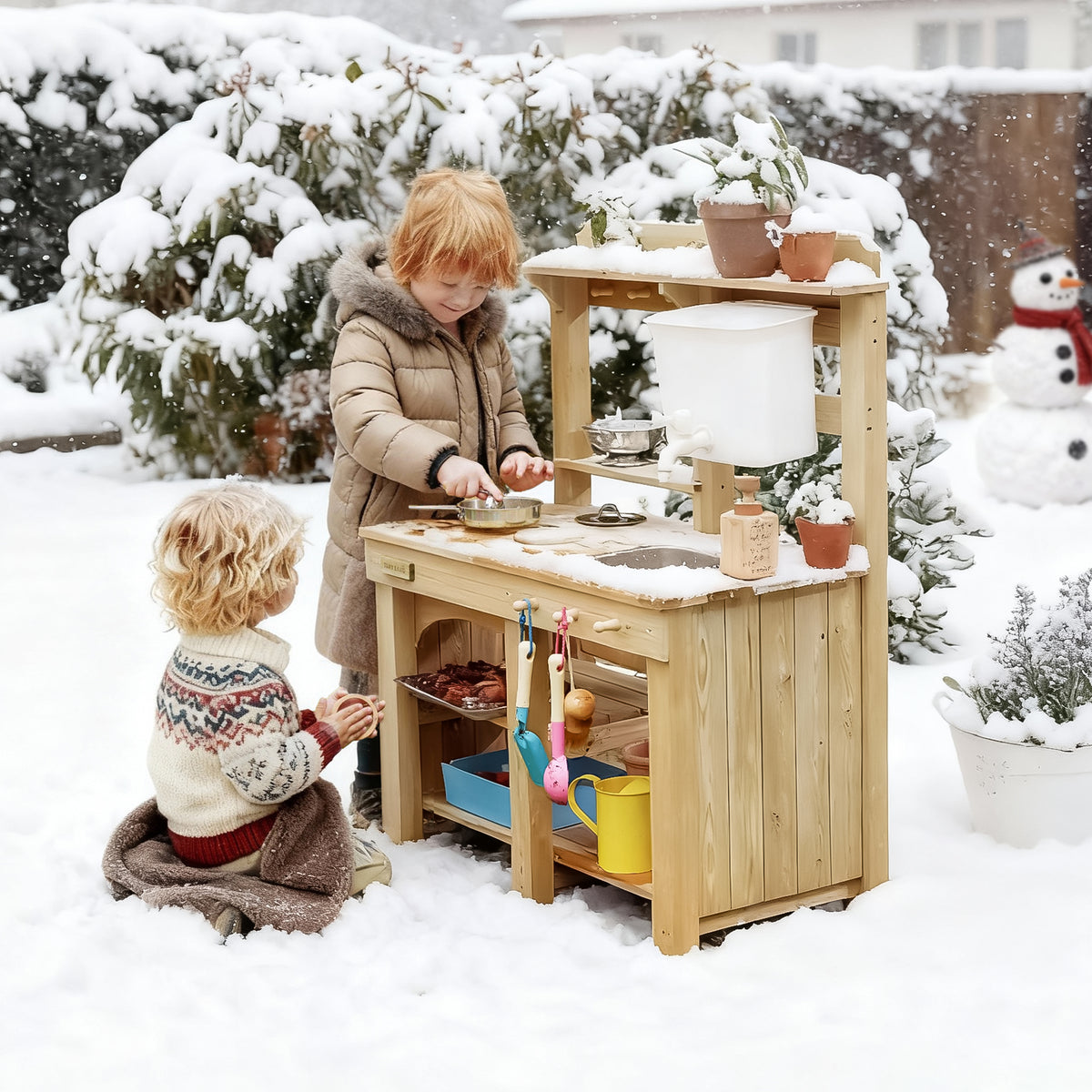
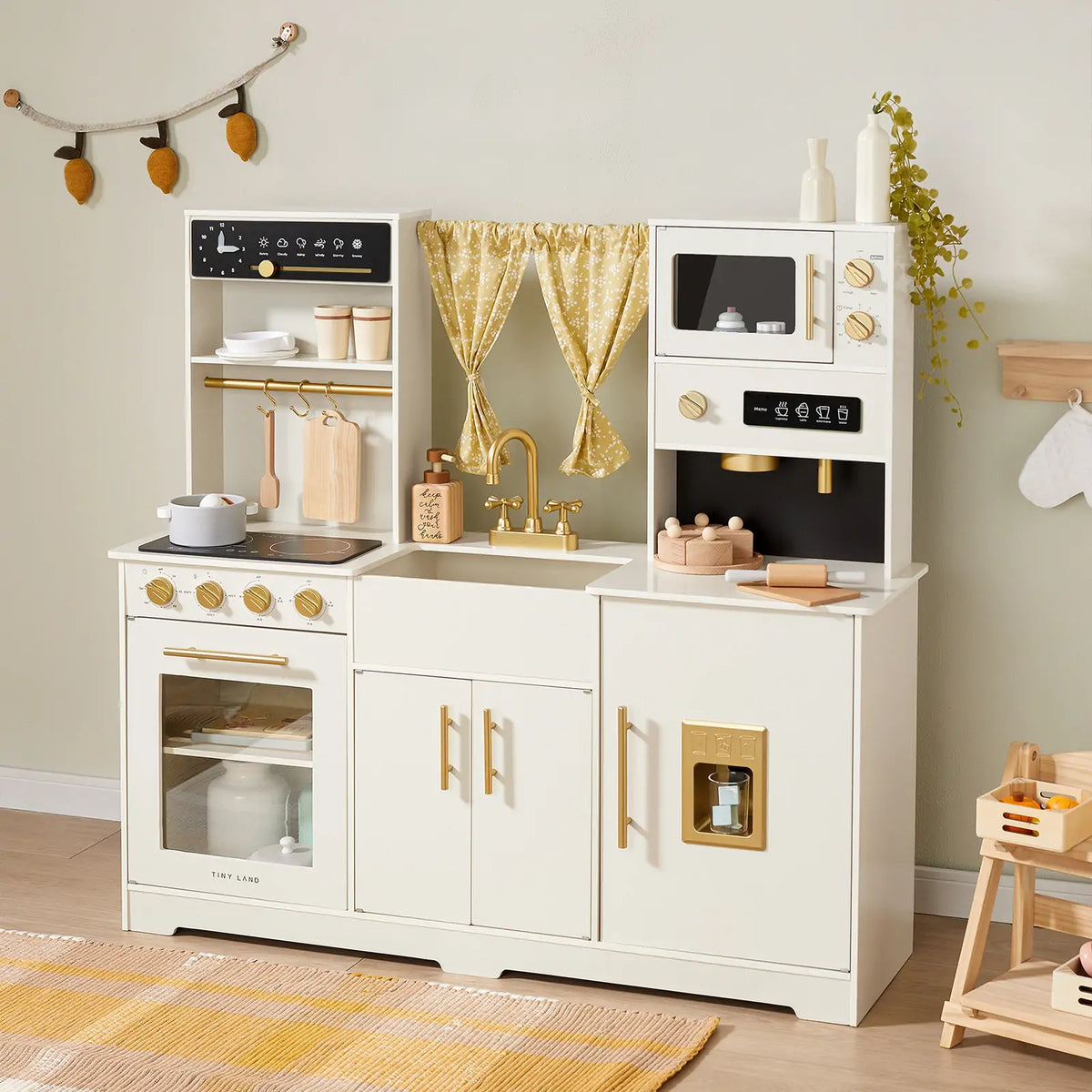
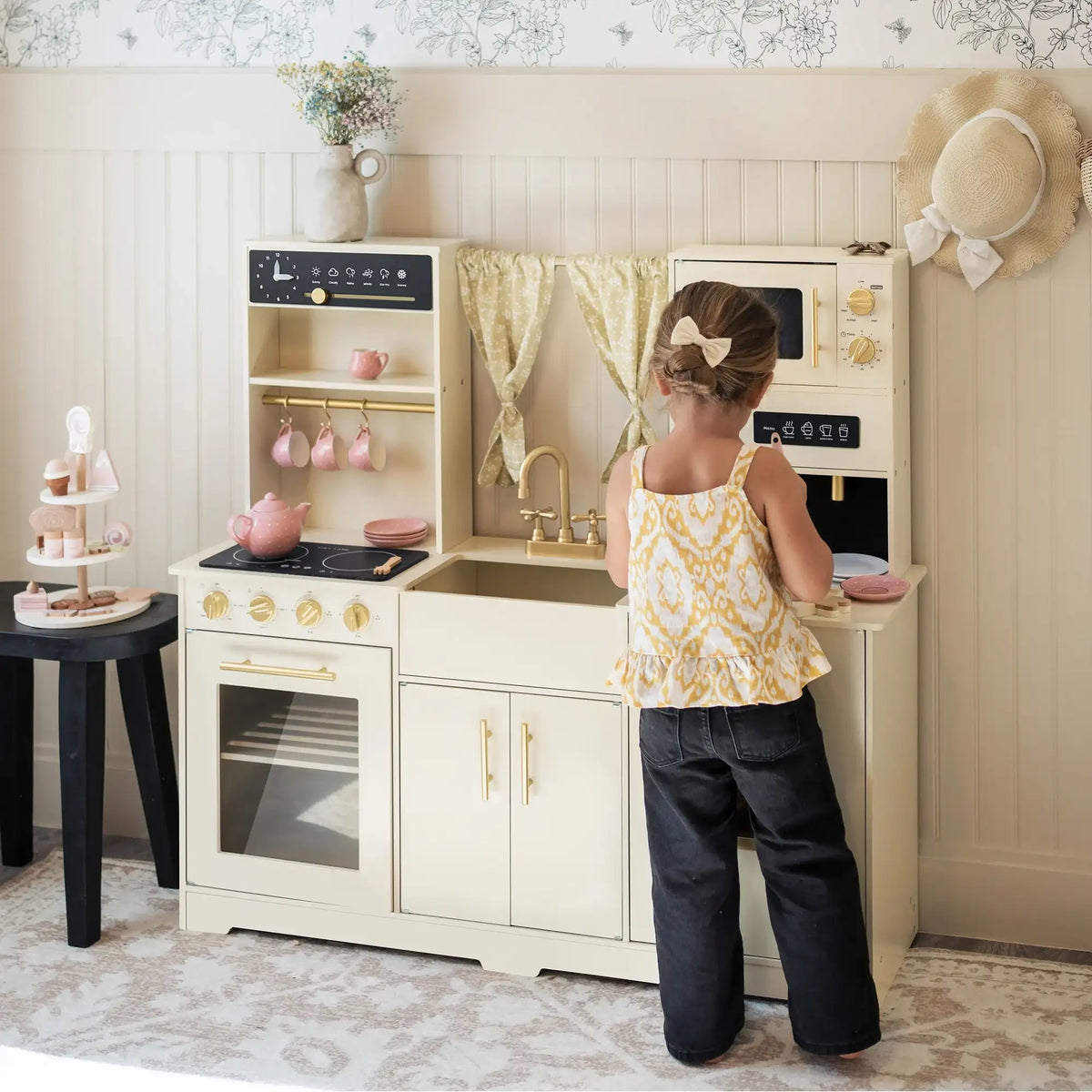
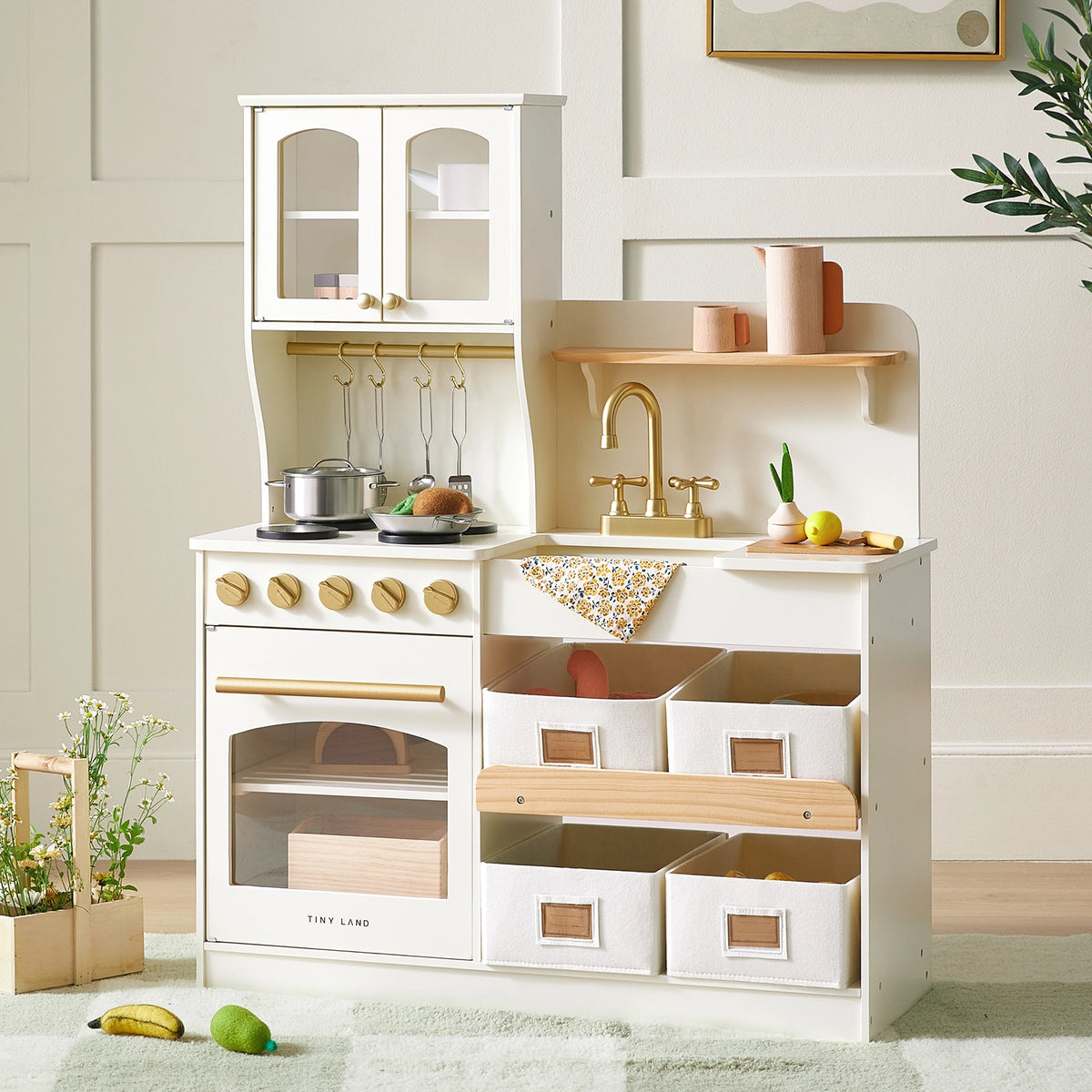
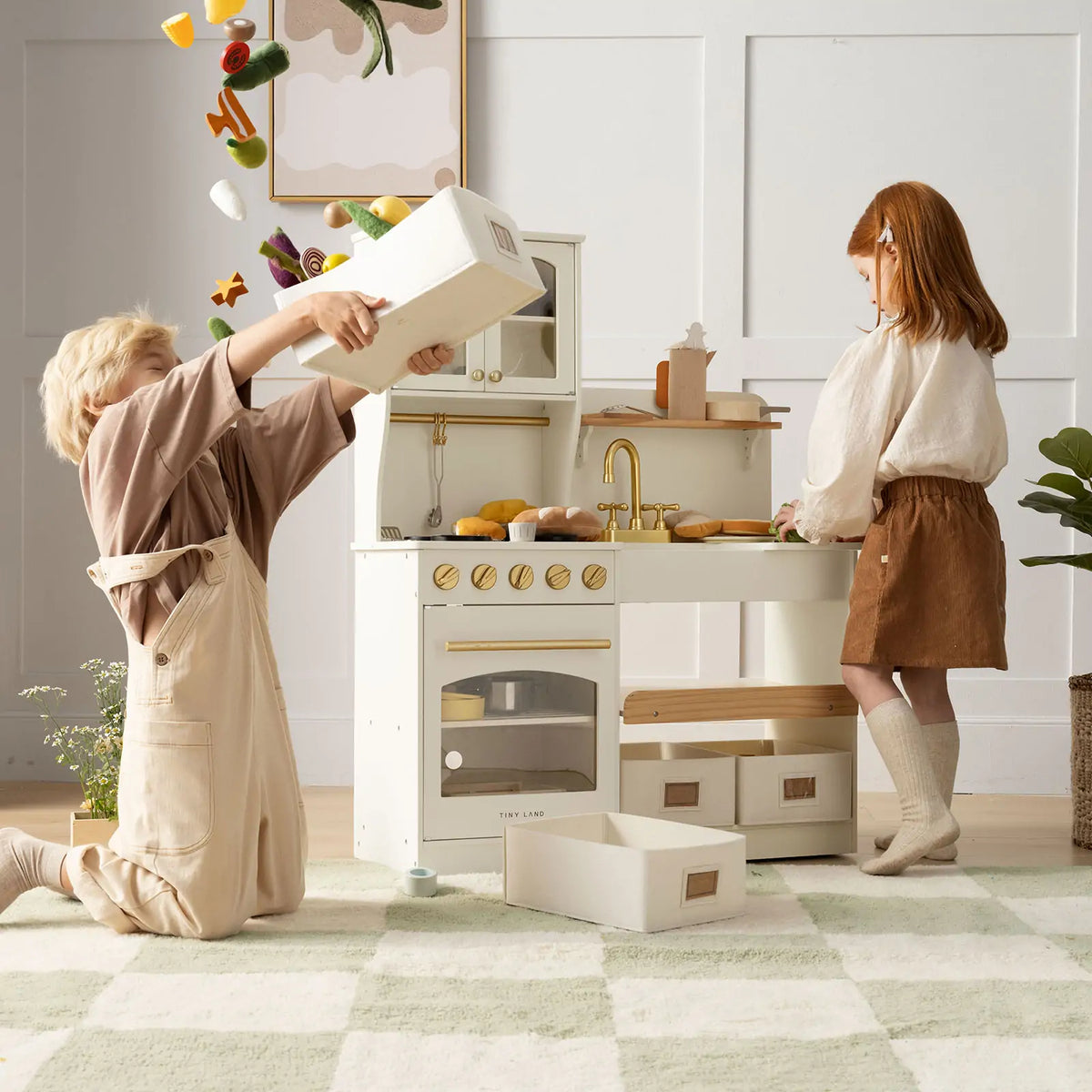
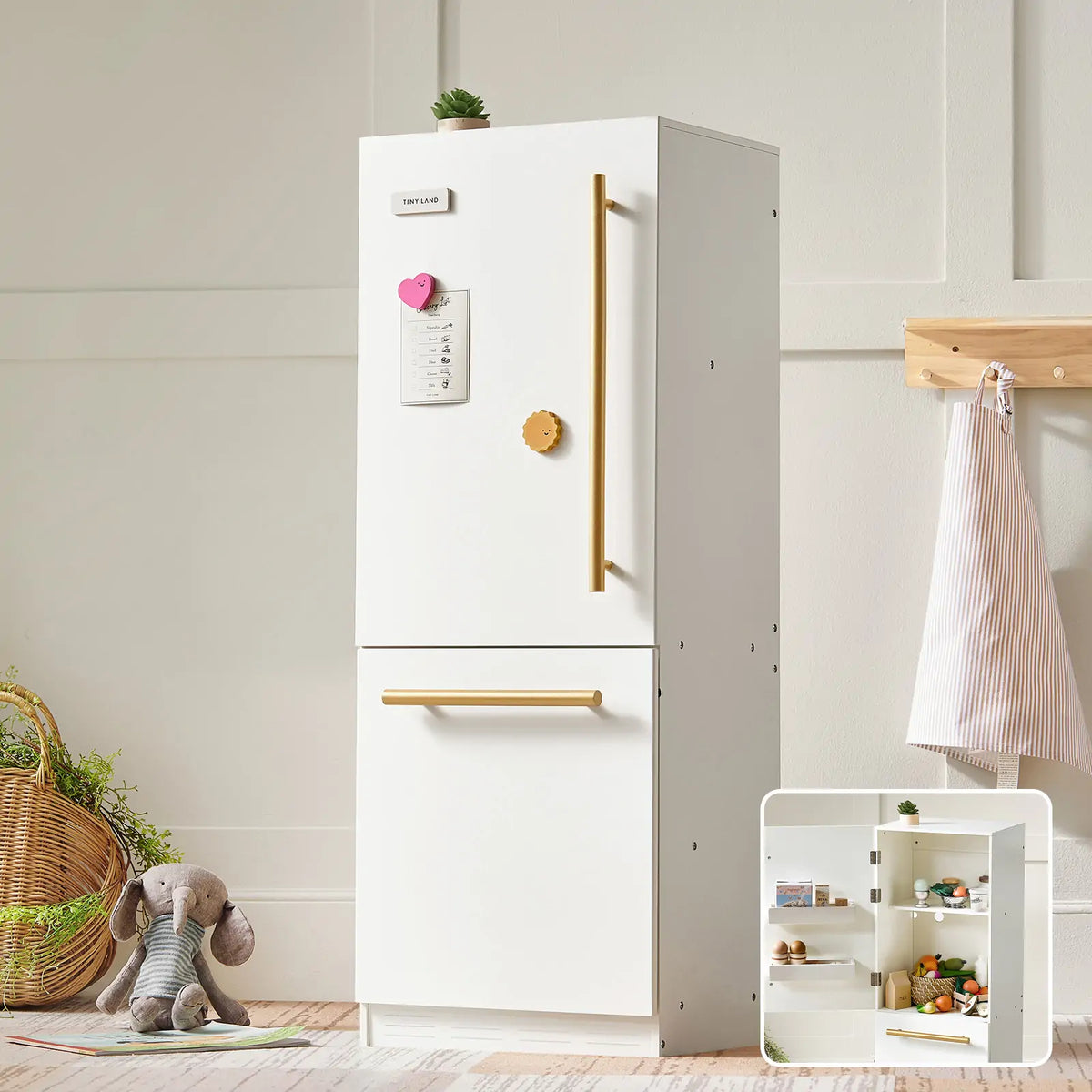
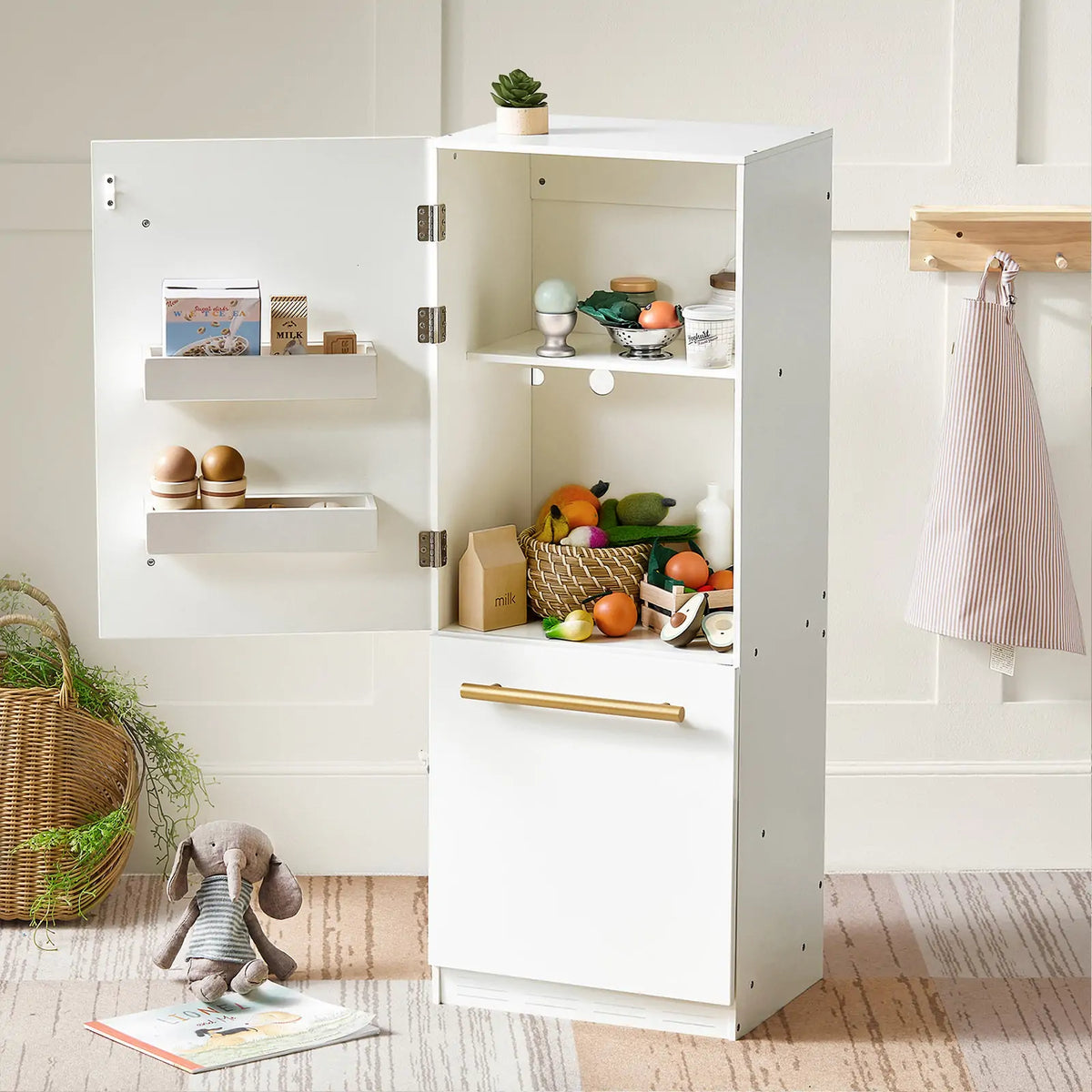
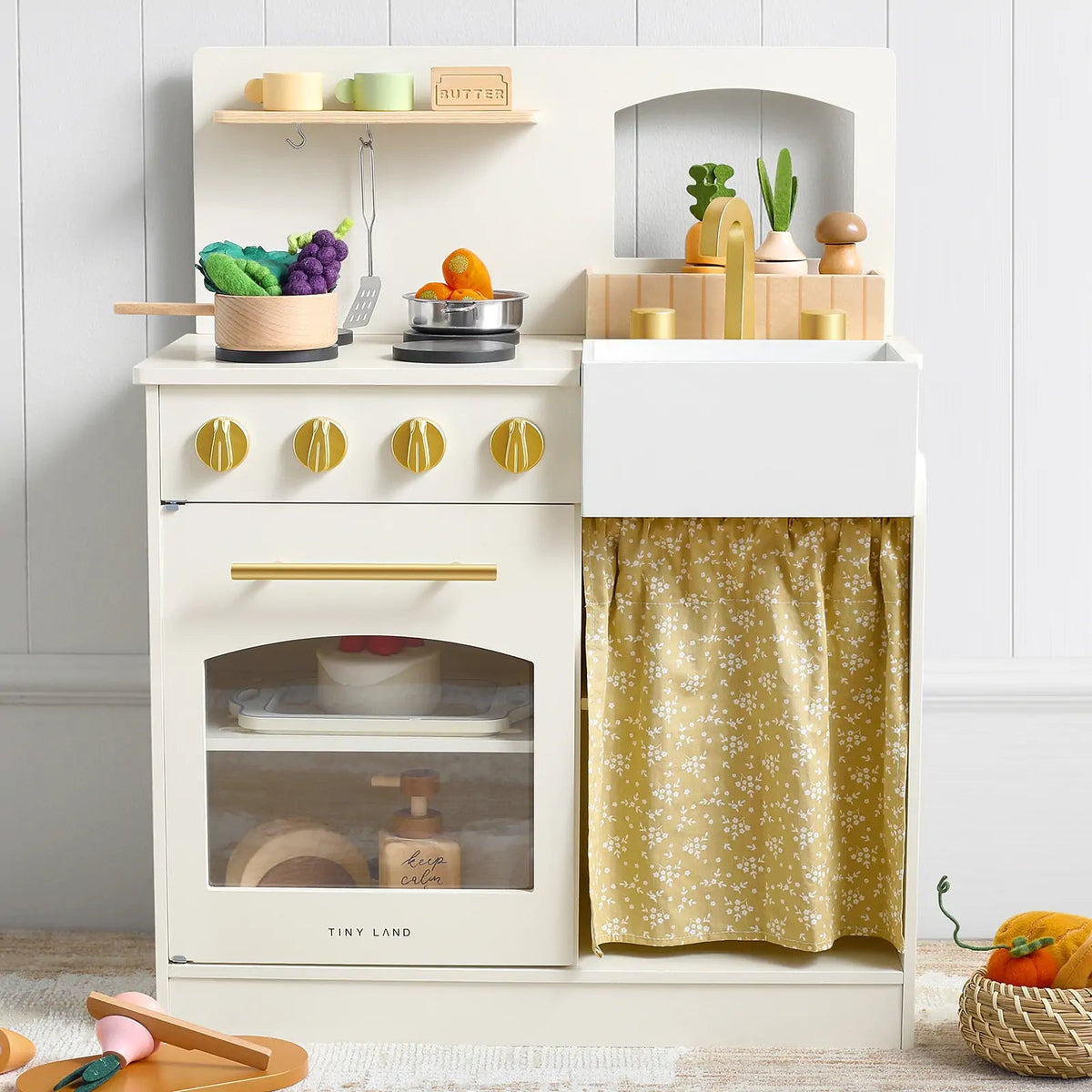
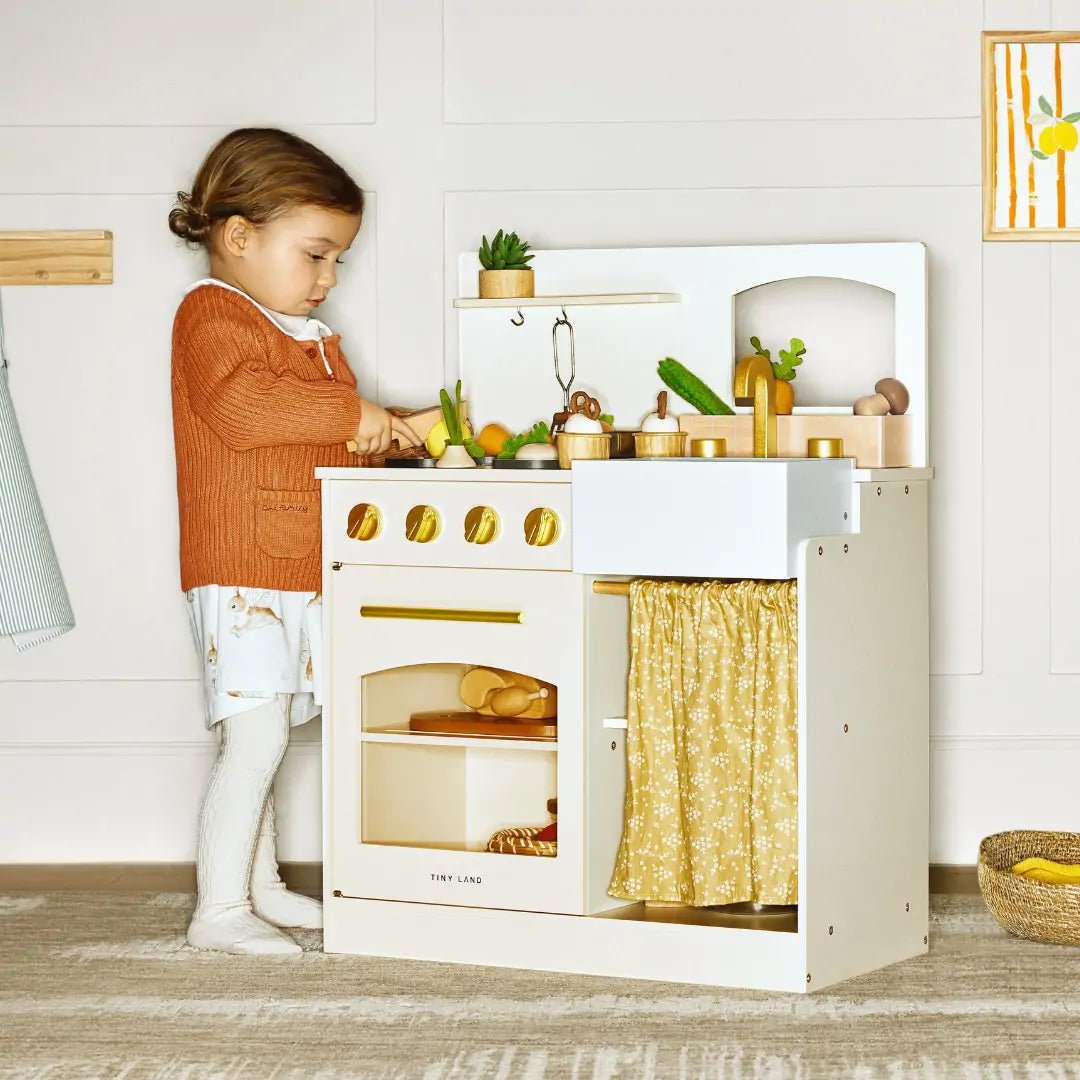

If you’ve ever watched a toddler mimic stirring a pot, chatting with an invisible customer, or pretending to wash dishes, you’ve already seen the magic of a what is a play kitchen in action. Far more than a simple toy, a play kitchen opens up a world of imaginative play that supports learning, connection, and joyful development.
In this guide, we’ll explore how a wooden play kitchen can help your child build confidence, develop key abilities like fine motor skills and social skills, and become your home’s favorite spot for pretend fun.
Discover Tiny Land’s range of playful toy kitchen options here.

Why Choose a Wooden Play Kitchen? (Real-Life, Creative Play Every Day)
A wooden play kitchen isn’t just a miniature version of your real kitchen — it’s a kitchen playset designed for growth. Built to be sturdy, safe, and beautiful, these play kitchens invite kids to mix, measure, organize, and imagine with confidence.
Tiny Land’s wooden play kitchens come in various sizes and styles — from compact sets to kitchens with spacious storage and multifunction stations — perfect for different spaces and ages.
Parent Insight: A wooden play kitchen blends seamlessly into your home while offering hours of pretend cooking and role play entertainment.
What Makes a Play Kitchen So Special?
Encourages Imaginative Play
A play kitchen becomes so much more than a corner in your living room — it becomes a stage where children invent stories, take on roles, and feel like a little chef in their own creative world. Imaginative scenarios (from baking cupcakes to hosting guests) help foster confidence and communication.
Play Idea: Let your child “host tea parties,” serve meals, or run a pretend restaurant with friends or siblings. This type of role play enriches creative thinking and expression.

Play Food & Kitchen Accessories Expand the Fun
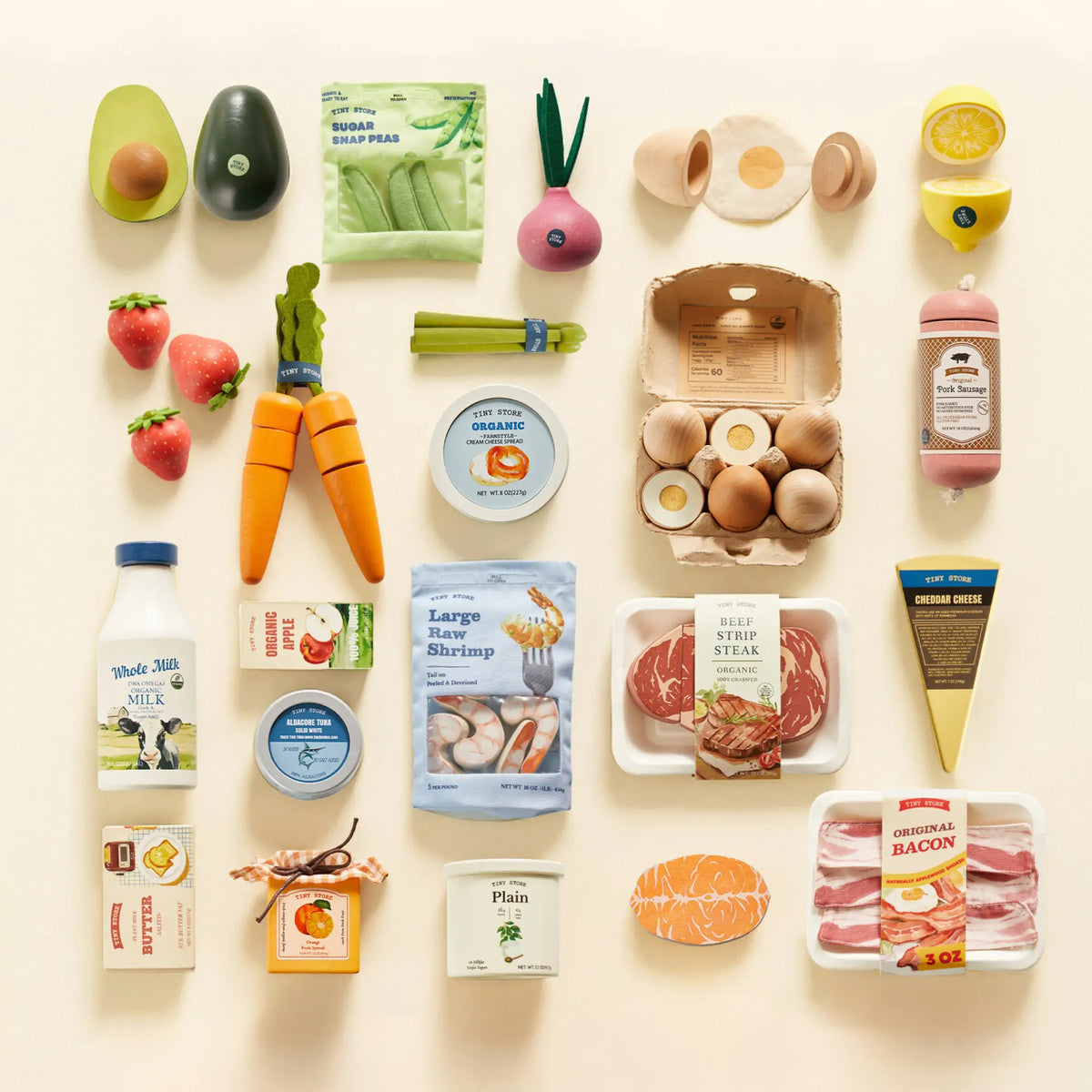
Adding pretend play food and kitchen accessories (like pots, pans, utensils, and wooden food sets) transforms simple scenarios into immersive experiences. These accessories help children practice sorting, matching, and naming — all while developing fine motor skills as they grasp, place, and arrange pieces.
Pro Tip: Use these accessories to encourage cooperative play — older siblings can run a pretend café with your toddler!
How Play Kitchens Support Early Development
Motor Skill Development
Reaching for items, twisting knobs, placing play food on trays, and opening cupboards all strengthen coordination and dexterity — foundational skills for handwriting, dressing, and more.
Social Skills Through Shared Play
A play kitchen becomes a social hub where kids learn to take turns, share roles, negotiate scenarios, and communicate with others — building empathy and cooperation.
Educational Note: These everyday interactions support language growth, emotional expression, and social confidence — all while having fun.

Choosing the Right Play Kitchen for Your Child
When selecting a toy kitchen or kitchen playset, consider these aspects:
- Size & Space: Pick a size that fits your play area without overwhelming it. Some Tiny Land kitchens offer built-in storage to keep everything neat.
- Accessories Included: Sets with varied accessories expand pretend opportunities — from food to utensils.
- Durability & Design: Look for well-constructed wooden play kitchens that stay stable as kids explore.
Each Tiny Land play kitchen — from compact Mediterranean styles to larger storage-featured units — is crafted for longevity and engaging play.
Play Kitchen Comparison
|
Product Name |
Key Features |
Best Play Kitchens For Persona |
Key Benefits |
|
Luxury (Iconic) Wooden Play Kitchen – Cream |
Ice maker, oven, stovetop, microwave, coffee maker, storage, child-safe paint |
Design-Conscious & Eco-Conscious Parents |
Non-toxic materials + stylish design = safe and décor-friendly |
|
Play Kitchen with Real Running Water System |
Real working water feature (interactive) |
STEM/Education-Oriented & Interactive-Play Parents |
Heightened sensory and motor engagement |
|
Wooden Play Kitchen with Storage |
Built-in cabinets and shelves, plenty of storage |
Space-Conscious Urban Parents |
Organizational needs met—keeps accessories tidy |
|
Pretend Play Kitchen (Blue / Green variants) |
Compact size, color-themed options, likely includes accessories |
Gift-Givers & Style-Oriented Parents |
Colorful, compact, visually appealing gift |
|
Mud Kitchen (Outdoor) |
Designed for outdoor, durable, messy play |
Outdoor-Play Advocates & Sensory Play Parents |
Encourages imaginative, weather-resistant outdoor play |
|
Kitchen + Fridge Set (Cream) |
Click-clack knobs, fridge with compartments, solid wood, non-toxic finishes |
Montessori-Focused & Storage-Minded Parents |
Promotes organization, realistic role-play, and safety |
How to Make Playtime Even Better
Here are simple ways to enhance imaginative play and learning with your child:
- Extend the Story: After pretend cooking, try a “restaurant review” where your child describes dishes to the family.
- Play Together: Join your child in role play — you can be the customer while they prepare your order.
- Integrate Learning: Use play food to introduce colors, counting, and healthy eating concepts.
These moments offer quality time and reinforce essential cognitive and social skills.

Play Kitchens for the Whole Family
Whether your toddler is just starting to explore pretend play or your preschooler wants to lead a bustling café, a play kitchen can be a place where the whole family gathers to invent, laugh, and learn.
From developing motor skill development to building storytelling abilities, these imaginative environments promote confidence and joyful exploration.

More Than a Toy — a Growth Space
A play kitchen is so much more than “just another toy.” It invites your child to experiment, interact, and express themselves in creative, meaningful ways. Whether they’re flipping pretend pancakes or arranging colorful play food, they’re learning, connecting, and growing with every giggle and shared story.
A thoughtfully chosen wooden play kitchen lays the foundation for curiosity, cooperation, and confidence — all while fueling hours of imaginative play.