


As children return to school, preparing a classroom is about more than organizing supplies and planning activities. The environment children learn and play in can influence how they explore, communicate, and connect with others throughout the school year.
For young children, meaningful learning often happens through hands-on experiences — through imagination, conversations, collaboration, and opportunities to create their own ideas.
This is why many early childhood educators focus on designing intentional play-based learning environments where children can discover new skills naturally through play.

Meet the Early Childhood Educator Behind This Play-Based Approach
Amber Unger is an early childhood educator with 18 years of experience working in public school classrooms. For the past 9 years, she has focused on studying and implementing play-based learning practices.
As a full-day 4K (four-year-old Kindergarten) teacher in a public school classroom in the Milwaukee, Wisconsin area, Amber is passionate about creating intentional learning environments where children have the opportunity to explore, collaborate, and develop meaningful skills through play.
When choosing materials to add to her classroom, Amber uses one important question to guide her decisions:
“Will this inspire richer play?”
If the answer is yes, it is worth making room for.
This approach reflects an important principle of play-based learning: the most valuable materials are not always the ones with the most instructions. Instead, they are the ones that encourage children to create, imagine, communicate, and extend their own ideas.
Creating an Imagination Center Through Open-Ended Pretend Play
One example of Amber’s approach to classroom design is her Imagination Center — a space where children can transform their ideas into different pretend play experiences.
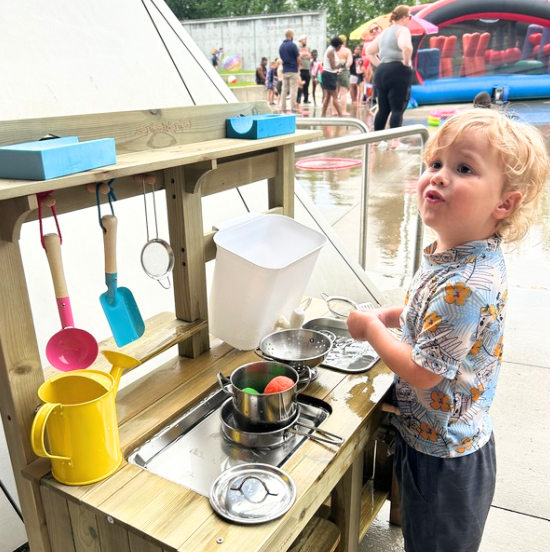
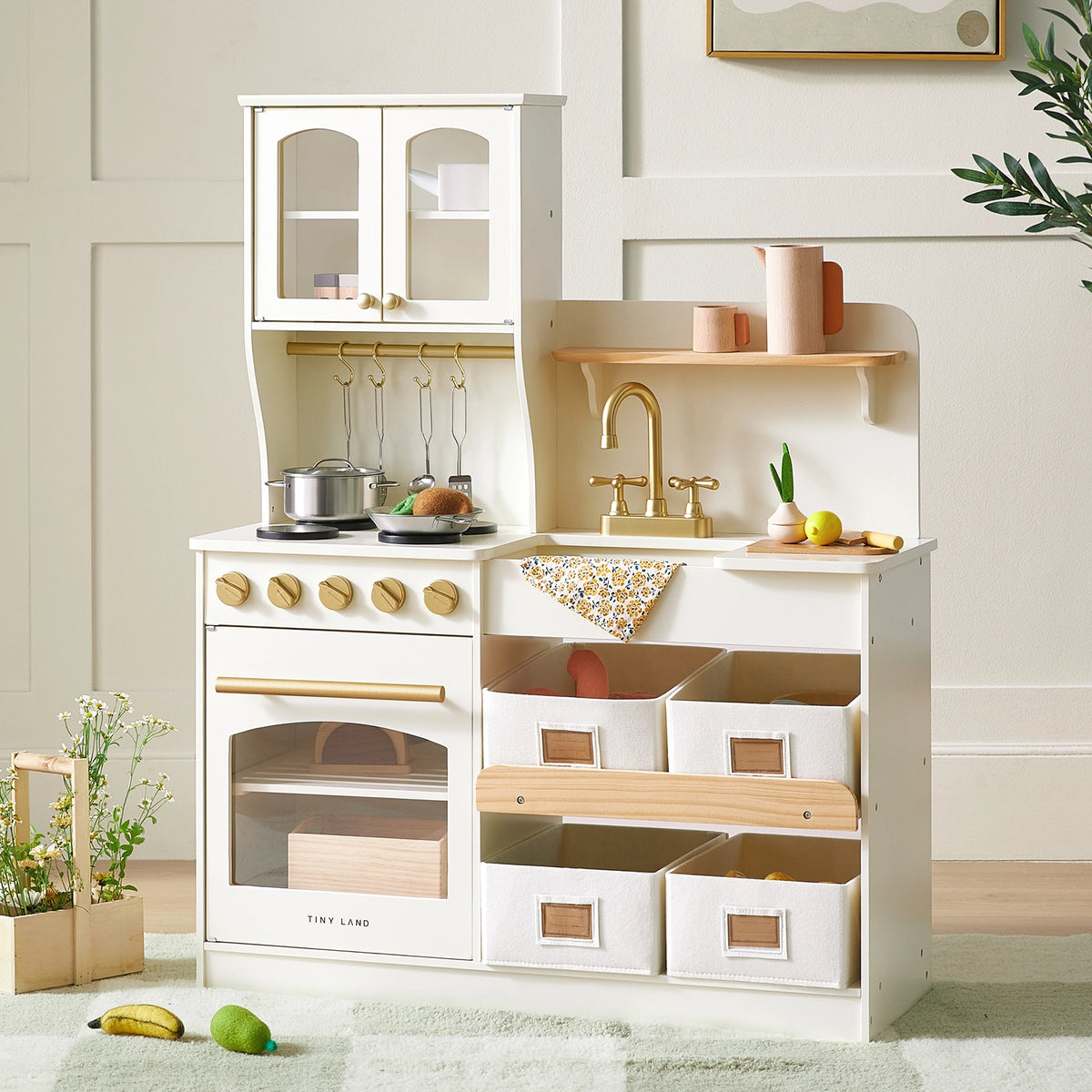
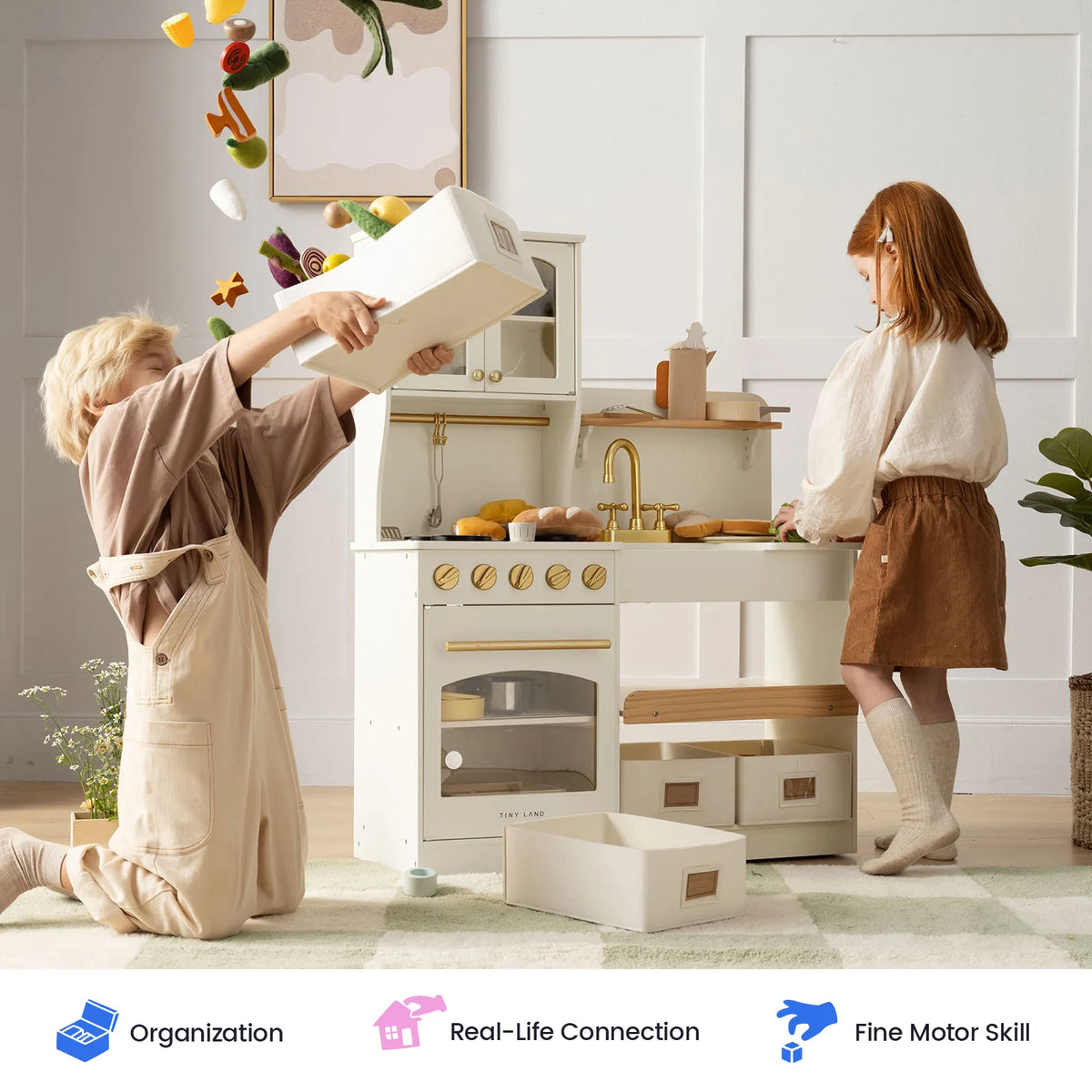
The Tiny Land Market Stand became a flexible addition to this learning environment because it supports open-ended dramatic play.
Instead of being limited to one specific activity, children can decide what the space becomes based on their imagination.
As Amber shared:
“My 4K friends can turn it into a farmers market, a coffee shop, a bakery, a flower shop, or anything their imaginations dream up.”
This flexibility allows the same play environment to support many different scenarios and encourages children to take an active role in creating their own experiences.
A market stand can become a place where children explore different perspectives, develop creative ideas, and connect with their classmates through shared pretend play.

How Pretend Play Supports Preschool Development
A thoughtfully designed dramatic play center can support multiple areas of early childhood development.
Encouraging Oral Language Development
Pretend play naturally creates meaningful opportunities for children to communicate.
As children create scenarios, take on different roles, and interact with classmates, they practice expressing their ideas, listening to others, asking questions, and building conversations.
A play environment like a market stand gives children a real-world context to use language, develop communication skills, and build confidence through play.
Building Foundational Math Skills
Pretend play can also introduce early math concepts through real-world inspired experiences.
Children may explore ideas such as organizing items, comparing objects, counting, and making decisions as part of their imaginary scenarios.
Because these skills are connected to play, children can engage with early math concepts in a way that feels relevant and enjoyable.
Strengthening Early Literacy Skills
Pretend play introduces children to the purpose of written words and symbols in everyday life.
As children create price signs, read labels, organize menus, or make pretend order notes, they begin to understand that letters, pictures, and marks can carry meaning and help people share information.
Through a market stand experience, children naturally build early reading and writing awareness while exploring a real-world environment.
Supporting Social-Emotional Development
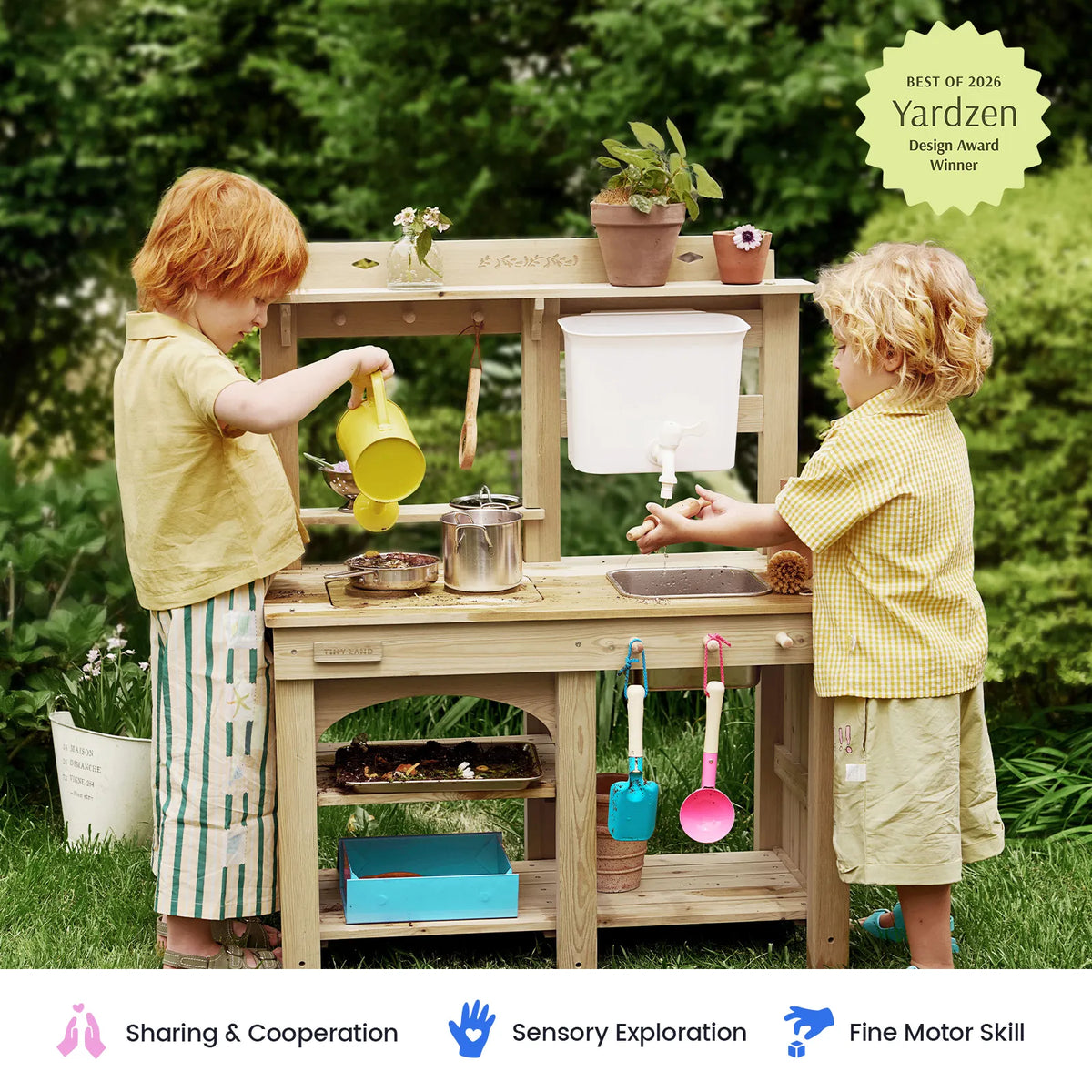
As children create shared play scenarios, they learn how to work together and take on different roles. They may practice asking questions, responding to others’ needs, offering help, and showing care as they build their imaginary worlds together.
Through these experiences, children develop important social-emotional skills, including cooperation, empathy, and understanding different perspectives

Look for Materials That Create Richer Play Experiences
When creating a play-based learning environment, the materials children interact with can influence the depth and quality of their play.
Rather than focusing only on how a toy looks or what it is designed to do, consider materials that inspire imagination, support multiple play possibilities, and encourage collaboration.
Inspire Imagination
Open-ended materials give children the freedom to decide how they want to play, create their own stories, and develop ideas based on their interests.
When children can transform a play space in different ways, they become active creators of their own experiences.
Support Multiple Play Possibilities
Flexible materials can adapt as children’s interests and ideas change.
A single play environment can become many different scenarios, allowing children to explore different roles and continue discovering new ways to play.
Encourage Collaboration
Play spaces that invite shared experiences create opportunities for children to communicate, cooperate, and learn with others.
Through collaborative pretend play, children practice sharing ideas, taking on roles, solving problems together, and building meaningful connections with their peers.

Bring Imagination to Life with the Tiny Land Market Stand
A meaningful play environment starts with materials that invite children to imagine, create, and connect.
Designed for open-ended pretend play, the Tiny Land Market Stand gives children the freedom to transform their play space into whatever their imagination inspires.
By encouraging children to take on different roles, interact with others, and create their own stories, the market stand turns everyday pretend play into opportunities for communication, collaboration, and discovery.
Whether you are creating a classroom dramatic play center or a playful learning space at home, the Tiny Land Market Stand helps children build meaningful experiences through imagination-led play.