|
Feature
|
Wooden Easel
|
Plastic Easel
|
|
Durability
|
Strong and designed for long-term use
|
Lightweight and easy to move
|
|
Stability
|
Usually heavier and more stable
|
Often easier to relocate
|
|
Design
|
Natural look that blends with home spaces
|
Bright appearance
|
|
Long-Term Use
|
Can grow with children through different stages
|
Works well as a flexible starter option
|
|
Creative Environment
|
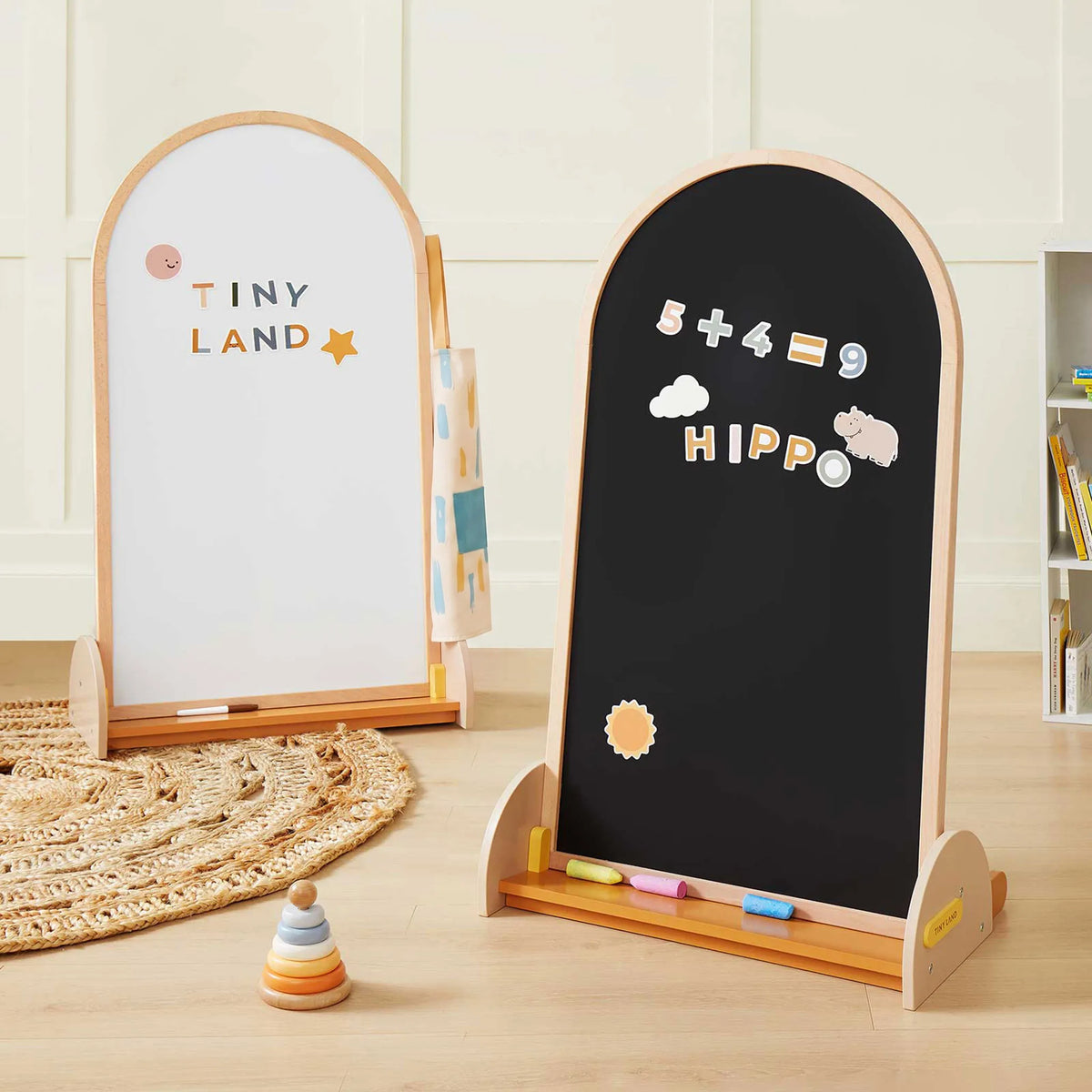
Creates a dedicated, timeless play space
|
Provides an accessible art station
|
There is no single “better” material for every family. Parents should consider how the easel will be used and what type of play environment they want to create.
Why Many Parents Choose Wooden Easels for Kids
1. Designed for Everyday Creative Play
Toddlers often return to activities that allow them to explore freely.
A sturdy wooden easel can become part of everyday routines:
- Morning drawing time
- Quiet afternoon activities
- Family art projects
- Preschool preparation activities
As children grow, the way they use an easel changes.
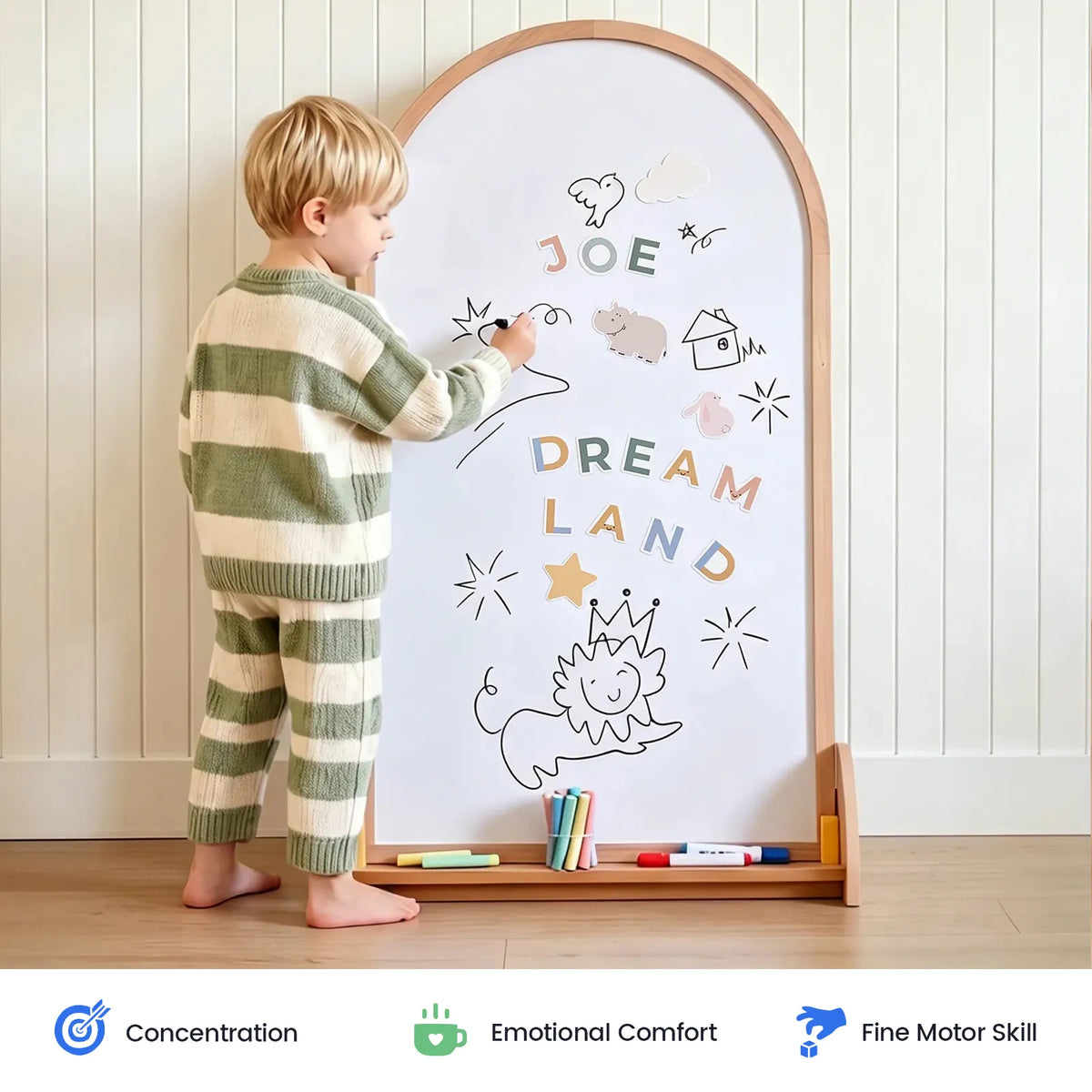
A younger toddler may begin with simple marks and colors, while an older preschooler may use the same space for writing practice, storytelling, and imaginative play.
A well-designed easel can continue supporting children through different stages of development.
2. Creates a Meaningful Creative Environment
Children learn from the spaces around them.
A creative corner with an easel, accessible supplies, and room for exploration can encourage children to:
- Make independent choices
- Take ownership of their creations
- Build confidence through discovery
For families creating play-based learning spaces, the goal is not simply adding more toys. It is creating an environment where children feel encouraged to explore.
A thoughtfully designed wooden easel can become part of that everyday learning environment.
3. Supports Open-Ended Play Beyond Drawing
One of the biggest benefits of a kids’ easel is that there are endless ways to use it.
A child may see the same easel as:
-
An Art Studio---Creating drawings, paintings, and colorful designs.
-
A Classroom---Pretending to be a teacher and practicing letters, numbers, or stories.
-
A Restaurant---Designing menus and signs during pretend play.
-
A Storytelling Space---Drawing characters and creating imaginary worlds.
This type of open-ended play supports imagination, problem-solving, and independence.
Tabletop Easel vs. Standing Easel: Which One Is Better for Toddlers?
When choosing an easel, parents should consider the size and style that best fits their home.
Tabletop Easel
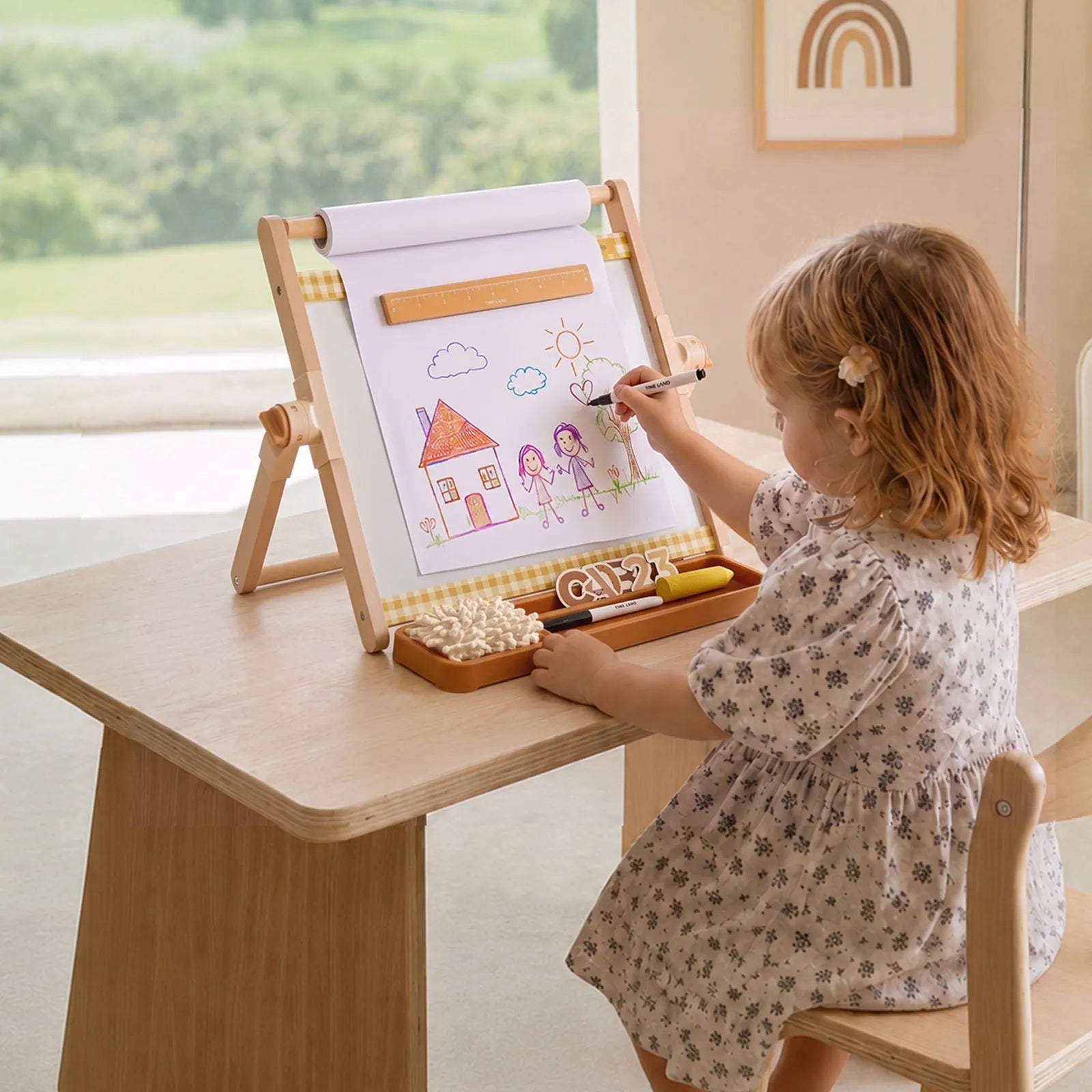
A tabletop easel is a practical choice for many toddlers and families with limited space.
Benefits include:
- Easy storage
- Flexible placement
- Great for small playrooms or apartments
- Easy to use on a table or children’s desk
Tabletop easels allow families to create a small creative corner without needing a large dedicated play area.
Standing Easel
- Bigger playrooms
- Older preschoolers
- Larger art projects
They can create a more traditional artist experience but usually require more space.
Which Should Parents Choose?
For toddlers and younger preschoolers, a tabletop easel can be a practical option because it is:
- Accessible
- Easy to store
- Flexible for different spaces
For families with larger creative areas, a standing easel may provide more room for bigger projects.
The best option depends on your child’s age, space, and daily routine.
What Should Parents Look for in a Toddler Easel?
When choosing the best easel for toddlers, consider these important features:
1. Child-Friendly Size
A toddler easel should allow children to create comfortably and independently.
Look for:
- Easy-to-reach surfaces
- Appropriate height
- Stable construction
A child who can access their creative tools independently is more likely to engage in self-directed play.
2. Multiple Creative Options
A versatile kids’ easel can support:
- Drawing
- Coloring
- Painting
- Letter practice
- Magnetic activities
More creative options allow children to explore different interests over time.
3. Easy Organization
A successful art space should make creativity simple for both children and parents.
Helpful features include:
- Storage for supplies
- Organized materials
- Easy cleanup
When creative tools are accessible, children are more likely to return to play independently.

How Easels Support Early Childhood Development
Creative play is an important part of early learning.
Fine Motor Skills
Drawing, coloring, and painting help children practice:
- Hand strength
- Grip control
- Hand-eye coordination
- Early writing movements
Creativity and Problem Solving
Art encourages children to make decisions:
- What should I create?
- Which colors should I use?
- How can I tell this story?
Through creative choices, children learn to think independently.
Confidence and Independence
When children create something by themselves, they experience pride and accomplishment.
A creative space gives children the freedom to explore ideas, experiment, and discover their own abilities.
How to Create a Toddler Art Corner at Home
An easel becomes even more meaningful when it is part of a complete creative environment.
A simple toddler art corner can include:
Creative Materials
- Crayons
- Washable markers
- Coloring pages
- Paint brushes
- Stickers
Comfortable Setup
Consider adding:
- A child-sized chair
- Storage baskets
- A dedicated creative area
Open-Ended Invitations
Instead of asking children to copy a specific picture, encourage imagination:
- “What story does your drawing tell?”
- “Can you design something new?”
- “Can you create something for your family?”
These simple prompts encourage creativity and self-expression.
Why Choose a Thoughtfully Designed Wooden Easel?
At Tiny Land, we believe children learn best when they have spaces designed for exploration, creativity, and independence.
A thoughtfully designed wooden easel is more than a place to create artwork. It can become part of everyday childhood moments — from first drawings and early writing practice to pretend play and family creative time.
By creating an inviting space for children to explore, parents can support meaningful play experiences that grow alongside their child.
Final Thoughts: Choosing the Best Easel for Your Toddler
A kids’ easel is more than a place to draw. It is a space where children can explore ideas, practice skills, and experience the joy of creating.
Plastic easels can provide flexibility and convenience, while wooden easels offer a durable and timeless option for families who want to build a dedicated creative space at home.
The best easel is not simply the one with the most features. It is the one that inspires children to pick up a crayon, follow their curiosity, and discover confidence through play.
Because every big idea begins with a small moment of creativity.