
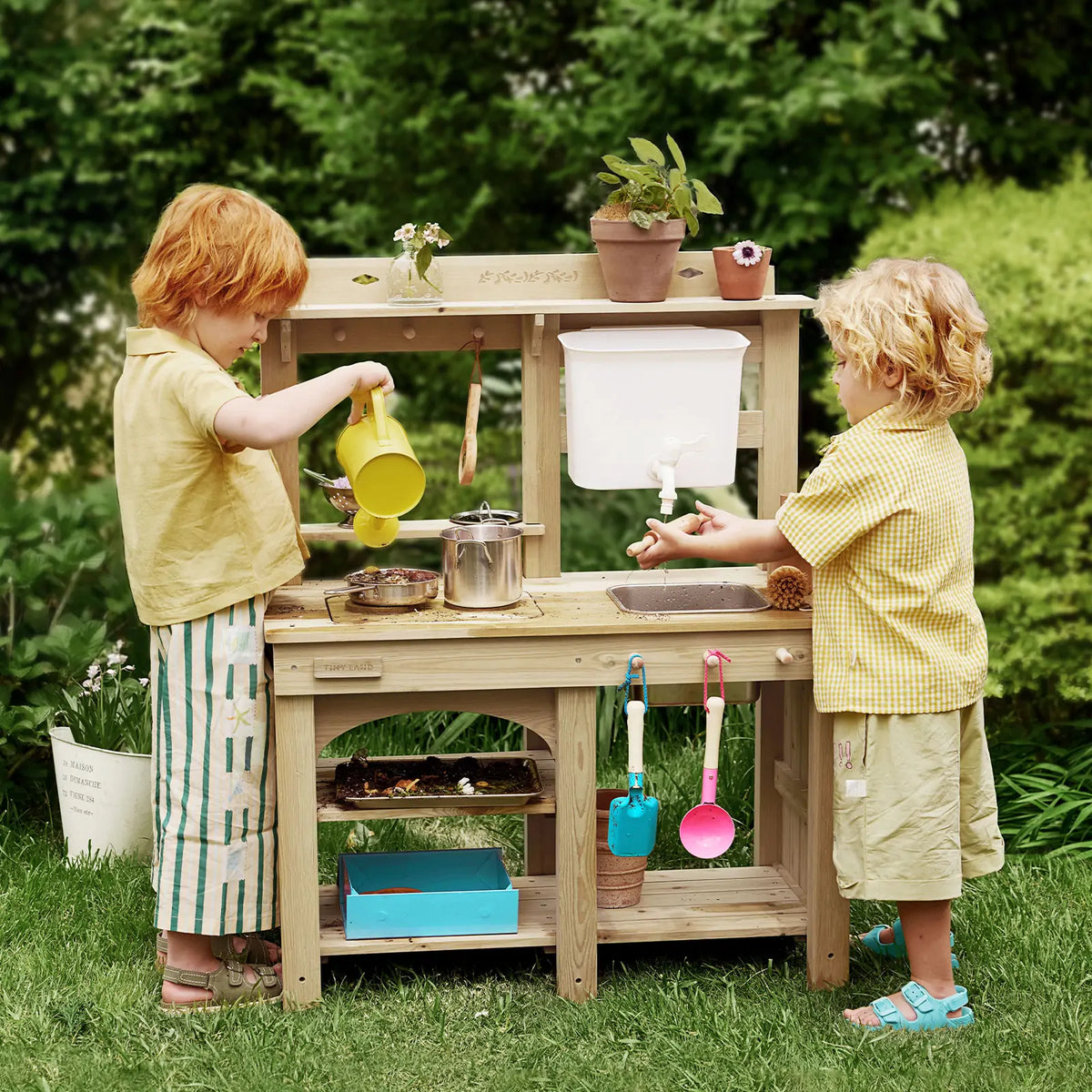
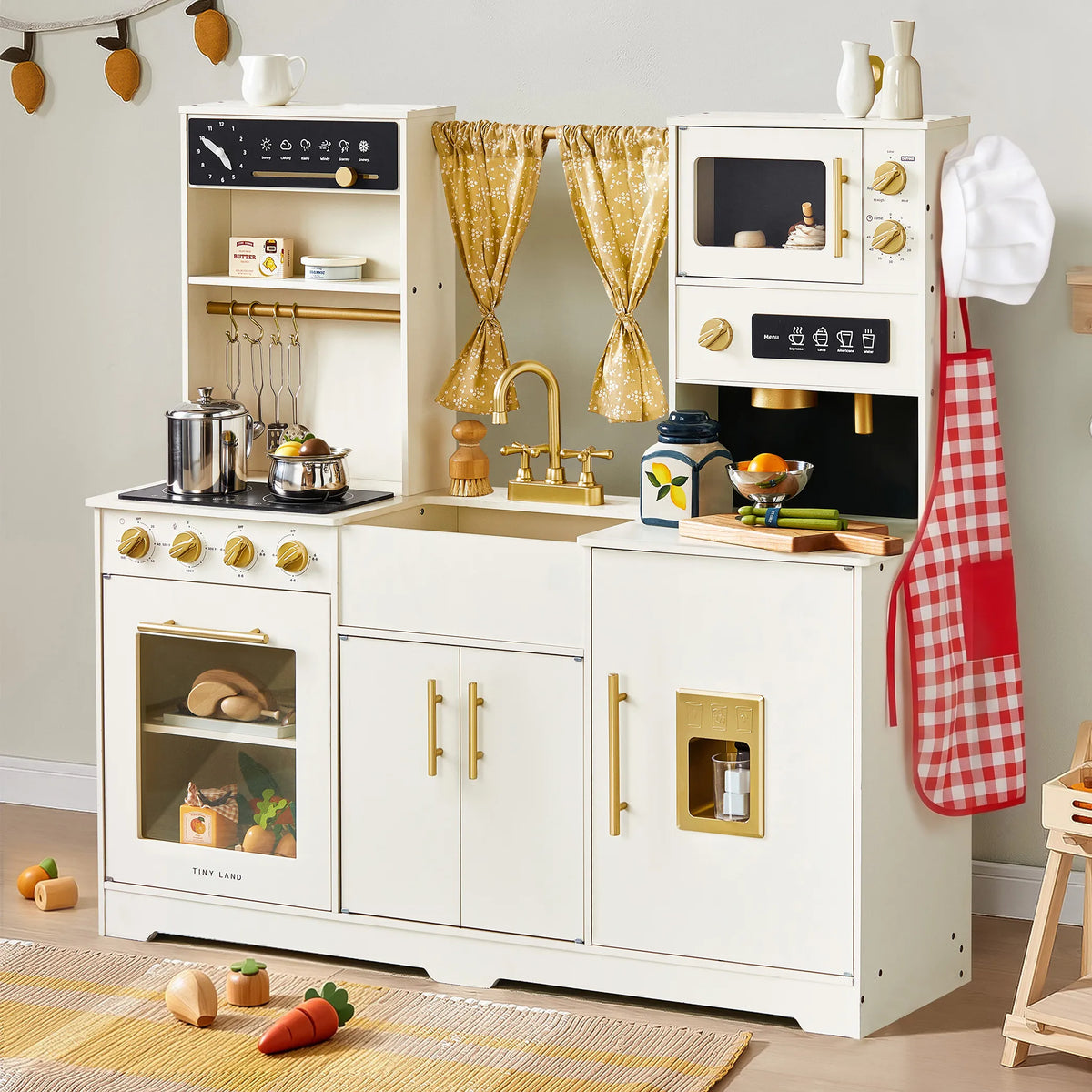
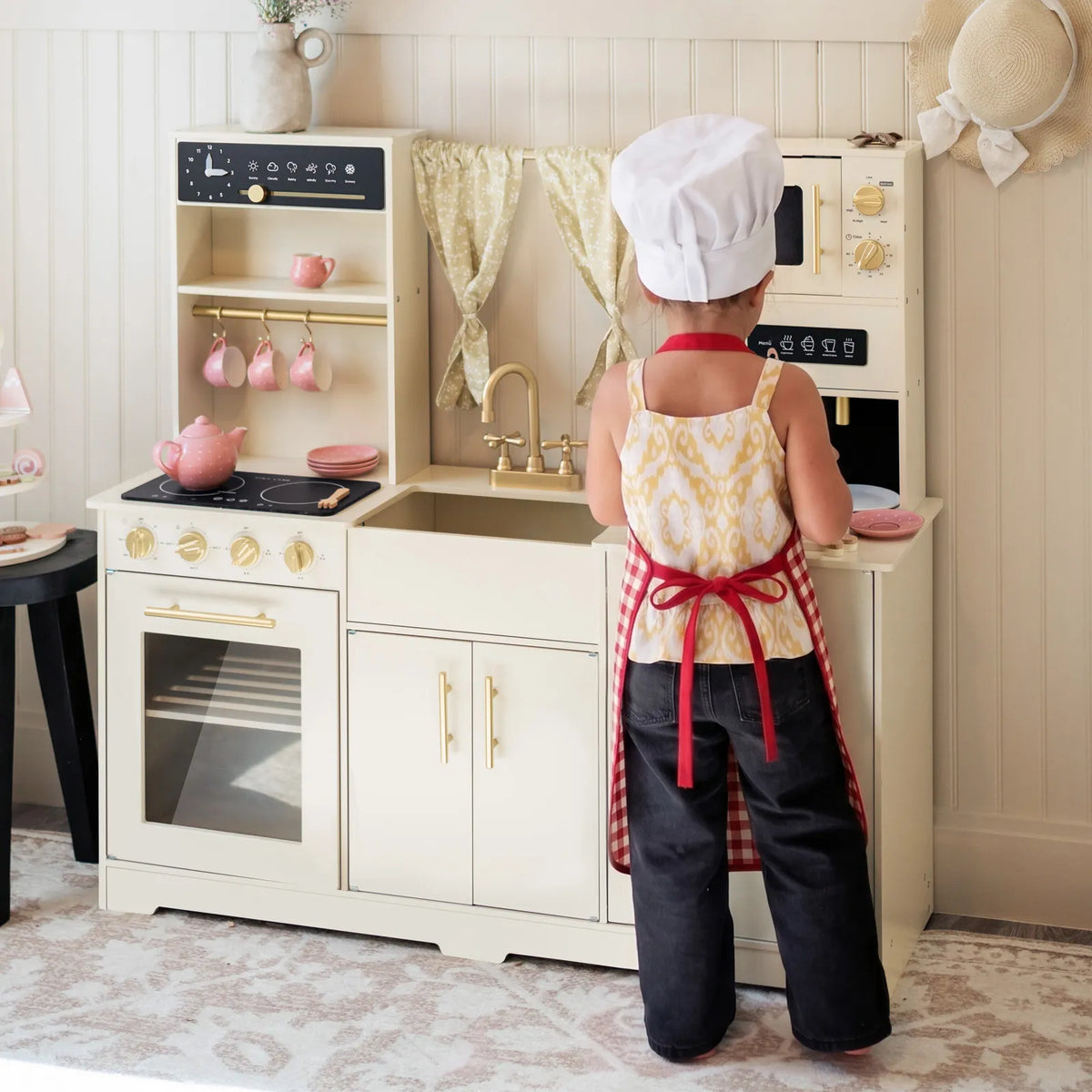
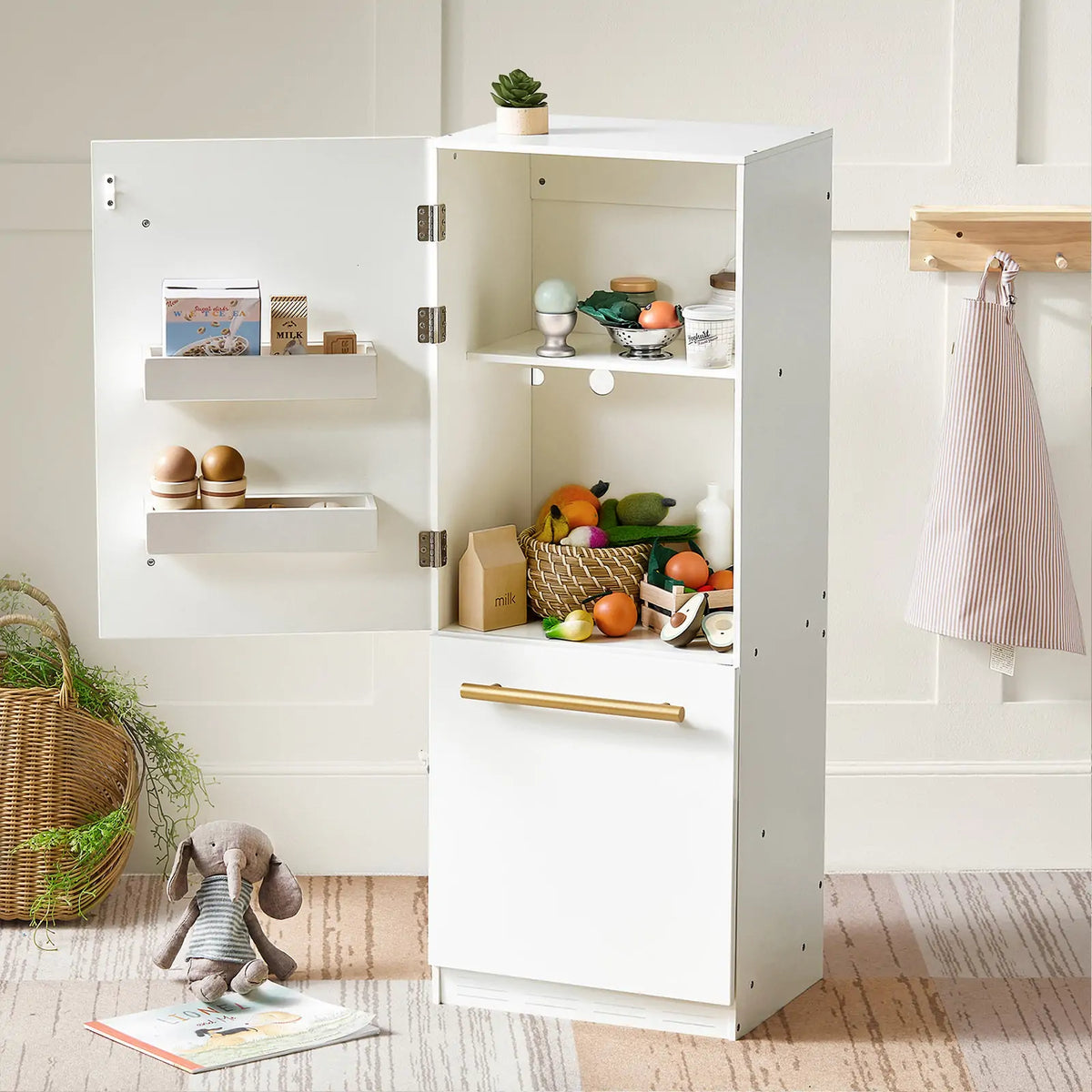
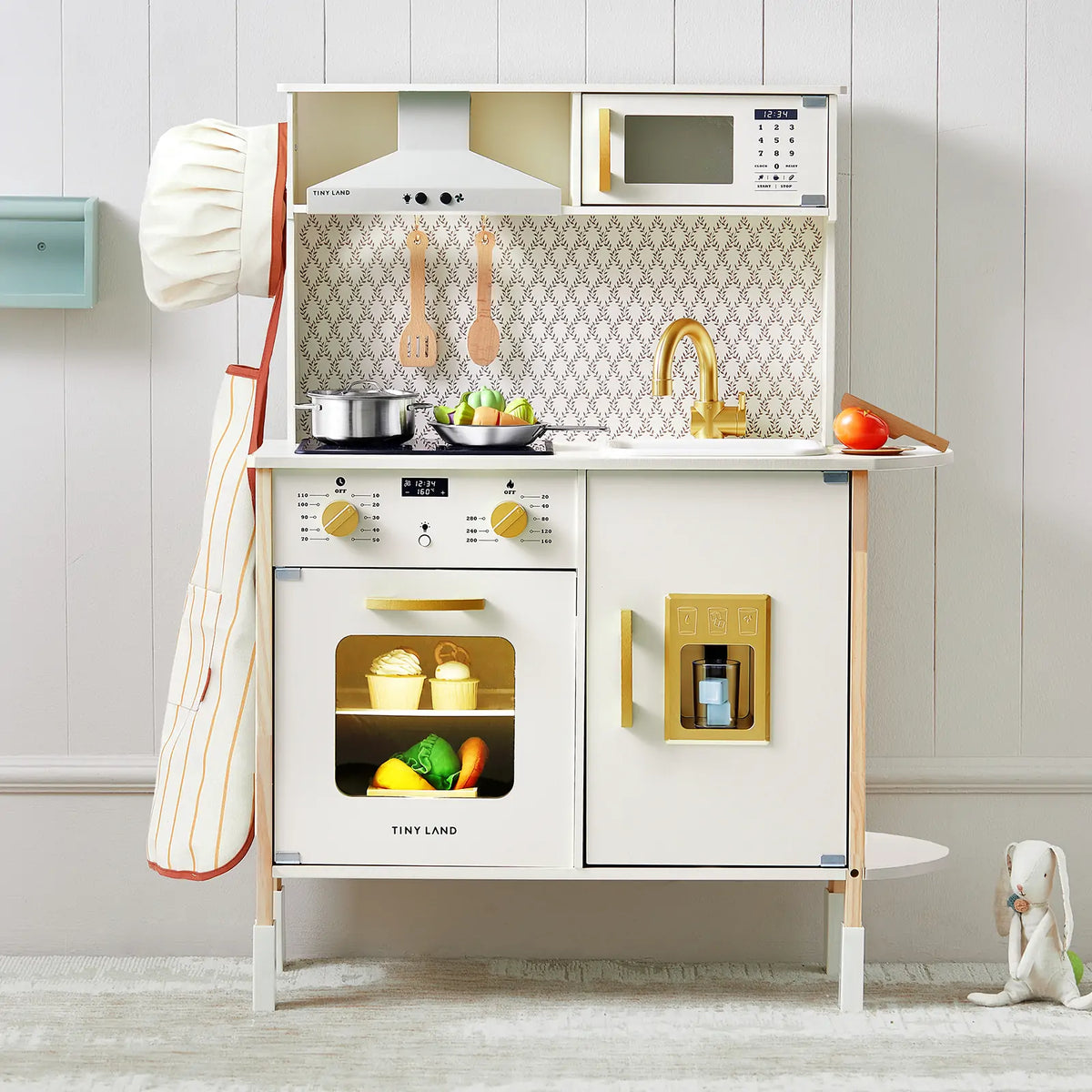
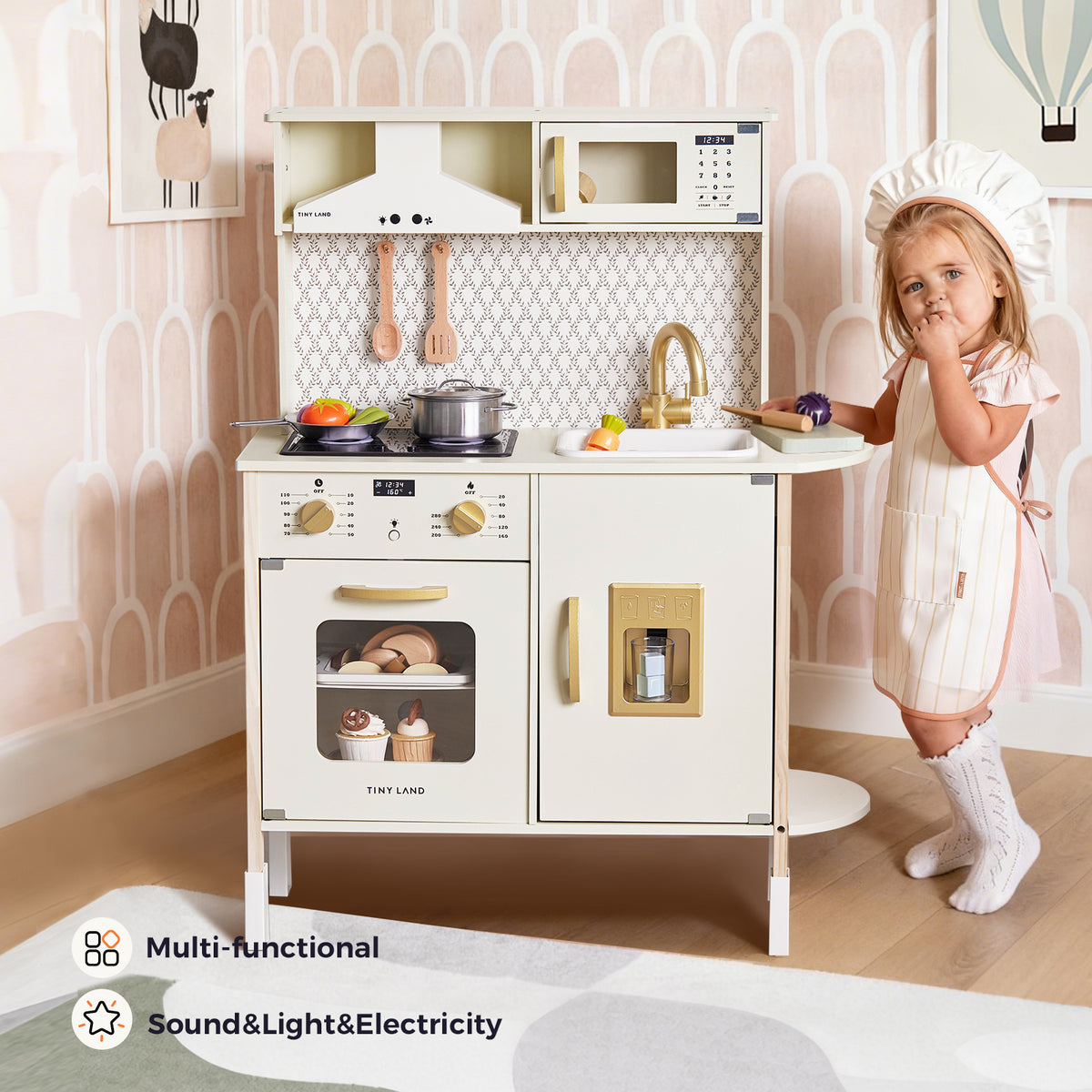




Encouraging outdoor play for toddlers is one of the best ways to support sensory play, creativity, and physical activity. A mud kitchen for toddlers or an outdoor mud kitchen gives children hours of fun exploring mud, sand, water, and other natural materials in the backyard. From making mud pies to water play, a mud kitchen for kids combines messy fun with imaginative learning.
But with so many options—solid wood kitchens, plastic sets, DIY builds, and pre-made outdoor play kitchens—how do you choose the right one for your child? Here’s a guide to help you select a play kitchen that matches your toddler’s age, backyard space, and playful curiosity.

Why a Mud Kitchen Matters
A mud kitchen is more than just a toy. It’s a mini outdoor workspace where toddlers can dig, mix, splash, and create. Children can pretend to cook with kitchen tools, pots, pans, utensils, and tubs while exploring textures, water, dirt, soil, and sand.
Some benefits of a mud kitchen for kids include:
-
Sensory play – toddlers touch, pour, mix, and feel different textures.
-
Fine motor skills – using spoons, stirring, and handling kitchen tools strengthens hand-eye coordination.
-
Imaginative play – children cook, serve, and role-play as chefs or gardeners.
-
Outdoor learning – encourages connection with nature and the yard.
-
Social skills – sharing with siblings or friends develops cooperation.
Whether you choose a solid wood mud kitchen or a DIY mud kitchen, toddlers gain the chance to play freely while exploring the joy of outdoor play.

Key Features to Consider
When selecting a mud kitchen, consider these important features to maximize fun, safety, and durability:
1. Material and Durability
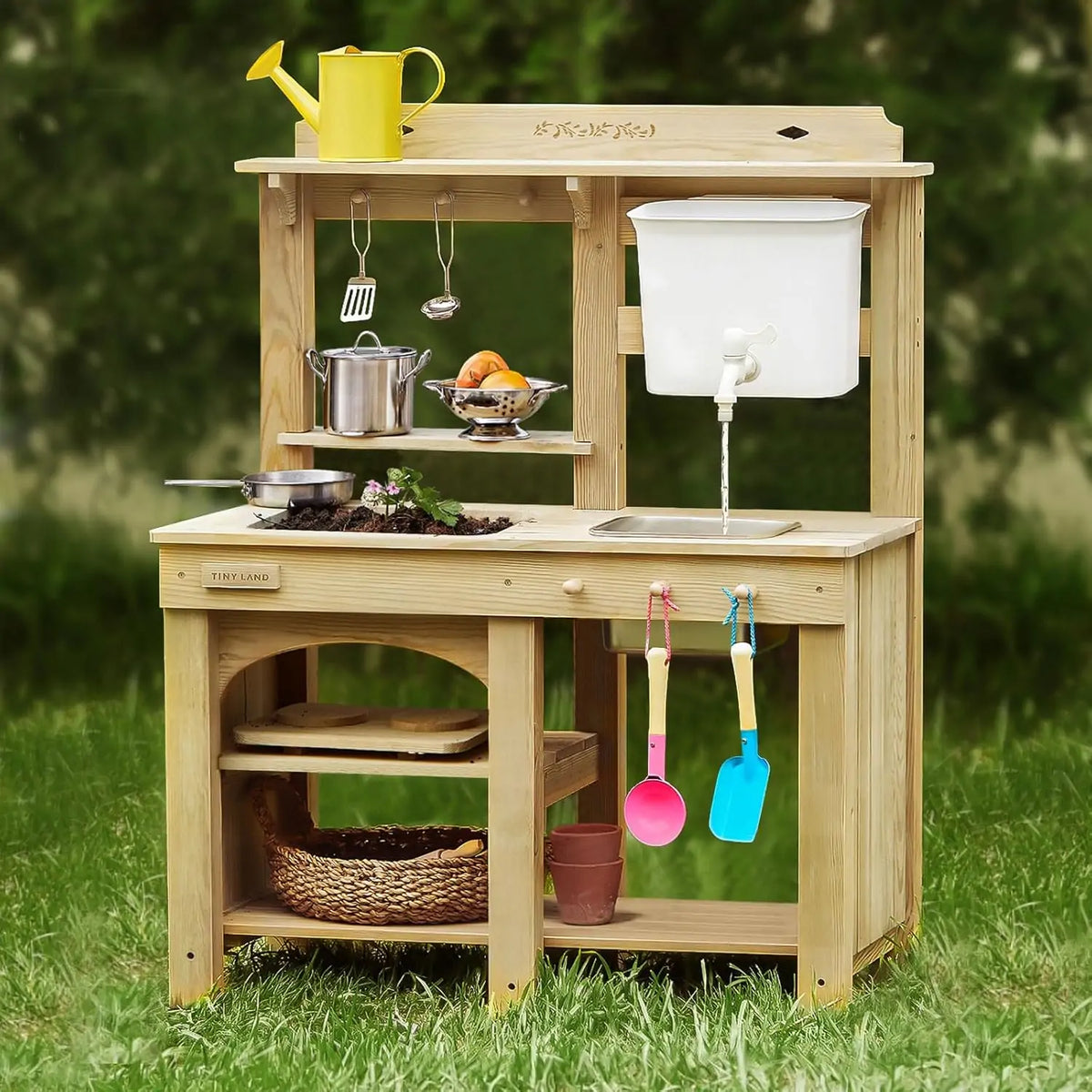
Many outdoor mud kitchens are made from solid wood, while others use sturdy plastic. Wooden kitchens are long-lasting, withstand weather, and often include bottom shelves or storage shelves for pots, pans, and utensils.
Plastic kitchens are lightweight and easier to move but may not last as long outside. Some parents also enjoy creating a DIY mud kitchen from wood or thrift store finds to match their backyard space.
2. Size and Accessibility
Choose a kitchen that fits your toddler’s height and age. They should comfortably reach the water basin, faucet, or sink without a stool. Many mud kitchens for toddlers have adjustable shelves or bottom shelves that provide storage and grow with your child.
3. Water Play Features
Some outdoor play kitchens come with a water tank, tub, or faucet. Water play adds a new dimension to sensory play, allowing toddlers to pour, splash, and mix with mud or sand. Kitchens with removable water basins make filling, draining, and cleaning easier.
4. Accessories and Tools
Look for kitchens with included kitchen tools, utensils, pots, pans, or even chalkboards for labels and drawings. Extra accessories like scoops, cups, mixing bowls, and garden tools expand creative possibilities and encourage toddlers to experiment with mud pies, planting, and mixing soil.
5. Safety
Ensure the kitchen has smooth edges and non-toxic finishes. Check that shelves and bottom boards are secure. Even with messy play, toddlers should be safe handling mud, water, and utensils.

DIY vs. Pre-Made Mud Kitchens
A DIY mud kitchen can be made using simple wood boards, crates, or tables from thrift stores. This option allows customization of size, shelves, and water basins for sensory play.
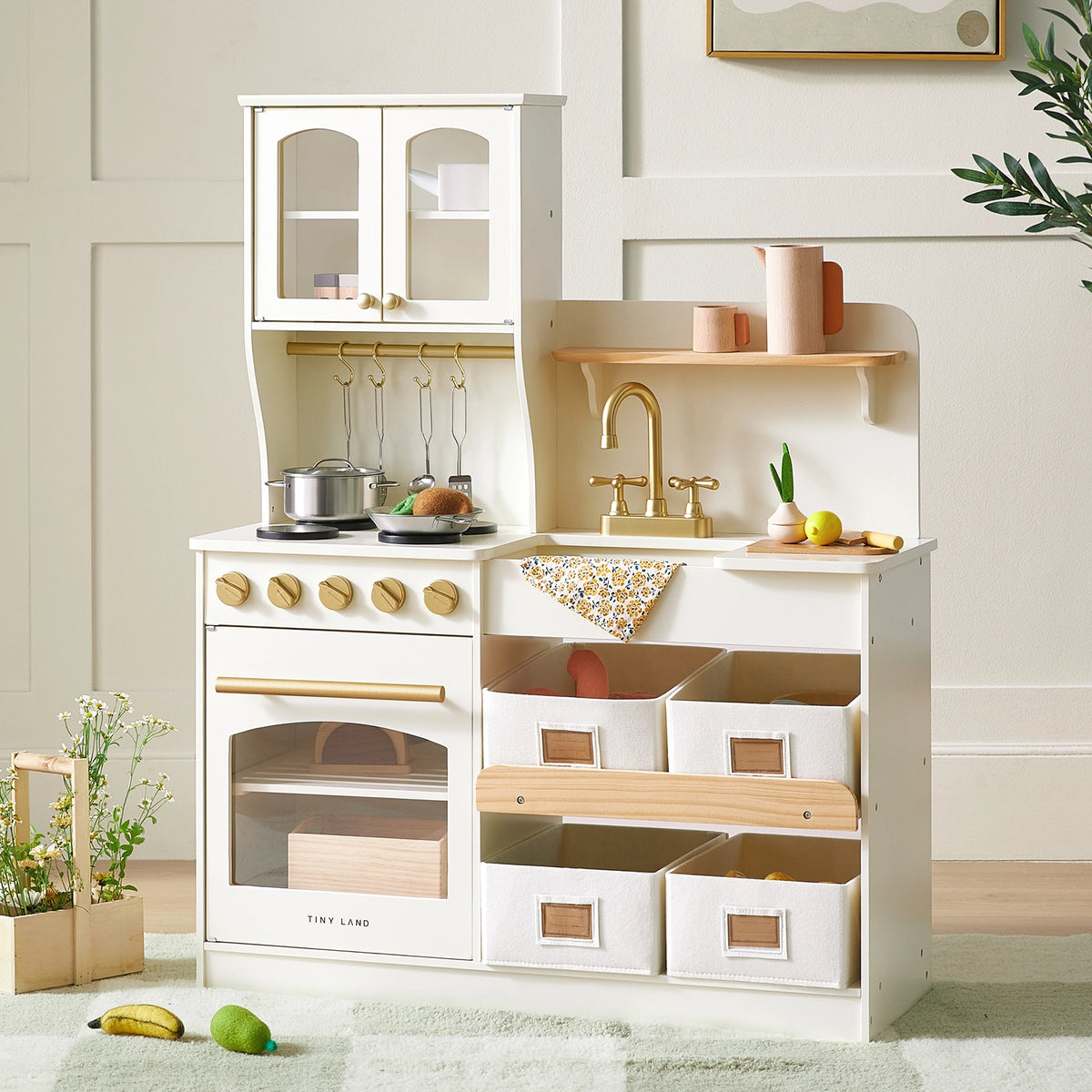
Pre-made outdoor mud kitchens often include storage, kitchen tools, bottom shelves, and water features. They range from compact play kitchens for patios to multi-level mud kitchens for kids with sink, faucet, and shelves.
Both options offer toddlers the chance to create, dig, splash, and cook mud pies while learning and playing outdoors.

Placement and Setup
Choose a location for the mud kitchen that is safe and practical:
-
Set it on patio, grass, or level backyard area.
-
Make sure it’s near a hose or water source for easy cleaning.
-
Provide natural materials like mud, sand, water, soil, and leaves.
-
Include small pots, pans, utensils, or tubs for mixing.
Adding natural elements encourages sensory exploration and creative play, letting toddlers experiment with mud pies, planting, or water play while developing coordination and imagination.

Encouraging Creative Outdoor Play
A mud kitchen can spark endless ideas:
-
Mix mud, sand, and water to create pretend recipes.
-
Serve mud pies to friends or dolls.
-
Experiment with different textures using leaves, sticks, and soil.
-
Build towers with solid wood blocks or stack pans and tubs.
-
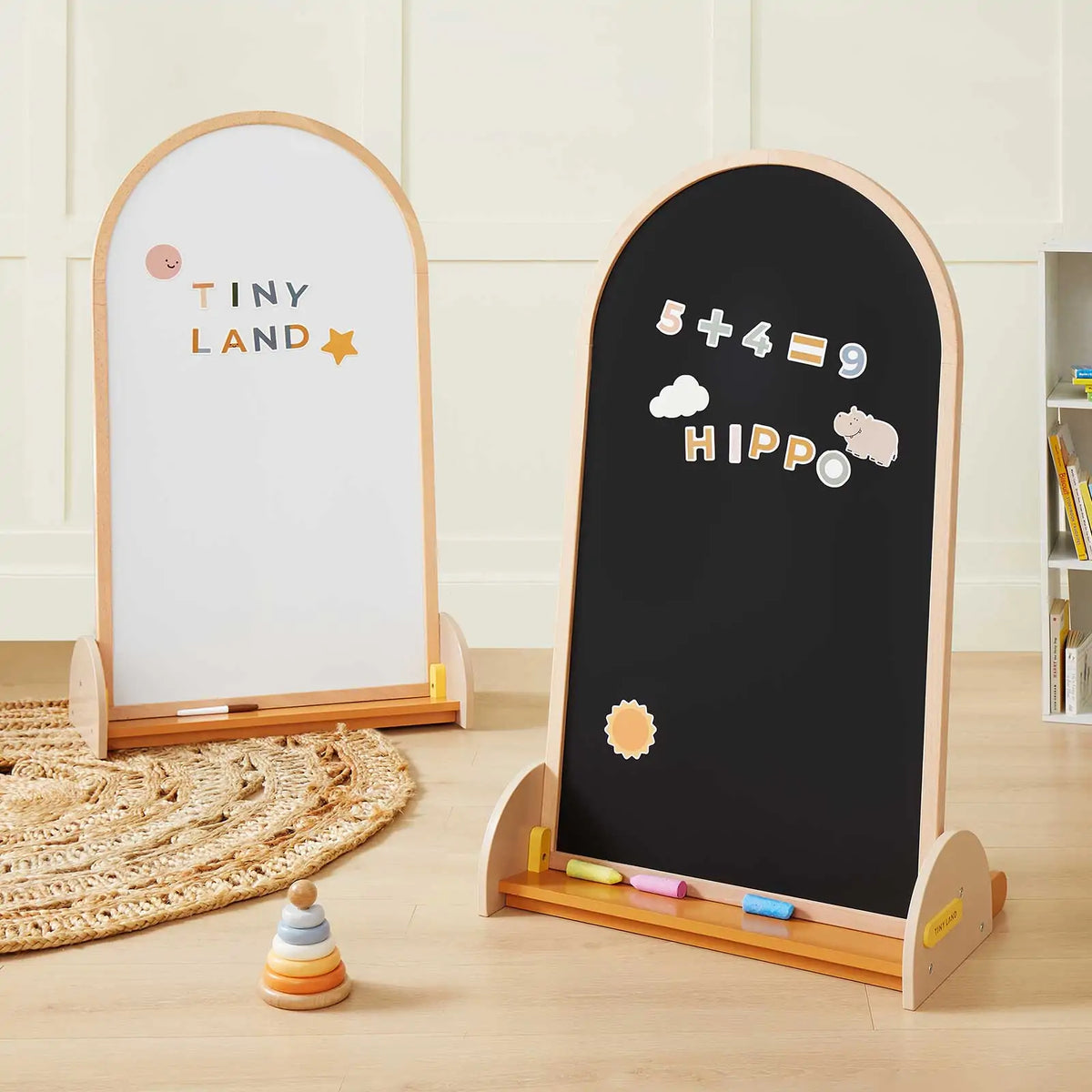
Draw on a chalkboard for menu items or labels.
These activities encourage problem solving, imaginative play, and early learning in a natural outdoor setting.

Maintenance Tips
Mud kitchens are naturally messy, but they are easy to care for:
-
Empty water basins after use.
-
Rinse tubs, pans, and utensils.
-
Brush off excess mud, sand, or dirt.
-
Cover the kitchen in bad weather to protect wood and shelves.
-
Store accessories on bottom shelves or bins to stay organized.
Proper care ensures the kitchen remains safe and ready for hours of outdoor play.
Why a Mud Kitchen Is the Perfect Gift
A mud kitchen for toddlers is a gift that combines fun, learning, and outdoor play. It supports:
-
Sensory play – exploring textures, mud, water, and sand.
-
Imaginative play – cooking, gardening, and role-play.
-
Problem solving – figuring out how to mix, pour, and stack items.
-
Fine motor skills – using kitchen tools, utensils, and pans.
It’s a gift that grows with the child, providing creative and messy play throughout summer, spring, or even with snow and water play in winter.

Final Thoughts
Choosing the right mud kitchen for toddlers means considering materials, size, storage, water features, and accessories. Whether you pick a solid wood outdoor mud kitchen or a DIY setup, toddlers will enjoy mud pies, water play, and sensory exploration for hours.
With the right play kitchen, children can dig, mix, splash, and create while developing fine motor skills, imagination, and problem solving abilities. A mud kitchen transforms your backyard into a fun, outdoor classroom where toddlers can explore the world and make learning through play exciting every day.