




If your child loves drawing, coloring, painting, or pretending to be a teacher, you may have wondered: Does my child really need an easel?
After all, children can draw on paper at the kitchen table. They can paint with a brush, practice letters, or make signs without an easel.
So what does a tabletop easel actually add to play?
The answer is simple: an easel isn't a must-have for every child, but it can create a dedicated, flexible space for creative and pretend play.
For families with limited space, a tabletop easel can be especially practical. It provides many of the creative possibilities of an easel while using an existing table or play surface instead of requiring a permanent floor space.
Here's what parents should know before deciding whether a tabletop easel is right for their child.

What Is a Tabletop Easel?
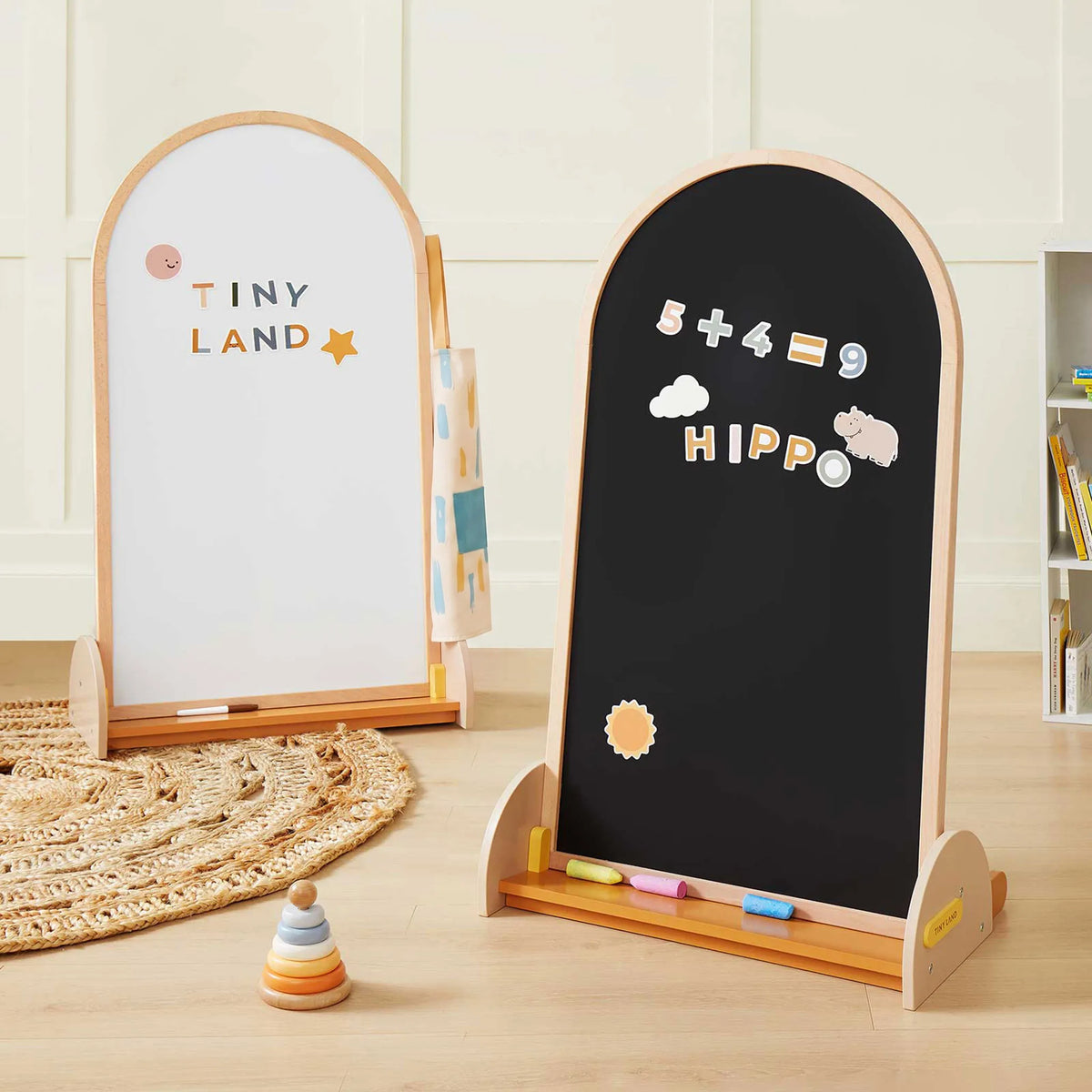
A tabletop easel is a compact easel designed to sit on a stable table, desk, or play surface.
Unlike a traditional standing easel, it doesn't require its own floor space. Depending on the design, children may be able to use it for drawing, painting, chalk, magnetic activities, writing, and other forms of creative play.
This makes a tabletop easel particularly useful for families who want a creative setup that can be:
-
Compact
-
Easy to move
-
Simple to store
-
Used for multiple activities
-
Adaptable to different play spaces
A tabletop easel can turn an ordinary table into a small creative studio without requiring a dedicated art room.

Do Kids Really Need an Easel?
No—not every child needs an easel.
An easel is a play tool, not a requirement for learning to draw or developing creativity. Children can explore art and writing with paper, crayons, markers, paint, and many other everyday materials.
The better question is:
Would an easel give my child more opportunities to engage in the kind of play they already enjoy?
A tabletop easel may be worth considering if your child regularly:
-
Draws or colors for fun
-
Enjoys painting
-
Likes experimenting with different art materials
-
Creates signs, menus, maps, or pictures during pretend play
-
Enjoys playing school
-
Is interested in letters and early writing
-
Likes having a dedicated place for their activities
-
Needs a creative activity that works in a smaller space
If your child rarely chooses creative activities, an easel may not be necessary.
But if drawing and pretend play are already part of your child's everyday interests, an easel can give those activities a more dedicated place to happen.

7 Reasons a Tabletop Easel Can Be Worth It
1. It Gives Children a Dedicated Creative Space
A tabletop easel creates a clear place for drawing, painting, writing, and experimenting.
Instead of spreading supplies across an entire table, children can have a defined creative station.
That simple distinction can make the activity feel different from ordinary table work.
A child might sit down and think:
"This is my place to create."
For some children, having a predictable setup can also make it easier to return to an activity independently.
2. It Encourages Open-Ended Creative Play
There doesn't have to be one correct way to use an easel.
A child might draw a picture, paint abstract shapes, make a pretend sign, or create an imaginary world.
Open-ended play gives children room to make choices about what they want to create rather than simply following a predetermined result.
Try asking: "What would you like to make today?"
Instead of: "Can you draw a house?"
The first question leaves more room for the child to lead the play.
3. It Can Become Part of Pretend Play
A children's easel doesn't have to stay in the art category.
It can easily become part of imaginative play.
For example, your child might use it as:
A classroom
Write letters, numbers, names, or a pretend lesson.
A restaurant
Create a menu, write prices, or draw today's specials.
A grocery store
Make signs or draw pictures of foods.
A veterinarian's office
Create signs and draw animals.
An art studio
Pretend to be an artist creating and displaying artwork.
A storytelling board
Draw characters, settings, or important moments from an imaginary story.
This is one reason a versatile tabletop easel can remain interesting beyond simple drawing.
4. It Gives Children Another Way to Explore Art
Children can interact with art materials in many different ways.
With an easel, they can experiment with:
-
Lines
-
Shapes
-
Colors
-
Patterns
-
Paint
-
Chalk
-
Letters
-
Pictures
-
Simple symbols
They can also erase, change, add to, or completely start over.
The goal doesn't need to be a finished masterpiece.
The process of experimenting can be the play.
5. It Works Well in Small Spaces
This is one of the biggest practical advantages of a tabletop easel.
A standing easel can be a great choice when a family has room for a dedicated art area.
But not every family has a large playroom.
A tabletop easel can work on an existing:
-
Children's table
-
Desk
-
Kitchen table
-
Craft table
-
Other stable play surface
When play is finished, the easel can be moved or stored rather than taking up permanent floor space.
For apartments, shared playrooms, and multipurpose family spaces, that flexibility can be particularly useful.
6. It Can Support Independent Creative Play
A tabletop easel doesn't need to come with a lesson plan every time your child uses it.
Once an age-appropriate selection of materials is available, children can decide what they want to do.
They might:
-
Draw a picture
-
Make a pretend shopping list
-
Create a sign
-
Practice their name
-
Draw a map
-
Paint a picture
-
Make a birthday card
-
Illustrate a story
Parents can provide the environment without directing every step.
That's an important part of play-based learning: creating opportunities for children to make choices and take the lead.
7. It Can Grow With Your Child's Interests
The way children use an easel can change as their interests develop.
A younger child might enjoy making marks and exploring colors.
A preschooler might start drawing recognizable objects, experimenting with letters, or incorporating the easel into pretend play.
An older preschooler may use it to write simple words, create signs, tell stories, or plan an imaginary game.
The easel itself doesn't have to change every time the activity changes.
The child's imagination changes what the easel can become.

Tabletop Easel vs. Standing Easel: Which Is Better?
There isn't one type of easel that is automatically better for every child.
The best choice depends on your child's preferences, your available space, and the kinds of activities you expect them to do.
| If your priority is... | A tabletop easel may be a good fit | A standing easel may be a good fit |
|---|---|---|
| Saving floor space | ✓ | |
| Easy storage | ✓ | |
| Moving between rooms | ✓ | |
| Using an existing table | ✓ | |
| A compact creative station | ✓ | |
| Large-scale artwork | ✓ | |
| Standing while creating | ✓ | |
| A dedicated art corner | ✓ |

Choose a Tabletop Easel If...
A tabletop easel may make sense if your family:
-
Has limited floor space
-
Already has a suitable table or desk
-
Wants a portable creative setup
-
Needs an easel that can be stored easily
-
Wants to combine art and pretend play
-
Prefers a multipurpose play space
Consider a Standing Easel If...
A standing easel may be worth considering if your child:
-
Enjoys creating larger artwork
-
Likes standing while drawing or painting
-
Has access to a dedicated creative area
-
Would use a larger vertical surface regularly
The choice isn't about which format is universally "better."
It's about which one your child is more likely to use and which one fits naturally into your home.

What Age Is a Tabletop Easel Good For?
There isn't one exact age at which every child needs or should use a tabletop easel.
Children's interests and abilities develop at different rates, so consider both the manufacturer's age recommendation and what your child can comfortably and safely do.
Toddlers
Younger children may enjoy simple mark-making, exploring colors, or making their first drawings.
Keep activities simple and use age-appropriate materials with close supervision.
Preschoolers
Preschoolers may use a tabletop easel for a wider variety of activities, including:
-
Drawing
-
Painting
-
Coloring
-
Pretend school
-
Storytelling
-
Letter practice
-
Making signs and menus
Older Preschoolers and Young Children
As children's interests develop, the easel can become part of more complex creative and imaginative play.
They may create stories, write simple words, make detailed pictures, or use the easel as part of a larger pretend-play scenario.
The key is not simply the child's age.
Look at what your child is interested in doing and choose materials and activities that match their current abilities.

What Can Kids Do With a Tabletop Easel?
If you're wondering whether your child will actually use an easel, start with activities that connect to their existing interests.
Drawing Invitations
Try simple prompts such as:
-
Draw your favorite animal.
-
Draw your family.
-
Draw a place you'd like to visit.
-
Draw something you saw today.
-
Make a picture using only three shapes.
Or skip the prompts completely and let your child decide what to create.
Pretend School
Turn the easel into a classroom.
Your child can pretend to be the teacher and write:
-
Letters
-
Numbers
-
Names
-
Simple words
-
A pretend schedule
You can even let stuffed animals become the students.
Restaurant Play
Invite your child to create a restaurant menu.
They can draw food, add pretend prices, or create a sign for their restaurant.
Now an art activity becomes part of a larger pretend-play story.
Storytelling
Start with a blank surface and ask:
"Who lives here?"
Your child might draw a character.
Then ask:
"What happens next?"
Let the story develop through drawings, words, and conversation.
Letter and Name Practice
For children who are beginning to explore writing, an easel can provide another place to experiment with:
-
Their name
-
Letters
-
Numbers
-
Shapes
-
Simple words
Keep the activity playful rather than turning every session into a lesson.
Signs and Maps
Ask your child to make:
-
A map of an imaginary town
-
A sign for a pretend store
-
A road map for toy cars
-
A treasure map
-
A sign for a play kitchen
These activities can combine drawing, storytelling, and pretend play.

How to Choose a Tabletop Easel for Your Child
If you decide a tabletop easel is right for your family, consider how it will actually be used.
1. Stability
The easel should sit securely on the surface where your child will use it.
This is particularly important when children are drawing, erasing, or painting with enthusiasm.
2. Size
Think about the available table space.
A compact easel can be easier to integrate into a shared playroom or family living space.
3. Surface Options
Consider what your child enjoys.
Depending on the design, different surfaces can support:
-
Drawing
-
Painting
-
Chalk
-
Dry-erase activities
-
Magnetic play
-
Early writing
More surfaces can mean more possibilities, but only if your child will actually use them.
4. Storage
Think about where the easel and its accessories will go when play is finished.
A tabletop design can be especially convenient for families who don't want a permanent floor-standing setup.
5. Versatility
The most useful easel may be one that supports more than one type of play.
Look for opportunities to use it for art, early writing, pretend play, storytelling, and other activities your child already enjoys.

How to Create a Simple Tabletop Art Space
You don't need an entire playroom dedicated to creativity.
Start small.
Step 1: Choose a Stable Surface
Set up the easel on a sturdy table or other appropriate surface.
Step 2: Offer a Few Materials
You don't need to put every art supply in front of your child.
Start with a small selection of age-appropriate materials.
Step 3: Keep Supplies Accessible
A small basket, tray, or container can make it easier for children to find what they need.
Step 4: Let Your Child Lead
Instead of demonstrating exactly what to make, give your child an opportunity to decide.
Try: "What should we make today?"
Step 5: Let the Play Change
A drawing session might turn into pretend school.
Pretend school might become a restaurant.
A restaurant might lead to making menus and signs.
You don't need to control the direction.
Follow the child's idea.

Is a Tabletop Easel Worth It for Your Child?
If you're asking whether your child needs a tabletop easel, the honest answer is no.
Children can draw, paint, write, and explore creativity without one.
But that doesn't mean an easel has no value.
A tabletop easel can be worth considering if your child already enjoys creative or pretend play and you want to give those activities a dedicated space.
It can be especially practical when you want:
-
A compact creative station
-
More opportunities for open-ended play
-
A space for drawing and painting
-
A tool that can become part of pretend play
-
A setup that works in a smaller home
-
An activity space that can change as your child grows
Ultimately, the best children's products aren't necessarily the ones that promise to teach everything.
They're the ones that give children more ways to play.
If a tabletop easel helps your child draw a picture, invent a story, pretend to run a restaurant, practice their name, or simply spend time creating something of their own, it may have earned a useful place in your play space.

Frequently Asked Questions About Tabletop Easels
Are tabletop easels good for toddlers?
They can be, provided the easel and art materials are appropriate for the child's age and abilities. Toddlers may enjoy simple mark-making, color exploration, and other supervised creative activities.
Always follow the manufacturer's age recommendations and supervise young children when using art supplies.
What age is best for a tabletop easel?
There isn't one "best" age for every child. Consider your child's interests, abilities, and the manufacturer's recommended age range. Tabletop easels can be used for different types of creative and pretend play as children grow.
Does my child need an easel to learn to draw?
No. An easel is not necessary for learning to draw. Children can explore drawing with paper and other materials. An easel simply provides another surface and a dedicated place for creative activities.
Are tabletop easels worth it?
For families whose children regularly enjoy drawing, painting, writing, or pretend play, a tabletop easel can be a useful addition to the play space. It can be particularly appealing when floor space is limited.
What can a child do with a tabletop easel?
Children can use a tabletop easel for drawing, painting, coloring, writing, storytelling, pretend school, making signs, creating menus, and many other open-ended activities.
Is a tabletop easel better than a standing easel?
Neither is universally better. Tabletop easels are generally more compact and can work well in smaller spaces, while standing easels can provide a larger dedicated creative surface. The right choice depends on the child's preferences and the family's space.

Final Takeaway
Your child doesn't need a tabletop easel—but they might really enjoy having one.
If creative activities already have a place in your child's play, a tabletop easel can make it easier to create, experiment, and turn everyday drawing into something bigger.
A blank surface can become a painting.
A painting can become a story.
A story can become pretend play.
And sometimes, that's all a good play tool needs to do: give a child's imagination somewhere to go.