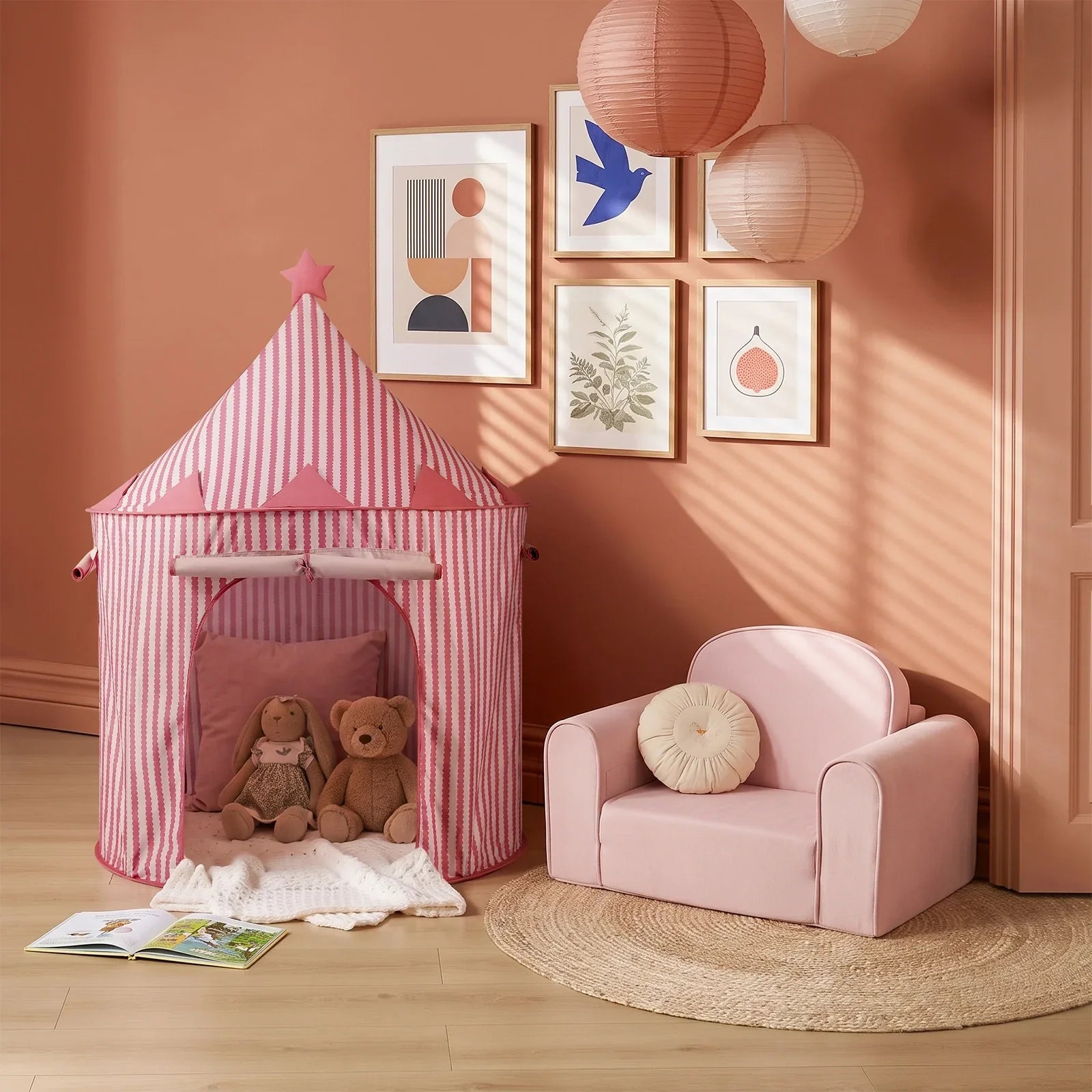

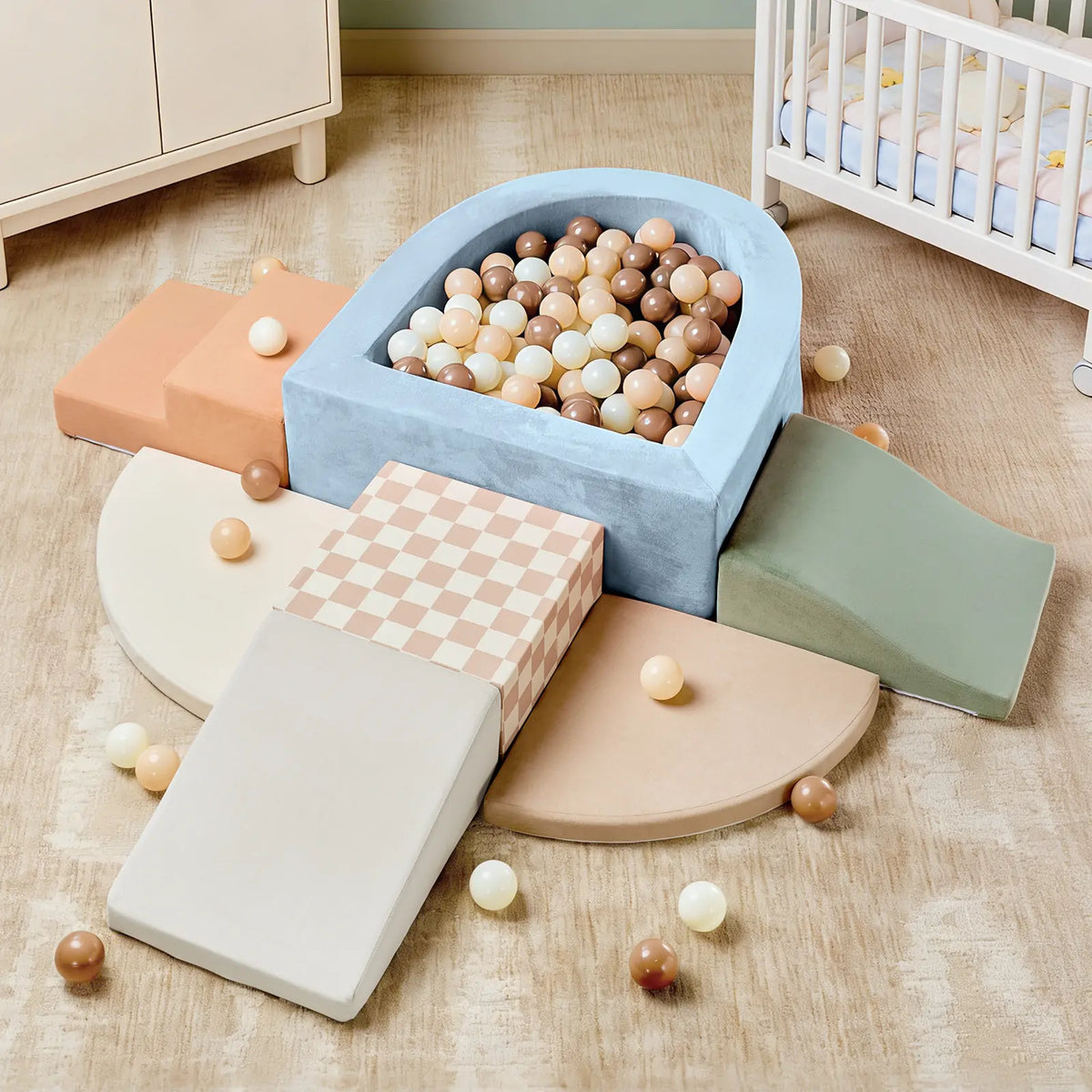

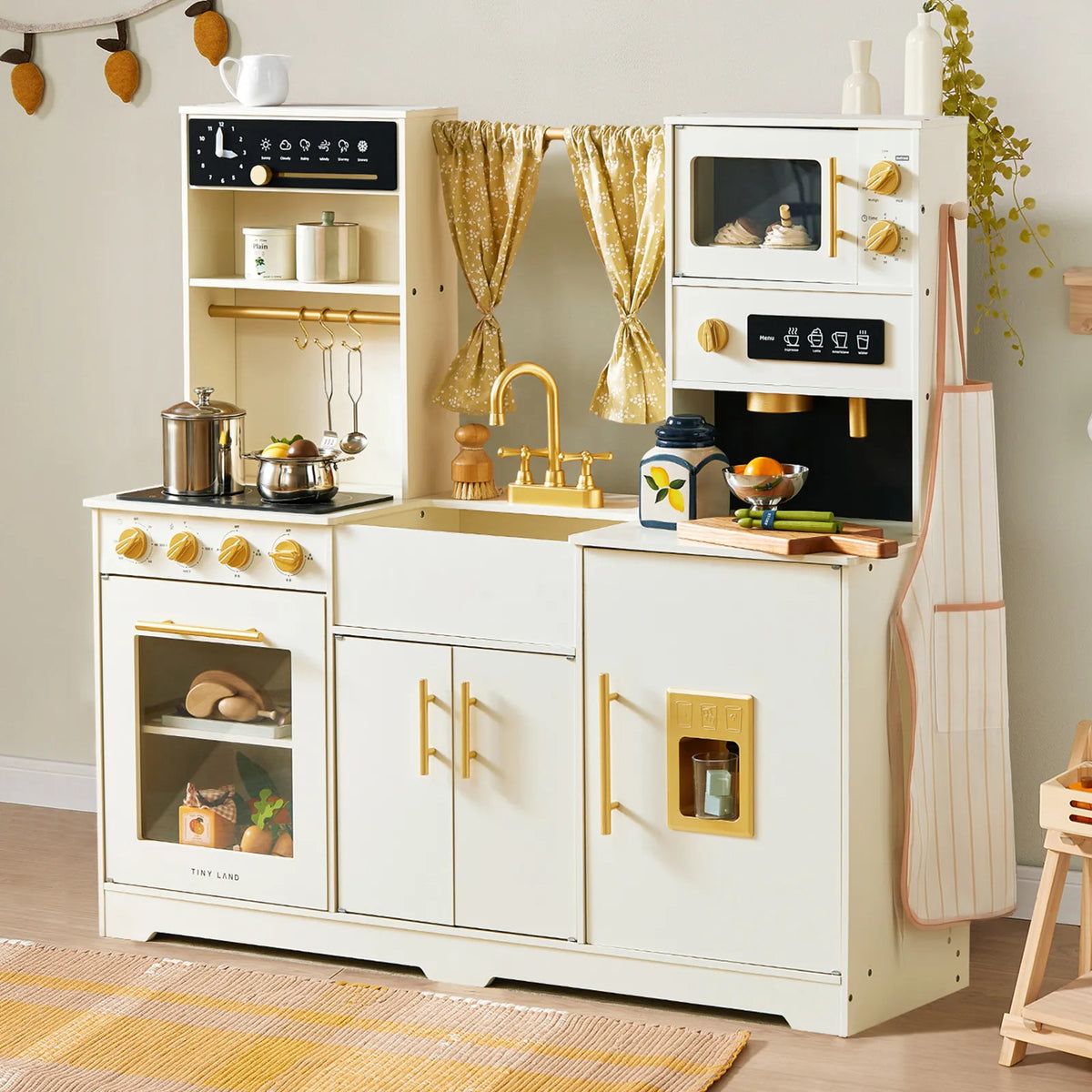


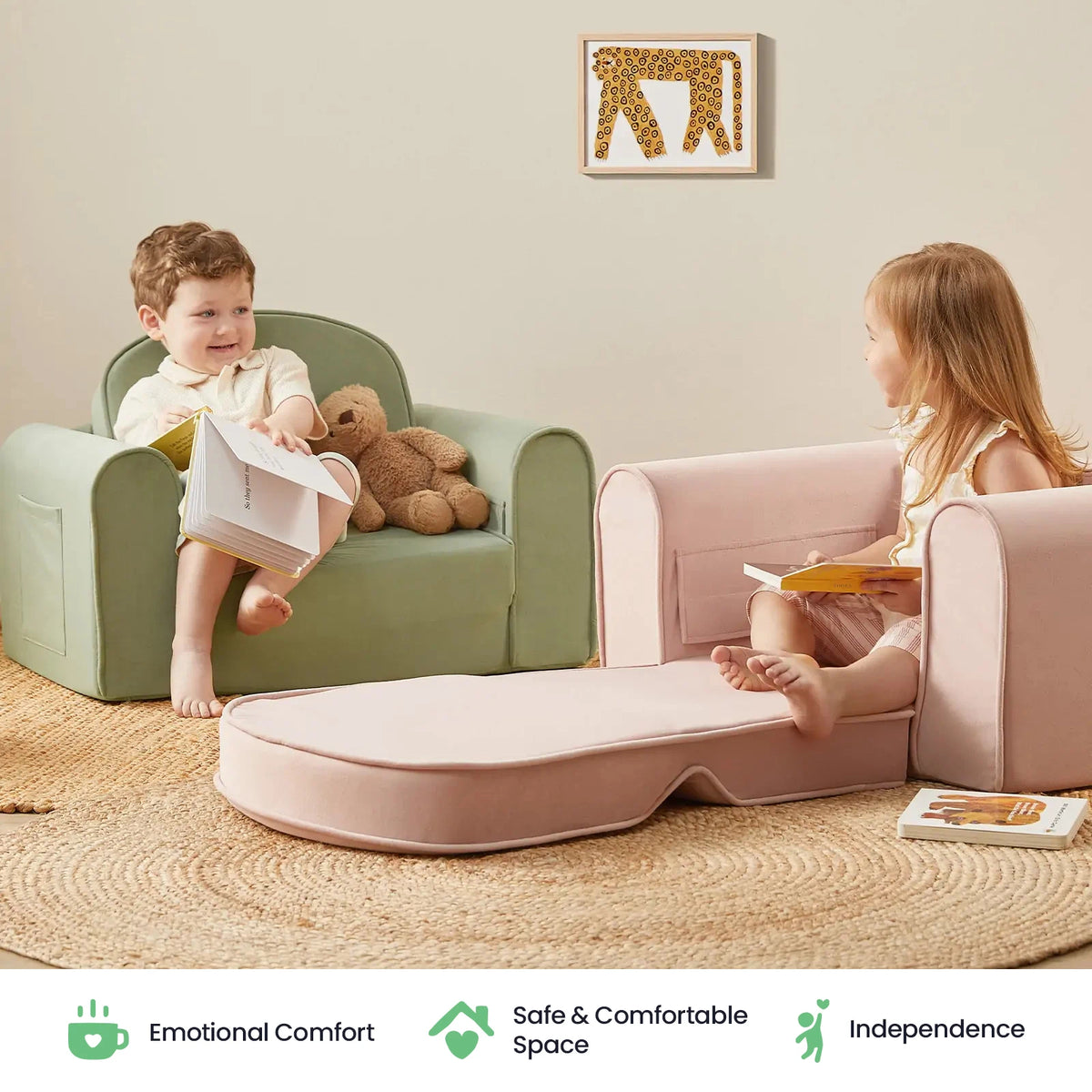
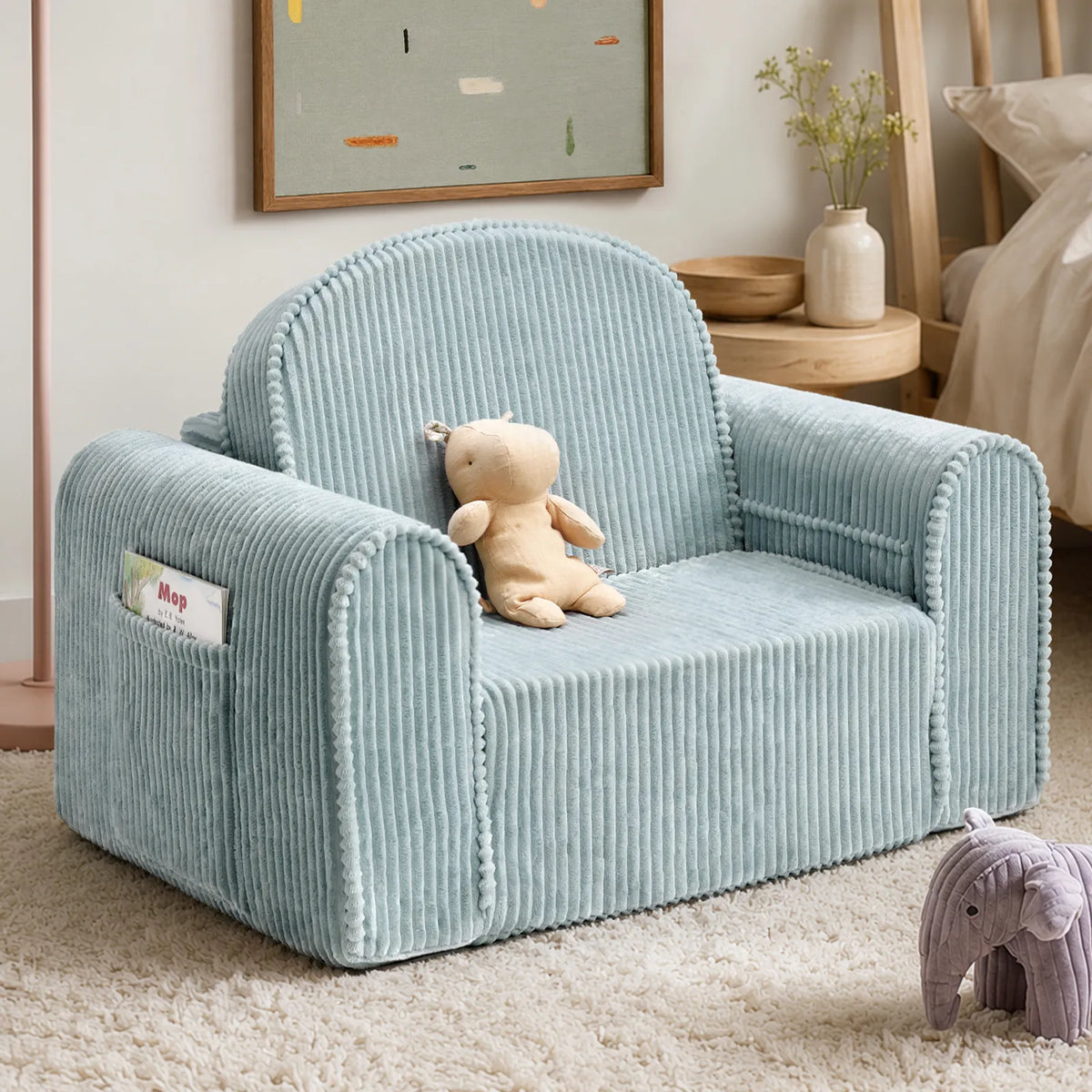
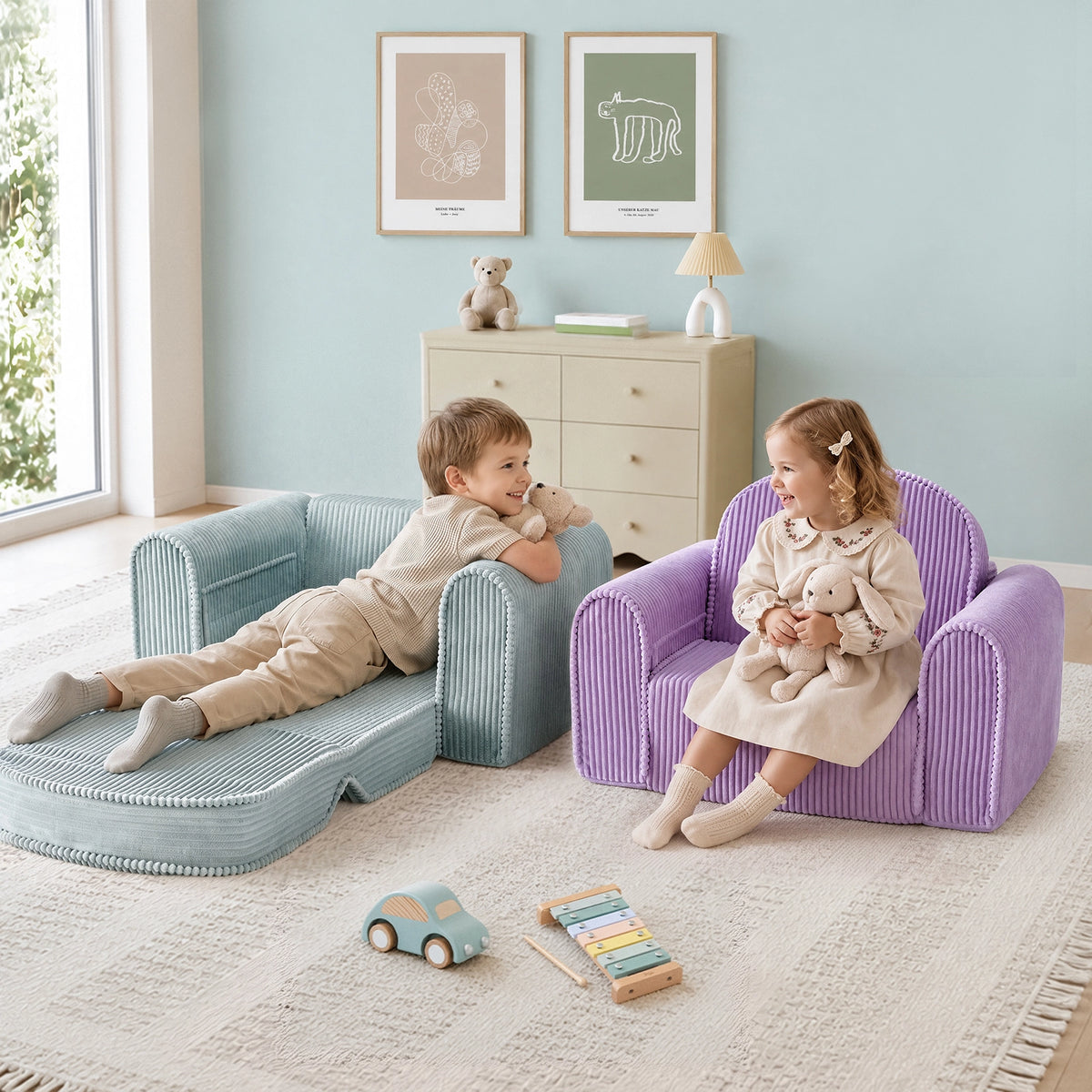

Small homes don’t have to mean small opportunities for active play.
For many families, the challenge isn’t finding an indoor climbing toy—it’s finding the right place for one.
A dedicated playroom may not be an option, and in an apartment or shared living space, every square foot matters.
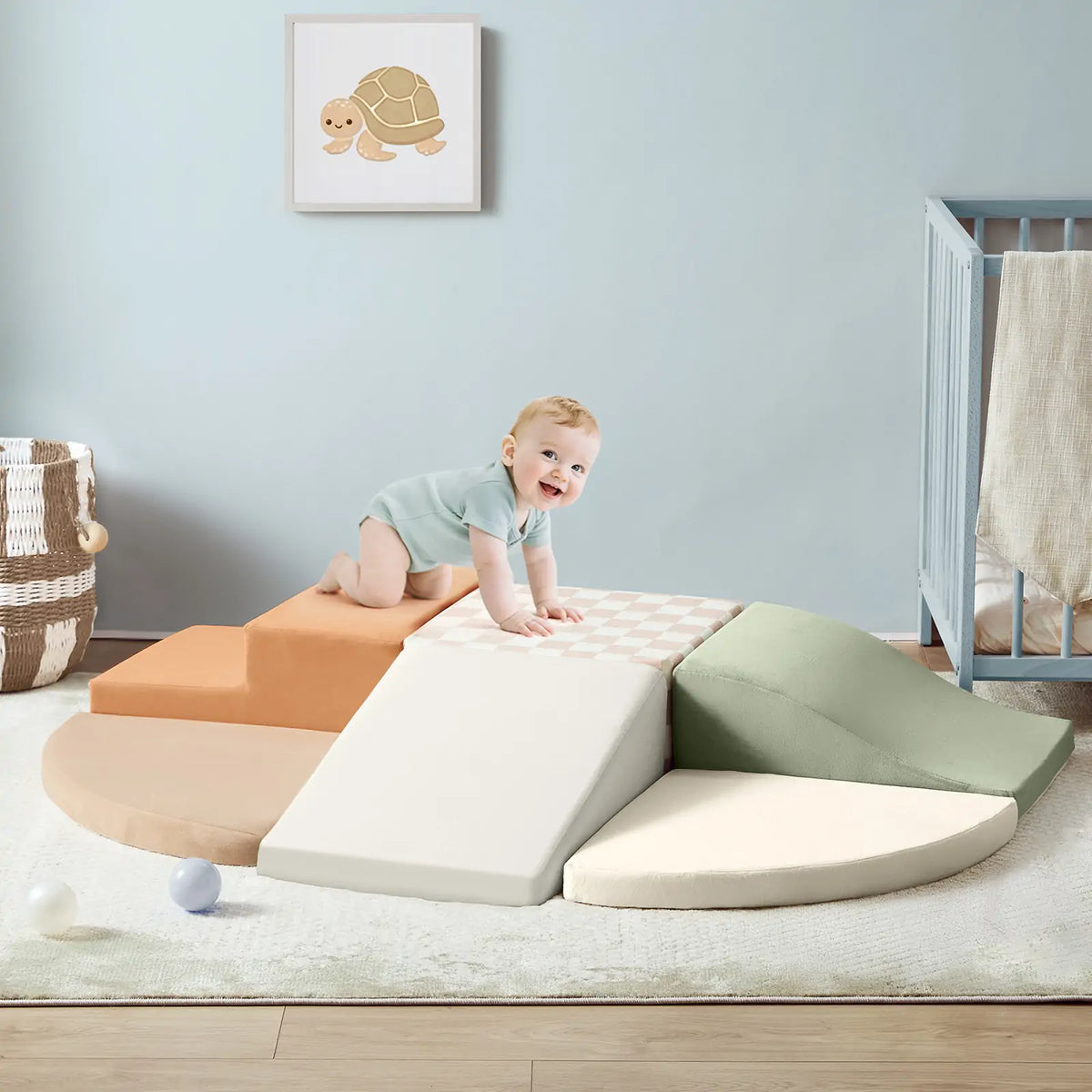
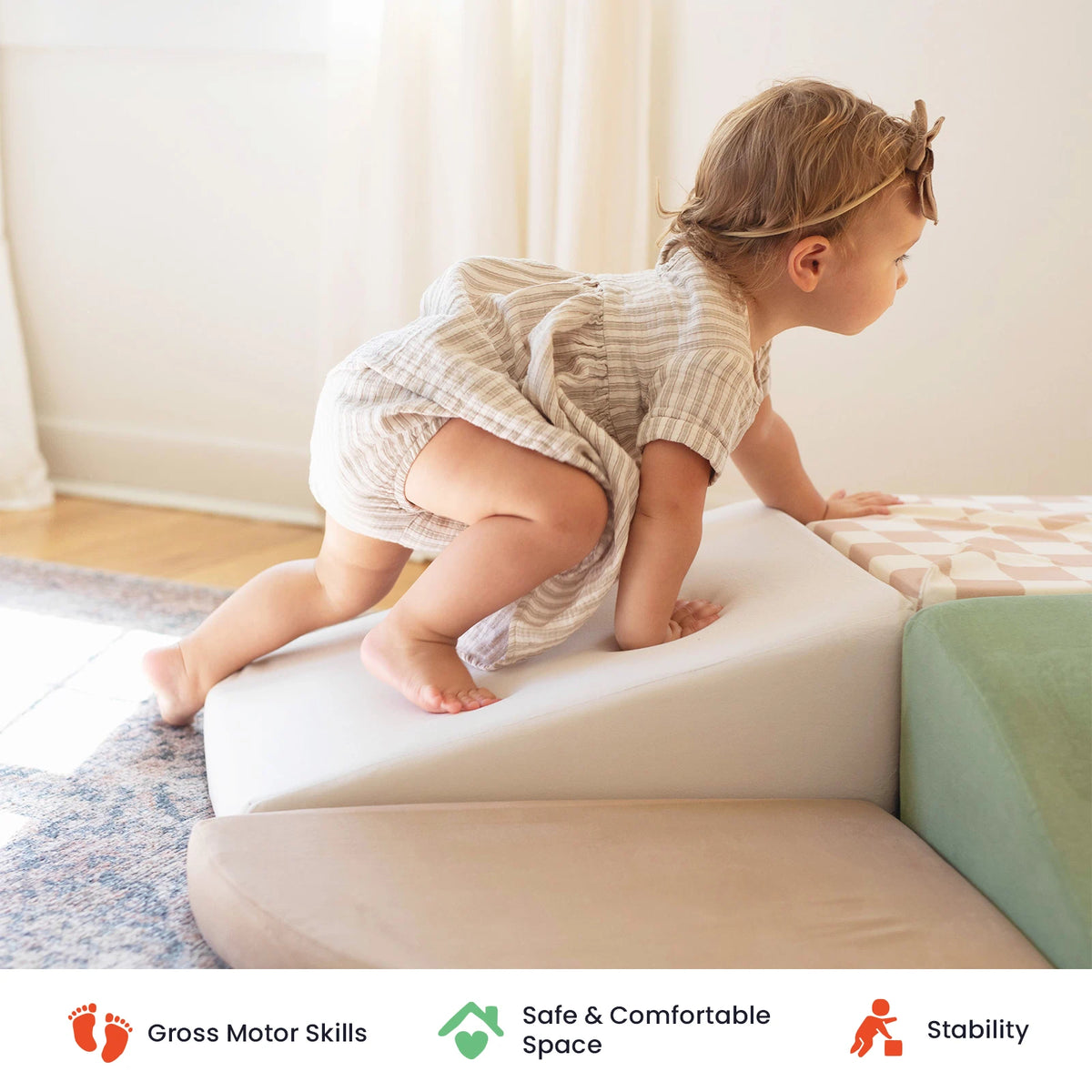
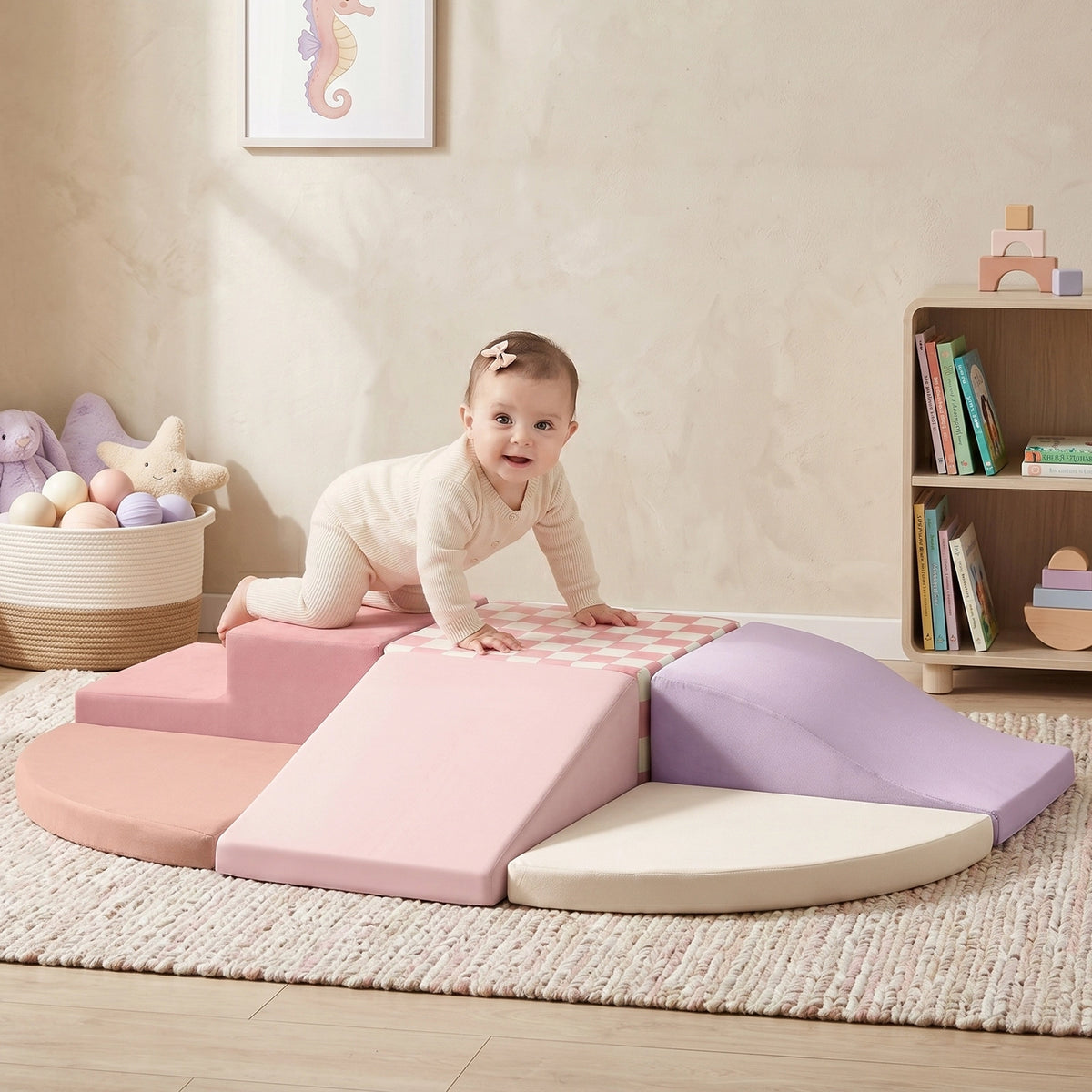
Foam climbing blocks can be a flexible solution for small homes because their modular design allows them to be arranged in different ways to fit the space you already have.
They can be placed in a corner, along a wall, beside a sofa, or within an underused area without requiring an entire room.
These ideas focus on where and how to place foam climbing blocks within your home, so you can choose a setup that works with the space you already have.
From compact apartments to small playrooms and shared family spaces, here are 8 foam climbing block setups for different home layouts and everyday needs.

1. The Living Room Corner Setup
Best for: Families without a dedicated playroom
If your living room doubles as your child’s play area, an unused corner can become a practical space for active play.
Place the foam climbing blocks toward the corner rather than in the middle of the room.
This creates a defined toddler play area while keeping the main walkway and family seating open.
A corner setup can also help keep active-play equipment contained in one part of the room instead of allowing toys to spread across the entire living space.
Small-space tip: Choose one consistent corner for active play and keep the surrounding area relatively clear. You don’t need to redesign the entire room—just make one small section work for play.
2. The Compact Playroom Setup
Best for: Families with a small dedicated playroom
A dedicated playroom doesn’t have to be large to support active play.
If your playroom has limited floor space, place the foam climbing blocks toward one side of the room rather than taking up the center.
This leaves more open floor space for children to move around the room and allows other everyday play materials to stay nearby without overcrowding the area.
Instead of filling the room with separate large toys, choose a few pieces that can support different types of play.
For small playroom ideas, think about how much floor space each item actually needs and prioritize flexible pieces that can adapt to the room.
Small-space tip: Leave the center of a small playroom as open as possible. Keeping the main floor area clear can make the room feel more spacious and give your child more room to move.

3. The Underused Nook Setup
Best for: Small unused spaces
Look for a small nook or recessed area that isn’t being used for everyday activities.
Instead of taking over the center of the room, place the foam climbing blocks within this underused section to create a dedicated play area.
This could be:
- An unused corner between furniture
- A recessed section of a family room
- An awkward area that is difficult to furnish
- A small section of an open playroom
The idea is simple: turn an overlooked space into a functional play zone without changing the rest of the room.
Small-space tip: Before using a nook, make sure there is enough open space around the climbing blocks for your child to move safely.
4. The Along-the-Wall Activity Zone
Best for: Long rooms and open floor plans
For rooms with a longer footprint, create an active-play area along one wall.
Arrange the foam climbing blocks so they use the edge of the room while leaving the center available for walking, family activities, or other furniture.
This setup can work well in:
- Long living rooms
- Open-concept family rooms
- Playrooms shared with other activities
- Larger rooms where you want to keep active play toward one side
Rather than placing the climbing blocks in the middle of the room, the wall can act as a natural boundary for the play area.
Small-space tip: Use the existing layout of the room to your advantage. Keeping active-play equipment along the perimeter can help preserve the most useful open floor space in the center.

5. The Sofa-Side Setup
Best for: Families who want the play area close to where parents spend time
For many families, the living room is where everyone gathers.
Placing foam climbing blocks near the sofa gives your toddler a dedicated active-play area while keeping them close to the family.
This arrangement can be practical for parents who want to remain nearby during active play without having to dedicate an entire room to children’s activities.
Keep the setup away from sharp furniture edges and busy walking paths, and make sure your child has enough open space around the blocks for movement.
Small-space tip: Think about where your family already spends time. A small play area can be more practical when it fits naturally into your existing routine rather than requiring a separate room.
6. The Bedroom-Corner Setup
Best for: Small children’s bedrooms
A child’s bedroom can double as a small indoor play area when a separate playroom isn’t available.
Choose one corner of the bedroom for the foam climbing blocks and keep the remaining floor as open as possible.
Position the active-play area away from the bed and other large furniture. This helps create a natural distinction between the space for movement and the space for rest.
For smaller bedrooms, flexible play equipment can be more practical than filling the room with several large, single-purpose toys.
Small-space tip: Keep the climbing setup compact and avoid placing it where it could block the bedroom door, closet, or other frequently used areas.

7. The Home-Friendly Minimalist Setup
Best for: Families who want children’s play equipment to blend into their home
When your play area is part of your main living space, you may want children’s equipment to feel like a natural part of the room rather than visual clutter.
Start with the pieces you actually use and avoid filling the available space simply because you have room for more toys.
Foam climbing blocks can work well in this type of space because their modular design allows you to adjust the arrangement to suit different room layouts.
Think About Color, Too
When choosing foam climbing blocks for a shared living space, consider how the color will look alongside the furniture and décor already in your home.
A soft or neutral shade can help a children’s play area blend more naturally into a living room, family room, or other visible space.
This can be especially useful for families who want to provide opportunities for active play without making the entire room feel like a playroom.
Small-space tip: You don’t need to hide the play equipment. Choose a simple arrangement and a location that works naturally with the furniture you already have.
8. The Split-Use Setup
Best for: Families who want one set to support different types of play
You don’t always have to keep every foam climbing block together.
Instead, separate the pieces and use them in different ways depending on how your child is playing or how much space you have available.
For example, you might arrange several pieces together for climbing, crawling, and movement, then use another piece separately as a comfortable spot for sitting, lounging, or taking a break.
This approach allows different pieces to serve different purposes without adding more furniture or large toys to the room.
Small-space tip: Think beyond using the set as one large structure. Separating the pieces can help you create an active play area while allowing the same set to serve other functions in the room.
 How to Choose the Right Foam Climbing Block Setup for Your Home
The best setup depends on more than the size of your home. It also depends on how your family uses each room.
Before deciding where to place your foam climbing blocks, consider these questions.
How much floor space can you dedicate to active play?
Start by identifying an area where your child can move around the blocks without interfering with major walkways.
Does the room have more than one purpose?
If your living room also serves as a dining area, family room, or playroom, choose a setup that can be adjusted when you need more open space.
Which areas of your home are currently underused?
An empty corner, open wall, or unused section of a bedroom may be more practical than taking over the center of a room.
Do you want the play area to blend into your home?
If your foam climbing blocks will stay in a shared living space, consider how their size, shape, and color work with your existing décor.
Can the same set be used in different ways?
Modular pieces can be rearranged depending on the available space and the type of play your child wants to do.
 5 Tips for Using Foam Climbing Blocks in Small Spaces
1. Use corners and edges first
Corners and open wall areas can help you create a toddler play area without taking over the center of the room.
2. Keep major pathways clear
Before settling on a setup, walk through the room as you normally would. Make sure the climbing area doesn’t interfere with doors, frequently used furniture, or everyday traffic.
3. Give active play enough open space
A small play area doesn’t mean squeezing the climbing blocks into the smallest possible corner. Make sure your child has enough clear space around the equipment for safe movement.
4. Use fewer, more flexible pieces
Instead of filling a small room with multiple large toys, consider how one modular set can support different activities when its pieces are rearranged.
5. Follow age and safety guidance
Choose a setup appropriate for your child’s age and abilities and follow the manufacturer’s instructions. Place foam climbing equipment on a stable, level surface and provide appropriate adult supervision during active play.

Small Space, Big Possibilities for Play
Creating a toddler play area doesn’t require a large house or a dedicated playroom.
A living room corner, open wall, bedroom nook, or small section of an apartment can all become useful spaces for indoor movement and play when the layout is planned around the space you already have.
Foam climbing blocks offer a flexible option for families because their modular pieces can be arranged in different ways to fit different rooms and everyday needs.
The goal isn’t to fit more toys into a small room. It’s to choose a setup that works with the way your family actually lives.
With thoughtful placement and flexible pieces, even a compact home can give your child a dedicated place to move, explore, and play.
Explore Tiny Land Foam Climbing Blocks and find a setup that fits your family’s space.