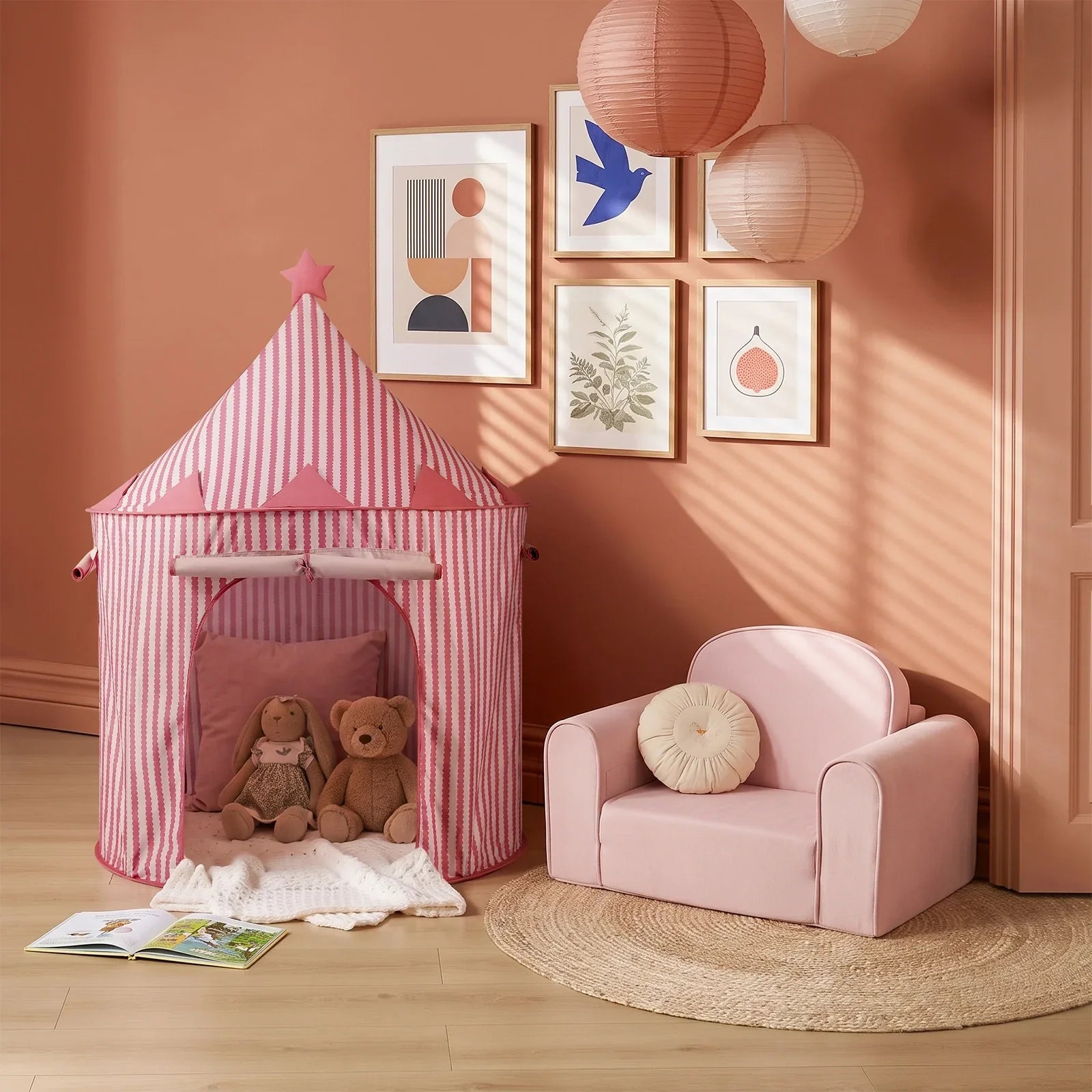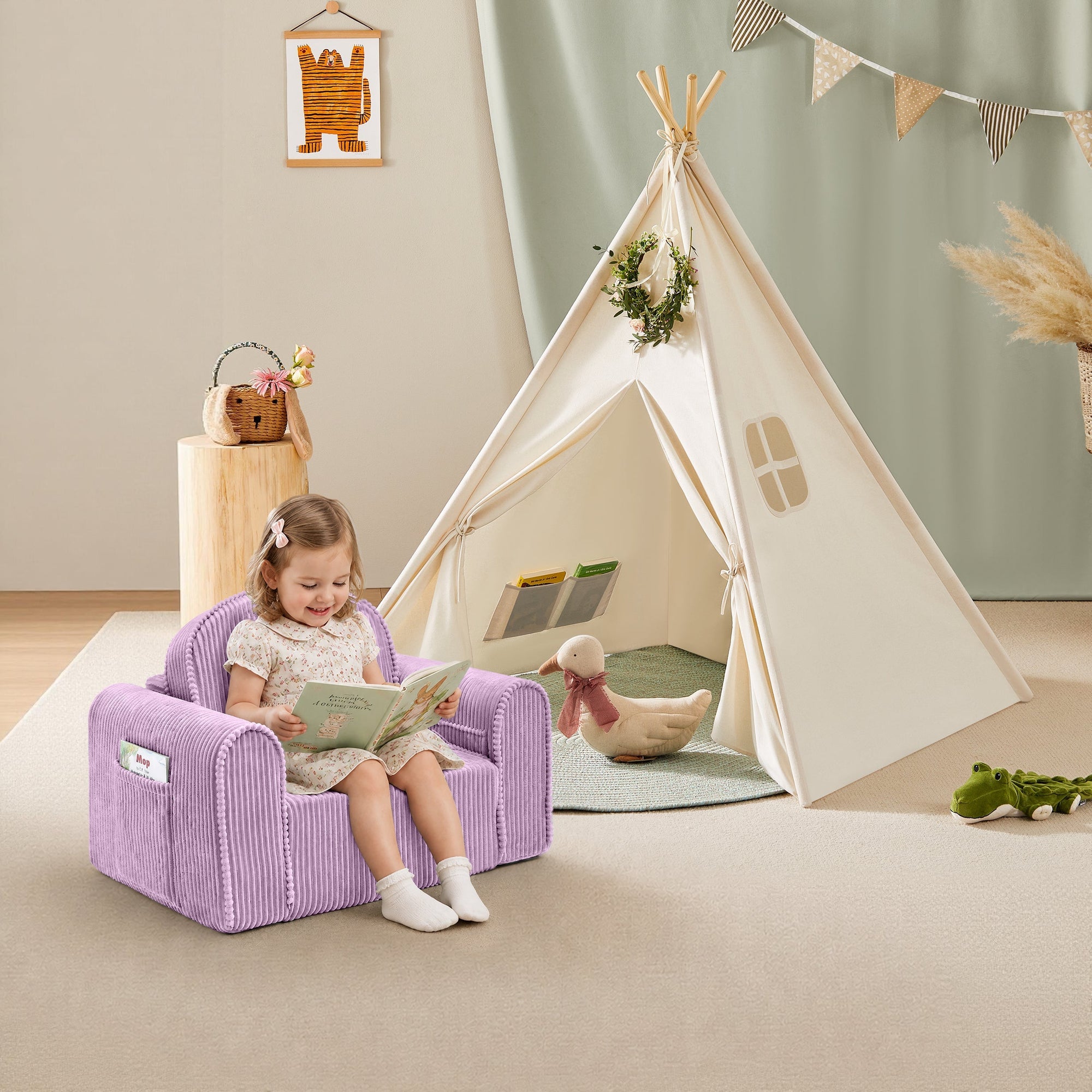

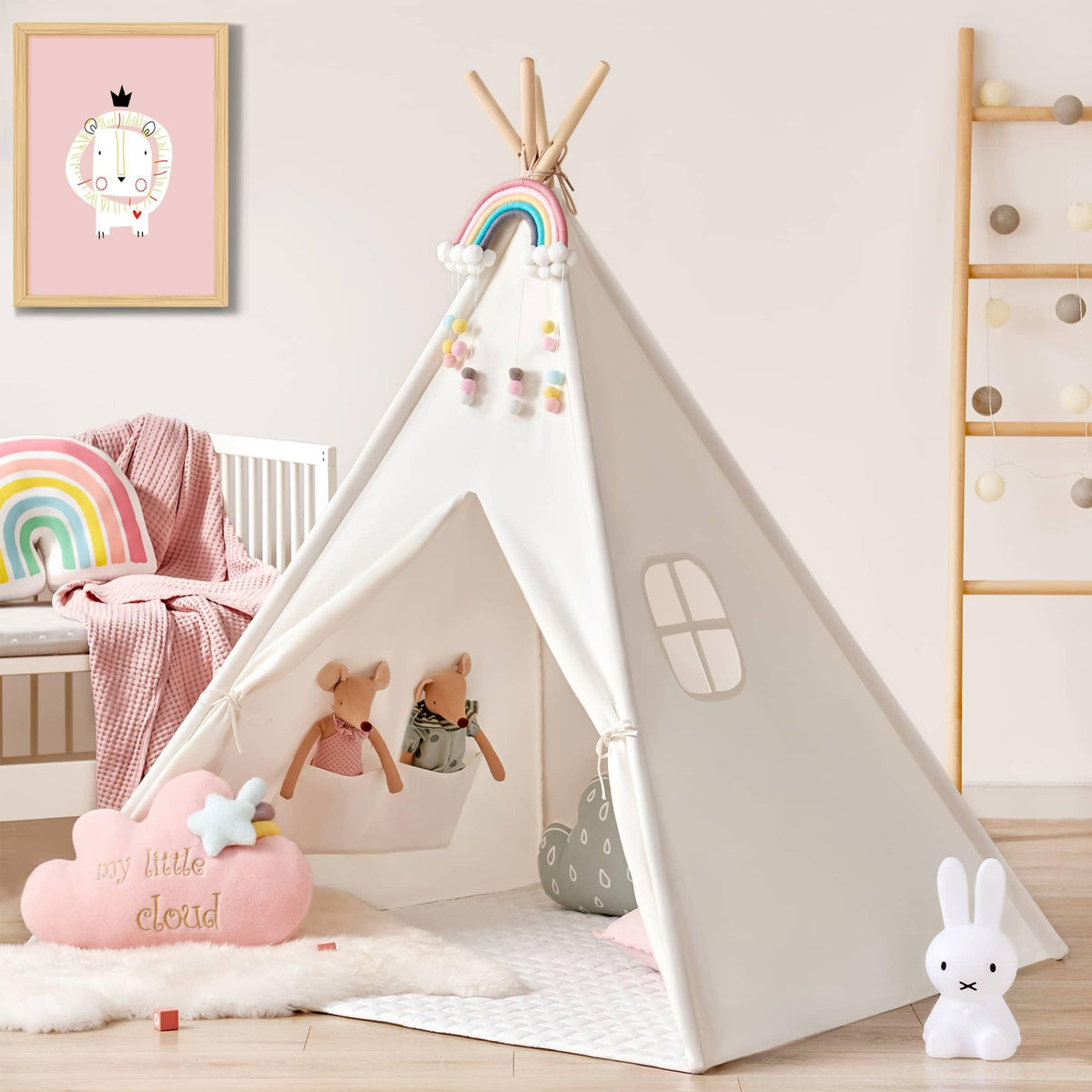
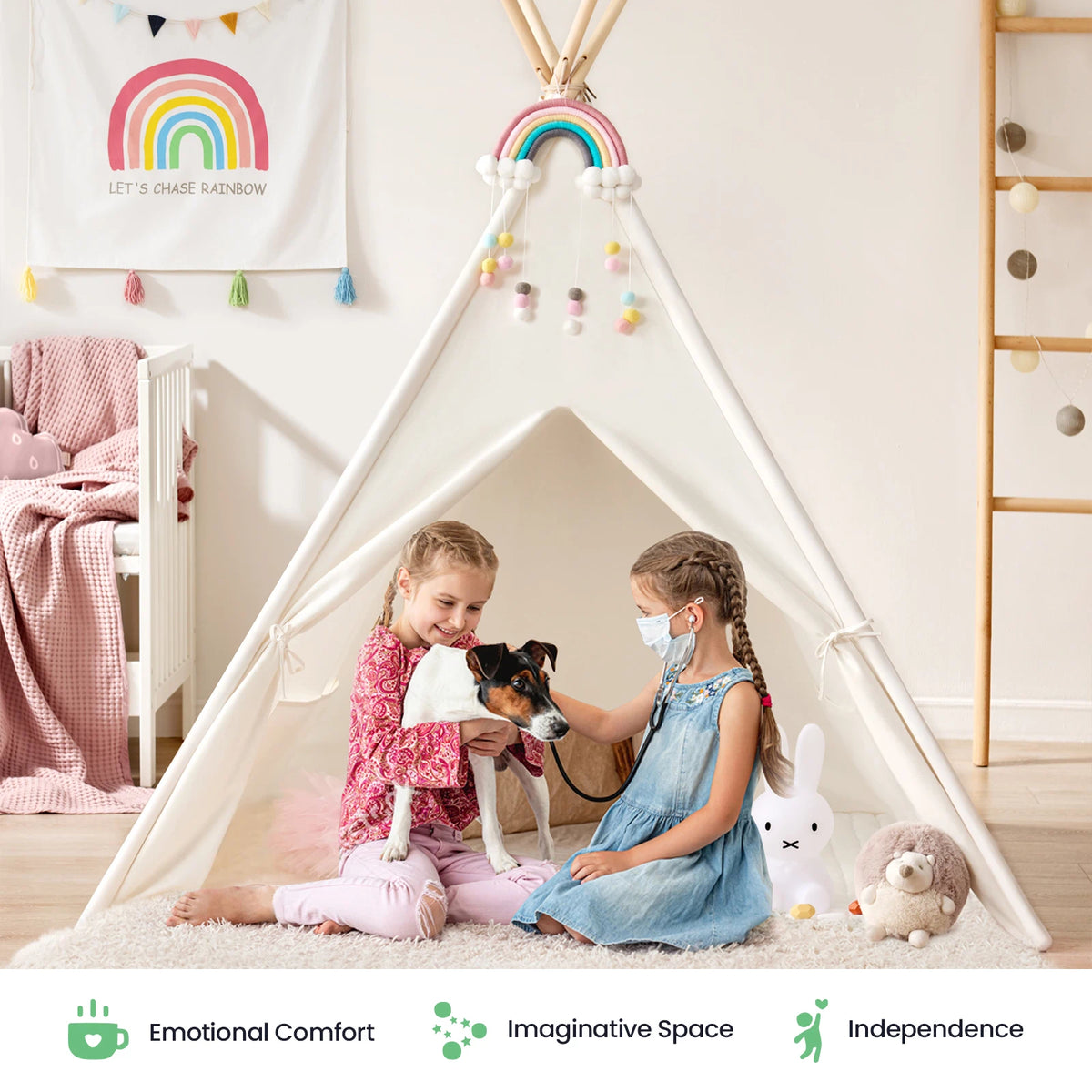
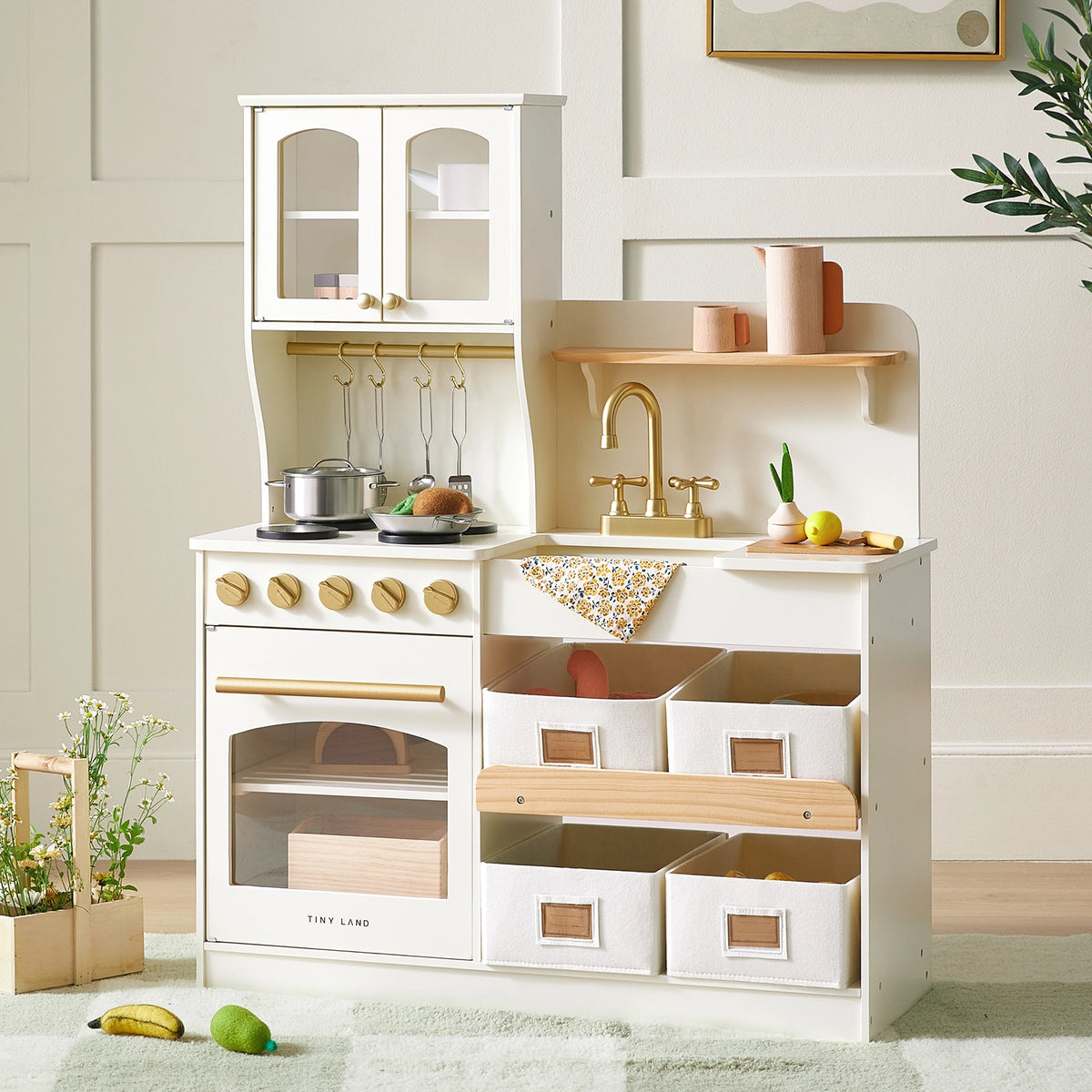
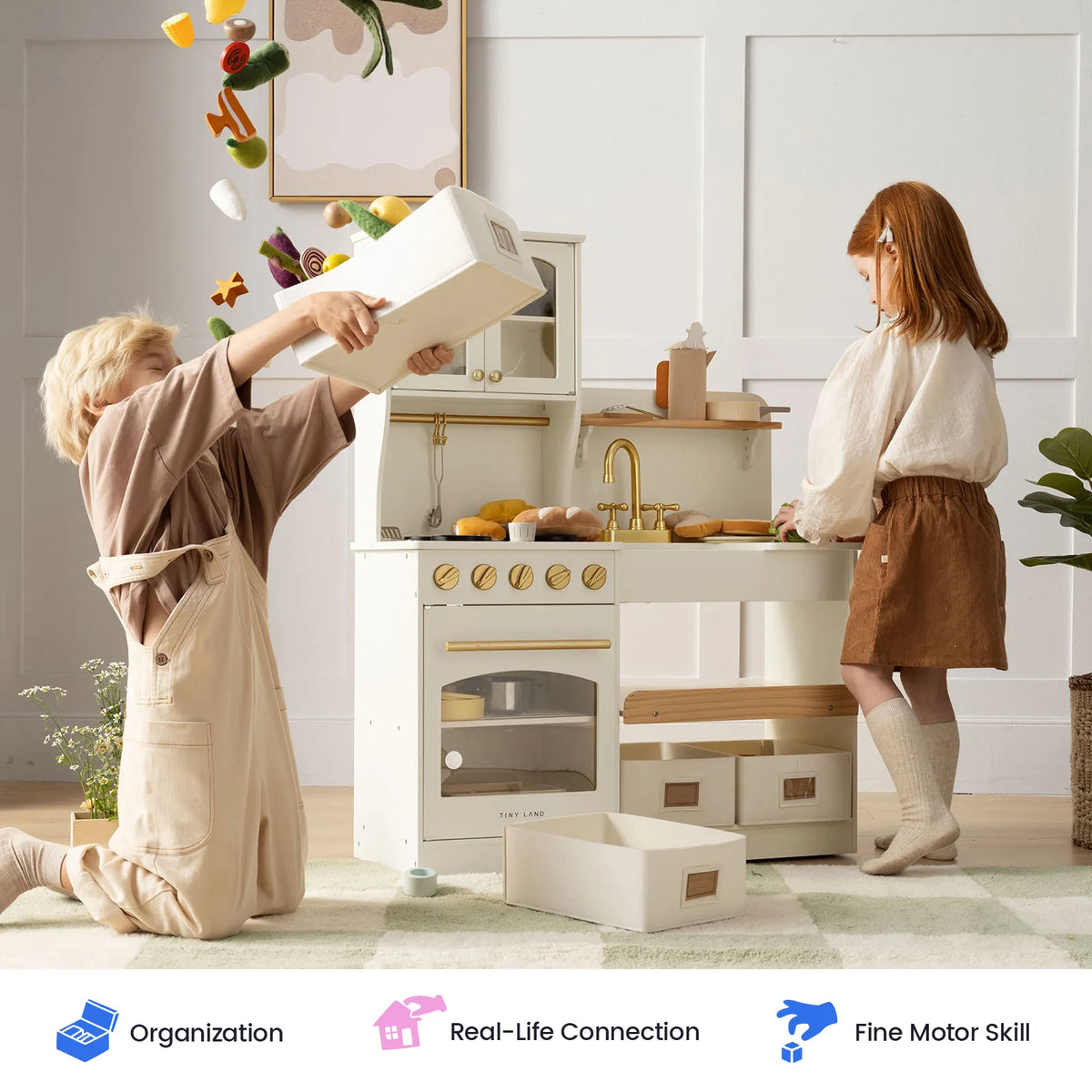
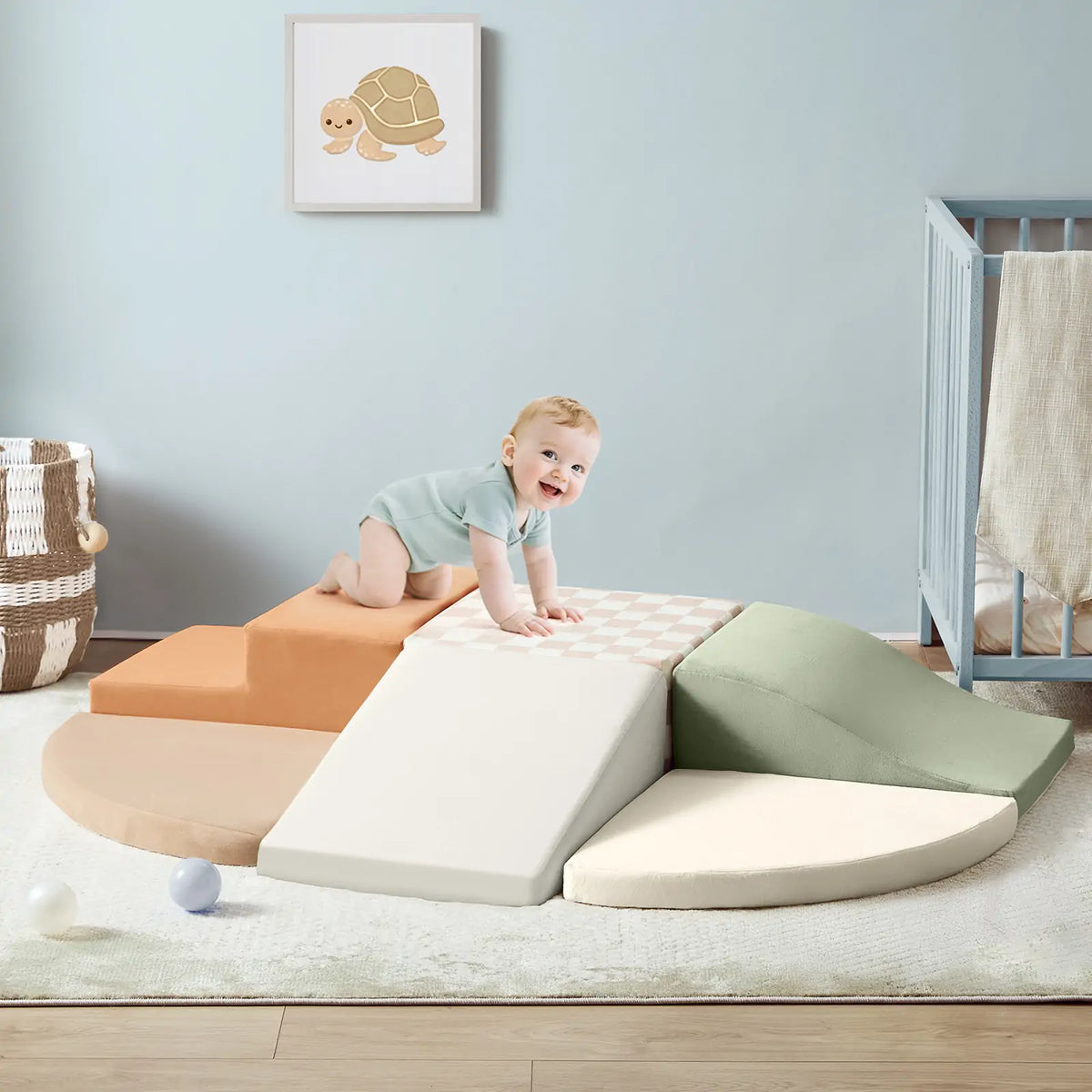
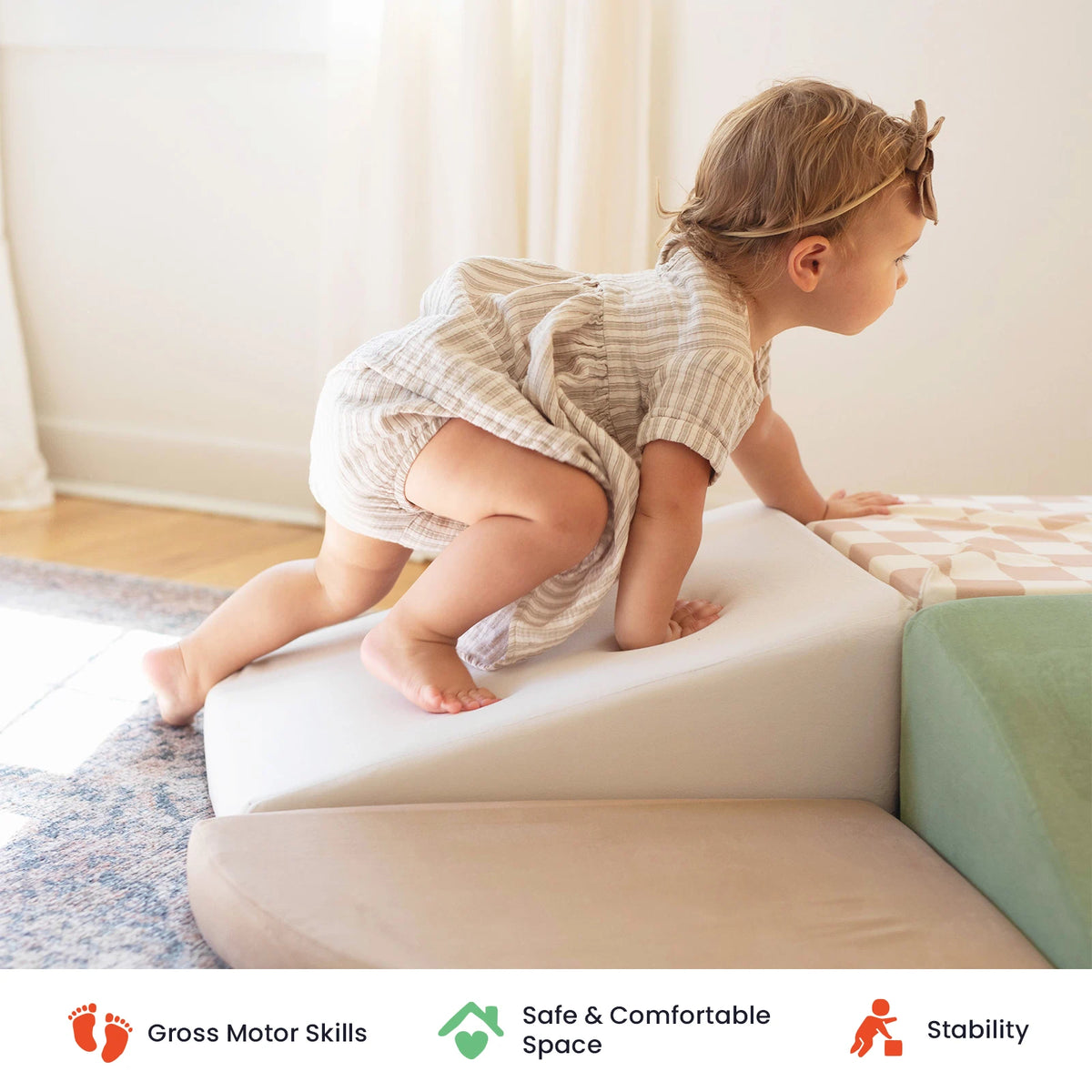

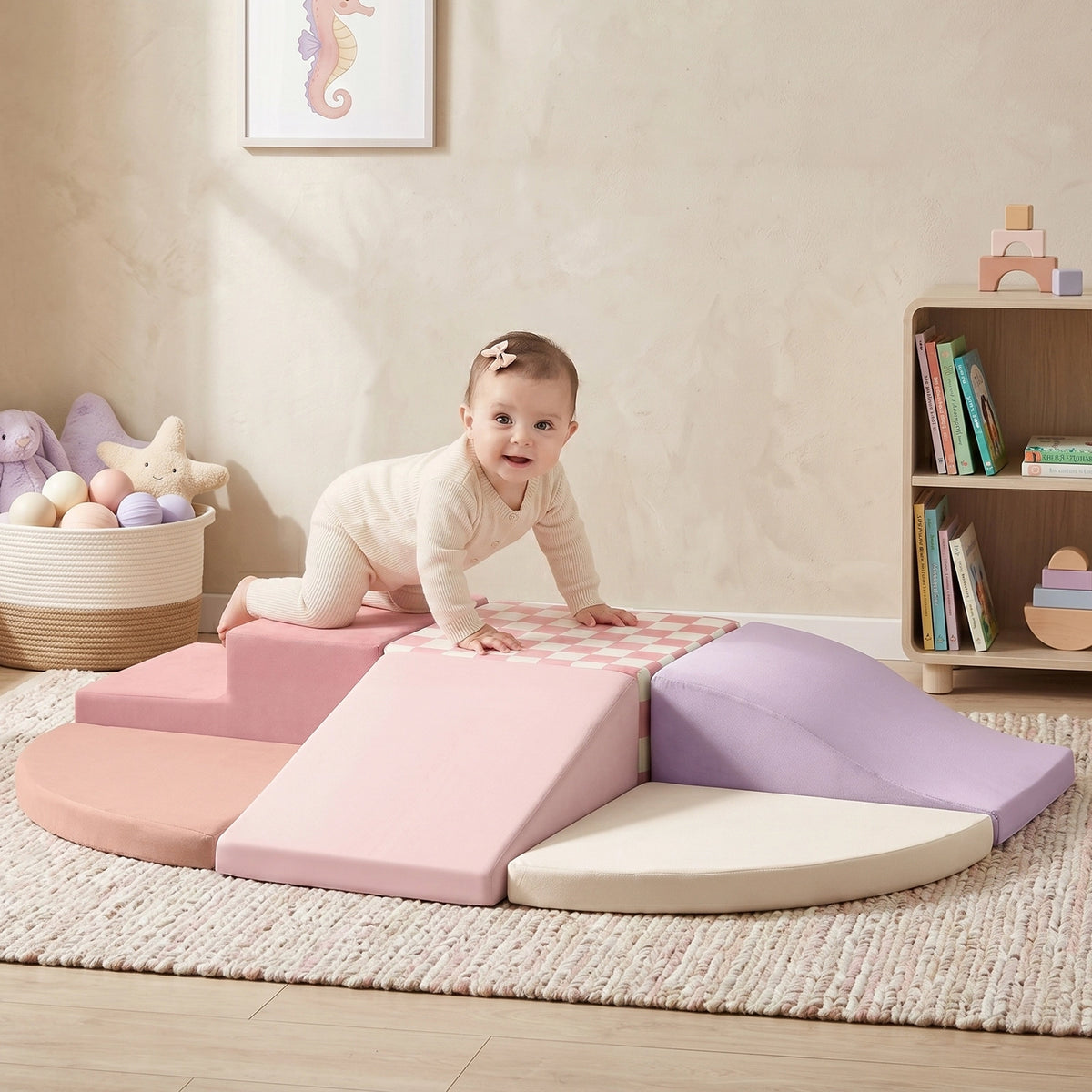


Looking for a kids play tent? Before choosing one based on color or appearance, consider how it will fit your child, your home, and your everyday routine.
The best play tent for your family should be age-appropriate, fit comfortably in your available space, be practical to set up and maintain, and provide an inviting space for children to create their own play.
From size and materials to safety, storage, and play value, this guide explains what parents should look for before buying a play tent for kids.

What Should You Look for in a Kids Play Tent?
Before buying a kids play tent, consider these eight factors:
-
Recommended age
-
Size and available floor space
-
Materials and construction
-
Safety and intended use
-
Indoor or outdoor suitability
-
Setup and storage
-
Cleaning and maintenance
-
How your child is likely to use the space
There is no single "best kids play tent" for every family. The right choice depends on your child's age, interests, your available space, and how you expect the tent to be used.

1. Start With the Recommended Age
The first thing to check is the manufacturer's recommended age range.
Children's physical abilities and play behaviors change quickly during the toddler and preschool years.
A younger child may enjoy entering, exiting, hiding, and exploring a tent, while an older child may turn the same space into a pretend house, campsite, classroom, or reading nook.
When choosing a kids play tent, ask:
-
Is the product designed for your child's age group?
-
Can your child enter and exit appropriately?
-
Does the design suit your child's physical abilities?
-
Are there small or detachable components?
-
Are the manufacturer's instructions clear?
Age recommendations are an important starting point, but parents should also consider how their individual child interacts with play products.

2. How Big Should a Kids Play Tent Be?
Size is one of the most important practical considerations when choosing a kids tent.
A tent can look small in a product photo but occupy considerably more floor space once assembled.
Before buying, measure the area where you plan to use it.
Consider:
-
The tent's floor footprint
-
Ceiling height
-
Nearby furniture
-
Doorways and walkways
-
Windows and vents
-
Space around the entrance
Kids Play Tent Size Guide
Think about both where the tent will go and what will happen inside it.
| Your situation | What to consider |
|---|---|
| Small bedroom or apartment | Choose a footprint that leaves comfortable walking space |
| One child | Allow enough room to sit, move, and play |
| Two children | Consider a larger interior and entrance |
| Reading nook | Leave room for a child and a few books |
| Pretend play | Allow space for toys, props, and movement |
| Multipurpose room | Consider how easily the tent can be moved or stored |
A simple trick is to use painter's tape to mark the approximate footprint of the tent on the floor before purchasing.
Then check the space around it.
A tent should not block a doorway, make a walkway difficult to use, or leave children squeezing between furniture to enter and exit.
Don't Choose a Tent Based on Floor Size Alone
The listed dimensions don't tell the whole story.
A tent with a similar footprint can feel very different depending on:
-
Interior height
-
Shape
-
Entrance size
-
Number of openings
-
Available floor area inside
If your child will use the tent primarily for reading, sitting space may matter most. If they will use it for pretend play with dolls, stuffed animals, or play food, interior floor space may be more important.

3. What Materials Should You Look for in a Kids Play Tent?
Two play tents can look similar online while having very different construction.
Look for clear product information about:
-
Tent fabric
-
Support poles or frame
-
Connectors
-
Floor construction
-
Windows and openings
-
Seams and attachment points
You don't necessarily need the most complicated construction. What matters is that the manufacturer clearly explains what the product is made from, how it should be assembled, and how it should be maintained.
Think About Everyday Durability
A children's play space gets used.
Books, stuffed animals, dolls, pretend food, blankets, and other toys may regularly go inside. That makes practical details such as fabric care and construction worth considering.
Before buying, check:
-
How the fabric should be cleaned
-
Whether components can be removed
-
How the frame should be handled
-
How the product should be stored
Always follow the manufacturer's care instructions rather than assuming that a fabric is machine washable or suitable for a particular cleaning product.

4. Are Kids Play Tents Safe?
Safety should be part of the buying decision—not an afterthought.
A play tent is intended for play. Unless specifically designed and labeled for another purpose, it should not automatically be treated as climbing equipment, a structure for hanging, or a camping tent.
Before buying, check whether the manufacturer provides clear information about:
-
Recommended age
-
Assembly
-
Intended use
-
Structural components
-
Loose or detachable parts
-
Care and maintenance
Parents should also inspect the tent periodically, especially after moving, storing, or reassembling it.
For younger children, small parts deserve particular attention. U.S. regulations restrict certain small parts in products intended for children under three because of choking hazards.
Safe use also depends on proper assembly, age-appropriate use, and following the manufacturer's instructions.

5. Indoor vs. Outdoor Play Tents: What's the Difference?
Not every kids play tent is designed for outdoor use.
If you're shopping for an indoor play tent, consider how well it fits into the room where your child will use it and whether it can be moved or stored easily.
For outdoor use, always check the manufacturer's instructions first.
Look for information about:
-
Intended environment
-
Weather exposure
-
Sun exposure
-
Stability
-
Anchoring
-
Cleaning
-
Storage
A play tent should not automatically be used as a camping tent simply because it has a tent-like shape.
If outdoor use is not specifically indicated by the manufacturer, keep the tent indoors.

6. How Easy Is It to Set Up and Store?
A kids play tent can become part of everyday play—or spend most of its time folded away.
Setup and storage can make a significant difference in how practical a tent is for a family.
Before buying, ask:
-
How much assembly is required?
-
Are tools needed?
-
Can one adult assemble it?
-
Can it be folded or disassembled?
-
How much storage space does it require?
-
Can it be moved between rooms?
This can be particularly important for families living in apartments, smaller homes, shared bedrooms, or multipurpose spaces.
A practical kids tent needs to work for parents as well as children. If it is manageable to set up, move, clean, and store, it is easier to incorporate into everyday family life.

7. Think About How Your Child Will Actually Play
One of the most useful questions to ask before buying is:
What will my child actually do inside the tent?
A flexible play tent can become many different things.
It might be:
-
A reading nook
-
A pretend house
-
An indoor campsite
-
A puppet theater
-
A storytelling space
-
A pretend classroom
-
A cozy hideaway
-
A space for stuffed-animal adventures
This flexibility is one reason play tents can be appealing as children's play spaces.
Research has examined relationships between pretend play and areas such as symbolic thinking, language, and social interaction.
However, researchers caution against treating pretend play as a standalone cause of broad developmental outcomes.
A more practical way to think about a play tent is as a physical setting where children can create their own play scenarios.
For example, a child might decide that the tent is a restaurant. They may assign roles, use toys as props, create a story, and decide what happens next.
The tent doesn't provide the story.
The child does.
 8. Match the Tent to Your Child's Interests
There is no universal best play tent for kids.
Instead, consider what your child already enjoys.
If Your Child Loves Books
A tent can become a cozy reading nook.
Look for enough space to sit comfortably with a few favorite books and easy access to the entrance.
If Your Child Loves Pretend Play
Consider whether there is room for dolls, stuffed animals, pretend food, costumes, or other favorite toys.
If Your Child Loves Storytelling
An open entrance can become a small stage for puppet shows and storytelling.
If Siblings Will Play Together
Consider the interior dimensions and whether the product is designed to accommodate more than one child.
Choosing a tent around your child's existing interests can make it easier for the space to become part of everyday play.

9. What Should You Put in a Kids Play Tent?
A play tent doesn't need to be filled with toys to become an engaging play space.
A few familiar items can help children transform the tent into different environments.
Depending on your child's age and interests, you might add:
-
Picture books
-
Stuffed animals
-
Dolls
-
Pretend food
-
Puppets
-
Blankets or cushions
-
Flashlights for pretend camping
-
Favorite small toys
Try not to overcrowd the space.
A smaller selection of familiar toys can leave room for children to decide what the tent becomes.
You can also rotate a few items from time to time to give the space a different purpose without buying additional toys.

10. What Should You Avoid When Buying a Kids Play Tent?
A good buying decision isn't only about what to look for. It's also about knowing what to avoid.
Avoid Choosing Based Only on Appearance
A beautiful tent may not be the right size or design for your home.
Check the dimensions and intended use before focusing on colors or decorative details.
Avoid Ignoring the Age Recommendation
A tent designed for a different age group may not be appropriate for your child.
Always review the manufacturer's recommendations.
Avoid Assuming Every Tent Is for Outdoor Use
A tent-shaped product is not automatically suitable for outdoor conditions.
Check the manufacturer's instructions.
Avoid Buying Without Measuring Your Space
Even a lightweight tent needs enough room around it for practical everyday use.
Measure first.
Avoid Overlooking Storage
If the tent needs to be folded away regularly, consider where it will go when it isn't being used.
Avoid Choosing Features Your Child Won't Use
More features don't necessarily mean more play value.
Consider your child's interests and choose a design that supports the kind of play they already enjoy.

11. What Makes the Best Kids Play Tent for Your Family?
Instead of asking, "What is the best kids play tent?", ask:
"What is the best kids play tent for my family?"
Different families may prioritize different features.
Best for Small Spaces
Look for a compact footprint and practical storage.
Best for One Child
Prioritize comfortable interior space without taking up unnecessary floor area.
Best for Siblings
Consider a larger interior and an entrance that makes shared play practical.
Best for Reading
Look for a comfortable sitting area and easy access to books.
Best for Pretend Play
Choose a flexible space that leaves room for toys, props, and child-led scenarios.
Best for Everyday Use
Setup, cleaning, portability, and storage may matter more than extra decorative features.
There is no single feature that makes one tent universally "best."
The best choice is the one that matches your family's actual needs.

12. Kids Play Tent vs. Playhouse: Which Is Right for Your Family?
A play tent and a playhouse can both create dedicated spaces for children's play, but they have different practical characteristics.
| Kids Play Tent | Playhouse | |
|---|---|---|
| Portability | Generally easier to move | Usually less portable |
| Storage | Often easier to fold or store | Usually requires more dedicated space |
| Setup | Often simpler | Can be more involved |
| Space requirement | Often suitable for smaller rooms | Usually needs a larger play area |
| Play style | Flexible and open-ended | Often provides a more defined environment |
| Best for | Families wanting a movable play space | Families with room for a larger, more permanent structure |
Neither is automatically better.
A kids play tent may make more sense if you want a flexible play space that can move between rooms or be stored when needed.
A playhouse may be a better fit if you have a dedicated playroom, bedroom, or outdoor area and want a larger, more permanent structure.
Think about your space first, then your child's play style.

Kids Play Tent Buying Checklist
Before you click "Buy," use this quick checklist.
Age & Fit
☐ The recommended age range matches your child
☐ Your child can enter and exit appropriately
☐ The design suits your child's abilities
Size
☐ The tent fits your available floor space
☐ There is enough room for the intended type of play
☐ The entrance and surrounding area are practical
Construction & Safety
☐ Materials are clearly identified
☐ Assembly instructions are provided
☐ Intended use is clearly explained
☐ You have reviewed the manufacturer's safety information
☐ You can inspect the product regularly for damage
Everyday Use
☐ Setup is manageable
☐ Storage works for your home
☐ Cleaning requirements fit your routine
☐ The tent can be moved if needed
Play Value
☐ Your child can use it in different ways
☐ It matches your child's interests
☐ There is enough room for favorite toys or books
☐ The design leaves room for child-led play

Meet the New Tiny Land Kids Play Tent
At Tiny Land, we believe a children's play space should be enjoyable for kids and practical for families.
Our new Tiny Land Kids Play Tent is designed to create a dedicated space for imaginative play, reading, quiet moments, and child-led adventures.
The design focuses on the things families actually consider when choosing a play tent: age-appropriate use, practical sizing, everyday play, and a space that can adapt as children's interests change.
Whether your child turns it into a reading nook, pretend house, campsite, puppet theater, classroom, or something completely unexpected, the goal is to provide a space they can make their own.
One Tent. Many Possibilities.
Today, it might be a library.
Tomorrow, it might be a campsite.
Next week, it might become a restaurant, classroom, or secret hideaway.
The tent stays the same. The story changes.
[Explore the Tiny Land Kids Play Tent →]
 Frequently Asked Questions About Kids Play Tents
What should I look for in a kids play tent?
Look at the recommended age, dimensions, materials, construction, safety information, intended use, setup, storage, and cleaning requirements. Then consider whether the design matches the way your child likes to play.
What age is a kids play tent for?
The appropriate age depends on the specific product. Always follow the manufacturer's recommended age range and consider your child's individual abilities. The CPSC recommends selecting toys based on children's age, skills, abilities, and interests.
Are play tents good for toddlers?
A play tent can provide a space for age-appropriate exploration and imaginative play, but parents should choose a product designed for the child's age and follow all manufacturer instructions.
How big should a kids play tent be?
Choose a size based on both your available space and how the tent will be used. Consider the tent's footprint, interior space, entrance, and the room needed around it.
Are kids play tents safe?
Safety depends on the individual product, its construction, assembly, and use. Parents should follow manufacturer instructions, respect age recommendations, and regularly inspect the tent for damage or loose components.
Can a kids play tent be used outdoors?
Only if the manufacturer specifically indicates that the tent is suitable for outdoor use. Check the product instructions for information about weather, sunlight, stability, and storage.
What can kids do in a play tent?
Children can use play tents for reading, pretend camping, storytelling, playing house, puppet shows, quiet play, and many other imaginative activities.
What can you put inside a kids play tent?
Books, stuffed animals, dolls, pretend food, puppets, blankets, cushions, and other age-appropriate toys can help children create different play scenarios. Avoid overcrowding the space.
Are kids play tents worth it?
A play tent can be a practical option for families looking for a flexible play space without dedicating an entire room to a larger play structure. Whether it is worthwhile depends on your child's interests, your available space, and how often the tent is likely to be used.
What's the difference between a play tent and a playhouse?
A play tent is generally lighter, more portable, and easier to store, while a playhouse is usually larger and more permanent. The better option depends on your family's available space and how you want your child to use the play area.

The Bottom Line
Choosing a kids play tent doesn't have to be complicated.
Start with the essentials: age, size, construction, safety information, intended use, setup, storage, and cleaning.
Then ask the most useful question:
How will my child actually use it?
A play tent can become a reading nook, campsite, pretend home, theater, classroom, or an entirely new world.
The best kids play tent isn't necessarily the one with the most features.
It's the one that fits your child, fits your home, fits your family's routine, and leaves enough room for their imagination.