





If your child loves to crawl, climb, and explore, you may be wondering whether a kids’ play tunnel or foam climbing blocks would be a better fit for your home.
Both encourage active indoor play, but they create different experiences.
A play tunnel typically invites children to crawl through, hide, explore, and move between spaces.
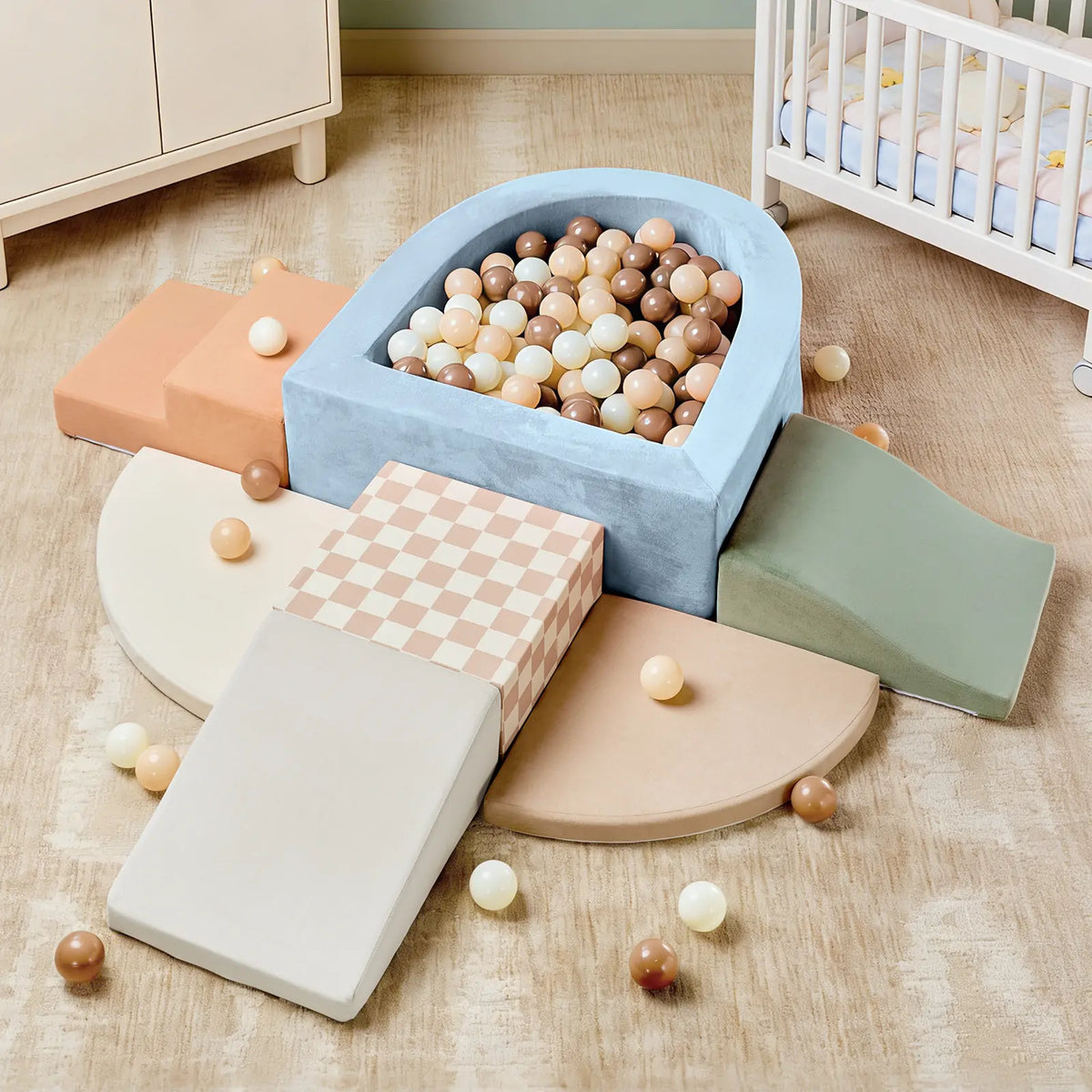
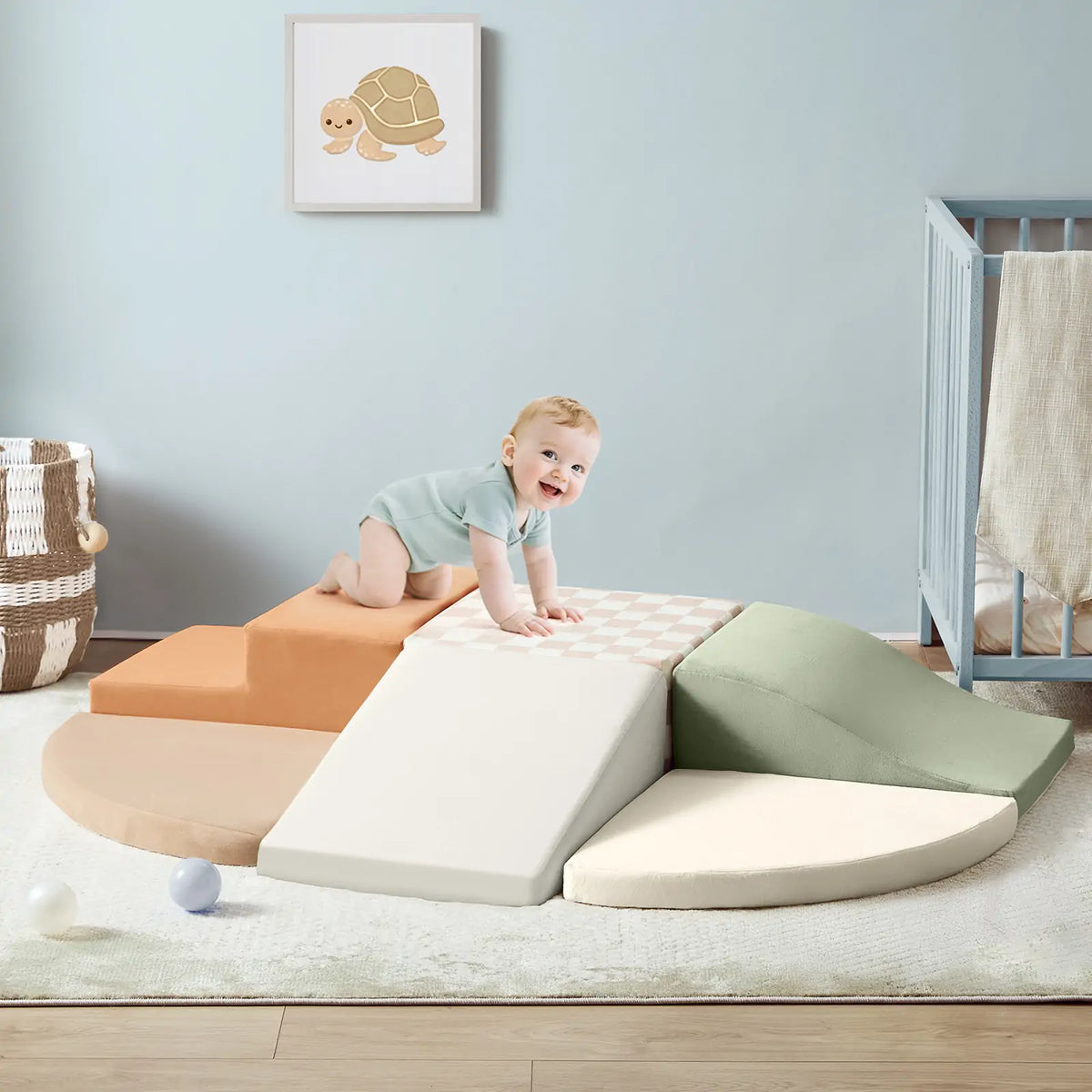
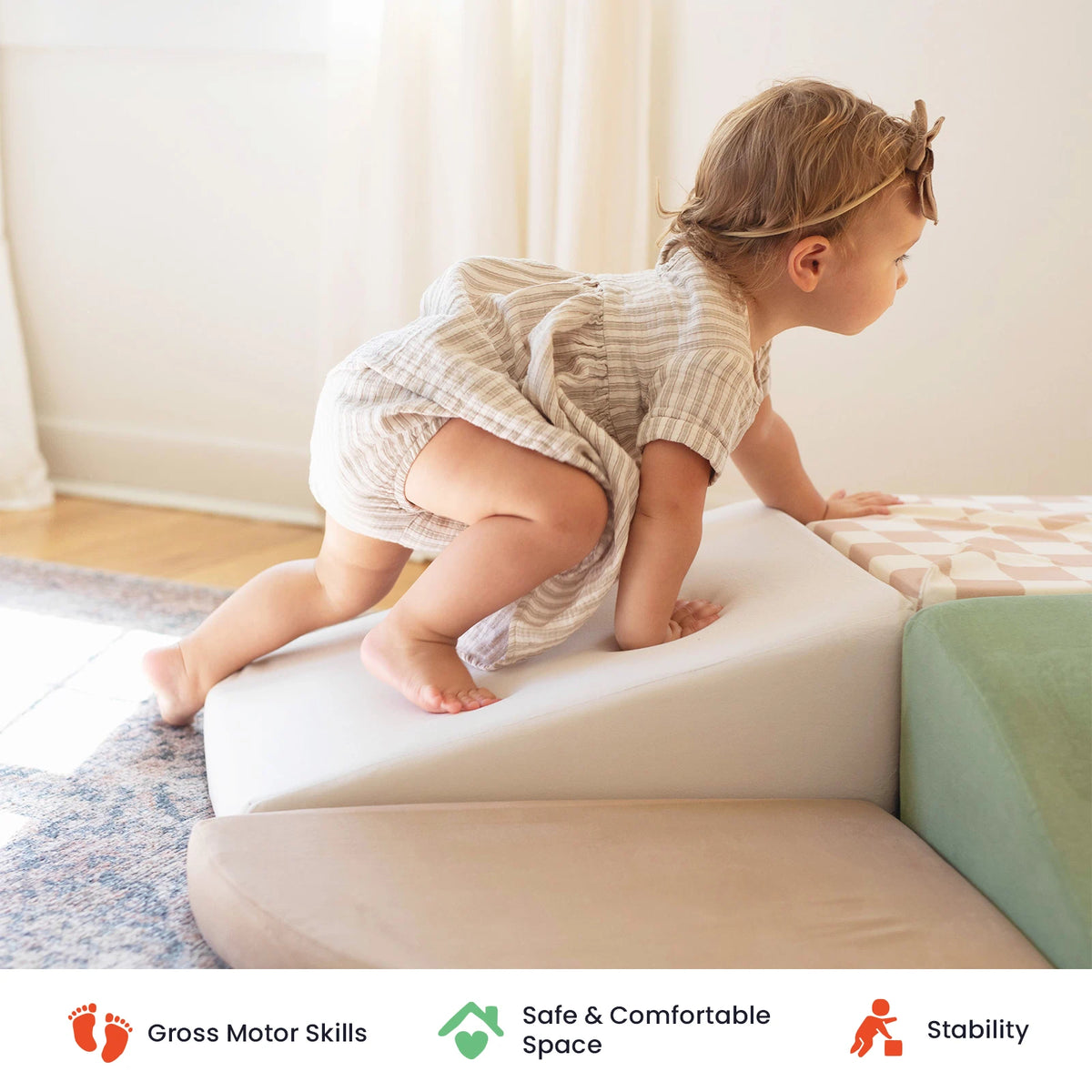
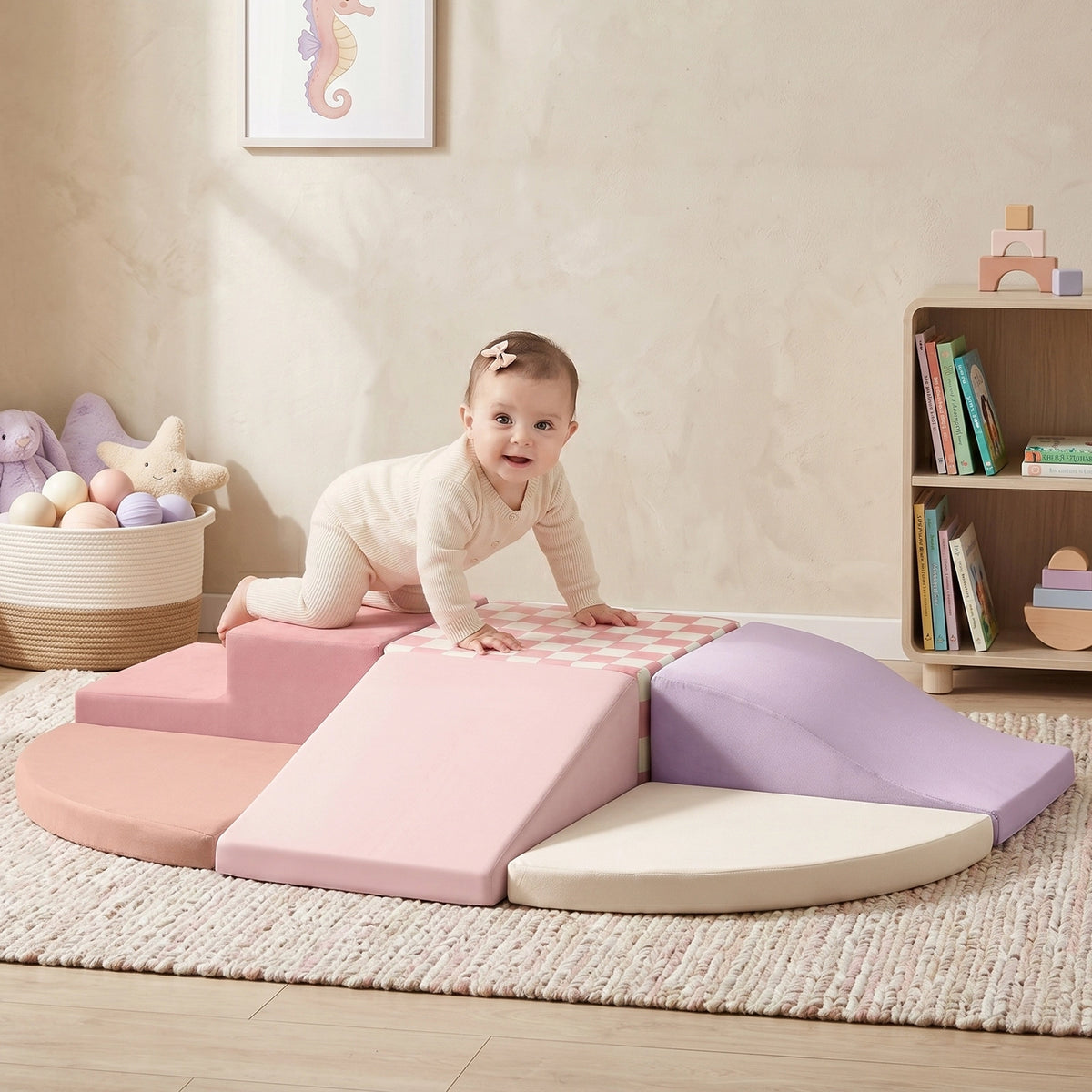
Foam climbing blocks encourage children to climb over, step across, balance, crawl around, and create different play routes.
So which one should you choose?
The best option depends on your child's play style, age, available space, and how much flexibility you want from the toy.
 Play Tunnel vs. Foam Climbing Blocks at a Glance
| Kids’ Play Tunnel | Foam Climbing Blocks | |
|---|---|---|
| Primary movement | Crawling and moving through | Climbing, stepping, balancing, and crawling |
| Play experience | Explore a pathway or enclosed space | Navigate and create different obstacles |
| Pretend play | Hideouts, tunnels, adventures | Forts, obstacle courses, pretend environments |
| Configuration | Some modular designs can be separated and rearranged | Pieces can be arranged in different ways |
| Best for children who enjoy | Crawling, hiding, and exploring | Climbing, building, balancing, and experimenting |
| Movement style | Move through | Move over, around, and between |
The most useful distinction isn't whether a toy can be rearranged. It's how children interact with the space.

What Does a Kids’ Play Tunnel Encourage?
A play tunnel creates an enclosed path that invites children to crawl and explore.
Children can move from one end to the other, peek through openings, hide inside, or incorporate the tunnel into imaginative games.
Play tunnels can be used for:
-
Crawling races
-
Hide-and-seek
-
Peekaboo
-
Pretend adventures
-
Simple indoor obstacle courses
-
Exploring different parts of a play space
For children who enjoy small spaces and the excitement of discovering what is around the next corner, a tunnel can turn ordinary floor play into an adventure.
A Modular Tunnel Can Offer More Than One Setup
A play tunnel doesn't have to remain one fixed structure.
A 3-in-1 modular crawl tunnel can be separated and rearranged into different configurations. One setup might create a longer crawling route, while another could create smaller sections for hiding, exploring, or pretend play.
This flexibility can be especially useful for families who want to change their child's play environment without adding another large toy.

What Do Foam Climbing Blocks Encourage?
Foam climbing blocks offer a more open-ended approach to active play.
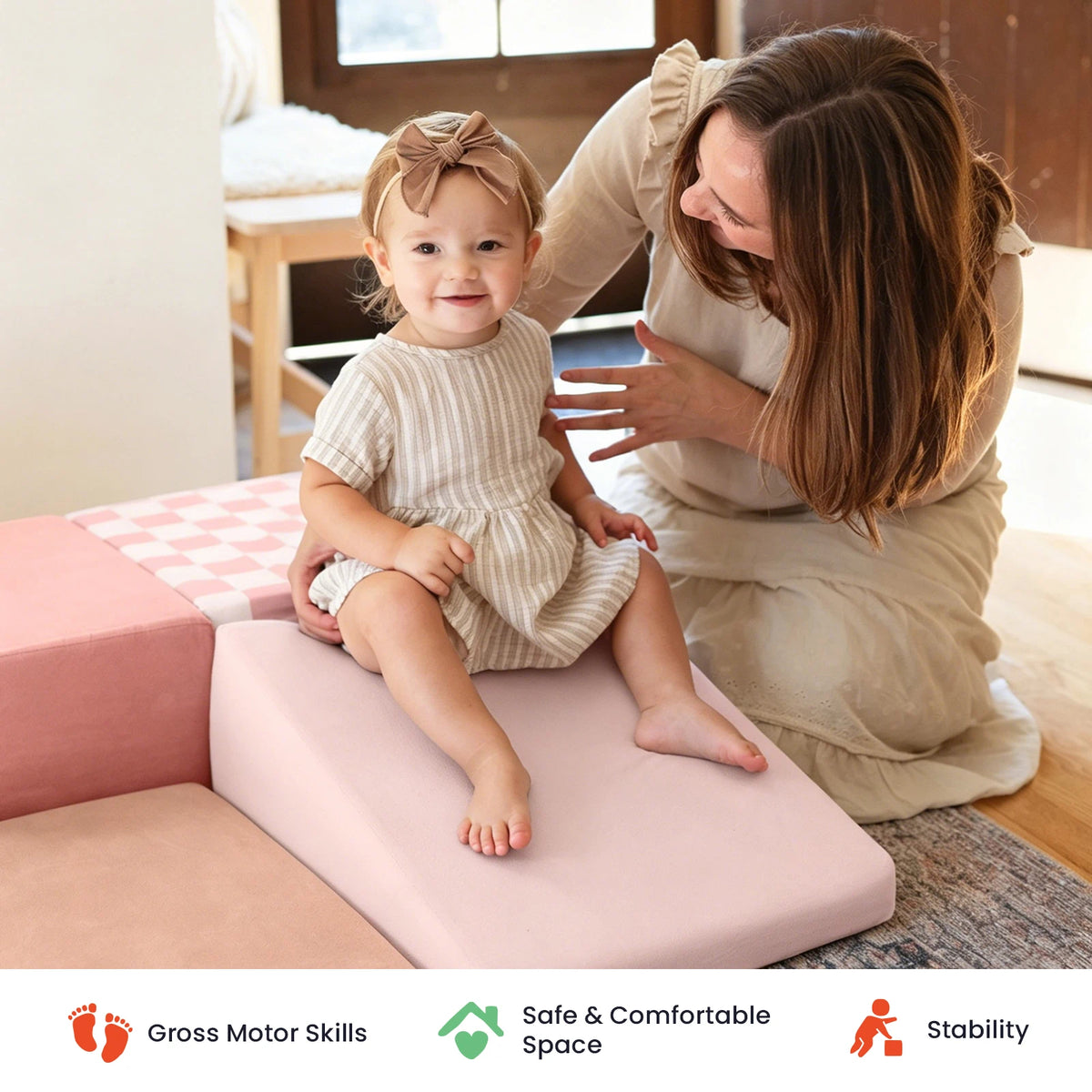
Rather than simply moving through an enclosed pathway, children can interact with different shapes by climbing, stepping, crawling, balancing, and navigating around obstacles.
Depending on how the pieces are arranged, children can:
-
Climb onto a soft block
-
Crawl over an obstacle
-
Step from one piece to another
-
Practice balancing
-
Build a simple obstacle course
-
Create a fort or pretend-play space
-
Rearrange the pieces into a new setup
There isn't necessarily one correct way to use foam climbing blocks. Children can experiment with different arrangements and create new routes as they play.

The Biggest Difference: Through vs. Over
If you're comparing the two, this simple idea can help:
Play Tunnel: Move Through
A tunnel gives children a pathway to explore.
They crawl inside, move forward, peek out, turn around, and discover what is on the other side.
Foam Climbing Blocks: Move Over and Around
Climbing blocks create obstacles that children can navigate in different directions.
They may climb up, step down, crawl over, move around, or rearrange the pieces before trying again.
Neither type of toy is inherently better.
They simply offer different ways to move and play.

Which One Is Better for Your Child?
Think about what your child naturally enjoys doing.
A Play Tunnel May Be a Good Fit If Your Child Loves:
Crawling: Your child enjoys getting down on the floor and moving through spaces.
Hiding: Your child likes creating small spaces to hide, peek out, or play hide-and-seek.
Exploring: Your child enjoys moving toward a destination and discovering what comes next.
Pretend play: A tunnel can become a cave, secret passage, campsite, or anything else your child imagines.

Foam Climbing Blocks May Be a Good Fit If Your Child Loves:
Climbing: Your child enjoys getting onto, over, and around different surfaces.
Challenges: Your child likes figuring out how to navigate an obstacle.
Building: Your child enjoys changing the arrangement and creating new structures.
Variety: You want a play setup that can become different obstacle courses and configurations.

What About Toddlers and Preschoolers?
Both play tunnels and foam climbing blocks can work in an indoor active-play space. The right choice depends on your child's individual interests and current abilities.
Younger Crawlers
A play tunnel can provide a straightforward invitation to crawl and explore.
The enclosed space can also add a sense of discovery to everyday floor play.
Active Toddlers
As children become more confident moving around, a modular tunnel or foam climbing blocks can provide opportunities for more varied movement.
Parents can start with simple configurations and change the setup as their child's interests develop.
Preschoolers
Older toddlers and preschoolers may enjoy more elaborate pretend-play setups and obstacle courses.
Foam climbing blocks can be arranged into changing routes, while a modular tunnel can add a crawling or enclosed section to the course.
Rather than choosing based on age alone, consider what your child already enjoys and what kind of play you want to encourage next.

Which Is Better for Small Spaces?
For families without a dedicated playroom, flexibility can be just as important as the size of the toy.
Look for play equipment that can:
-
Be rearranged when needed
-
Fit different areas of the room
-
Offer multiple play configurations
-
Be moved or stored when the space is needed for something else
A modular 3-in-1 crawl tunnel can be separated and rearranged instead of being limited to one permanent configuration.
Foam climbing blocks offer similar flexibility because changing the arrangement can create different play layouts.
The goal isn't necessarily to find the smallest toy.
It's to find a toy that makes better use of the space you already have.

Can You Use a Play Tunnel and Foam Climbing Blocks Together?
Yes. Combining them can create a more varied indoor obstacle course.
For example:
Crawl through the tunnel → climb over a foam block → step across another piece → crawl back through the tunnel.
Two simple play elements can become a changing movement route.
You can also switch the order or rearrange the pieces to create a different challenge.
This gives children opportunities to move in several ways rather than repeating the same movement throughout the entire play session.

Quick Parent Checklist
Still deciding?
Ask yourself:
Does my child mainly enjoy crawling and exploring enclosed spaces?
→ A play tunnel may be a natural choice.
Does my child enjoy climbing, stepping, and navigating obstacles?
→ Foam climbing blocks may be a better fit.
Does my child enjoy both?
→ Consider combining the two.
Do I have limited space?
→ Look for modular or configurable designs that can be changed when needed.
Do I want the play setup to change over time?
→ Prioritize toys that offer multiple configurations rather than a single fixed arrangement.

Frequently Asked Questions
Are play tunnels good for toddlers?
Play tunnels can be a simple way to encourage crawling, exploring, and active indoor play. Parents should choose a tunnel that is appropriate for their child's age and abilities and follow the manufacturer's safety and supervision guidelines.
Are foam climbing blocks good for indoor play?
Foam climbing blocks can provide opportunities for children to climb, crawl, step, balance, and navigate different obstacles indoors. Their configurable nature also allows families to create different play setups.
Can a play tunnel be part of an indoor obstacle course?
Yes. A tunnel can be combined with soft climbing blocks and other age-appropriate play equipment to create a simple indoor obstacle course.
Can a modular play tunnel be rearranged?
Some modular play tunnels are designed to be separated and reconfigured. A 3-in-1 design can give families multiple ways to arrange the pieces instead of relying on a single fixed layout.
Should I choose a play tunnel or foam climbing blocks?
Consider your child's preferred movement. If they primarily enjoy crawling, hiding, and exploring enclosed spaces, a play tunnel may be a good fit. If they enjoy climbing, balancing, and navigating obstacles, foam climbing blocks may offer more variety. If they enjoy both, the two can complement each other.

The Bottom Line
A kids’ play tunnel and foam climbing blocks can both support active indoor play, but they create different movement experiences.
A play tunnel is primarily about crawling through, exploring, hiding, and discovering.
Foam climbing blocks are about climbing over, stepping across, balancing, crawling around, and creating new routes.
But modular designs can blur the line. A 3-in-1 crawl tunnel that can be separated and rearranged can offer multiple ways to create a play environment, while foam climbing blocks can be continually reconfigured into new challenges.
So instead of asking, "Which toy is better?", ask: "What kind of play does my child enjoy, and how flexible do I want the play space to be?"
For some families, the answer may be a play tunnel. For others, it may be foam climbing blocks. And for children who love both crawling and climbing, combining the two can create an indoor active-play environment with even more possibilities.
Explore Flexible Active Play with Tiny Land
Looking for a play setup that can change with your child's interests?
Tiny Land's active-play collection includes flexible designs created for crawling, climbing, exploring, and imaginative play.
A modular 3-in-1 crawl tunnel can be separated and rearranged to create different configurations, giving families more ways to use the same play set at home.
Explore Tiny Land's active-play toys and find a setup that fits your family's space and play style.