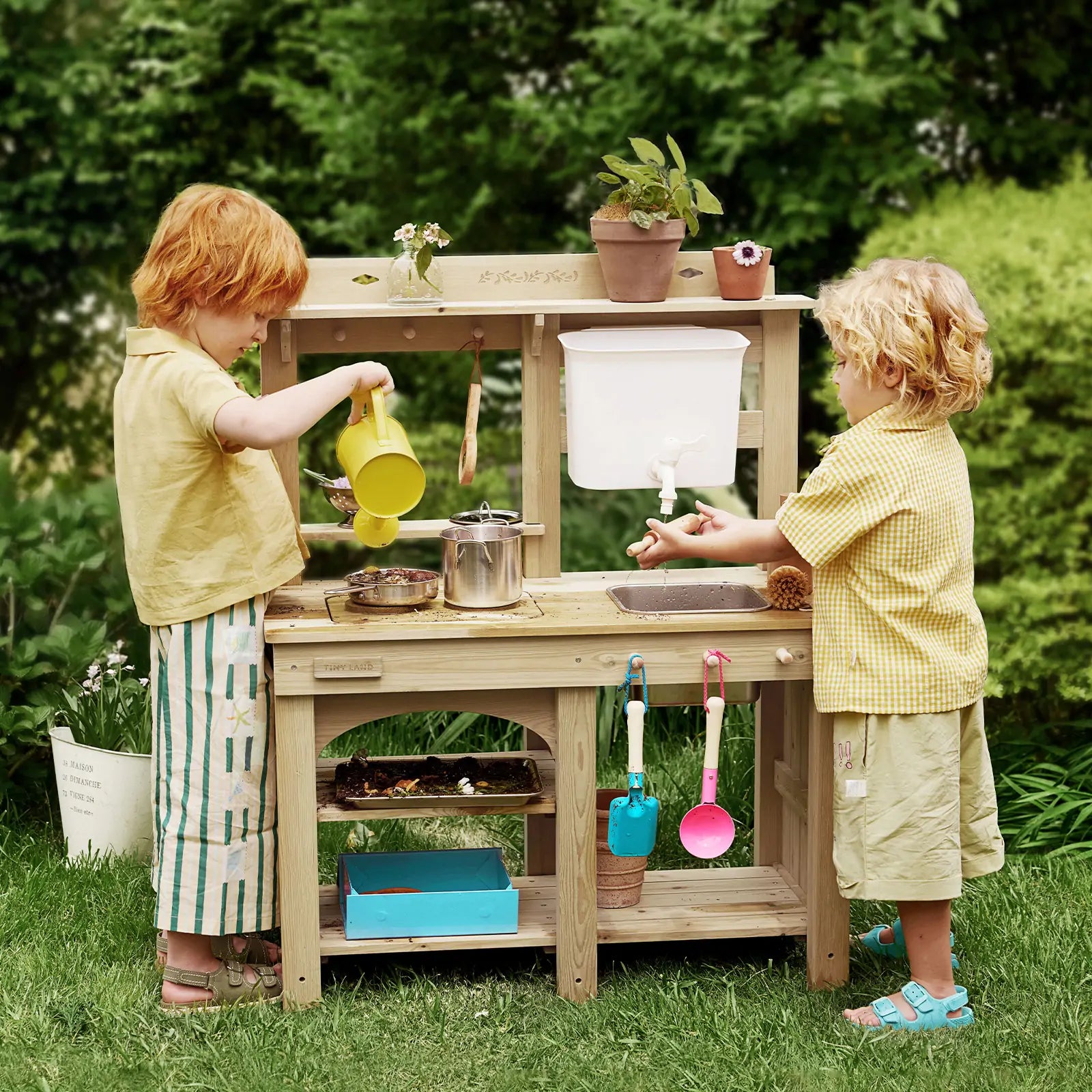

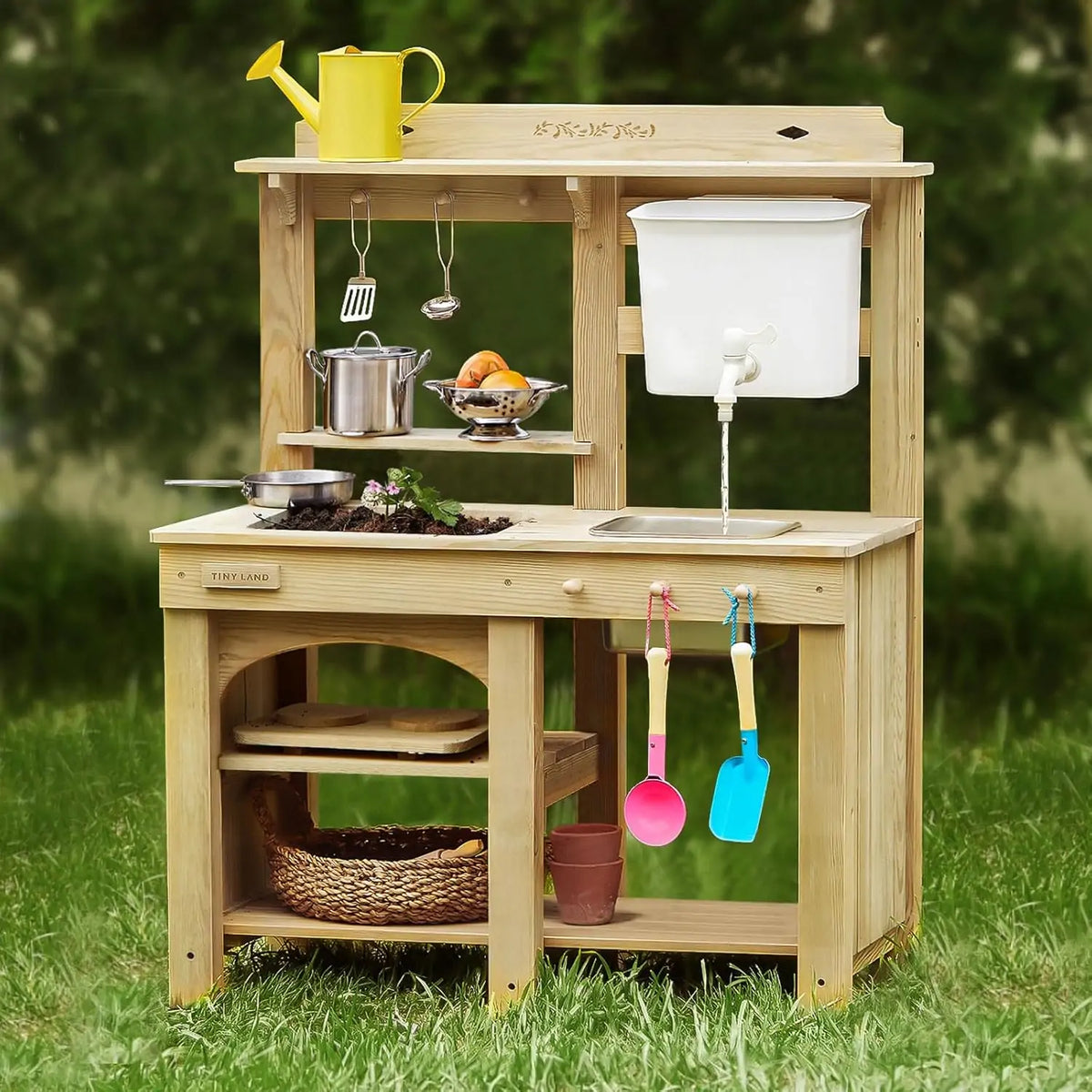
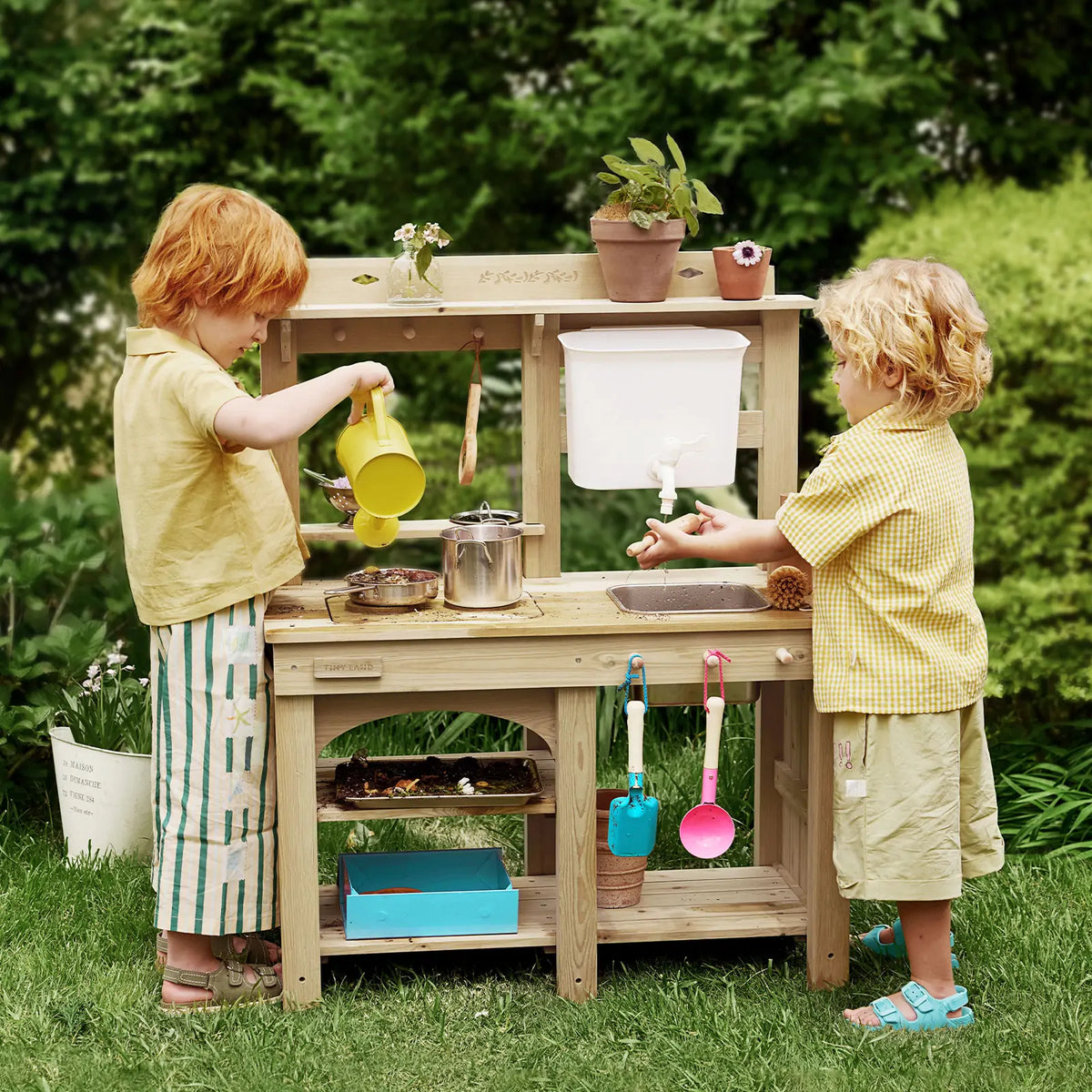




A mud kitchen may look like just a place for messy play, but for young children, it can be one of the richest outdoor toys for learning. When children scoop mud, pour water, stir with kitchen utensils, press flower petals into mud cakes, or serve a mud pie to a friend, they are building fine motor skills in a fun and engaging way.
Mud kitchens bring together outdoor play, sensory play, imaginative play, and real hands on discovery. There is no right or wrong way to play. Children can create pretend meals, mix magic potions, bake flower cakes, or invent imaginary dishes using mud, water, leaves, sticks, and other natural materials. While it feels like simple fun, mud kitchen play supports fine motor skill development, gross motor skills, communication skills, problem solving skills, and confidence.

How Mud Kitchens Build Fine Motor Skills
Fine motor skills are the small movements children use in their hands, fingers, and wrists. These skills help with everyday tasks such as holding a pencil, using scissors, buttoning clothes, opening containers, and feeding themselves.
Mud kitchen fine motor skills develop naturally because children use their hands in many different ways. They grip spoons, pinch flower petals, squeeze squelchy mud, twist lids, scoop soil, stir water, and press mud into bowls or trays. These small repeated actions strengthen hand muscles and improve hand eye coordination.
The best part is that children do not feel like they are practicing a skill. They are simply playing. A child making mud cakes may be working on finger strength. A child pouring water from one cup to another may be building control and coordination. A child using kitchen tools to mix mud is learning how to guide small movements with purpose.

Outdoor Play Supports the Whole Body
Mud kitchens do not only support fine motor development. They also help children use gross motor skills. During outdoor mud play, children bend, squat, reach, carry water, move bowls, collect natural materials, and walk around the play area. These larger movements support physical development, balance, strength, and physical coordination.
An outdoor mud kitchen also gives children the benefit of fresh air and movement. Instead of sitting still with a screen, children play in the natural environment, use their bodies, and spend time exploring the natural world. This kind of outdoor play is important for a child’s health because it encourages active movement, curiosity, and independent discovery.
Sensory Play with Mud, Water, and Nature
Mud play is a powerful sensory experience. Children touch different textures, smell wet soil, hear water splash, and see how mud changes when they add more water. They may notice that dry dirt feels powdery, wet mud feels sticky, and squelchy mud makes a funny sound when stirred.
These sensory rich experiences support sensory development and sensory processing. Children learn through their senses before they can fully explain what they are learning. When kids explore mud, water, stones, leaves, and flower petals, they begin to understand weight, texture, temperature, and cause and effect.
For example, they may discover that adding too much water makes the mud runny, while adding more soil makes it thicker. This simple process supports cognitive development and critical thinking because children are testing ideas and adjusting their actions.

Imaginative Play and Open Ended Play
One of the greatest benefits of mud kitchens is open ended play. A mud kitchen does not tell children exactly what to do. It gives them materials and space to create their own ideas.
Today, the outdoor play kitchen may be a cafe. Tomorrow, it may become a potion lab, bakery, garden restaurant, or science station. Children may create pretend meals for dolls, make magic potions for friends, or prepare mud pie for a pretend picnic. This encourages creativity and allows children to build stories through role play.
Mud kitchens encourage imaginative play because they combine real-world kitchen actions with the freedom of nature. Children imitate what they see adults do in the kitchen, but they also invent their own rules, recipes, and games. That mix of real life and imagination is valuable for child development.

Social and Communication Skills
Mud kitchens are also useful for social and communication skills. When children play together, they need to share tools, take turns, talk about what they are making, and decide who does what. One child might be the chef, another might be the customer, and another might collect leaves for the recipe.
These small moments build social skills and language development. Children practice asking questions, giving instructions, explaining ideas, and solving disagreements. Communication skills mud kitchens support can be very natural: “Can I use the spoon?” “Let’s add more water.” “This is soup.” “Do you want a mud cake?”
Cooperative play also helps build social confidence. Children learn that their ideas matter, but they also learn to listen to others. Sharing tools, working together, and creating pretend meals as a group all support social and communication skills.
Early Math Skills and Problem Solving
Mud kitchen play can also introduce early math skills in a natural way. Children compare big and small containers, count stones, measure water, sort leaves, and notice when one bowl has more mud than another. These are early math ideas, but they happen through play rather than formal teaching.
Problem solving skills also appear again and again. If a mud cake falls apart, a child may add less water. If a bowl is too heavy, they may carry less mud. If a pretend soup looks too thin, they may add more soil. These small experiments build problem solving and critical thinking.

Creating Your Own Mud Kitchen
Parents do not need a perfect backyard to create their own mud kitchen. A small outdoor corner can become a wonderful mud kitchen play area. Add a child-height table or shelf, a few old pots, bowls, spoons, cups, and kitchen tools. Then include natural materials like leaves, sticks, stones, pinecones, and flower petals.
Storage space is helpful, but the setup does not need to be fancy. In fact, simple mud kitchens often lead to better open ended play because children are free to use their imagination.

Final Thoughts
Mud kitchens are more than messy fun. They support fine motor skills, gross motor skills, sensory play, communication skills, imaginative play, physical development, and cognitive development. Through mixing mud, pouring water, sharing tools, and creating pretend meals, children learn in a way that feels natural and joyful.
A child making a mud pie may look like they are only playing, but they are also building coordination, creativity, independence, social confidence, and a deeper connection with the natural world.