




Outdoor time is not just a break from indoor routines. For kids, it can become one of the best ways to learn. With the right outdoor educational toys, a backyard, deck, patio, or school yard can turn into a space for outdoor play, sensory play, active play, creativity, and hands on learning.
The best outdoor toys do more than keep children busy. They help kids explore the world, build confidence, practice movement, and use their imagination. Whether children are playing with sand, pouring water, walking across balance beams, using magnifying glasses, or creating outdoor games with friends, they are learning through real experiences.

Why Outdoor Educational Toys Matter
Children learn by doing. They want to touch, move, build, test, imagine, and discover. Outdoor educational toys support this natural curiosity because they make learning feel like play.
A child digging in sand is exploring texture and movement. A toddler pouring water from one cup to another is learning cause and effect. Preschoolers playing active games are practicing balance, coordination, and social skills. Children using natural materials like leaves, sticks, rocks, and flowers are learning how to observe the environment around them.
This kind of outdoor learning gives kids fresh air, movement, and freedom. It also helps them focus in a different way from the classroom. Instead of only listening or watching, children learn with their hands, bodies, and senses.

Outdoor Play Supports Imagination and Creativity
One of the biggest benefits of outdoor play is that it gives kids room to imagine. A simple yard can become a restaurant, a forest classroom, a construction site, or a tiny world full of adventure.
Imaginative play helps children create stories, solve problems, and express ideas. A stick can become a tool. A table can become a shop. A patch of sand can become a cooking station. A few toys, natural materials, and open space can lead to hours of creative playtime.
Outdoor educational toys should not control every step of play. The best outdoor toys leave space for free play, where children can decide what to create and how to use each item. This freedom helps build creativity, independence, and confidence.
Sensory Play and Hands On Learning
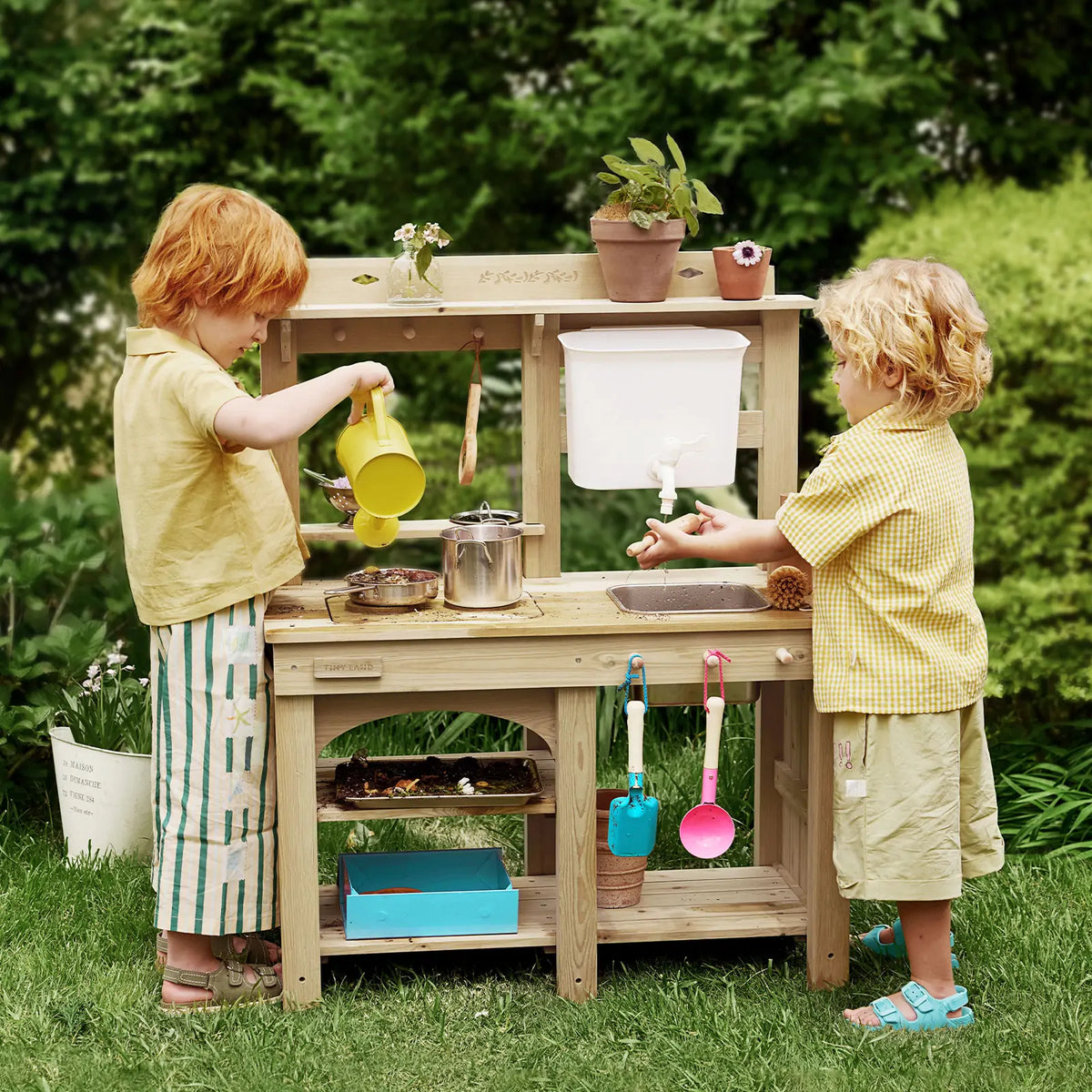
Sensory play is one of the easiest ways to make outdoor learning meaningful. Kids naturally love water play, sand, mud, dirt, and different textures. These materials may look simple, but they offer rich learning opportunities.
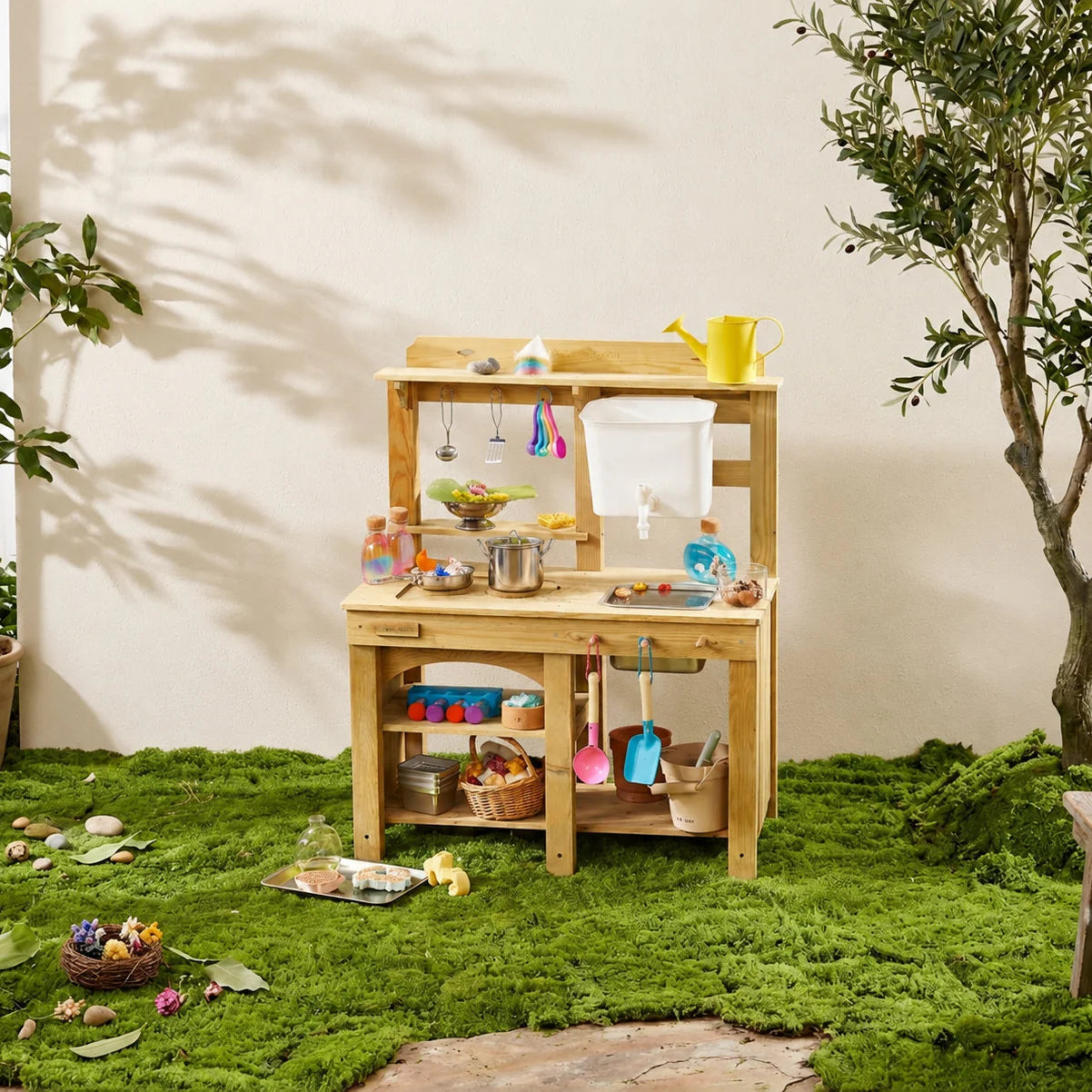
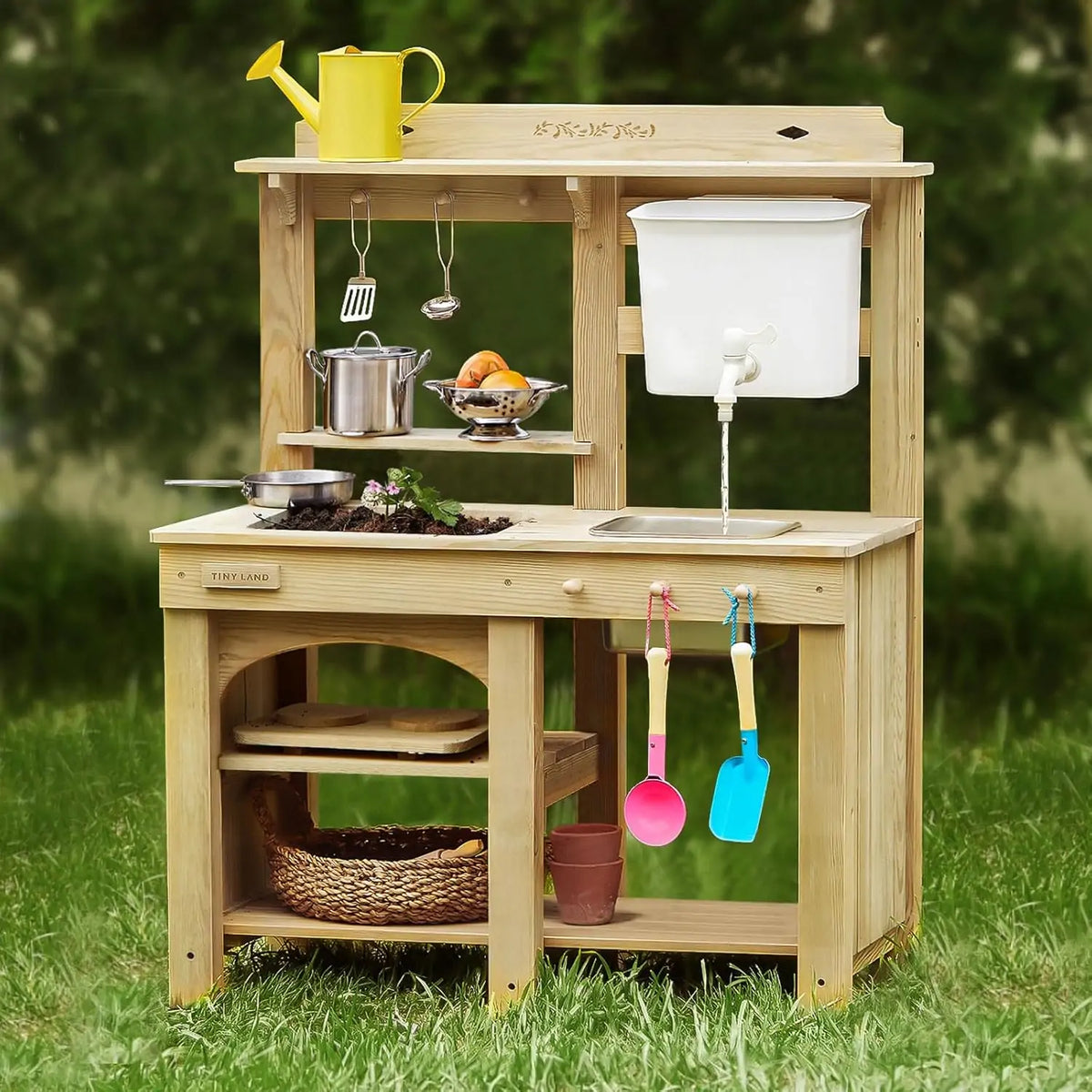
A water table, sand table, mud kitchen, buckets, cups, and pouring tools can support sensory exploration. Children can mix sand and water, scoop dirt, pour from one container to another, or create pretend recipes using leaves and flowers.
Through this kind of play, children learn about weight, texture, movement, and cause and effect. They also practice focus and problem solving. For example, a child may wonder why dry sand falls apart but wet sand can hold a shape. That small moment of discovery is real learning.

Outdoor Toys for Active Play
Kids need movement. Outdoor toys that encourage active play help children build balance, strength, and coordination.
Balance beams, stepping stones, balls, hoops, obstacle course pieces, and active games are great choices for outdoor learning. These toys support movement while also giving children small challenges to overcome.
A toddler may slowly walk across a low balance beam. Older kids may create a more difficult backyard challenge with friends. In both cases, children are practicing body control, patience, and confidence.
Active play also supports focus. After running, jumping, climbing, or balancing, many kids feel calmer and more ready for quieter activities. That makes outdoor play valuable not only for the body, but also for emotional balance.
STEM Learning in a Natural Setting
Outdoor spaces are perfect for early STEM learning. Children do not always need a formal lesson to learn science, math, or problem solving. Nature gives them plenty to explore.
Simple tools like magnifying glasses, measuring cups, garden tools, collection trays, and bug viewers can turn the backyard into an outdoor classroom. Kids can observe leaves, compare rocks, watch insects, measure water, or notice how shadows change in the sun.
This type of learning encourages critical thinking. Children ask questions, test ideas, and make connections. They may wonder why some objects float, how plants grow, or why water moves faster on a sloped surface. These small discoveries help children learn in a natural setting.

Building Social Skills Through Outdoor Games
Outdoor games are also helpful for building social skills. When kids play with friends, siblings, parents, or educators, they practice communication, sharing, teamwork, and patience.
Group games teach children how to follow rules, take turns, and solve small disagreements. They also give kids a chance to create their own rules and challenges. This is especially useful for preschoolers and younger children who are still learning how to play with others.
Outdoor play often feels less pressured than indoor structured lessons. Children can move, laugh, try again, and learn naturally through interaction.
Choosing Outdoor Educational Toys for Different Ages
When choosing toys for kids, parents should think about age, interests, space, and safety.
For toddlers, choose simple toys that support water play, sand play, pouring, stacking, movement, and sensory exploration. Toddlers enjoy toys they can touch, carry, splash, and use again and again.
For preschoolers, look for outdoor toys that encourage pretend play, problem solving, active games, crafts, and discovery. Mud kitchens, outdoor tables, nature tools, balance toys, and simple sports games can work well.
For older children, choose toys that add more challenge. STEM learning tools, nature exploration kits, outdoor building toys, obstacle games, and creative projects can keep them engaged.
The best choice is usually a toy that can grow with the child. Open-ended toys are useful because children can use them in different ways as their skills and imagination grow.

Outdoor Learning for Small Spaces
You do not need a large backyard to create meaningful outdoor learning. A small yard, deck, patio, or even a flat surface outside can become a play area.
Parents can set up a small water play station, a sensory bin, a nature table, a sand tray, or a simple balance path. A few tools, natural materials, and enough room to move can create a fun and engaging outdoor space.
The key is to keep it easy. Outdoor educational toys should be simple to use, easy to clean, and flexible enough for different types of play.

Final Thoughts
Outdoor educational toys help children learn through fresh air, movement, imagination, and hands on discovery. They support outdoor play, sensory play, active play, STEM learning, social skills, creativity, coordination, and problem solving.
For parents and educators, the goal is not to make outdoor time feel like another classroom lesson. The goal is to create a space where children can explore, imagine, move, and discover at their own pace.
When kids have the right outdoor toys, the backyard can become a place full of fun, learning, confidence, and creativity. That is the real benefit of outdoor educational toys: they help children grow while simply enjoying the world around them.