



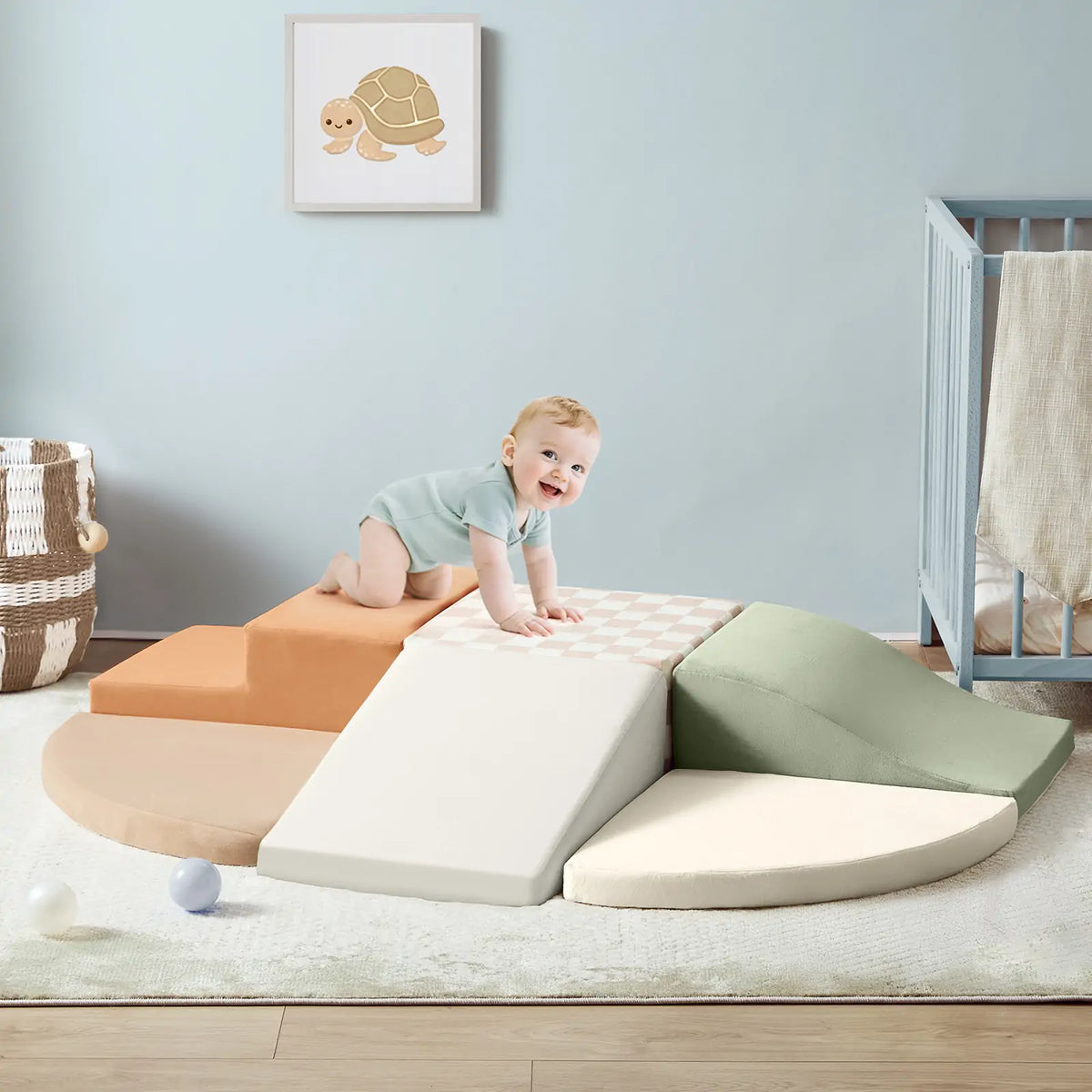
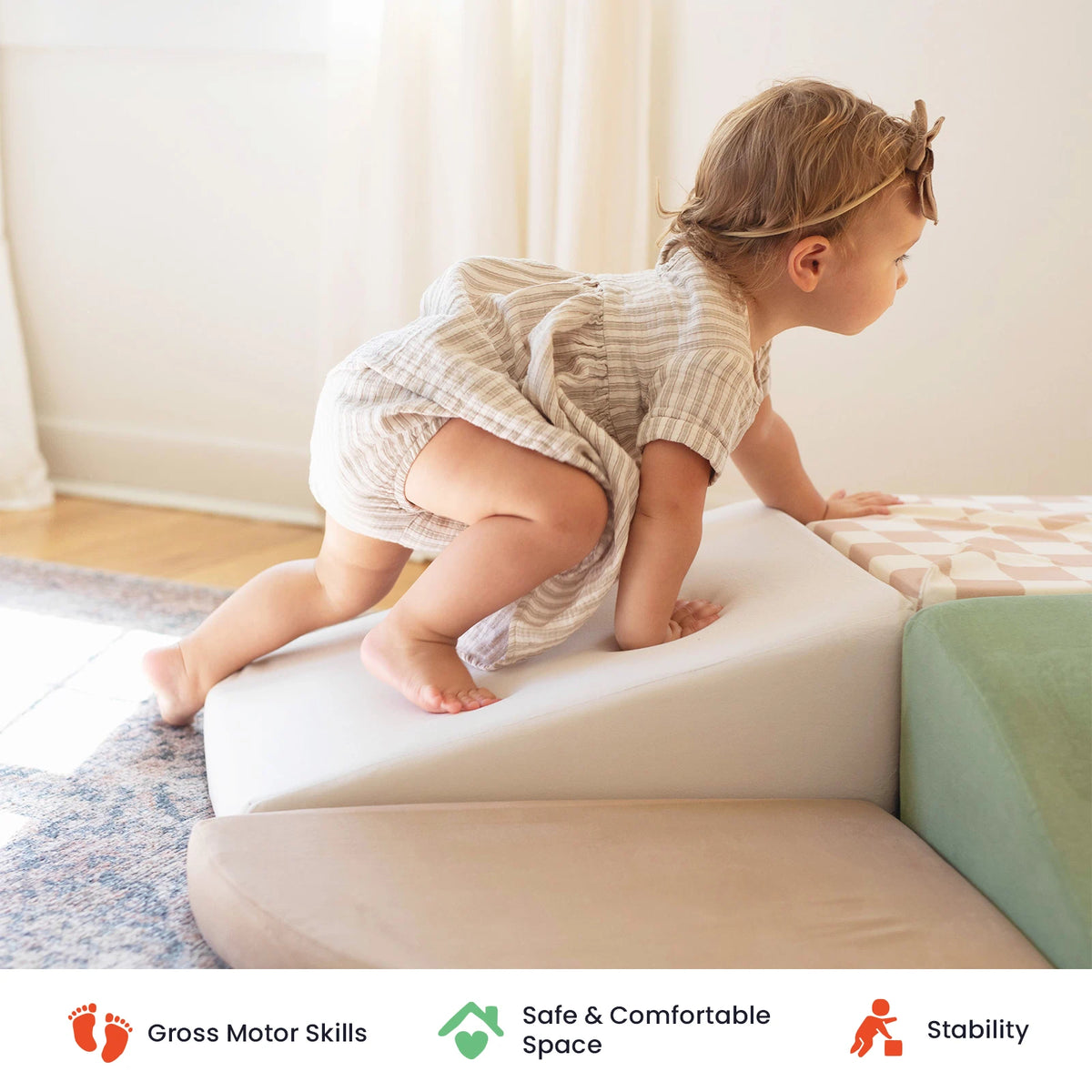


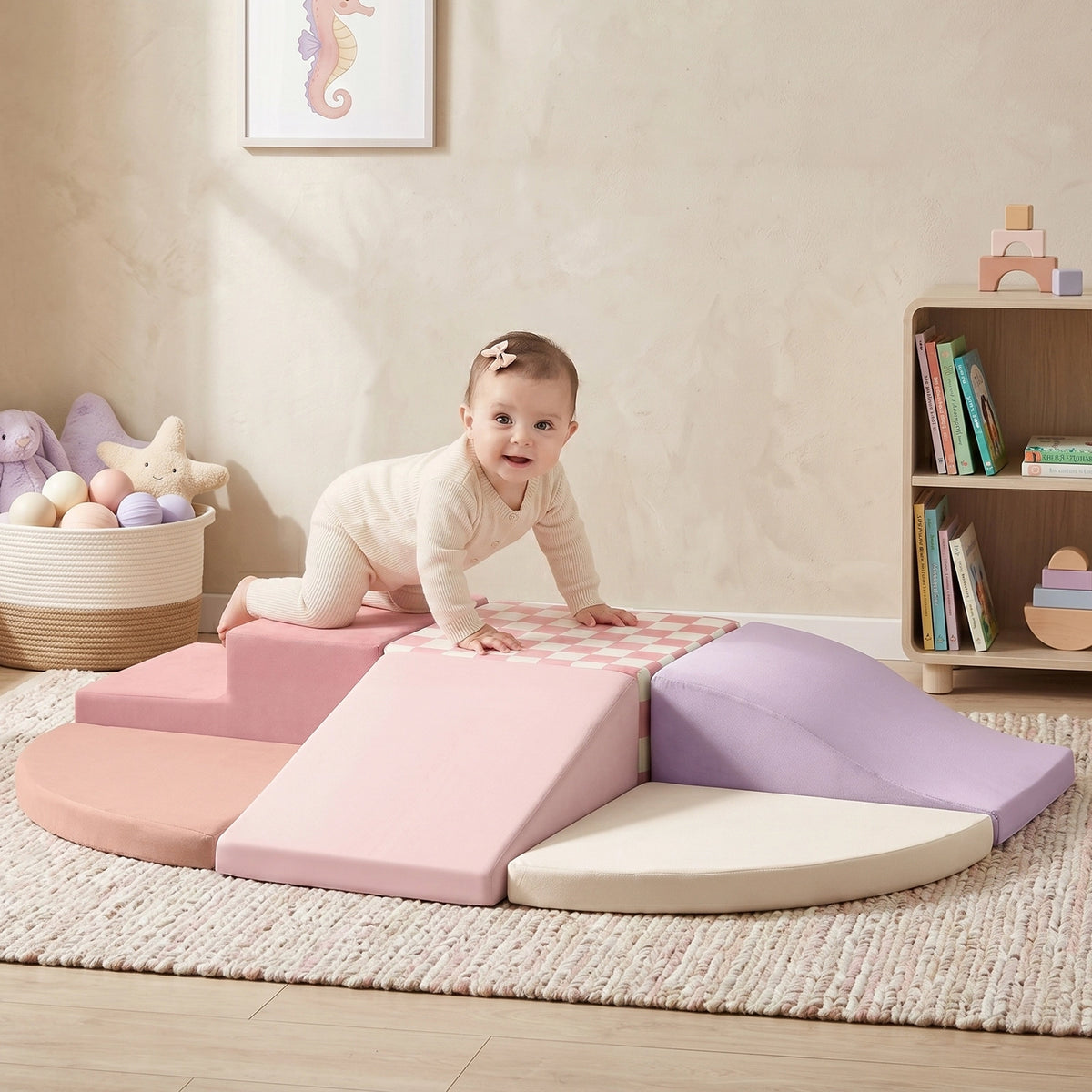
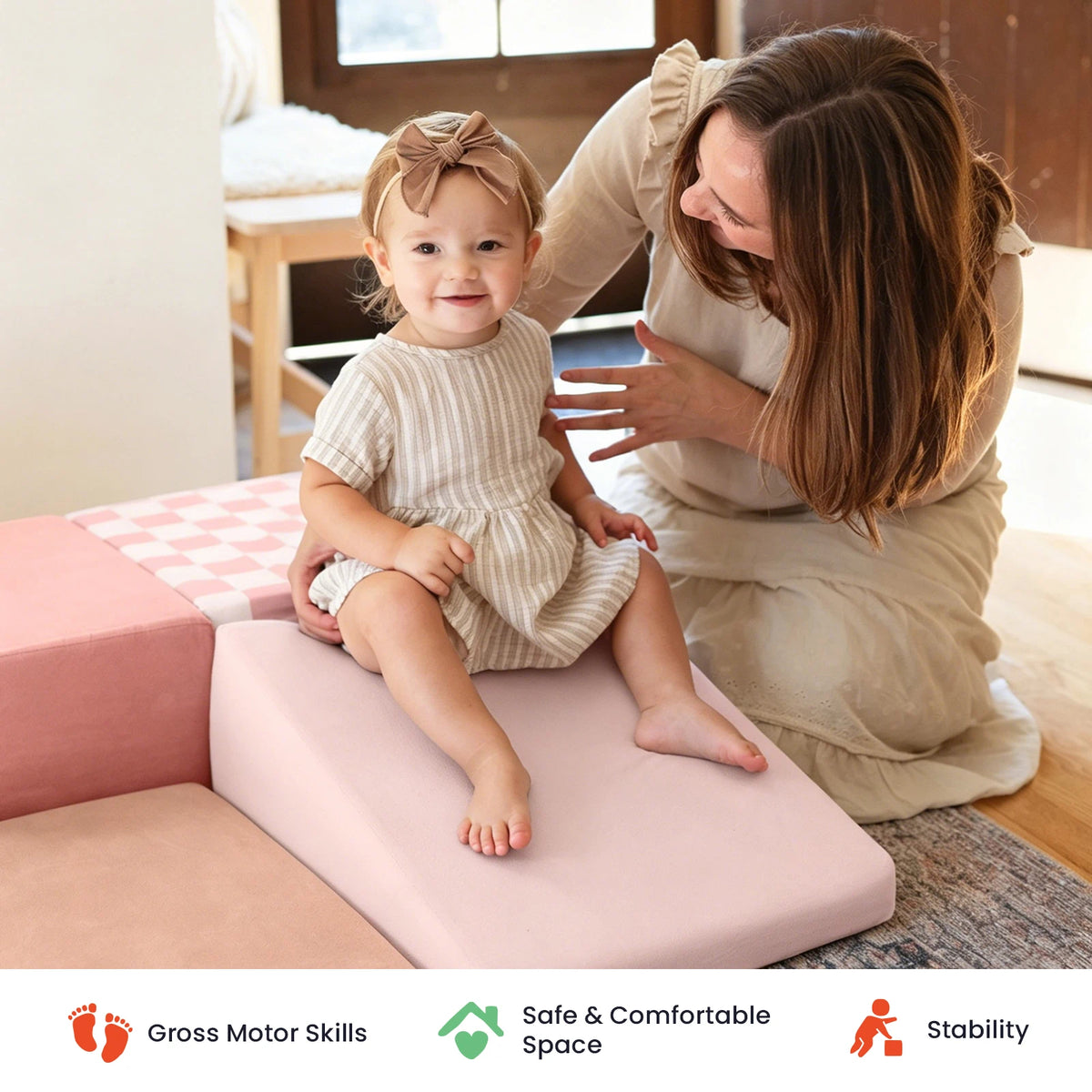


A Pikler triangle is a wooden climbing structure designed for children to explore climbing and movement through play. Its simple frame and rungs give toddlers a dedicated place to climb, step, balance, and move under adult supervision.
For parents considering a Pikler triangle for toddlers, choosing the right one involves more than looking at its appearance. Age guidance, weight limits, stability, available space, materials, and intended use are all worth checking before bringing a climbing triangle into your home.

What Is a Pikler Triangle?
A Pikler triangle is a freestanding triangular climbing structure made of wood, created by Hungarian pediatrician Dr. Emmi Pikler in the 1930s, typically with a wooden frame and climbing rungs. Unlike a toy with one fixed activity, a Pikler climbing toy can be used in different ways as children explore movement and play.
When choosing a Pikler triangle, always follow the manufacturer's instructions for age, weight, setup, and use.
Why Families Use It for Indoor Movement Play
A toddler climbing toy can provide a designated space for indoor active play, particularly when families want to create a movement area at home.
Children can climb up and down the rungs, move around the structure, or use it for fun, self-directed movement and independent play, as well as incorporate it into simple imaginative games.
Because the play is not limited to one activity, a Pikler triangle can become part of different toddler movement activities.
For parents, the key consideration is whether the structure fits both the child's needs and the available play space.

How the Pikler Climbing Triangle Differs from Other Climbing Toys
Pikler triangles are specifically designed around a triangular climbing frame. Other indoor climbing toys may have different shapes, heights, surfaces, or intended uses.
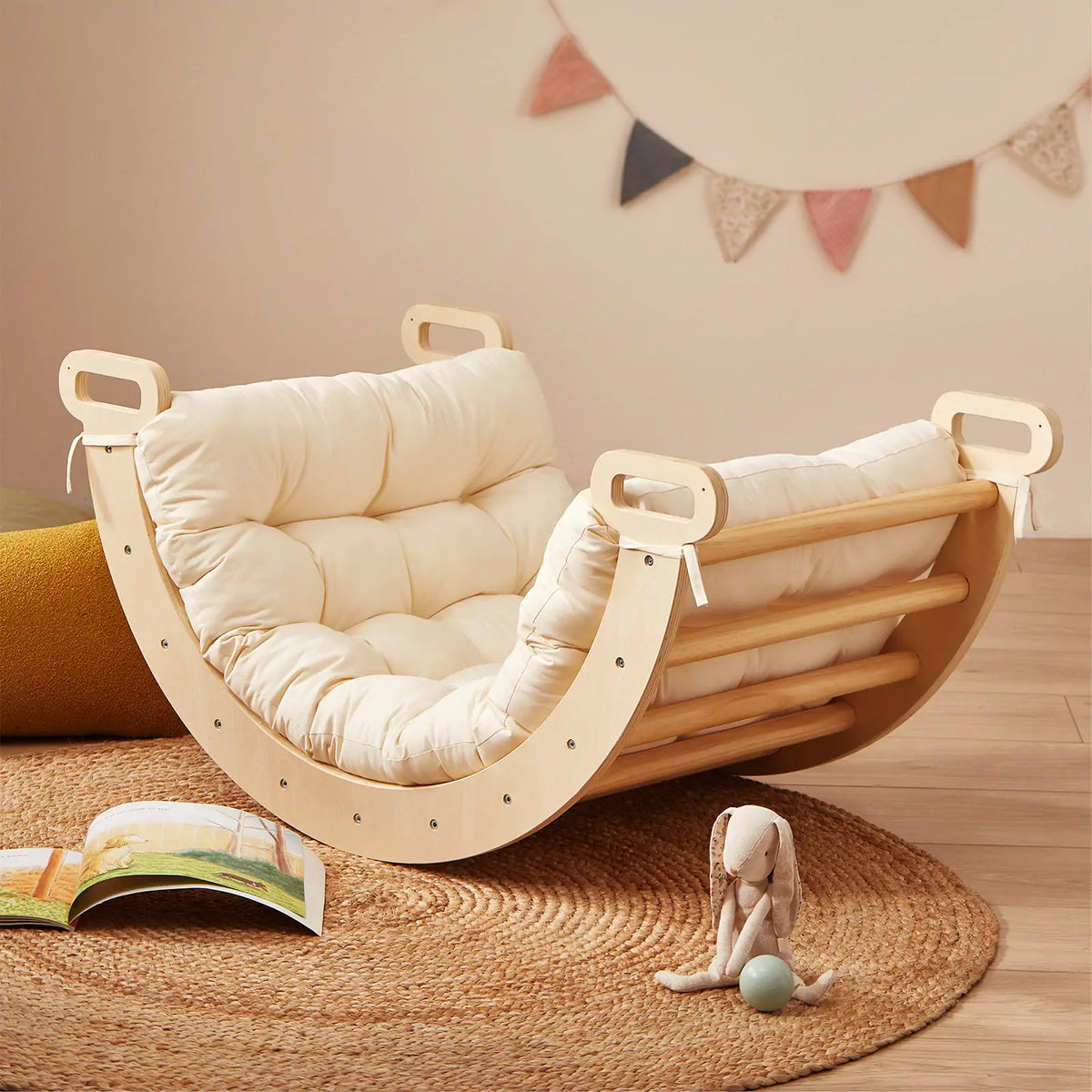
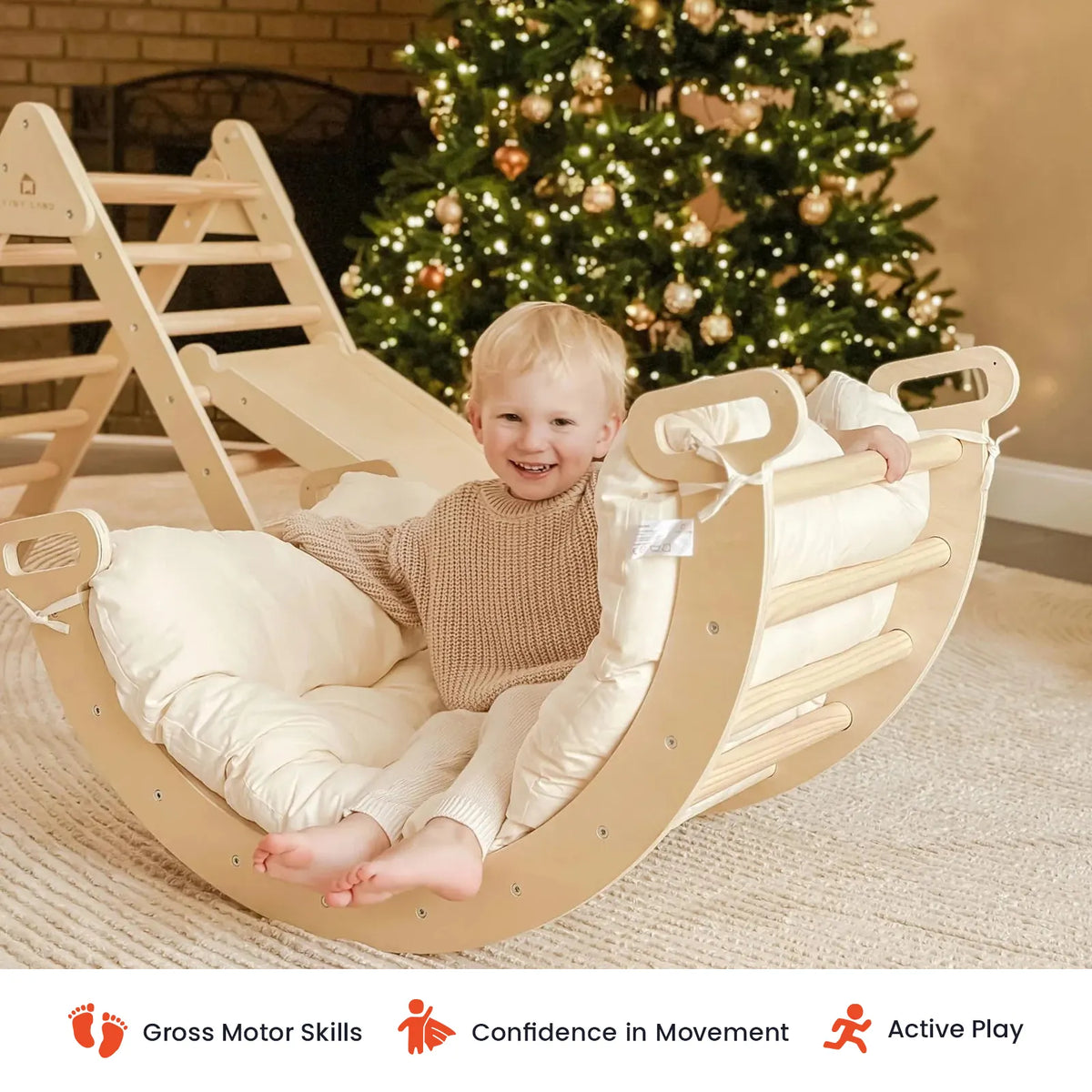
A Pikler triangle may be a useful option for families looking for a dedicated climbing structure rather than a multi-function play system, since some models are sold as a broader climbing set with add-ons like a climbing arch or balance beam instead of a standalone triangle.
When comparing different climbing toys, consider:
-
The manufacturer's recommended age range
-
Maximum supported weight
-
Overall dimensions and required floor space
-
Stability and setup requirements
-
Construction materials
-
Whether additional accessories are compatible
-
How the product can be stored when it is not being used

Pikler Triangle Benefits for Toddlers
A Pikler triangle set gives toddlers a physical structure to explore through supervised movement play.
Its benefits should be considered in terms of the play opportunities it provides, including self-paced climbing under supervision that can help toddlers build confidence and independence, supporting growing confidence rather than promising specific developmental outcomes.
Gross Motor Skills Practice
Climbing involves movements such as stepping, reaching, gripping, and changing body position, which helps build gross motor skills and broader motor skills.
A child can climb up and down the rungs, pause between movements, or repeat a familiar climbing path. Repeated climbing can also support fine motor skills through gripping and hand placement. These activities provide opportunities for gross motor play as part of an indoor movement routine.
Children should be allowed to explore at a pace that is appropriate for them rather than being encouraged to climb higher or faster.
Balance and Body Awareness
Climbing also involves paying attention to where the body is positioned in relation to the structure.
As children step between rungs or change direction, they can build spatial awareness by judging where their bodies are in relation to the rungs and frame while exploring different positions and movements.
This makes a Pikler triangle suitable for balance and climbing activities during supervised play.
The experience will vary from child to child, so the focus should remain on safe exploration rather than achieving a particular developmental milestone.

Open-Ended and Independent Play
A Pikler triangle can support open ended movement play because there is not necessarily one correct way to use it.
Depending on the child's interests and the setup, the structure can become a climbing challenge, pretend mountain, or part of a simple indoor play scene, which can encourage creative play and simple problem solving during supervised play.
This flexibility can make a Pikler triangle useful for families who prefer toys that can be incorporated into different types of play over time.
Pikler Triangle Play Ideas
Simple activities can help children become familiar with a climbing triangle while keeping the focus on supervised movement and exploration.
Climb Up and Down
The most straightforward activity is simply climbing up and down the triangle.
An adult can stay nearby while the child explores the ladder-like rungs. This kind of self-paced climbing can help young toddlers build confidence as they become more comfortable with the ladder.
Younger or less experienced climbers may start with a small number of steps and gradually explore more of the structure when they are comfortable.
There is no need to turn climbing into a race or encourage a child to reach the highest point.

Crawl-Through Tunnel
Depending on the design and setup of the product, children may also enjoy moving underneath or around the triangle.
The structure can become part of a simple crawl-through path, giving children another way to explore the space.
Before trying this activity, make sure the area around the triangle is clear and that the activity is appropriate for the specific product and the child's age.
Pretend Mountain or Fort
A climbing triangle can also become part of imaginative play.
A child might pretend that the triangle is a mountain to climb or incorporate it into a simple fort or play scene. This allows the same structure to be used for both movement and pretend play.
Keep any blankets, cushions, or other additions clear of climbing areas unless the manufacturer specifically allows them.

Add a Ramp Only When Product-Safe
Some climbing systems are designed to work with additional accessories, while others are not. On some models, the ramp attaches on the other side to create another play surface, such as a climbing wall or rock wall, but only when the manufacturer specifically approves that setup.
If you want to use a ramp or slide with a Pikler triangle, first confirm that the manufacturer specifically approves that accessory for the product. Check the installation instructions, compatibility information, age guidance, and weight limits before use.
Do not assume that a ramp or slide is safe simply because it appears to fit the structure.
Safety Tips Before Using a Pikler Triangle
Safe use starts with following the manufacturer's instructions and setting up the climbing triangle appropriately for the space. Proper setup helps children climb safely during supervised play.
Use on a Clear, Stable Surface
Place the Pikler triangle on a stable, level surface and make sure there is enough clear space around it for the child to move.
Keep nearby furniture and other objects far enough away that they do not interfere with climbing or movement.
Before play, check that the structure is positioned securely and has not shifted.
Follow Age and Weight Guidance
Always check the manufacturer's recommended age range and maximum weight limit before use, as guidance often starts around 6 months and may extend to about 6 years depending on the product and the intended ages it is designed for.
These specifications can vary between products, and some list weight capacities up to 160 lbs, so parents should rely on the instructions for the specific Pikler triangle rather than assuming that all climbing triangles have the same requirements.
If your child is outside the recommended age or weight range, do not use the product unless the manufacturer provides different guidance.

Adult Supervision
Toddlers should be supervised when using a Pikler triangle.
An adult can remain close while the child climbs, particularly when the child is still learning how to use the structure or trying a new movement.
It is also important to inspect the triangle regularly. Check connections, hardware, and other visible parts for looseness or damage before use. If the structure becomes damaged or unstable, stop using it and follow the manufacturer's instructions for addressing the issue.
How to Choose a Pikler Triangle
Choosing a wooden climbing triangle starts with checking the product facts rather than simply comparing appearance or price.
The right choice depends on your child's ages and activity level, your available playroom or living area, and whether you need a model that works well in limited space.
Product facts to confirm before comparison
Age guidance: Check the manufacturer's recommended age range and make sure it matches your child's age.
Weight limit: Confirm the maximum supported weight and follow the manufacturer's instructions.
Size: Measure the area where you plan to use the triangle. Remember to leave enough clear space around it for supervised movement.
Stability: Review the product's setup requirements and make sure you have a suitable, stable surface for use.
Materials: Check the manufacturer's listed materials and finishes if these are important considerations for your family. Some models also use FSC-certified wood for families who value sustainability.
Accessories: If you are interested in a ramp, slide, or another accessory, confirm that it is specifically designed and approved for the product.
Storage: Consider where the climbing triangle will stay when it is not being used. Check whether it can fold flat for easy storage and how simple it is to store between play sessions.
For families comparing options, you can explore Tiny Land's Pikler Triangle collection to review available climbing triangles and compare the details that matter for your space and child's needs.

Frequently Asked Questions
What age is a Pikler triangle for?
There is no single age recommendation for every Pikler triangle. Some models can be introduced from around 6 months and remain suitable up to about 6 years, so a 2 year old may use one very differently from an older child. Always check the manufacturer's age guidance for the specific product before use.
Is a Pikler triangle safe for toddlers?
A Pikler triangle should be used according to the manufacturer's age and weight guidance, on a stable surface, and with adult supervision. Parents should also check the structure and its connections regularly for visible damage or looseness.
What can toddlers do with a Pikler triangle?
Toddlers can use a Pikler triangle for supervised climbing, stepping, balance, crawling around the structure, and independent play, as well as other activities such as simple pretend setups around the frame. Activities should be appropriate for the child's age and comfort level.
Does a Pikler triangle need a lot of space?
The amount of space required depends on the size of the specific product and how it is intended to be used. Measure the available floor area and leave sufficient clear space around the triangle for movement. Foldable models can be more practical in homes with limited space because they are easier to store between play sessions.
Can I use a ramp with a Pikler triangle?
Only use a ramp or slide if the manufacturer confirms that it is compatible with that specific Pikler triangle. Some compatible systems are sold as a three piece set that includes a triangle, arch, and ramp, so parents should verify that each piece is made for that model. Follow all instructions for installation, age, and weight limits.
What should I check before buying a Pikler triangle?
Start with the manufacturer's age and weight guidance. Then check the product's dimensions, stability and setup requirements, materials, compatible accessories, and how it fits into your available play and storage space.

Create an Indoor Movement Space
A Pikler triangle can support active play, independent play, and physical development for little ones in a home play space.
Before choosing one, focus on the practical details: age guidance, weight limits, stability, materials, dimensions, compatible accessories, and the amount of clear space available for supervised play.
Ready to create a safe indoor climbing corner? Explore Tiny Land Pikler triangles for supervised toddler movement, balance practice, and open-ended play.