





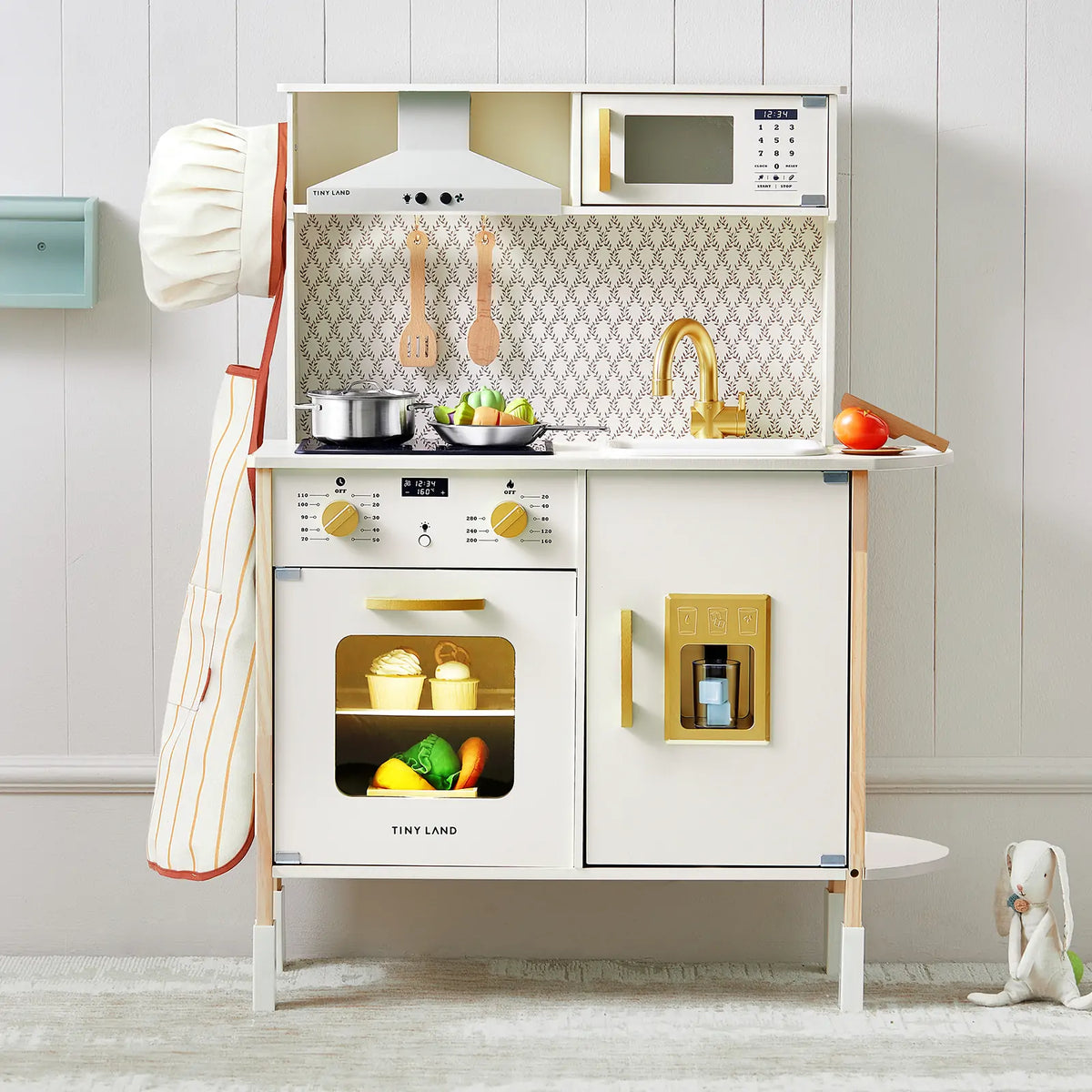
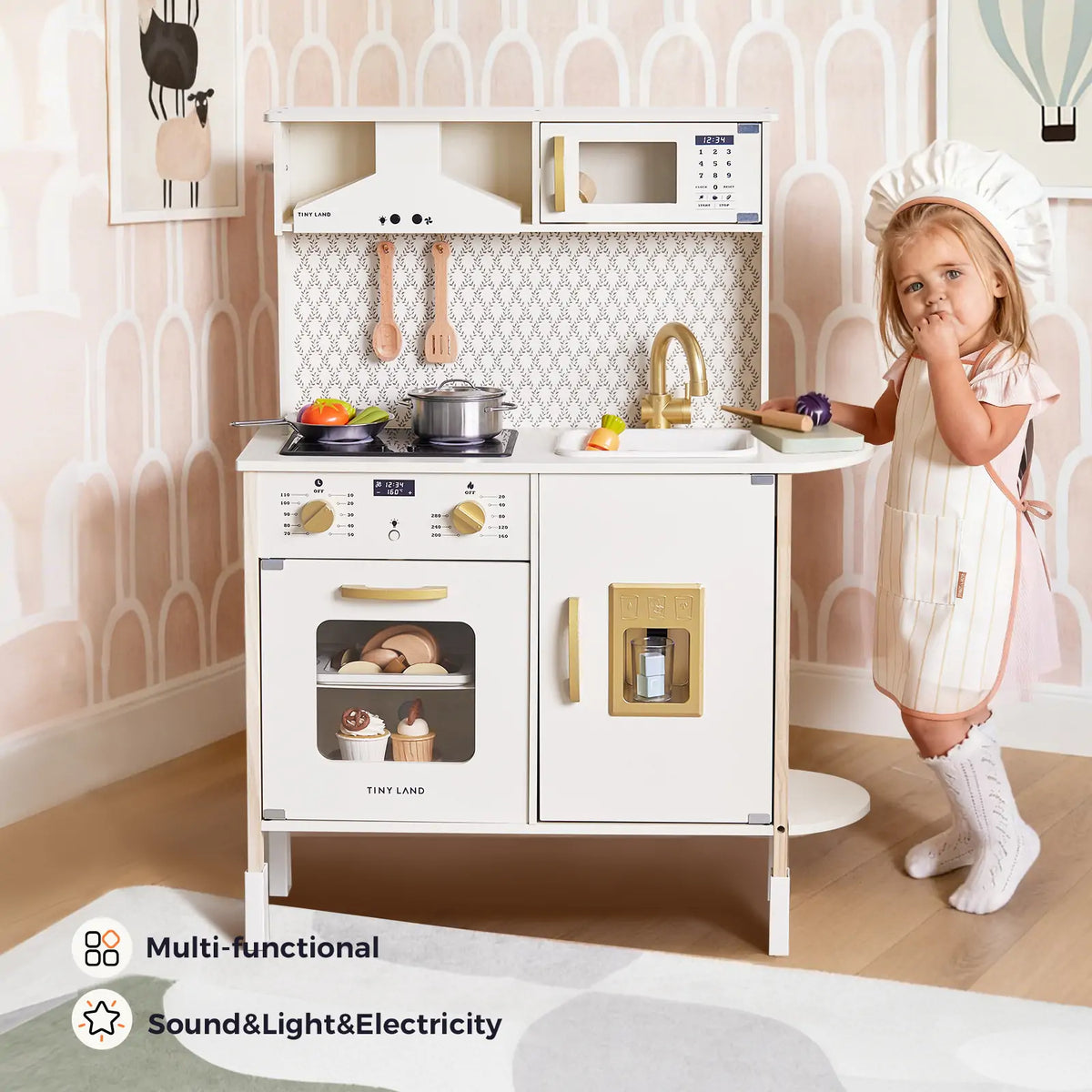
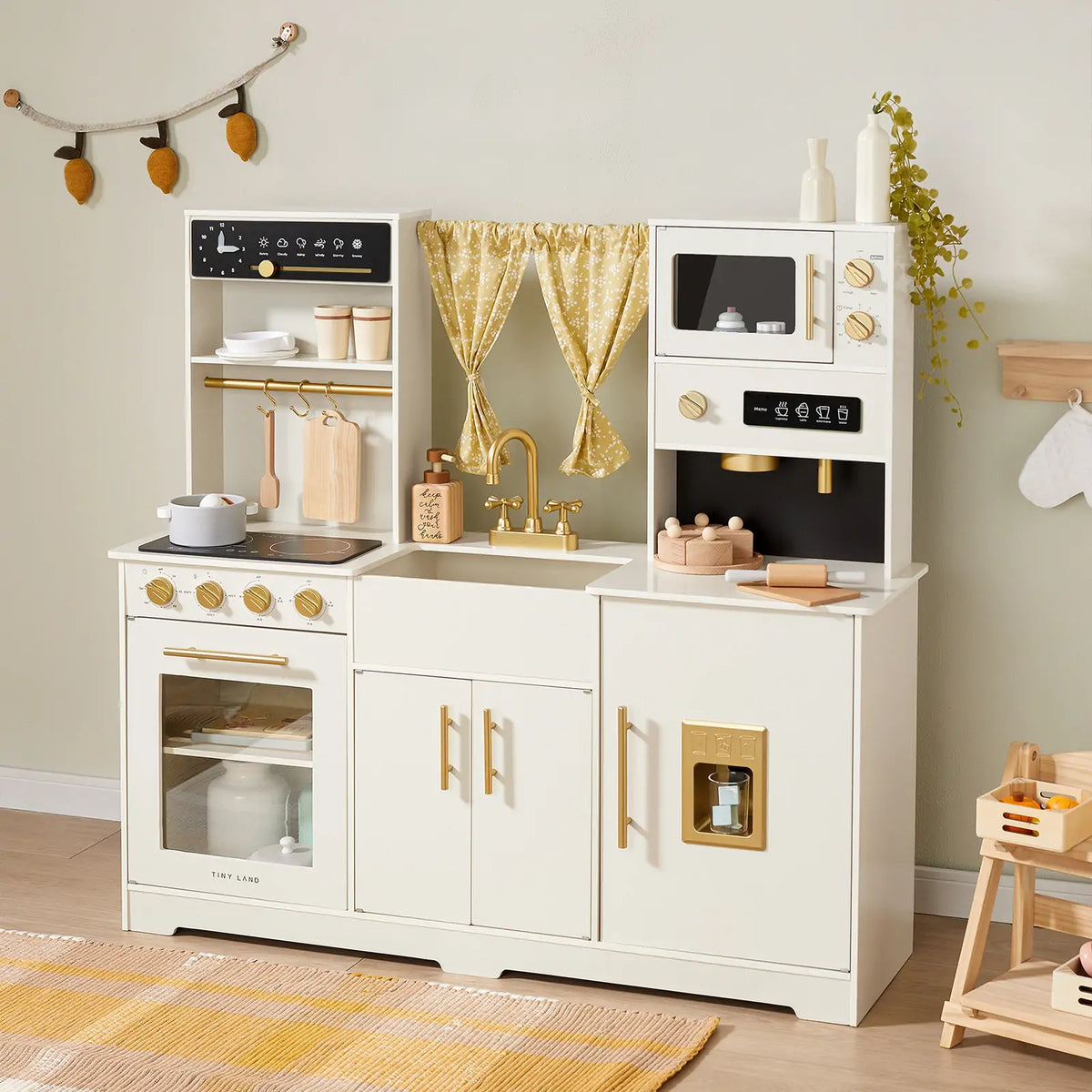
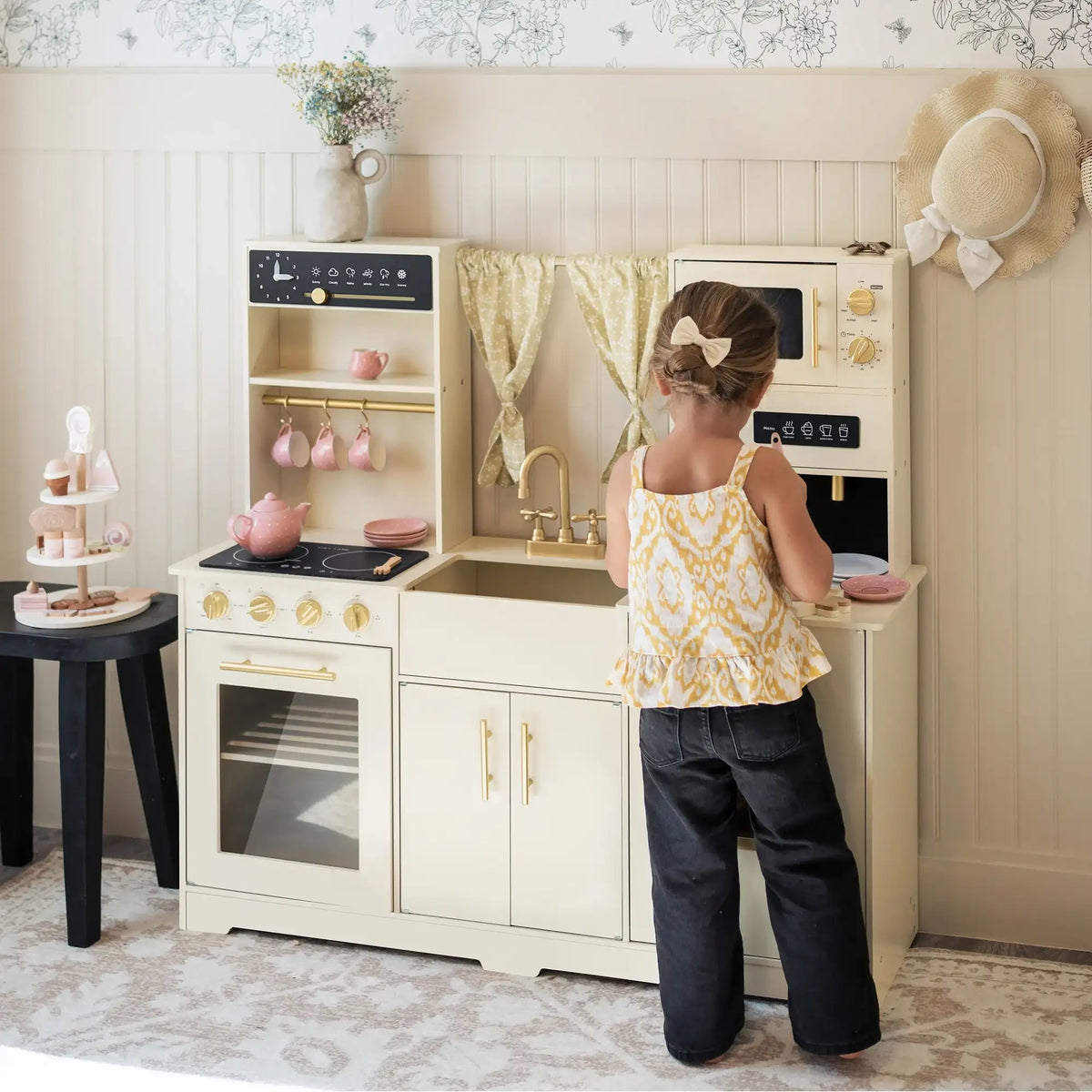
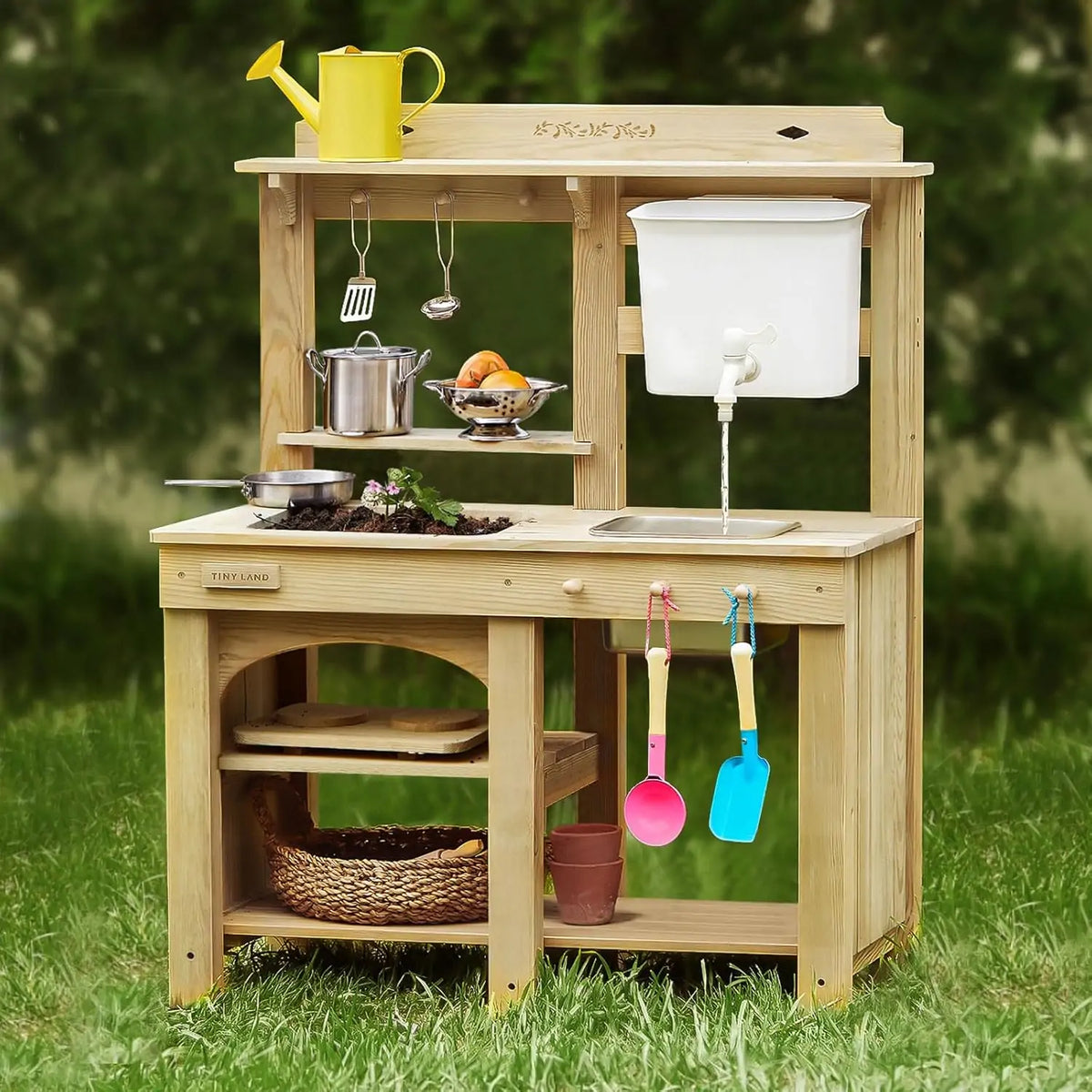
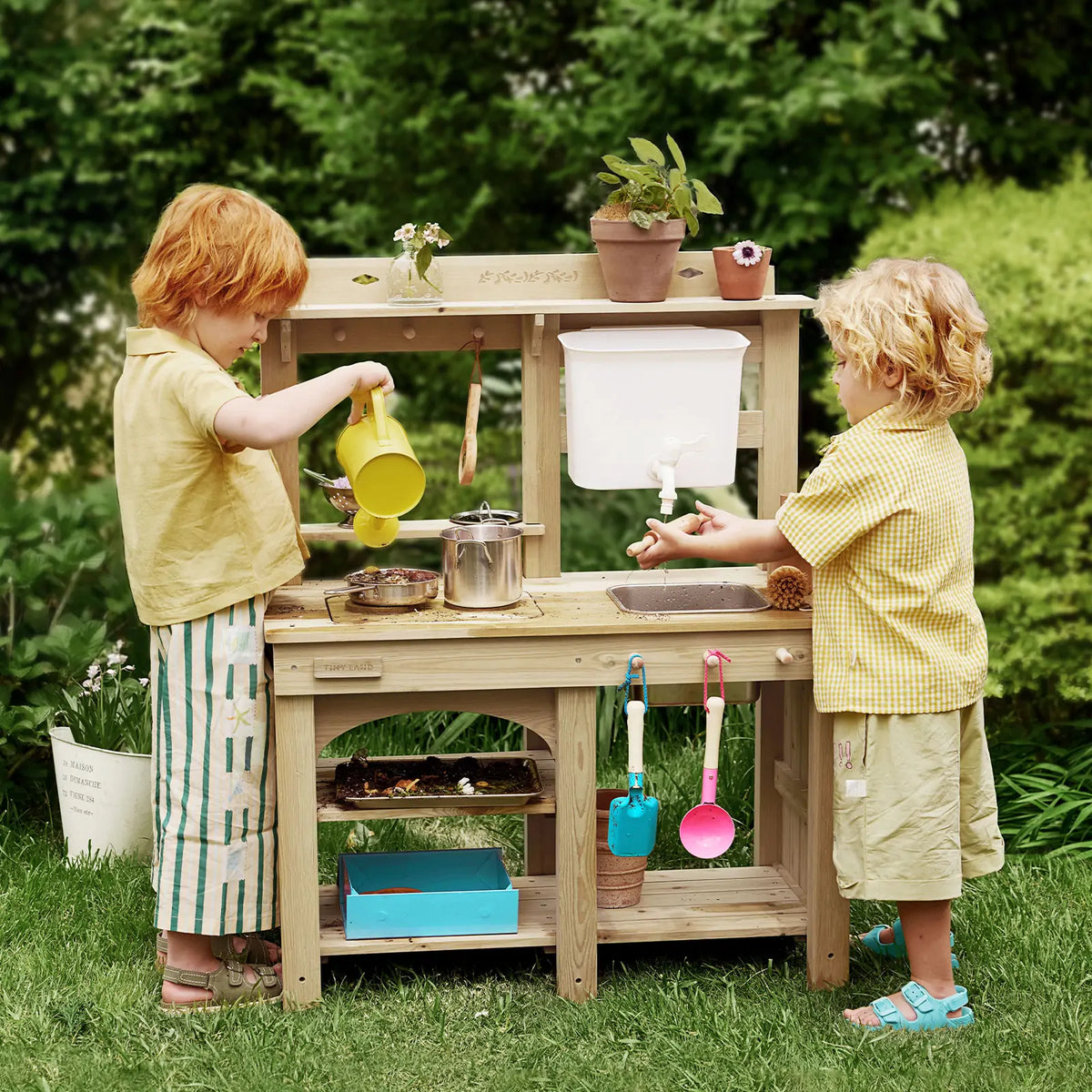
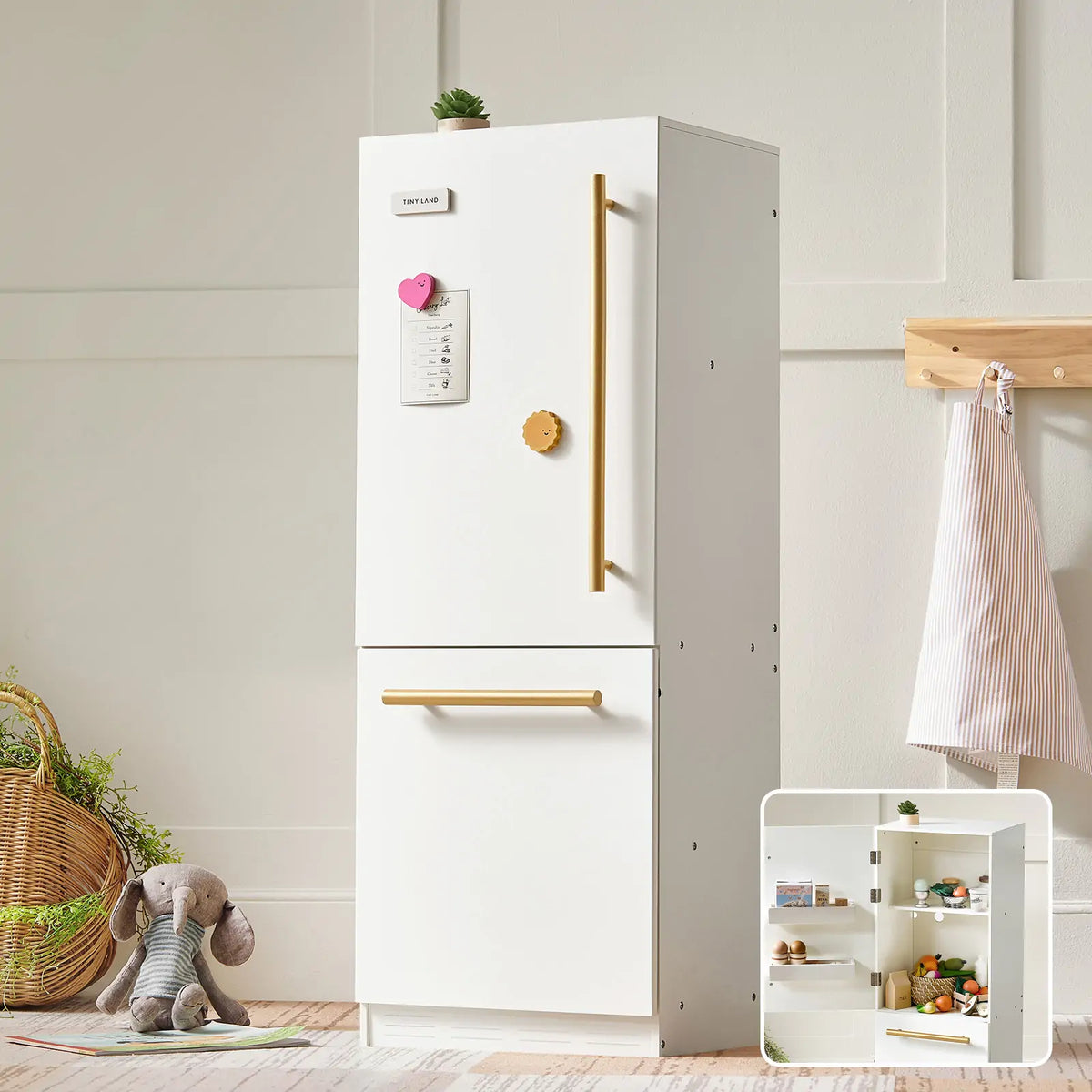
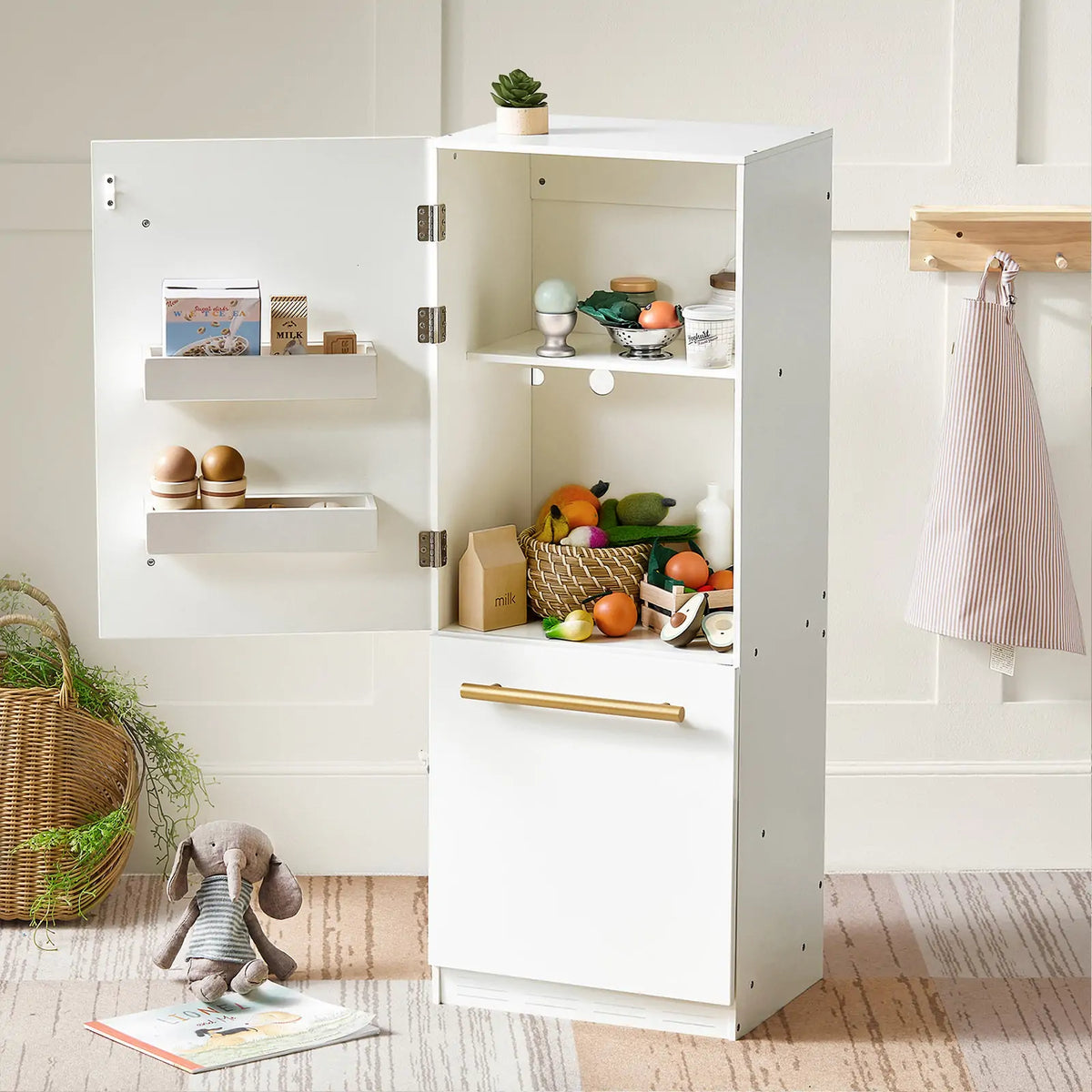







We’re thrilled that our Tiny Land Grocery Store Playset has been warmly embraced by Brittany and Jessica, the dedicated speech-language pathologists behind The Play Society. With over 10 years of combined experience in developmental speech therapy, early intervention, and play-based learning, they are experts at helping children ages 6 months to 4 years build meaningful communication skills through play.
The Play Society’s mission is to create warm, judgment-free spaces where caregivers and children can connect, learn, and grow together. In their engaging in-person courses, our Grocery Store Playset plays a key role in sparking natural language development and encouraging hands-on exploration within a supportive community environment.

Why Choose Tiny Land Market Playset?
What truly sets this playset apart is its incredible versatility. The sturdy setup easily transforms from a grocery store into a hardware shop, doctor’s office, or other everyday scenes — simply by swapping out materials. This flexibility opens the door to new roles, routines, and vocabulary, providing many benefits for your child’s growth:
--Builds Language Skills: Encourages natural language development by introducing new words and phrases through imaginative play.
--Supports Social-Emotional Growth: Promotes empathy, confidence, and teamwork through role-playing and shared experiences.
--Fuels Creativity & Problem-Solving: Inspires curiosity and flexible thinking with open-ended, hands-on activities.
--Enhances Fine Motor Skills: Develops hand-eye coordination and dexterity with tactile play elements.
--Provides a Safe, Supportive Space: Creates a judgment-free zone where children can explore and learn at their own pace.
Speech-language pathologists (SLPs) emphasize that regular, real-life themed play helps children gain confidence and communication skills by encouraging repetition, curiosity, and social interaction in a fun, low-pressure environment.

Expert-Recommended Play Themes to Try at Home
Hardware Store
Step 1: Gather Your Materials
Be inspired by the items Brittany and Jessica recommend or gather what you have at home! These might include toy tools (hammer, screwdriver, wrench, measuring tape, nuts and bolts), playdough as “concrete,” small boxes, paintbrushes, safety goggles, blocks, or tape.
Step 2: Create Your Visuals
Before children can read, pictures support early learning by helping kids connect images to words and real-life objects, strengthening understanding and early communication skills. Print or create your own—simple drawings work just as well.

Step 3: Play!
Turning the market into a hardware store invites children to explore early play concepts like building, connecting, filling, transporting, and taking things apart. These simple play patterns happen naturally as children stack pieces, carry tools, twist bolts, or explore both familiar and new items. Through these hands-on experiences, children begin to understand how things work while developing early problem-solving skills, coordination, and confidence.
Vocabulary Inspiration: “Hammer,” “Let’s fix it,” “Open,” “I need help,” “Build it up!,” “Turn,” “The screw is small”.
Modeling Actions: Show your child how to use the tools with simple, slow movements like twisting the screwdriver, tapping with a hammer, or carefully stacking blocks. Narrate what you’re doing and offer encouragement before stepping in to help (“That’s tricky,” “You’re trying so hard,” “You did it!”).

Doctor’s Office
Step 1: Gather Your Materials
Be inspired by the items Brittany and Jessica recommend or gather what you have at home! This might include bandaids, gauze, masks, gloves, tongue depressors/popsicle sticks, flashlights, pretend play doctor’s kit, a stuffed animal or doll (the “patient”), doctor’s dress-up clothing, or a small notebook for “doctor’s notes.”
Step 2: Create Your Visuals
Before children can read, pictures help support early learning by connecting images to words and real-life objects, strengthening understanding and early communication skills. Print ours or create your own—simple drawings work just as well.

Step 3: Play!
Turning the market into a doctor’s office reflects a routine children may already recognize. While doctor visits may be familiar, they can also bring up big feelings. Pretend play and independent exploration create a safe, playful space for children to make sense of these experiences and build understanding.
As children handle doctor tools like peeling bandages, listening with a stethoscope, shining a flashlight, or caring for their “patient,” language naturally grows through action. Caregivers can model simple, meaningful words by narrating what’s happening and modeling vocabulary as your child holds, explores, or uses an item. This hands-on play also supports fine motor skills, problem-solving, patience, and empathy — all while building confidence and communication through play.
Vocabulary Inspiration: “Doctor,” “Boo-boo,” “Ouch,” “Let’s check his ears!,” “All better!,” “A stethoscope,” “You’re so brave!,” “Peel the bandaid.”
Modeling Actions: Try showing your child how to use the items through simple, slow actions. Sitting together in front of a mirror can help children watch your movements and facial expressions as you demonstrate how to listen with the stethoscope, peel and place a bandaid, or check a heartbeat. There’s no pressure for children to imitate — so much learning happens simply through observation and shared play.

Pro Tips for Playtime Success
You don’t need a flawless setup or a single perfect play session for your child to learn and grow. In fact, some of the best learning happens through repetition — each time they play, they’ll discover something new, try different actions, and build their vocabulary at their own comfortable pace.
Parents and caregivers don’t have to be “on” the whole time either. Start by playing alongside your child and gently model simple words or actions to help them get going. Then, feel good about stepping back and letting them explore on their own. Watching, experimenting, and repeating are some of the most powerful ways kids learn.
And remember — if toys get mixed up or play doesn’t follow a script, that’s actually a sign your child is thinking creatively and learning. By giving your child space and time, you’re setting the stage for curiosity, communication, and confidence to blossom naturally.

The Tiny Land Promise
We believe play should be flexible and fun. Our toys provide a familiar foundation with endless possibilities, empowering children to build language, social skills, confidence, and healthy habits for life.