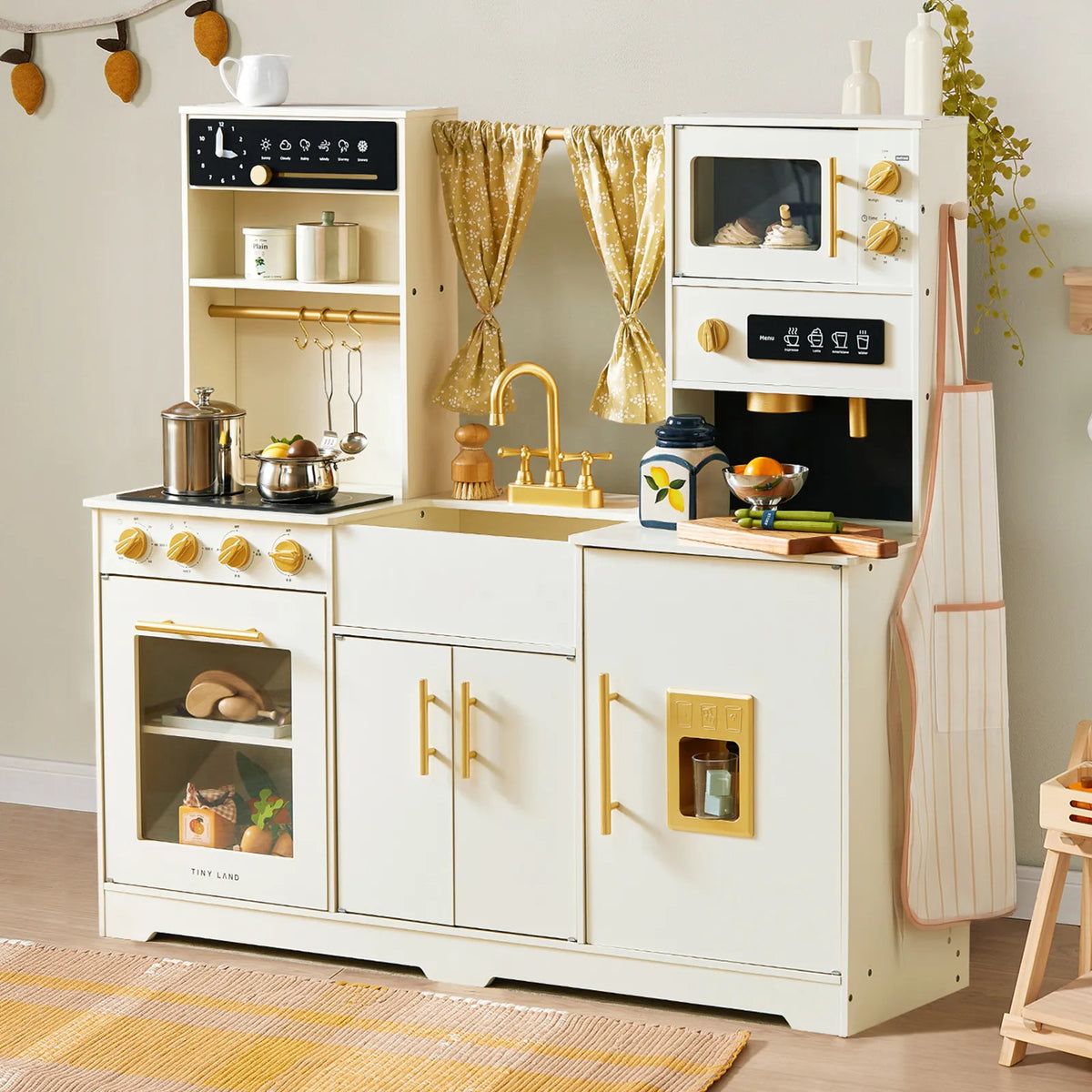
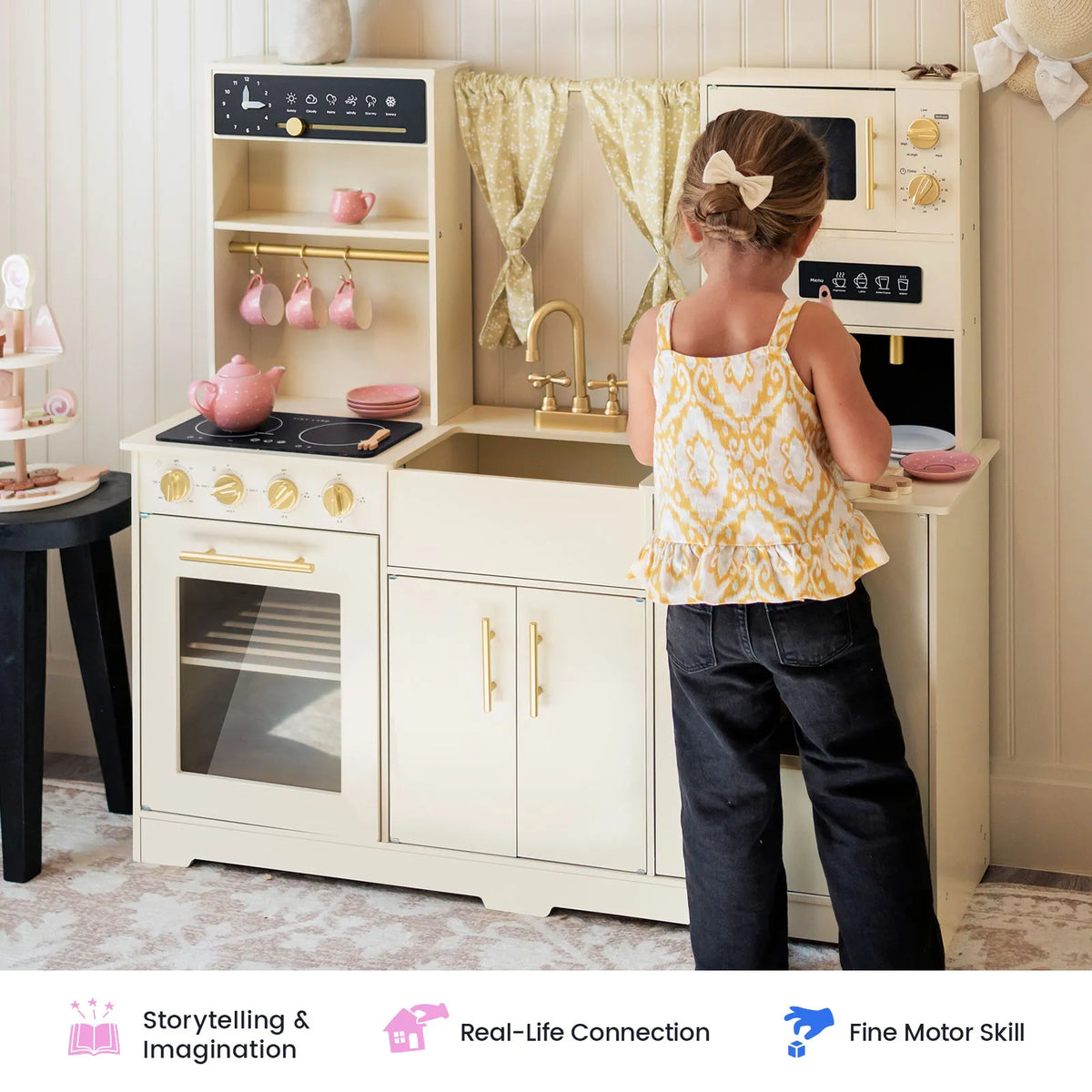
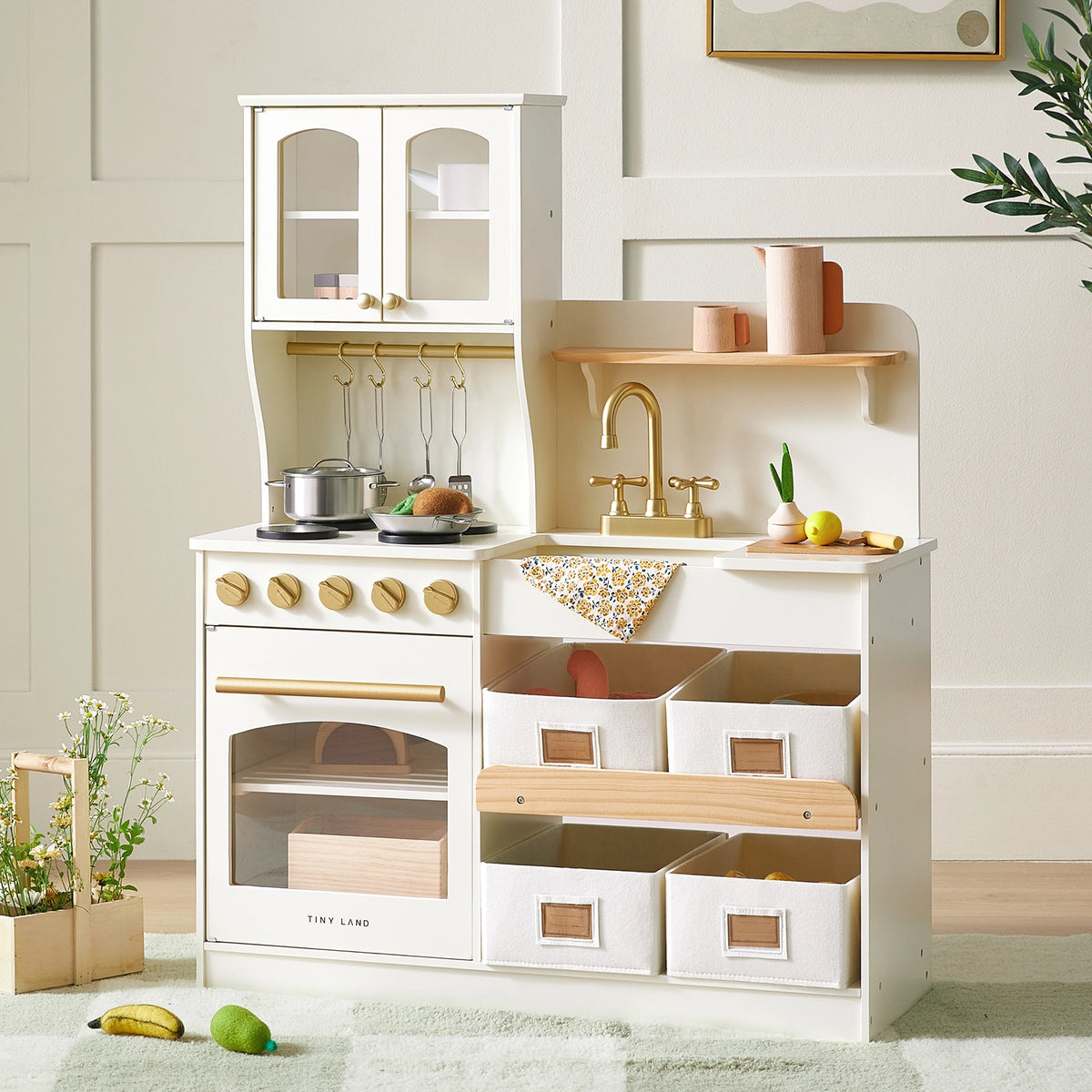
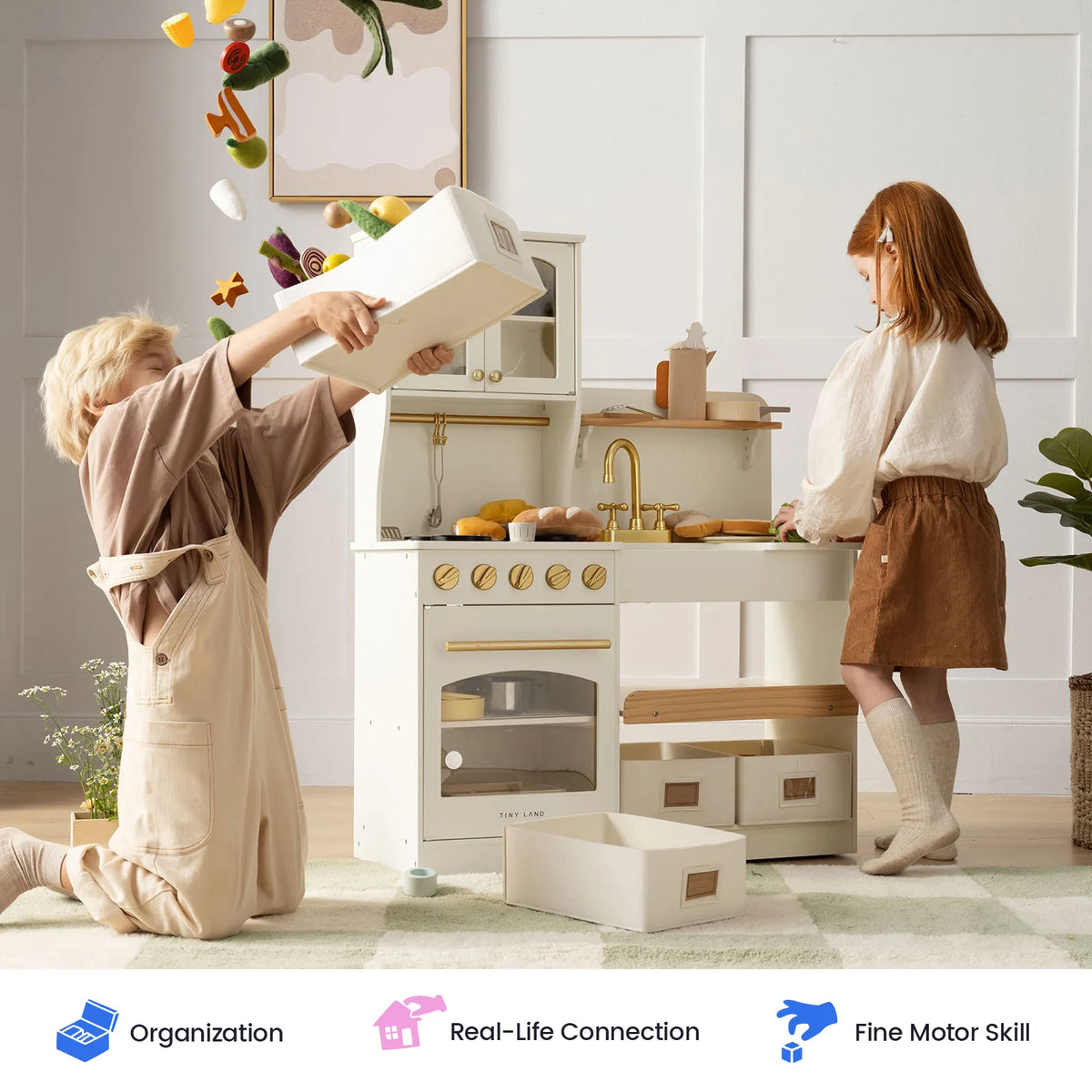
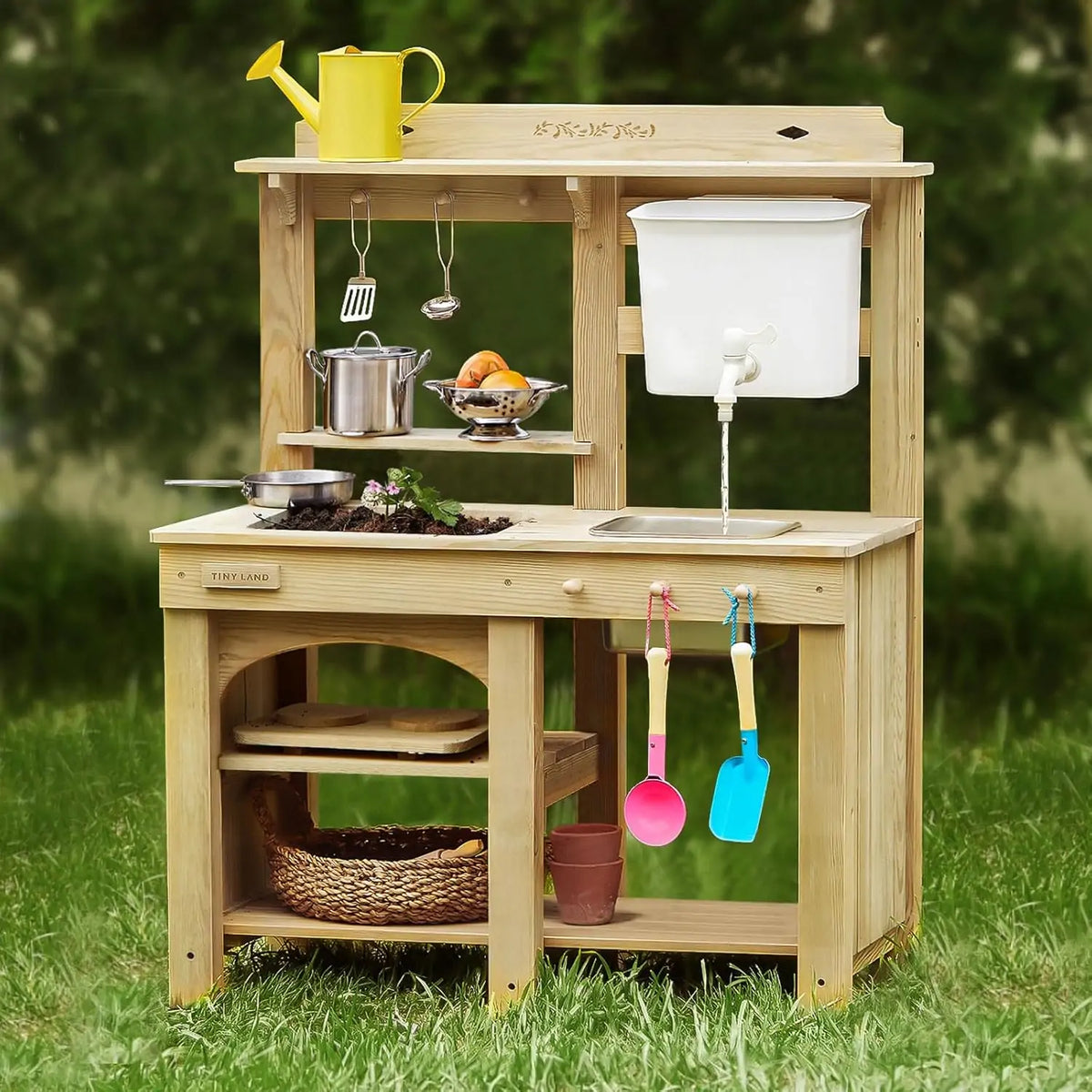
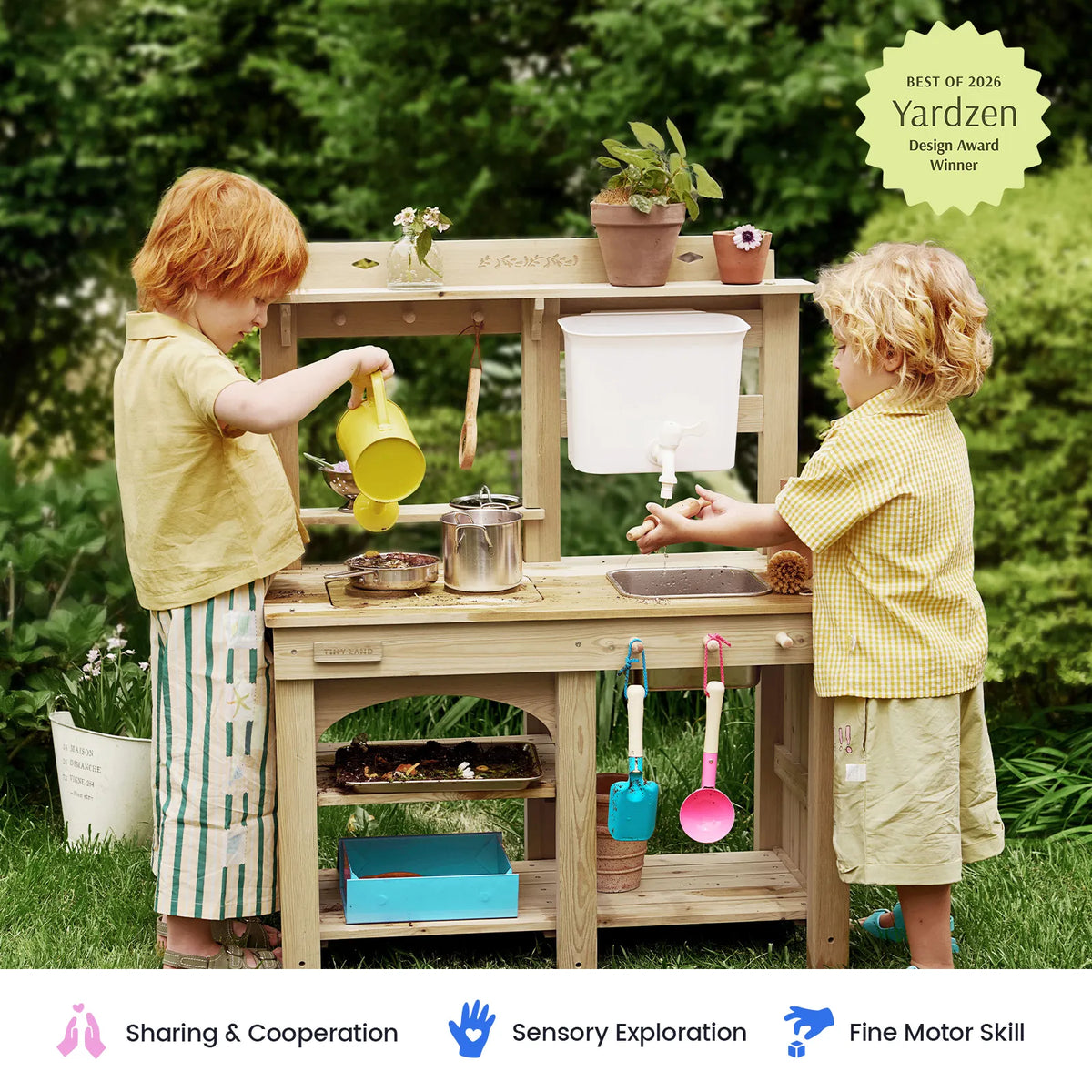
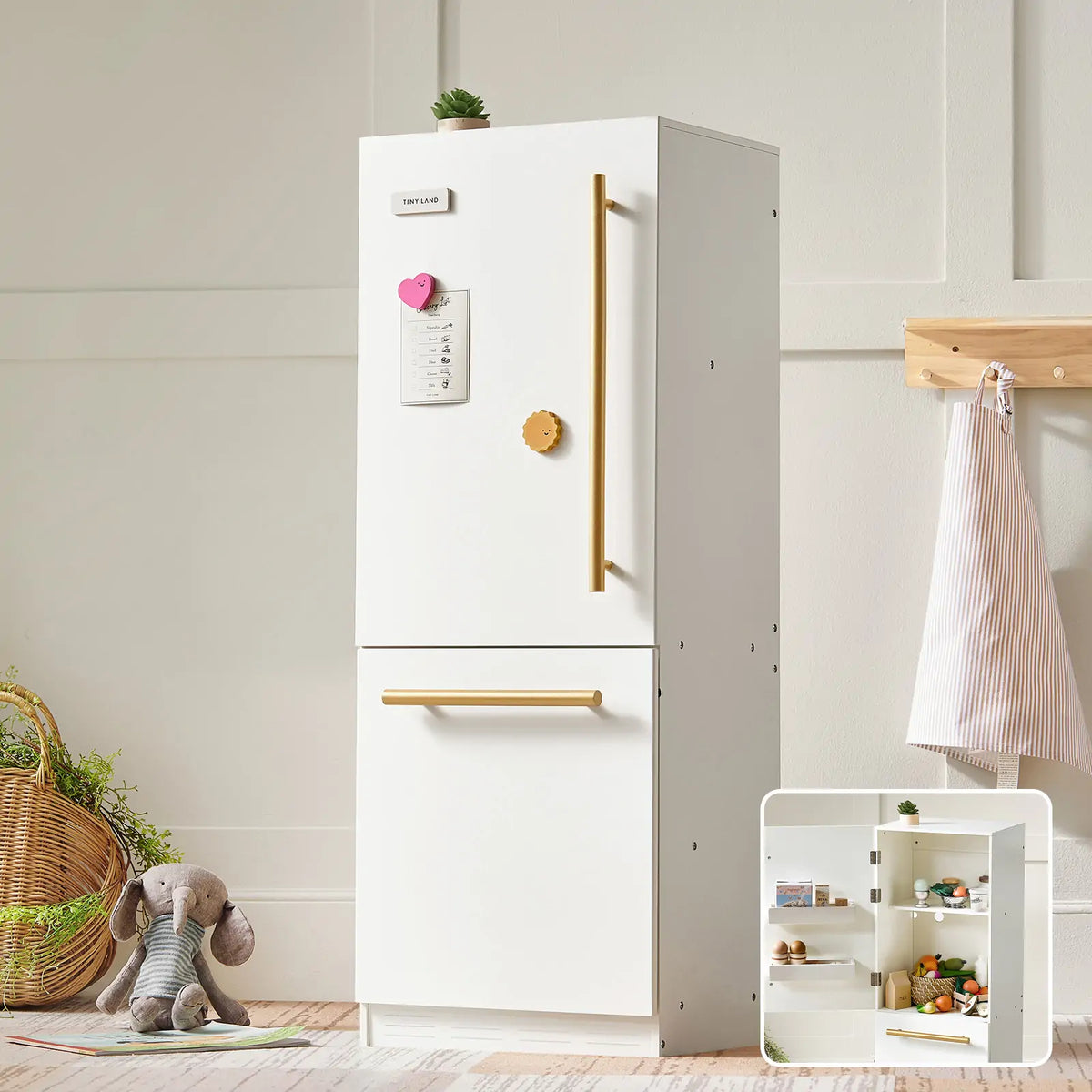
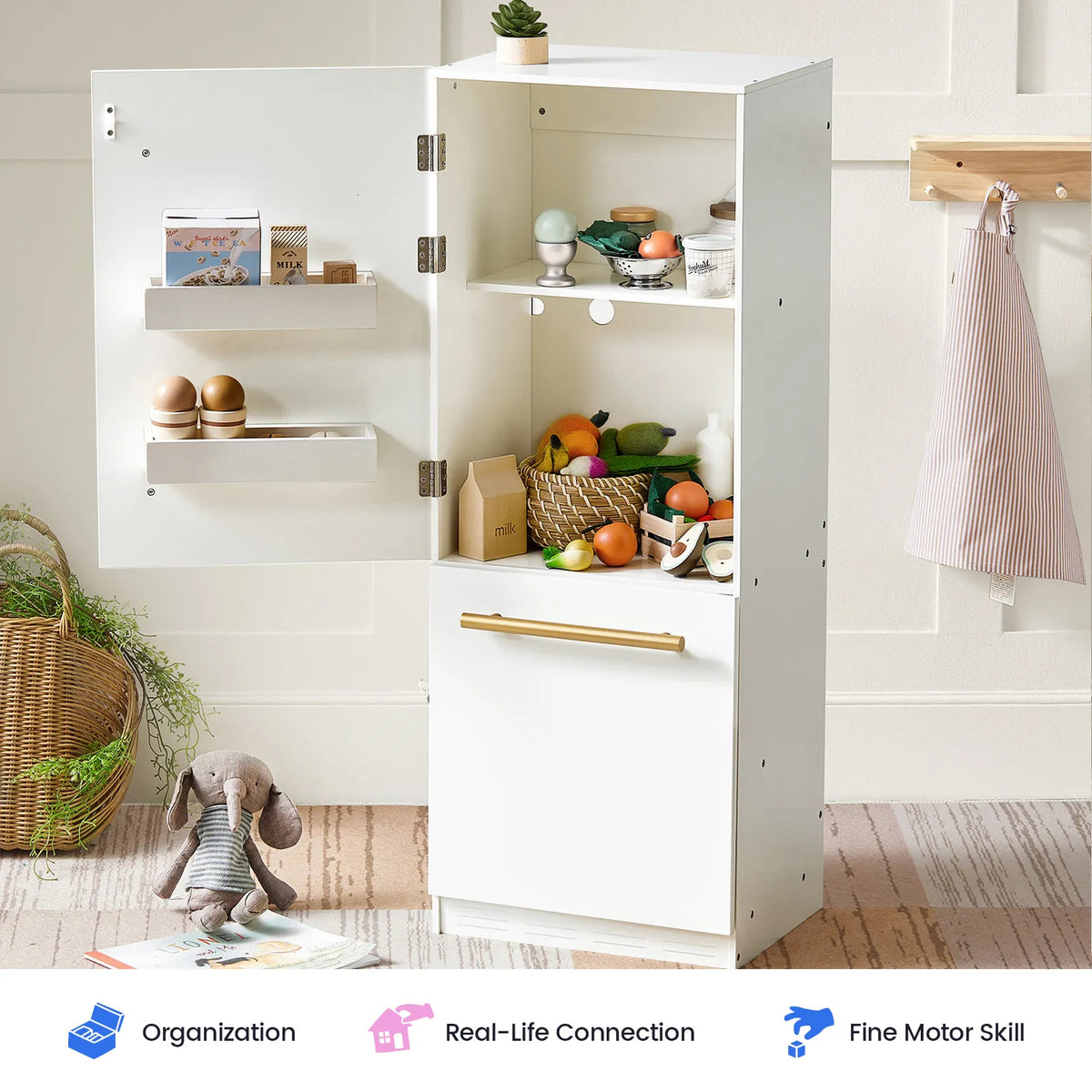
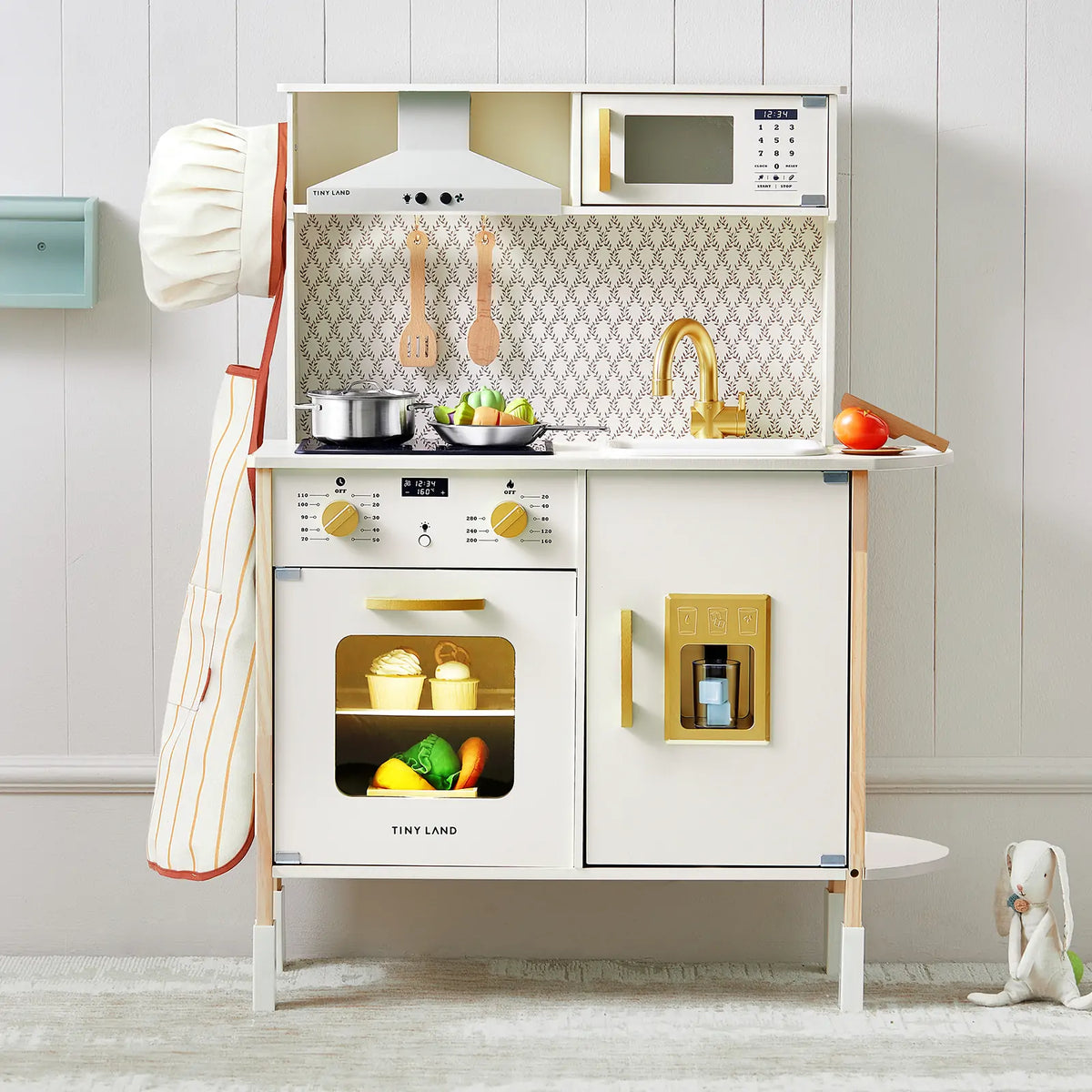
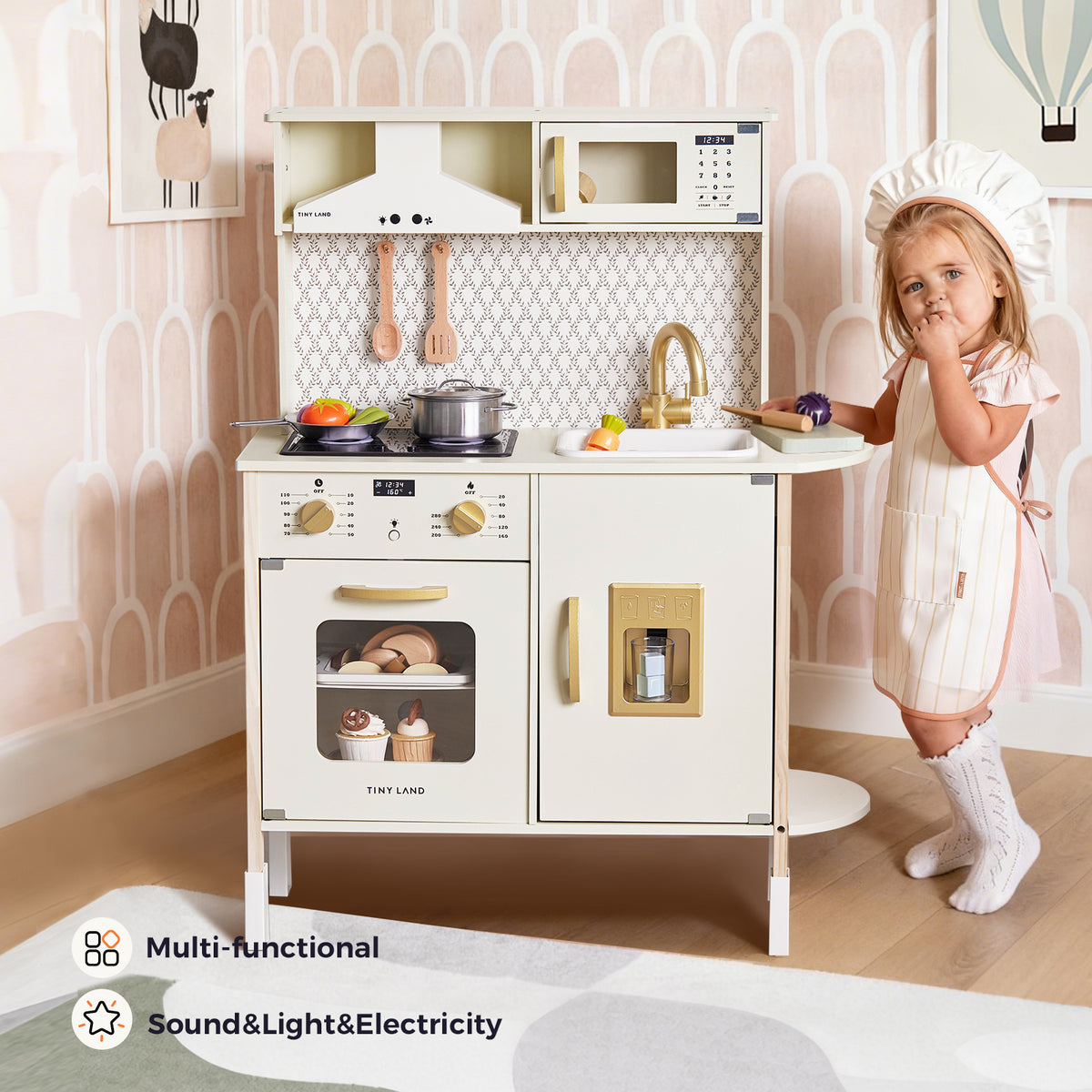



A play kitchen can turn everyday routines into simple pretend-play opportunities for toddlers.
With a few pieces of pretend food, some open-ended props, and a little space to play, children can create their own breakfasts, shops, cafes, and family meals.
If you already have a wooden play kitchen, you do not need complicated activities to get started. The kitchen itself can become a place for toddlers to practice familiar routines through imaginative play.
Here are 12 easy play kitchen activities that work well for toddlers ages 2–4.

Why Play Kitchen Activities Work for Toddlers
Pretend play gives toddlers a familiar setting where they can act out things they see every day.
A kitchen can become a breakfast counter in the morning, a grocery store in the afternoon, or a pretend cafe during playtime.
The activities do not need to have a fixed outcome. A toddler might prepare the same pretend meal several times, change roles halfway through a game, or create a completely new scenario.
Why Simple Pretend Play Works at Home
Simple routines are often enough to start toddler pretend play.
You can introduce a familiar action, such as making breakfast, and let your child decide what happens next. One day they may be the cook.
Another day, they may become the customer, cashier, or restaurant owner. This kind of simple home pretend play encourages creativity and storytelling as children switch roles and invent new scenarios.
Keeping the setup simple also makes it easier for children to return to the same play space independently.

What You Need to Get Started
A basic setup can include:
-
A play kitchen or pretend kitchen
-
Pretend food or a play food for kids set
-
Simple kitchen accessories such as plates, cups, and utensils
-
A small basket or container for shopping play
-
A few picture cards or simple drawings for pretend recipes
If you are looking for a wooden play kitchen, choose a setup that fits your available space and your child's age. Always follow the manufacturer's age guidance, and if parents do not want a large setup, affordable Dollar Store items can also help stock the play area.

12 Easy Play Kitchen Activities
The best play kitchen ideas for toddlers are often based on routines children already recognize. Try one activity at a time, then let your child change the story.
Morning Kitchen Routines
1. Pretend Breakfast
Start the day with a simple pretend breakfast.
Your child can choose what to "make," place food on plates, and serve breakfast to family members or stuffed animals.
You can take turns being the cook and customer, and as they set the table they can practice counting cups or dishes while picking up new kitchen and food vocabulary through this kind of learning.
Try asking:
-
"What should we make for breakfast?"
-
"Who is eating with us?"
-
"What should we put on the plate?"
The goal is simply to let your child create a familiar morning routine through pretend play.

2. Picture Recipe Cards
Create a few simple recipe cards using pictures instead of written instructions.
For example, draw three or four pretend ingredients on a piece of paper. Your child can find those items in the play kitchen and "prepare" the recipe.
The cards can be changed regularly to give the same kitchen a new play scenario.
3. Wash and Prepare Pretend Food
Set up a simple food-preparation routine.
Your child can pretend to wash food, place ingredients on the counter, and prepare them for cooking.
This creates a sequence that feels similar to a real kitchen routine without requiring an actual cooking activity.

Grocery Shopping and Pantry Play
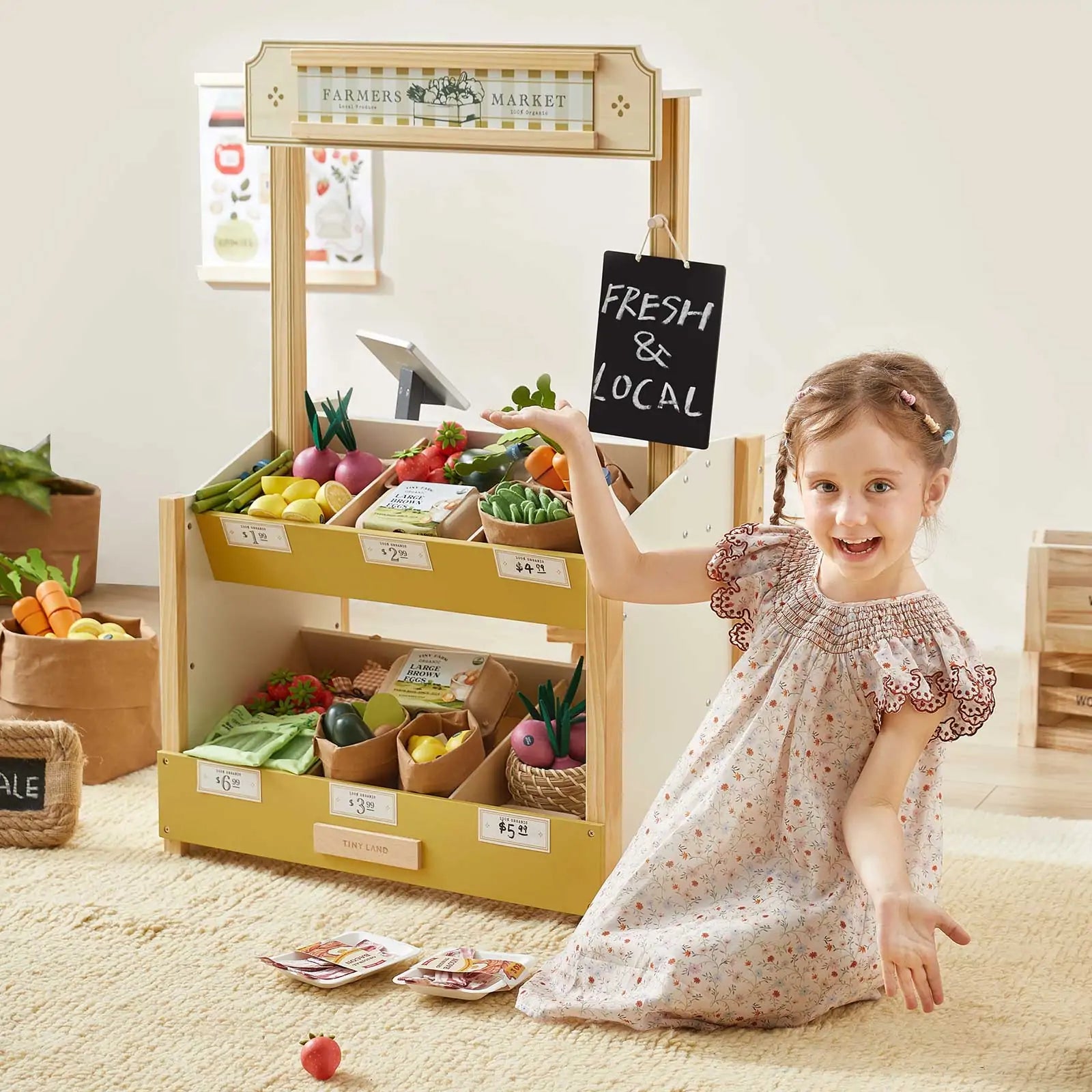
4. Pretend Grocery Shopping
Turn the play kitchen into a small pretend grocery store.
Place pretend food around the play area and give your child a basket or container. Ask them to make a simple shopping list for a pretend meal, then choose a few items and bring them back to the kitchen.
You can switch roles so your child becomes the shopper while you become the storekeeper.
5. Stock the Pantry
After grocery shopping, bring the food back to the pretend kitchen and "put away" the groceries.
Your child can decide where different items belong. Some food can go on a shelf, while other items can stay in a basket or display area.
This also gives the kitchen a natural transition from shopping to cooking.
6. Sort Food by Category
Add a simple sorting game to the kitchen routine.
Ask your child to group pretend food by categories such as fruits, vegetables, breakfast foods, or snacks.
The categories can be as simple or imaginative as your child wants, and sorting or using picture- or word-based lists can build early matching, grouping, math, and literacy skills.
There is no need to make the categories perfectly correct. The activity is about giving children another way to interact with their pretend kitchen.

Restaurant and Cafe Play
7. Run a Pretend Cafe
Turn the kitchen into a small cafe.
Your child can choose a cafe name, decide what is on the menu, and prepare pretend food for customers. A piece of paper can become a simple menu, and this kind of role play also builds vocabulary and language skills as kids talk through orders.
You can play the customer and place an order, then switch roles.
8. Take Customer Orders
Make the cafe scenario more interactive by taking pretend orders.
You can say, "I'd like a sandwich, please," or ask your child what they recommend.
For younger toddlers, keep the orders short and familiar. Older toddlers may enjoy remembering several items and creating their own menu, which also supports problem-solving as they match orders to the menu.
9. Serve Stuffed Animals
Stuffed animals make easy pretend customers.
Line them up near the play kitchen and let your child decide what each customer wants. Your child can prepare the food, serve it, and check whether everyone has received their order.
The same setup can become a restaurant, birthday party, family dinner, or tea party depending on the story your child creates, letting them imagine serving stuffed animals or friends.

Cooking, Serving, and Cleanup
10. Prepare a Family Dinner
Let your child create a pretend dinner for the family.
Start by choosing foods for a balanced pretend meal, gather the pretend ingredients, prepare the food, and serve it on plates. This can also help children learn about healthy food choices and build everyday skills that support real life. You can participate as another family member or simply let your child lead the story.
This is one of the easiest pretend play activities for toddlers because it builds on something they regularly see at home.
11. Pack a Pretend Lunch
Pretend it is time to pack lunch for school, work, or a family outing.
Your child can choose several pretend foods, such as fruit, cheese, or bread, place them into a container or bag, and decide who the lunch is for.
You can make the scenario more playful by asking, "What should we pack for the picnic?"
12. Clean Up and Restock the Kitchen
End pretend cooking with a cleanup routine.
Your child can return food to its place, put dishes away, wipe the play surface with an appropriate child-safe setup, and restock the kitchen for the next play session.
Cleanup does not have to feel separate from pretend play. It can become the final part of the restaurant, grocery store, or family kitchen story.

Play Kitchen Ideas by Age
Children between 2 and 4 can engage with the same play kitchen activities in different ways. Keep the activity simple for younger toddlers and allow older toddlers to add more steps and roles.
Ages 2–3
For ages 2–3, focus on short and familiar routines.
Good starting points include:
-
Pretend breakfast
-
Washing and preparing food
-
Simple grocery shopping
-
Serving stuffed animals
-
Putting food away
-
Basic cleanup
At this age, children may move quickly between activities. That is okay. Let them choose what to repeat and follow their lead.
Ages 3–4
Children ages 3–4 may be ready for longer pretend scenarios with multiple steps that build imagination.
Try:
-
Running a pretend cafe
-
Taking customer orders
-
Creating picture menus
-
Preparing a family dinner
-
Packing a pretend lunch
-
Shopping for several ingredients
-
Restocking the kitchen after play
You can also introduce simple role changes. Your child might start as the cook, become the customer, and then turn the kitchen into a grocery store, which encourages creativity and storytelling as older toddlers build longer stories during play.

How to Set Up a Play Kitchen in a Small Space
You do not need a large playroom to create a useful play kitchen setup. Compact setups can work especially well in small spaces, and even a storage-bin oven can create a useful play area for a child. The goal is to give each part of the pretend routine a clear place, which can cost less than $10 if you worry about budget or room.
Create a Food Display Area
Use a shelf, basket, or small open area to display pretend food. Food sets do not have to be store-bought, since you can make play food from cardboard boxes or use free felt play food patterns available online.
Keeping food visible can make it easier for toddlers to choose what they want to use during play. You can also rotate a small selection instead of putting everything out at once.
If you are adding wooden play food, you can organize the display area with simple categories such as breakfast foods, fruits, vegetables, or pantry items for either store-bought or homemade pieces.

Add a Shopping and Cooking Area
Keep the shopping area close enough to the kitchen that your child can move between the two. If you do not have a full kids kitchen, you can build a simple cardboard version from boxes for free, and video tutorials can help parents create it.
A small basket can become a grocery basket. The same basket can later become a picnic basket or lunch bag depending on the pretend-play scenario.
This creates a natural flow:
Shop → Bring food home → Prepare → Cook → Serve
You can find more options for combining pretend cooking and food play in Tiny Land's play kitchen collection.
Make Cleanup Part of the Game
Keep the cleanup routine simple.
At the end of play, encourage your child to return pretend food and accessories to their usual places. A few clearly defined storage areas can make it easier to reset the kitchen.
Cleanup can also become part of the pretend story. A restaurant needs to close, a grocery store needs to restock, and a family kitchen needs to be ready for the next meal.

How to Use Play Food in a Toy Kitchen
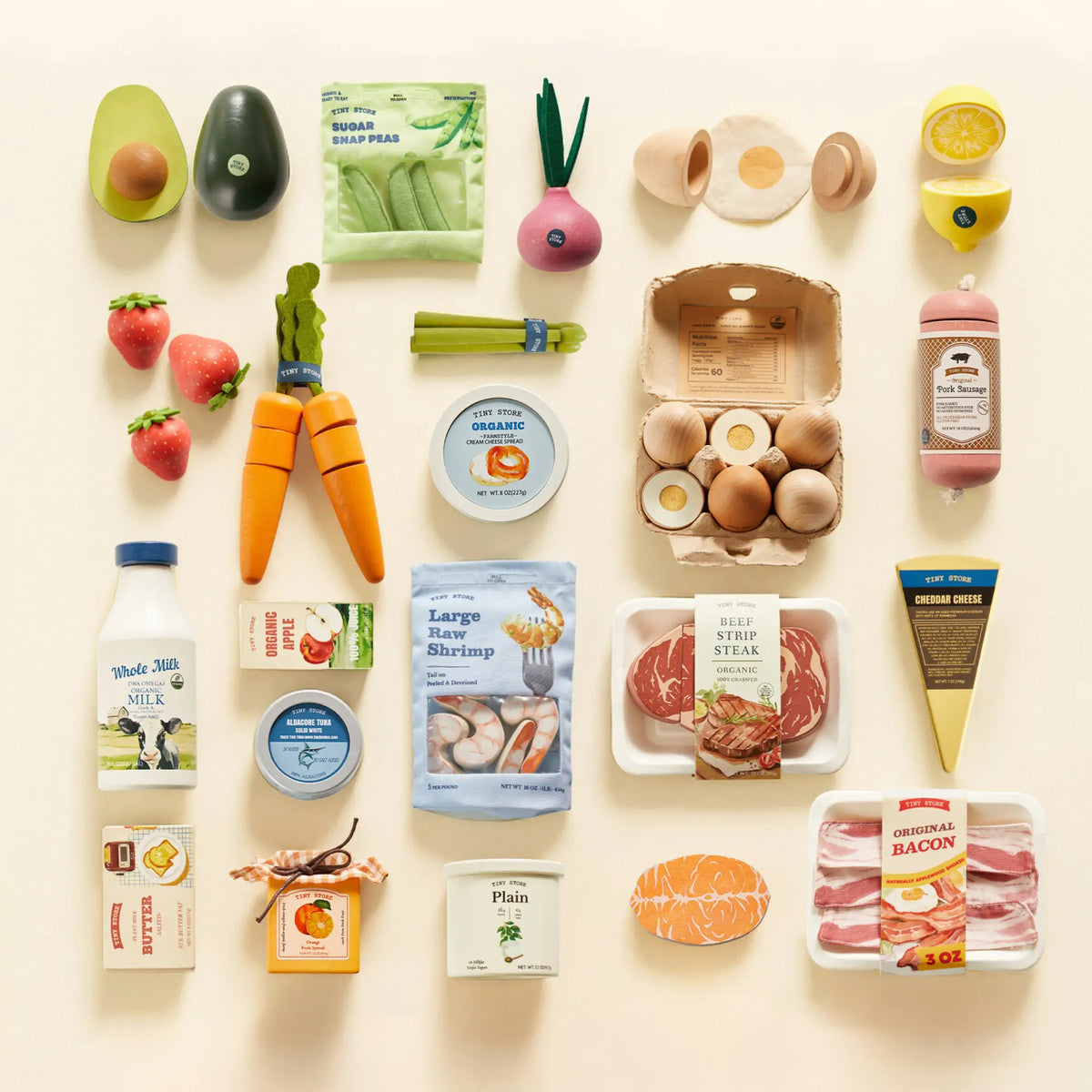
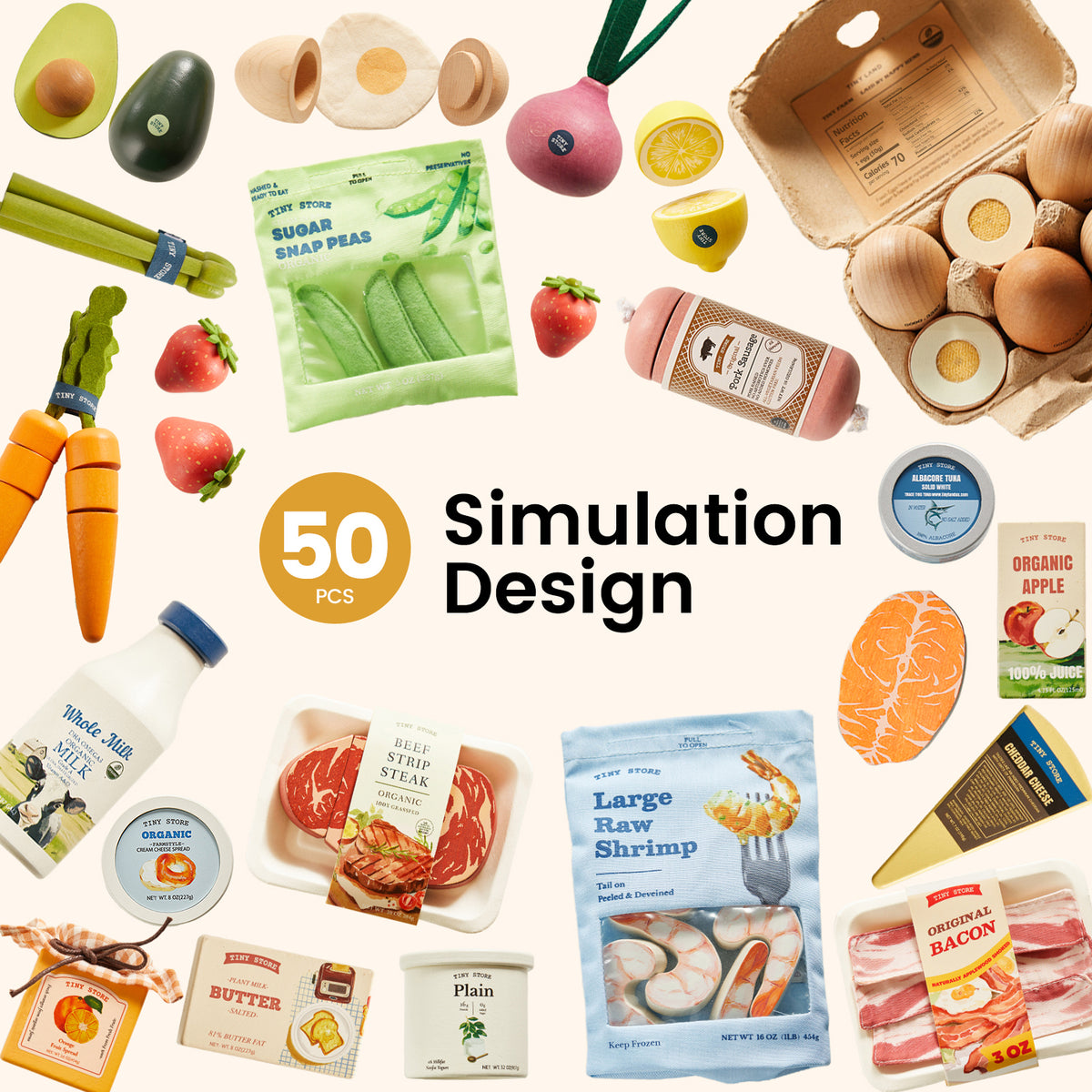
Play kitchen food can make a toy kitchen feel more connected to everyday pretend routines.
Instead of treating pretend food as a separate activity, use it as part of a larger kitchen scenario. Printable play food can also be made with simple templates in PowerPoint or Google Slides, giving you easy DIY toys to rotate into pretend meals. For example:
Grocery shopping: Choose pretend food from a display and bring it back to the kitchen.
Food preparation: Gather the ingredients needed for a pretend meal, and turn recycled materials such as toilet paper tubes into mini canned foods.
Cooking: Use the play kitchen as the setting for preparing the food.
Serving: Put the finished pretend meal on plates and serve family members or stuffed animals.
Cleanup: Return the food to its storage area and reset the kitchen.
A wooden play food set can also be used across different scenarios, from a pretend breakfast to a cafe or family dinner. Explore play food for kids to add more possibilities to a pretend kitchen setup.
The key is not to create a complicated activity every time. A few familiar foods and a simple kitchen routine can be enough to start a new story.

Frequently Asked Questions
Do Toddlers Need a Play Kitchen to Use Pretend Food?
No. Toddlers can use pretend food in many types of imaginative play. A play kitchen simply provides a familiar setting for cooking, serving, shopping, and other everyday routines.
You can also use pretend food with baskets, tables, play tents, or other open-ended play spaces.
What Are Easy Play Kitchen Activities for Toddlers?
Some easy options include pretend breakfast, grocery shopping, stocking a pantry, running a pretend cafe, serving stuffed animals, preparing a family dinner, packing a pretend lunch, and cleaning up the kitchen; these simple ideas are fun for little ones and support social, emotional, and cognitive development.
Start with one familiar routine and let your child decide how the story develops, since repeated kitchen routines also build counting and early math skills.
How Do You Keep a Play Kitchen Organized?
Give food and accessories like pots, pans, and a sink if the kitchen has one a few consistent storage areas. Baskets, shelves, and small containers can help separate different categories of play items.
You can also keep only a smaller selection available at one time and rotate items when your child wants a different play scenario. Realistic features such as realistic lights and sounds can also teach cause and effect during play.

Create Everyday Pretend-Play Moments
A play kitchen set does not need complicated instructions to become an engaging play space, giving your little chef hands-on learning with toys that support a child's development. Everyday routines such as breakfast, grocery shopping, cooking, serving, and cleanup can all become part of a child's pretend-play story; kids love sensory challenges like describing textures and smells during pretend cooking, and these familiar moments create endless opportunities for dramatic play in a pretend world.
Ready to create a pretend kitchen at home? Realistic features can make the play more realistic and teach simple cause-and-effect ideas. Explore Tiny Land's wooden play kitchens and add play food for more everyday cooking, shopping, and serving ideas.