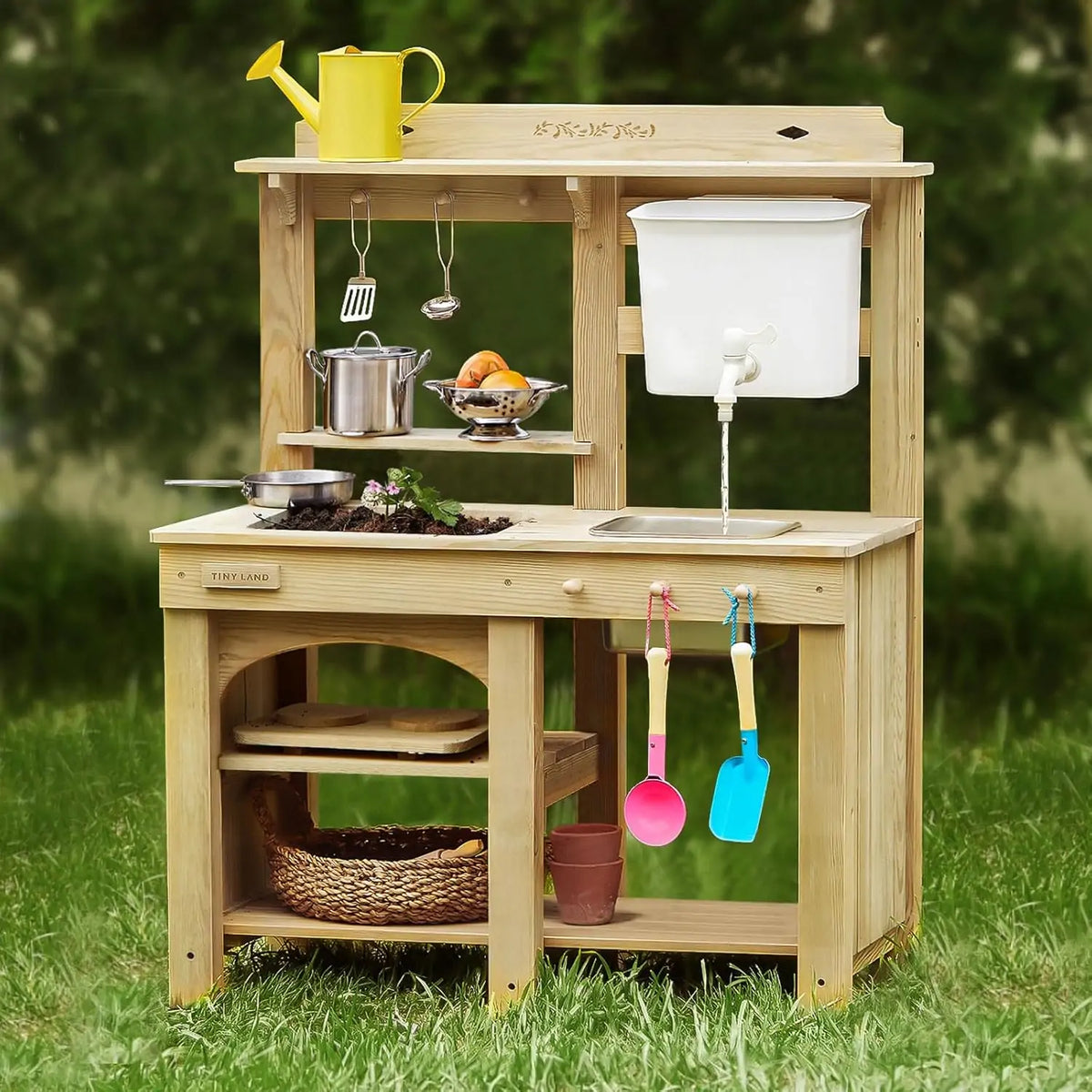
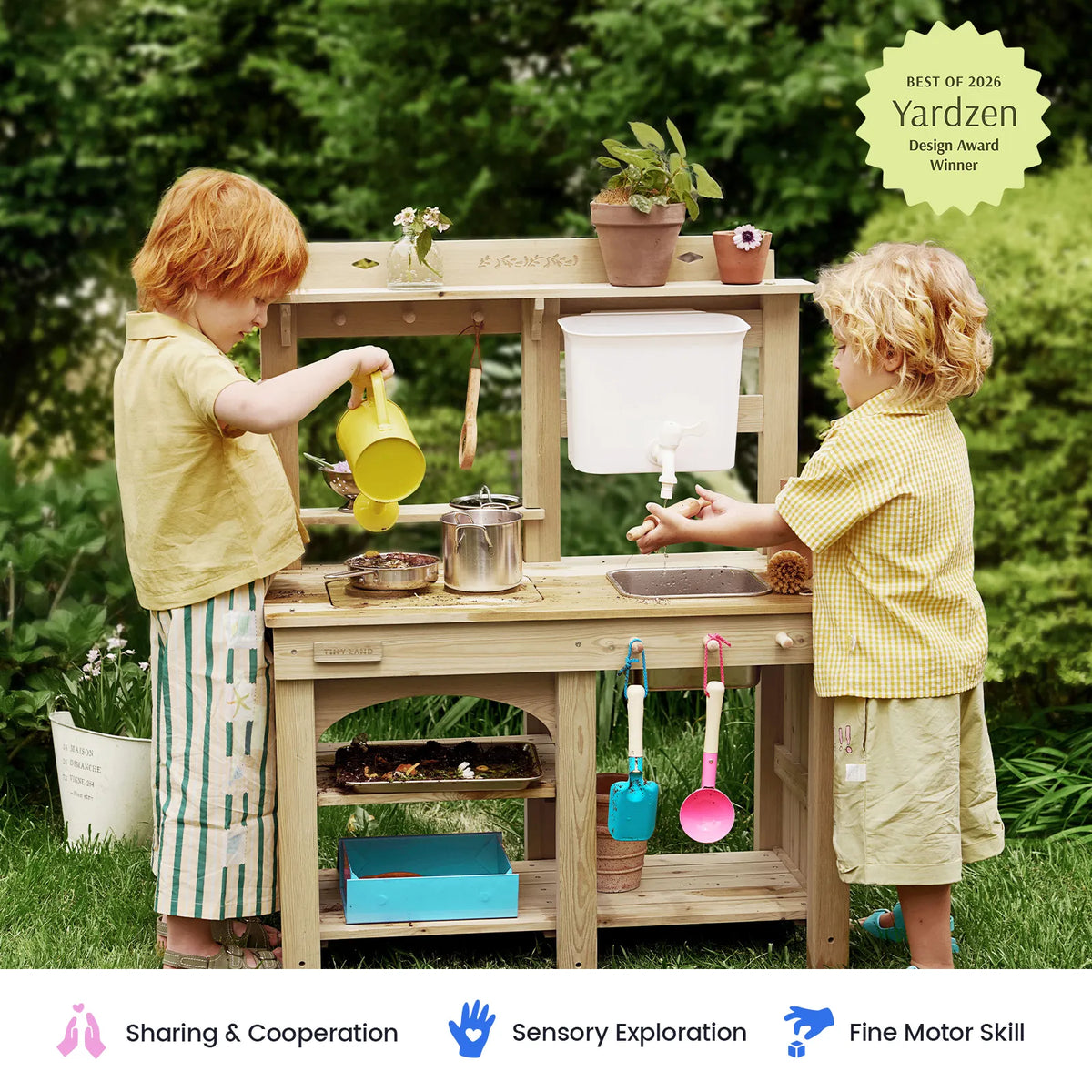
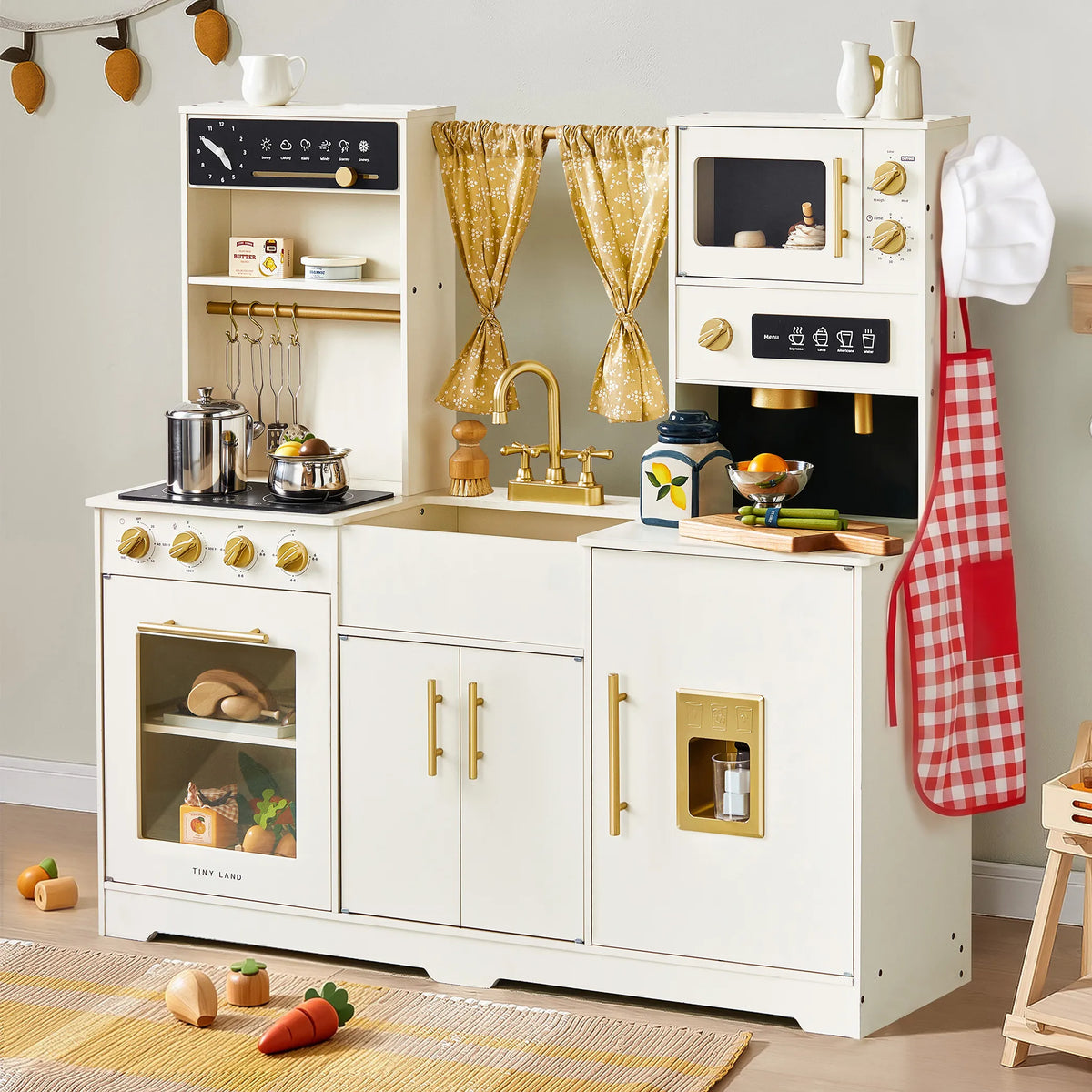
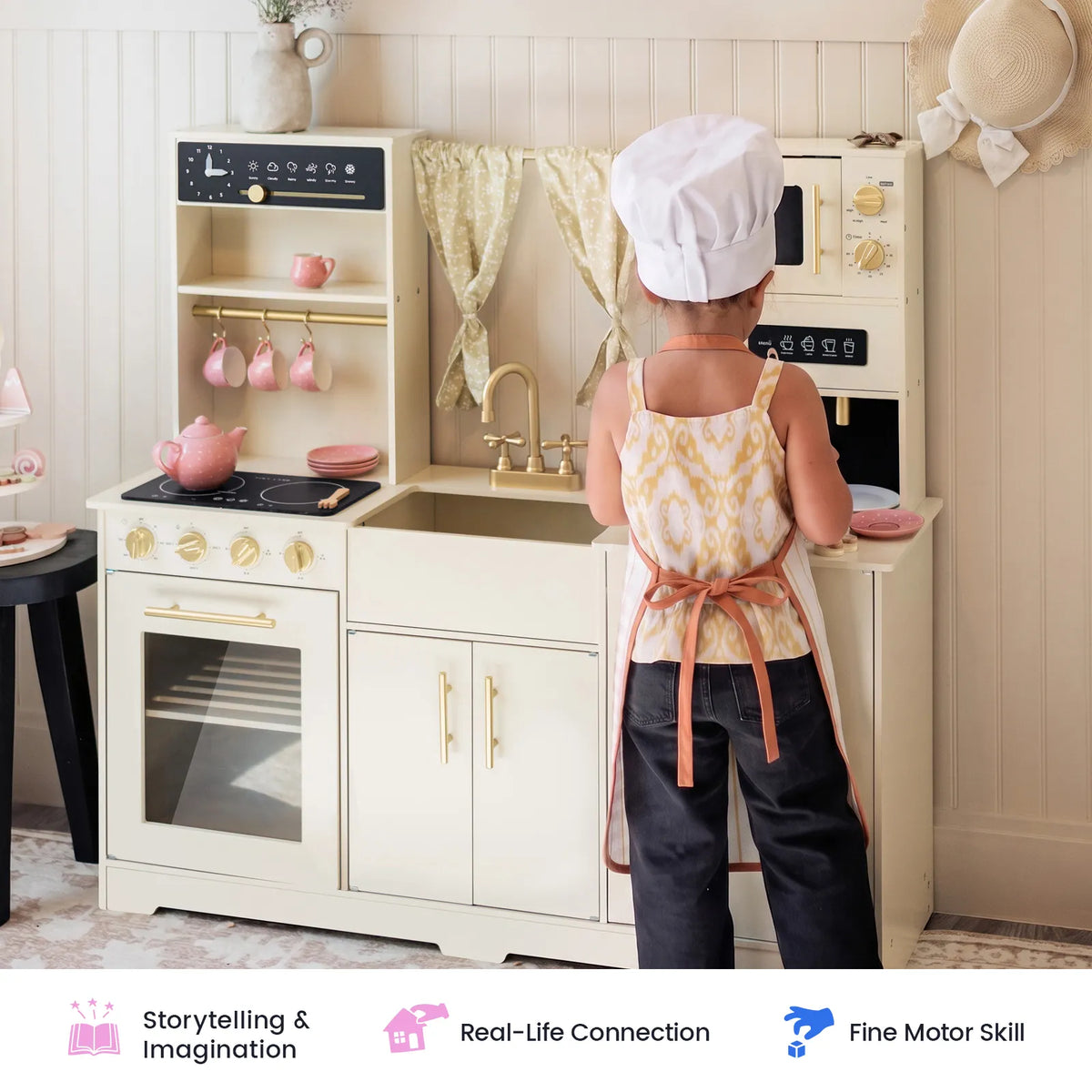
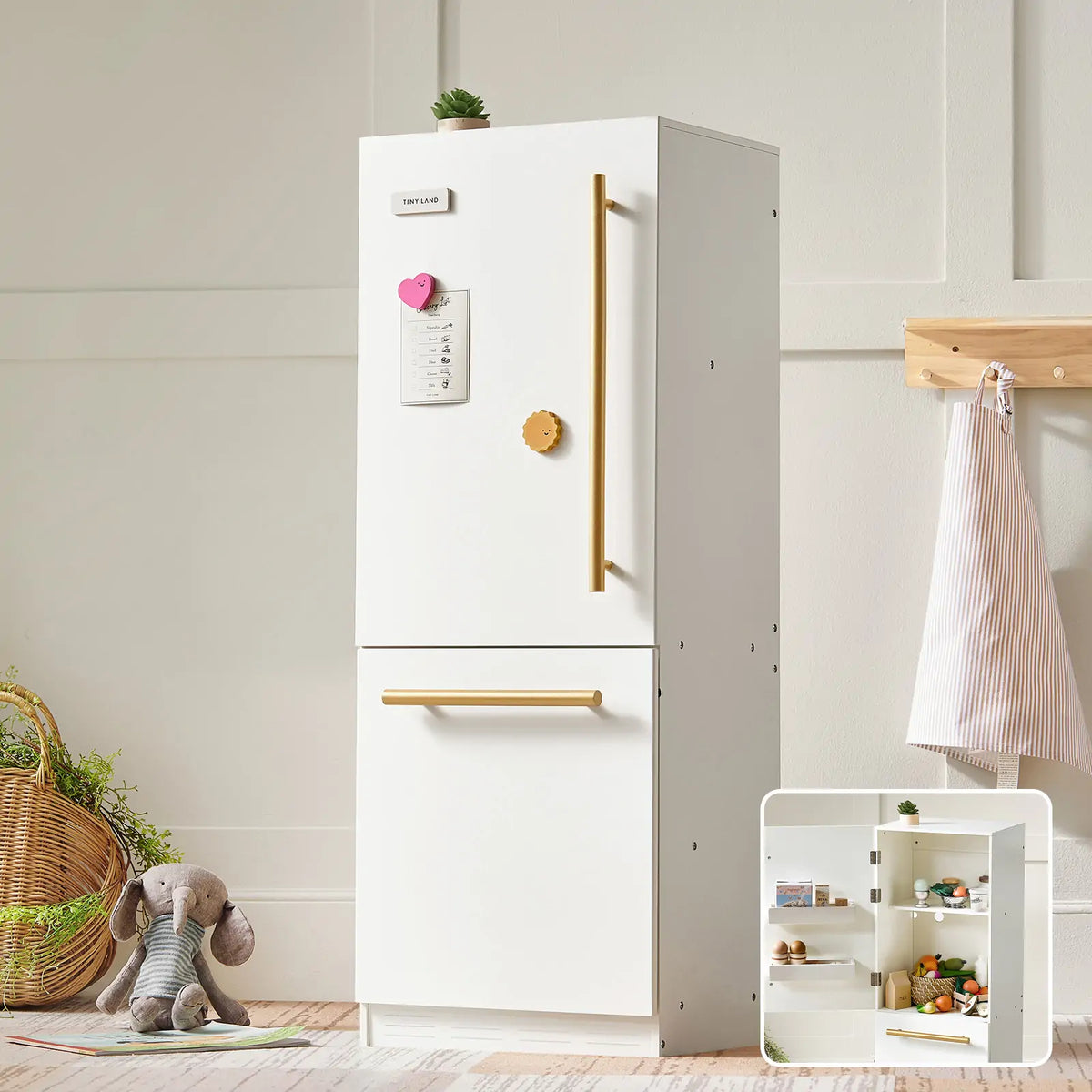
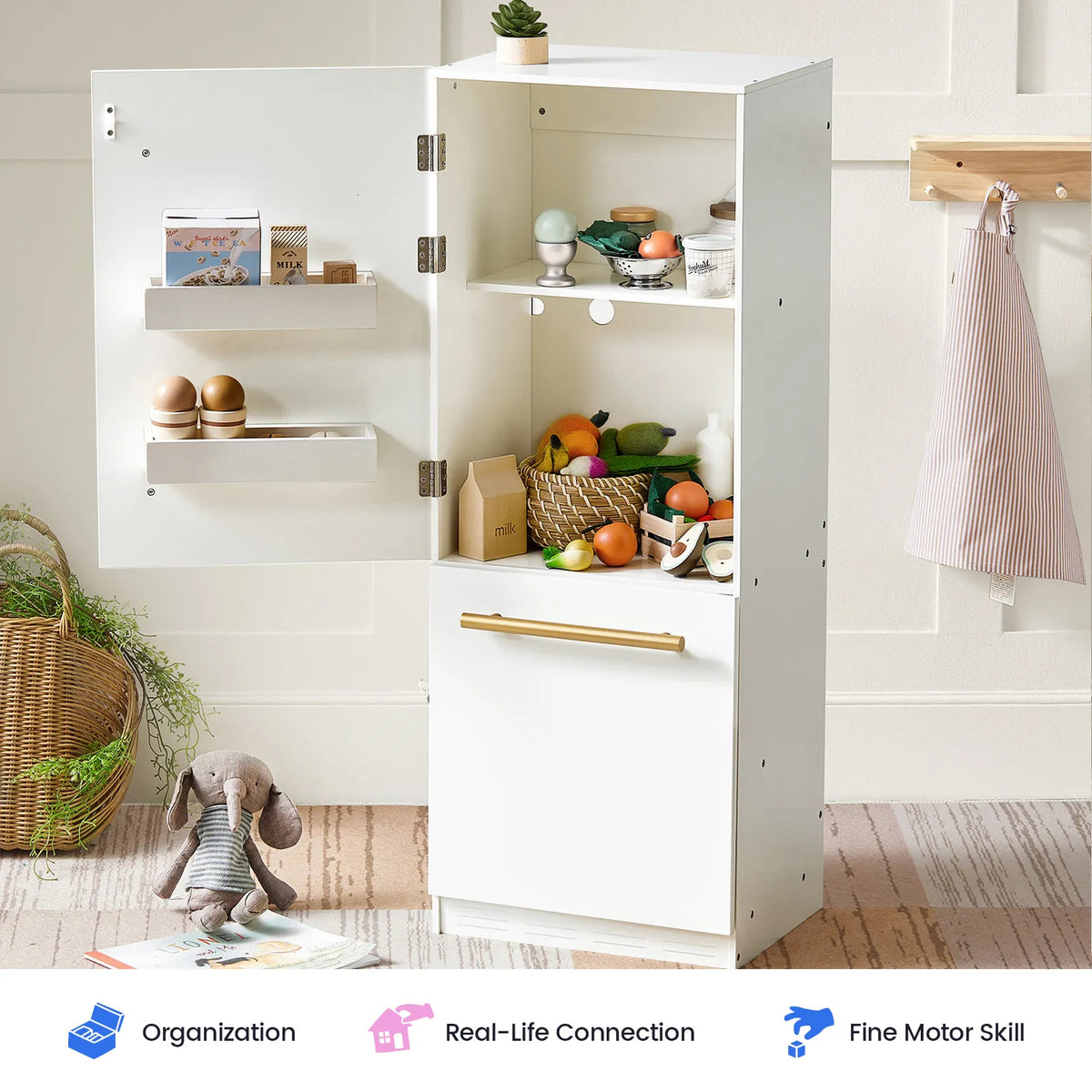
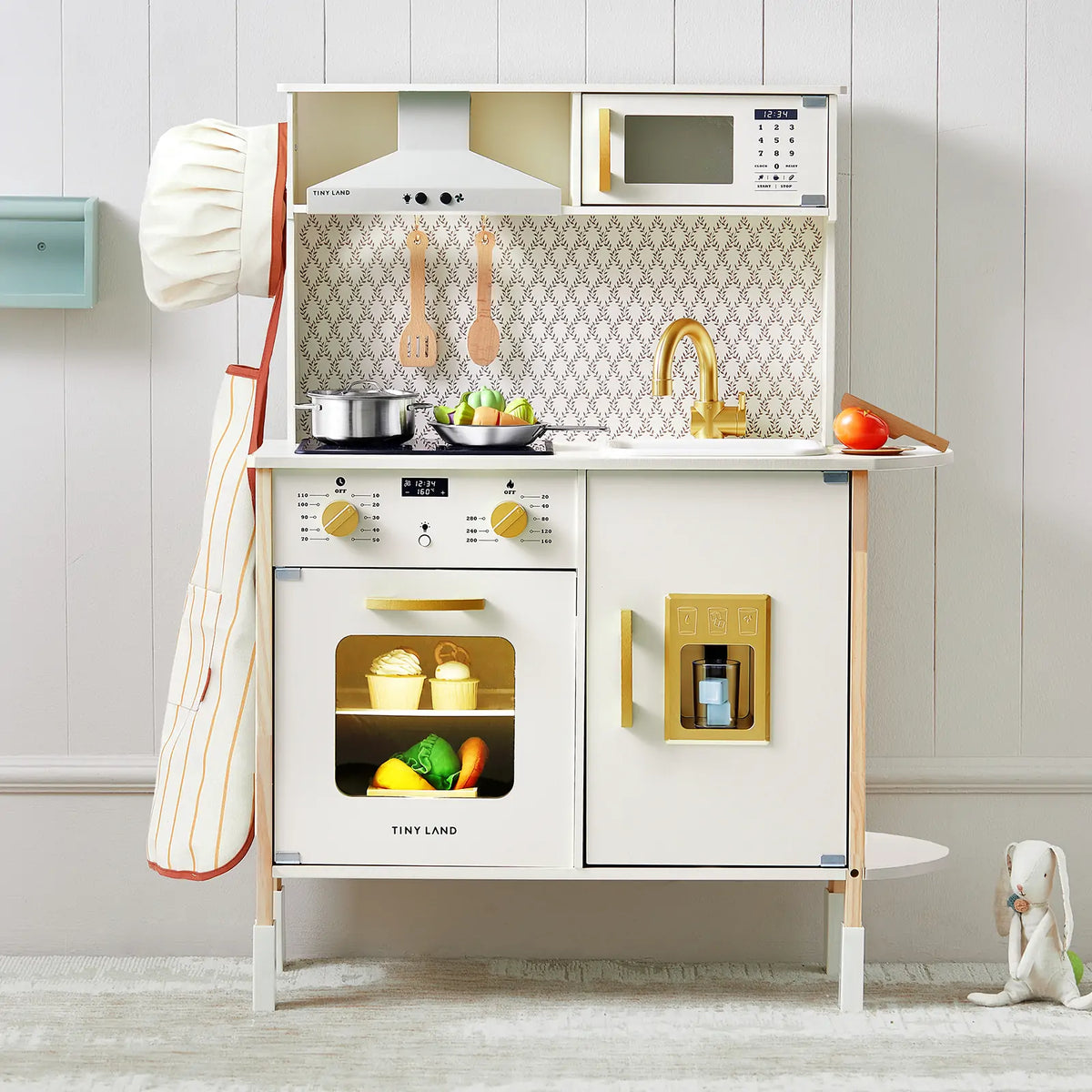
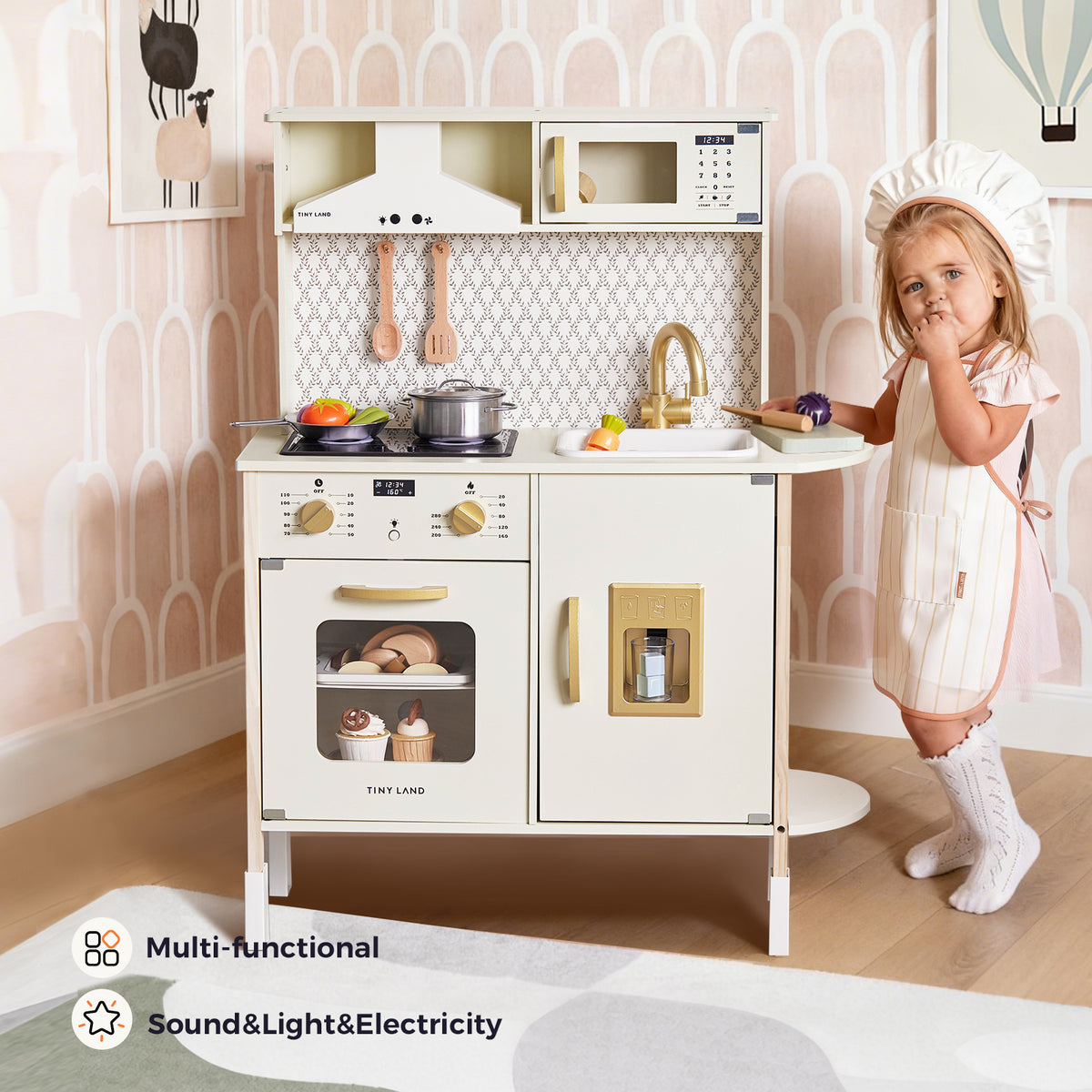



Choosing between a play kitchen and a dollhouse can be surprisingly difficult. Both can become a centerpiece for pretend play, but they invite children to play in different ways.
A play kitchen may suit children who enjoy imitating everyday actions such as preparing, serving, shopping, and organizing food.
A dollhouse may suit children who enjoy characters, rooms, conversations, and longer story-based play.
So, which one is better?
There is no universal answer. The better choice depends on how your child already likes to play, how much space you have, which accessories you own, and how your family wants to use the toy.
If you're searching for play kitchen vs. dollhouse, this guide compares the two side by side and gives you a simple way to decide which pretend-play centerpiece fits your home.

Play Kitchen vs. Dollhouse: What's the Main Difference?
The simplest distinction is this:
A play kitchen is built around actions and familiar routines. A dollhouse is built around characters, spaces, and stories.
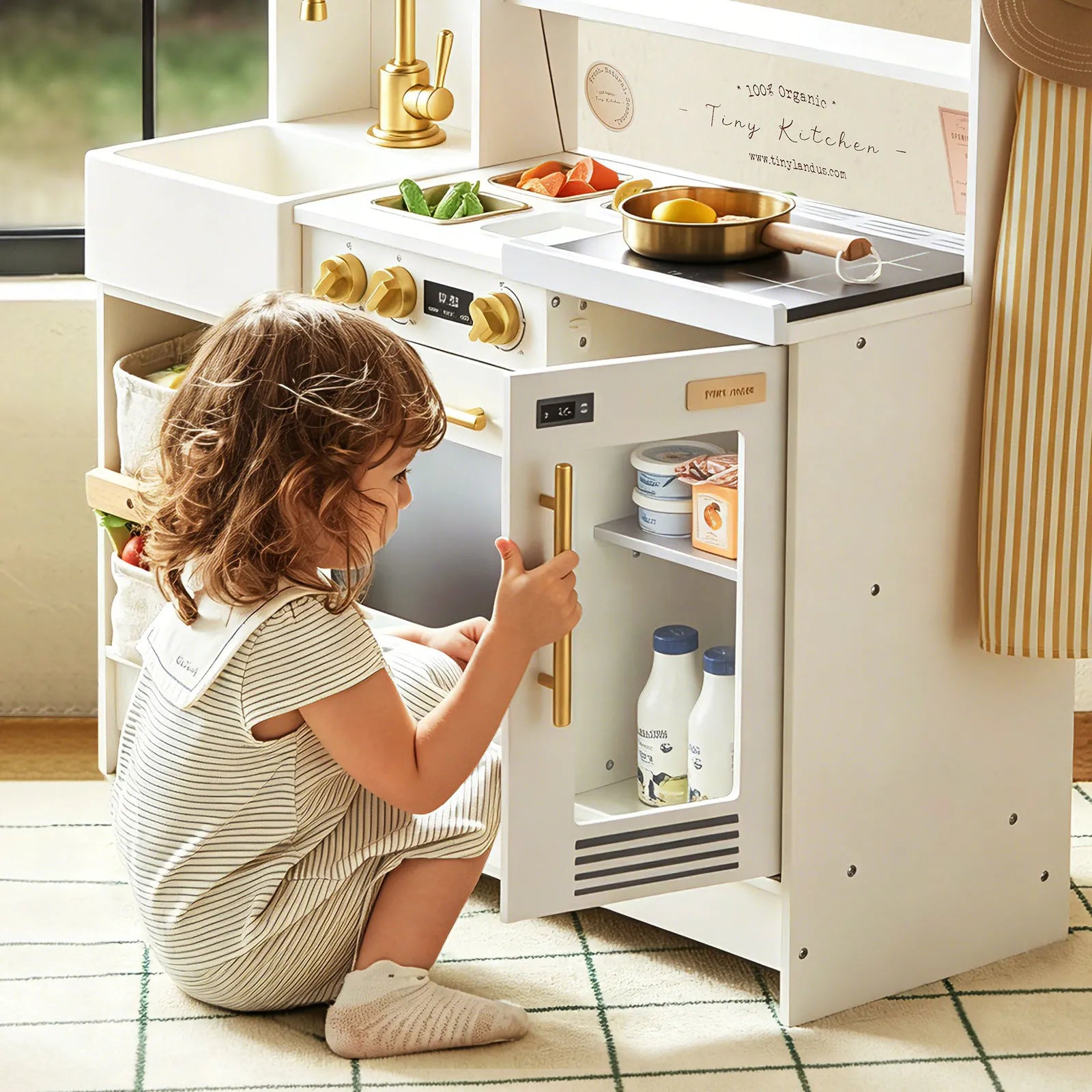
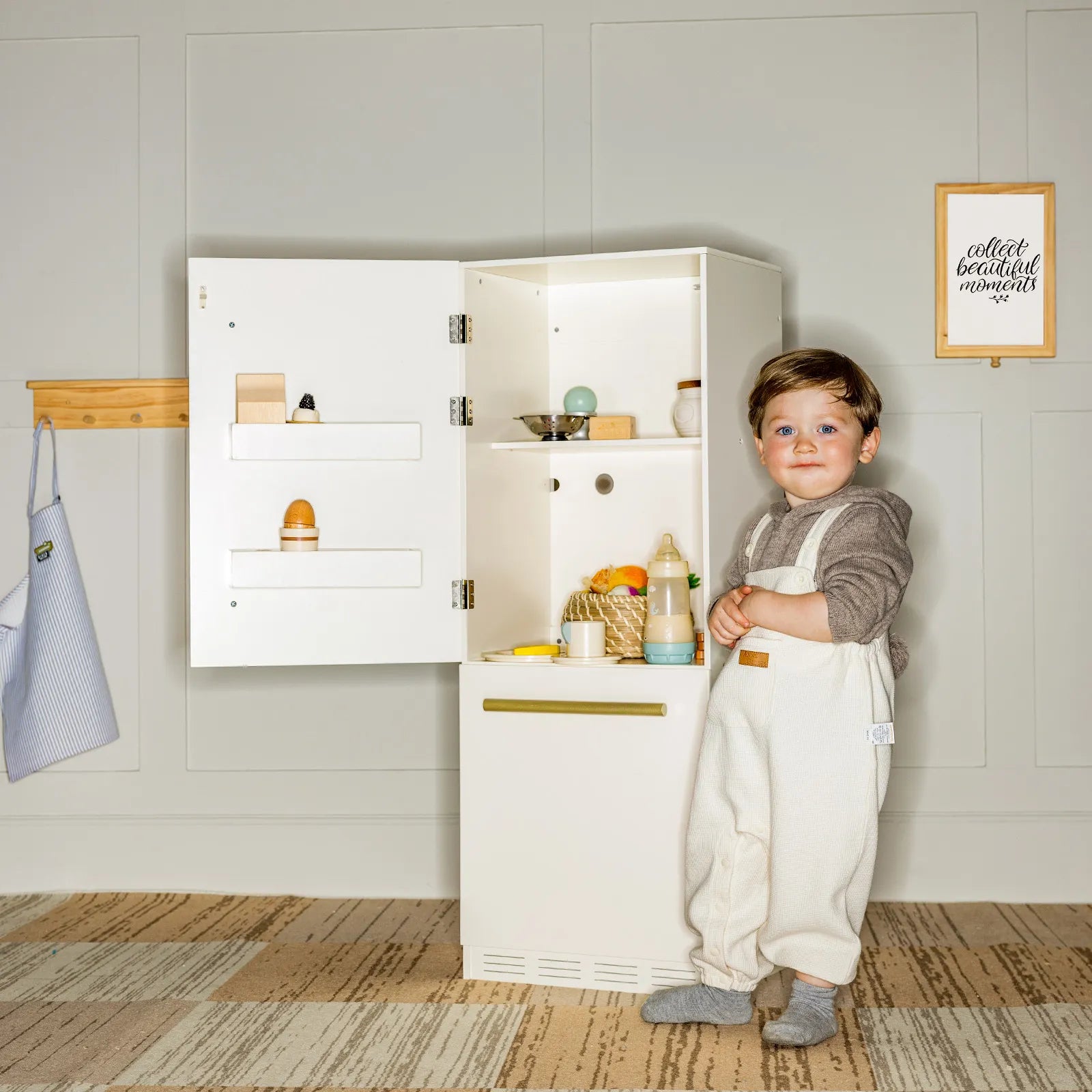
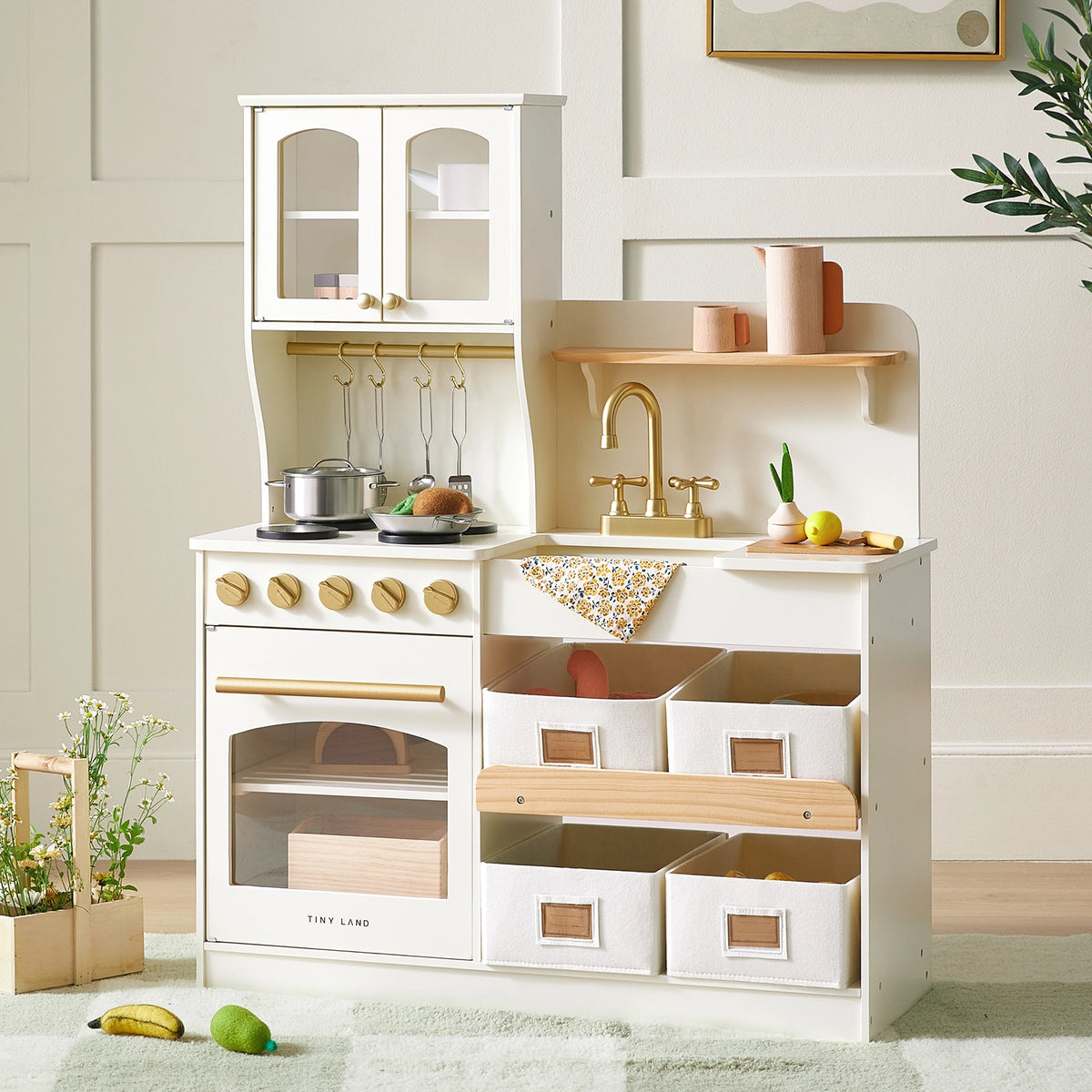
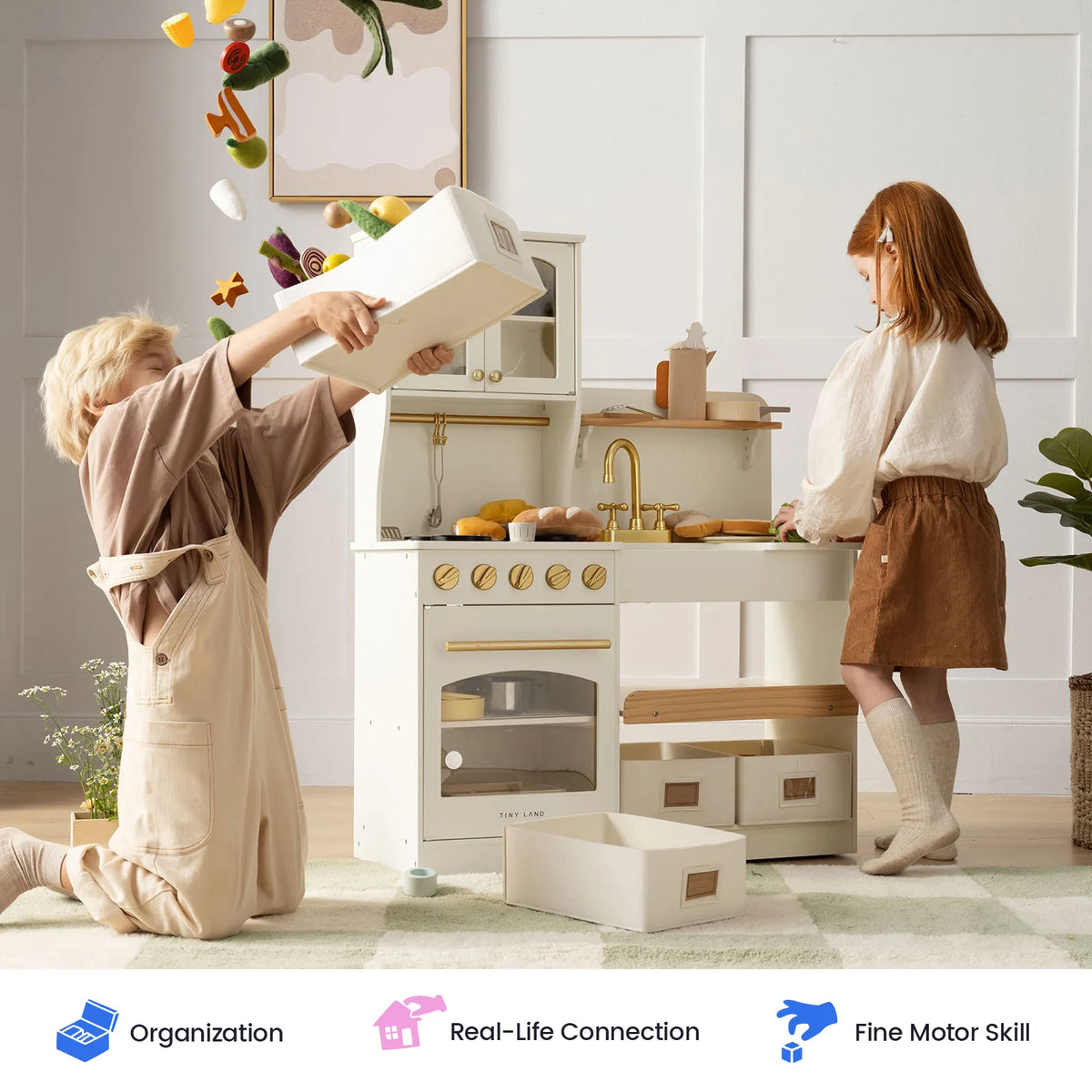
A play kitchen gives children a miniature environment where they can pretend to cook, serve meals, organize ingredients, shop for food, or run a restaurant or café.
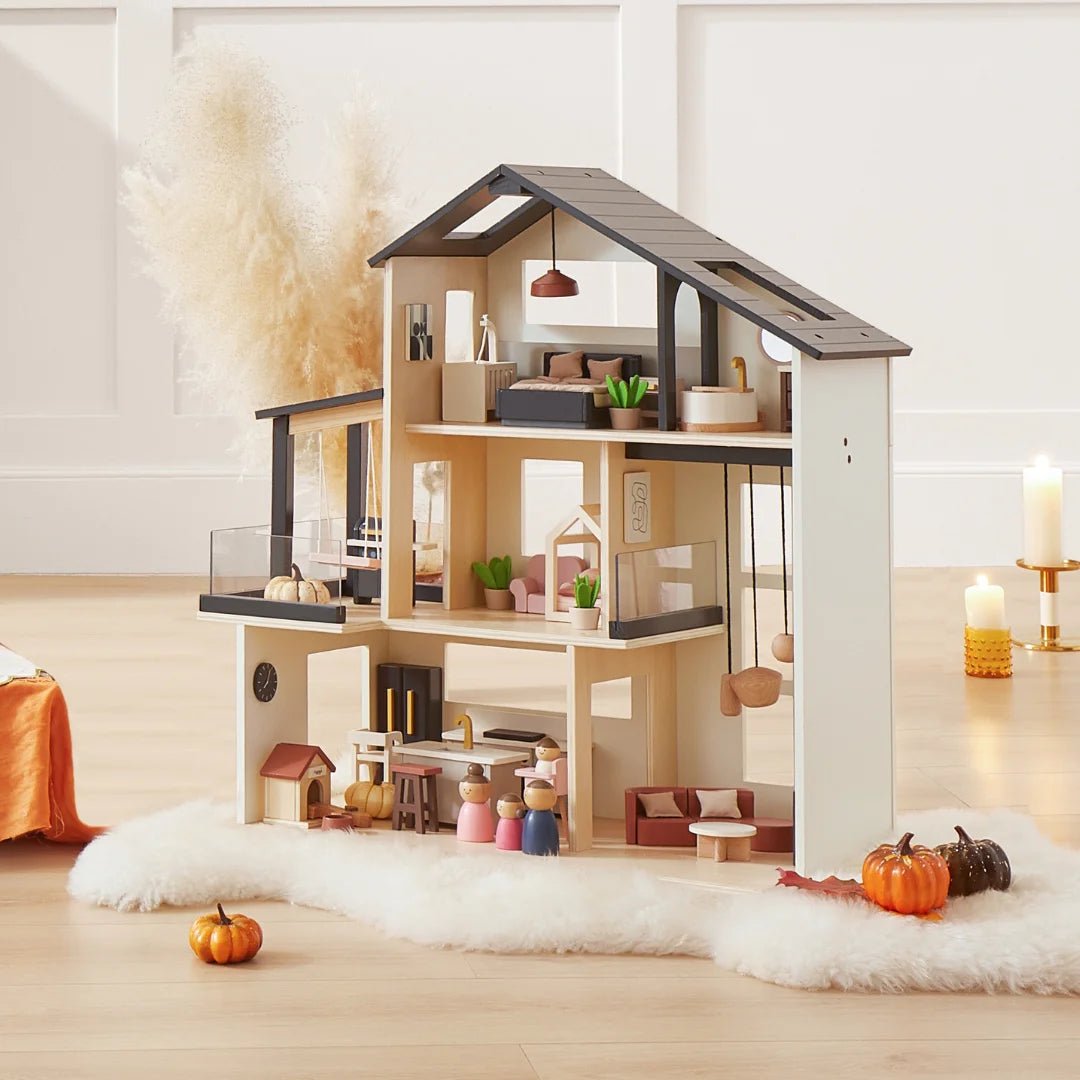
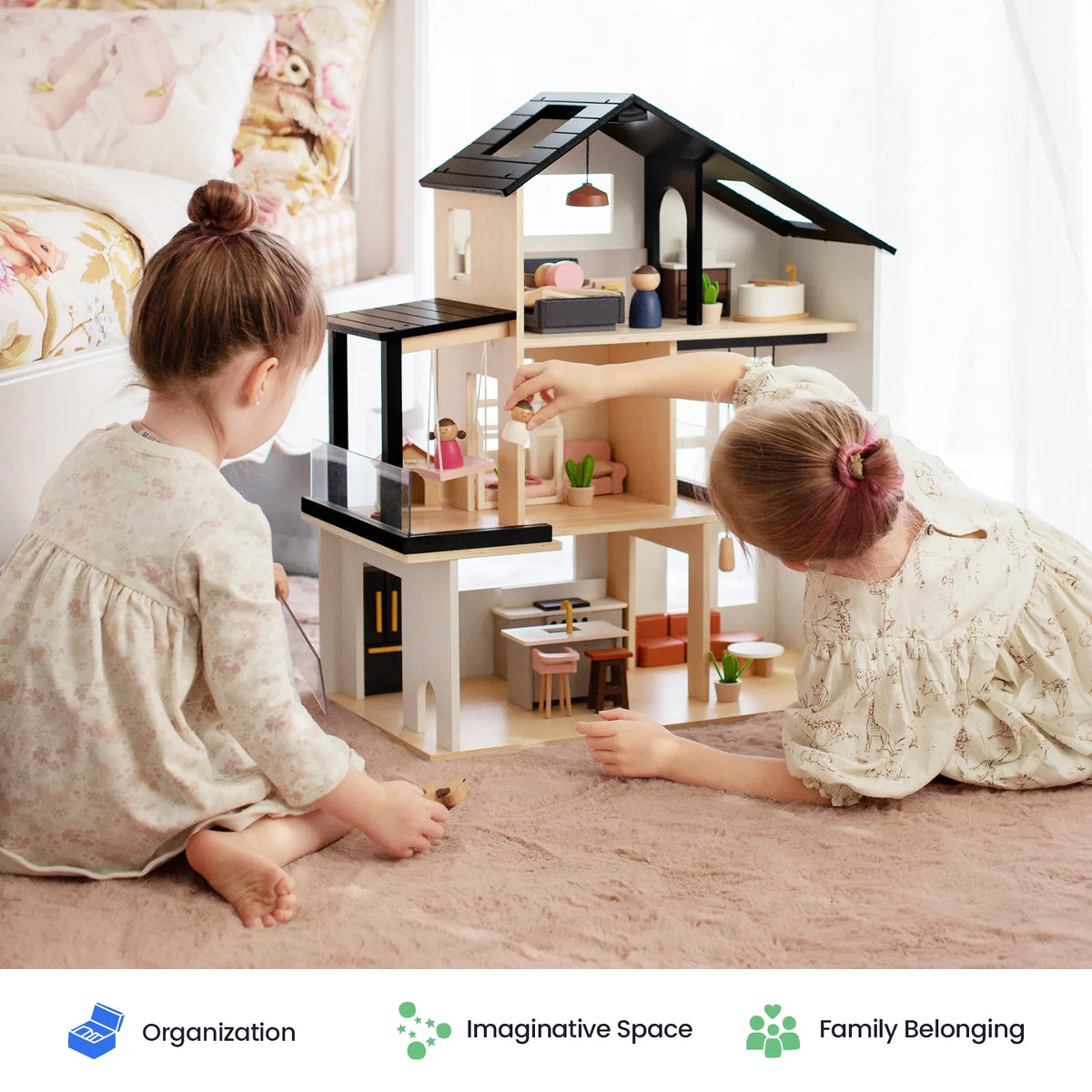
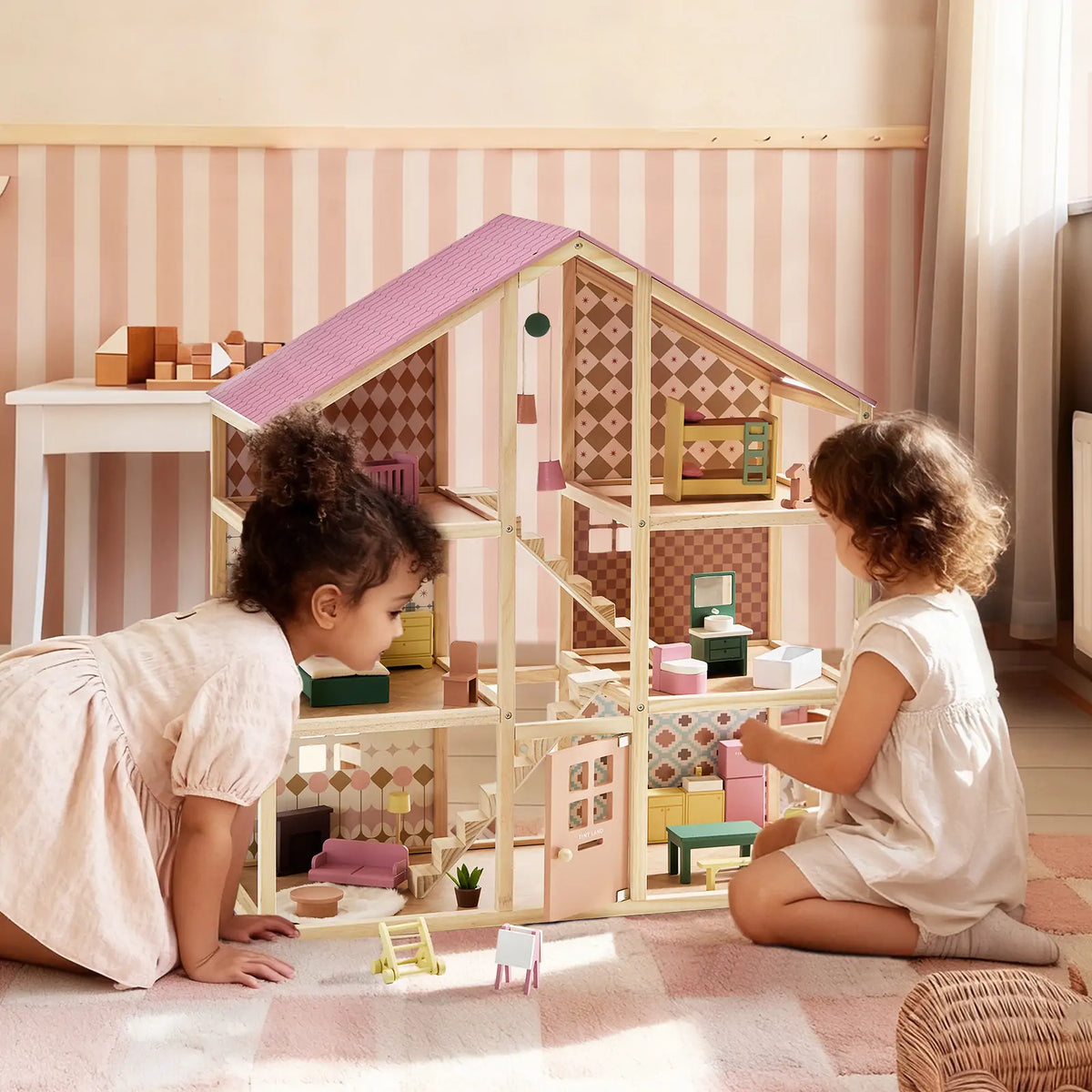
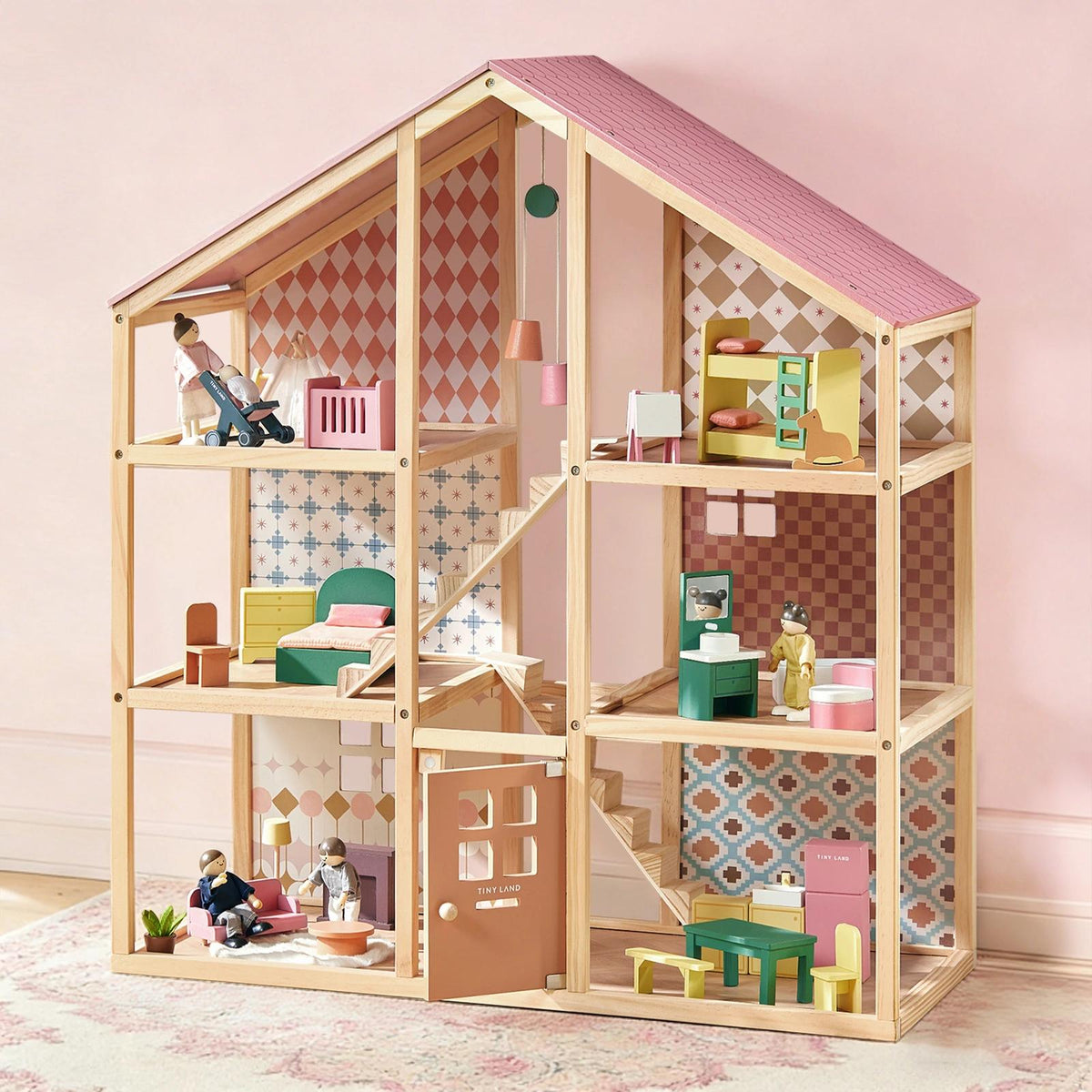
A dollhouse provides a miniature home where children can create characters, arrange rooms, move furniture, act out conversations, and develop imaginary stories.
Neither type of toy is inherently better. They simply offer different starting points for pretend play.
| Play Experience | Play Kitchen | Dollhouse |
|---|---|---|
| Main play | Cooking, serving, shopping, organizing | Characters, rooms, conversations, stories |
| Typical play style | Everyday routines and role-play | Character-based storytelling |
| Accessories | Play food, cookware, utensils | Dolls, figures, furniture |
| Story structure | Often starts with a familiar routine | Often develops around characters and events |
| Play position | Often standing or playing from the front | Often sitting or playing close to the structure |
| Storage | Food, dishes, cookware, utensils | Dolls, furniture, and smaller accessories |
| Good starting point | Children interested in imitation and hands-on actions | Children interested in characters and storytelling |
The important question isn't which toy has more “educational value.”
It's:
Which type of play does your child naturally return to?

Compare the Play Experience
Play Kitchen: Everyday Actions Become Pretend Play
A play kitchen gives children a familiar setting for acting out things they see in everyday life.
A child might pretend to:
- Make breakfast
- Prepare dinner
- Serve food to family members
- Wash or organize dishes
- Put groceries away
- Run a pretend café
- Take restaurant orders
- Prepare food for dolls or stuffed animals
The play can start with a very simple scenario: “I'm making dinner.”
Then it can become more elaborate: “You're the customer, I'm the chef, and the restaurant is open.”
That flexibility is part of what makes a play kitchen useful as a pretend play toy for home. Children can repeat familiar routines or change the scenario whenever they want.
A play kitchen can also work particularly well when a child already enjoys imitation—watching adults cook, pretending to clean, arranging objects, or serving others.

Dollhouse: Characters Create the Story
A dollhouse starts from a different place.
Instead of asking, “What should I make?” children may begin by asking: “Who lives here?”
From there, the child decides what happens.
They might:
- Give characters names and personalities
- Arrange furniture
- Decide who sleeps in each room
- Create family routines
- Make characters talk to one another
- Move characters from room to room
- Invent birthdays, visits, trips, or other events
- Change the storyline during each play session
The physical rooms provide a setting, while the characters provide the reason for the story.
For children who naturally use dolls, figures, stuffed animals, or other toys to create conversations and imaginary situations, a dollhouse for toddlers or young children can provide a natural extension of that play.

How to Choose: Watch What Your Child Already Does
You don't need to predict which toy your child will like months from now.
Instead, look at what they already do with the toys around them.
A Play Kitchen May Be a Good Fit If Your Child:
Imitates cooking or household routines
Does your child pretend to stir, pour, wash, clean, or prepare food?
A play kitchen gives those actions a dedicated space.
Likes serving other people
Some children particularly enjoy making something and then bringing it to someone else.
A pretend meal can become a shared play routine between a child and parent, sibling, or friend.
Enjoys sorting and organizing
If your child likes lining up objects, putting things into containers, opening doors, or arranging food, a kitchen provides plenty of opportunities for this type of hands-on play.
Repeats familiar sequences
A child may repeatedly prepare food, serve it, clean up, and start again.
That repetition can be part of the child's own pretend-play routine.

A Dollhouse May Be a Good Fit If Your Child:
Creates characters
If your child already gives dolls, stuffed animals, or figures names and personalities, a dollhouse gives those characters a physical setting.
Enjoys conversations
Does your child speak for different toys or create imaginary conversations?
A dollhouse provides rooms and situations that can give those conversations somewhere to go.
Likes arranging spaces
Some children enjoy deciding where furniture belongs, who sleeps where, and how each room should be used.
A dollhouse turns that interest into part of the play.
Changes stories over time
A dollhouse can support stories that evolve from one play session to another.
Today, the characters might be preparing for a birthday.
Tomorrow, they might be moving furniture, welcoming a visitor, or going on a trip.

Not Sure Yet? Look at the Toys Your Child Already Uses
Before buying a new centerpiece, observe your child's existing pretend play.
A cardboard box might become a kitchen.
A few figures might become a family.
A stuffed animal might become a restaurant customer.
These small moments can provide useful clues about whether your child is more drawn to actions and routines or characters and stories.
 Consider Your Available Space
A good pretend-play toy needs more than enough room for the product itself.
You also need to consider where the child will stand or sit, how the toy opens, and where accessories will be stored.
What to Check Before Buying a Play Kitchen
Available wall and floor space
Many play kitchens work well against a wall. Measure the available width and depth before choosing one.
Door and cabinet clearance
Don't measure only the footprint. Check whether oven doors, refrigerator doors, cabinets, or other moving parts require additional space.
Accessory storage
Play food, cookware, cups, and utensils can quickly add up. Consider whether the kitchen provides storage or whether you have another system available.
Standing space
Children often play with kitchens from the front. Leave enough room for comfortable standing and movement.

What to Check Before Buying a Dollhouse
Overall height
A taller dollhouse may offer more rooms, but it also requires more vertical space.
Front or multi-sided access
Check whether the design is intended for front-facing play or whether children need access from multiple sides.
Accessory storage
Dollhouse furniture, figures, and miniature accessories can be small and easy to scatter. Think about where everything will go after play.
Sitting area
If your child will primarily play on the floor, make sure there is enough room to sit comfortably in front of the dollhouse.
Don't Just Measure the Toy
Measure the play zone.
The useful question is: Where will my child stand or sit while playing, and where will everything go when play is finished?
That can be more important than the product dimensions alone.

Let Your Existing Toys Help You Decide
Your current collection of pretend-play toys can also point you toward the better centerpiece.
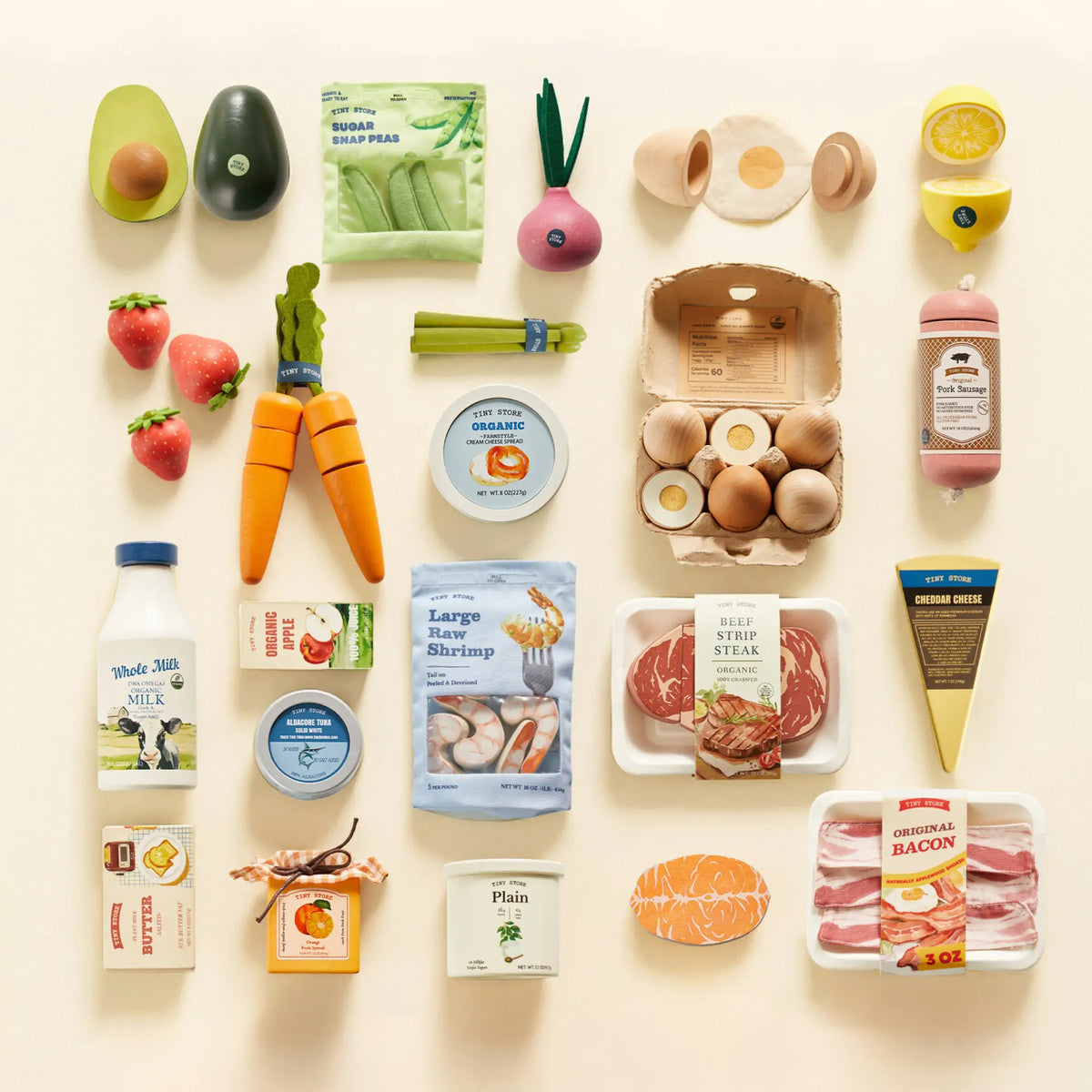
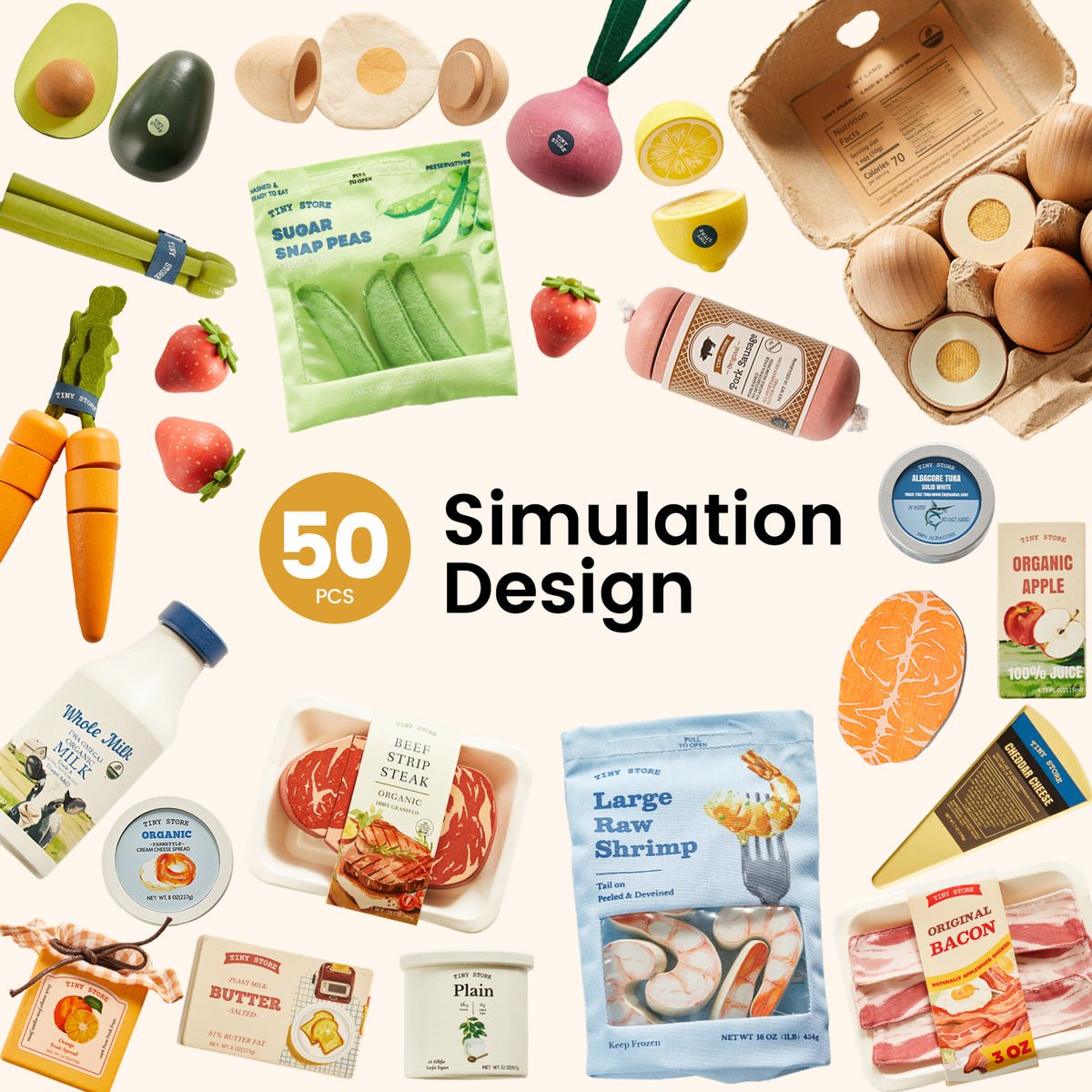
Already Have Play Food?
A play kitchen can immediately give that collection a home.
Play food can become:
- Breakfast ingredients
- Grocery items
- Restaurant meals
- Café orders
- Picnic supplies
- Pretend cooking ingredients
If your child already spends time sorting, serving, or “cooking” with play food, a kitchen may be a natural next step.
Already Have Dolls or Figures?
A dollhouse can give existing characters a setting.
You don't necessarily need a large collection of miniature accessories from the beginning. Start with the characters your child already enjoys and see how they use the space.
Already Have a Train Set?
A train set can expand dollhouse storytelling.
Characters can travel between locations, visit friends, go on imaginary trips, or connect different parts of a pretend town.
Already Have a Grocery Store or Market Stand?
A grocery store or market stand can connect naturally with a play kitchen and play food.
A child can:
Shop → bring food home → prepare it → serve it → clean up
That creates a simple sequence without requiring a parent to provide a storyline.

What Makes a Good Pretend-Play Toy?
If you're searching for the best pretend play toy, it's tempting to compare features, accessories, and product size.
But a better starting point is how flexible the play experience is.
A strong pretend-play setup can give children opportunities to:
Use It in More Than One Way
A kitchen can become a restaurant, café, grocery preparation area, or family kitchen.
A dollhouse can become a family home, hotel, school, or entirely imaginary setting.
Connect It to Existing Toys
Play becomes more flexible when children can combine the centerpiece with dolls, stuffed animals, vehicles, play food, blocks, or other toys.
Play Alone or With Others
A pretend-play environment can work differently depending on whether a child is playing independently, with a sibling, or with a parent.
Change the Story
Open-ended play doesn't need to follow one correct sequence.
The child should be able to decide what happens next.
Fit Into Real Family Life
The best toy for one home may not be the best toy for another.
Storage, available floor space, cleanup, and accessibility all matter.
That's why there isn't one universal best pretend play toy for every child or family.

When a Play Kitchen and Dollhouse Work Together
You don't always have to think of a play kitchen and dollhouse as competing choices.
If your space allows for both, they can become different locations within the same pretend-play world.
For example:
The dollhouse is the characters' home.
The child decides who lives there and what their daily routine looks like.
The characters visit the play kitchen or pretend restaurant.
They can order breakfast, prepare lunch, or host a dinner.
Play food becomes part of the storyline.
The characters can shop for ingredients, bring them home, and prepare meals.
A train or vehicle connects the locations.
The characters can travel between home, a restaurant, a grocery store, or other imaginary places.
Then the child decides what happens next.
This is one reason pretend-play toys can work as an ecosystem rather than as isolated products.
You don't have to build the entire setup at once.
Start with one centerpiece, then add accessories based on what your child actually uses.
 Play Kitchen or Dollhouse? Take the Five-Question Quiz
Still deciding?
Answer these five questions.
1. Does your child prefer actions or characters?
Actions → Play Kitchen
If your child frequently pretends to cook, serve, shop, clean, or organize, a play kitchen may be a better starting point.
Characters → Dollhouse
If your child frequently creates characters, conversations, families, or imaginary stories, a dollhouse may be a better fit.
2. Which setup fits your home?
Available wall space + standing play → Consider a Play Kitchen
Dedicated floor-play area + sitting play → Consider a Dollhouse
Always check the specific product dimensions and required clearance.
3. Which accessories do you already own?
Play food + cookware → Play Kitchen
Dolls + figures + miniature furniture → Dollhouse
Existing toys can make a new centerpiece useful immediately.
4. Will siblings or friends play together?
Think about how children will physically access the toy.
A play kitchen can naturally create roles such as chef, customer, server, or shopper.
A dollhouse can support different characters and story roles.
The best option depends on the specific design and how your children tend to play together.
5. How much accessory organization can your family manage?
Consider the entire setup, not just the main toy.
Ask yourself:
- Where will the play food go?
- Where will the dolls go?
- Where will small furniture pieces go?
- Can the child help with cleanup?
- Is there enough storage nearby?
A toy that fits your family's daily routine is more likely to remain part of the play space.

Play Kitchen or Dollhouse: Which Should You Buy?
If you want the simplest answer:
Choose a play kitchen if your child is naturally drawn to everyday actions such as cooking, serving, shopping, organizing, and imitation.
Choose a dollhouse if your child is naturally drawn to characters, rooms, conversations, and evolving stories.
If you're still unsure, look at your child's current play rather than trying to predict what they “should” enjoy.
And remember: choosing one doesn't mean excluding the other forever.
A play kitchen and dollhouse can eventually become parts of the same imaginative world.
The best pretend-play centerpiece is ultimately the one that fits your child's interests and your family's space, routines, and storage needs.

Frequently Asked Questions
Is a play kitchen or dollhouse better for toddlers?
Neither is universally better.
A child who enjoys imitating cooking, serving, shopping, or household routines may naturally engage with a play kitchen. A child who enjoys characters, dolls, rooms, and simple stories may gravitate toward a dollhouse.
Always check the manufacturer's recommended age range for the specific product, particularly when accessories include small pieces.
Should I buy a play kitchen or dollhouse first?
Start with the type of pretend play your child already initiates most often.
If your child frequently imitates cooking, serving, shopping, or household routines, a play kitchen may be the more natural first choice.
If your child frequently creates characters, conversations, and imaginary homes, a dollhouse may be the better starting point.
Which takes up more room: a play kitchen or dollhouse?
It depends on the individual design.
A play kitchen may require more floor depth for standing play and opening doors or cabinets. A dollhouse may require more vertical space or additional room around the structure.
Always consider the full play zone rather than comparing the product footprint alone.
Can boys and girls both use play kitchens and dollhouses?
Yes. Play kitchens and dollhouses are not gender-specific toys.
Children can use either one to create routines, characters, relationships, and imaginary stories according to their individual interests.
Which toy is easier to share with siblings?
Both can support shared pretend play.
A play kitchen can naturally create different roles such as chef, customer, server, or shopper.
A dollhouse can allow children to take on different characters and contribute to the same story.
The specific design, number of access points, and children's individual play styles all matter.
Can a play kitchen and dollhouse be used together?
Yes.
A dollhouse can provide the characters' home, while a play kitchen can become a restaurant or another location. Play food, grocery stores, trains, and vehicles can connect the different parts of the story.
This can turn individual pretend-play toys into a larger play world.

Find Your Pretend-Play Centerpiece
Whether your child wants to prepare a pretend meal or create an imaginary family story, you don't need to find the toy with the longest feature list.
Start with how your child already plays.
Then choose a centerpiece that gives that play somewhere to grow.