
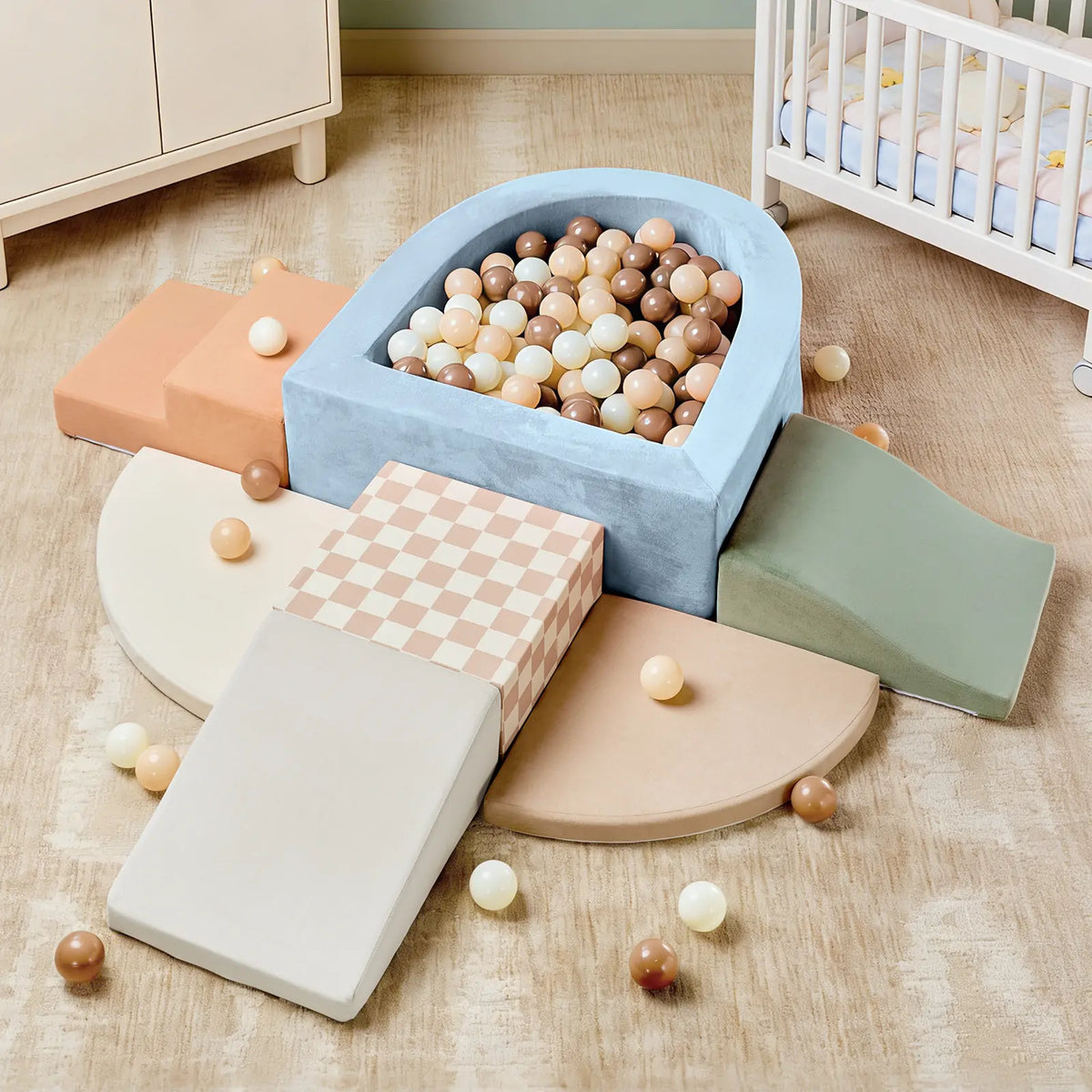
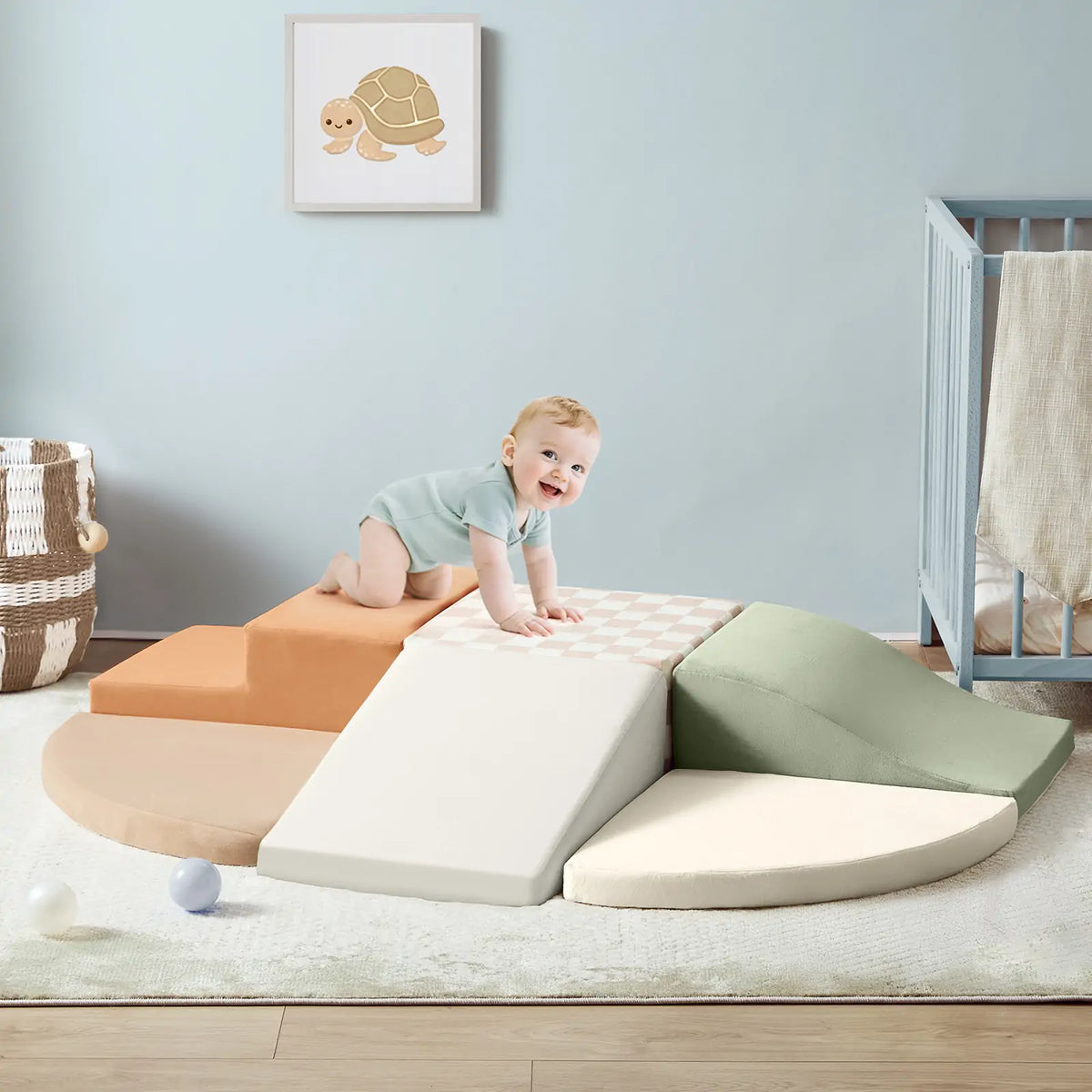
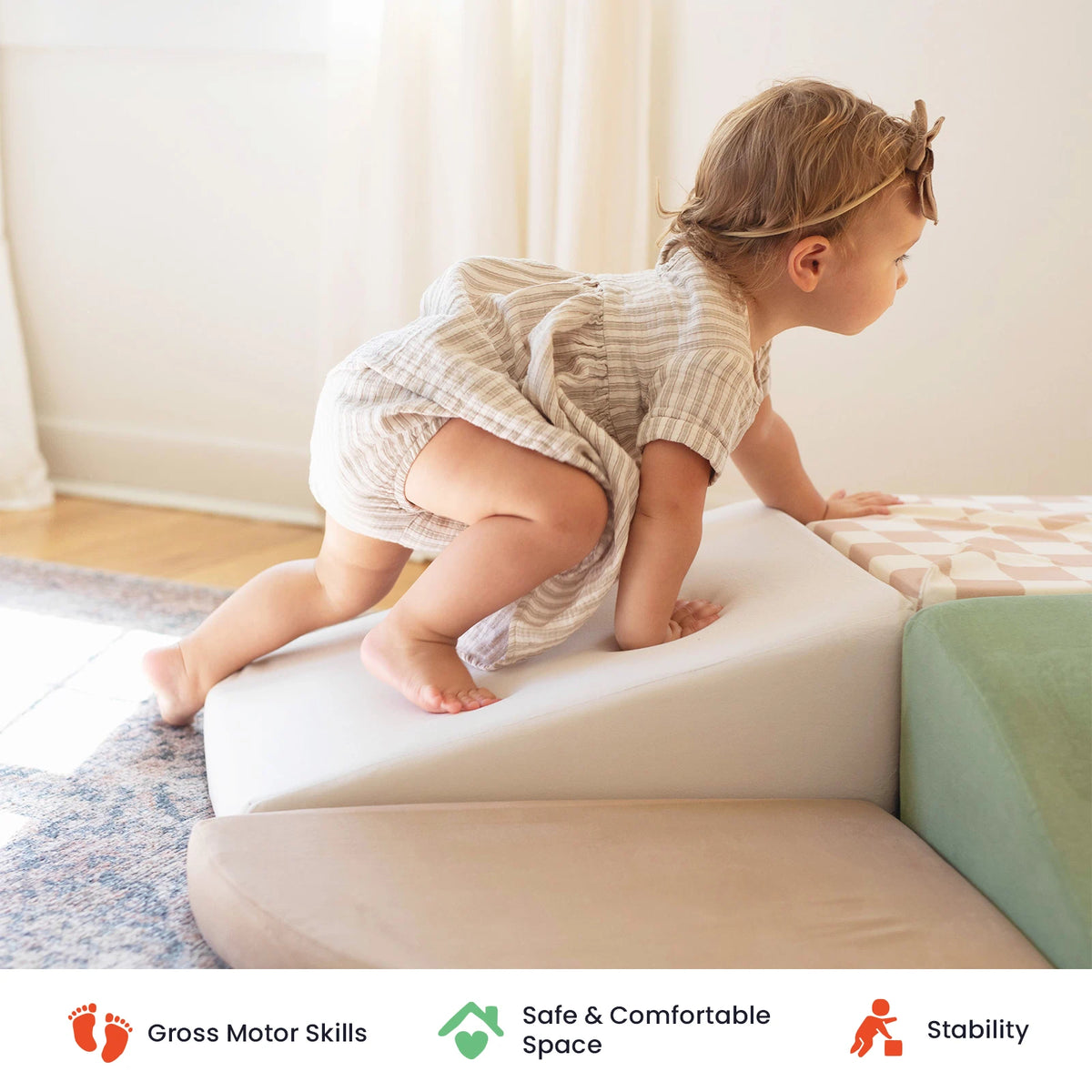

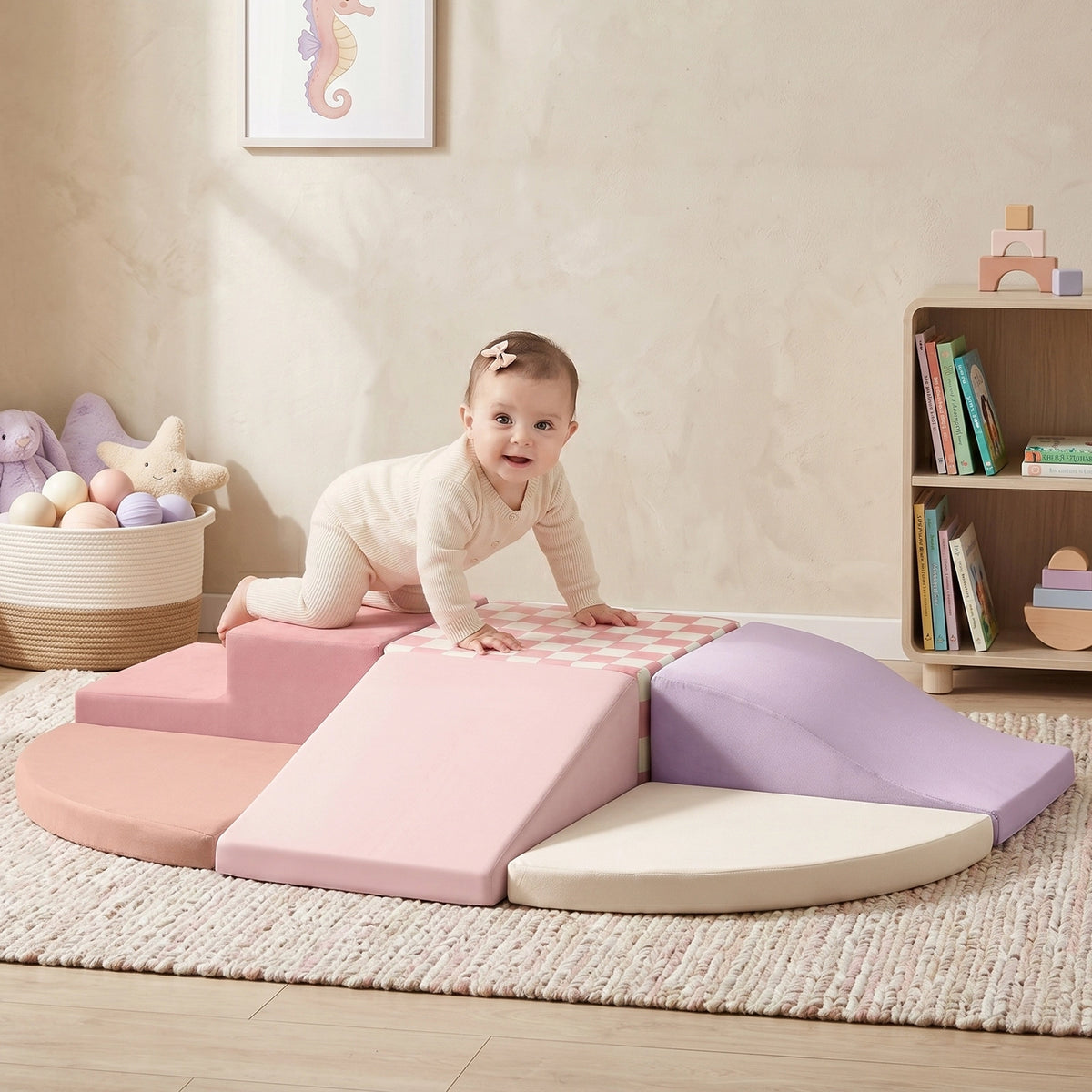
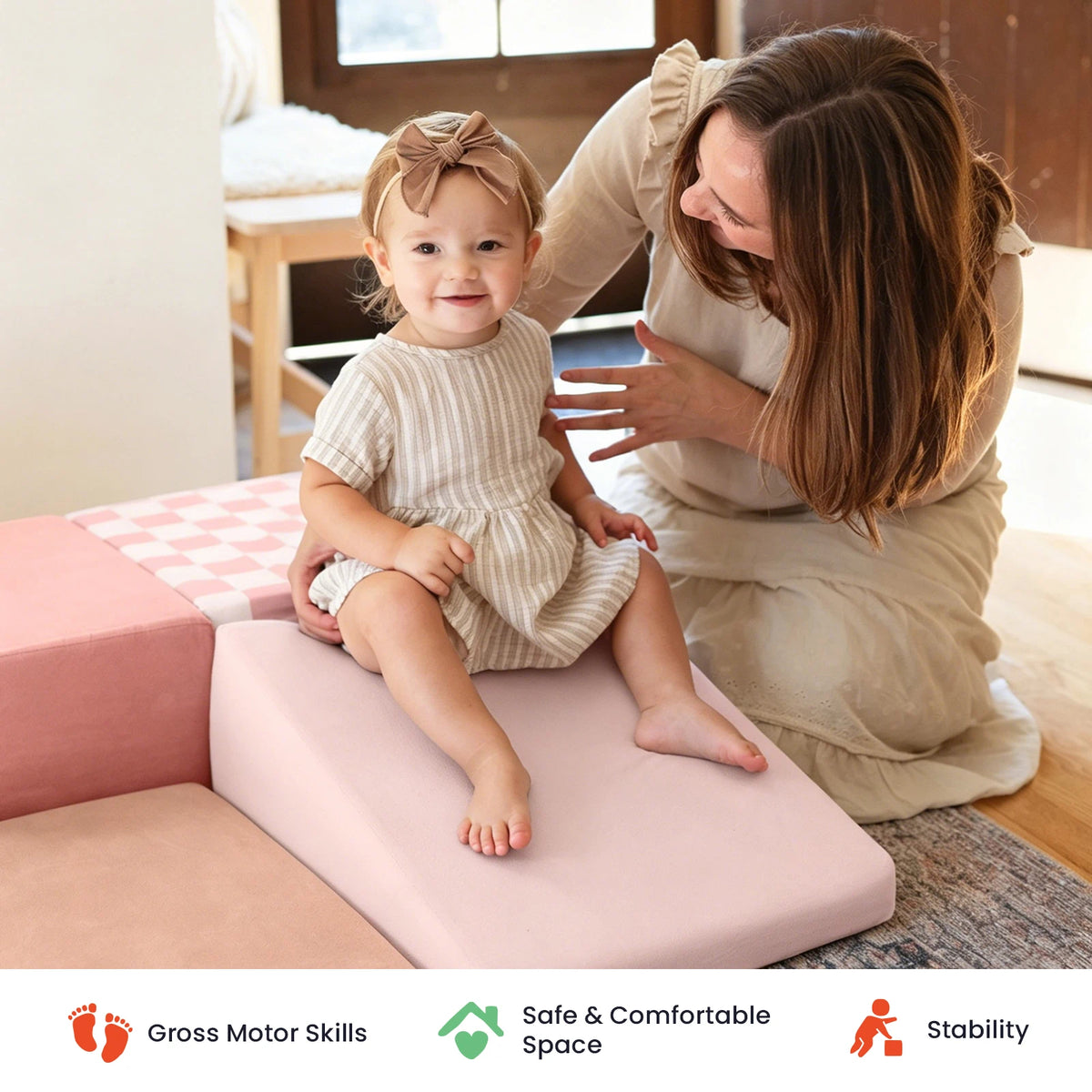
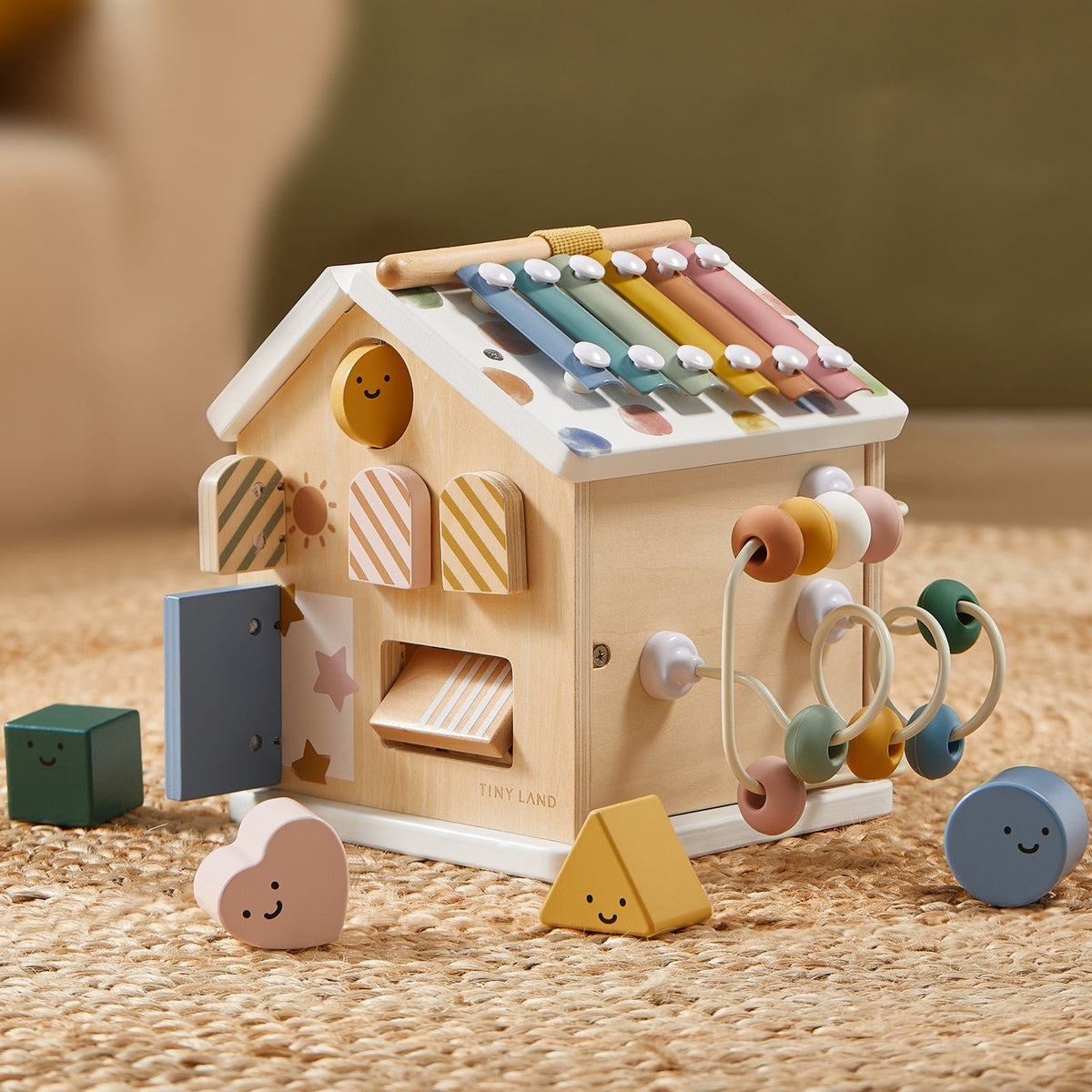
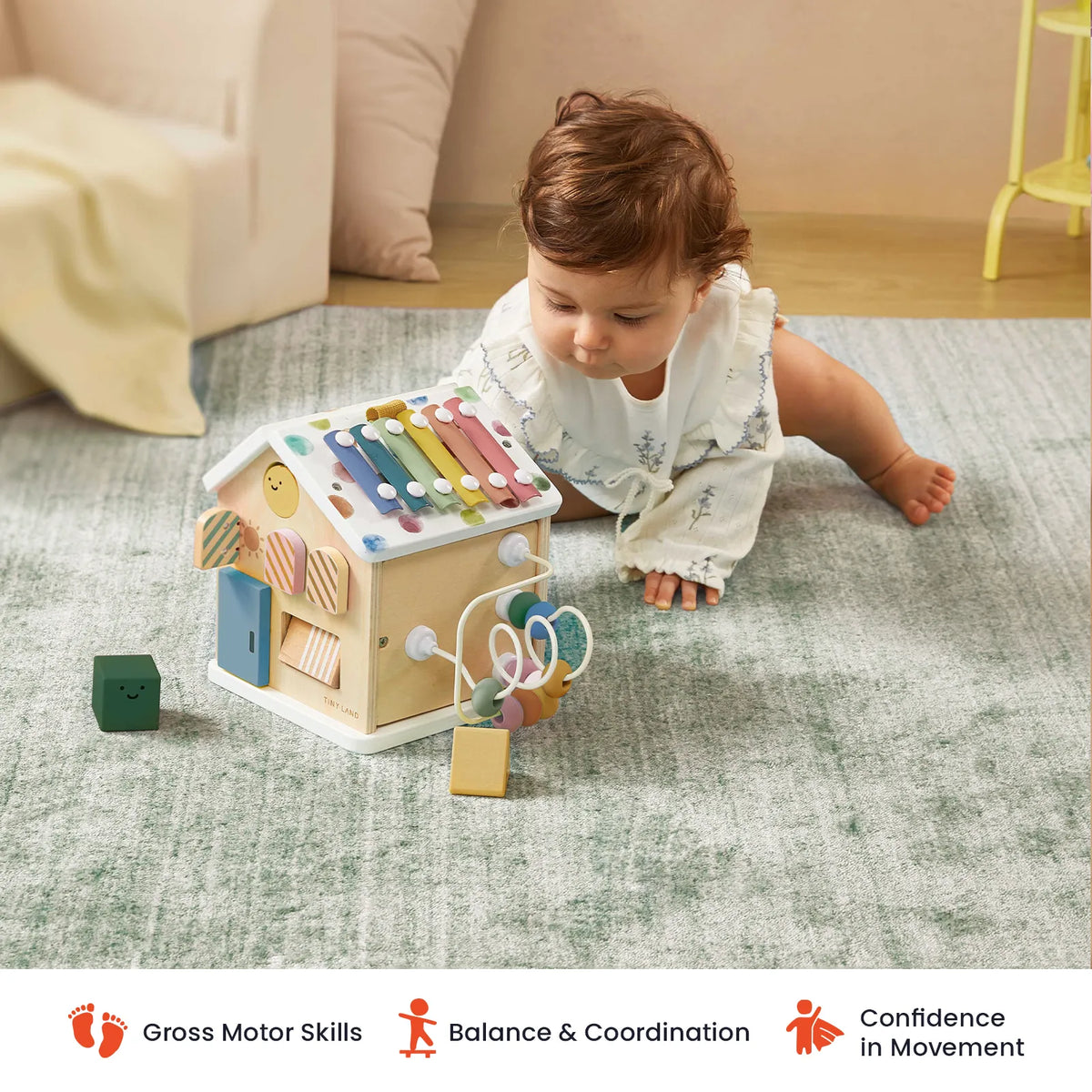
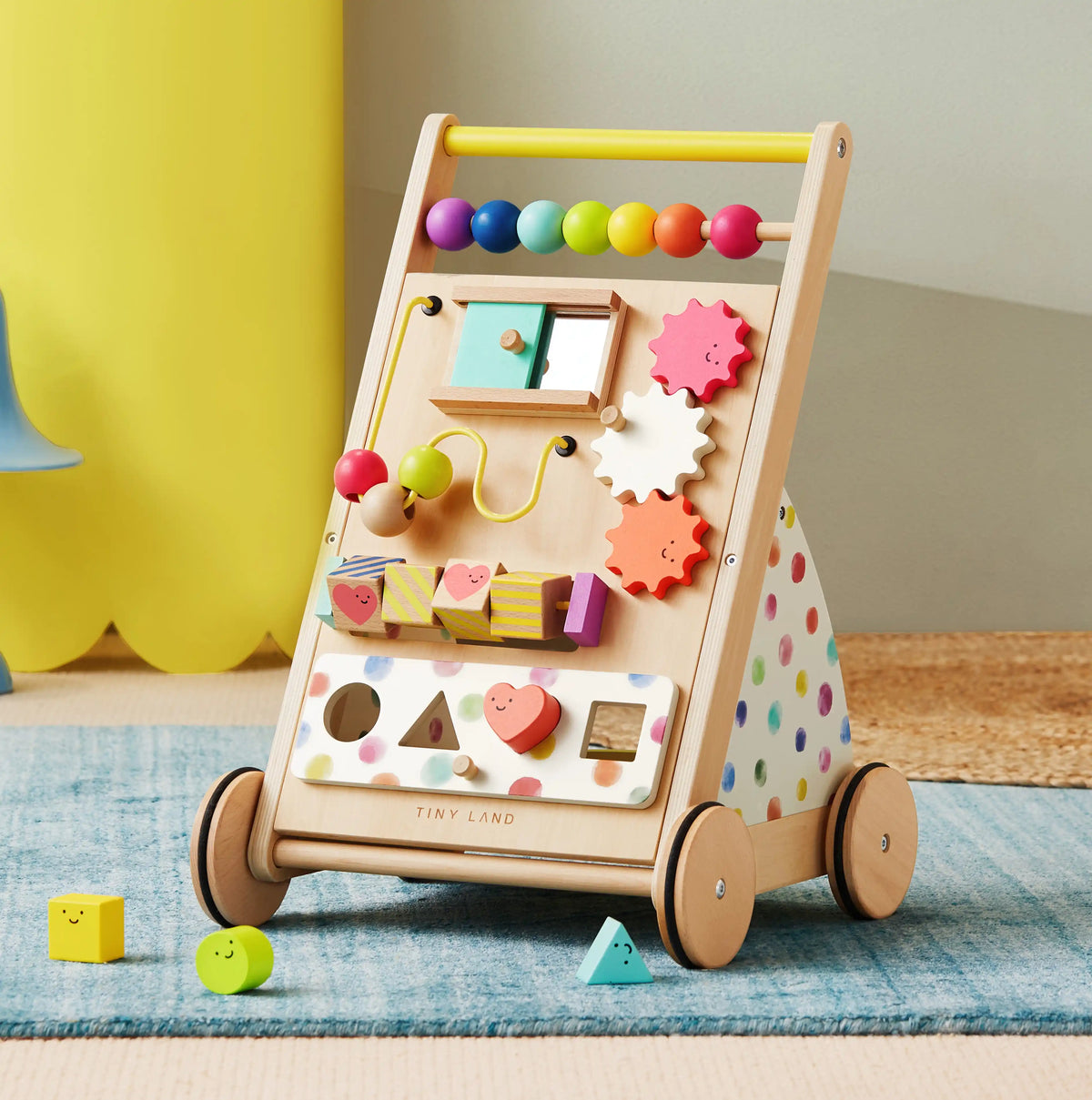


Stepping stones for kids can turn an open area at home into a simple opportunity for movement, balance, and imaginative play.
Toddlers and preschoolers can step from one piece to another, create their own paths, and turn a basic movement activity into an imaginary adventure.
Whether you are looking for a simple indoor activity or a way to encourage movement outside, stepping stones can be arranged in different ways to match your child's age, abilities, and interests.

What Are Stepping Stones for Kids?
Stepping stones are movement toys that support learning through movement, helping children discover new ways to explore while practicing balance, coordination, controlled movement, and core strength.
They can be arranged close together for a simple path or spaced differently to create new movement challenges as children become more confident.
For toddlers, a short path can encourage careful stepping from one surface to another. Preschoolers may enjoy adding turns, changing directions, or creating their own routes.
One of the benefits of stepping stones is that they can support open-ended play. The same pieces might become:
-
A path across an imaginary river
-
Islands in a pretend ocean
-
A bridge through a forest
-
Stops along an adventure
-
Part of a larger movement game
This flexibility allows children to decide how they want to move and what their play environment represents, and early, repeated use of physical toys can help build healthy movement habits over time.

Indoor and Outdoor Play: Stepping Stone Activities for Toddlers and Preschoolers
Stepping stones can be used for both indoor and outdoor play, depending on the available space and the activity you want to create. Start with a simple arrangement and adjust it as your child becomes more comfortable.
Follow the Path
Place the stones in a short line and invite your child to move from one to the next.
For younger toddlers, keep the pieces relatively close together and encourage slow, controlled steps. Preschoolers may enjoy a longer path or one that changes direction.
You can also let your child help decide where each stone should go. Choosing the route becomes part of the activity and gives them an opportunity to create their own movement path.
Stop and Go
Turn the path into a simple listening game.
When you say “go,” your child moves to the next stone. When you say “stop,” they pause where they are.
Once they understand the basic game, add simple instructions such as:
-
Walk slowly.
-
Take a big step.
-
Take a small step.
-
Turn around.
-
Freeze.
These small changes can create new ways to use the same setup without needing additional equipment.
Pretend the Floor Is Water
Turn the stones into imaginary islands.
Tell your child that the floor is water and the stones are safe places to stand, or use a theme like “The Floor is Lava.” Their goal is to travel from one island to another without stepping into the water.
The story can change according to your child's interests. The stones could become stepping rocks across a river, planets in space, or stops along an imaginary journey, encouraging imagination and creativity.
Create a Simple Movement Path
Preschoolers can combine stepping with other simple movements.
For example:
Step → balance → turn → step → finish
You can change the direction or arrangement of the stones to create a different path. The goal is not to make the activity difficult, but to give children different ways to move and explore.

Outdoor Play: Balance and Movement Games for Active Play
Stepping stones can also become part of outdoor play when the weather is suitable and you have an appropriate space for movement.
Outdoor setups can give children more room to create longer paths, experiment with different arrangements, and combine stepping with other types of active play. For extra variety, try asking children to move like different animals as they travel the path.
You can also combine stepping stones with balance beams or mini trampolines in larger obstacle courses to support core strength. When children help build or complete these setups together, active toys can also encourage teamwork, strategy, and endurance.
Make an Outdoor Stepping Path
Start with a short path and let your child move across it at their own pace.
Once they are comfortable, rearrange the stones into a gentle curve or create several sections. Children can also help decide where the next stone should go.
This makes the setup itself part of the activity rather than simply something prepared by an adult.
Play Island Hopping
Use the stones as imaginary islands.
Children can pretend they are traveling across an ocean and need to reach each island without touching the ground.
You can add a simple story, such as searching for treasure or traveling to a new destination.
The activity can stay simple: move from one stone to another and create a story around the journey.
Add Simple Movement Challenges
Once your child is familiar with the path, introduce one new challenge at a time.
For example:
-
Walk across the stones.
-
Step onto a specific stone.
-
Turn around and return.
-
Move slowly from one stone to the next.
-
Create a new path together.
Allow your child to set the pace. The purpose is to make movement feel like play rather than a structured exercise.

How to Set Up a Safe Imaginative Play Path for the Whole Family
A good stepping stone activity starts with an appropriate play area.
Choose a clear, level surface with enough room for children to move around the stones. Keep the path away from stairs, sharp edges, and other potential hazards to support children's safety. A setup with good stability also helps keep children protected during active play.
For younger children, begin with a simple arrangement. Placing the stones closer together can make it easier for toddlers to move between them.
Keep these basic considerations in mind:
-
Use the stepping stones on a stable, appropriate surface.
-
Keep the surrounding area clear.
-
Match the setup to the child's age and abilities.
-
Supervise young children during active play.
-
Start with an easy path before introducing more challenging arrangements.
-
Adjust the spacing and layout as your child becomes more comfortable.
Pretend play can also give the whole family a simple way to join movement and imaginative play.
One child might create the path while another decides what the stones represent. Adults can join the story without taking over the game, allowing children to lead the direction of play. That kind of family playtime can bring a lot of joy while still letting children stay in charge.

How to Choose Stepping Stones for Your Child
When choosing balance stepping stones, look beyond the activity itself and check whether the set fits your child's age, your available space, and the way you expect to use it at home.
Product dimensions, storage dimensions, surface details, and age guidance answer different questions, so it helps to check each one separately.
Start with the Product's Age Guidance
Start with the manufacturer's recommended age and product instructions.
The current Tiny Land Stepping Stones listing gives an age recommendation of 2 years and up.
Use that guidance together with your child's current abilities and confidence rather than replacing the manufacturer's age requirement with a general rule such as “once a child can walk.”
Stepping stones can be a great choice for little ones when the recommended age and current abilities align.
If your child is within the recommended age range, consider how they currently move and whether the planned setup is appropriate for their abilities.
Compare Step Size, Height and Available Floor Space
When comparing stepping stone sizes, distinguish between the size of an individual piece, the usable surface where a child steps, and the space needed to arrange the activity.
The current Tiny Land listing shows multiple stepping-stone levels and dimensions. Check the current product details for the specific set rather than assuming that the outside dimensions of a piece represent its entire usable stepping surface.
For home use, also measure the area where you plan to create the path. The required activity space depends on how you arrange the pieces, so there is no fixed spacing that should be applied to every child or every room.
Check the Base, Surface and Care Instructions
Look at the product's construction materials for durability, and check whether they are eco-friendly, recyclable materials, along with the manufacturer's instructions for use.
The current Tiny Land listing identifies plastic and rubber materials and describes a textured surface and rubber base. These are product features, but a rubber base or textured surface should not be treated as a guarantee that the stones will not move on every type of floor.
Similarly, outdoor use does not automatically mean a product can be left outside through all weather conditions, and durable construction is something to verify rather than assume across products. Follow the current product instructions for appropriate surfaces, cleaning, and outdoor use.
Check What Is Included and How It Stores
Before purchasing, check the current information for the products.
Note that lightweight items are usually easier to carry, restack, and move between indoor and outdoor spaces.
Storage stacking should also be distinguished from stacking for play. A set being designed to stack for storage does not by itself mean that children may climb or stand on a higher stacked configuration. Follow the manufacturer's instructions for any permitted play configuration.
Match the Set to the Kind of Play You Want
Think about the type of activity you want to create, since the kind of play you choose can shape daily playtime and what children discover during movement activities.
If you mainly want step-by-step movement and balance play, stepping stones can be arranged into paths, islands, and simple movement games. A rainbow color set can also support imaginative routes or themed games.
If your child also needs a product specifically designed for climbing or building, consider those products separately.
Climbing blocks and stepping stones can serve different play purposes and should not automatically be treated as interchangeable. Some families also decorate stepping stones with painted designs to make setups feel more engaging.
|
Selection Question |
What to Check |
Tiny Land Information |
Does It Fit Your Child? |
|---|---|---|---|
|
Child's age |
Manufacturer's age guidance and use restrictions |
2 years+ |
Check age and current abilities |
|
Will it fit at home? |
Individual size, usable stepping surface, and activity space |
Check current product details |
Measure your available play area |
|
What surface is appropriate? |
Base structure, surface, and product instructions |
Plastic/rubber; textured surface and rubber base |
Do not assume every floor has the same grip |
|
How much space does it take to store? |
Stacked outside dimensions and number of pieces |
Easier to carry, restack |
Compare with your storage space |
|
What comes with the set? |
Package contents and color |
Check the current product listing |
Confirm before ordering |
|
What kind of play do you want? |
Stepping/balance versus climbing or building |
Designed for stepping and movement play |
Choose according to the intended activity |
If you are considering Tiny Land stepping stones, check the current product details for the specific SKU before purchasing.

Frequently Asked Questions About Stepping Stones for Kids
What are stepping stones for kids used for?
Stepping stones for kids can be used for balance, movement, coordination, and pretend play. Children can walk, step, or move between the stones while creating different games and play scenarios.
Are stepping stones good for toddlers?
Stepping stones can be part of an age-appropriate movement activity for toddlers. Start with a simple path, follow the manufacturer's age guidance, use an appropriate surface, and supervise young children during active play.
What age are Tiny Land stepping stones designed for?
The current Tiny Land product listing gives a recommended age of 2 years and up. Parents should also consider their child's individual abilities and follow the product's use instructions.
How much room do they take up when stored?
The current Tiny Land listing gives an approximate stacked storage dimension. This describes the stacked storage size, not the floor space required to arrange the stones for play.
Can I stack them for play or only for storage?
The listed stacked dimension describes how the pieces store. It should not be interpreted as approval for climbing or standing on a higher stacked configuration. Check the manufacturer's instructions before using the pieces in any stacked play setup.
Can I use them outdoors?
The Tiny Land product listing describes the stepping stones for indoor and outdoor play. For outdoor use, choose an appropriate, stable surface and follow the manufacturer's instructions. Outdoor use should not be interpreted as permission to leave the product exposed to all weather conditions indefinitely.
Can you use stepping stones indoors?
Yes. They can be used indoors when there is enough clear space for safe movement. A playroom or open area can become a simple stepping path or pretend-play activity.
How can I make stepping stones more fun?
Add a simple pretend-play story to spark imagination and creativity. The toys can become islands, bridges, stepping rocks across a river, or stops along an imaginary adventure. You can also change the arrangement, introduce simple movement challenges, and let children help create the path. Try animal walks or a quick game to sort colors between turns.
How far apart should stepping stones be?
The spacing should be appropriate for the child's age, size, abilities, and confidence. Start with an easy arrangement and adjust the distance gradually as the child becomes more comfortable. There is no single fixed spacing that works for every child.
Can stepping stones be used for pretend play?
Yes. They can become part of an imaginary world where children create their own paths, stories, and movement games. This open-ended approach lets children explore different ways to use the pieces.

Make Movement Part of Everyday Play
Stepping stones can help active play come live in everyday home routines and keep movement fun for kids. With an open space and a few pieces, toddlers and preschoolers can practice balance and movement while creating their own games and open-ended play adventures.
Children often love simple movement setups because they can discover new ways to play each time.
Explore Tiny Land stepping stones and check the current product details.
You can also explore active toys for more movement-focused play options that can complement stepping activities at home.