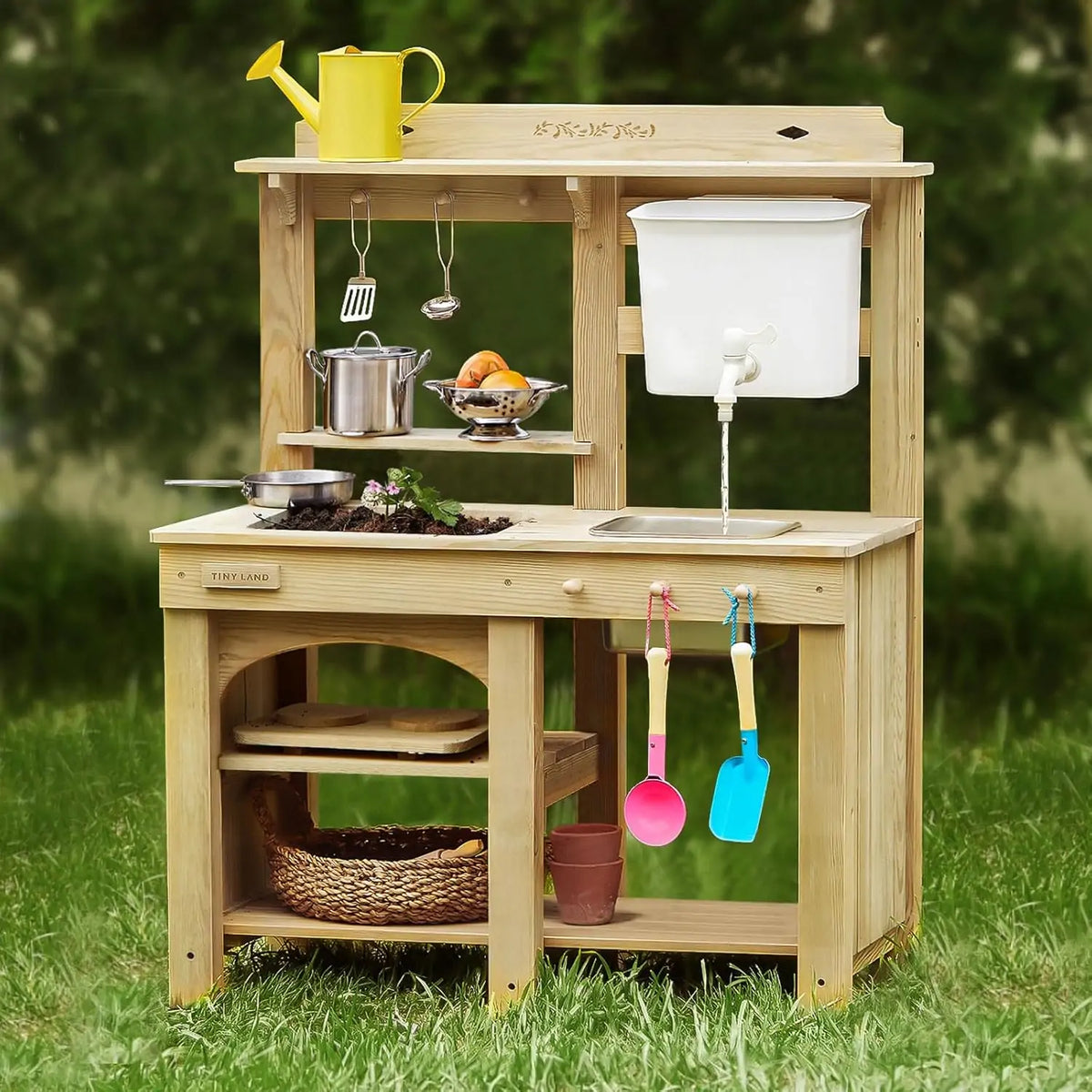
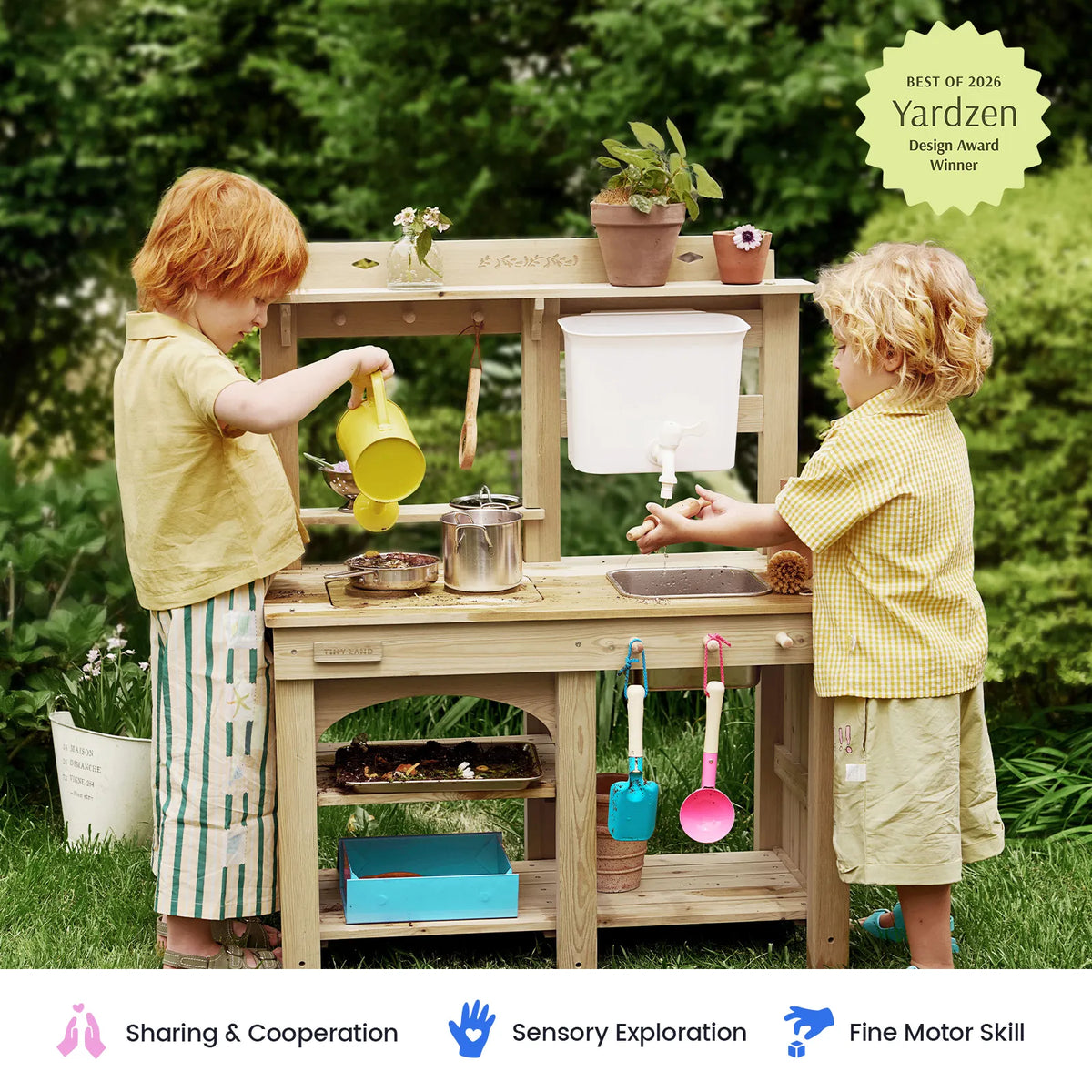
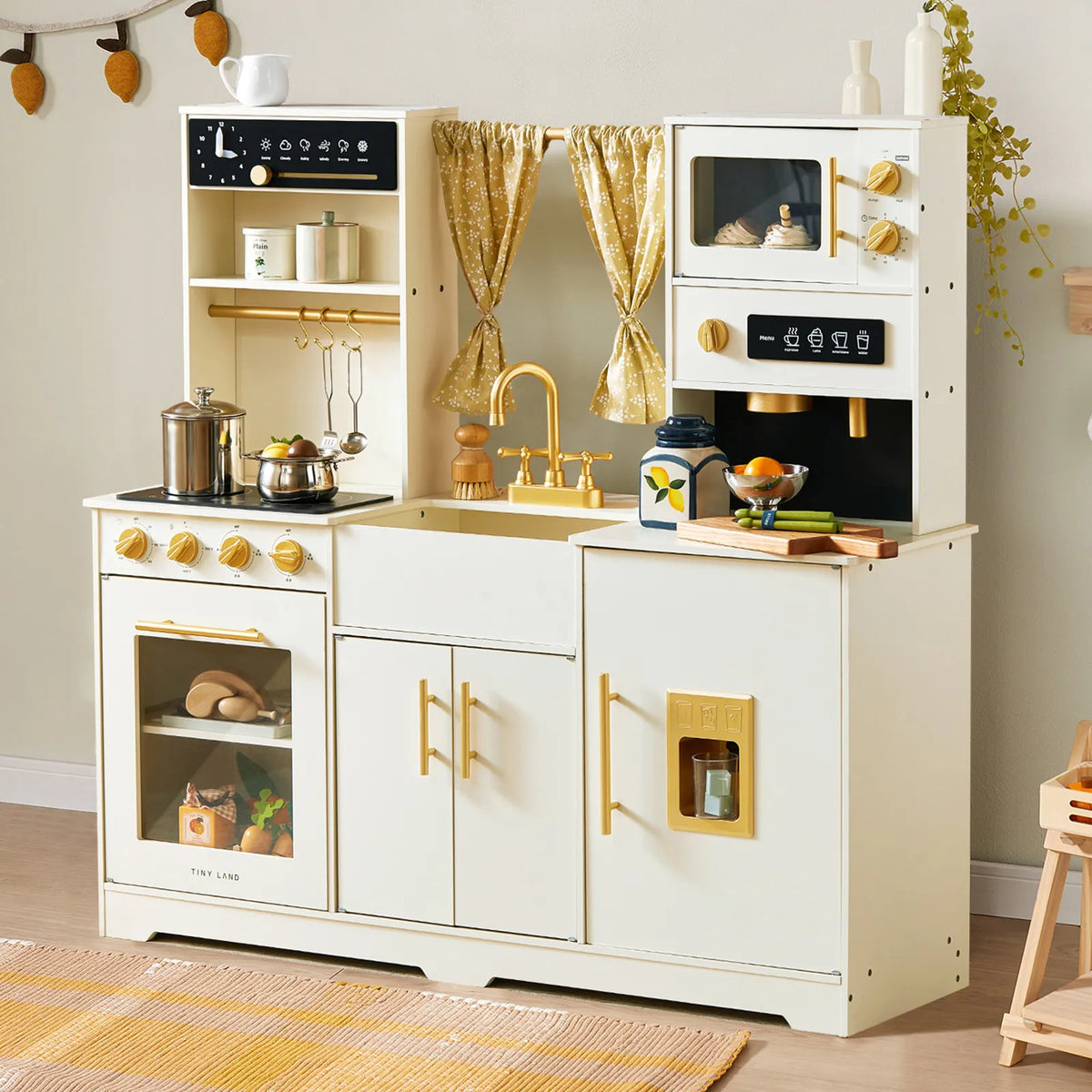
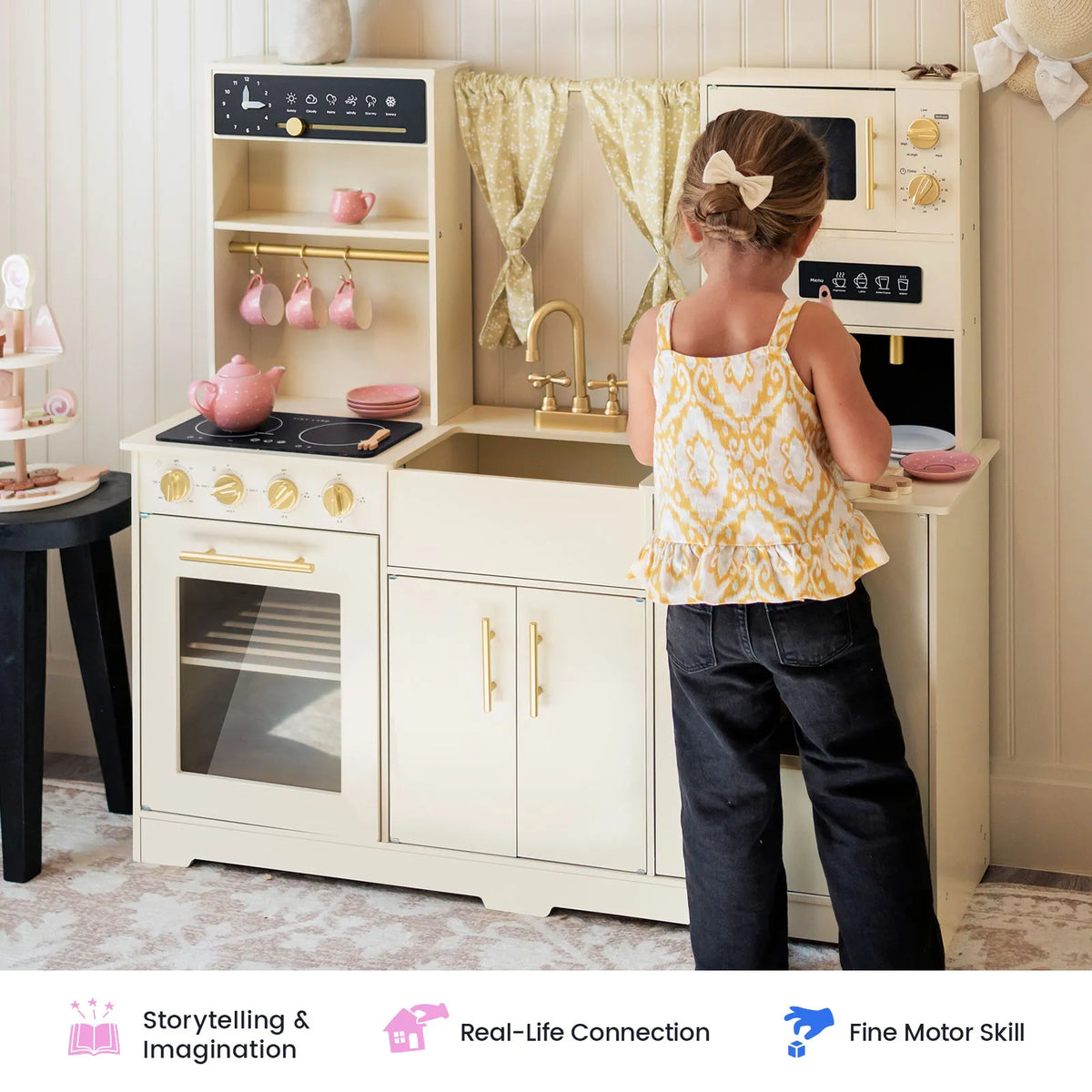
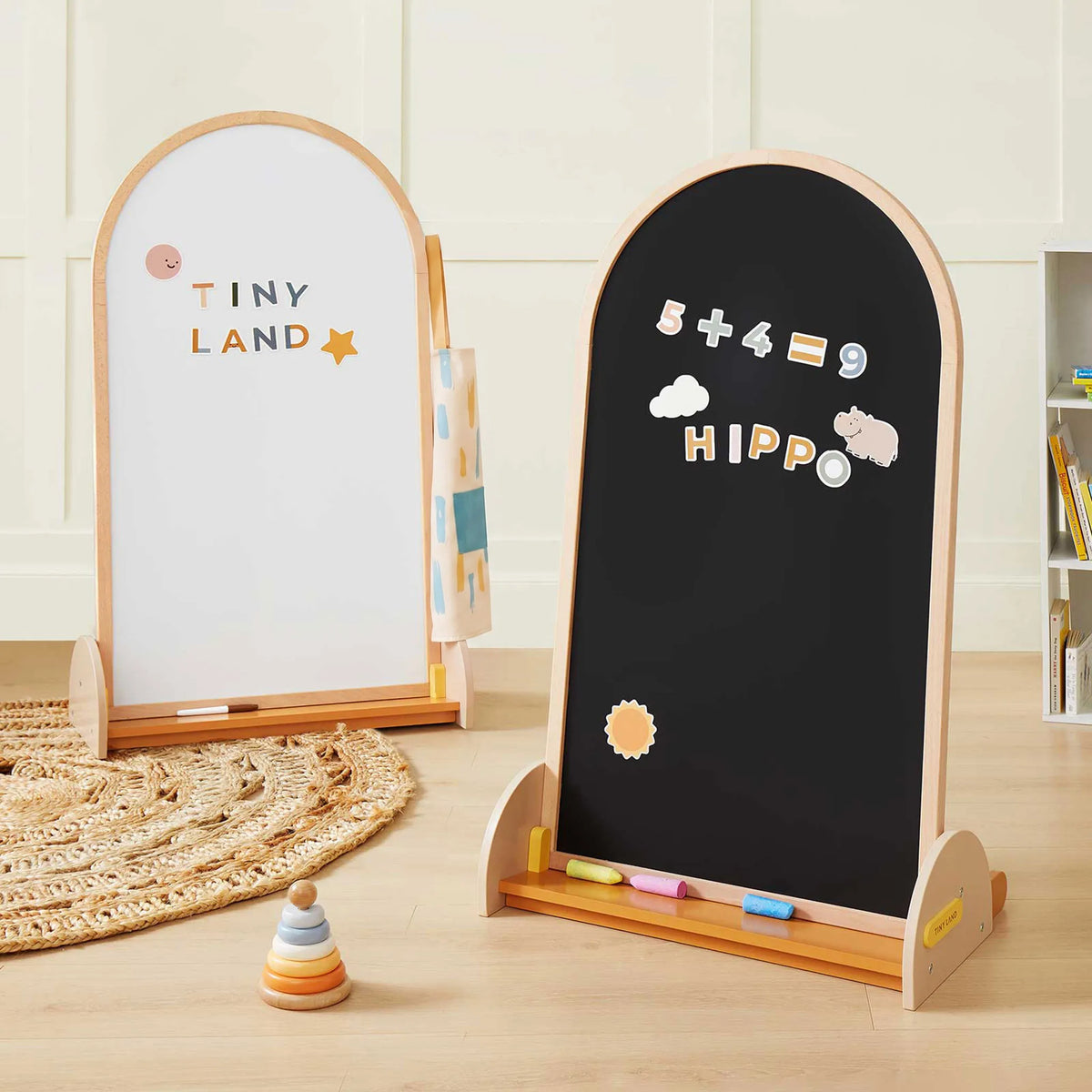



This month, we invited a pediatric occupational therapist, Mariah Schultz to share her perspective on Tiny Land mud kitchen play, offering insights into how everyday outdoor play supports children’s developmental growth at home.
Why It Supports Your Child’s Development (A Parent-Friendly OT-Informed Perspective)
Many parents notice something interesting: children who struggle to stay engaged indoors often become deeply focused on the outdoor play kitchen—sometimes for surprisingly long periods of time.
What looks like “just outdoor messy fun” is actually a rich developmental environment where attention, coordination, communication, and problem-solving naturally come together.
And the key reason is the way the toy creates a play experience that is open-ended, unpredictable, and fully led by the child.

When Your Child Plays Outside, Something Changes
Many parents notice a clear shift when play moves outdoors.
You might see your child:
-
staying engaged longer without reminders
-
repeating simple actions like pouring, mixing, or scooping without boredom
- becoming deeply absorbed in pretend play
This is not random. Outdoor environments offer just enough variation and freedom to keep children engaged without pressure to “do it right.”
As a result, attention often lasts longer when children are not focused on performance.

Why Outdoor Play Holds Their Attention
Unlike indoor play, outdoor kitchen environments are constantly changing:
- textures shift (dry sand, wet mud, water)
- materials behave differently each time
- nothing is fully predictable
So children are not just playing—they are constantly adjusting.
Without realizing it, they are practicing how to:
- stay focused in changing conditions
- adapt actions in real time
- continue a goal even when things don’t go as expected
This is one reason outdoor play often feels more engaging than structured toys.

It’s Not Just Hand Strength—It’s Real-World Coordination
When children scoop, pour, stir, or transfer materials outdoors, they are doing much more than building strength.
They are learning how to:
- adjust force depending on the material
- coordinate both hands together
- manage movement on uneven or unstable surfaces
These are the same types of skills used in everyday tasks like eating, dressing, and handling small objects.
Over time, you may notice small improvements in independence during daily routines.

Why Imagination Becomes More Complex Outdoors
Without fixed rules or instructions, children naturally create their own structure.
You may hear things like:
- “This is a restaurant, I’m the chef.”
- “We’re making soup for the animals.”
- “We need more ingredients before we serve it.”
What looks like pretend play is actually your child practicing:
- planning
- role switching
- problem-solving in real time
They are learning how to think flexibly while staying engaged in one continuous story.

Why They Talk More During Play
Outdoor kitchen play often leads to more conversation—not because adults prompt it, but because communication becomes necessary to keep the play going.
Children naturally:
- ask for materials
- describe what they are making
- negotiate roles with others
Language becomes part of the action, not something separate from it. That’s why conversations during play often feel more natural and sustained.

Your Role Matters Less Than You Think (In a Good Way)
One of the most helpful things parents can do is simple: step back.
Instead of directing the play, focus on shaping the environment:
- offer simple tools (cups, bowls, spoons)
- add natural materials (water, leaves, sand, sticks)
- allow mess to be part of exploration
- avoid turning play into instruction
Children don’t need more direction here. They need space to lead.

What’s Really Happening Beneath the Surface
While it may look like cooking or pouring, several developmental systems are working at the same time:
- attention is sustained through changing conditions
- movement is adjusted while thinking continues
- language emerges through real interaction
This combination is what makes outdoor kitchen play so powerful—it supports multiple areas of development all at once, through a single play experience.

The Bottom Line for Parents
Outdoor kitchen play is not about teaching specific skills.
It is about creating an environment where children can:
- stay engaged longer
- think more flexibly
- coordinate their bodies more effectively
- communicate more naturally
And most importantly, it allows learning to happen in a way that feels like play—not instruction.