






Expert Perspective: Lilliana Dunbar, LCSW | Child and Family Therapist
A play kitchen can be more than a place to pretend to cook. It can give children opportunities to explore familiar experiences, make their own choices, take on caregiving roles, and invite trusted adults into their imaginative world.
But how can parents participate without turning playtime into another lesson?
Lilliana Dunbar, LCSW, a child and family therapist and founder of Deeply Rooted Therapy, believes the answer begins with following a child’s lead. A certified trainer of The Growing Brain Curriculum from ZERO TO THREE, Lilliana also helps parents and early childhood professionals understand early development and child-led play.
In her professional experience, play kitchens, food, and dishes are consistently among the most-used materials in a playroom.
Her perspective offers parents a practical starting point: create an inviting environment, follow their child’s lead, and stay curious about the world their child creates through play.
 Why Play Kitchens Can Be Meaningful to Children
From a Child-Centered Play Therapy (CCPT) perspective, playroom materials are selected intentionally because they correspond to different therapeutic themes.
Lilliana describes play kitchens, food, and dishes as “nurturing and real life” materials. These materials give children opportunities to explore caregiving and helping roles, autonomy and a sense of agency, safety and containment, family experiences, mastery, and confidence.
A child might prepare food for a therapist, care for a baby, run a restaurant, repeat an order until they master it, or recreate something familiar from home.
Rather than deciding in advance what children should learn or practice, child-led play gives them room to determine how they engage with the materials and what happens in their play.
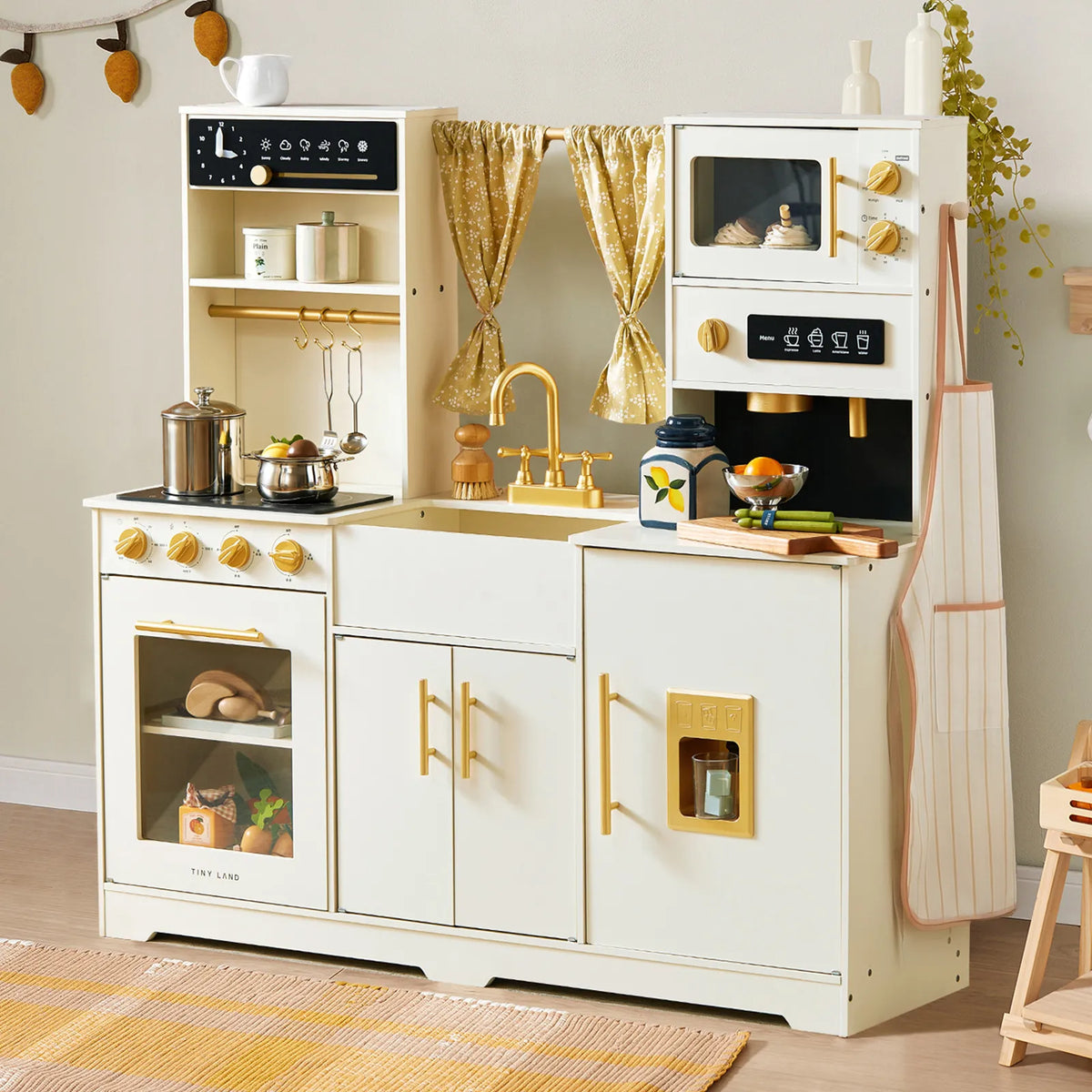
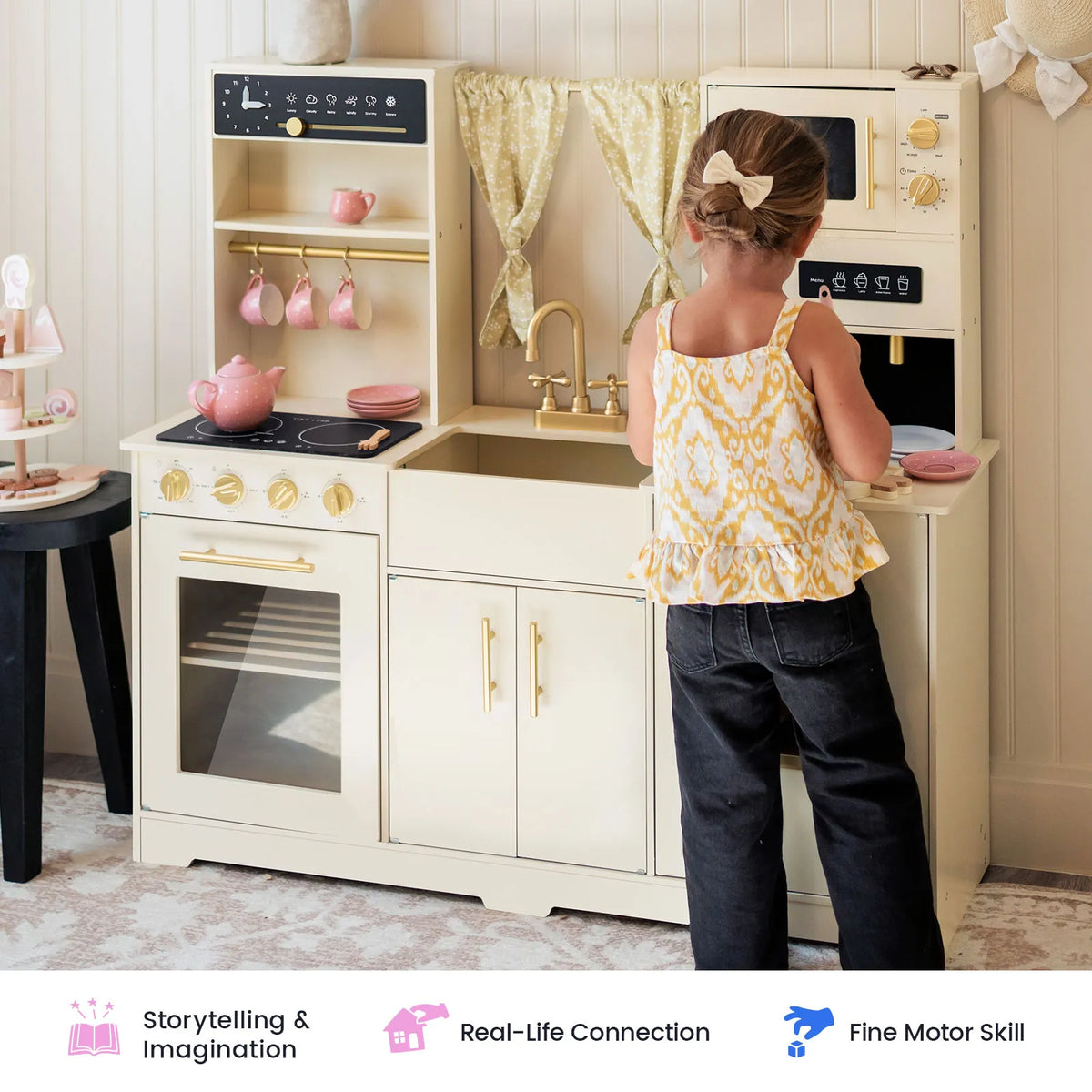
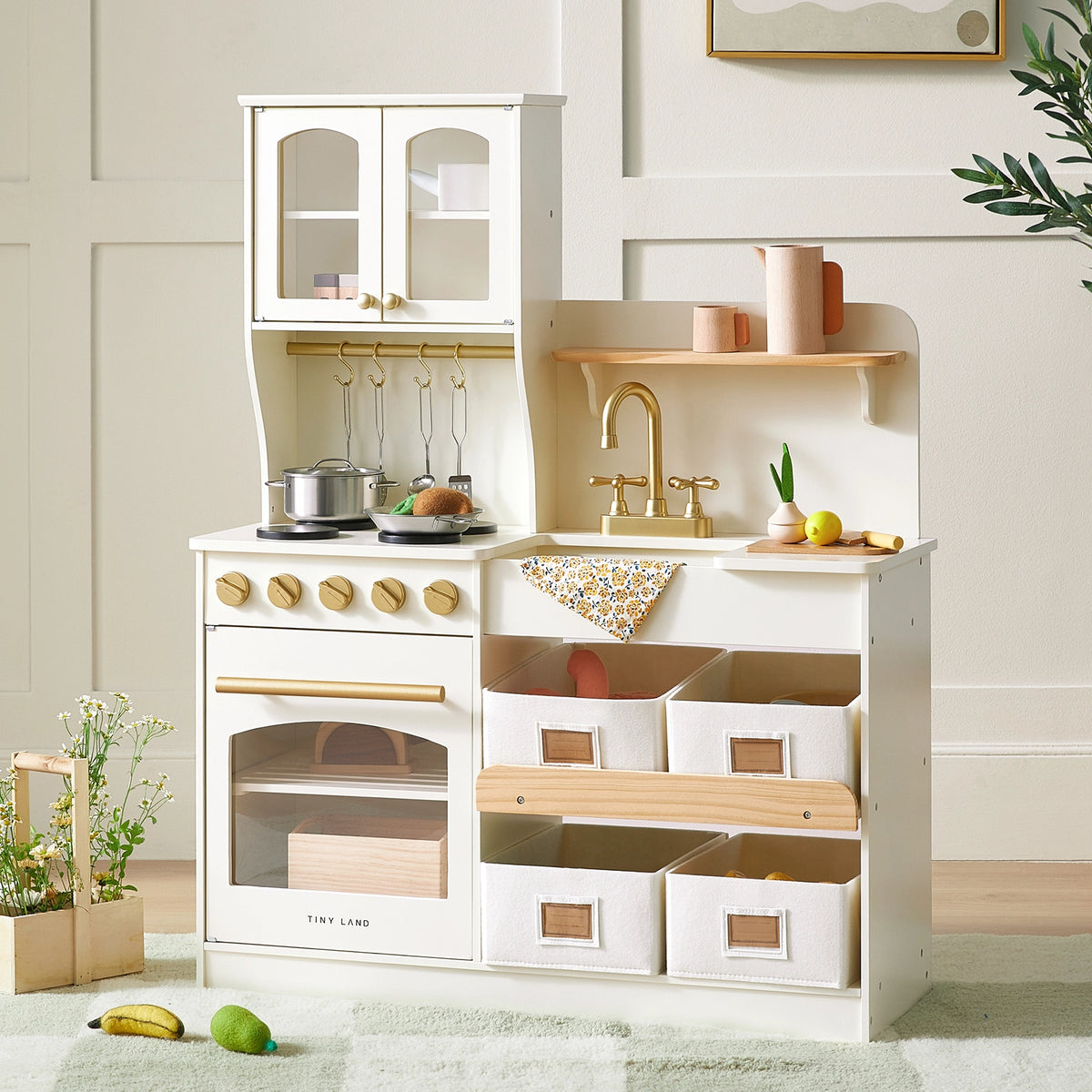
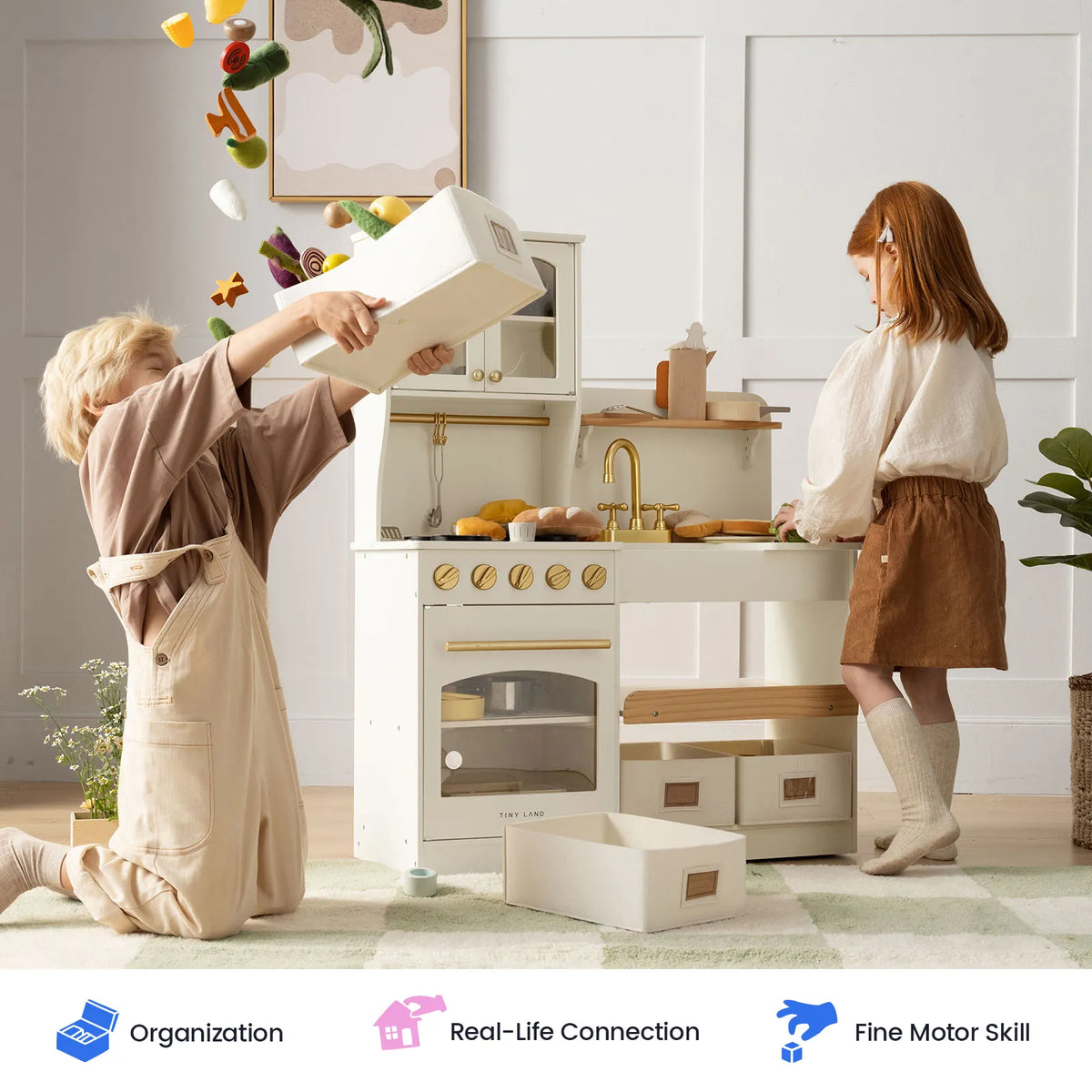
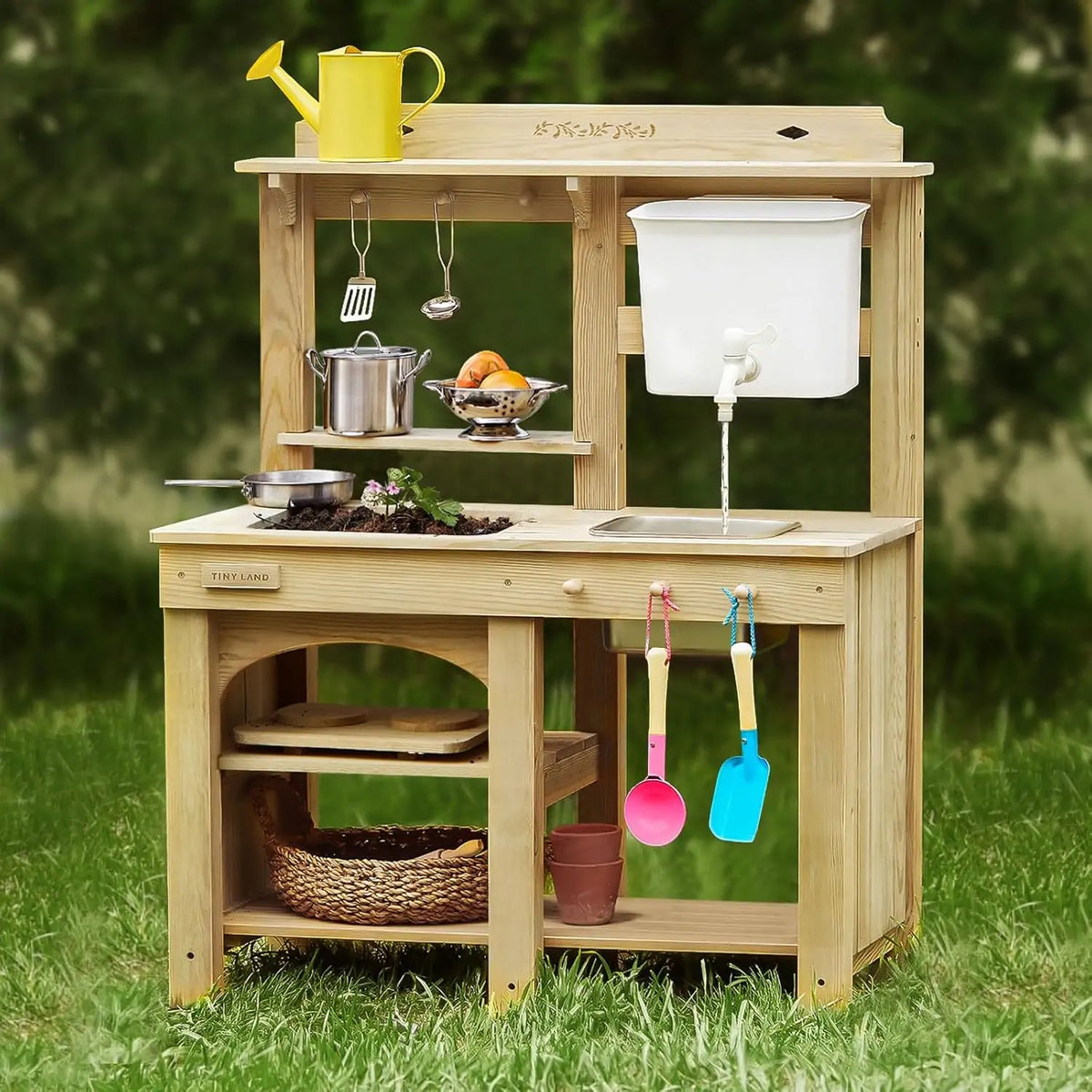
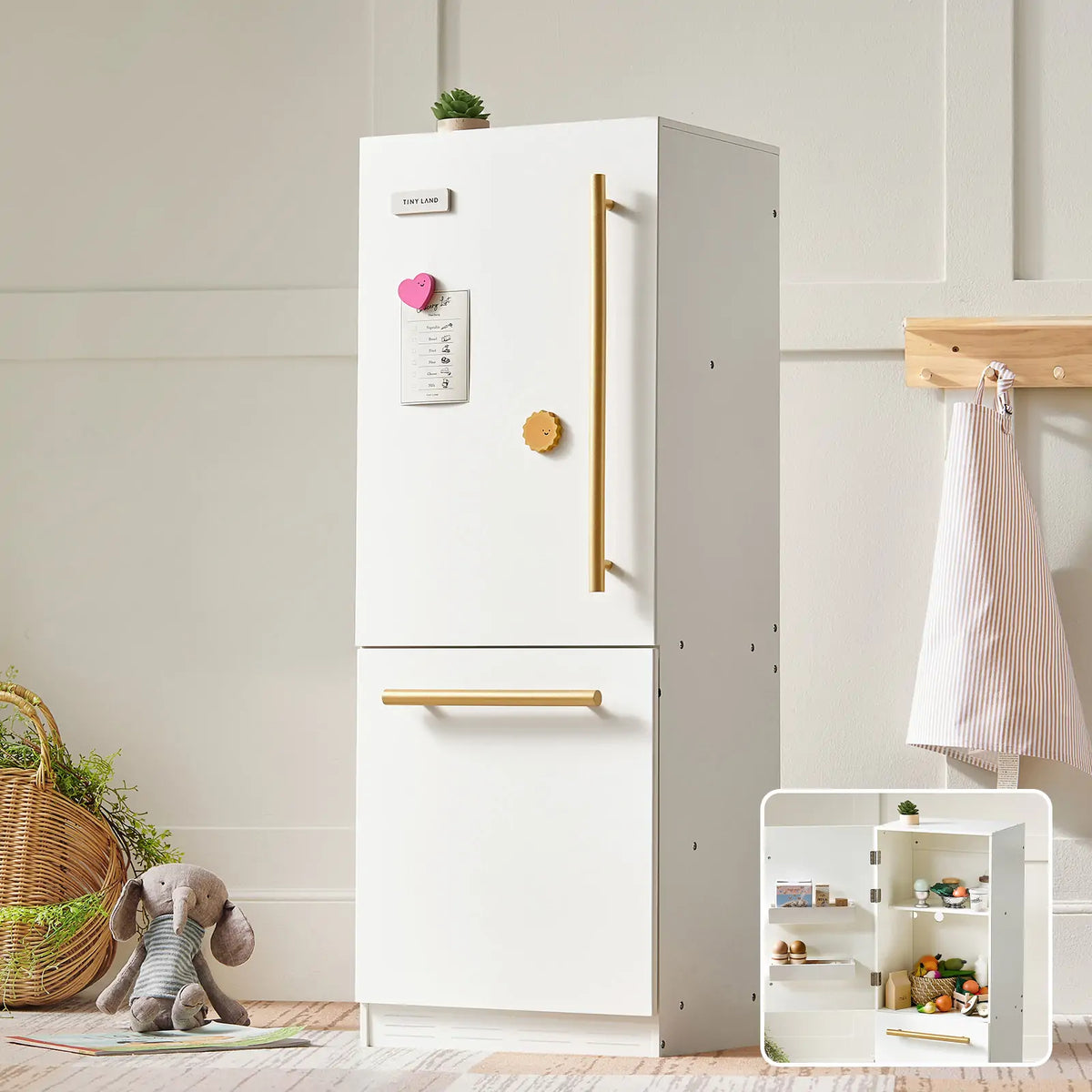
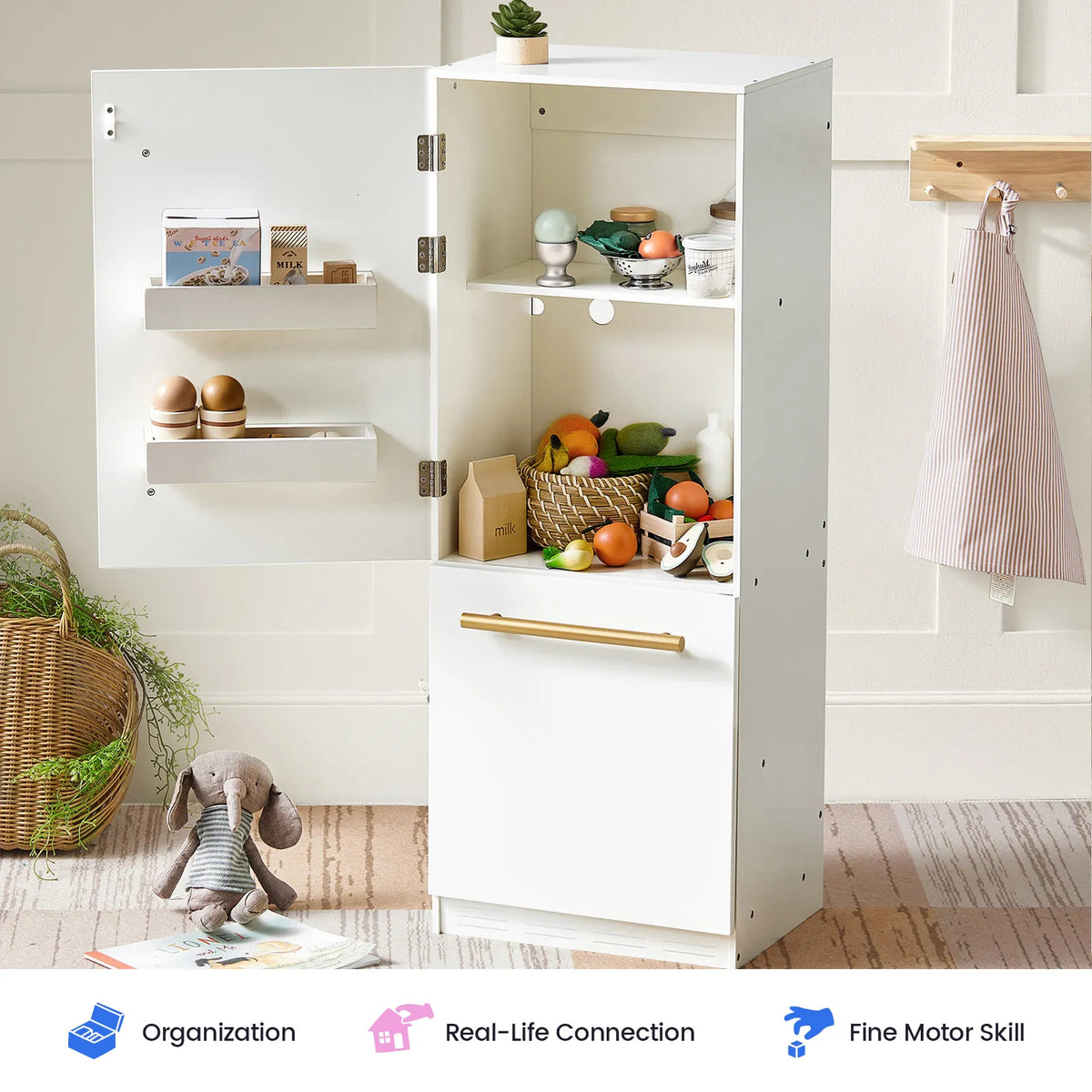
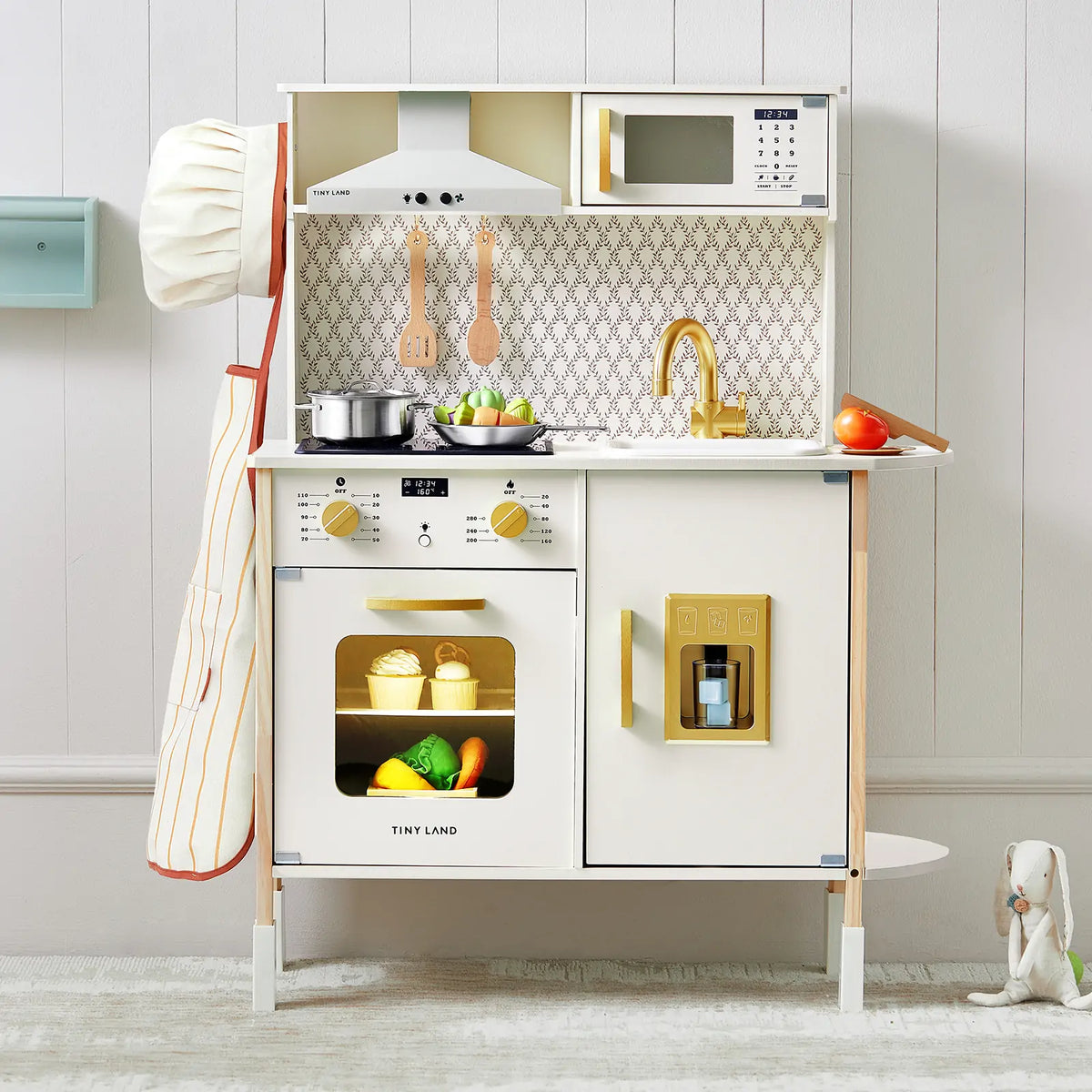
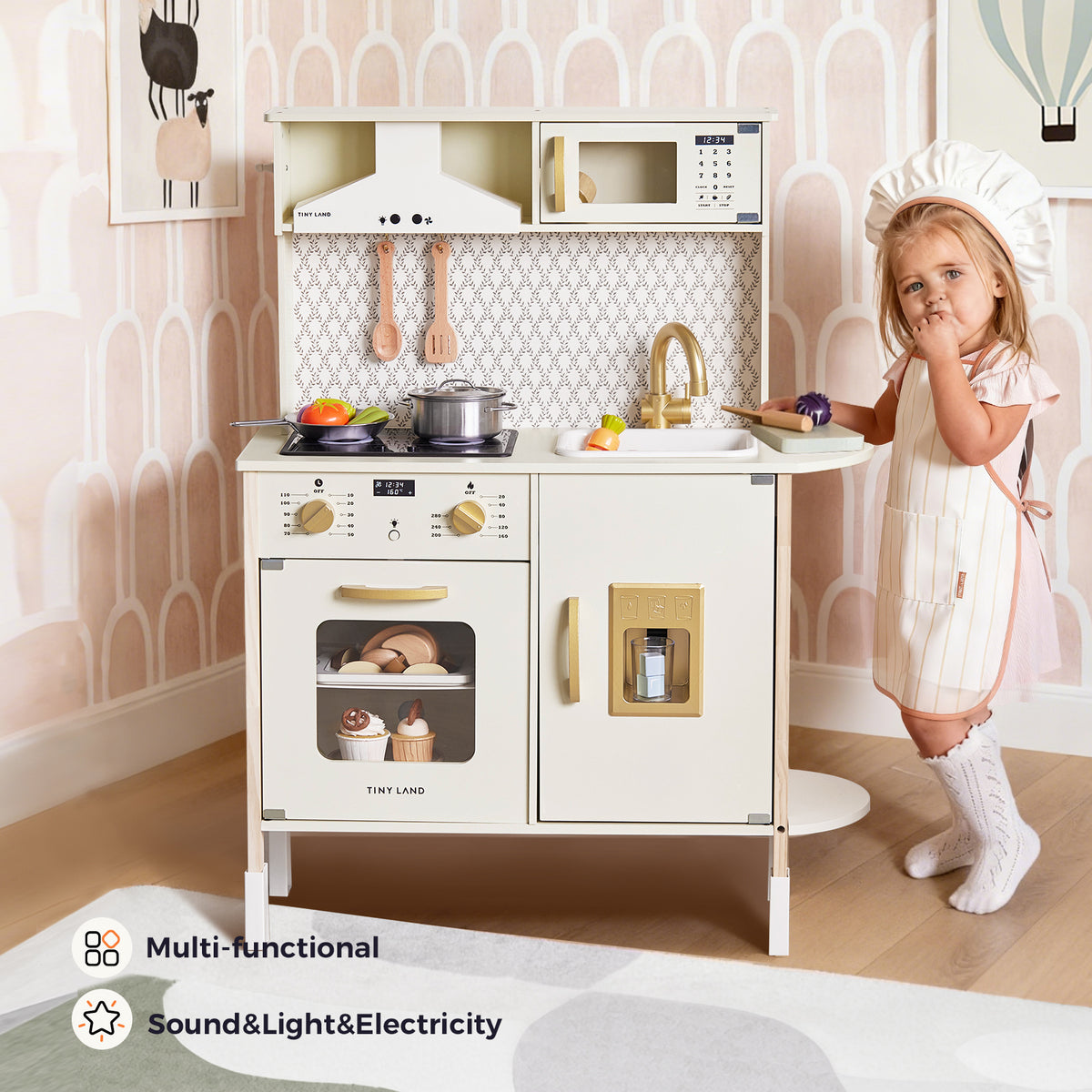
The Tiny Land Play Kitchen + Refrigerator Set can provide a familiar setting for children to explore everyday activities through pretend play, from preparing meals to creating their own stories about serving food and organizing groceries. The direction of the play is up to the child.
These are opportunities children may explore, not guaranteed outcomes. Each child can use the same materials differently, depending on their interests and the story they choose to create.
Let Your Child Lead the Play
When children begin pretend kitchen play, adults may naturally want to suggest what to make, assign roles, or introduce a learning activity. But child-led play starts with giving children room to decide what happens next.
With the Tiny Land Play Kitchen + Refrigerator Set, a child might decide to prepare dinner, open a pretend restaurant, organize groceries, or make a meal for a stuffed animal. These are examples of how families might use the play kitchen in everyday imaginative play, rather than prescribed activities children need to follow.
Here are three ways parents can make room for their child’s ideas.
Follow the role your child gives you.
If your child asks you to be a restaurant customer, let them decide what is on the menu. If they serve you a pretend meal, accept the role they have created rather than taking over the story.
Allow your child to make decisions.
If your child decides what to prepare, serve, or put away, give them room to direct the activity. You do not need to correct every choice or make the pretend scenario follow real-life rules.
Allow repetition.
A child may want to prepare the same meal or take the same restaurant order repeatedly. Lilliana describes children repeating an order until they master it. Rather than immediately suggesting something new, give them time to continue exploring the activity they have chosen.
The goal is not to guide every step toward a particular result. It is to allow children to explore their own ideas at their own pace.

Try Observations Instead of Constant Questions
Parents often want to make play educational. When a child is pretending to cook, it can be tempting to ask questions such as:
-
“What color is the banana?”
-
“Count how many stirs you are doing.”
-
“Oranges don't go in a sandwich.”
Questions, explanations, and guided activities can have their place. But Lilliana emphasizes that free play and guided play are both valuable, even though they serve different purposes. Parents do not need to turn every play experience into a lesson for it to support development.
During child-led play, try describing what you notice instead of repeatedly asking questions or directing the next step.
Lilliana offers these examples:
-
“You worked really hard to make that meal.”
-
“You decided the baby was hungry.”
-
“You have an idea about what type of sandwich you want.”
These observations acknowledge the child’s actions and ideas while leaving room for them to continue leading the play.
Try this during kitchen play: If your child spends time preparing a pretend meal, notice the effort they are putting into it. If they decide to feed a baby doll, acknowledge their idea. If they invent an unusual sandwich, let them share their story rather than immediately correcting their choices.
You do not need to ask a question after every observation. Sometimes, simply noticing what your child is doing is enough.
This does not mean parents should never ask questions or offer guidance. It means recognizing when to step back and let the child’s own ideas lead.

Make Room for Connection Through Shared Play
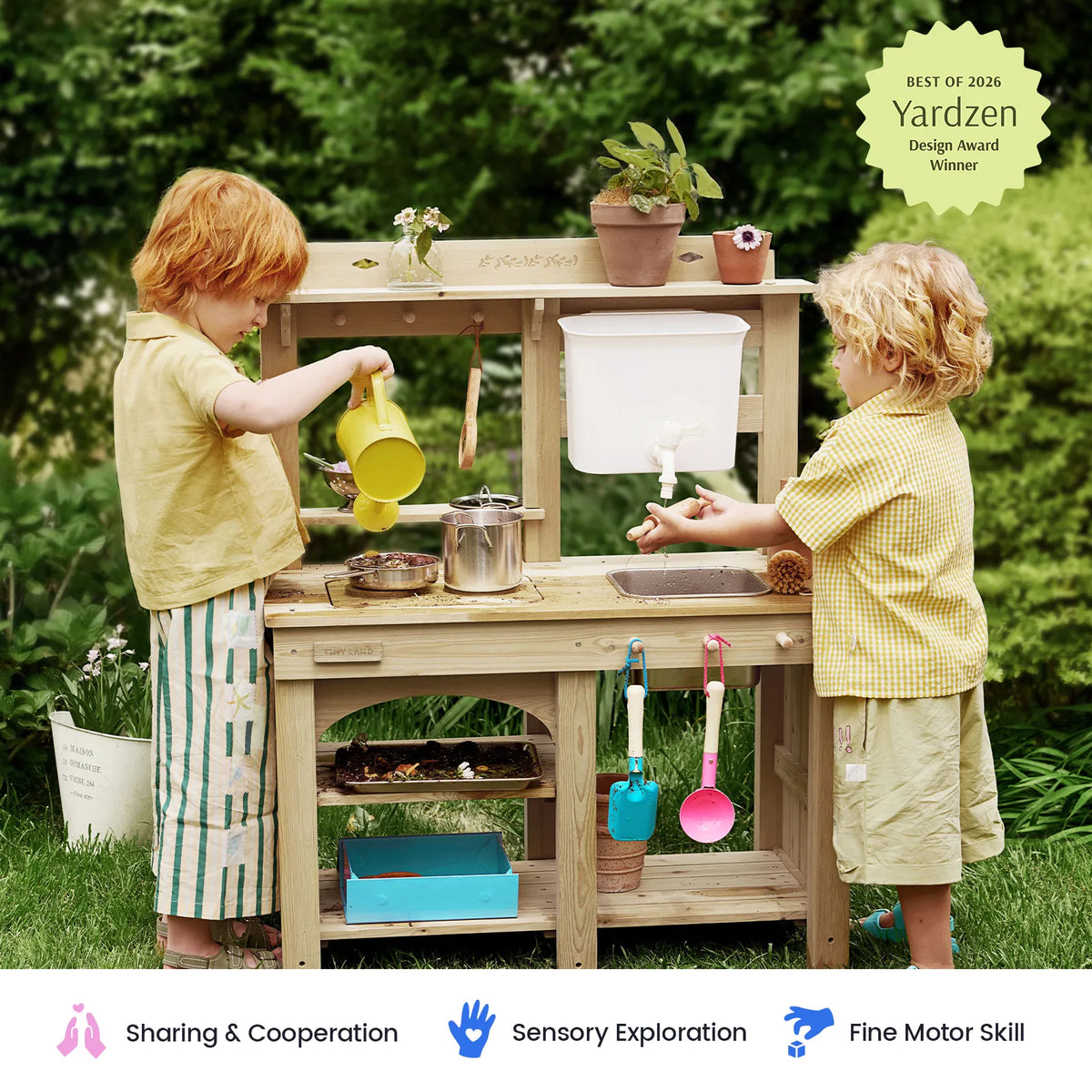
A play kitchen can also become a setting for children and adults to interact through pretend roles. A child might run a restaurant while a parent acts as the customer, prepare food for someone else, or create a pretend grocery shop with a sibling.
As described in Lilliana’s professional perspective, imaginative play with others offers opportunities to explore cooperation, negotiation, empathy, problem-solving, and communication.
The aim is not to make sure every interaction teaches a specific skill. Instead, parents can give children room to express their ideas, take on different roles, and shape the play as it unfolds.
With the Tiny Land Play Kitchen + Refrigerator Set, you might join when your child invites you, accept the role they assign, or observe while they play independently. If they want you to participate, play along. If they prefer to create their own story, give them space.
Lilliana frequently discusses this approach with parents and educators in her developmental playgroups. Caregivers do not always have to teach during play. Creating the environment, slowing down, observing, and following a child’s lead can provide opportunities for connection and development.
 Bringing Child-Led Play into Everyday Life
A play kitchen does not need a prescribed activity plan to become part of everyday play.
The Tiny Land Play Kitchen + Refrigerator Set offers a setting for pretend cooking, serving meals, and incorporating familiar household routines into imaginative play. Parents can support these experiences by following their child’s lead, joining when invited, and noticing what unfolds without feeling that every interaction needs a learning objective.
As Lilliana puts it, “Play is a child's first language.”
Rather than always deciding what children should do or learn, parents can take time to notice what their children are expressing through play. Sometimes, the most helpful next step is not to introduce a new activity, but to give children room to continue the story they have started.