
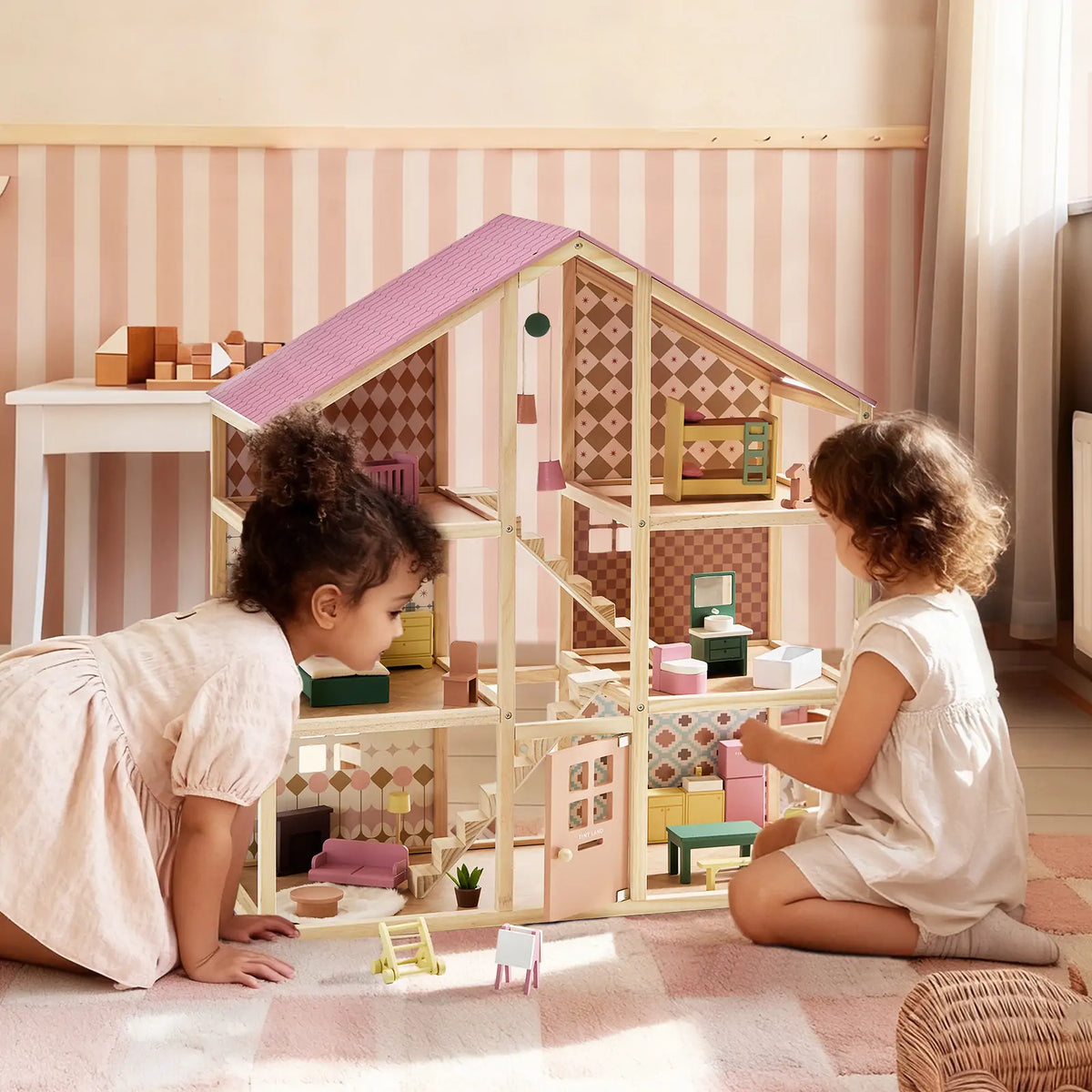
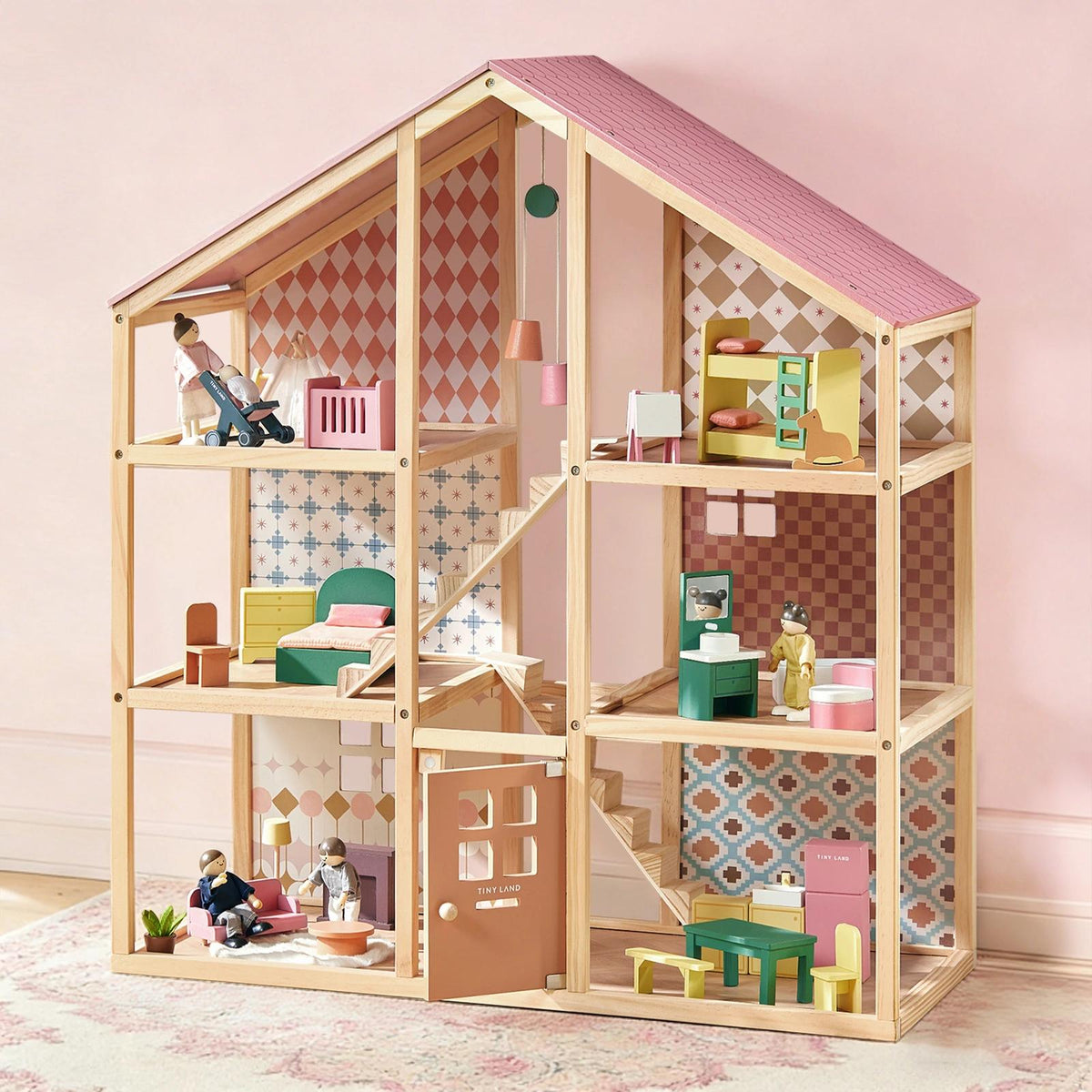
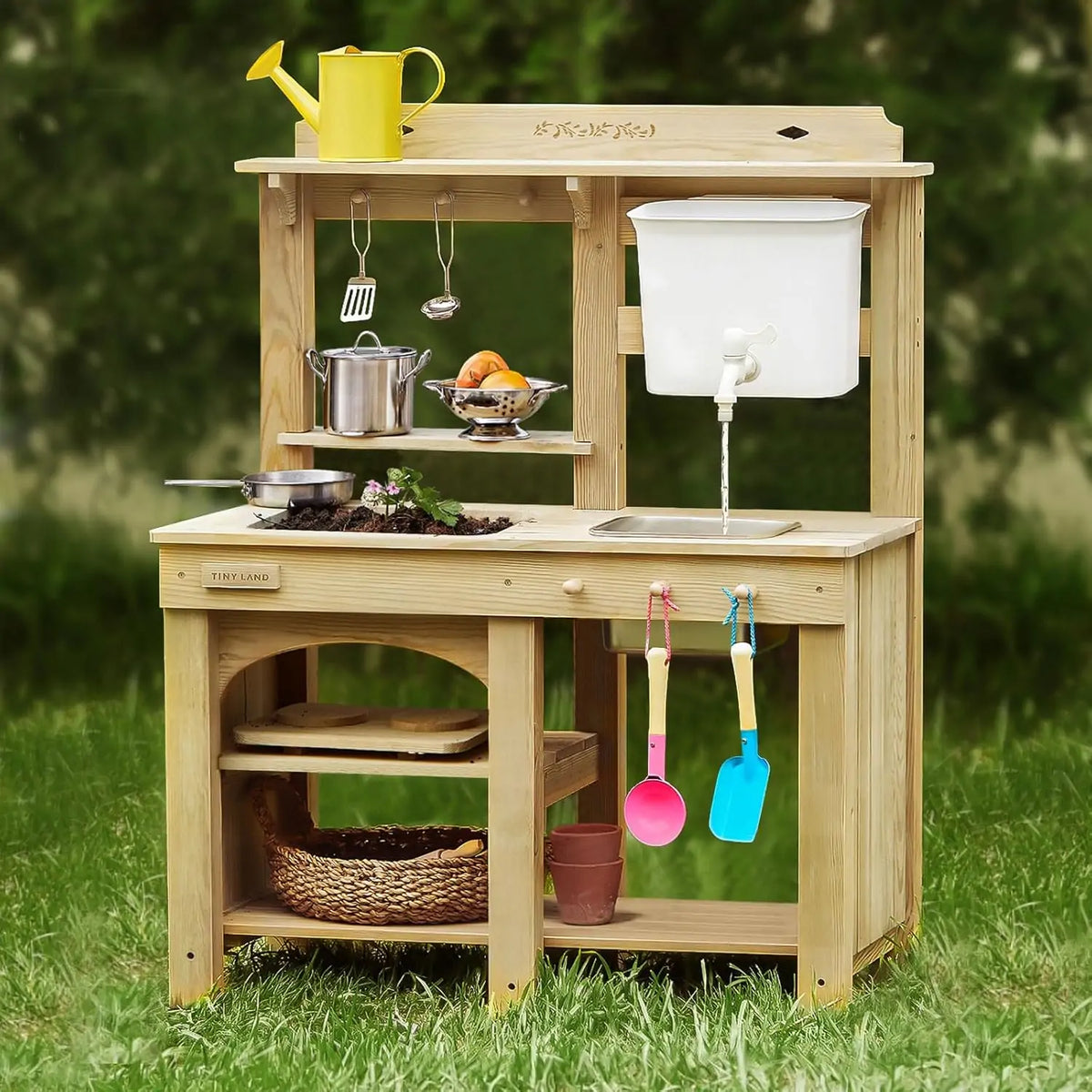
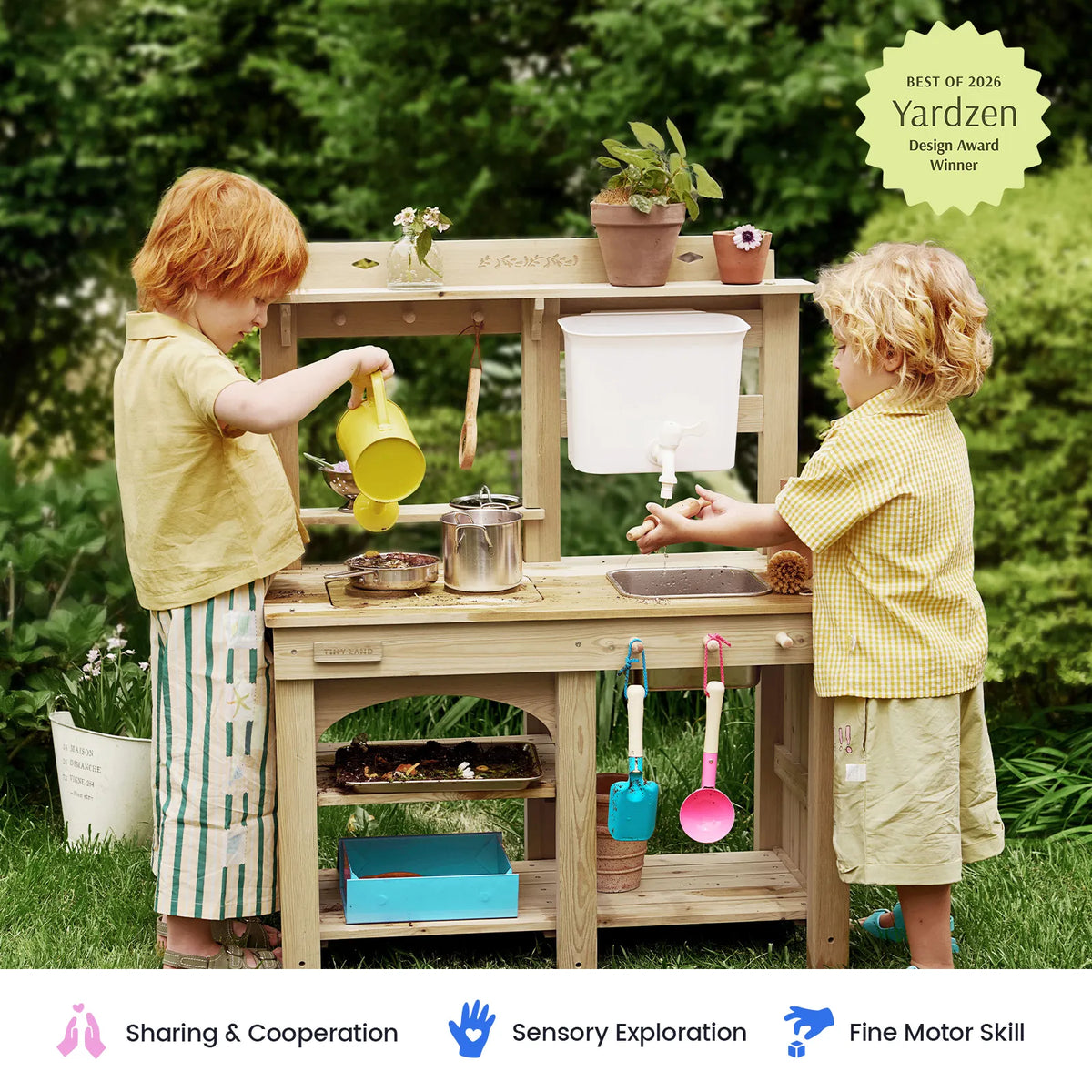




Pretend play often becomes a group activity. Siblings may turn a play kitchen into a family restaurant, friends may take turns being chefs and customers, and children in a shared playroom may create an imaginary café together.
When more than one child wants to join, however, a kitchen designed around a single workstation can quickly feel crowded.
If you're shopping for siblings or a shared play space, look beyond the number of accessories.
The layout, available floor space, and variety of play areas can matter just as much.
 What to Look for in a Play Kitchen for Multiple Kids
1. Consider the Space Around the Kitchen
A wider play kitchen can provide more room for shared play, but it also needs more floor space.
Before choosing one, measure the area where the kitchen will go and think beyond the kitchen's footprint. Children need room to stand, move, reach accessories, and transition between activities.
Consider:
-
The kitchen's overall width and depth
-
Open floor space in front of the kitchen
-
Where play food and accessories will be stored
-
Whether children need to access the kitchen from the side
-
How the kitchen will fit with the rest of the playroom
A larger kitchen only works well when the surrounding space allows children to use it comfortably.
2. Look for Multiple Play Areas
When several children play together, they don't necessarily need to do the same thing.
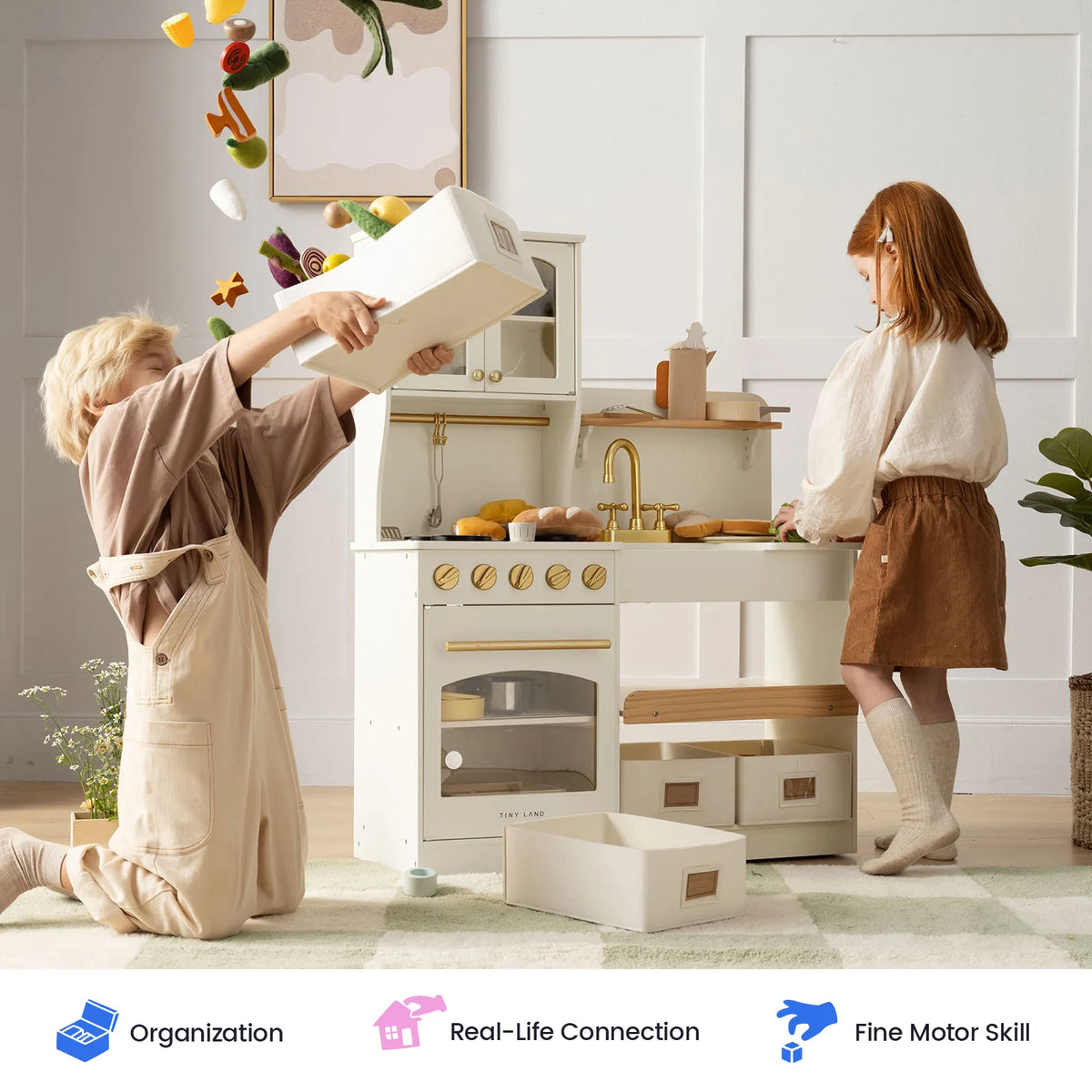
One child might prepare food at the stovetop while another washes dishes at the sink. A third child might organize pretend ingredients or serve the meal.
That's why a kitchen with several accessible areas can be more useful for shared play than one centered around a single activity.
Look for features such as:
-
Sink and washing area
-
Stovetop or cooking surface
-
Counter space
-
Storage areas
-
Pretend appliances
-
Accessories that support different play scenarios
The goal isn't simply to count features. Think about whether those features give children different ways to participate in the same play scenario.

How Many Children Will Use the Kitchen?
The number of children who typically play together can help determine the size and layout that make sense for your space.
For One Child
A compact play kitchen may be enough when one child usually plays independently.
Focus on the child's height, the available room, and whether the kitchen offers enough features to support different types of pretend play without taking up unnecessary floor space.
For Two Children
For siblings or friends, look for a layout that gives both children accessible areas to play.
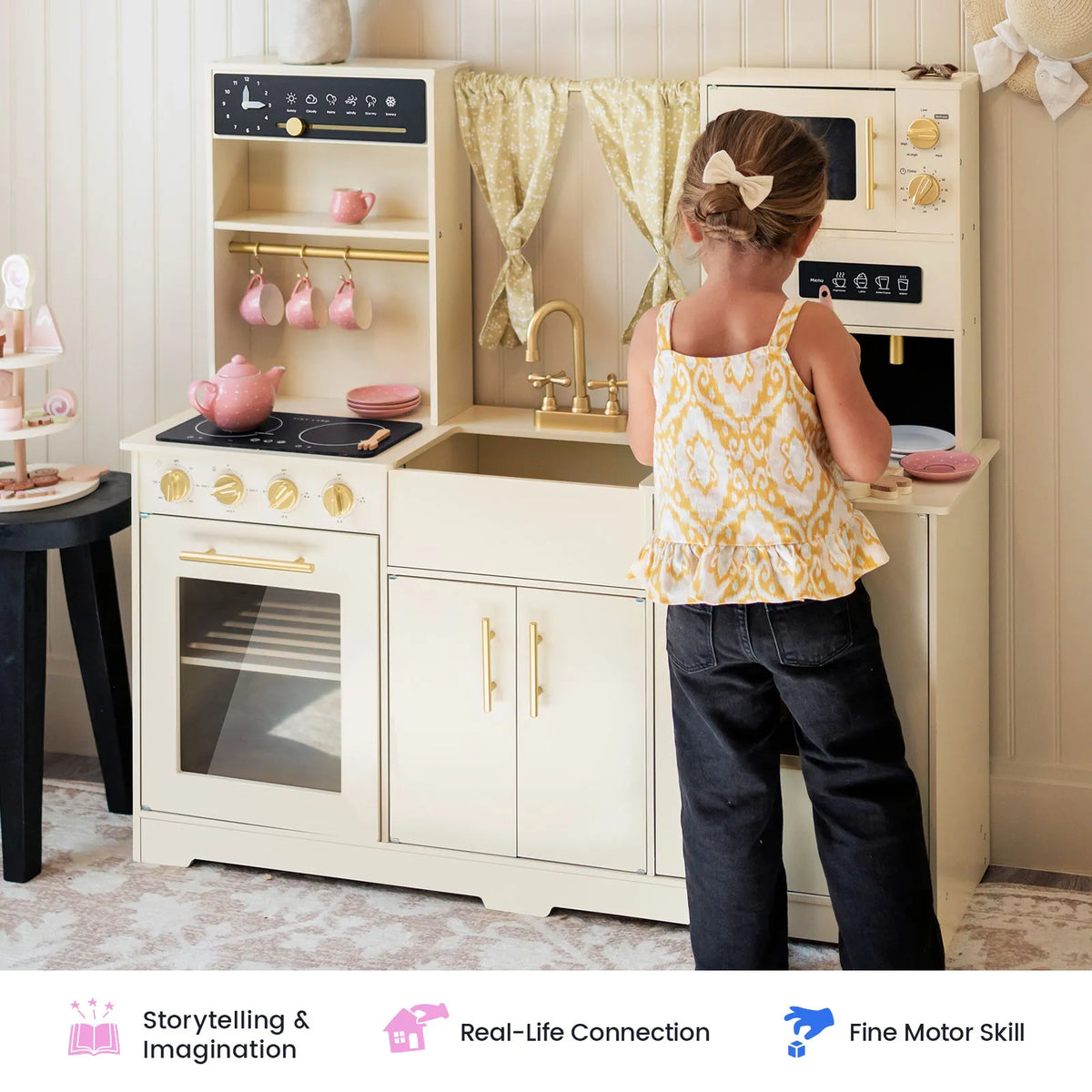
A wider design can allow one child to work at the sink or stovetop while the other uses the counter, storage, or pretend appliances. This can make it easier for children to develop different roles within the same play scenario.
For Three or More Children
When several children want to participate at once, both the kitchen's width and the surrounding floor space become more important.
Look for multiple accessible areas rather than a single central workstation. If the kitchen will be used in a classroom, daycare, or shared playroom, consider how many children may use it during a typical play period—not just how many can stand at it at one time.
There is no universal “right size” for every family. The best fit depends on the number of children, the available room, and how they naturally play together.

Why Layout Matters for Shared Pretend Play
A wider design isn't simply about fitting more features onto a kitchen. It can also change how children move and interact during play.
When different parts of the kitchen are accessible, children can take on different roles without all gathering around the same spot.
For example:
-
One child prepares a pretend meal.
-
Another washes dishes or gathers ingredients.
-
Another organizes food or serves the meal.
The roles can change from one play session to the next, giving children an open-ended setting for storytelling, cooperation, and imaginative play.
Why the Tiny Land Play Kitchen Works for Shared Play
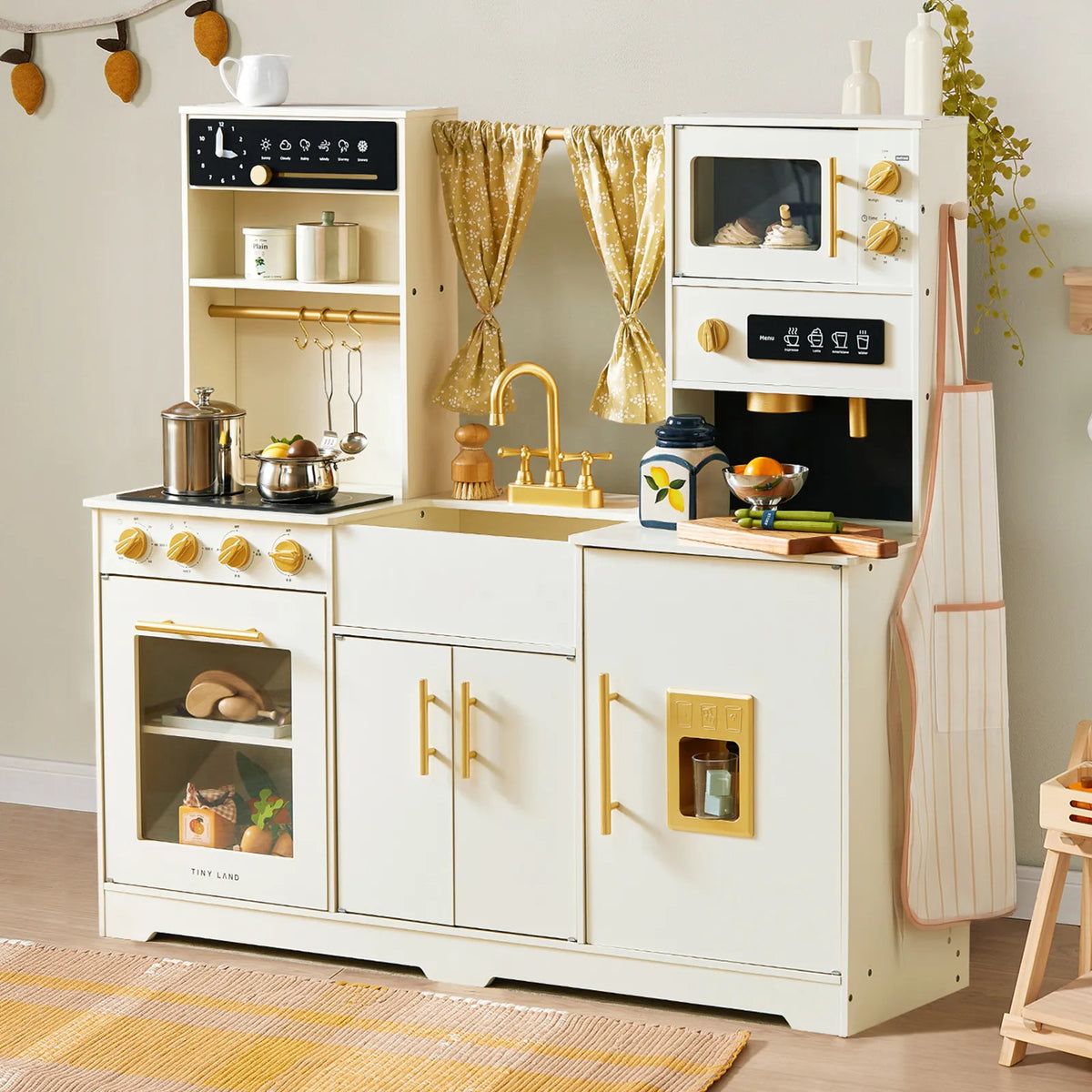
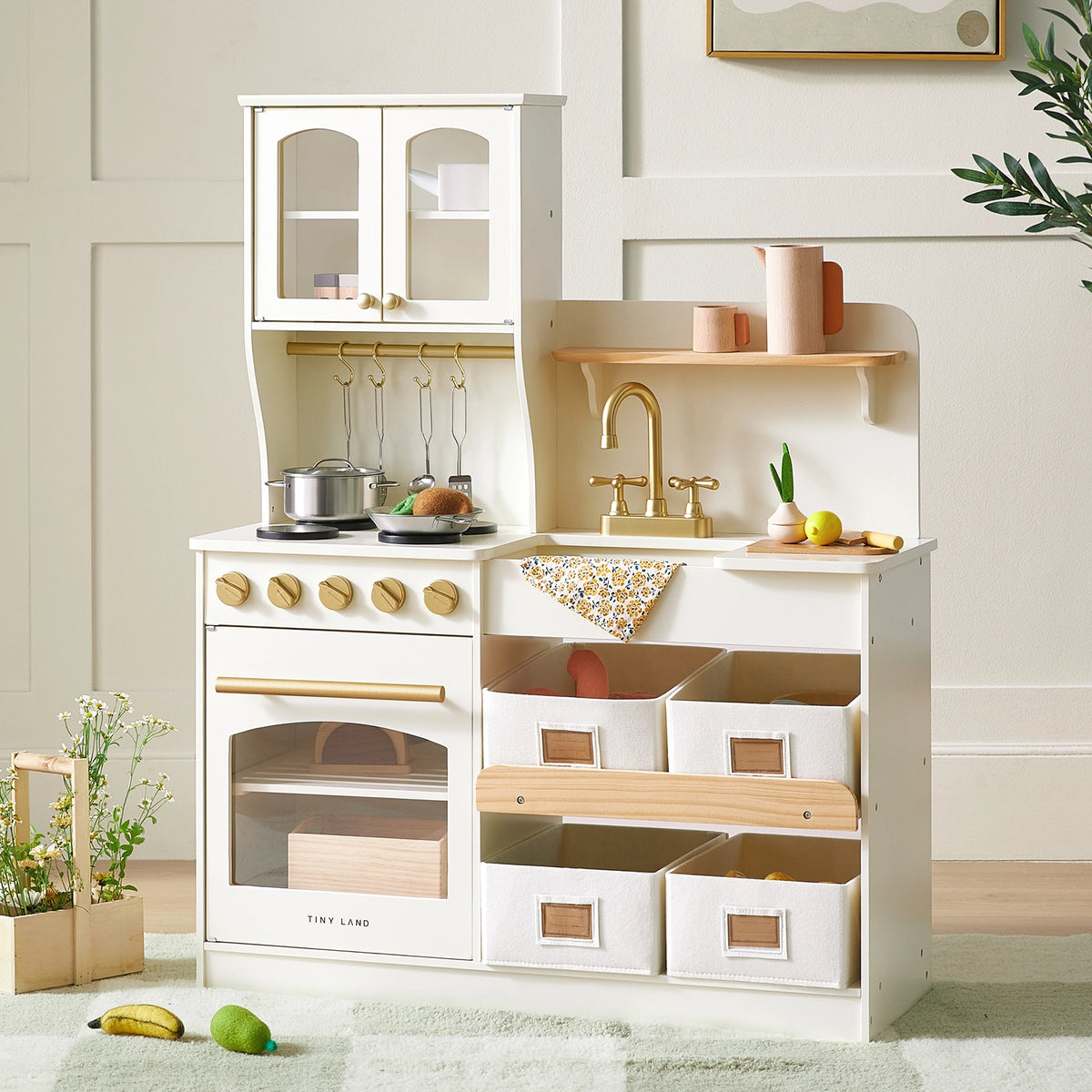
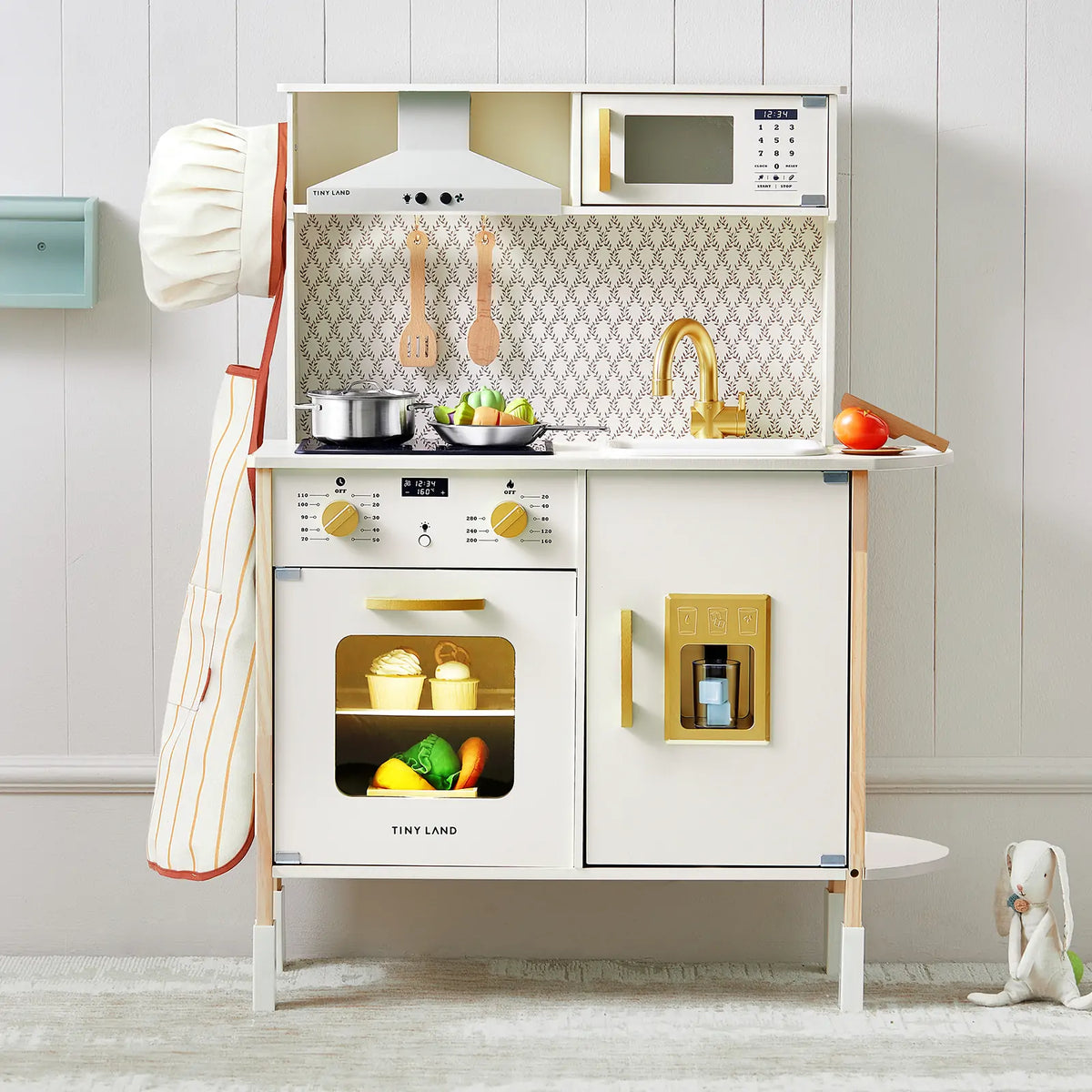
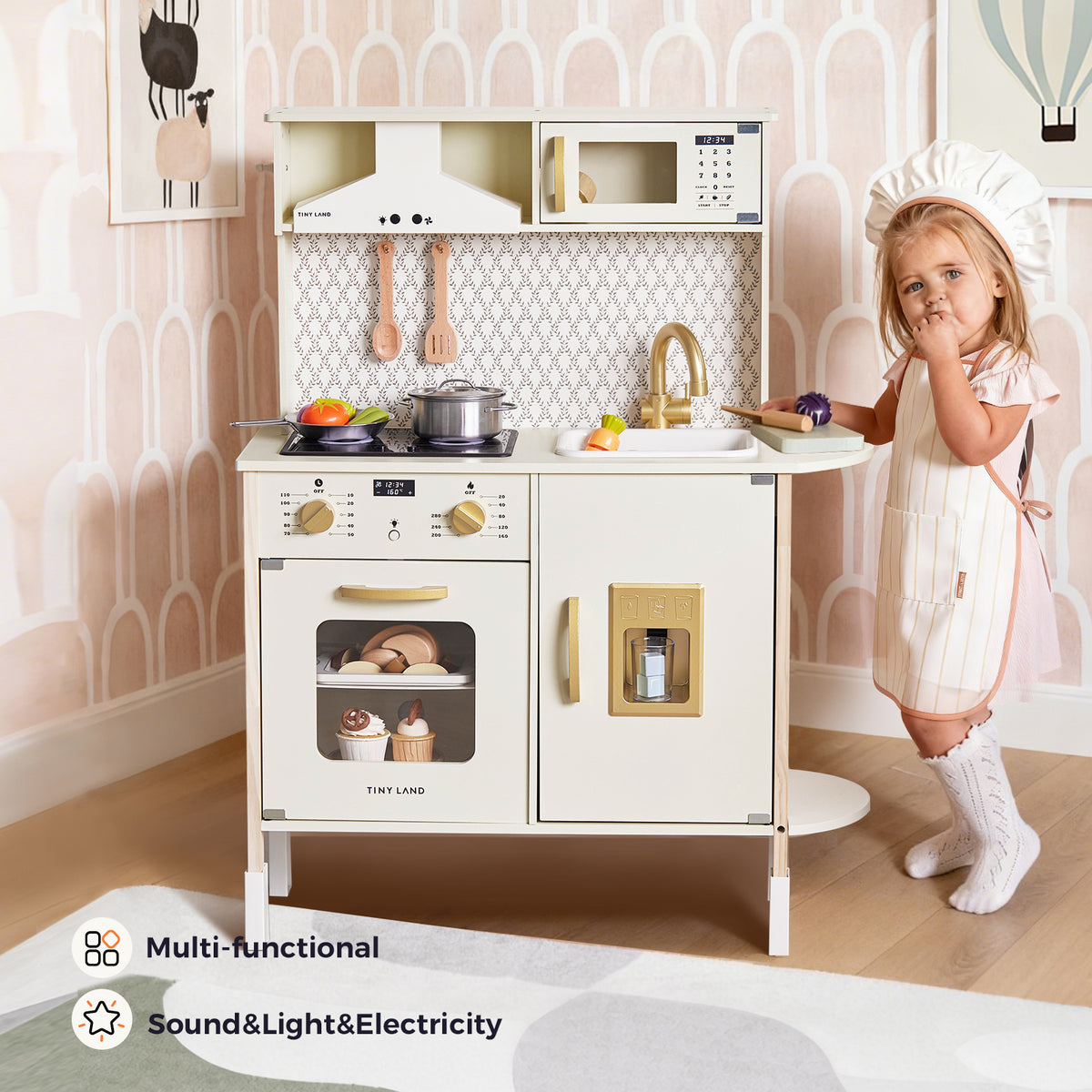
The Tiny Land Play Kitchen for Kids features an approximately 43-inch-wide design with multiple areas for pretend cooking and everyday kitchen play.
Its layout includes a sink, stovetop, microwave, ice maker, counter space, and storage. Rather than requiring children to share one central activity, these areas give them different ways to participate in the same pretend-play scenario.
For example, one child can work at the sink while another uses the stovetop, while a third incorporates the counter or pretend food into the game. The kitchen's layout can support different roles without requiring every child to use the same section at the same time.
The kitchen also features a modern cream-and-wood-inspired design with fabric curtains and home-style details, making it a natural fit for family playrooms and shared living spaces where the look of a toy matters too.

What FinForum Highlighted
FinForum recently included the Tiny Land Play Kitchen in its play kitchen guide and named it “Best for Multiple Kids.”
In its hands-on review, FinForum described setting up the kitchen in a test playroom and observing “three kids aged 3, 5, and 7 cook simultaneously without bumping into each other.”
The review specifically highlighted the kitchen's “43-inch-wide operating area” and “dual-station design,” noting that two children could pretend to cook while another child used the ice maker or sink.
FinForum also highlighted the kitchen's modern cream-and-white aesthetic, fabric curtains, and additional details such as the clock and weather table.
At the same time, its review pointed out practical considerations including the kitchen's 43-inch width and longer assembly time.
These observations offer one third-party perspective on what can make a play kitchen work well for multiple children. When comparing options, families should still consider their own available space, children's ages, and typical play style.
Is a Larger Play Kitchen Right for Your Family?
A wider play kitchen may be worth considering if:
-
Two or more children regularly play together
-
Siblings or friends enjoy pretend cooking
-
You have enough floor space for a larger kitchen
-
You want children to take on different roles during pretend play
-
The kitchen will be part of a shared playroom, classroom, or childcare space
A more compact kitchen may make more sense when floor space is limited or when one child typically plays independently.
The right choice isn't necessarily the largest kitchen. It's the one that provides enough room for the way your children actually play while fitting naturally into your home.

Creating a Shared Pretend-Play Space
A play kitchen can provide a familiar starting point for open-ended play. The same kitchen can become a family kitchen one day, a restaurant the next, and an imaginary café after that.
For families choosing a kitchen for multiple children, start with three practical questions:
How many children will play together? How much space do you have? Are there enough distinct areas for different activities?
Once those questions are answered, consider the details—features, storage, accessories, design, and overall size.
For families looking for a wider setup for shared pretend play, the Tiny Land Play Kitchen offers multiple areas for children to explore, create, and play together.