




What makes a child want to pick up a book?
For Allison Minton, the answer isn't only about finding the right story. It's also about what surrounds the book.
As a book reviewer and children's book specialist, Allison has spent nine years reviewing children's and adult books, and building a multi-platform book review community. Through her experience with hundreds of books, she has developed a close understanding of how different stories can connect with children at different ages.
As a mom of three, her perspective on children's books goes beyond reviewing them. She sees how her own children respond to different stories, spaces, and ways of engaging with books in everyday family life.
That experience has shaped a simple philosophy about reading spaces:
A reading corner doesn't need to be perfect. It needs to make books easy to reach, comfortable to enjoy, and welcoming enough for children to make the space their own.
1. Keep Books Where Kids Can Reach Them
The simplest reading corner starts with accessibility.
If children can see and reach their books without needing an adult to get them down, they have more opportunities to choose what they want to explore.
Maybe they pick a favorite story they've read dozens of times. Maybe they flip through a picture book for a few minutes. Maybe a particular cover catches their attention and makes them curious about what's inside.
The choice belongs to them.
Books should be in a space where children can easily reach them whenever they want, so they can explore on their own.
With hundreds of children's books reviewed over the years, Allison has seen firsthand that different stories can appeal to different children and ages. Keeping books accessible gives children the opportunity to discover what catches their attention rather than relying on an adult to choose every book for them.
You Don't Need Every Book Out at Once
An accessible bookshelf doesn't have to display your entire collection.
Parents can keep a manageable selection within reach and rotate books based on interests, seasons, or what their child is currently exploring.
The goal isn't to create a perfectly styled bookshelf.
It's to make books a visible and reachable part of everyday life.
When a child can walk over and choose a book independently, reading becomes something they can initiate—not simply something an adult asks them to do.

2. Create a Cozy, Flexible Reading Corner
Once books are easy to reach, think about where your child will read them.
A reading corner should give children a comfortable place to settle in, whether they're looking at a book alone or listening to a story with a parent or sibling.
It also helps when the space can accommodate different reading moments.
One child may want to curl up quietly with a favorite book. Two siblings may want to look at the same picture book together. A parent may want to sit down beside them for story time.
You don't need a large room or complicated setup to create that kind of space.
Create a Defined Nook With a Teepee
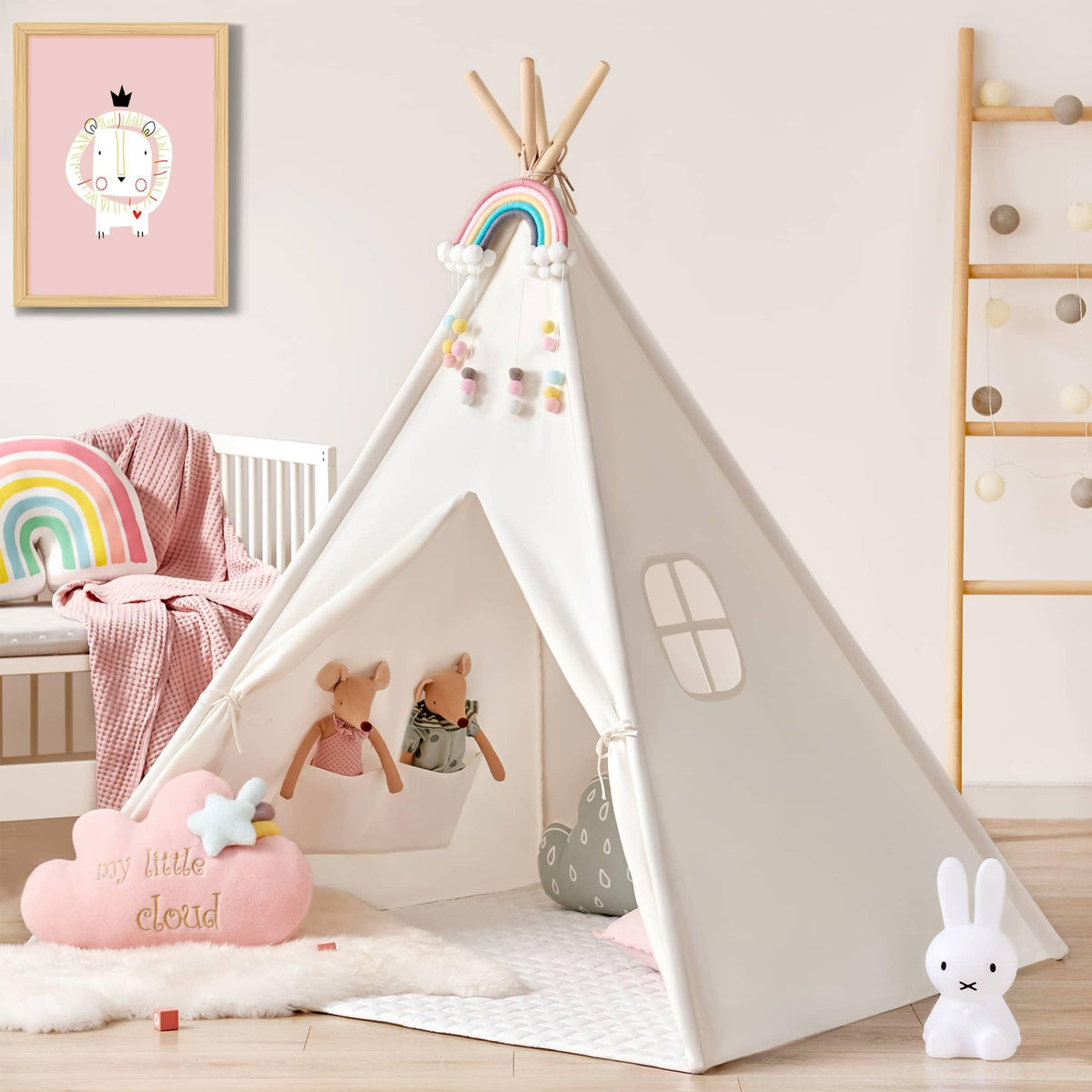
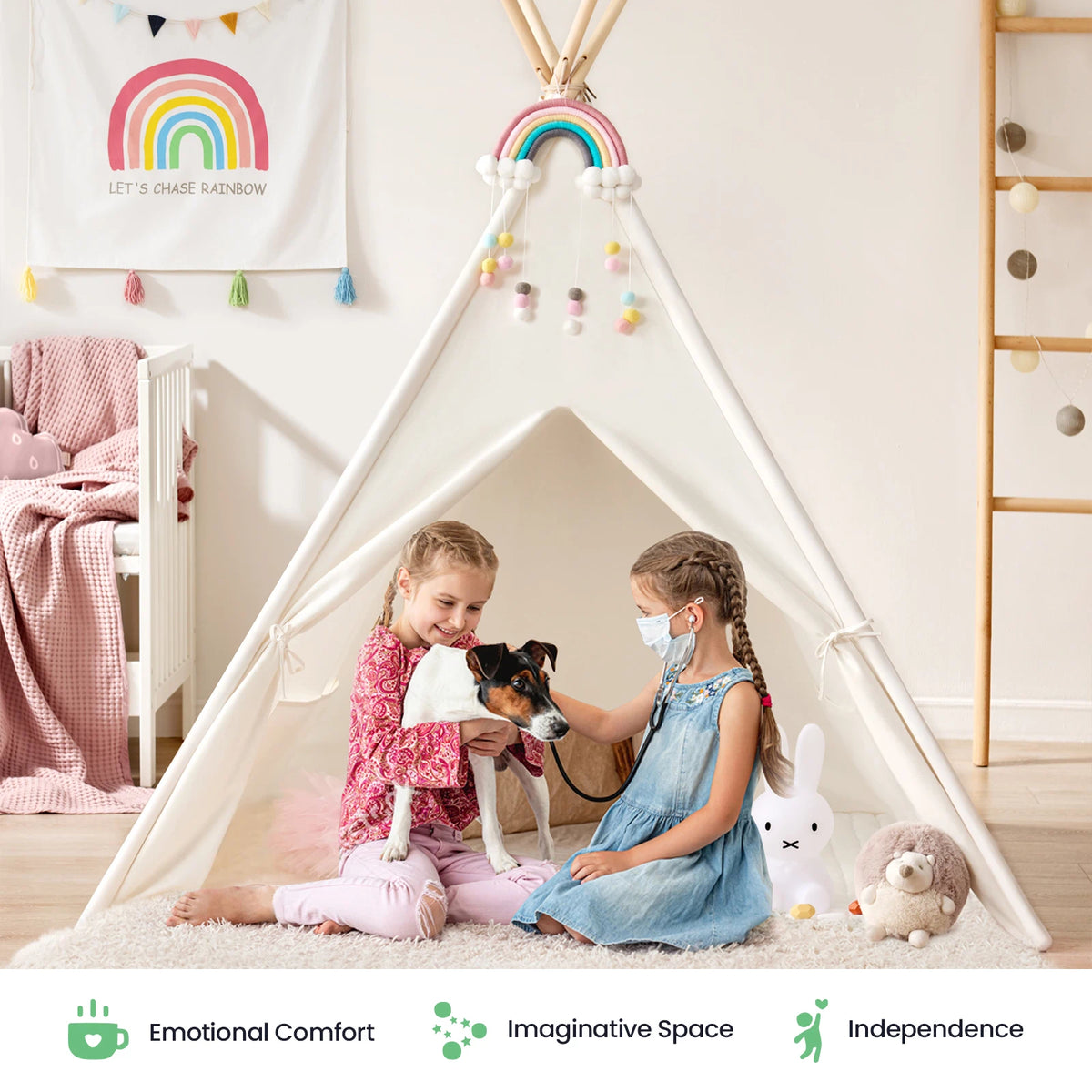
A Tiny Land Teepee can give a reading corner a clear sense of place without requiring an entire room. It can accommodate up to three children, making it suitable for both individual reading and shared story time.
For Allison, that's part of what makes a teepee work well in a reading corner:
“A reading nook with a Tiny Land teepee might be a quiet solo space for one child and a group storytime fort for another.”
The same nook can serve different purposes throughout the day.
For families with limited space, that versatility can be especially useful. A small section of a playroom, bedroom, or family room can become a reading nook without needing a dedicated reading room.

Give Everyone Room to Get Comfortable
For families with multiple young children, seating can be just as important as the books themselves.
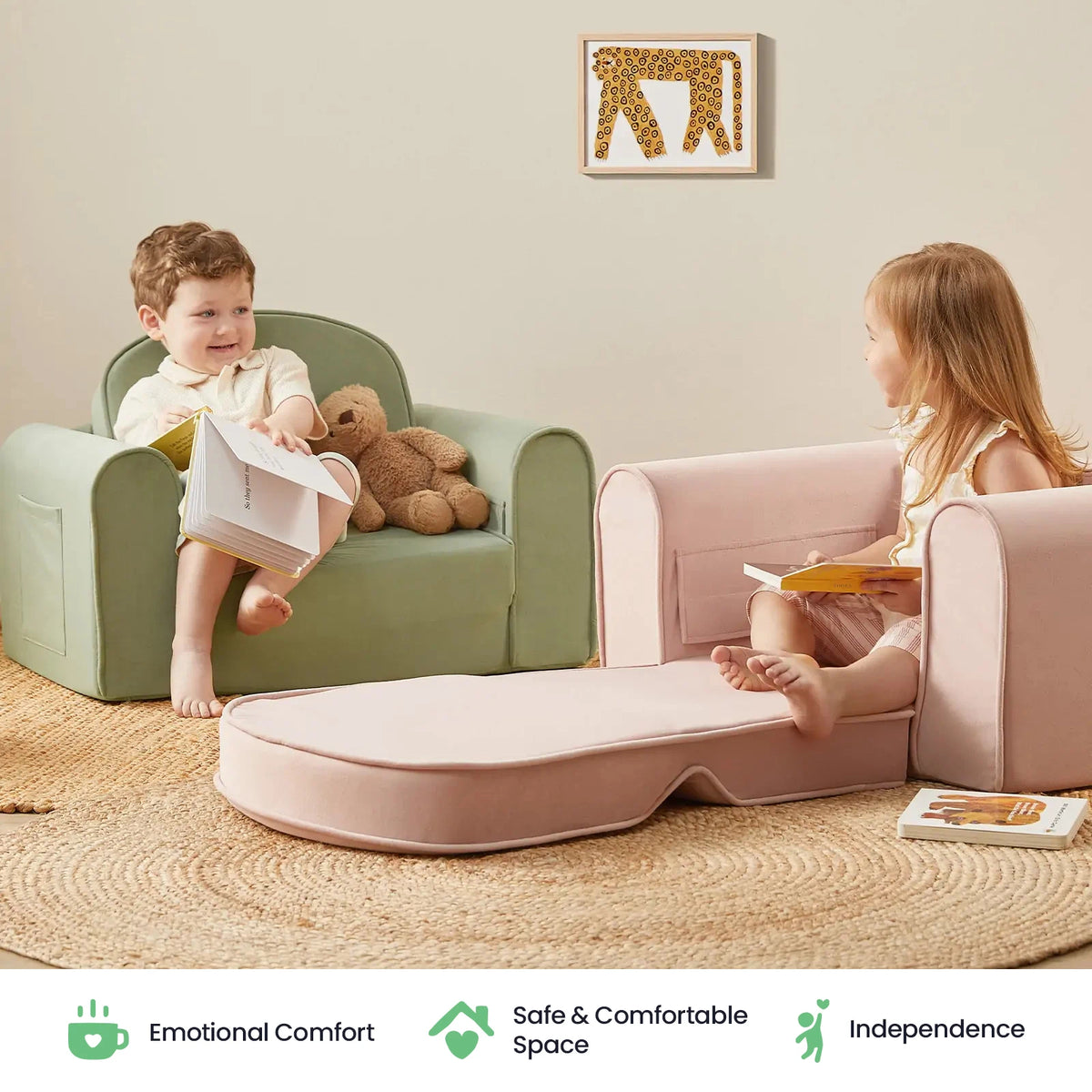
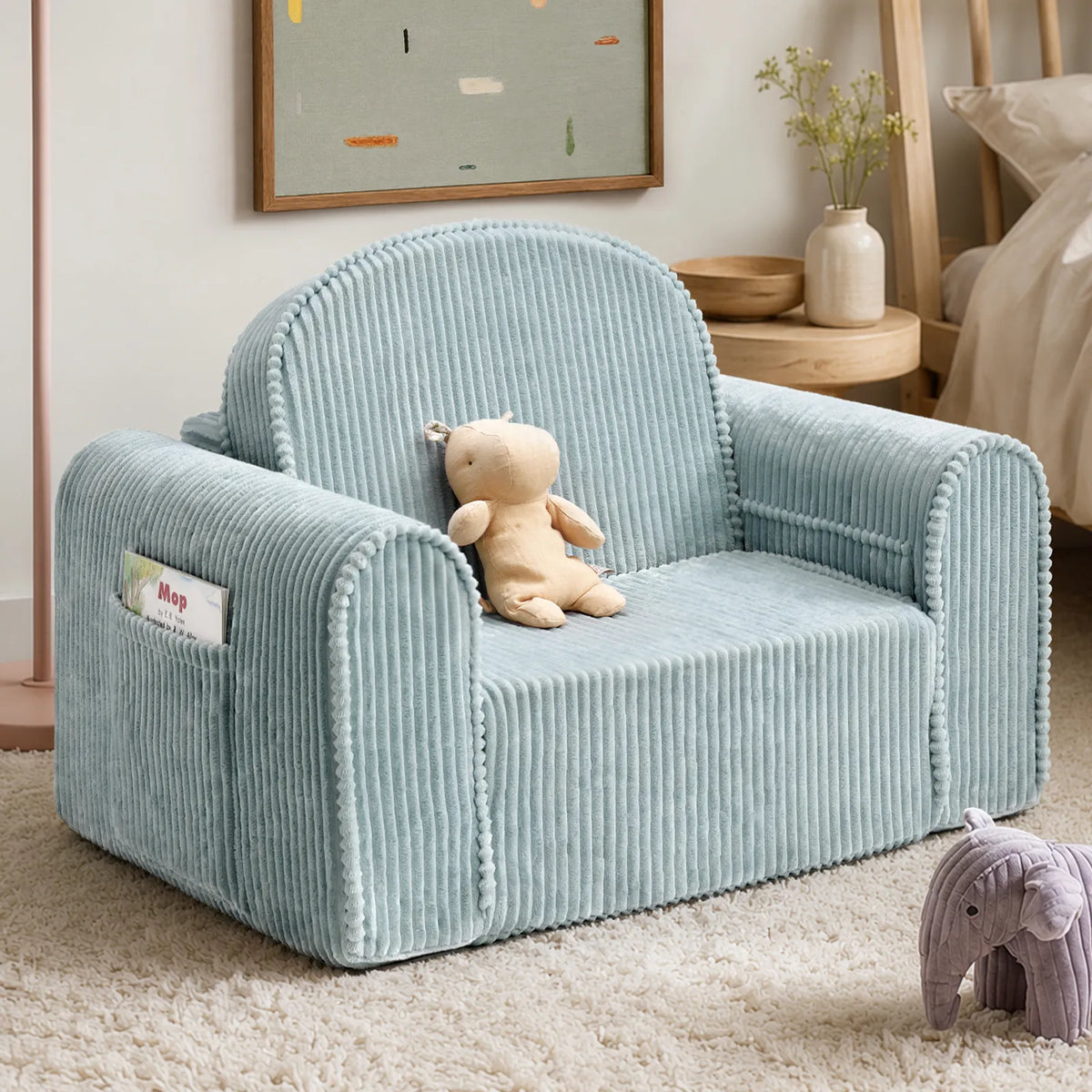
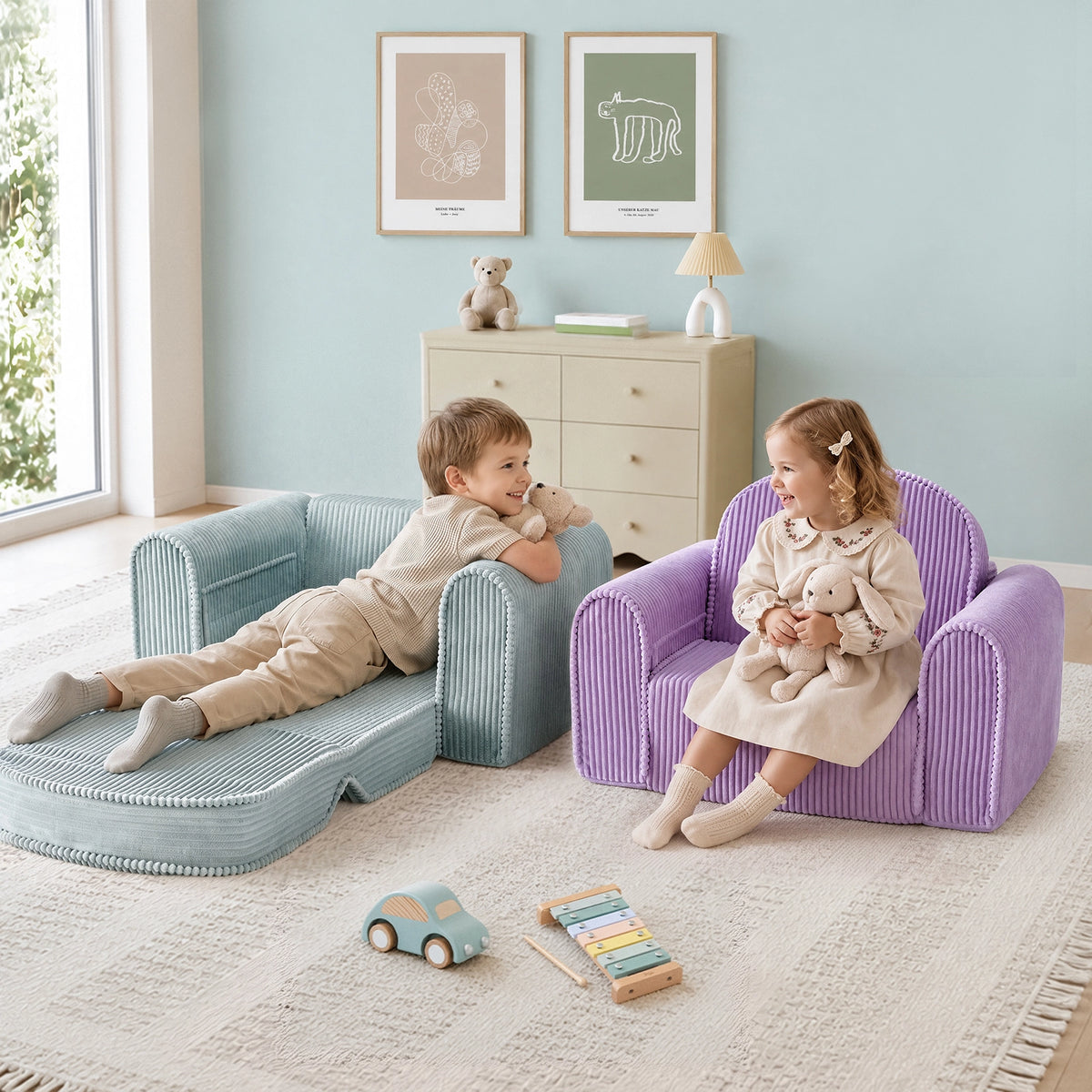
The Tiny Land Corduroy Kids Sofa stretches into a sofa bed, giving children room to sit, stretch out, or read together.
That can be useful when a reading corner needs to work for more than one child. Instead of creating a space designed around a single seat, an adaptable surface gives siblings room to share story time.
It also leaves room for parents.
Sometimes a reading corner is where a child reads independently. Other times, it's simply a comfortable place for a parent and child to sit together with a book.
Both experiences can happen in the same space.

3. Give Kids a Space That Feels Like Theirs
The third part of a good reading corner has less to do with furniture and more to do with ownership.
Young children spend much of the day in spaces organized by adults. A reading nook can give them a small area that feels different—a place they can choose to enter when they want a quieter moment away from the activity happening around them.
For Allison, this idea comes from everyday life with three young children.
Her children don't always use a space in the same way. One may want to look through books quietly, while another may prefer having a sibling nearby. What works at one moment may not be what a child wants at another.
That's why she believes a reading space should leave room for children to use it in their own way.
Let the Reading Corner Have More Than One Purpose
A reading corner might become:
-
A quiet place to explore books independently
-
A cozy spot to read with Mom or Dad
-
A shared space for siblings
-
A little retreat from the activity of the rest of the house
-
A starting point for imaginative play
There doesn't have to be one “right” way to use it.
A child might start with a picture book and end up acting out the story. They might talk about a character, make up their own ending, or simply read the same favorite book again.
Those moments are part of the experience, too.
The reading corner simply gives them a familiar place for them to happen.

Let Books Become Part of Everyday Play
This connection between books and play is central to Allison's Toddler Tuesday series.
What began as a way to share the books she was already reading with her children has grown into a weekly space where she shares children's books and products, shows her kids interacting with them in real life, and gives parents practical ideas they can try at home.
Her approach isn't about turning every book into a structured activity.
Instead, reading can naturally lead somewhere else.
- A story might inspire pretend play.
- A character might start a conversation.
- An illustration might prompt a child to tell their own story.
- Or a child might simply want to read the same favorite book again.
All of those moments can become part of a child's relationship with books.
A reading corner gives those moments a familiar place to happen.

Your Reading Corner Doesn't Need to Be Pinterest-Perfect
It's easy to look at beautiful reading nooks online and assume that creating one requires a dedicated room, custom shelving, or a carefully coordinated setup.
It doesn't.
A reading corner can be a small part of a playroom, bedroom, or family room.
Start with what your child actually needs:
- Make books accessible. Put a selection where they can see and reach them.
- Make it comfortable and flexible. Give them somewhere they want to sit, curl up, or read with someone else.
- Give them ownership. Let the space become theirs instead of deciding exactly how it should be used.
For Allison, that's the difference between creating a reading corner for a child and simply decorating a corner with books.
The goal isn't to make reading look perfect.
It's to make books feel approachable.

You don't need a dedicated library to create a meaningful reading space.
Put books within reach. Give children somewhere comfortable to settle in. And leave enough room for them to decide what the space becomes.
- Maybe they'll read alone.
- Maybe they'll ask you to join them.
- Maybe siblings will turn the teepee into a story time fort.
- Maybe the book will inspire a game five minutes later.
That's okay.
The best reading corner isn't the one that looks perfect. It's the one that makes a child want to come back to books.